
Reviewed · SOHO, LITTLE ITALY & CHINATOWN TOURS
Asia in Queens: Exploring NYC’s Largest Chinatown
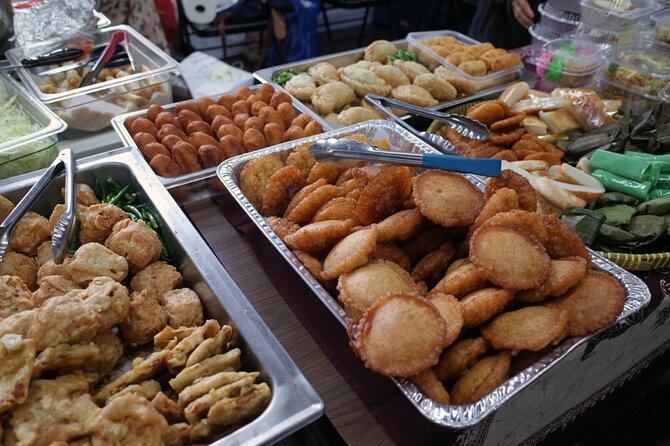
Flushing gives you a different New York, one where food courts, street stands, Asian groceries, and old American landmarks share the same few blocks. I love that this tour treats the neighborhood as more than a place to eat: it connects Chinese, Taiwanese, and Korean food with the people and places that shaped Queens. I also like the generous tasting lineup, which can include dumplings, noodles, breads, vegetables, sweets, boba, coffee, tea, and other bites.
The main trade-off is simple: five and a half hours on foot, with plenty of standing, is a bigger commitment than a quick food crawl. Comfortable shoes matter, and an umbrella is sensible. The group limit of seven helps keep the walk personal, but this is still an active outing rather than a sit-down meal.
In This Review
- Key points to know before you book
- Why Flushing is the right place for this tour
- Starting at New World Mall
- The Free Synagogue of Flushing and the rhythm of the walk
- Bowne House: food beside early Queens history
- Flushing Town Hall and a change of pace
- Flushing Friends Quaker Meeting House
- What you may actually eat
- The guides make the difference
- How much value do you get for $175?
- Who will enjoy this most?
- Practical details that matter
- Should you book Asia in Queens?
- FAQ
- Where does the tour start?
- What time does the tour begin?
- Where does the tour end?
- How long does the tour last?
- How many people can join the tour?
- What is included in the experience?
- Is the tour offered in English?
- Can I cancel for a full refund?
Key points to know before you book
- More than a food tour: Historic sites such as Bowne House, Flushing Town Hall, and the Quaker meeting house give the food a local setting.
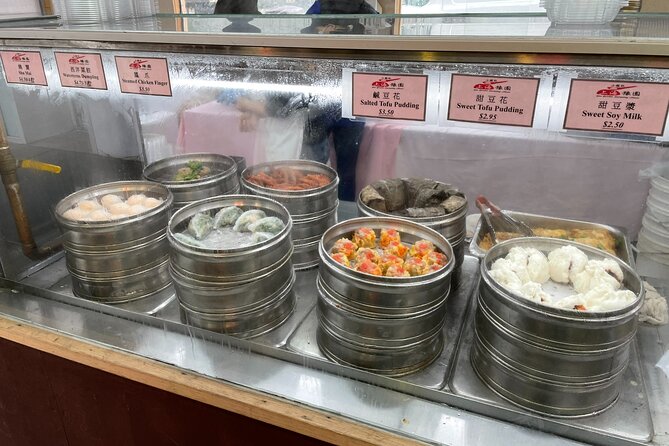
- A serious amount of tasting: Past menus have included dumplings, rice noodles, Korean dishes, Portuguese egg tarts, breads, sausages, desserts, boba, tea, coffee, and soft drinks.
- Food courts are part of the experience: New World Mall and other mall-based dining areas show where locals find some of Flushing’s best-value food.
- Small group, maximum seven: The size is useful in crowded food halls and makes it easier to ask questions or request a pause.
- Plan for a late lunch’s worth of food: Pace yourself. The tasting stops can add up to well over a dozen samples.
- A full half-day in Flushing: The tour starts at 10:30 a.m. at 136-02 Roosevelt Avenue and returns to the same meeting point.
Why Flushing is the right place for this tour
Many New York food walks stay in Manhattan, where familiar neighborhoods can feel polished for visitors. Flushing asks more of you, but gives you a broader picture of the city. The streets around Roosevelt Avenue bring together food stalls, mall restaurants, specialty groceries, religious buildings, and historic sites.
That mixture is the point. You are not simply moving from one famous restaurant to another. You are seeing how a neighborhood works, with food shopping, family businesses, public buildings, and places of worship close together.
The tour also makes good use of Flushing’s unusual food setup. Some of the best eating happens inside malls and food courts rather than in restaurants with prominent storefronts. A guide can help you make sense of these spaces, where menus may be unfamiliar and dozens of choices compete for your attention.
I especially like the way the tour places the neighborhood’s Asian food beside older Queens landmarks. Bowne House, Flushing Town Hall, and the Flushing Friends Quaker Meeting House provide a historical counterpoint to dumplings, noodles, kimchee, and spicy rice cakes. You get a better sense of place when the meal and the building are part of the same story.
More SoHo, Little Italy and Chinatown walks:
- SoHo, Little Italy, and Chinatown Walking Tour in New York
★ 5.0 · 3,153 reviews - NYC: Chinatown & Little Italy Food Tour with 7 Flavorful Tastings
★ 5.0 · 2,733 reviews - Original NYC Guided Food Tour of Chinatown and Little Italy
★ 5.0 · 2,194 reviews
Starting at New World Mall
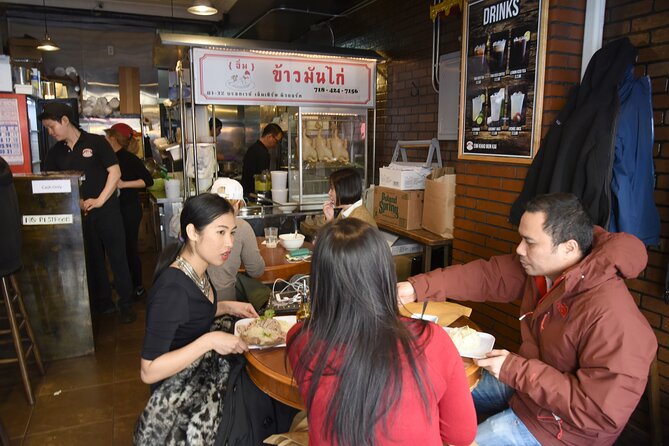
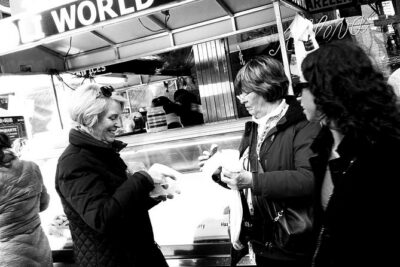
The first stop, New World Mall, gives you an immediate introduction to Flushing’s food culture. You visit vendors, outdoor stands, and mall-based food courts, with tastings selected along the way.
This is a practical setting for a guided food tour. The choices can be numerous, and a small group makes it easier to move through the area without losing one another. The tasting format also lets you sample several foods instead of committing to one large dish.
The food selection can vary, but the experience has included dumplings, breads, noodle dishes, vegetable plates, sausages, and other savory bites. You may also encounter drinks such as boba, coffee, tea, or water during the day. Since the tasting is shared, you can try more dishes without filling up at the first stop.
The key advice here is to pace yourself. If you normally eat a full breakfast before a food tour, keep it light. The tour can include well over a dozen tastes, and the early stops are only the beginning.
The Free Synagogue of Flushing and the rhythm of the walk
The stop at the Free Synagogue of Flushing lasts about 45 minutes. Here, the tour shifts from food to local history and views, then returns to another bite.
That rhythm is one of the tour’s strengths. You are not expected to stand at a counter for five straight hours. The day alternates between walking, eating, sitting, and listening, which helps make the long schedule manageable.
The synagogue stop also reinforces the area’s layered character. Flushing is not presented as a single-culture district frozen in time. Instead, you see different parts of its past alongside the present-day food businesses that draw people from across the city.
The itinerary does not promise a formal interior tour or a specific type of view, so you should think of this as a history stop within a food walk, not a dedicated synagogue visit. That distinction matters if you are mainly seeking architectural sightseeing.
Bowne House: food beside early Queens history
Bowne House receives about an hour, making it one of the longer stops. The guide discusses the history here and includes another tasting.
This pairing works well. Food can make a neighborhood memorable, but historical context helps explain why Flushing matters beyond its restaurants. At Bowne House, the guide provides a link to the area’s earlier story before you continue through its present-day streets.
I would pay attention during this part even if you booked mainly for lunch. The tour’s strongest feature is the connection between the food and the place where you are eating it. The historical stops keep the outing from becoming a series of unrelated samples.
There is also a useful practical benefit to the hour-long stop. A longer pause gives the group time to ask questions, eat at a comfortable pace, and take a break from walking. Families may appreciate that balance. One family with children aged 9, 12, and 14 found the pace workable, with enough time for both sitting and walking.
More Bronx and Queens visits:
- NYC Bus Tour of Brooklyn, Bronx, Queens: Art, Food & Sports
★ 5.0 · 3,805 reviews - NYC Highlights Tour: Bronx, Brooklyn, Harlem, Queens & Coney
★ 4.5 · 2,846 reviews - NYC: Contrasts Tour of Harlem, The Bronx, Queens & Brooklyn
★ 4.5 · 2,167 reviews - From Manhattan: Bronx, Queens and Brooklyn Half-Day Tour
★ 4.3 · 1,321 reviews
Flushing Town Hall and a change of pace
The next 45-minute stop takes you around Flushing Town Hall for more history and special bites. This is another example of the tour’s approach: a recognizable local building becomes part of a wider discussion about the neighborhood.
You should expect food to remain central, but not every stop functions like a restaurant meal. Some tastings are quick, shared, or taken between explanations. That makes the day varied, though it also means you should not expect a private table or a fixed multi-course lunch.
The shorter stops help keep the route moving. They also prevent the historical portions from taking over the day. If you want a food tour with just enough cultural background to give the dishes context, this balance should suit you.
Flushing Friends Quaker Meeting House
The final listed stop is the Flushing Friends Quaker Meeting House, with about 45 minutes devoted to history and another bite.
By this point, the neighborhood should feel less like a collection of food counters and more like a place with several eras layered together. The Quaker meeting house provides a quiet contrast to the food halls and commercial streets visited earlier.
The final tasting also helps the day end on food rather than a lecture. Since the tour returns to its starting point, you do not need to arrange a second pickup location. That is convenient if you plan to continue exploring Flushing afterward or head back by public transportation.
What you may actually eat
The exact menu can change, but the food range described for this experience is unusually broad. Tastings have included:
- Chinese dumplings and breads
- Thin noodles and rice noodle dishes
- Vegetable dishes
- Korean sushi, kimchee, soup, sausages, and spicy rice cakes
- Portuguese egg tarts and other sweets
- Boba, coffee, tea, water, and soft drinks
That variety is important. You are not simply sampling five versions of the same dish. You may move between familiar foods prepared in a different way and dishes you have never tried before.
The shared format is helpful for adventurous eaters. You can take a taste of something new without ordering a full portion. It also lets the guide explain where a dish comes from and how it fits into the local food scene.
Still, keep expectations flexible. The description promises tastings at multiple stops, but it does not guarantee every item listed above on every date. If you have strict dietary needs, ask before booking rather than assuming the guide can adjust every dish.
The guides make the difference
Named guides associated with this walk include Sierra, Carly, Snyder, and Esneider. Sierra is especially noted for guiding both couples and families, while Carly has also led the experience.
The guide’s role here is more important than on a simple market visit. Flushing’s food courts and mall vendors can be hard to read at first, and the historical sites need explanation to connect them to the modern neighborhood. A good guide helps you understand not only what you are eating, but why this particular area has such a wide range of food.
The strongest guide descriptions emphasize warmth, humor, passion for the neighborhood, and clear explanations of food and culture. That matters because a five-and-a-half-hour walk can feel long if the commentary is flat. Here, the guide is expected to set the pace, explain the dishes, and make the stops feel connected.
Because the group is capped at seven, you should have a better chance to ask questions than on a large bus-style food tour. The small size is especially useful in crowded food courts, where a group of twenty could become awkward.
How much value do you get for $175?
At $175 per person, this is not a cheap lunch. The price needs to be judged against the amount of food, the guide’s time, and the length of the walk.
You receive about five and a half hours with a small group, tastings at several locations, soft drinks, coffee, and tea. The food can amount to a full day’s worth of sampling, especially if you try more than a dozen items. You are also paying for the guide’s knowledge of places that are not always obvious to a first-time visitor.
I see the price as reasonable for a dedicated food enthusiast who would otherwise spend hours guessing what to order. It is less compelling for someone who wants a quick Chinatown lunch or prefers choosing every dish independently.
The value improves if you treat the tour as both lunch and neighborhood orientation. Afterward, you will have a better idea of which kinds of food and shopping areas interest you. The experience also saves you from making several separate visits to understand the area’s Chinese, Taiwanese, and Korean food offerings.
Who will enjoy this most?
I would recommend this tour to people who plan trips around food, enjoy trying unfamiliar dishes, and want more context than a standard restaurant meal provides. It also suits repeat New York visitors who have already covered the main Manhattan sights and want to see a different side of the city.
Families can do well here, provided children are comfortable walking and trying shared foods. The family-friendly pace described for children aged 9, 12, and 14 suggests that the mix of sitting and walking can work for older kids and teenagers.
Solo visitors and couples should also benefit from the small group. You are not left trying to order a large number of dishes alone, and the shared tastings make it easier to sample broadly.
I would hesitate to recommend it to anyone who dislikes standing, walking, shared portions, or unfamiliar food. It is also not the best choice if you need a tightly controlled menu, a private dining room, or a short activity.
Practical details that matter
The meeting point is 136-02 Roosevelt Avenue in Flushing, with a 10:30 a.m. start. The activity ends back at that same meeting point, and the area is near public transportation.
Wear comfortable shoes. The route includes food courts, outdoor areas, historic sites, and regular walking, so this is not a polished indoor tasting event from start to finish. Bring an umbrella, since the experience requires good weather.
The tour is offered in English, uses a mobile ticket, and allows service animals. Most people can participate, but you should consider your own comfort with a long walking day and repeated food stops.
Confirmation is sent within 48 hours of booking, subject to availability. You can cancel for a full refund up to 24 hours before the start time. If poor weather or an insufficient number of bookings causes cancellation, you are offered another date, another experience, or a full refund.
Should you book Asia in Queens?
Book it if you want a serious half-day food outing with history mixed in, especially if you are curious about Flushing’s mall food courts and less obvious eating spots. The small group, broad tasting list, and guides such as Sierra, Carly, Snyder, and Esneider make this more personal than a standard neighborhood walk.
Skip it if you want a fast meal, a fixed menu, or a low-cost introduction to Chinatown. At $175, the tour earns its price through quantity, guidance, and time. Come hungry, wear good shoes, and save room for dishes you may not recognize.
FAQ
Where does the tour start?
The tour starts at 136-02 Roosevelt Avenue, Flushing, New York 11354.
What time does the tour begin?
The scheduled start time is 10:30 a.m.
Where does the tour end?
The activity ends back at the meeting point.
How long does the tour last?
The experience lasts approximately five hours and 30 minutes.
How many people can join the tour?
The maximum group size is seven travelers.
What is included in the experience?
The tour includes tastings at multiple stops, soft drinks, coffee, and tea.
Is the tour offered in English?
Yes. The tour is offered in English.
Can I cancel for a full refund?
Yes. You can cancel at least 24 hours before the start time for a full refund. Cancellations or changes made less than 24 hours before the start time are not refunded or accepted. If poor weather or a failure to meet the minimum number of participants cancels the tour, you are offered another date, another experience, or a full refund.
Just listed around New York City
- NYC: Little Shop of Horrors Off-Broadway Ticket5 reviews
- Private NYC Airport Transfer: LGA to Manhattan – Up to 5★ 3.6 · 5 reviews
- New York City Tour in German★ 4.5 · 5 reviews
- New York: Hamilton and Washington Revolutionary Walking Tour★ 5.0 · 5 reviews
- NYC Freedom Tower Private Photo or Video Experience★ 4.0 · 6 reviews
- New York Afternoon Fall Foliage Cruise with Lunch★ 5.0 · 6 reviews
- Brooklyn Walking Tours by Locals: Private & 100% Personalized★ 4.0 · 6 reviews
- Southold Bay Oyster Farm Tour★ 5.0 · 6 reviews
SoHo, Little Italy & Chinatown Tours, compared.
SoHo, Little Italy, and Chinatown Walking Tour in New York
Read our review →
Chinatown & Little Italy Food Tour with 7 Flavorful Tastings
Read our review →
Original NYC Guided Food Tour of Chinatown and Little Italy
Read our review →
SoHo, Little Italy, and Chinatown 2-Hour Guided Walk
Read our review →
SoHo, Little Italy, and Chinatown NYC Guided Walking Tour
Read our review →Browse the lists this tour appears in