
Reviewed · BROADWAY SHOWS & TICKETS
Broadway the Tour- NYC Guided Immersive Historic Walking Tour
Broadway the Tour turns the Theater District into an open-air storybook. In about two hours, you move from the early days of Longacre Square and vaudeville to Hamilton, Wicked, Moulin Rouge, and the modern fight to preserve Broadway’s old theaters. The headset adds songs, interviews, and recordings from famous shows while your guide fills in the facts.
I like the small group limit of 20, which should make it easier to hear and ask questions. I also like the 10 a.m. start: you get the Broadway story early, then keep the afternoon free for a museum, lunch, or a matinee.
The main trade-off is simple: this is a walking and standing tour, and many theater interiors are viewed from the street. Admission to the Museum of Broadway and most theaters is not included, so think of this as a guided neighborhood tour rather than a backstage visit.
In This Review
- Key points to know before you book
- Broadway begins before the bright lights
- From the Lyceum to Times Square
- 42nd Street and the Great White Way
- Smaller theaters and Broadway’s working machinery
- Shubert Alley and the actors waiting for a break
- A cookie break at Schmackary’s
- Hamilton, the Rodgers Theatre, and Broadway today
- Six, Gershwin, Wicked, and the Brill Building
- The Winter Garden, a diner, and George M. Cohan
- The Palace Theatre and Theatre Circle
- What the headset and group size add
- Timing, weather, and value
- Who should book Broadway the Tour
- FAQ
- Where does Broadway the Tour begin?
- What time does the tour start?
- How long does the tour last?
- Where does the tour end?
- Is the Museum of Broadway admission included?
- Are theater admission tickets included?
- Is a snack included?
- Is the tour offered in English?
- What happens if I need to cancel?
Key points to know before you book
- Broadway history unfolds in chronological order, from immigrant theater and vaudeville to today’s blockbuster musicals.
- A personal audio headset keeps you connected to the guide while adding music, interviews, narration, and sound effects.
- The route passes a remarkable cluster of theaters, including the Lyceum, New Amsterdam, Shubert, Majestic, Richard Rodgers, Palace, and Gershwin.
- The Schmackary’s stop includes a cookie, one of the tour’s few food-related extras.
- Roxie is one named guide associated with the experience, and the live guide is central to making the historic details understandable.
- You return to the starting point, with free cancellation available up to 24 hours before the scheduled start.
Broadway begins before the bright lights
Meet at the Museum of Broadway, 145 West 45th Street, at 10 a.m. The tour opens with the basic shape of Manhattan and the early beginnings of Broadway, giving you a useful map before the theater names start flying past.
That opening matters. Broadway can feel like a wall of signs, marquees, restaurants, and people moving in every direction. A guide who explains how the area developed helps you connect the street in front of you with the larger story.
The Museum of Broadway is the starting point, not an included admission stop. If you want to visit it separately, plan that as an extra activity and allow additional time beyond the two-hour, 10-minute walk.
Your audio headset is more useful than it may sound. You hear the guide without needing to crowd around them, then switch attention to recorded music, actor stories, interviews, and sound effects. That mix gives the walk a theatrical pulse without turning it into a simple lecture.
More Broadway seats to book:
- NYC: Aladdin the Musical on Broadway
★ 4.8 · 1,800 reviews - NYC: The Lion King on Broadway
1,609 reviews - NYC: MJ the Musical on Broadway
1,510 reviews
From the Lyceum to Times Square
The Lyceum Theatre is one of the oldest continuously operating Broadway theaters. It is also a good early reminder that Broadway is not one single style of building or show. The current production is Cole Escola’s Oh, Mary!, and the tour uses the theater as an entertaining entry into Broadway’s long life.
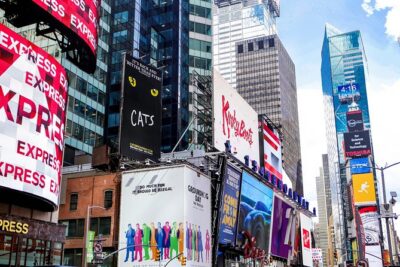
Next comes Times Square, where you learn how Longacre Square became the Crossroads of the World. One Times Square offers a natural photo stop, especially if you want a picture beneath the building linked to the New Year’s Eve ball drop.
Times Square is easy to reduce to neon and crowds. The better part of this stop is learning that its identity changed over time. The tour connects the square’s physical growth with the rise of Broadway as a major entertainment district.
42nd Street and the Great White Way
Along 42nd Street, the story moves into immigrant theater, vaudeville, opera, and early musicals. You also hear how the bright lights gave Broadway its nickname, the Great White Way.
This stretch is one of the strongest parts of the walk because several old theaters sit close together. You get photo opportunities involving roughly half a dozen historic playhouses, including the theater now home to Aladdin. The guide also explains the story behind 42nd Street, tying the street itself to the musical that made it famous.
The New Amsterdam Theatre is especially important. Built in 1903, it is a fine Art Nouveau building and once hosted the Ziegfeld Follies for nearly two decades. Today, it is home to Disney’s Aladdin. You will not tour the interior as part of this walk, but hearing about the building’s design and changing productions adds meaning to what you see from outside.
The nearby New Victory Theatre offers a different kind of history. Built in 1900 as the Republic Theatre, it moved through vaudeville, burlesque, and adult films before becoming a theater for children and international productions. That unusual story helps you see Times Square as a place that kept changing to match its audience.
Smaller theaters and Broadway’s working machinery
The Helen Hayes Theatre, first called The Little Theatre, was built in 1912 as a response to the oversized theaters of the day. Its purpose was more intimate and experimental. This stop gives the tour a needed shift away from famous blockbusters and toward smaller venues that helped new work find a home.
The Imperial Theatre brings you back to major productions. It is closely linked with Les Misérables, and the guide also discusses shows that did not have the same long run or lasting fame. That comparison is valuable because Broadway success is never automatic, even when a theater has a grand marquee and a famous address.
The St. James Theatre opened in 1927 and has hosted major musicals such as Oklahoma! and Hello, Dolly! The stop helps place those productions within the story of Broadway’s changing style. You are not only looking at buildings. You are learning why certain theaters became associated with particular eras and performers.
At the Shubert Theatre, the tour turns toward the people and business forces that shaped Broadway. Names such as Hammerstein, George M. Cohan, Ziegfeld, and Fanny Brice enter the story. You also hear about the rise of the Shuberts and the growth of one of the most powerful theater unions in the arts.
This is where the headset can be especially helpful. The modern fronts of 8th Avenue do not reveal much about the theater district’s early business battles. Audio clips and live explanation give those hidden decisions a voice.
More New York City history walks:
- New York City: American Museum of Natural History Ticket
★ 4.5 · 15,447 reviews - NYC: Starship Landmark 90 Minute Sightseeing Cruise
★ 4.6 · 3,666 reviews - Starship Landmark 90 Minute Sightseeing Cruise
★ 4.5 · 2,073 reviews - American Museum of Natural History Admission Ticket
★ 4.0 · 1,931 reviews
Shubert Alley and the actors waiting for a break
Shubert Alley is a narrow passage between the Shubert and Booth Theatres. It was created in 1912 to meet fire safety rules, but it soon became a famous gathering place for Broadway hopefuls and theater professionals.
The alley offers a quick look at the less glamorous side of the business. Aspiring performers once waited nearby, hoping to be noticed, while producers and directors worked in the surrounding theaters. Broadway’s public face is the curtain call. Shubert Alley hints at the long, uncertain work that comes before it.
The Majestic Theatre stop covers several well-known shows and nearby playhouses, including the Imperial, Booth, and Music Box. You hear music from Rodgers and Hammerstein and learn about productions such as Gypsy, Dear Evan Hansen, Funny Girl, Les Misérables, and The Phantom of the Opera.
The list is broad, so do not expect a full study of every musical. Instead, the guide uses these shows to explain how individual productions can shape a theater’s identity for years.
A cookie break at Schmackary’s
The stop at Schmackary’s is a practical and pleasant pause. The visit includes a cookie, so you get a small snack during a walking route that otherwise focuses on buildings, stories, and recordings.
The bakery has a special connection to the Broadway community. It was founded by an aspiring actor and became known for cookies enjoyed by cast members, crews, and theatergoers. The stop gives the tour a present-day connection to the district’s working performers.
It is not a full meal, and you should plan lunch separately. Still, a cookie can be welcome after several blocks of city walking, especially if you are taking the morning tour before a later activity.
Hamilton, the Rodgers Theatre, and Broadway today
At Hamilton, the tour brings the story into the present. The show’s blend of hip-hop, R&B, pop, and traditional musical theater changed how many people thought about American history onstage.
The Richard Rodgers Theatre, named for composer Richard Rodgers, has hosted productions such as Guys and Dolls and How to Succeed in Business Without Really Trying. It is now the home of Hamilton, linking an older Broadway tradition with one of the most influential modern shows.
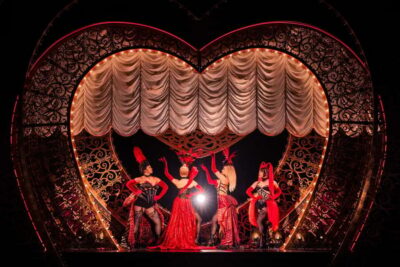
The Al Hirschfeld Theatre gives you another angle. It is currently home to Moulin Rouge the Musical and honors the caricaturist whose drawings captured Broadway performers from Ethel Merman to Zero Mostel. Hirschfeld often hid his daughter Nina’s name in his drawings, a small detail that makes the artist’s work more personal and memorable.
The tour also addresses harder questions about the district. City planning, civil engineering, corporate interests, and the desire to protect historic theaters have not always pointed in the same direction. You learn why historic overlays matter and why preserving old Broadway houses can be difficult as Midtown changes.
That section adds weight to the tour. Broadway is not only a collection of famous shows. It is also a group of old buildings that need protection, repairs, and public support to survive.
Six, Gershwin, Wicked, and the Brill Building
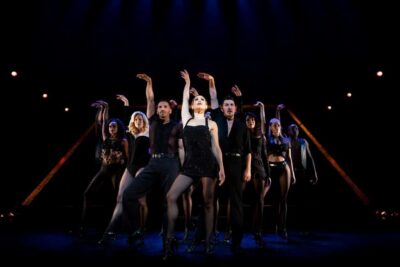
The theater currently associated with Six introduces the practical side of making it on Broadway. The guide discusses revivals such as Chicago, blockbusters such as Wicked, and shows with more provocative humor, including The Book of Mormon.
The point is not simply to name popular productions. It is to show the range of material that competes for an audience and the different paths a show can take once it reaches New York.
The Gershwin Theatre was renamed in 1983 for George Gershwin, whose work includes Porgy and Bess and An American in Paris. The building is part of Midtown’s 1970s redevelopment, so it represents a newer chapter than the old theaters around 42nd Street.
At the Brill Building, the focus shifts from theater to popular music. During the 1960s, songwriters such as Carole King, Gerry Goffin, Barry Mann, and Cynthia Weil worked in the building’s music offices and studios. This stop helps explain how pop songwriting and musical theater began to influence each other.
For music fans, the Brill Building may be one of the most rewarding stops because it widens the story beyond Broadway marquees. You see how the sounds of popular culture fed into later musicals and how the border between pop music and theater became less fixed.
The Winter Garden, a diner, and George M. Cohan
The Winter Garden Theatre began as a horse exchange for William Vanderbilt before becoming a theater in 1911. It later hosted the Ziegfeld Follies, Cats, and Mamma Mia! Its past shows how buildings can change purpose while remaining part of the city’s entertainment life.
The tour also points out a diner opened in 1987 that became known for classic American food and musical performances by aspiring Broadway artists. The stop is brief, but it gives you another view of the district, where performers do not only appear under a marquee. They also work in the restaurants and smaller venues around the theaters.
At the George M. Cohan statue, you meet one of Broadway’s key early figures. Cohan wrote, composed, produced, acted, and helped shape the modern musical through his mix of music, dance, and drama. He also wrote patriotic songs, including Over There, which became strongly associated with World War I.
The statue is one of the few included admission stops, although it is an outdoor public monument rather than a ticketed attraction. It gives the tour a clear human focus after so many theater names and production titles.
The Palace Theatre and Theatre Circle
The Palace Theatre closes the main historical route. In the early 20th century, it was the top destination for vaudeville performers. To play the Palace meant reaching the highest level of that entertainment world.
This final theater stop brings the story back to performance itself. Before Broadway musicals dominated the district, vaudeville gave performers a demanding stage and helped build the audience culture that later supported musicals, plays, and revues.
The walk ends at Theatre Circle, a Broadway shop filled with playbills, posters, autographed photographs, and rare books. Admission is included, and the store makes a fitting final stop because it lets you see how theater history becomes something you can take home.
You finish back at the starting point. That makes the tour easier to fit into a day, since you are not left on the other side of Midtown trying to retrace the route.
What the headset and group size add
The audio system is one of the tour’s most useful features. You can hear a live guide such as Roxie while also listening to selected recordings, actor interviews, music, narration, and sound effects. That combination should appeal to you if theater history feels dry when presented only as dates and names.
The maximum group size is 20 people. That is not a private tour, but it is small enough to keep the guide within reach. You can also use the included Ask the Guide text service if a question comes to mind during or after the walk.
The tour is offered in English. ASL interpretation is available with advance notice, and service animals are allowed. Most people can take part, but you should be able to walk and stand without assistance for the full route.
Timing, weather, and value
The tour lasts about 2 hours and 10 minutes and begins at 10 a.m. The morning schedule is a real advantage if you want to see a matinee, visit another attraction, or leave time for lunch afterward.
The supplied details do not give a tour price, so I cannot judge the exact dollar value. In practical terms, the experience offers the most value if you want a structured introduction to Broadway, enjoy music and theater stories, and would otherwise spend time trying to identify theaters on your own.
It offers less value if you mainly want to enter the theaters or visit the Museum of Broadway. Those admissions are not included, and most stops are viewed from the street. Treat the walk as a guided history lesson with audio production, not as a theater tour with interior access.
Parking fees are not included. Public transportation is nearby, which is the sensible way to reach the Theater District. Free cancellation is available until 24 hours before the start time. If bad weather cancels the tour, you can choose another date or receive a full refund.
Who should book Broadway the Tour
I would choose this tour for a first visit to New York’s Theater District, for anyone who enjoys musicals, and for families or mixed-age groups who want more than a photo stop in Times Square. The cookie, short theater stops, and sound clips keep the pace varied.
It also suits theater fans who know the big show titles but want the background behind the buildings, producers, unions, artists, and city decisions that made Broadway possible. The route connects old vaudeville houses with Hamilton, Wicked, Six, and Moulin Rouge, so you get both history and current Broadway.
You may want to skip it if you dislike walking, need frequent seated breaks, or expect to go inside multiple theaters. For everyone else, the combination of live narration, recordings, a manageable group size, and a return to the starting point makes this a useful morning introduction to the Great White Way.
FAQ
Where does Broadway the Tour begin?
The tour begins at the Museum of Broadway, located at 145 West 45th Street, New York, NY 10036.
What time does the tour start?
The scheduled start time is 10 a.m.
How long does the tour last?
The experience lasts approximately 2 hours and 10 minutes.
Where does the tour end?
The activity ends back at the meeting point.
Is the Museum of Broadway admission included?
No. The tour begins at the Museum of Broadway, but admission to the museum is not included.
Are theater admission tickets included?
Most theater admission is not included. The route focuses on guided outdoor stops and views of the buildings.
Is a snack included?
Yes. The stop at Schmackary’s includes a cookie.
Is the tour offered in English?
Yes. The tour is offered in English.
What happens if I need to cancel?
You can cancel up to 24 hours before the start time for a full refund. Changes or cancellations made less than 24 hours before the start time are not accepted for a refund.
More New York City walking tours
- SoHo, Little Italy, and Chinatown Walking Tour in New York
★ 5.0 · 3,153 reviews - Secrets of Grand Central Station Walking Tour New York City
★ 5.0 · 1,796 reviews - Greenwich Village Walking and Food Tasting Tour
★ 5.0 · 1,572 reviews - Artistic, Alternative Greenwich Village Walking Tour
★ 5.0 · 971 reviews
Just listed around New York City
- Brooklyn Nets Basketball Game Ticket at Barclays Center★ 5.0 · 12 reviews
- Recreate the Most Requested Walking Tour of 1840s New York★ 5.0 · 12 reviews
- Explore NYC- Tour of Manhattan, The Bronx, Queens & Brooklyn★ 4.5 · 12 reviews
- Edge at Hudson Yards General Admission Tickets★ 4.0 · 13 reviews
- Charging Bull, Wall Street, 911 Memorial + One World Tickets★ 5.0 · 13 reviews
- Oppenheimer in New York: Upper West Side Walking Tour★ 5.0 · 13 reviews
- NYC: Thanksgiving Gourmet Lunch or Dinner Harbor Cruise★ 5.0 · 13 reviews
- Great Jones Distilling Co. NYC Craft Whiskey Tour and Tasting★ 5.0 · 13 reviews
Broadway Shows & Tickets, compared.
Broadway and Times Square Insider Tour with Theater Professional
Read our review →
Browse the lists this tour appears in