

Reviewed · NEW YORK CITY
Brunch in a Crunch in NYC
The best part of Brunch in a Crunch is that brunch becomes the activity, not just another meal squeezed between sightseeing stops. You work with a small group, learn to make dishes such as eggs Benedict and lemon raspberry ricotta pancakes, then sit down to eat what you prepared.
I like the hands-on format, where everyone gets a chance to cook and taste the food. I also like the friendly teaching style. Chefs Paige, Ashley, Dale, Danny, Oliver, and Monica are praised for clear explanations, patience, humor, and useful kitchen tips. The main thing to consider is the fixed, non-refundable booking policy, which leaves little room for a change of plans.
In This Review
- Key points at a glance
- Turning a New York brunch into a cooking lesson
- Meeting at 16 Beaver Street at noon
- Preparing eggs Benedict and lemon raspberry ricotta pancakes
- A class where beginners can take part
- Dietary needs and menu questions
- Eating the brunch you made
- Why the small-group format matters
- Timing, weather, and booking conditions
- Who should book Brunch in a Crunch?
- Final decision
- FAQ
- Where does Brunch in a Crunch take place?
- What time does the class start?
- How long does the experience last?
- Where does the activity end?
- What dishes might I learn to make?
- Is food included?
- How many people can join the class?
- Is the class suitable for beginners?
- Can vegan, dairy-free, or gluten-free versions be provided?
- Can I cancel or change my booking?
Key points at a glance
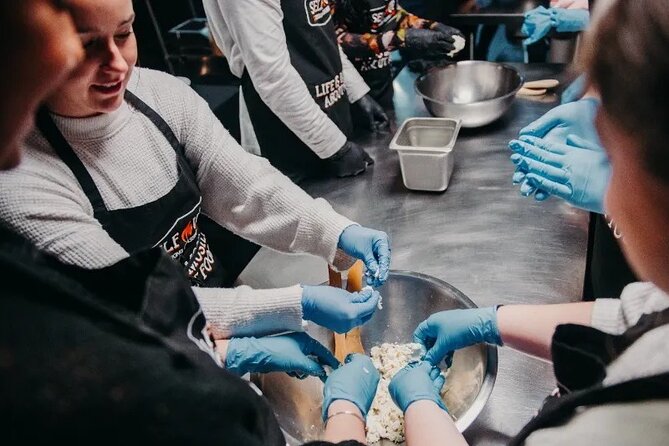
- Three hours of cooking and eating: Arrive at noon and plan to finish back at the 16 Beaver Street meeting point.
- Classic brunch dishes: Learn recipes that include eggs Benedict and lemon raspberry ricotta pancakes.
- A real small-group class: The maximum group size is 20, with plenty of chances to take part.
- Helpful instruction for beginners: The chefs explain each step and keep the tone relaxed rather than intimidating.
- Dietary flexibility: Past classes have provided vegan, dairy-free, and gluten-free versions.
- Brunch with drinks included: You cook, sit down to eat, and leave well fed for the afternoon.
Turning a New York brunch into a cooking lesson
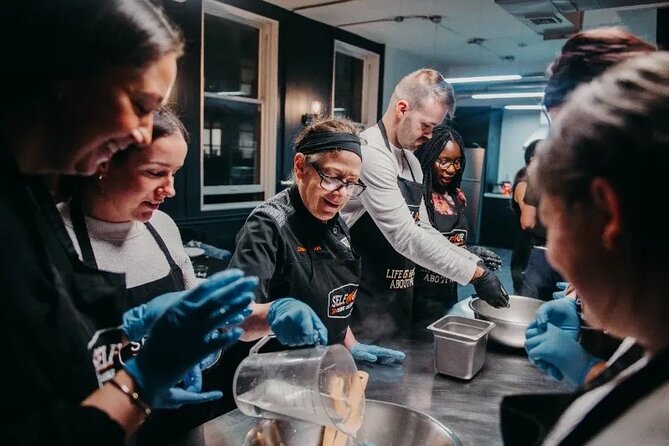
New York is famous for long brunch waits, packed dining rooms, and reservations that disappear quickly. This class takes a different route. Instead of hunting for a table, you meet at 16 Beaver Street in Lower Manhattan and spend the early afternoon making the meal yourself.
That change matters. You are not simply served a plate and sent on your way. The class gives you a practical reason to slow down and pay attention to how brunch dishes come together. You may learn how the parts of eggs Benedict are prepared, how a pancake batter gets its texture, or how a chef manages several components at once.
The setting also makes the meal social. You work beside other people who have chosen a food-focused activity, then share the finished brunch. That makes this a good pick for friends, couples, solo visitors who enjoy group activities, and work teams. A group of 20 has used the class for team building, and the kitchen has been described as clean and well organized.
The tone is more friendly workshop than serious culinary school. That is good news if you are a beginner. One attendee arrived worried about feeling intimidated and found that Paige and Oliver made people at different skill levels comfortable. You should not need advanced cooking experience to take part.
Big New York City bookings that pair well with this one:
- NYC: SUMMIT One Vanderbilt Tickets
★ 4.7 · 51,195 reviews - NYC: 9/11 Memorial & Museum Timed-Entry Ticket
★ 4.8 · 31,428 reviews - NYC: Empire State Building Tickets – Observatory & Museum
★ 4.7 · 25,757 reviews
Meeting at 16 Beaver Street at noon
The class starts at 12:00 pm at 16 Beaver Street, New York, NY 10004. It ends at the same meeting point, so there is no separate finishing location to arrange transportation from.
The Lower Manhattan address is near public transportation, which helps if you are building this into a sightseeing day. Still, I would leave enough time to find the building and arrive ready for a noon start. A cooking class is not an ideal place to stroll in late, since the early explanations and food preparation set up everything that follows.
The supplied details do not describe a neighborhood walk or any sightseeing stops. Treat this as a destination-based class rather than a tour through New York. Its value is inside the kitchen, not in moving from one landmark to another.
The experience lasts about three hours. That is long enough for instruction, preparation, eating, and conversation, but short enough to fit around other plans. I would avoid booking a timed museum entry or show immediately afterward. Cooking times can vary, and the class is meant to be enjoyed at a reasonable pace.
Preparing eggs Benedict and lemon raspberry ricotta pancakes
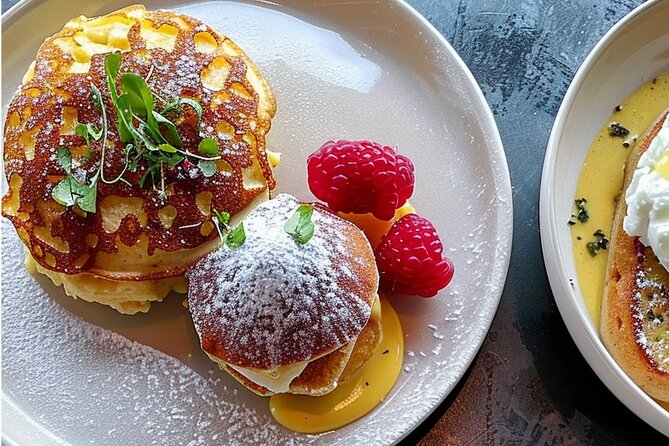
The sample dishes give you a nice contrast. Eggs Benedict brings together several skills and components, while lemon raspberry ricotta pancakes offer a sweeter, lighter brunch option. Together, they create a full meal rather than a single recipe demonstration.
The class is described as interactive, so you should expect to do more than watch a chef work at the front of the room. You may be assigned or invited to help with different parts of the recipes, and the group shares the finished food. The exact menu can vary, so I would not book this expecting a guaranteed list beyond the dishes specifically named in the description.
The teaching style is one of the strongest reasons to choose this activity. Paige and Ashley are praised for making recipes easy to follow. Dale and Danny are credited with useful explanations and a good sense of humor. Paige and Oliver helped beginners feel at ease, while Danny and Paige explained techniques clearly enough for participants to repeat them at home.
That last point is important. A cooking class is a better value when it gives you something beyond lunch. Here, the goal is to send you home with recipes and methods you can use for friends and family. You may not become an expert chef in three hours, but you can pick up a few reliable brunch habits.
The class also adds food history and science to the cooking in at least some sessions. That can make familiar dishes more interesting, especially if you like knowing why a technique works rather than simply copying instructions.
A class where beginners can take part
The group size is capped at 20 people. That is not an intimate private lesson, but it is small enough for a shared workshop, especially with more than one chef or assistant helping in the kitchen.
The exact staffing changes by session. Names associated with the classes include Paige, Ashley, Dale, Danny, Oliver, Monica, and Mark. Several sessions have had two or three instructors, which helps keep the activity moving and gives people someone to ask for help.
I would choose this over a formal, high-pressure class if you are new to cooking. The instructors are described as patient, kind, funny, and helpful. They explain the steps and encourage people to participate rather than making the class feel like a test.
That does not mean every person will spend the same amount of time on every dish. In a group class, some tasks naturally go faster than others. If you want one-on-one instruction or total control over every plate, a private lesson would likely suit you better. This experience is built around shared work and a communal meal.
It also works well for a parent and adult child, two friends, or a couple. A mother and daughter found the class comfortable for a beginner, and another couple learned new techniques while producing a meal they enjoyed. The activity gives you something to do together, which can be more memorable than sitting across from each other at a restaurant.
Another side of New York City for the same day:
- New York City: Statue of Liberty & Ellis Island with Ferry
★ 4.6 · 18,683 reviews - New York City: American Museum of Natural History Ticket
★ 4.5 · 15,447 reviews - Statue of Liberty and Ellis Island Tour: All Options
★ 5.0 · 13,571 reviews - New York in One Day Guided Sightseeing Tour
★ 5.0 · 13,166 reviews
Dietary needs and menu questions
Dietary flexibility is a real plus here. One vegan participant was offered non-dairy and gluten-free versions of everything, showing that the instructors have handled common dietary needs with care.
You should still communicate your requirements clearly when booking or before the class. The information confirms that these adaptations have been offered, but it does not promise that every possible allergy or restriction can be accommodated. If your needs are serious or complex, confirm the details directly with Selfup before paying.
The menu itself centers on brunch classics. That makes the recipes practical for home cooking, and it also means you should expect familiar comfort food rather than a highly specialized tasting menu. If you want a broad survey of New York restaurants or a formal fine-dining experience, this is not that.
Eating the brunch you made
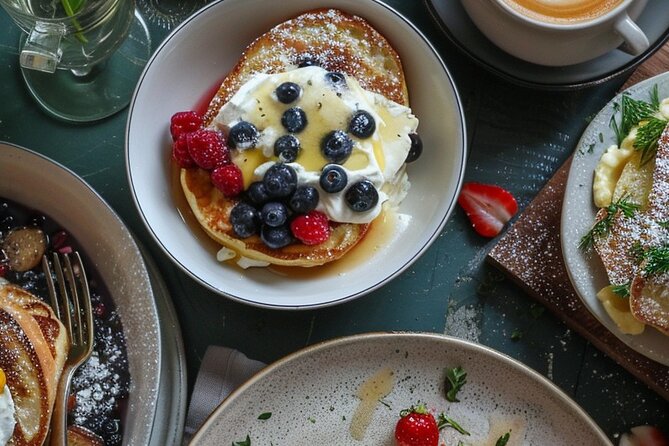
After the preparation comes the reward: you sit down with the group and eat the food. The experience includes a full brunch with drinks, so you should not need to plan a second meal immediately afterward.
I like this part because it gives the class a clear finish. You get to see how the recipes work as a meal, not just as separate practice exercises. You can taste the results, compare notes with the other participants, and ask final questions while the techniques are still fresh.
The social side is just as useful as the food. The activity attracts people with an interest in cooking and brunch, so conversation has a natural starting point. It can be a comfortable way to meet people if you are visiting New York alone, though you should remember that the group may be as large as 20.
The food is also the main measure of value. At $120 per person, this is more expensive than a standard brunch. You are paying for instruction, ingredients, drinks, the use of the kitchen, and a three-hour activity. If you only want pancakes and eggs, a restaurant will cost less and require less effort.
But the comparison changes if you value an experience you can take home. You are learning recipes, practicing techniques, and receiving a meal at the end. For a visitor who wants an activity with a practical result, the price can make sense. For a hungry diner who wants speed and convenience, it may not.
Why the small-group format matters
A maximum of 20 people gives the class energy without making it feel like a large lecture. The best sessions appear to balance group conversation with active participation. People have had opportunities to make and taste the food, rather than simply watching the chefs do all the work.
The kitchen is described as organized and clean, which matters in a hands-on class. Clear work areas and prepared ingredients help prevent the activity from becoming confusing. Several instructors also make it easier to handle different skill levels and dietary needs.
Still, group classes always involve some shared responsibility. You may need to wait briefly while another part of the meal is ready, or work alongside people with different levels of confidence. I see that as part of the appeal here, but it is worth knowing if you prefer a quiet, private cooking lesson.
The 20-person limit also makes this useful for a team event. A work group can cook together without splitting into an enormous crowd, and the shared meal gives everyone a natural finish. The class is not presented as a formal corporate program, so groups should confirm any special arrangements directly.
Timing, weather, and booking conditions
The noon start makes this a sensible Sunday afternoon plan or a midday break from Lower Manhattan sightseeing. The three-hour length leaves room to continue exploring afterward, though I would not schedule anything that depends on the class ending at an exact minute.
A mobile ticket is provided, and confirmation arrives when you book. The meeting point is near public transportation, and service animals are allowed.
One unusual condition is that the activity requires good weather. If poor weather causes a cancellation, you are offered another date or a full refund. The class may also be canceled if the minimum number of participants is not reached, in which case you are offered a different date or experience, or a full refund.
Your own cancellation options are much stricter. The experience is non-refundable and cannot be changed for any reason after booking. I would wait until your schedule is firm before purchasing, particularly because the class is often booked about 16 days ahead.
Who should book Brunch in a Crunch?
I would recommend this class if you want a social New York activity that produces a real meal. It suits beginners, food lovers, couples, families with older children, friends, and work groups. It is especially useful for people who are tired of restaurant lines and want to learn recipes they can repeat at home.
I would be less enthusiastic if your main goal is a classic restaurant brunch, a private lesson, or a sightseeing tour. You will be cooking, sharing tasks, and following a group schedule. The $120 price also deserves thought if you are comparing it only with the cost of a meal.
The high rating of 4.9 from 11 listed reviews, along with a 100 percent recommendation figure, fits the pattern of praise for the chefs, the food, the clean kitchen, the relaxed instruction, and the chance to participate. The most consistent strength is not one particular pancake or sauce. It is the combination of useful teaching and a satisfying brunch at the end.
Final decision
Book Brunch in a Crunch if you want to make your meal, meet a small group of food-minded people, and leave with recipes you can use again. Chef Paige and the other instructors are the heart of the experience, especially for beginners who want patient guidance without a stiff classroom feel.
Skip it if you need a flexible booking, have a packed midday schedule, or simply want to sit down and be served. For the right person, $120 buys more than brunch. It buys a practical, friendly afternoon in the kitchen, with food to eat and skills to take home.
FAQ
Where does Brunch in a Crunch take place?
The class starts at 16 Beaver Street, New York, NY 10004, USA.
What time does the class start?
The scheduled start time is 12:00 pm.
How long does the experience last?
The cooking class lasts about three hours.
Where does the activity end?
The class ends back at the meeting point at 16 Beaver Street.
What dishes might I learn to make?
The class includes brunch dishes such as lemon raspberry ricotta pancakes and eggs Benedict.
Is food included?
Yes. You prepare the brunch, eat your creations afterward, and receive drinks as part of the full brunch experience.
How many people can join the class?
The maximum group size is 20 participants.
Is the class suitable for beginners?
Yes. The instructors explain each recipe step by step, and the class is designed as an interactive cooking workshop rather than an advanced professional course.
Can vegan, dairy-free, or gluten-free versions be provided?
Vegan, non-dairy, and gluten-free versions have been provided in past classes. Contact Selfup before booking to confirm that your specific needs can be handled.
Can I cancel or change my booking?
No. The experience is non-refundable and cannot be changed for any reason. If the provider cancels because of poor weather or because the minimum number of participants is not met, you are offered another date, another experience, or a full refund.
Just listed around New York City
- NYC: Little Shop of Horrors Off-Broadway Ticket5 reviews
- Private NYC Airport Transfer: LGA to Manhattan – Up to 5★ 3.6 · 5 reviews
- New York City Tour in German★ 4.5 · 5 reviews
- New York: Hamilton and Washington Revolutionary Walking Tour★ 5.0 · 5 reviews
- NYC Freedom Tower Private Photo or Video Experience★ 4.0 · 6 reviews
- New York Afternoon Fall Foliage Cruise with Lunch★ 5.0 · 6 reviews
- Brooklyn Walking Tours by Locals: Private & 100% Personalized★ 4.0 · 6 reviews
- Southold Bay Oyster Farm Tour★ 5.0 · 6 reviews