Reviewed · TOURS
Death in New York: Extended Daylight Tour (Lower Manhattan)
Lower Manhattan’s most revealing stories are often below your feet. This walking tour with author K. Krombie traces old burial grounds, churches, execution sites, funeral businesses, and memorials from Battery Park through Chinatown. It gives familiar streets an unusual subject: how New York dealt with death as the city grew.
I like the small maximum group of 15, which should make it easier to hear and ask questions. I also like the route itself, since it links major sights such as Trinity Church and the 9/11 Memorial with less obvious places, including the African Burial Ground National Monument and Funeral Row on Mulberry Street.
The main drawback is simple: this is a nearly three-hour walking tour with no listed indoor break. If you want a quick overview of Lower Manhattan or prefer a bus tour, this may feel too specialized and too long.
In This Review
- Key points to know before you book
- Why death makes a useful key to New York
- Starting at Whitehall Street and Battery Park
- Financial District churches, memorials, and an old cemetery
- Civic Center and the African Burial Ground
- Chinatown’s Funeral Row on Mulberry Street
- Chatham Square and the final stop
- What $44 buys you
- Timing, pace, and practical planning
- Who will enjoy this unusual Lower Manhattan walk
- Should you book Death in New York?
- FAQ
- How much does the Death in New York tour cost?
- How long does the walking tour last?
- What time does the tour start?
- Where does the tour begin?
- Where does the tour end?
- Who leads the tour?
- What language is the tour offered in?
- How large is the group?
Key points to know before you book

- A fresh way to see Lower Manhattan: The subject is burials, undertakers, executions, and the city’s changing funeral customs.
- K. Krombie leads the walk: The guide is also an author, and the experience includes extra stories and facts beyond the core route.
- The route covers five districts and neighborhoods: Battery Park, the Financial District, Civic Center, Chinatown, and Two Bridges.
- A compact group helps: The tour accepts no more than 15 people, a useful limit for a storytelling-heavy walk.
- The finish is in Chinatown: You begin near South Ferry and end at Chatham Square, so plan your onward route from there.
- The price reflects a long guided walk: At $44 per person, you are paying for nearly three hours of focused interpretation rather than transport or admission tickets.
Why death makes a useful key to New York
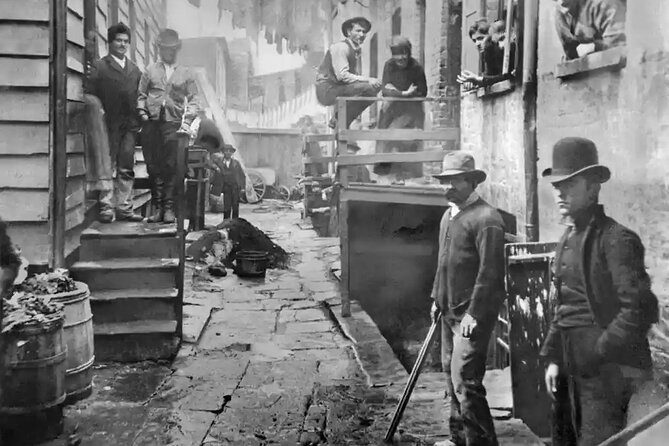
New York is often presented through skyscrapers, finance, immigration, and famous landmarks. This tour uses a less polished subject to show how those themes connect. Where people were buried, how bodies were moved, who handled funerals, and where executions took place all reveal how the city changed over time.
I like this approach because it makes you notice the ground plan of Lower Manhattan. A churchyard is not just a pretty patch of green. A courthouse is not merely an impressive civic building. A street in Chinatown can also carry the story of businesses tied to mourning and burial.
The tone is intended to be historical and cultural rather than a simple ghost walk. You should expect stories about city burials, undertakers, and executions, with the guide connecting those subjects to places you can see from the sidewalk.
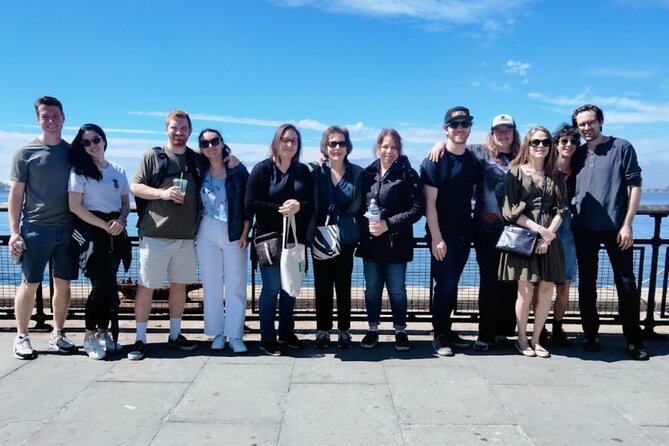
K. Krombie is the named guide and the author behind the tour. The experience is offered in English. One especially useful feature is the room for additional facts beyond the scheduled stops, so the walk is not limited to a rigid list of addresses.
Big New York City bookings that pair well with this one:
- NYC: SUMMIT One Vanderbilt Tickets
★ 4.7 · 51,195 reviews - NYC: 9/11 Memorial & Museum Timed-Entry Ticket
★ 4.8 · 31,428 reviews - NYC: Empire State Building Tickets – Observatory & Museum
★ 4.7 · 25,757 reviews
Starting at Whitehall Street and Battery Park
The walk begins at the Whitehall Terminal, at 4 Whitehall Street, close to South Ferry and Whitehall Street station. The stated start time is 11:00 a.m., so arrive with enough time to find the meeting point and get oriented before the group sets off.
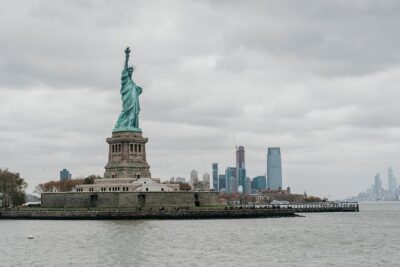
Battery Park is a fitting opening. You begin with a viewpoint toward the Statue of Liberty, a major symbol of arrival, departure, and New York’s place in the wider world. Here, the tour’s subject can begin broadly, with the city viewed as a place where people arrived, worked, lived, and eventually needed places for burial and remembrance.
The Battery Park portion is listed as about 30 minutes, with no admission ticket required. You are not paying extra to enter a museum or attraction at this stop. The value comes from the guide’s interpretation and from seeing the harbor-side setting in person.
The opening viewpoint also helps you get your bearings. From here, the tour moves inland through one of the most concentrated historic sections of Manhattan. You should expect the walk to shift quickly from open waterfront views to dense streets and civic buildings.
Financial District churches, memorials, and an old cemetery
The Financial District section includes a long run of important stops. You visit the Shrine of St. Elizabeth Ann Bayley Seton at 7 State Street, the Wireless Operators Memorial, the National Museum of the American Indian, and the corner of Broadway and Morris Street, identified as the site of the old city cemetery.
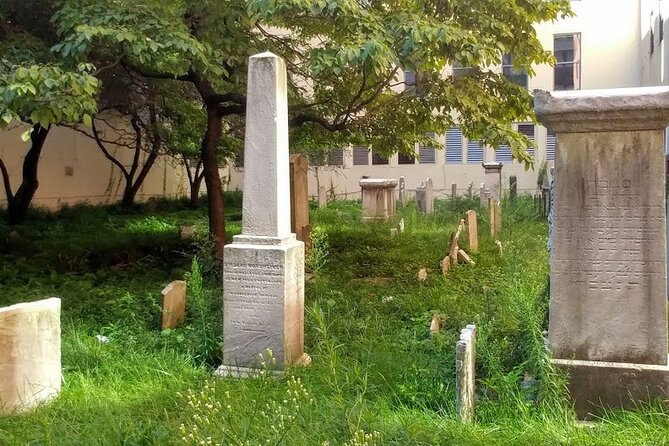
That old cemetery site is central to the tour’s purpose. Modern Manhattan gives little visual warning that land once served a very different function. A street corner can preserve a memory even when the original cemetery no longer looks like a cemetery. This is the sort of detail you are likely to miss when walking quickly between Wall Street and the waterfront.
The route continues to Trinity Church and St. Paul’s Chapel. Both are familiar landmarks, but the tour places them inside a story about death, worship, burial, and public memory. You will see how religious buildings fit into a city where valuable land was always under pressure.
The section also includes the 9/11 Memorial North Pool. This is a modern memorial space, and its inclusion gives the walk a wider time span. The subject is not limited to colonial-era burial grounds or early New York. It also considers how the city remembers people after a major modern tragedy.
You then pass St. Peter’s Roman Catholic Church before leaving the Financial District. This part of the route is listed as about 30 minutes, although the number of stops means the actual pace may feel purposeful. You should be ready to keep moving while listening, rather than spending a long time inside each location.
Civic Center and the African Burial Ground

The Civic Center section continues the connection between public power and the treatment of the dead. Stops include City Hall Park, Surrogate’s Courthouse, the corner of Elk Street and Chambers Street, and the African Burial Ground National Monument.
The African Burial Ground National Monument is one of the most important places on the route. Its presence ensures that the tour’s subject is not only about prominent churches or established civic institutions. It also points toward the lives and deaths of Africans and people of African descent whose burial ground was later covered by the expanding city.
City Hall Park adds another layer. It is public space beside major government buildings, and the tour uses this setting to consider how civic life and death have occupied the same small part of Manhattan. The Surrogate’s Courthouse is especially relevant to the legal side of death, since surrogate courts deal with matters connected to estates and inheritance.
The route also passes the David N. Dinkins Manhattan Municipal Building at 1 Center Street and the Metropolitan Correctional Center at 150 Park Row. These stops broaden the theme again. You move from burial and remembrance to municipal authority, courts, custody, and the institutions that manage difficult parts of city life.
This is one of the more thought-provoking sections, but it may also be the most serious. If you want only light sightseeing, the focus on death, incarceration, and historical inequality may feel weighty. If you value context, these stops help explain why Lower Manhattan cannot be understood through architecture alone.
Another side of New York City for the same day:
- New York City: Statue of Liberty & Ellis Island with Ferry
★ 4.6 · 18,683 reviews - New York City: American Museum of Natural History Ticket
★ 4.5 · 15,447 reviews - Statue of Liberty and Ellis Island Tour: All Options
★ 5.0 · 13,571 reviews - New York in One Day Guided Sightseeing Tour
★ 5.0 · 13,166 reviews
Chinatown’s Funeral Row on Mulberry Street
From the Civic Center, the route moves into Chinatown and reaches Funeral Row on Mulberry Street. This is one of the tour’s most distinctive stops because it connects the subject to a living commercial street rather than only to monuments and historic markers.
The focus here is the funeral trade and the role of undertakers. You will see how death has long required practical services, from preparing bodies to arranging ceremonies and helping families manage loss. That makes the tour feel grounded in daily life. Death is not treated only as an abstract historical event. It is also an industry, a family matter, and a neighborhood concern.
Mulberry Street is a useful place for this discussion because the surrounding area carries layers of immigrant and commercial history. The tour does not simply point out old buildings. It asks you to consider how a neighborhood serves its residents at every stage of life.
The Chinatown portion is scheduled for about 30 minutes. Since the tour ends nearby, this is also a convenient place to continue exploring on your own, though the supplied route ends at Chatham Square rather than returning you to Battery Park.
Chatham Square and the final stop
The last section takes you to Chatham Square in the Two Bridges area. This is the endpoint, not a return to the starting point, so keep your plans flexible after the walk.
Chatham Square makes sense as a finish because it sits at a meeting point between Chinatown, the Civic Center, and the Lower East Side. By the end, you have crossed several parts of Lower Manhattan and seen how burial places, religious sites, government buildings, memorials, and funeral businesses sit close together.
The itinerary assigns about 30 minutes to Two Bridges. Taken together, the listed sections account for about two and a half hours, while the full experience is approximately 2 hours 45 minutes. The extra time allows for movement between stops and the guide’s storytelling.
This is not a tour where you simply collect photographs. The walk is the point. You see the city at street level, notice addresses and corners, and move through areas that can blur together when visited separately.
What $44 buys you
The price is $44 per person. Since admission tickets are listed as free at the stops, the fee goes mainly toward the guided experience, route planning, and K. Krombie’s interpretation.
I consider that a fair price if you enjoy focused walking tours and want something more specific than a general Lower Manhattan introduction. You are getting nearly three hours with a guide, a maximum group of 15, and a route that covers a substantial stretch of the city.
The value is less clear if you planned to visit the same landmarks independently. You can walk through Battery Park, view the Statue of Liberty, pass Trinity Church, and see the 9/11 Memorial without paying for entry to this tour. What you cannot easily reproduce on your own is the connection between those places and the less obvious sites tied to burials, executions, and the funeral trade.
The small group matters here. A tour built around stories and specific street corners works better when you can hear the guide clearly. It also gives you a better chance to ask K. Krombie about a detail that catches your attention.
Timing, pace, and practical planning
The tour starts at 11:00 a.m. and runs in daylight, which is useful for identifying buildings, memorial spaces, and street locations. The experience is offered in English, and confirmation is provided when you book.
Wear comfortable shoes. That is practical advice for any 2-hour-45-minute walking route, especially one crossing Battery Park, the Financial District, Civic Center, Chinatown, and Two Bridges. You should also plan around the fact that the tour ends at Chatham Square, not at Whitehall Terminal.
The experience is near public transportation, and service animals are allowed. Most people can participate, but the route is still a city walk, so consider your own comfort with spending close to three hours on foot.
The group size is capped at 15 people. That is large enough for a social outing but small enough to preserve the guide-led feel. If you are visiting New York alone, this can be an easy way to join a compact group. Krombie’s friendly and humorous manner, along with the extra facts added during the walk, should suit you if you like history delivered in a conversational style.
Free cancellation is available up to 24 hours before the start time for a full refund. Changes or cancellations made less than 24 hours ahead are not accepted for a refund, and the cut-off follows New York local time.
Who will enjoy this unusual Lower Manhattan walk
I would choose this tour if you have already seen the headline sights and want a new way to read the city. It is also a good fit if you like urban history, cemetery history, religious buildings, memorials, or the practical side of how communities handle death.
Solo visitors can benefit from the compact format and the guide’s personal storytelling. The tour also suits curious first-time visitors who want to see major landmarks while learning about places that are easy to overlook.
I would think twice if you dislike serious subjects. Executions, burials, prisons, and funeral businesses are not background decoration here. They are the central theme.
Families should also decide based on the ages and interests of the children in their group. The data confirms that most people can participate, but it does not give a recommended minimum age or describe a child-specific format.
Should you book Death in New York?
Book it if you want a street-level history lesson with a clear theme and a route through several distinct parts of Lower Manhattan. The strongest reasons are K. Krombie’s author-led storytelling, the unusual focus on burials and undertakers, and the chance to connect famous places with lesser-known sites.
Skip it if your priority is a short, relaxed sightseeing loop, a ride between landmarks, or a tour with plenty of indoor time. At $44, the cost makes sense when you value interpretation and a carefully built route. It makes less sense if you only want access to places you could view freely on your own.
For the right visitor, this is a memorable way to see New York. You finish at Chatham Square with a better sense of how the city has buried, mourned, punished, remembered, and rebuilt itself.
FAQ
How much does the Death in New York tour cost?
The tour costs $44 per person.
How long does the walking tour last?
The experience lasts approximately 2 hours and 45 minutes.
What time does the tour start?
The tour starts at 11:00 a.m.
Where does the tour begin?
The meeting point is Whitehall Terminal, 4 Whitehall Street, New York, near South Ferry and Whitehall Street station.
Where does the tour end?
The tour ends at Chatham Square in Chinatown.
Who leads the tour?
The tour is led by author K. Krombie.
What language is the tour offered in?
The tour is offered in English.
How large is the group?
The tour has a maximum of 15 people.
Just listed around New York City
- NYC: Little Shop of Horrors Off-Broadway Ticket5 reviews
- Private NYC Airport Transfer: LGA to Manhattan – Up to 5★ 3.6 · 5 reviews
- New York City Tour in German★ 4.5 · 5 reviews
- New York: Hamilton and Washington Revolutionary Walking Tour★ 5.0 · 5 reviews
- NYC Freedom Tower Private Photo or Video Experience★ 4.0 · 6 reviews
- New York Afternoon Fall Foliage Cruise with Lunch★ 5.0 · 6 reviews
- Brooklyn Walking Tours by Locals: Private & 100% Personalized★ 4.0 · 6 reviews
- Southold Bay Oyster Farm Tour★ 5.0 · 6 reviews
Tours, compared.
Statue of Liberty and Ellis Island Tour: All Options
Read our review →




9/11 Memorial, Ground Zero Tour with Optional 9/11 Museum Ticket
Read our review →
Hop-on Hop-off Sightseeing Tour by Open-top Bus
Read our review →