
Reviewed · WALKING TOURS
Fabulous Hells Kitchen Walking Tour
Hell’s Kitchen is best understood on foot, block by block, where old row houses, theaters, churches, community centers, and newer apartment towers sit close together. This tour uses that changing streetscape to tell a lively story, from immigrant workers and neighborhood gangs to gay nightlife and the arts. Brian, known as BFAB, guides the walk with personal knowledge gained from living in the area for more than a decade.
I like the small group limit of 12, which gives the tour a personal feel, and I like the unusual mix of serious history and playful activities. You might be answering a quiz question one minute and learning to clack a folding fan the next. The main drawback is simple: this is a 2.5-hour walk with periods of standing, so it is not a good pick if long walks are difficult for you.
In This Review
- Key points about the Hell’s Kitchen walk
- Starting at 401 West 42nd Street
- How Hell’s Kitchen got its rough reputation
- Old Hell’s Kitchen at the German Church and Hartley House
- Manhattan Plaza and a neighborhood in transition
- The Westside Theater and church-to-theater history
- LGBTQ+ history, nightlife, and local organizations
- Quiz questions, fan clacking, and a bakery stop
- What the $69 price includes
- Ending at FLEX on West 51st Street
- Who will get the most from this tour
- Should you book the Fabulous Hells Kitchen Walking Tour?
- FAQ
- How long is the Fabulous Hells Kitchen Walking Tour?
- Where does the tour begin?
- Where does the tour end?
- What is included in the tour price?
- Are food and drinks included?
- Can I cancel for a full refund?
Key points about the Hell’s Kitchen walk
- Fifteen stops in 2.5 hours: The route covers a broad slice of Hell’s Kitchen without trying to turn every building into a lecture.
- Brian’s local perspective: BFAB brings more than a standard neighborhood script, with personal insight into the area’s changing identity.
- LGBTQ+ history takes center stage: The tour connects Hell’s Kitchen’s gay past and present with local organizations, nightlife, and community life.
- Old buildings still in view: You see late-1800s row houses, tenement-style buildings, the German Church, and Hartley House.
- Playful activities keep you involved: A quiz with a prize and a fan-clacking tutorial add a light touch to the historical walk.
- Useful extras are included: Photo-taking help, neighborhood advice, sunscreen, and an iPhone charging bank are available.
Starting at 401 West 42nd Street
The tour begins at 2:30 p.m. near 401 West 42nd Street. That location puts you close to the eastern side of Hell’s Kitchen and near major public transportation, making it a practical starting point if you are already in Midtown.
Arrive ready to walk rather than dressed for a formal sightseeing bus. The route covers about 1.6 miles according to the tour details, but the real demand comes from being on your feet for roughly two and a half hours. Wear comfortable shoes, bring water, and consider sunscreen even though the guide carries some for anyone who forgets.
The small group format matters here. Hell’s Kitchen streets can be busy, and a group of 12 is easier to keep together than a large crowd. You should also have a better chance to hear Brian’s stories and take part in the quiz without feeling lost in the back row.
The tour includes photo-taking service, so you can ask for help capturing your group or particular moments along the route. That is a modest extra, but useful if you are traveling alone or want everyone in the picture.
More New York City walking tours:
- SoHo, Little Italy, and Chinatown Walking Tour in New York
★ 5.0 · 3,153 reviews - Secrets of Grand Central Station Walking Tour New York City
★ 5.0 · 1,796 reviews - Greenwich Village Walking and Food Tasting Tour
★ 5.0 · 1,572 reviews
How Hell’s Kitchen got its rough reputation
Hell’s Kitchen was once associated with working-class immigrant life, crowded housing, street gangs, and hard conditions. The neighborhood’s name has several explanations in popular history, and this tour addresses the origin as part of its opening story.
Brian’s approach connects large events to ordinary street life. Instead of treating the district as a collection of old facades, he explains how people lived here, how gangs shaped its reputation, and how the area later changed. You hear stories that can be colorful, grim, or both.
The tour also looks at Hell’s Kitchen as a place that refused to remain fixed in one identity. Its past includes immigrant families and working people. Its later chapters include artists, theaters, LGBTQ+ residents, nightlife, and community groups. That shift is one of the most useful reasons to take the walk. You see how New York neighborhoods change while older traces remain in place.
Some of the stories involve murders and other difficult episodes. That may appeal to anyone who likes the less polished side of city history, but it is worth knowing that the tone is not purely light or architectural. The humor and games soften the presentation without erasing the neighborhood’s harder past.
Old Hell’s Kitchen at the German Church and Hartley House
The route includes some of the oldest surviving buildings in the area, including the German Church and Hartley House. These stops help you picture a period when Hell’s Kitchen was made up of close-knit immigrant communities and modest homes rather than the high-rise district many people see today.
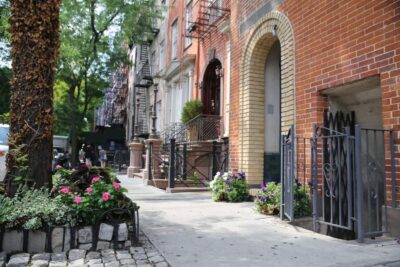
The late-1800s row houses and tenement-style buildings are especially valuable because they make the past visible at street level. You are not only hearing that the neighborhood once housed working families. You are looking at the building types that shaped daily life.
Hartley House adds a community-minded chapter to the story. The tour uses sites like this to show how local organizations helped form the neighborhood and leave a mark on its identity. That broader view keeps the walk from becoming only a tale of crime and nightlife.
One practical note: old buildings are often best appreciated from the sidewalk, not from inside. The appeal here is the connection between the structure, its setting, and Brian’s explanation. If you prefer museum interiors or elaborate displays, this tour offers a different kind of history lesson.
Manhattan Plaza and a neighborhood in transition
Manhattan Plaza is one of the key stops. Its presence reflects a later phase in Hell’s Kitchen’s development and gives the tour a way to discuss how the neighborhood changed from a rough working-class district into a more mixed and culturally active community.
The value of a stop like this is the contrast. Older tenements and row houses tell one story. Manhattan Plaza points to another, showing how housing and community life took new forms as Hell’s Kitchen evolved.
The tour does not treat change as automatically good or bad. You get a chance to consider what was gained, what was lost, and how different groups shaped the neighborhood at different times. That makes the walk more useful than a simple before-and-after account.
Because the tour visits 15 locations, some stops are likely brief. The goal is to build a connected picture of Hell’s Kitchen rather than spend half an hour at one landmark. If you want an in-depth architectural study of Manhattan Plaza alone, this is not that experience. If you want context for how the neighborhood fits together, it earns its place on the route.
Another side of New York City for the same day:
- NYC: SUMMIT One Vanderbilt Tickets
★ 4.7 · 51,195 reviews - NYC: 9/11 Memorial & Museum Timed-Entry Ticket
★ 4.8 · 31,428 reviews - NYC: Empire State Building Tickets – Observatory & Museum
★ 4.7 · 25,757 reviews - New York City: Statue of Liberty & Ellis Island with Ferry
★ 4.6 · 18,683 reviews
The Westside Theater and church-to-theater history
The Westside Theater is another notable stop. The tour explains the connection between a church building and its later use as a theater, a practical example of how New York structures gain new lives.
That kind of reuse is one of the most interesting parts of city walking. A building can carry traces of its earlier purpose while serving a new audience. Here, the story links religion, entertainment, architecture, and the neighborhood’s artistic growth.
You may find this especially useful if you are interested in theater but do not want a tour focused only on Broadway. Hell’s Kitchen’s stage history is tied to its wider social story, including the arrival of artists and the growth of gay nightlife.
The tour’s method is conversational rather than academic. Brian gives you the background needed to understand the site, then keeps moving. This works well for a first look at Hell’s Kitchen, though anyone seeking dates, architectural drawings, or a formal theater history may want a separate specialist tour.
LGBTQ+ history, nightlife, and local organizations
The LGBTQ+ history is a central reason to choose this walk. Hell’s Kitchen has long been connected with gay life in New York, and the tour looks at both its past and present.
Brian brings attention to gay nightlife, community organizations, and the people who helped shape the area’s identity. This gives you a fuller picture than the old gangster stories alone. Hell’s Kitchen was not simply a dangerous district that later became fashionable. It also became a place where different communities built social networks, creative spaces, and a public presence.
I appreciate that the tour puts LGBTQ+ history into the main route rather than treating it as a small footnote. It helps explain why the neighborhood feels culturally distinct today and why certain venues, streets, and institutions matter.
The subject is presented alongside other chapters of Hell’s Kitchen life. You hear about gangs, immigrant communities, theater, and redevelopment in the same walk. That mix is useful because neighborhoods are never just one thing. If you want a tour devoted exclusively to LGBTQ+ landmarks, you may need a more specialized option. For a broad neighborhood tour with a strong LGBTQ+ focus, this format makes sense.
Quiz questions, fan clacking, and a bakery stop
The interactive quiz is a smart touch. History walks can become passive, especially when you are standing on a sidewalk and trying to remember names and dates. The quiz gives you a reason to listen and a chance to test what you have picked up along the way.
There is a prize for the winner, which adds a little competition without turning the tour into a classroom. You do not need special knowledge before arriving. The questions are tied to what you learn during the walk.
The fan-clacking tutorial is even more unexpected. It brings a bit of performance and personality into a tour that also deals with murder, gang history, and social change. You learn how to clack a folding fan properly, an activity that fits the tour’s playful connection to LGBTQ+ culture.
A bakery stop is also part of the experience described by the tour details. Food is not included, so think of this as a pause or local flavor rather than a meal. You should eat before or after the walk and carry your own water and snacks. The guide does not provide bottled water, meals, or snacks.
These details matter because they show what sort of afternoon this is. You are not signing up for a silent march from landmark to landmark. You are taking part in a social walk where conversation, humor, and participation matter as much as the buildings.
What the $69 price includes
At $69, the tour is priced above a basic self-guided walk but below many private New York experiences. The value depends on how much you want from a guide.
You are paying for about 2.5 hours, a licensed local guide, a small group capped at 12, and a route with 15 stops. You also receive photo-taking help, a quiz with a prize, the fan-clacking tutorial, local recommendations, sunscreen access, and an iPhone charging bank.
The strongest value is Brian’s personal connection to the neighborhood. Hell’s Kitchen is easy to walk through without understanding what you are seeing. A good local guide turns ordinary-looking streets into evidence of earlier communities and changing city life.
The price does not cover food, drinks, or public transportation. The listed transportation cost is $5.80 per person, so add that if you need it. Bring water, and eat before or after the tour. Those are small expenses, but planning for them keeps the afternoon comfortable.
For a first visit to Hell’s Kitchen, I think the price is reasonable if you enjoy guided storytelling and group interaction. It is less attractive if you prefer to wander alone, stop for long meals, or spend most of your time inside museums.
Ending at FLEX on West 51st Street
The walk ends at FLEX bar at 405 West 51st Street. That gives you an immediate option to continue exploring Hell’s Kitchen on your own, but your return to the hotel is not arranged.
The ending point also fits the tour’s focus on the neighborhood’s gay past and present. You can finish with a drink or continue elsewhere, but any food, drinks, or onward transportation are your responsibility.
Because the route ends several blocks north of the starting point, plan your next move before you arrive. The end point is near public transportation, and you can arrange your own trip back to your hotel. If you have an evening reservation, leave enough time for the walk to finish and for the journey onward.
Who will get the most from this tour
I would choose this walk if you want to understand Hell’s Kitchen beyond its restaurants and theater marquees. It suits first-time visitors who want a neighborhood introduction, as well as New Yorkers who have passed through the area without knowing its story.
It is a particularly good fit for you if you enjoy:
- Local stories instead of a formal lecture
- LGBTQ+ history connected to a wider neighborhood story
- Old buildings and changing city streets
- A small group with chances to ask questions
- Playful activities mixed with serious history
- A moderate walk of roughly 1.6 miles
You should think twice if standing for long periods is hard, if hot or poor weather causes problems, or if you want a food tour with included tastings. The tour requires good weather and may be canceled if conditions are poor. In that case, you can choose another date or receive a full refund.
Service animals are allowed. Confirmation is provided at booking, and free cancellation is available until 24 hours before the 2:30 p.m. start time. Changes or cancellations inside that window are not refunded.
Should you book the Fabulous Hells Kitchen Walking Tour?
Book it if you want a lively introduction to Hell’s Kitchen led by someone who has made the neighborhood his home. Brian, or BFAB, brings together gang stories, old buildings, theater, community groups, LGBTQ+ life, and neighborhood change without making the walk feel like a dry history class.
The best reasons to go are the small group, the personal guide, and the unusual activities. The quiz and fan-clacking lesson may sound silly on paper, but they give the afternoon a social spark. The walk also covers enough ground to help you understand how several different versions of Hell’s Kitchen exist side by side.
Skip it if you want a quiet architectural survey, a meal-based tour, or a short stroll with little standing. For everyone else, $69 buys a useful look at one of Manhattan’s most layered neighborhoods, with enough humor and local detail to make the streets easier to read afterward.
FAQ
How long is the Fabulous Hells Kitchen Walking Tour?
The tour lasts approximately 2 hours and 30 minutes.
Where does the tour begin?
It starts at 401 West 42nd Street in New York City.
Where does the tour end?
The tour ends at FLEX bar at 405 West 51st Street. You arrange your own transportation afterward.
What is included in the tour price?
The price includes a licensed local guide, photo-taking service, an interactive quiz with a prize, a fan-clacking tutorial, local tips, sunscreen carried by the guide, and an iPhone mobile charging bank.
Are food and drinks included?
No. You must bring your own water or another drink. Meals and snacks are not included, so eat before or after the tour and bring snacks if needed.
Can I cancel for a full refund?
Yes. You can cancel at least 24 hours before the start time for a full refund. Cancellations or changes made less than 24 hours before the tour are not refunded.
Just listed around New York City
- Gypsy starring Audra McDonald on Broadway Ticket★ 4.0 · 4 reviews
- 3 Days – Niagara Falls & 1000 Islands Cruise★ 5.0 · 4 reviews
- Christmas in New York: Skip-the-Line Holiday Lights Tour★ 4.7 · 4 reviews
- Central Park Pedicab Guided Tours with Theater★ 5.0 · 4 reviews
- Full-Day Sightseeing Tour in New York City★ 4.5 · 4 reviews
- Private Marvelous Mrs. Maisel Sites Guided Tour★ 5.0 · 4 reviews
- New York City or Brooklyn: Photoshoot in Iconic Locations★ 4.0 · 4 reviews
- Private Transfer from Newark L Airport EWR to Manhattan by SUV★ 4.0 · 4 reviews
Walking Tours, compared.
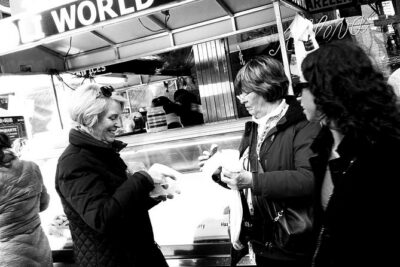
SoHo, Little Italy, and Chinatown Walking Tour in New York
Read our review →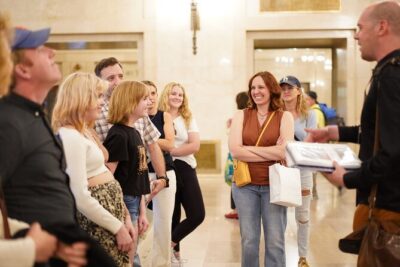
Secrets of Grand Central Station Walking Tour New York City
Read our review →
Greenwich Village Walking and Food Tasting Tour
Read our review →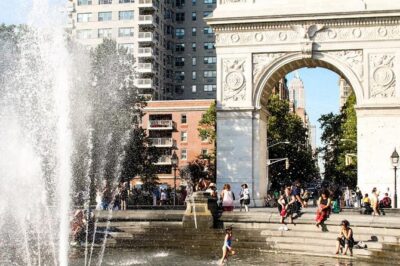
Artistic, Alternative Greenwich Village Walking Tour
Read our review →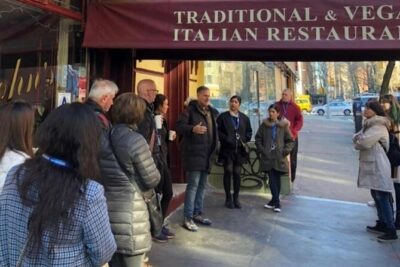
True Crime NYC: Mafia Walk w/Ret. NYPD Detective and Local Food
Read our review →
Browse the lists this tour appears in