
Reviewed · WALKING TOURS
Fifth Avenue Gilded Age Mansions Walking Tour
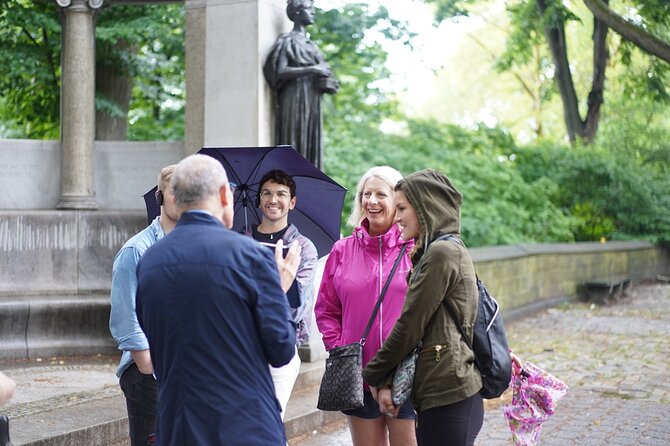
New York’s Fifth Avenue once ran past a parade of millionaire mansions, and this walk helps you see the grand avenue as it looked during the Gilded Age. You’ll hear about the families who built these homes, the architects who shaped the Upper East Side, and the social rules behind all that stone and polish.
I like the small maximum group of 17, which makes it easier to ask questions and keep close to the guide. I also like the earpieces, especially on a city sidewalk where traffic and crowds can swallow a soft voice. The main drawback is clear: this is mostly an exterior walking tour, not a mansion-interior tour.
I love how the route connects architecture with real people. Guides such as Bill Shaffer, Richard, AJ, Rose, Hazel, Katie, and Ben have been praised for clear explanations, old photographs, quirky details, and stories that make the addresses easier to remember. Bring comfortable shoes and dress for the forecast. Two hours in a cold wind can feel much longer than two hours on paper.
In This Review
- Key points to know before you book
- What this Fifth Avenue walk is really about
- Starting at Doris C. Freedman Plaza
- Fifth Avenue and Central Park
- The Arsenal and Central Park Zoo
- Temple Emanu-El on Fifth Avenue
- The Frick Collection and East 70th Street
- Albertine and the social side of the avenue
- The Metropolitan Museum of Art
- Bergdorf Goodman and modern Fifth Avenue
- Ukrainian Institute of America and the finish
- The guides are the heart of the experience
- Price, pace, weather, and practical value
- Who should book this walk
- Should you book the Fifth Avenue Gilded Age Mansions Walking Tour?
- FAQ
- How long does the tour last?
- How much does the tour cost?
- Where does the tour start?
- Where does the tour end?
- Is the tour offered in English?
- Are earpieces included?
- How large is the group?
- Does the tour go inside the mansions?
- Is the tour connected to The Gilded Age television series?
- Can I cancel for a full refund?
Key points to know before you book
- You walk about two miles: The route moves from Doris C. Freedman Plaza toward the Upper East Side at a moderate pace.
- The focus is the street itself: Most stories are told outside mansions, museums, churches, clubs, and shops.
- The group is capped at 17: That is a useful size for a city walking tour and should help you stay connected to the guide.
- Earpieces are included: You can hear the guide while standing a short distance away, though one person had trouble keeping the earpiece in place.
- The guides make the difference: Bill, Richard, AJ, Rose, Hazel, Katie, and Ben are among the guides singled out for lively, well-paced talks.
- The Gilded Age TV connection is secondary: Some guides tie the series to the walk, but the tour is chiefly about New York history from roughly 1870 to 1930.
What this Fifth Avenue walk is really about
The tour is not a parade of open-house interiors. It is a street-level lesson in how New York’s richest families reshaped Fifth Avenue and the blocks beside Central Park.
That distinction matters. From a sidewalk, you can study façades, setbacks, church towers, park views, and the changing use of old buildings. You also get a sense of scale. A mansion may look elegant in a photograph, but seeing its former address beside modern Fifth Avenue makes the old concentration of wealth easier to grasp.
The guide fills in what the buildings cannot tell you on their own. Expect stories about former residents, family fortunes, business interests, social ambition, and the way New York changed between the late 1800s and early 1900s.
The tour is led by a local New Yorker, and that local angle is useful. Guides have added stories from their own lives in the city, along with historic photographs and small details that are unlikely to appear on a standard sightseeing route.
More New York City walking tours:
- SoHo, Little Italy, and Chinatown Walking Tour in New York
★ 5.0 · 3,153 reviews - Secrets of Grand Central Station Walking Tour New York City
★ 5.0 · 1,796 reviews - Greenwich Village Walking and Food Tasting Tour
★ 5.0 · 1,572 reviews
Starting at Doris C. Freedman Plaza
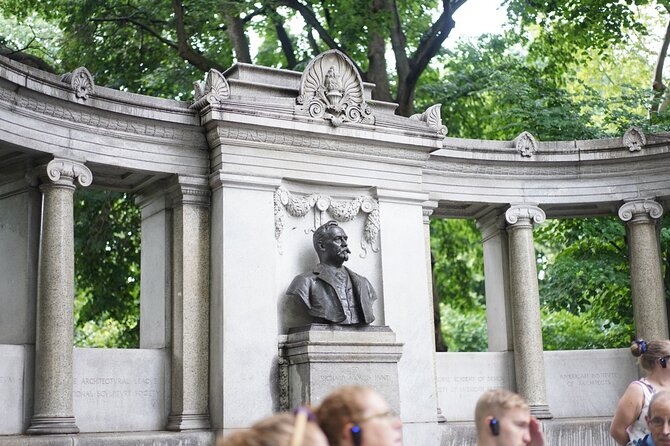
The walk begins at 764 Doris C. Freedman Place, near Fifth Avenue and Central Park. This is a sensible starting point because the park provides an immediate reference point: the route is about the avenue on one side of Central Park and the elite neighborhood that grew around it.
Give yourself time to find the meeting spot. The starting area can attract more than one walking group, and there is no dedicated tour sign mentioned in the provided details. Arriving early should save you from circling the plaza and asking other groups where they are headed.
Once the guide has gathered everyone, you receive an earpiece. This is more than a small extra. On Fifth Avenue, you may be standing near traffic, buses, pedestrians, and other tour groups. The earpiece lets you look up at a building while still following the explanation.
One caution: an earpiece did not work perfectly for everyone. If yours slips, tell the guide right away rather than spending the tour adjusting it.
Fifth Avenue and Central Park
The opening stretch presents Fifth Avenue as Millionaire’s Row, the famous line of grand homes that once bordered Central Park. The guide explains how the avenue looked in the Gilded Age, when immense private houses announced their owners’ wealth and social rank.
This is where the tour’s central idea comes into focus. New York’s wealthy did not simply buy apartments or land. They built public-facing statements in stone, placing their homes beside the city’s major park and along one of its most important avenues.
The first Fifth Avenue segment lasts about 20 minutes, followed by about 10 minutes at Central Park. The park is not just scenery here. It helps explain why the avenue became so desirable. A fashionable address with an open green view was a powerful selling point in a city growing denser by the year.
You may find the route especially useful if you already walk Fifth Avenue but usually pay attention only to shops and museums. The guide gives you a reason to stop and look above street level.
The Arsenal and Central Park Zoo
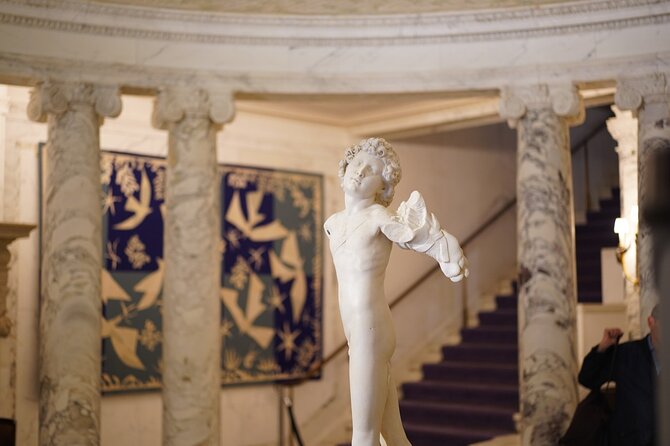
The Arsenal, at 830 Fifth Avenue, is one of the early stops. The building sits near the park and adds a different layer to the walk. Instead of focusing only on private mansions, the guide places the avenue within the larger civic story of Central Park.
The nearby Central Park Zoo, on East 64th Street, follows as another brief stop. Each of these stops is listed at about 10 minutes, so do not expect a long visit inside. The value comes from hearing how the park, its institutions, and the surrounding avenues developed together.
This portion also gives you a change of visual rhythm. You move from private wealth to public New York, from mansion façades to park buildings and civic spaces. That contrast helps explain why the Upper East Side became more than a row of wealthy homes.
Another side of New York City for the same day:
- NYC: SUMMIT One Vanderbilt Tickets
★ 4.7 · 51,195 reviews - NYC: 9/11 Memorial & Museum Timed-Entry Ticket
★ 4.8 · 31,428 reviews - NYC: Empire State Building Tickets – Observatory & Museum
★ 4.7 · 25,757 reviews - New York City: Statue of Liberty & Ellis Island with Ferry
★ 4.6 · 18,683 reviews
Temple Emanu-El on Fifth Avenue
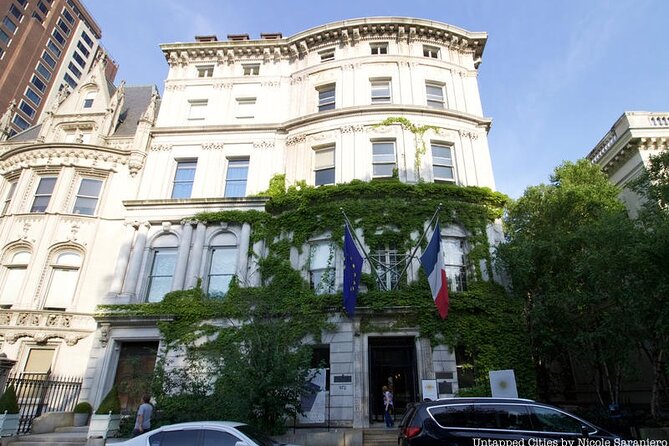
Temple Emanu-El, at 1 East 65th Street, brings religious and cultural life into the story. Its prominent location shows how major institutions claimed space along this prestigious stretch of Fifth Avenue.
The guide’s job here is to connect the building’s appearance and address with the people who could afford to build and maintain such institutions. You are not simply checking off a landmark. You are learning how wealth, faith, status, and public identity overlapped in old New York.
The stop is brief, so keep your attention on the guide rather than expecting an interior visit. The tour’s pattern is to pause outside, explain the setting, and move on before the city’s normal traffic and activity become too distracting.
The Frick Collection and East 70th Street
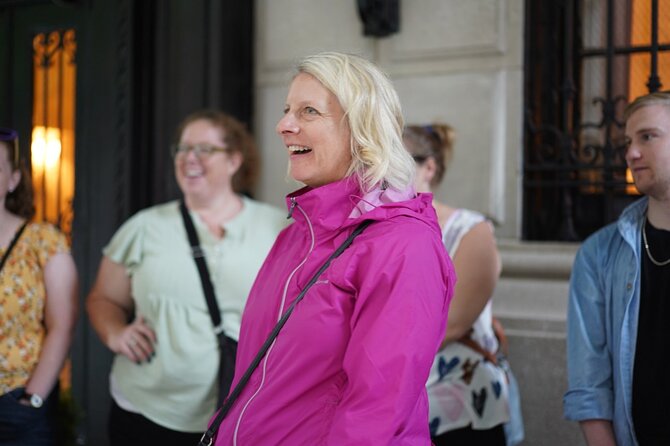
The Frick Collection at 1 East 70th Street is one of the most important addresses on the walk. It connects the Gilded Age to art collecting and to the preservation of elite residences and collections.
The building is a strong reminder that these families wanted more than comfortable homes. They also wanted paintings, decorative arts, grand rooms, and a lasting place in New York’s cultural life.
The tour does not function as a museum admission visit, so plan a separate visit if you want to see the collection inside. That limitation is also part of the tour’s value. You get the neighborhood context first, then you can return later with a better sense of why the address matters.
A guide may use photographs to show how a place looked in an earlier period. That is especially helpful on Fifth Avenue, where modern changes can hide the old residential character.
Albertine and the social side of the avenue
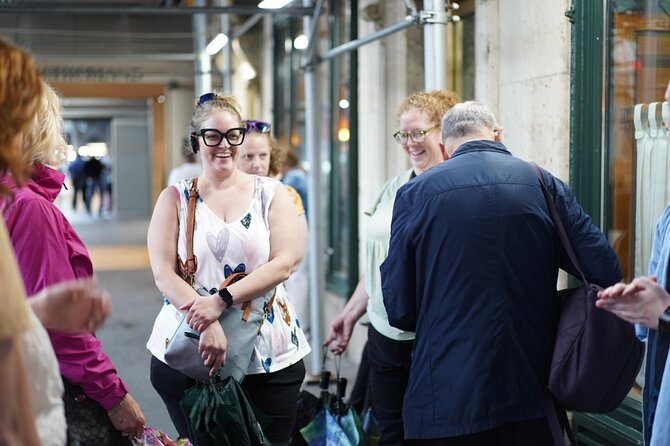
At 972 Fifth Avenue, Albertine adds a literary and cultural note to the route. The stop is another reminder that this stretch is not only about private mansions. It is also about institutions that give the avenue an ongoing cultural life.
The tour works best when you listen for connections between stops. One address may show private wealth, the next public culture, and the next religious or civic identity. Taken together, those stops create a clearer picture of how the Upper East Side developed.
This is also a good point to ask questions. The group size, capped at 17, should make it easier to speak with the guide without shouting across a crowd. Guides have been praised for answering questions and keeping large enough groups engaged for the full two hours.
The Metropolitan Museum of Art
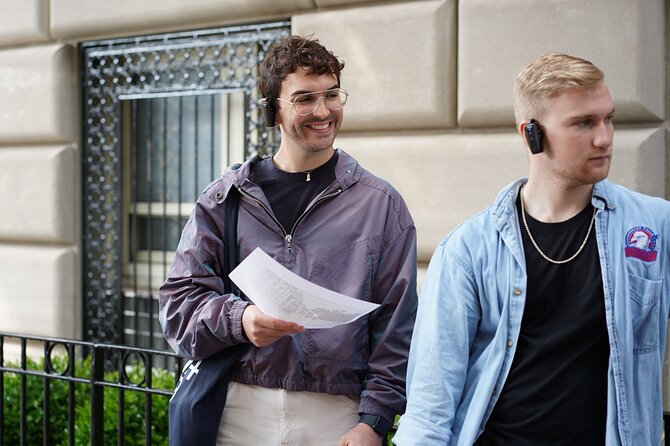
The Metropolitan Museum of Art at 1000 Fifth Avenue is the route’s grandest cultural landmark. The tour pauses outside for about 10 minutes, using the museum and its position beside Central Park to explain the city’s growing ambition.
The Met represents public display on a huge scale. The mansions nearby were private statements, but the museum turned wealth and collecting into a public institution. That shift is important to understanding New York around the turn of the 20th century.
You will not spend the stop touring the galleries. If you want museum time, schedule it separately. The walking tour is better used as a neighborhood introduction, especially if this is your first time exploring the Upper East Side.
After the museum, the route includes another Central Park stop. The repeated park reference is useful rather than redundant. It keeps reminding you that the park shaped the avenue’s value, views, traffic, and social life.
Bergdorf Goodman and modern Fifth Avenue
Bergdorf Goodman shows what happened after Fifth Avenue’s residential era began to fade. The avenue became a major retail address, and luxury shopping replaced many of the private homes that once lined the street.
This is one of the tour’s sharper contrasts. You can stand outside a modern department store and imagine a time when the same stretch was associated with private mansions, formal calling, servants, and tightly controlled social circles.
The stop also gives the guide a chance to connect old wealth with modern luxury. The names and buildings changed, but Fifth Avenue remained a place where New York displayed money and taste in public.
I find this kind of comparison more useful than treating the Gilded Age as a sealed-off past. The avenue is still doing some of the work it did then, just through different buildings and businesses.
Ukrainian Institute of America and the finish
The walk ends near the Ukrainian Institute of America at 2 East 79th Street, finishing at 975 Fifth Avenue. This final stretch brings the route into the Upper East Side and adds another cultural institution to the story.
The ending is well placed for continuing your day around Fifth Avenue, Central Park, or nearby museums. It also means the tour is not a loop, so think about your plans afterward. You will finish several blocks north of the starting point.
By the end, you have covered roughly two miles at a moderate pace. That is manageable for most people who are comfortable walking, but it is still a real city walk. Hazel, one of the guides praised for patience with slower walkers, shows why pacing matters. You should not need to race, but you should be ready to remain on your feet for most of the two hours.
The guides are the heart of the experience
The strongest part of this tour is the guide’s storytelling. Bill Shaffer has been praised for clear explanations, old photographs, careful group checks, and the ability to keep the tour fun in cold weather. Richard has been noted for his broad store of New York facts and for looking after the group’s pace.
AJ, Rose, Hazel, Katie, and Ben have also led tours that balanced facts with personal stories and small bits of unusual information. Those details matter because architecture alone can become a blur of façades. A story about a former resident or an odd social custom gives each address a hook.
The tour is also suitable for people who have not watched The Gilded Age television series. Some guides make a connection to the show, but one guide had limited knowledge of it, so you should not book this as a TV-location tour.
Instead, think of the series as an optional extra. The main subject is New York between about 1870 and 1930, with attention to architecture, wealth, families, and city life.
Price, pace, weather, and practical value
At $39 per person, the tour is reasonably priced for a two-hour guided walk with a local guide and earpiece. You are paying for interpretation, not entry tickets. The stops are free, and the tour does not promise extended indoor access to mansions or museums.
I think the price works best for you if you want context. Without a guide, you can walk Fifth Avenue for free, but you may miss why certain addresses matter and how the people connected. The tour turns a familiar avenue into a readable one.
The value drops if you want indoor exploration. The walk is mostly outside, and you should budget separate admission and time for places such as the Frick Collection or the Metropolitan Museum of Art.
Weather deserves real attention. A late afternoon in November can bring falling temperatures and stronger wind, and one tour took place in 28-degree weather. Wear layers, and bring a hat and gloves in cold months. Comfortable shoes are essential in every season.
The tour is offered in English and uses mobile tickets. Confirmation arrives when you book. Service animals are allowed, public transportation is nearby, and most people can participate. Free cancellation is available up to 24 hours before the start time, but changes or cancellations inside that window are not accepted.
Who should book this walk
I would choose this tour if you like architecture, urban history, old photographs, famous families, or the practical question of how New York became New York.
It is a particularly good fit for:
- First-time visitors who want more than the usual Midtown sights
- Returning visitors who have walked Fifth Avenue but never studied its old buildings
- History fans interested in the years from 1870 to 1930
- Architecture lovers who enjoy façades and city planning
- Fans of The Gilded Age who understand that the TV connection is only part of the experience
- Families and couples who can manage a two-hour walk
I would skip it if your main goal is to enter several mansions or spend most of the time indoors. I would also think twice if you dislike walking in cold, windy, or rainy weather.
Should you book the Fifth Avenue Gilded Age Mansions Walking Tour?
Book it if you want a well-priced, story-led walk that explains what you are seeing. The best guides turn grand addresses into human stories, and the small group and earpiece help you stay involved.
Do not book it expecting a mansion crawl with interior access. You will spend most of the tour outside, looking up, listening, and moving north along Fifth Avenue.
For the right reader, that is the point. The tour shows you an overlooked side of New York, where a shopping avenue, a park edge, a church, a museum, and a former mansion all tell parts of the same story.
FAQ
How long does the tour last?
The walking tour lasts approximately two hours.
How much does the tour cost?
The price is $39 per person.
Where does the tour start?
It starts at 764 Doris C. Freedman Place, New York, New York 10019.
Where does the tour end?
It ends at 975 Fifth Avenue, New York, New York 10075.
Is the tour offered in English?
Yes. The tour is offered in English.
Are earpieces included?
Yes. Earpieces are included so you can hear the guide from a short distance away.
How large is the group?
The maximum group size is 17 participants.
Does the tour go inside the mansions?
The tour is primarily an exterior walking tour. The supplied details indicate that only one Gilded Age mansion is entered, while most stops take place outside.
Is the tour connected to The Gilded Age television series?
Some guides connect the walk to the television series, but the main subject is New York history from roughly 1870 to 1930. The tour is not presented as a dedicated TV-location tour.
Can I cancel for a full refund?
Yes, if you cancel at least 24 hours before the experience start time. Cancellations or changes made less than 24 hours before the start time are not accepted for a refund.
Just listed around New York City
- NYC: Little Shop of Horrors Off-Broadway Ticket5 reviews
- Private NYC Airport Transfer: LGA to Manhattan – Up to 5★ 3.6 · 5 reviews
- New York City Tour in German★ 4.5 · 5 reviews
- NYC Freedom Tower Private Photo or Video Experience★ 4.0 · 6 reviews
- New York Afternoon Fall Foliage Cruise with Lunch★ 5.0 · 6 reviews
- New York: Hamilton and Washington Revolutionary Walking Tour★ 5.0 · 5 reviews
- Brooklyn Walking Tours by Locals: Private & 100% Personalized★ 4.0 · 6 reviews
- Southold Bay Oyster Farm Tour★ 5.0 · 6 reviews
Walking Tours, compared.
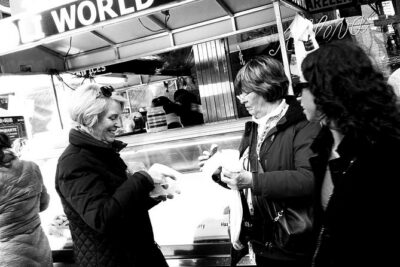
SoHo, Little Italy, and Chinatown Walking Tour in New York
Read our review →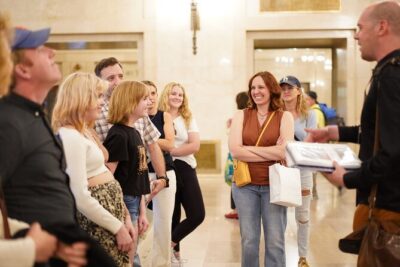
Secrets of Grand Central Station Walking Tour New York City
Read our review →
Greenwich Village Walking and Food Tasting Tour
Read our review →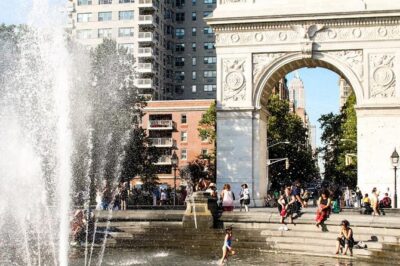
Artistic, Alternative Greenwich Village Walking Tour
Read our review →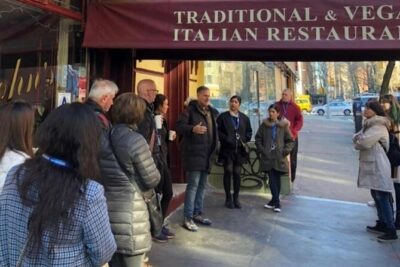
True Crime NYC: Mafia Walk w/Ret. NYPD Detective and Local Food
Read our review →

Browse the lists this tour appears in