Reviewed · TOURS
Financial Crisis Tour with a Finance Professional
The most interesting part of this tour is not the famous bull or the New York Stock Exchange facade. It is hearing how the 2008 financial crisis looked from people who had worked inside major banks and financial markets. On a two-hour walk through Lower Manhattan, you connect familiar buildings with the decisions, failures, and money-making schemes behind the collapse.
I like two things here. First, the guides explain hard subjects such as CDOs and CDWs in plain English, so you do not need a finance degree to follow along. Second, the route adds New York history, architecture, real estate, and even the story of Trinity Church, giving you a fuller introduction to the Financial District than a crisis lecture alone.
The main drawback is simple: this is an outdoor walking tour, and the New York Stock Exchange is not open to the public. If you expect to enter the exchange or spend much time indoors, you may feel shortchanged. The walk can also feel hurried at times, and $59 is a serious price for two hours.
In This Review
- Key points to know before booking
- Why this Wall Street walk is different
- Meeting at 22 Broad Street
- Wall Street and the companies behind the crisis
- Federal Hall and the American financial story
- The Charging Bull and the photo stop
- The New York Stock Exchange and the Federal Reserve
- What the guides do best
- Is two hours enough for the subject?
- The $59 price and overall value
- Practical tips for a comfortable walk
- Who should book the Financial Crisis Tour?
- FAQ
- How long is the Financial Crisis Tour?
- How much does the tour cost?
- Where does the tour begin?
- Where does the tour end?
- Does the tour enter the New York Stock Exchange?
- What language is the tour offered in?
- How much walking is involved?
- How large is the group?
- Is the tour suitable for most people?
- Can I cancel for a refund?
Key points to know before booking
- Former Wall Street professionals lead the walk: Past guides have included Emily, James, Jared, Ben, Jon, Tom, Mike, and Jonathan.
- The 2008 crash is the main subject: You hear about Lehman Brothers, Bear Stearns, bank failures, traders, and the Great Recession.
- The route mixes finance with New York history: Federal Hall, Trinity Church, Wall Street, the Charging Bull, and the Federal Reserve all help fill out the story.
- The Stock Exchange is viewed from outside: It has been closed to public visitors since 2001, so no interior visit is included.
- Expect moderate walking outdoors: The tour lasts about two hours, with a few chances to enter buildings.
- Small groups keep it personal: The maximum group size is 20, and some departures may be much smaller.
Why this Wall Street walk is different
Many Financial District walks focus on colonial New York, the founding of the national government, or a quick photograph with the Charging Bull. This one uses those sights as a setting for a more modern story: how Wall Street helped create, spread, and suffer through the financial crisis of 2008 and 2009.
That focus gives the tour a clear purpose. You are not simply moving from one landmark to the next. You are learning why certain firms mattered, how the collapse spread through the banking system, and why the crisis changed the financial world you still live in.
The guides bring different backgrounds and personalities. Emily has been praised for making complex subjects easy to understand. James has used personal experience and well-timed stops indoors to keep people comfortable in cold weather. Jared has led lively tours that worked for finance fans, first-time visitors, teenagers, and families.
Ben has offered a wider look at the district, including the present-day use of buildings and the history of Trinity Church. Jon has explained the causes of the crash with humor and straightforward examples. The exact guide depends on your departure, but the experience is built around a guide with finance-industry experience rather than a script read from a phone.
That difference matters. A former professional can explain the gap between what a building represents in public and how it functioned inside the financial system. You also have someone to ask when a term, company, or event is unclear.
Big New York City bookings that pair well with this one:
- NYC: SUMMIT One Vanderbilt Tickets
★ 4.7 · 51,195 reviews - NYC: 9/11 Memorial & Museum Timed-Entry Ticket
★ 4.8 · 31,428 reviews - NYC: Empire State Building Tickets – Observatory & Museum
★ 4.7 · 25,757 reviews
Meeting at 22 Broad Street
The tour begins at 22 Broad Street, in the Financial District. You should arrive ready to walk, since the route moves through narrow downtown streets and ends at 33 Liberty Street, near the Federal Reserve Bank.
This part of Manhattan is compact but busy with visual details. Tall office buildings, historic facades, security barriers, narrow lanes, and grand civic structures all sit close together. A guide helps turn that jumble into a story.
The group can include as many as 20 people. That is small enough for questions to be possible, though your experience will depend on the guide and the size of your particular departure. Some past tours have been intimate, including one family group that received what felt like a personal walk.
The tour is offered in English and uses a mobile ticket. Confirmation arrives at booking. Public transportation is nearby, and service animals are allowed. Most people can participate, but you should be comfortable with a moderate amount of walking.
Wall Street and the companies behind the crisis
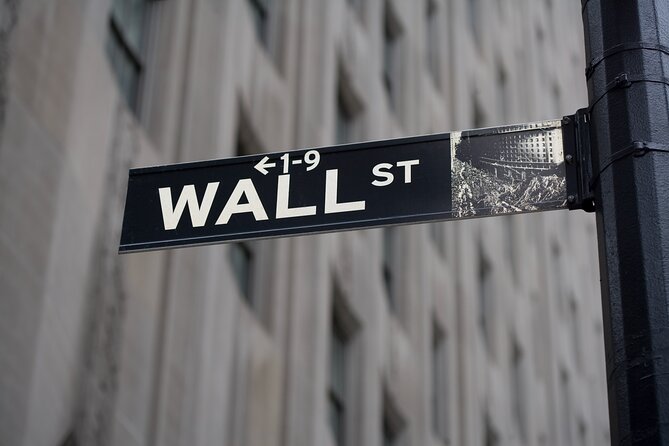
The first major portion of the route takes place around Wall Street and lasts about an hour. This is where the guide sets up the financial story and links it to the actual streets and buildings around you.
You learn about firms connected to the shake-up, including Lehman Brothers and Bear Stearns. The point is not simply to memorize which bank failed or was rescued. The guide explains how traders made huge sums, how banks became exposed to risky financial products, and how the collapse affected the wider economy.
The tour also connects with the story told in The Big Short. If you have seen the film or read Michael Lewis’s book, you will recognize some of the ideas. If you have not, the guide gives enough background to make the subject understandable.
This is the strongest part of the experience for anyone curious about the crisis but unsure where to begin. Financial news often assumes you already know the difference between a bank, a mortgage-backed security, a CDO, and a credit default swap. Here, those subjects are broken into manageable pieces.
The best guides keep the discussion moving through questions and conversation instead of delivering a long speech. That approach helps a mixed group. A finance professional, a high school student, and someone who simply wants to understand the news can all take something useful from the same explanation.
There is also room for a wider story. The tour can cover the origins of the stock exchange and bond market, past market crashes, the financial history of New York, and the role of buildings in the district today. If you want only the 2008 crisis, this broader material may feel like a detour. I see it as a useful tradeoff because it shows that Wall Street has gone through repeated cycles, not just one isolated disaster.
Federal Hall and the American financial story
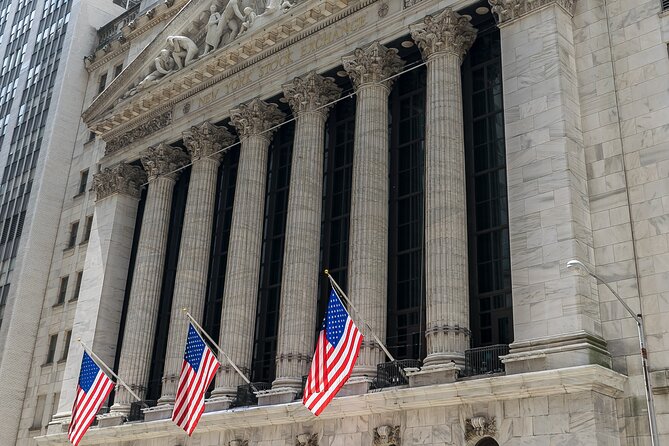
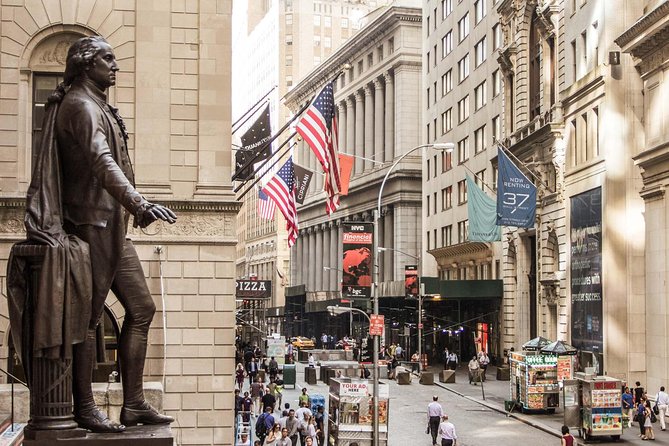
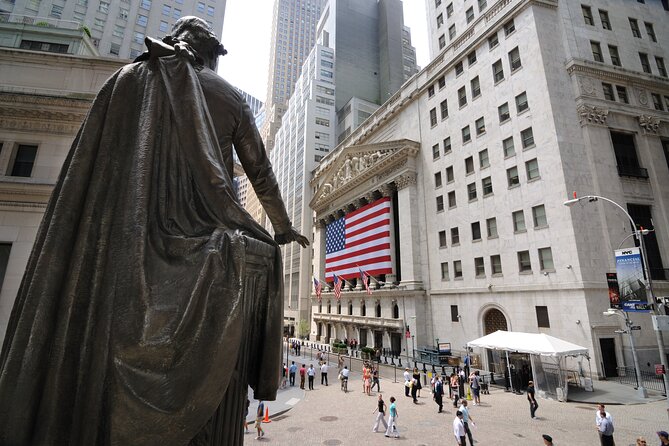
The route includes Federal Hall, where George Washington became president. This stop shifts the subject from modern banking to the birth of the United States and its early financial institutions.
That historical link is valuable. Wall Street is not just a cluster of banks and trading firms. It grew alongside the new nation, its government, its debt, and its markets. Federal Hall gives the guide a place to explain how political power and financial power developed side by side.
The stop lasts about 20 minutes. It is one of the places where you may have a chance to go inside a building, although the experience is mostly outdoors. The exact access and flow can vary, so do not book this expecting a long museum visit.
Families can get a lot from this section. One past tour worked well for teenagers because the guide connected school lessons in American history with the streets in front of them. That is a good sign for parents who want an educational activity that does not feel like a classroom lecture.
Another side of New York City for the same day:
- New York City: Statue of Liberty & Ellis Island with Ferry
★ 4.6 · 18,683 reviews - New York City: American Museum of Natural History Ticket
★ 4.5 · 15,447 reviews - Statue of Liberty and Ellis Island Tour: All Options
★ 5.0 · 13,571 reviews - New York in One Day Guided Sightseeing Tour
★ 5.0 · 13,166 reviews
The Charging Bull and the photo stop
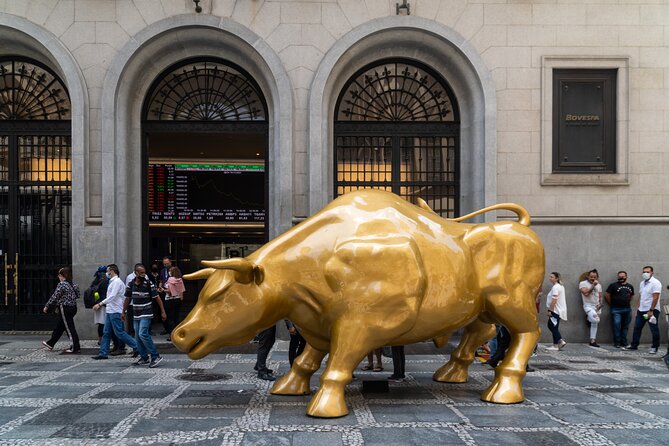
The Charging Bull is a brief stop of about 15 minutes. You will have time to pose for a photo and hear why the sculpture has become such a familiar symbol of financial confidence, risk, and market power.
This is the lightest part of the tour. The bull is popular, and the area around it can be crowded, so do not expect a quiet, thoughtful encounter with the sculpture. Its value comes from fitting the larger story. After discussing greed, fear, bank failures, and market swings, you see a public symbol of the optimism that often drives financial speculation.
The stop also gives the group a change of pace. Two hours of financial vocabulary can be a lot, particularly for children or companions who are not interested in markets. A quick photo opportunity keeps the route from becoming too serious.
The New York Stock Exchange and the Federal Reserve
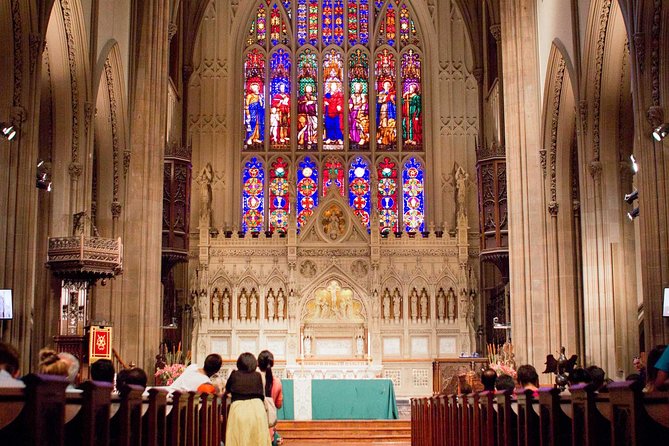
The tour takes you past the New York Stock Exchange and toward the Federal Reserve Bank. These are essential sights for understanding how Lower Manhattan’s financial identity is presented to the public.
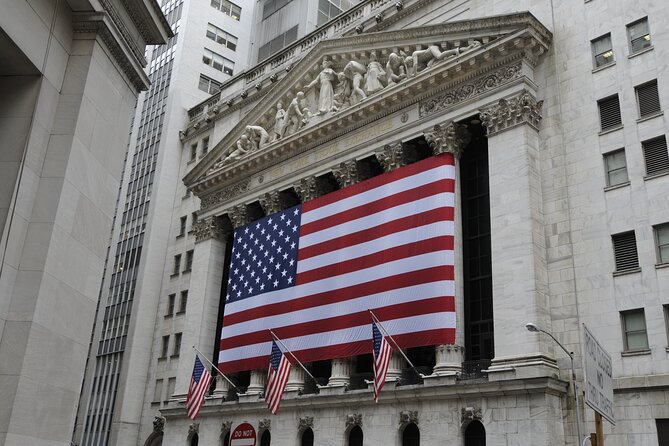
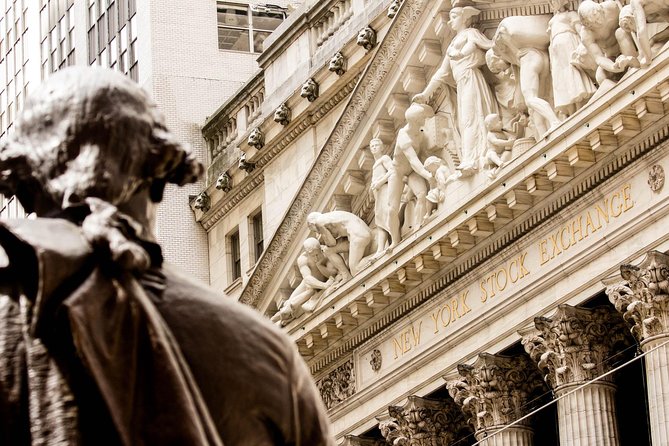
Be clear about what you will and will not do. The tour does not enter the Stock Exchange. It has been closed to public visitors since 2001, so any description that suggests an interior tour would set the wrong expectation.
From outside, the building still gives the guide a strong visual anchor. You can discuss the exchange, its history, and the people and institutions tied to it while standing in the district where the activity took place. But if your main goal is to see trading floors or enter a working exchange, this is not the right experience.
The walk ends near the Federal Reserve Bank at 33 Liberty Street. This location is useful for planning the rest of your day. One past itinerary ended within a few blocks of the 9/11 National Memorial Museum, making it easy to combine the two subjects if that fits your plans.
The end point is not the same as the start, which is helpful if you are continuing through Lower Manhattan. You should still check your next destination before booking, since the tour does not return you to Broad Street.
What the guides do best
The clearest strength is explanation. Emily has been praised for making difficult material easy to grasp. Jared has kept his tours conversational and engaging, including with a visitor on the autism spectrum who felt included when the guide used a movie-filming question to draw him into the discussion.
James has brought his own Wall Street experience into the history and has made indoor pauses when the weather turned cold. Ben has added information about current building use and tenancy, which gives the district a more immediate feel. Jon has been especially effective at explaining complex instruments without assuming a specialist audience.
Those details point to the kind of guide you should hope for: someone who can tell a story, answer basic questions without condescension, and adjust the pace for a mixed group. The tour is not just for finance professionals. It has worked for couples, families, solo visitors, and people with very little market knowledge.
The guide names are not guaranteed for every departure. Emily, James, Jared, Ben, Jon, Tom, Mike, and Jonathan have all led tours at different times, but your booking does not promise a specific person unless the provider confirms it.
Is two hours enough for the subject?
Two hours gives the tour a useful limit. You get an overview of the crisis, the district, and several landmark buildings without giving up half a day of sightseeing.
The tradeoff is speed. One account described the main points as covered sometimes in a hurry. That makes sense given the route. The guide has to explain the crash, answer questions, discuss earlier financial events, include Federal Hall, stop at the bull, and finish near the Federal Reserve in roughly 120 minutes.
I would treat this as an introduction, not a full course in finance. You should leave with a clear framework for understanding the crisis, not every detail of the mortgage market or banking regulations.
That format suits you if you want a strong starting point before reading The Big Short, visiting the 9/11 Memorial Museum, or exploring more of New York’s financial past. It may disappoint you if you already work in finance and want technical depth.
The $59 price and overall value
At $59 per person, this is not a bargain-priced stroll. You are paying for a specialized guide, a small maximum group, and a subject that requires more preparation than a basic landmark walk.
I think the price is reasonable if your group values clear explanations and first-hand financial experience. A good guide can turn an intimidating subject into a memorable two hours, and the tour adds several major sights at no separate admission cost.
The value is weaker if you mainly want photographs of Wall Street. You can see the exterior of the Stock Exchange and the Charging Bull without booking a paid tour, and no Stock Exchange admission is included.
The guide makes the decision. A strong one can explain the difference between the headline version of the crisis and the complicated chain of events beneath it. A hurried or less engaging guide may leave you feeling that the price is high for an outdoor walk.
Practical tips for a comfortable walk
Wear comfortable shoes. The route involves moderate walking through Lower Manhattan, with much of the time outside.
Dress for the weather, especially in winter. Downtown streets can be windy, and one helpful suggestion from a past tour was to use indoor building stops as a chance to warm up. Do not count on a scheduled bathroom break, since one participant specifically wished there had been an opportunity along the way.
Bring questions. The best use of this tour is interactive, and the guides have been described as approachable before and after the walk. If a term makes no sense, ask for an example rather than letting the explanation pass you by.
The tour is in English, and one guide was especially careful to speak clearly for people using English as a second language. That is useful for an international group, though the official offering is English only.
Free cancellation is available if you cancel at least 24 hours before the start time. Changes or cancellations made less than 24 hours before the experience are not accepted for a refund.
Who should book the Financial Crisis Tour?
I would book this for a first visit to New York if you want more than postcard sights. It is a smart choice for people interested in investing, banking, American history, real estate, or the causes of the 2008 recession.
Families with older children and teenagers can also do well here, especially when the guide connects finance to history, films, or familiar news stories. The material is serious, but the better guides use humor and questions to keep it moving.
I would skip it if you want to go inside the New York Stock Exchange, avoid outdoor walking, or prefer a broad sightseeing tour with many attractions. The route is focused, and the $59 cost only makes sense if the subject interests you.
For most curious visitors, this is a useful way to put Wall Street in context. You see the famous symbols, but you also hear the human decisions and institutional failures behind them. Book it if you want to understand what happened, not just stand where it happened.
FAQ
How long is the Financial Crisis Tour?
The tour lasts approximately two hours.
How much does the tour cost?
The listed price is $59 per person.
Where does the tour begin?
The meeting point is 22 Broad Street, New York, NY 10005.
Where does the tour end?
The tour ends at 33 Liberty Street, near the Federal Reserve Bank.
Does the tour enter the New York Stock Exchange?
No. The Stock Exchange has been closed to public visitors since 2001, so the tour views it from outside.
What language is the tour offered in?
The tour is offered in English.
How much walking is involved?
A moderate amount of walking is involved. The experience is mostly outdoors, with a chance to visit inside a few buildings.
How large is the group?
The tour has a maximum of 20 participants.
Is the tour suitable for most people?
Most people can participate, and service animals are allowed. You should be prepared for outdoor walking.
Can I cancel for a refund?
Yes. You can cancel at least 24 hours before the start time for a full refund. Cancellations made less than 24 hours in advance are not refunded.
Just listed around New York City
- NYC: Little Shop of Horrors Off-Broadway Ticket5 reviews
- Private NYC Airport Transfer: LGA to Manhattan – Up to 5★ 3.6 · 5 reviews
- New York City Tour in German★ 4.5 · 5 reviews
- New York: Hamilton and Washington Revolutionary Walking Tour★ 5.0 · 5 reviews
- NYC Freedom Tower Private Photo or Video Experience★ 4.0 · 6 reviews
- New York Afternoon Fall Foliage Cruise with Lunch★ 5.0 · 6 reviews
- Brooklyn Walking Tours by Locals: Private & 100% Personalized★ 4.0 · 6 reviews
- Southold Bay Oyster Farm Tour★ 5.0 · 6 reviews
Tours, compared.
Statue of Liberty and Ellis Island Tour: All Options
Read our review →



9/11 Memorial, Ground Zero Tour with Optional 9/11 Museum Ticket
Read our review →
Hop-on Hop-off Sightseeing Tour by Open-top Bus
Read our review →