
Reviewed · GRAND CENTRAL TERMINAL TOURS
Grand Central Photo Tour
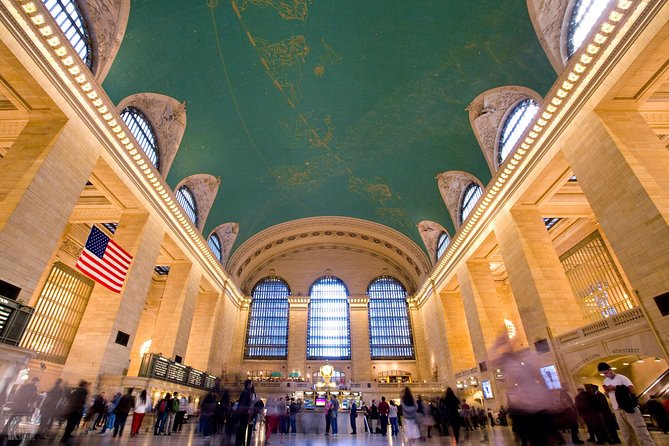
Grand Central Terminal becomes a working photo studio on this 2.5-hour workshop. You will practice slow shutter speeds, search for fresh angles, and get an unusual chance to photograph the main floor from 100 feet above it. The aim is not just to collect a postcard view, but to learn how to make the terminal feel alive.
I like the small group of eight or fewer, since a photographer can look at your images and offer useful corrections instead of giving a speech to a crowd. I also like the hands-on approach to composition and camera settings, praised in feedback about guides such as Bruce, Rob, and Zim. The main catch is that this is a photography lesson first, not a broad sightseeing tour of Midtown.
In This Review
- Key points to know before booking
- Why Grand Central works so well for a photo lesson
- Starting at 10:00 am on East 42nd Street
- Learning to see the terminal differently
- Using slow shutter speeds with moving crowds
- Finding the elevated view of the main floor
- What the small group changes
- The guide’s role matters more than the equipment
- Is $150 a fair price?
- Who will enjoy this workshop most
- Practical details that affect your day
- Should you book the Grand Central Photo Tour?
- FAQ
- Where does the Grand Central Photo Tour begin?
- What time does the tour start?
- How long does the experience last?
- Where does the tour end?
- How many people can join the tour?
- Is a photography permit included?
- Is tripod use included?
- What is the minimum age?
- Can I cancel for a refund?
Key points to know before booking
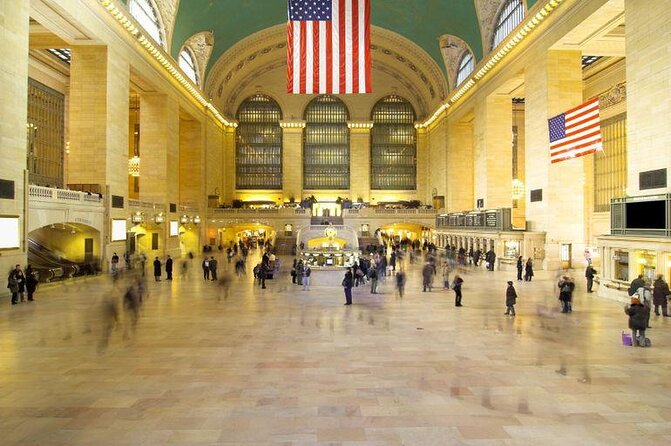
- A real photography workshop: Practice composition, angles, exposure choices, and slow shutter speeds as you walk.
- Grand Central from above: The tour includes an opportunity for an unobstructed photo of the main floor from 100 feet up.
- Small-group instruction: The maximum group size is eight, allowing more personal help.
- Permit included: You do not need to arrange the photography permit yourself.
- Beginner-friendly format: You can join at any skill level, including with a camera you have never fully mastered.
- Simple Midtown logistics: Meet at 10:00 am at 89 E 42nd Street, use a mobile ticket, and finish where you began.
Why Grand Central works so well for a photo lesson
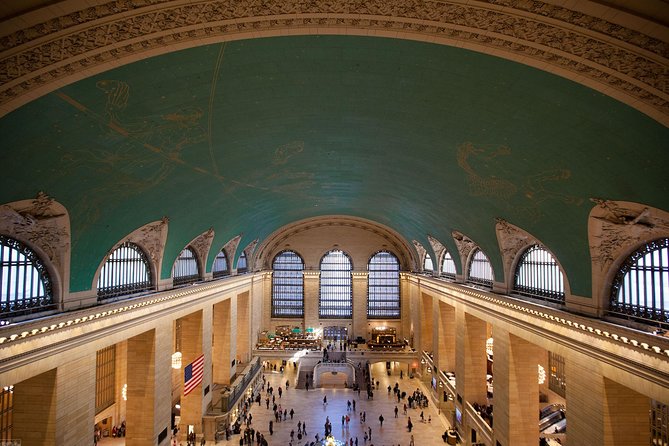
Grand Central Terminal gives you several kinds of photography in one building. The main floor offers scale, symmetry, architecture, and constant movement. Look up and you have the famous celestial ceiling. Look down and you have streams of people crossing beneath the clock and information board.
That mix makes the terminal useful for learning. You are not practicing on a quiet, empty room where every picture looks much the same. You are working with changing light, moving subjects, strong lines, and a building that rewards both careful planning and quick reactions.
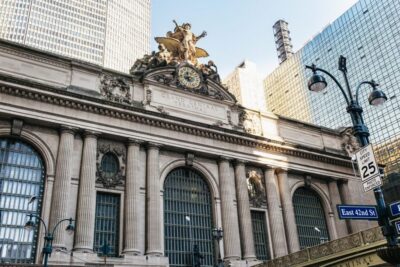
The tour also helps clear up a common name mix-up. Grand Central Terminal is the landmark and train terminal most people mean when they say Grand Central Station. Your meeting point is at the terminal, at 89 E 42nd Street.
I like the fact that the lesson focuses on seeing as well as operating a camera. Several of the strongest comments about the company’s photo workshops praise advice on composition, angles, and finding the story in an image. That matters because many beginners assume better photographs come mainly from buying better equipment. In practice, choosing where to stand and what to leave out often makes the larger difference.
More Grand Central visits:
- Secrets of Grand Central Station Walking Tour New York City
★ 5.0 · 1,796 reviews - NYC: The Secrets of Grand Central Terminal
★ 4.8 · 718 reviews - NYC: Official Grand Central Terminal Tour
★ 5.0 · 458 reviews
Starting at 10:00 am on East 42nd Street
You meet at 10:00 am at 89 E 42nd Street. The location is near public transportation, which is useful in Midtown, where walking and subway connections are usually easier than trying to arrive by car.
Bring your mobile ticket and arrive ready to start on time. The activity lasts about two and a half hours, and the entire session takes place at Grand Central Terminal before returning to the meeting point.
The minimum age is 18. Service animals are allowed, and the activity information says most people can participate. Since this is an active photography workshop, you should be comfortable carrying and using your own camera or phone for much of the session. The supplied information does not promise a separate private lesson, so expect to share the guide’s attention with a small group unless your booking happens to have fewer people.
Learning to see the terminal differently
Your guide is a professional photographer, not simply someone showing you the building. The useful part of the session is the chance to ask questions while you are actually making photographs.
You may work on how to frame Grand Central’s architecture, how to use leading lines, and how to choose a position that gives a familiar view more impact. You will also be encouraged to consider angles you might normally overlook. One piece of advice reflected in the feedback is to make decisions about the image you want, rather than relying on the camera to make every choice for you.
That is a good fit for someone who knows the basics but feels stuck taking the same kind of picture. It is also friendly to a beginner who has recently bought a digital camera and is still unsure about the settings. The guide can adjust instruction to your level, so you are not expected to arrive with advanced technical skills.
The workshop is not described as a formal classroom course. You should expect to learn while walking, photographing, checking your results, and trying again. That format can be more useful than a long explanation of camera theory, especially when you can immediately see how a small change affects your image.
Using slow shutter speeds with moving crowds
One of the clearest technical aims is learning to use slow shutter speeds. Grand Central is a good place to practice because people are constantly moving through the main floor.
A slow shutter can turn motion into a visual effect, showing the flow of the terminal rather than freezing every person in place. It is a creative choice, not simply a camera trick. You will need to balance shutter speed with the rest of your exposure, and the guide can help you understand what your camera is doing as you experiment.
This exercise is valuable for beginners because it makes the relationship between shutter speed and motion visible. It also gives more experienced photographers a reason to try a setting they may not use often.
Do not expect every frame to work. Slow-shutter photography often produces a mixture of useful images and mistakes. That is part of the lesson. The small group makes it more likely that you can show an image to the guide and ask what went wrong, or what could make the next attempt stronger.
A few more New York City picks to weigh up
- NYC Professional Photoshoot and Walking Tour with Private Guide
★ 5.0 · 608 reviews - New York Icon Photography Tour led by a Local Photographer
★ 5.0 · 155 reviews - New York: 1-hour Photoshoot in Iconic Locations
★ 5.0 · 101 reviews - Central Park Photography Tour with Local Photographer
★ 5.0 · 85 reviews
Finding the elevated view of the main floor
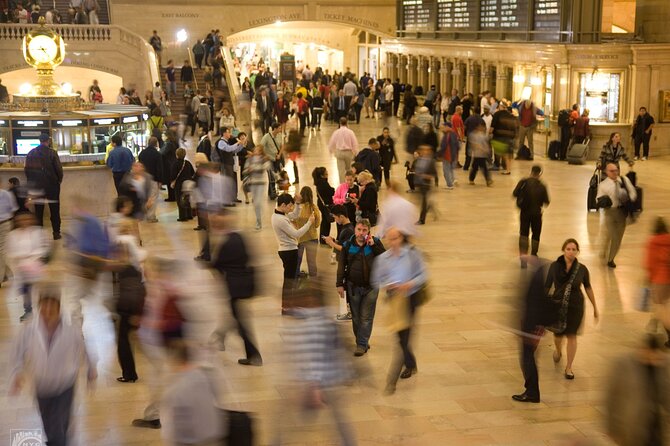
The most unusual feature is the chance to take an unobstructed photograph of Grand Central’s main floor from 100 feet above it. This changes the way you read the room.
From ground level, the terminal feels enormous. From above, its geometry and human movement become easier to see. The elevated position can help you make a photograph with cleaner lines and a different sense of scale from the standard eye-level view.
This is also where the included photography permit matters. You are not simply wandering through with a camera and hoping that a good position is available. The permit is part of the package, and the activity specifically includes access for this kind of photography.
The information also says you are granted the use of a tripod during the tour. That is particularly useful when you are testing slow shutter speeds or trying to keep an architectural frame steady. Since the details do not explain the exact tripod arrangement, ask the operator if you need to know how it will work with your own equipment.
What the small group changes
A maximum of eight people is a meaningful advantage for a lesson like this. Photography instruction works best when the guide can see what you are doing and respond to the picture in front of you.
You can expect the guide to check in as the group moves around. Feedback associated with the company’s workshops describes regular image reviews and tips tailored to each person’s level. That kind of quick correction is useful: you might learn that your framing is too loose, your angle hides the strongest line, or your settings are not matching the effect you want.
The group size does not mean eight private lessons running at once. You will still spend time making your own pictures and waiting while the guide helps someone else. If you want uninterrupted attention, a private booking would normally be the better style of experience, but no private option or price is provided here.
For a couple or small family group, the workshop can also be a pleasant shared activity. The focus gives everyone something to do, and you leave with photographs rather than only a memory of looking at the building.
The guide’s role matters more than the equipment
The supplied information identifies professional photographer guides, and one Grand Central session specifically names Bruce. Other comments connected to the provider mention Rob and Zim, with particular praise for adapting instruction, explaining settings, and pushing creative thinking.
I would not book this mainly to hear a long architectural lecture. Book it because you want a working photographer beside you while you make pictures. The guide’s value is in showing you how to use the building, the people in it, and your camera together.
You should also avoid assuming that expensive gear is required. The workshop is beginner-friendly and aimed at improving digital photography, so the lesson is built around choices you can make with the equipment you already use. A camera with manual controls may give you more room to practice slow shutter speeds, but the provided information does not set out a required camera type.
The strongest benefit is feedback. You can learn a camera setting from a manual, but it is harder to judge why an image feels flat or crowded. A professional can point to the problem while the scene is still in front of you.
Is $150 a fair price?
At $150 per person, this is not a low-cost way to enter Grand Central. The terminal itself is a public landmark, so you can see its main spaces without paying for this workshop.
The price makes more sense if you count the service as a small photography class. You receive about 2.5 hours with a professional photographer, a group capped at eight, a photography permit, instruction on composition and camera settings, slow-shutter practice, and the special elevated photo opportunity. You are paying for access, guidance, and correction, not just admission.
I see good value here for someone who would otherwise spend the day taking random snapshots and still not know why some worked. It is also a practical choice if you are visiting New York with a camera and want to come home with stronger images of a landmark you might otherwise photograph in the same familiar way.
The value is weaker for a person who already works comfortably with manual exposure, composition, and slow shutter speeds. If you mainly want facts about Grand Central, a standard sightseeing visit would suit you better. The activity is centered on making photographs, and the 150-dollar price reflects that specialization.
Who will enjoy this workshop most
I would recommend it to:
- Beginners who want direct help rather than a technical manual
- Camera owners who know the controls but need better composition
- Visitors who want more than the usual ceiling and clock photograph
- Couples or small groups looking for a shared creative activity
- Experienced shooters who want fresh ideas for using motion and architecture
It may not suit you if you want a relaxed, unstructured photo walk. It also may not be ideal if you expect a full New York sightseeing program, since the advertised activity stays at Grand Central and ends back at the meeting point.
The minimum age of 18 keeps the group adult-oriented. Most people can participate, and service animals are allowed, but the available details do not describe step-free access, seating, or specific camera support. If those points matter to you, contact the operator before booking.
Practical details that affect your day
The mobile ticket keeps the arrival process simple. You meet at the terminal, begin at 10:00 am, and finish at the same general meeting point.
The activity has free cancellation if you cancel at least 24 hours before the local start time. A cancellation made less than 24 hours before the start is not refunded, and late changes are not accepted. That makes it worth checking your New York schedule before committing.
Gratuities are not included. You should treat a tip as optional and based on the quality of the instruction and service.
Plan your day around the two-and-a-half-hour session. You will be walking through the terminal, stopping to compose images, checking your camera, and trying settings more than once. A camera with a charged battery and enough storage is sensible, though the supplied information does not list required equipment.
Should you book the Grand Central Photo Tour?
Book this tour if you want to learn while photographing one of New York’s most rewarding interiors. The small group, professional guidance, permit, elevated viewpoint, and slow-shutter practice give the experience a clear purpose.
I would skip it if you simply want to see Grand Central or take a few quick phone pictures. You can visit the terminal on your own for that. But if you want to understand why your images work, change your usual angles, and leave with practical skills you can use elsewhere, $150 can be a sensible investment.
FAQ
Where does the Grand Central Photo Tour begin?
The tour begins at Grand Central Terminal, 89 E 42nd Street, New York, NY 10017.
What time does the tour start?
The scheduled start time is 10:00 am.
How long does the experience last?
The workshop lasts approximately 2 hours and 30 minutes.
Where does the tour end?
The activity ends back at the meeting point at Grand Central Terminal.
How many people can join the tour?
The group has a maximum of eight travelers.
Is a photography permit included?
Yes. A photography permit is included in the experience.
Is tripod use included?
The activity information states that you are granted the use of a tripod during the tour.
What is the minimum age?
The minimum age is 18.
Can I cancel for a refund?
Yes. You can cancel at least 24 hours before the experience start time for a full refund. Cancellations made less than 24 hours before the start are not refunded.
Just listed around New York City
- NYC: Little Shop of Horrors Off-Broadway Ticket5 reviews
- Private NYC Airport Transfer: LGA to Manhattan – Up to 5★ 3.6 · 5 reviews
- New York City Tour in German★ 4.5 · 5 reviews
- New York: Hamilton and Washington Revolutionary Walking Tour★ 5.0 · 5 reviews
- NYC Freedom Tower Private Photo or Video Experience★ 4.0 · 6 reviews
- New York Afternoon Fall Foliage Cruise with Lunch★ 5.0 · 6 reviews
- Brooklyn Walking Tours by Locals: Private & 100% Personalized★ 4.0 · 6 reviews
- Southold Bay Oyster Farm Tour★ 5.0 · 6 reviews
Grand Central Terminal Tours, compared.
Secrets of Grand Central Station Walking Tour New York City
Read our review →
SUMMIT One Vanderbilt with Grand Central Terminal Tour
Read our review →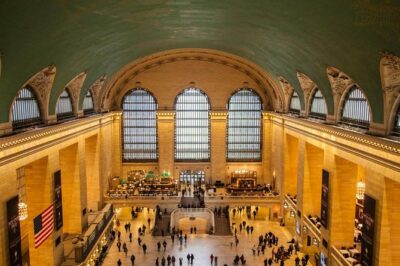
NYC Secrets of Grand Central Private Walking Tour
Read our review →
Best NYC Sightseeing Tour: Times Square, Grand Central, & More
Read our review →
SUMMIT One Vanderbilt Ticket and Grand Central Tour
Read our review →Browse the lists this tour appears in