
Reviewed · WALKING TOURS
Hell Gate Walking Tour
Hell Gate is one of New York’s strangest corners: an island park between Manhattan and Queens with whirlpools, vanished waterways, prison stories, bridge engineering, and a plot to blow up one of the city’s great spans. This offbeat walking tour turns a quiet stretch of Randall’s and Wards Islands into a lively history lesson.
I like the personal scale, with no more than 15 people, and I like the guide Krombie’s story-first approach. Her subjects range from river pirates and Typhoid Mary to psychiatric patients, Rikers Island prisoners, and the foiled plot against Hell Gate Bridge. The main consideration is the setting: you spend about two and a half hours outdoors, walking across a large island park with limited shelter, so good weather and sensible shoes matter.
In This Review
- Key details before you book
- Why Hell Gate makes such a good history walk
- Starting at Randall’s Island Athletic Field
- Stop 1: Wards Island Park and the view toward Hell Gate
- Stop 2: Astoria Park and the Triborough Bridge
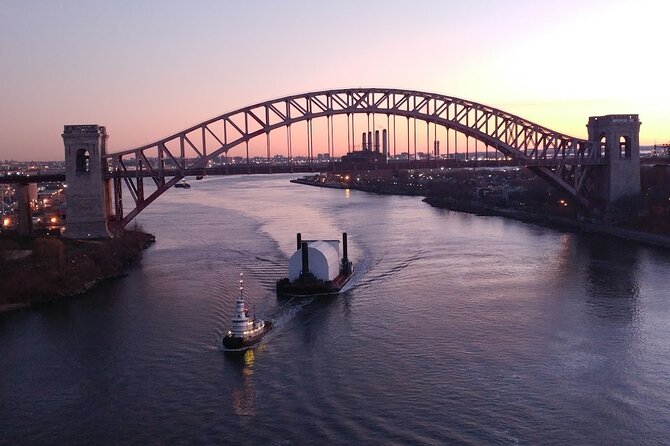
- Stop 3: Hell Gate Bridge and the plot to destroy it
- Stop 4: Randall’s Island Park and the northern end of Hell Gate
- What makes the guide important
- Price, timing, and practical value
- Getting back after Sunken Meadow
- Who should book this walk
- Cancellation and booking flexibility
- Should you book the Hell Gate Walking Tour?
- FAQ
- Where does the Hell Gate Walking Tour begin?
- Where does the tour end?
- How long does the tour last?
- How much does the tour cost?
- What is the maximum group size?
- What can you see from Wards Island Park?
- Which bridge is discussed during the tour?
- Does the tour include stories about Rikers Island?
- Is public transportation available after the tour?
- What happens if bad weather cancels the tour?
Key details before you book
- A forgotten side of New York: See Randall’s and Wards Islands, an area many city visitors skip.
- Hell Gate from several angles: Look toward Mill Rock, Roosevelt Island, Astoria Park, and the East River power plants.
- A bridge with a wartime secret: Hear how Hell Gate Bridge was engineered and why saboteurs once targeted it.
- Dark stories with local connections: The tour covers Typhoid Mary, river pirates, psychiatric patients, prisoners, and urban legends rooted in real events.
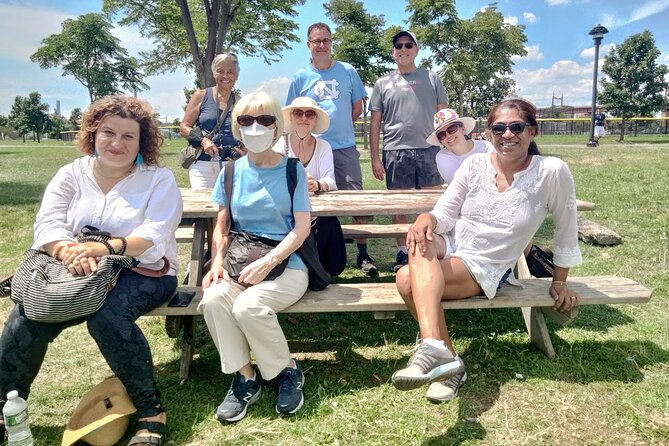
- Small-group pacing: The maximum group size is 15, allowing room for questions and a calmer walk.
- Useful ending point: The route finishes near the M35 bus stop at Sunken Meadow, with service toward 125th Street and Lexington Avenue.
Why Hell Gate makes such a good history walk
Most New York walking tours focus on famous streets, grand buildings, or well-known neighborhoods. This one takes you to a less obvious setting, where the views help explain the story. From the islands, you can see water channels, bridge approaches, former island sites, and industrial edges that are easy to overlook from Manhattan.
The name Hell Gate comes from the dangerous currents that once churned through the East River channels. The waterway was feared for its whirlpools and wrecks, and the tour uses those hazards as a starting point for a much wider look at New York.
I like that the subject is not limited to one bridge or one battle. You move through stories about transportation, engineering, public health, crime, prisons, hospitals, war, and the changing shape of the islands. Krombie’s strength is connecting those subjects so the place feels like more than a pleasant park with good views.
The tone also sounds more entertaining than academic. You can expect vivid storytelling, humor, mysteries, and odd facts rather than a dry list of dates. That makes the tour a good choice if you enjoy history best when it comes with people, schemes, mistakes, and strange turns.
More New York City walking tours:
- SoHo, Little Italy, and Chinatown Walking Tour in New York
★ 5.0 · 3,153 reviews - Secrets of Grand Central Station Walking Tour New York City
★ 5.0 · 1,796 reviews - Greenwich Village Walking and Food Tasting Tour
★ 5.0 · 1,572 reviews
Starting at Randall’s Island Athletic Field
The meeting point is Randall’s Island Athletic Field, near East River Lane. The tour begins on Randall’s Island, then moves through the connected Randall’s and Wards Islands area. Check the exact meeting details carefully before setting out, since the starting point is not in the middle of Manhattan and the islands have several roads, fields, and pedestrian access points.
The first stretch gives you time to get oriented. This is not a quick photo stop followed by a bus ride. You will be walking outdoors, listening as the guide builds a picture of the waterways and the islands around you.
Because the route is on an island park rather than a dense neighborhood, you should plan ahead. Bring water, wear comfortable shoes, and check the forecast. The experience requires a moderate level of physical fitness, and it can feel especially exposed on a hot or wet day.
Stop 1: Wards Island Park and the view toward Hell Gate
The opening stop is Wards Island Park, where you get a strong view toward Hell Gate, Mill Rock, and Roosevelt Island. This is a useful first look because the water itself is central to the story.
From this vantage point, the guide can explain how the channels fit together and why the currents made this stretch so dangerous. Mill Rock and Roosevelt Island help you understand the geography without needing a map. The tour turns the view into evidence: each island and water passage has a role in the story.
You spend about 15 minutes here. That is long enough to hear the opening explanation and take in the scene without making the first stop feel drawn out.
The surroundings are also part of the appeal. You are away from the usual Manhattan crowds, yet the city is still present in the distance through bridges, buildings, and moving water. I would consider this one of the best parts for visitors who want a different view of New York, not simply another walk past famous façades.
Stop 2: Astoria Park and the Triborough Bridge
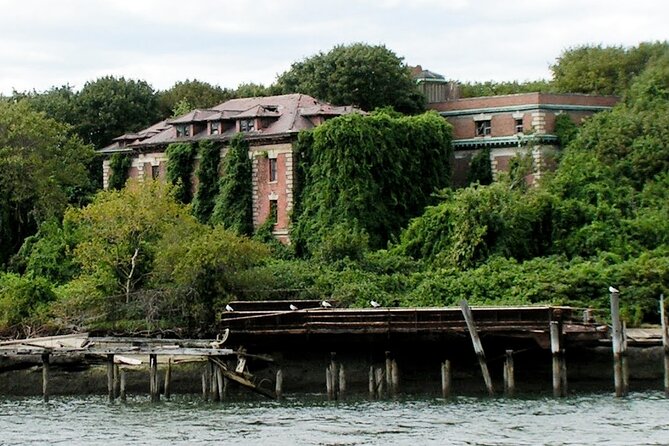
The next viewpoint shifts your attention toward Astoria Park and the Triborough Bridge, now commonly known as the Robert F. Kennedy Bridge. You also see more of Wards Island itself, which helps tie the history to the ground beneath your feet.
This section lasts about 20 minutes. It offers a chance to look outward and understand how the islands sit between Manhattan, Queens, and the East River channels.
The bridge views give the tour a strong visual anchor. The Triborough Bridge is familiar to many people from a car or train window, but seeing it from the island offers a different sense of its scale and position. The guide can place the bridge within the broader story of transportation and development in this part of New York.
Do not expect a classic skyline panorama at every stop. The appeal here is more specific: bridges, waterways, working infrastructure, and islands with unusual pasts. If you want a tour centered on major landmarks, this may feel too quiet. If you like urban geography and overlooked places, it should suit you well.
Another side of New York City for the same day:
- NYC: SUMMIT One Vanderbilt Tickets
★ 4.7 · 51,195 reviews - NYC: 9/11 Memorial & Museum Timed-Entry Ticket
★ 4.8 · 31,428 reviews - NYC: Empire State Building Tickets – Observatory & Museum
★ 4.7 · 25,757 reviews - New York City: Statue of Liberty & Ellis Island with Ferry
★ 4.6 · 18,683 reviews
Stop 3: Hell Gate Bridge and the plot to destroy it
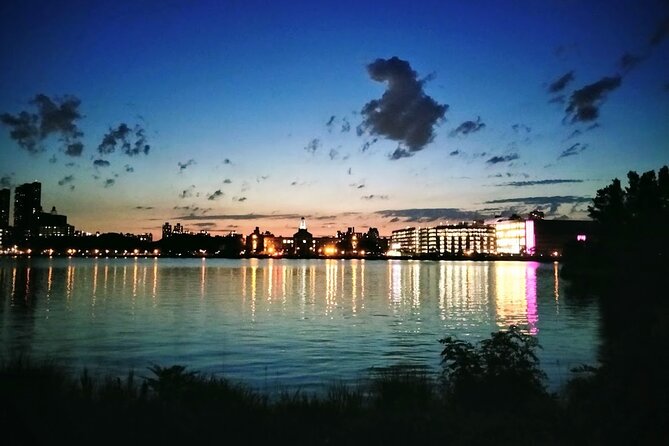
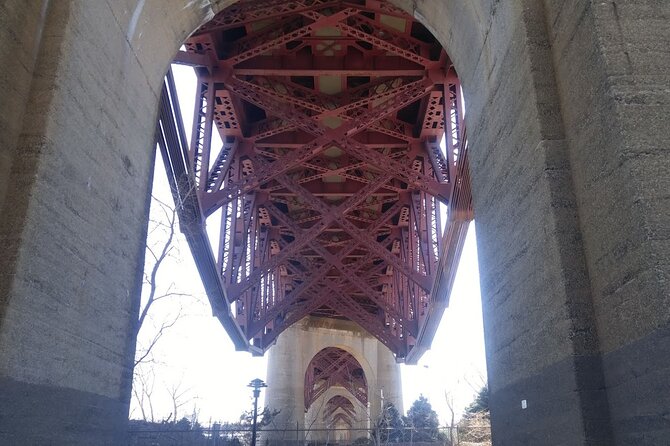
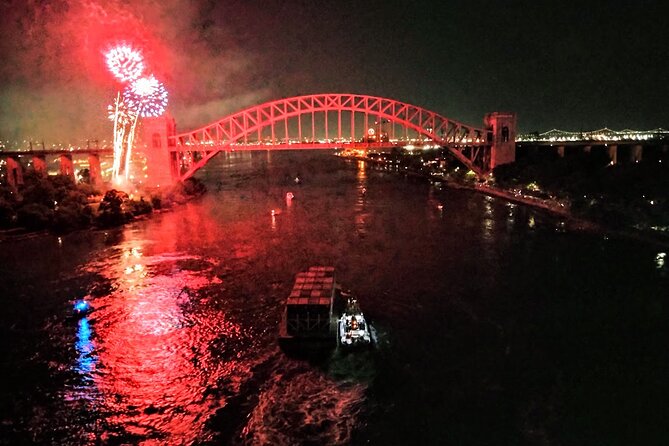
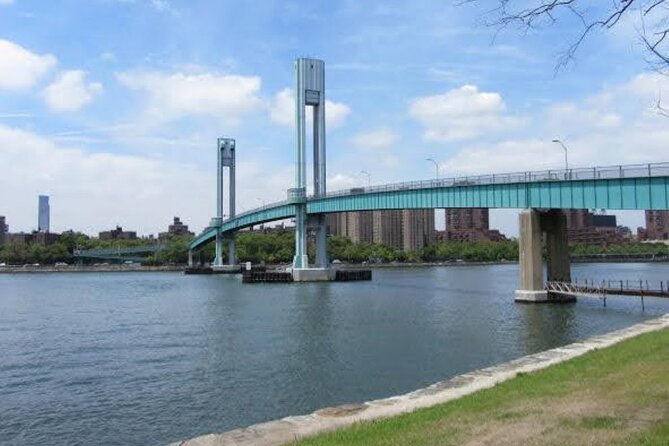
At the Wards Island end of Hell Gate Bridge, the tour turns to engineering and wartime intrigue. You hear about the unusual design of this iconic bridge and a plot to blow it up.
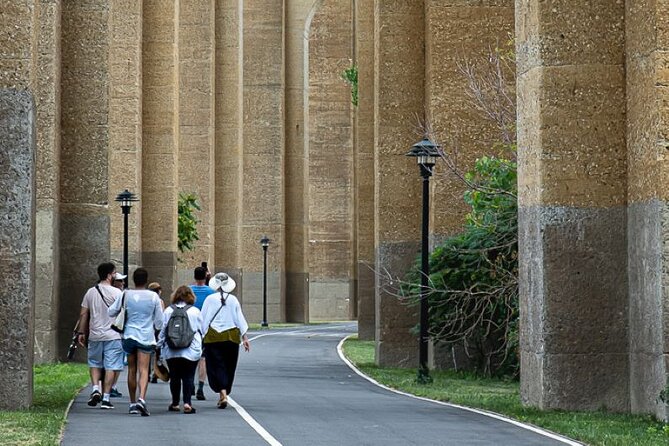
The bridge is not just a backdrop. Its structure helps explain the problem engineers faced when spanning Hell Gate. The crossing had to contend with a difficult waterway and the need for a major rail connection. Looking at it from the island gives the story a physical sense that a book or photograph cannot quite provide.
The sabotage plot adds a sharp change of mood. It is one of the tour’s most memorable subjects because it links a local bridge to international conflict and New York’s role as a major transport center. The story is presented as a foiled Nazi plot, giving the bridge a wartime chapter that many people would not expect.
This stop takes about 15 minutes. It is short, focused, and likely to appeal to anyone who enjoys engineering stories, espionage, or the overlooked details behind familiar structures.
Stop 4: Randall’s Island Park and the northern end of Hell Gate
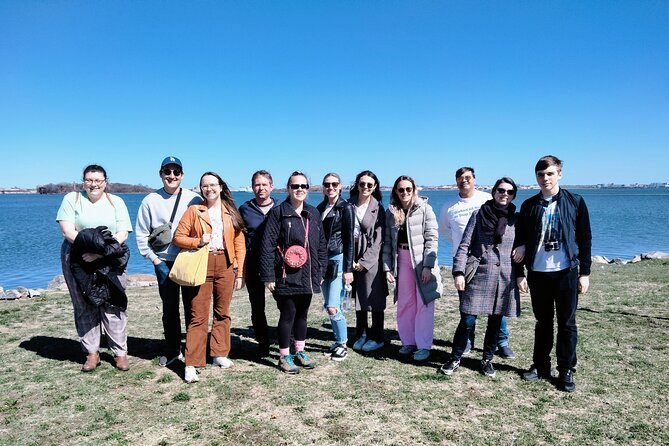
The longest portion takes place in Randall’s Island Park and lasts about 35 minutes. Here, the tour broadens from the bridge to the islands and their surrounding waterways.
You see the remains of Little Hell Gate, the channel that once separated Randall’s and Wards Islands. The tour also points out the truss bridge over the covered strait, showing how the area has been reshaped over time.
That change is one of the most useful ideas in the experience. The islands are not fixed scenery. Waterways have been covered, bridges added, land joined, and old uses replaced. Seeing the remnants of Little Hell Gate helps you understand how New York has repeatedly altered its shoreline to serve transportation, utilities, recreation, and institutions.
This section also includes classic film locations. The information provided does not identify the films, so you should think of this as an added layer rather than the main reason to book. Still, it may be a fun detail if you enjoy spotting places that have appeared on screen.
From Sunken Meadow, you look toward the northern part of Hell Gate, the former islands joined to Astoria, and the power plants along the East River. The view toward Rikers Island, North and South Brother Islands, and the world’s biggest prison barge brings the tour into its darker subjects.
The stories connected with these places include psychiatric patients, prisoners, Typhoid Mary, and river pirates. The subject matter is not light, but it gives the islands a human dimension. New York’s history is not only about wealth and spectacle. It also includes quarantine, confinement, illness, crime, public fear, and people pushed to the edges of the city.
The long final stop is where Krombie’s storytelling matters most. Several unrelated subjects could easily become a jumble, but the setting provides a thread. You can look across the water toward the places being discussed, which makes the stories easier to picture and remember.
What makes the guide important
This tour depends heavily on the guide. The islands do not offer a steady stream of obvious landmarks, so the experience lives or dies by the explanation between viewpoints.
Krombie is repeatedly identified in the supplied material as an animated, passionate storyteller with a strong command of her research. That description fits the tour’s subject matter. Hell Gate requires someone who can explain currents, bridges, institutions, urban myths, and wartime schemes without losing the group.
I would choose this experience for the guide-led storytelling, not simply for the scenery. You can walk around a park by yourself, but it would be difficult to know why Little Hell Gate matters, what happened around the bridge, or which dark stories belong to the islands.
The small group helps here. With a maximum of 15 people, you should have a better chance to hear clearly and ask questions than on a large coach-style excursion. It also suits the relaxed pace of a tour built around observation and conversation.
Price, timing, and practical value
The price is $34 per person, with fees and taxes included. For a roughly two-hour-thirty-minute guided experience, that is a reasonable price if you value focused local history and an unusual setting.
You are not paying for admission to a major attraction. The value comes from the guide’s research, the route, and the interpretation of places that would otherwise be easy to pass without understanding. If you prefer self-guided walks, you could visit the islands independently, but you would miss the connected stories that give the area meaning.
The tour requires good weather. That is more than a minor note because the route is outdoors and the island can feel exposed. A sunny day should make the water views and bridges more enjoyable, while heat, rain, or strong wind could make the same walk tiring.
Coffee and tea are not included, so bring your own drink if you want one. Service animals are allowed, and the location is near public transportation, though the start and finish are on Randall’s Island rather than beside a central subway entrance.
Getting back after Sunken Meadow
The tour ends at Sunken Meadow, close to the M35 bus stop. That bus can take you to 125th Street and Lexington Avenue, where you can transfer to the 4, 5, or 6 subway trains.
Your guide can also walk you to the various pedestrian exits from the island. This is helpful because Randall’s Island is large and the best exit depends on where you are headed next.
The ending is practical, but allow time for the return journey when planning your day. The tour does not finish in a busy commercial district where you can instantly continue sightseeing. It finishes in a park setting, with public transport as the next step.
Who should book this walk
I would recommend Hell Gate to repeat visitors, local residents, history fans, and anyone who has already seen the standard New York sights. It gives you a fresh reason to cross into an area that many people know only from a bridge or a passing train.
It is also a good date idea if you want an activity with conversation built in. The unusual stories provide plenty to discuss afterward, and the walk has a more personal feel than a crowded landmark attraction.
Families with older children may enjoy the bridge and mystery elements, though the darker subjects may not suit very young children. Anyone with limited walking ability should consider the moderate fitness requirement before booking.
You should think twice if you want a polished indoor museum experience, frequent cafés, or a route packed with famous buildings. This is a seasonal, outdoor history walk, and its appeal depends on your interest in the stories as much as the views.
Cancellation and booking flexibility
You can cancel up to 24 hours before the start time for a full refund. Changes or cancellations made less than 24 hours in advance are not accepted for a refund.
Since the tour requires good weather, poor conditions may lead to cancellation. In that case, you are offered another date or a full refund. Confirmation is provided when you book, and the experience uses a mobile ticket.
Should you book the Hell Gate Walking Tour?
Book it if you want New York history that reaches beyond the usual neighborhoods and famous buildings. The strongest reasons are Krombie’s storytelling, the small group, the views of several bridges and islands, and the unusual mix of engineering, wartime intrigue, public health, crime, and forgotten waterways.
I would skip it only if you dislike outdoor walking, need a central Manhattan meeting point, or prefer a tour with constant landmark spectacle. For the right audience, $34 buys something hard to find elsewhere: a guided look at a quiet piece of New York that becomes surprisingly dramatic once you know what happened there.
FAQ
Where does the Hell Gate Walking Tour begin?
It begins at Randall’s Island Athletic Field #8, near East River Lane, New York, NY 10035.
Where does the tour end?
The walk ends at Sunken Meadow on Randall’s Island, close to the M35 bus stop.
How long does the tour last?
The experience lasts approximately two hours and 30 minutes.
How much does the tour cost?
The price is $34 per person, including all fees and taxes.
What is the maximum group size?
The tour has a maximum of 15 people.
What can you see from Wards Island Park?
The first viewpoint includes Hell Gate, Mill Rock, and Roosevelt Island.
Which bridge is discussed during the tour?
The tour visits Hell Gate Bridge and covers its unusual engineering and a plot to blow it up.
Does the tour include stories about Rikers Island?
Yes. From Sunken Meadow, you get a view toward Rikers Island, North and South Brother Islands, and the largest prison barge in the world. The storytelling also covers prisoners and other dark local subjects.
Is public transportation available after the tour?
Yes. The nearby M35 bus travels to 125th Street and Lexington Avenue, where you can transfer to the 4, 5, or 6 subway trains.
What happens if bad weather cancels the tour?
You can choose a different date or receive a full refund if the experience is canceled because of poor weather.
Just listed around New York City
- The Story of Grand Central Terminal: An Art And Engineering Marvel★ 5.0 · 10 reviews
- Private Transfer: JFK Airport to Manhattan Up to 10pax★ 4.8 · 10 reviews
- Manhattan Neighborhoods Bike Tour★ 5.0 · 10 reviews
- West Village History & Walking Food Tour★ 4.5 · 10 reviews
- New York City: Private Manhattan Limousine Tour★ 4.3 · 10 reviews
- Private Walking Tour: Footsteps of Dylan and Springsteen★ 5.0 · 10 reviews
- Manhattan to Brooklyn NYC Walking Tour: Brooklyn Bridge and Dumbo in Spanish★ 4.5 · 10 reviews
- Captain Steve’s Sailing Experience on Long Island★ 5.0 · 10 reviews
Walking Tours, compared.

SoHo, Little Italy, and Chinatown Walking Tour in New York
Read our review →
Secrets of Grand Central Station Walking Tour New York City
Read our review →
Greenwich Village Walking and Food Tasting Tour
Read our review →
Artistic, Alternative Greenwich Village Walking Tour
Read our review →
True Crime NYC: Mafia Walk w/Ret. NYPD Detective and Local Food
Read our review →


Browse the lists this tour appears in