
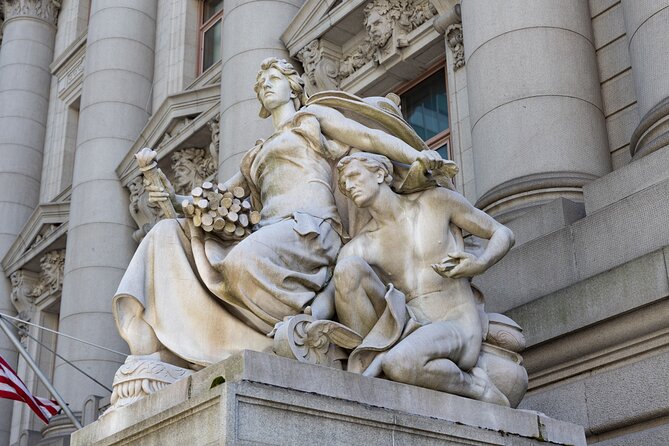
Reviewed · WALL STREET & FINANCIAL DISTRICT TOURS
How Money Was Made: Wall Street Walking Tour
Wall Street’s story begins long before stock tickers and investment banks. This two-hour walk connects Native American trading traditions, European commerce, political power, market crashes, and the rebuilding of Lower Manhattan after 9/11. You’ll see the financial district through its people and turning points, not just its famous street signs.
I like the wide historical lens, which includes women pioneers and enslaved laborers as well as financiers and industrialists. I also like the chance to pair Wall Street’s grand architecture with hard questions about aggressive growth and its effect on different populations. The possible drawback is pace: one review called the tour very fast and packed with history, so you’ll need comfortable shoes and a good attention span.
In This Review
- Key points to know
- Starting outside the Museum of the American Indian
- From early trade to European merchants
- Seeing Wall Street as a political center
- Financial innovators, women pioneers, and Robber Barons
- Market crashes and the cost of fast growth
- Architecture and iconic Lower Manhattan sites
- Lower Manhattan after 9/11
- Is $49 a fair price for two hours?
- Who will get the most from this walk?
- Planning the day around your Wall Street walk
- Should you book How Money Was Made?
- FAQ
- How long is the Wall Street walking tour?
- How much does the tour cost?
- Where do I meet the guide?
- What language is the tour in?
- Is the tour wheelchair accessible?
- What happens if it rains?
Key points to know
- Two hours from Native American trade to modern Wall Street: The tour covers centuries of financial and political change in a compact walk.
- A broader cast of characters: You’ll hear about financial innovators, women pioneers, Robber Barons, and enslaved laborers.
- Market crashes are part of the story: Economic success is balanced with the damage caused by financial crises.
- Meeting point is easy to identify: Find the guide outside the Museum of the American Indian, holding a red Inside Out Tours flag.
- English and wheelchair accessible: The tour has a live English-speaking guide and is listed as wheelchair accessible.
- Rain or shine: Plan for outdoor walking in all weather and wear comfortable shoes.
Starting outside the Museum of the American Indian
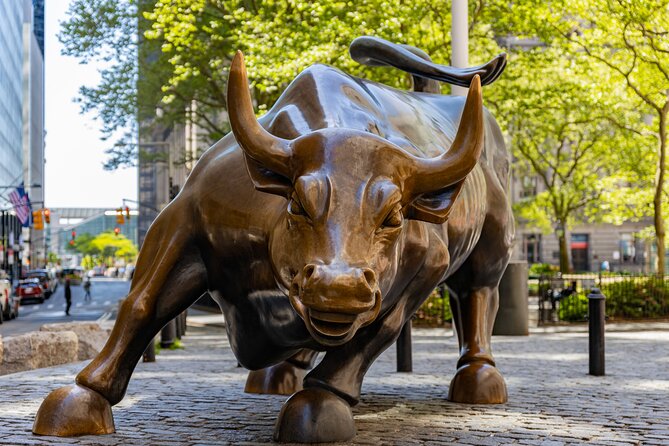
Your tour begins in front of the Museum of the American Indian, where you’ll look for a red Inside Out Tours flag. This is a useful meeting point because it is specific and easy to describe, but you still need to allow time to find the guide in a busy part of Lower Manhattan.
The opening setting also fits the subject. The tour does not treat Wall Street as a story that began with modern banks. Instead, it starts with Native American origins of early trading in the Americas, then follows the arrival and influence of European merchants.
That framing matters. It reminds you that commerce in this part of the world did not appear from nowhere, and that the financial system later built by European and American leaders rested on earlier systems of exchange, land use, labor, and political control.
If Jess is leading your walk, you may hear the same warm, engaging style that earned her specific praise. Guides can shape a history walk more than the route itself, especially when the subject involves complex events and many unfamiliar names.
More Wall Street walks:
- NYC City Tour: Statue of Liberty, 9/11 Memorial, Wall Street
★ 4.5 · 2,059 reviews - Wall Street Insider Tour with a Finance Professional
★ 4.5 · 660 reviews - Wall Street Insider Tour with a Finance Professional
★ 4.5 · 571 reviews
From early trade to European merchants
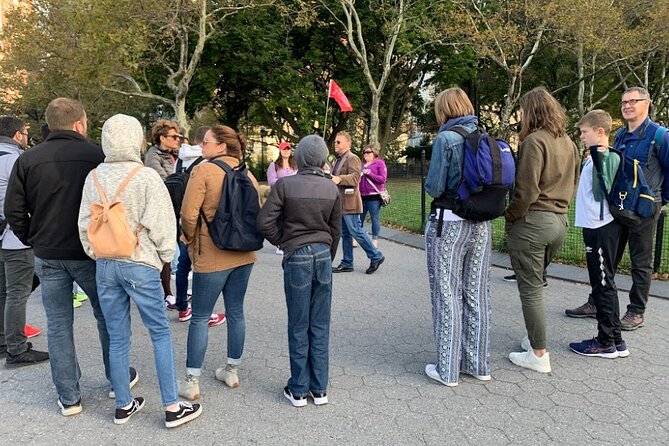
The first part of the walk sets up Wall Street as more than a place for buying and selling shares. You’ll consider the Native American roots of early trade and then track how European merchants changed the scale and direction of commerce in the Americas.
I appreciate this beginning because it gives you a useful test for every later part of the tour: who controlled trade, who gained from it, and who paid the cost? Those questions are more revealing than a simple parade of famous financiers.
The tour then moves toward the rise of the American financial system. You’ll learn how commercial activity and political decisions worked together. Wall Street was shaped not only by business ideas but also by laws, institutions, power, and the ambitions of people who wanted to build a new nation and expand its economy.
The information comes quickly, so listen for the main sequence rather than trying to remember every name. A small notebook or a few notes on your phone could help if you want to follow up later, though the walk itself is designed as a moving introduction rather than a classroom lecture.
Seeing Wall Street as a political center
It is easy to reduce Wall Street to money. This tour asks you to see it as a political center too, where decisions about trade, finance, labor, and economic growth affected the entire country.
That political angle gives the architecture more meaning. As you admire Lower Manhattan’s older buildings and iconic sites, the guide connects the physical setting to the people and institutions that helped shape the American financial system.
The route takes you into the heart of Wall Street to view important sites. The supplied information does not promise entry into buildings or museums, so expect an outdoor walking experience rather than interior visits. That is worth knowing when you compare the $49 price with a museum ticket or a longer guided excursion.
I like this format for a first look at the financial district. You can place the streets, buildings, and public spaces in a larger story, then return later to any site that catches your interest. The tradeoff is that you will not have much time to linger at each location.
Financial innovators, women pioneers, and Robber Barons
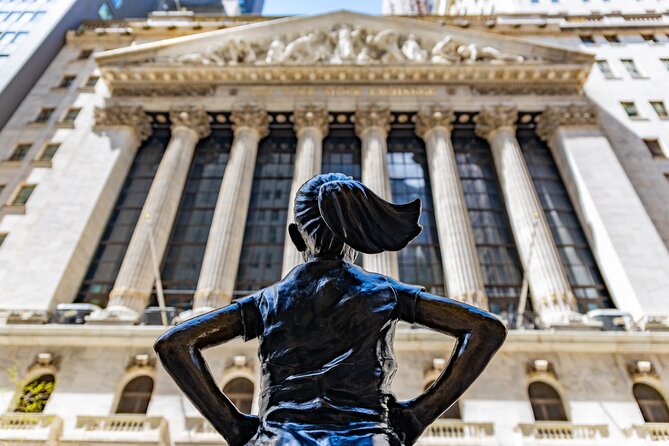
One of the strongest parts of the subject is its range of people. Wall Street is often presented through a narrow list of powerful men, but this tour also brings in women pioneers and financial innovators.
That wider cast changes how you understand the district. Women were not simply bystanders to the growth of finance, and innovation was not limited to one type of banker or business leader. The tour places those figures beside Robber Barons, a term used for industrial and financial leaders whose wealth and methods remain controversial.
I value that balance. You get the ambition and ingenuity behind economic growth, but you also examine the concentrated power that growth could create. You are not asked to admire Wall Street without question.
The tour also includes forgotten enslaved laborers who helped shape the history of Wall Street. This is a crucial part of the walk because financial history can otherwise sound clean and abstract. Money was connected to real labor, unequal rights, and people whose contributions were later pushed out of the popular story.
This may be the most meaningful reason to choose the experience. You are not only looking at famous streets and impressive buildings. You are being asked to notice who is remembered, who is left out, and how wealth was built.
More New York City walking tours:
- SoHo, Little Italy, and Chinatown Walking Tour in New York
★ 5.0 · 3,153 reviews - Secrets of Grand Central Station Walking Tour New York City
★ 5.0 · 1,796 reviews - Greenwich Village Walking and Food Tasting Tour
★ 5.0 · 1,572 reviews - Artistic, Alternative Greenwich Village Walking Tour
★ 5.0 · 971 reviews
Market crashes and the cost of fast growth
The tour explores financial crises caused by stock market crashes. That section gives the walk a needed sense of risk. Wall Street did not grow in a straight line, and financial confidence could turn into fear with devastating results.
You’ll hear how aggressive economic growth affected diverse populations. The point is not simply that crashes hurt investors. Financial crises and rapid expansion could reach workers, families, communities, and groups with far less power than the people making the biggest decisions.
I like this part because it keeps the tour from becoming a celebration of wealth. You can admire the scale of the financial system while asking who benefited from it and who was exposed to its failures.
A fast-paced route can make this material harder to absorb. If the guide moves quickly from one crisis to another, focus on the larger pattern: ambition, speculation, growth, collapse, and the uneven burden of recovery. You can always read more later, but the walk gives you the structure for doing so.
Architecture and iconic Lower Manhattan sites
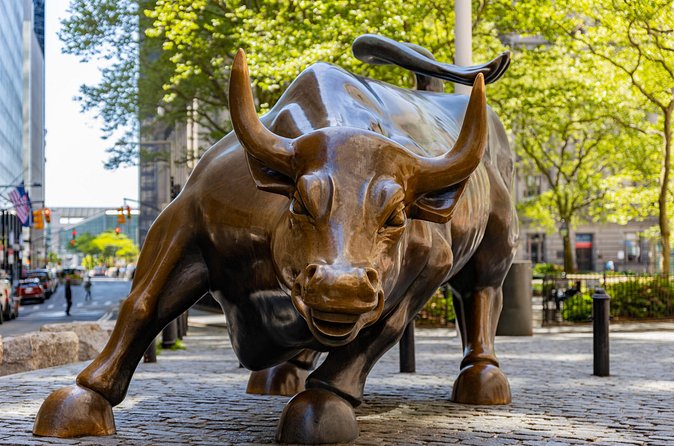
Wall Street is also a place to look up. The tour includes New York architecture and iconic landmarks, using the built environment as part of the story.
You’ll have a chance to view sites in the heart of Wall Street rather than hearing about the district from a distant neighborhood. That physical setting is important. Finance can feel invisible when you read about it in a book, but the walking route places the subject in streets and buildings where political and economic events unfolded.
Do not expect a slow architecture tour. The focus is the history of Wall Street, with architecture supporting that story. If you are hoping for long stops dedicated to design details, this may feel brisk.
For me, the best way to approach this part is to split your attention. Listen for the historical point, then take a moment to notice the scale, age, and character of the surrounding buildings. Even a short pause to look up can make the financial district feel less like a collection of office addresses.
Lower Manhattan after 9/11
The final historical stretch addresses the rebirth of Lower Manhattan after the devastating events of 9/11. This brings the tour into the recent past and shows that Wall Street’s story is still changing.
The inclusion of 9/11 gives you a way to understand Lower Manhattan as a place that had to rebuild its identity as well as its physical surroundings. The financial district is not only an old center of commerce. It has also had to recover, adapt, and present itself again as part of New York’s public life.
The subject deserves a respectful tone. This is not a sightseeing stop to rush through for a photograph. Listen closely to how the guide connects the events to the rebirth of the area, and give yourself room to process the transition from older financial history to living memory.
Because the tour lasts only two hours, this section cannot cover every detail. Think of it as a concise introduction to the changes that shaped Lower Manhattan after 9/11, not a full memorial or museum experience.
Is $49 a fair price for two hours?
At $49 per person, this is priced above a casual tip-based walk but below many longer, specialized city tours. The value depends on how much structure and context you want.
I think the price makes sense if you want one guide to connect several difficult subjects: Native American trade, European merchants, American finance, market crashes, labor, gender, political power, and 9/11. Doing that on your own would require several sources and a lot of walking without a clear thread.
The cost feels less worthwhile if you mainly want photographs of Wall Street landmarks or a quick orientation to the neighborhood. You can view the area independently, and this experience does not include food, drinks, transportation, or hotel pickup and drop-off.
There is no stated group size, so you should not assume an intimate small-group setting. The strongest value comes from the guide’s interpretation, especially if the guide can keep the many time periods and personalities clear within the brisk pace.
A rating of 4.6 from six pieces of feedback suggests generally strong satisfaction, but the small number means you should keep your expectations measured. The comments include very high praise for Jess and one clear complaint that the experience was not worth the price. That mixed signal fits the tour itself: history fans may find the packed content worthwhile, while people seeking a slow stroll may feel rushed.
Who will get the most from this walk?
I would choose this tour if you enjoy social history and want to understand how money, politics, labor, and place fit together. It suits you especially well if you have already seen Wall Street but feel you only know the surface symbols.
It is also a good pick for anyone curious about the people left out of traditional financial stories. The inclusion of women pioneers and enslaved laborers gives the walk a broader point of view than a tour focused only on famous financiers.
You should be comfortable walking for two hours and following a quick stream of information. Comfortable shoes are essential, and the tour takes place rain or shine, so bring weather protection as needed.
The experience is wheelchair accessible, which makes it a practical choice for many visitors. Still, because the tour is outdoors and walking-based, you may want to confirm current route conditions when booking if you have particular mobility needs.
The language is English, with a live guide. If you need another language, this is not the right match based on the available information.
Planning the day around your Wall Street walk
The tour does not include hotel pickup or drop-off, so plan your own way to and from the meeting point. It also does not include food or drinks, so handle those before or after the walk rather than expecting a refreshment stop.
I would avoid scheduling a tight appointment immediately afterward. The official duration is two hours, but you still need time to locate the red flag at the Museum of the American Indian and move on once the walk ends.
The flexible booking terms help if your New York plans are uncertain. You can reserve now and pay later, and cancellation is free up to 24 hours in advance for a full refund. Those terms reduce the risk of committing too early, though you still need to check the available starting times for your chosen date.
Should you book How Money Was Made?
Book it if you want a serious, compact explanation of Wall Street that goes beyond stock symbols and famous buildings. The strongest reasons are the broad timeline, the attention to enslaved laborers and women pioneers, and the honest treatment of crashes and unequal economic growth.
Skip it if you want a relaxed architecture stroll, a food-focused outing, or a tour with long stops at individual landmarks. The content is packed, and one clear piece of feedback described the pace as very fast.
For the best experience, wear comfortable shoes, arrive ready to listen, and treat the walk as a framework for understanding Lower Manhattan. At $49, it offers good value when the guide’s storytelling is your main reason for coming.
FAQ
How long is the Wall Street walking tour?
The tour lasts two hours.
How much does the tour cost?
The price is $49 per person.
Where do I meet the guide?
Meet in front of the Museum of the American Indian. The guide will be holding a red Inside Out Tours flag.
What language is the tour in?
The tour is conducted in English with a live English-speaking guide.
Is the tour wheelchair accessible?
Yes, the activity is listed as wheelchair accessible.
What happens if it rains?
The tour takes place rain or shine. Bring suitable weather protection and wear comfortable shoes.
Just listed around New York City
- NYC: Little Shop of Horrors Off-Broadway Ticket5 reviews
- Private NYC Airport Transfer: LGA to Manhattan – Up to 5★ 3.6 · 5 reviews
- New York City Tour in German★ 4.5 · 5 reviews
- New York: Hamilton and Washington Revolutionary Walking Tour★ 5.0 · 5 reviews
- NYC Freedom Tower Private Photo or Video Experience★ 4.0 · 6 reviews
- New York Afternoon Fall Foliage Cruise with Lunch★ 5.0 · 6 reviews
- Brooklyn Walking Tours by Locals: Private & 100% Personalized★ 4.0 · 6 reviews
- Southold Bay Oyster Farm Tour★ 5.0 · 6 reviews
Wall Street & Financial District Tours, compared.

NYC City Tour: Statue of Liberty, 9/11 Memorial, Wall Street
Read our review →
Wall Street Insider Tour with a Finance Professional
Read our review →Wall Street Insider Tour with a Finance Professional
Read our review →
Manhattan Group Tour Including Wall Street and 911 Memorial
Read our review →
Wall Street Tour with 9/11 Memorial and Statue Ferry
Read our review →
Wall Street and Financial District Walking Tour
Read our review →
Wall Street and Financial District Walking Tour
Read our review →Browse the lists this tour appears in