
Reviewed · HISTORICAL TOURS
Jewish History of NYC Private Tour with Transfers
The Lower East Side tells Jewish New York’s story block by block. On this private tour, you follow immigrant paths past old synagogues, the former Forward newspaper building, and the restored Eldridge Street Synagogue-Museum. The focus is not just on buildings, but on the people who built new lives here.
I like the small private format and the chance to ask questions as you go. I also like the practical finish: your guide can point you toward kosher restaurants, cafes, and stores. Guide Jonathan made a point of contacting his group before the tour and included two young daughters in the conversation, a useful sign for families.
The main consideration is time. The walking tour lasts two hours, so it gives you a focused introduction rather than a full study of Jewish New York. The 3.5-hour version includes transfers, but about 1.5 hours of that time may be spent in the car, depending on where you stay.
In This Review
- Key points at a glance
- Why the Lower East Side makes a strong Jewish history tour
- Starting at The Ludlow Hotel on Ludlow Street
- Angel Orensanz and the early synagogue story
- Bialystoker Synagogue and living Jewish practice
- East Broadway, the Educational Alliance, and practical help
- The Forward Building and the power of Yiddish news
- Eldridge Street Synagogue-Museum as the final stop
- Stories of immigration, faith, and Holocaust escape
- What the $192 price means in practical terms
- Food advice and the useful finish
- Families, mobility, and group planning
- Who should book this Lower East Side tour
- Final recommendation: a focused and personal introduction
- FAQ
- How long does the Jewish History of NYC Private Tour last?
- Where does the walking tour meet?
- Does the tour include hotel pickup and drop-off?
- Which languages are available?
- What sites are included?
- Is the tour suitable for wheelchair users?
- What is included in the 3.5-hour transportation option?
Key points at a glance

- Angel Orensanz Cultural Foundation: See the former synagogue that served as one of the neighborhood’s earliest Jewish houses of worship.
- Bialystoker Synagogue: Pass an active congregation with roots reaching back to 1826 and a notable interior.
- East Broadway landmarks: Learn how the Educational Alliance supported new arrivals and how the Forward shaped Yiddish culture.
- Eldridge Street finale: End at a beautifully restored synagogue-museum with Moorish Revival design.
- Private guide attention: Ask questions, set a comfortable pace, and request food or shopping suggestions.
- Optional vehicle service: The longer package includes private pickup and drop-off at your New York City accommodation.
Why the Lower East Side makes a strong Jewish history tour
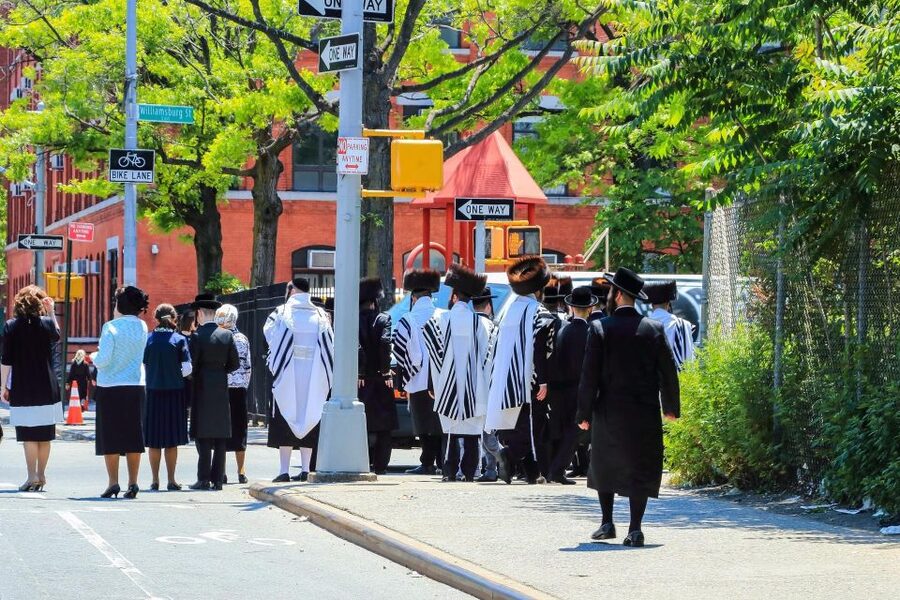
The Lower East Side was once home to one of the largest Jewish communities outside Israel. Its streets preserve traces of immigration, religious life, education, newspapers, social aid, and family businesses, even as the neighborhood has changed.
That mix makes this more useful than a tour that only lists dates and addresses. You are moving through places linked to daily life. A synagogue tells you about worship. A settlement house tells you about practical help. A newspaper office shows how a language and a public culture took shape in America.
I would choose this experience if you want a clear introduction to Jewish New York without spending a whole day in museums. The guide connects the stops, so you can understand why they belong together.
The private setup matters here. Jewish history can raise personal questions about religion, migration, identity, and the Holocaust. With your own guide, you can pause when a subject interests you instead of keeping to a fixed lecture. You can also ask for explanations in English, French, Italian, Spanish, or German.
More New York City history walks:
- New York City: American Museum of Natural History Ticket
★ 4.5 · 15,447 reviews - NYC: Starship Landmark 90 Minute Sightseeing Cruise
★ 4.6 · 3,666 reviews - Starship Landmark 90 Minute Sightseeing Cruise
★ 4.5 · 2,073 reviews
Starting at The Ludlow Hotel on Ludlow Street
The two-hour walking option begins in front of The Ludlow Hotel at 180 Ludlow Street. This is a practical meeting place in the Lower East Side, but you should check the final instructions sent by Rosotravel the day before. The company advises guests to look for important details in their email before setting out.
Wear comfortable shoes. The route runs rain or shine, and the guide adjusts the pace to the group. That flexibility is helpful, but weather still affects how enjoyable an outdoor neighborhood walk feels. Bring suitable clothing and expect to spend most of the two-hour option on city streets.
The exact order of stops can depend on the selected package. Think of the tour as a guided route through key Jewish sites rather than a promise that every building will be entered. Several places are viewed from the street, while the Synagogue-Museum at Eldridge Street is presented as a major final stop.
Angel Orensanz and the early synagogue story

One of the most striking stops is the Angel Orensanz Cultural Foundation. The building began as the first synagogue built in this neighborhood, giving it a direct link to the early Jewish community.
Today, its cultural role adds another layer to the story. You see how a religious building can outlive its first purpose and continue to matter as a place connected with art and public life. Your guide can help you read the building not only as architecture, but also as evidence of how the neighborhood’s Jewish population changed over time.
This is the kind of stop that benefits from a guide. On your own, you might admire the facade and keep walking. With historical context, you can place it within the experience of immigrants creating institutions in an unfamiliar city.
Do not expect a long visit at every address. The walking time is limited, and the tour has several important stops. If you are especially interested in synagogue architecture, ask your guide how much time the route allows at Angel Orensanz before the tour begins.
Bialystoker Synagogue and living Jewish practice
The route also takes you past Bialystoker Synagogue, an active place of worship with roots reaching back to 1826. Its continued religious use gives the tour a link to Jewish life in the present, not only to the past.
The synagogue is known for its striking interior and long history. Since the description emphasizes passing by the building, you should not assume that the tour includes a full interior visit unless your guide confirms it. That distinction matters if your main goal is architectural photography or an extended look inside.
Still, an active synagogue is valuable in a history tour. It reminds you that the Lower East Side is not simply an outdoor museum. Religious buildings can remain part of community life even when the population, neighborhood economy, and surrounding streets change.
Your guide also discusses American Jewish traditions and the ways Jewish immigrants shaped New York. The emphasis is broad enough for first-time visitors, while the private format gives you room to ask about details that connect with your own interests.
A few more New York City picks to weigh up
- Private Central Park Pedicab Tour
★ 5.0 · 6,981 reviews - Private Transfer from Manhattan to NYC Airports (JFK/EWR/LGA)
★ 3.5 · 1,683 reviews - New York City: Private Central Park Pedicab Tour
★ 4.9 · 1,637 reviews - Carriage Ride in Central Park (VIP – PRIVATE) Since 1964™
★ 4.0 · 1,074 reviews
East Broadway, the Educational Alliance, and practical help
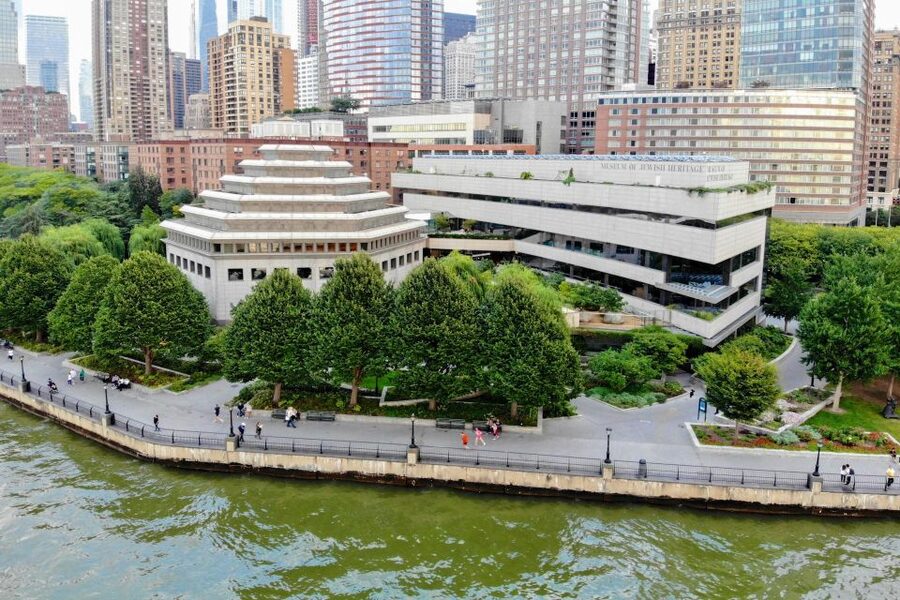
East Broadway brings the social side of immigration into view. Here, you encounter the Educational Alliance, an institution that once offered important support to Jewish immigrants arriving in New York around the turn of the 20th century.
This stop helps correct a common misunderstanding about immigration history. New arrivals did not simply reach America and immediately succeed on their own. They needed education, social assistance, community networks, and places where they could learn how to manage life in a new city.
The Educational Alliance represents that support system. Your guide can explain how institutions like this helped people adjust, build skills, and maintain ties with others who shared parts of their background.
I like this part of the route because it shifts the focus from famous names to ordinary needs. Finding work and housing mattered, but so did learning, community, and a sense of belonging. Those details make the past easier to understand.
Families may find this section especially useful. Jonathan, one of the guides associated with the tour, made a clear effort to include children of elementary-school age in the discussion. A private guide can simplify explanations, answer basic questions, and keep younger participants involved without slowing the whole group.
The Forward Building and the power of Yiddish news
A short distance away is the Forward Building, the former home of Forverts, a major Yiddish-language newspaper. This stop brings language and public debate into the tour.
A newspaper could do much more than report the day’s events. For Jewish immigrants, a Yiddish publication helped readers follow American life, discuss politics and culture, and stay connected to a language they understood. The Forward became an important part of Jewish-American culture.
You will not just be looking at an old office building. You will be considering how a community built its own public voice. The building marks a time when print media helped shape identity and connect readers across a rapidly growing city.
This is also a good point to ask your guide about language. The tour is offered in English, French, Italian, Spanish, and German, but the history includes the role of Yiddish in American Jewish life. A guide who explains that clearly can add much more than a simple architectural description.
Eldridge Street Synagogue-Museum as the final stop
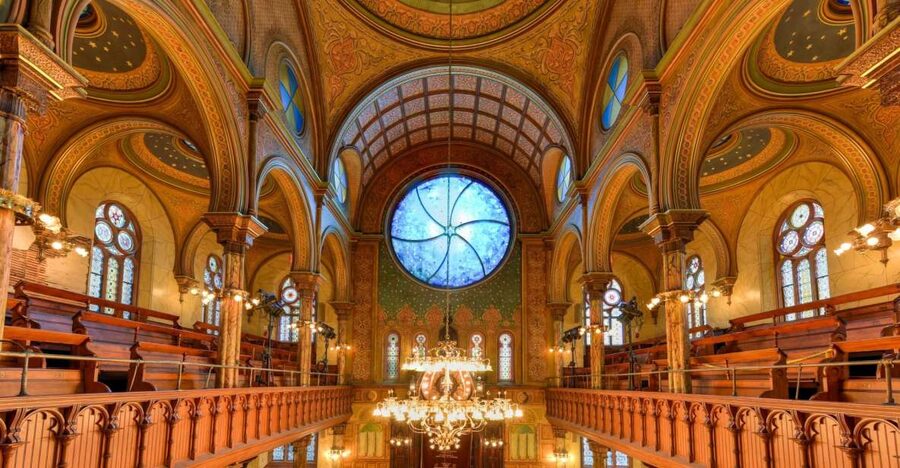
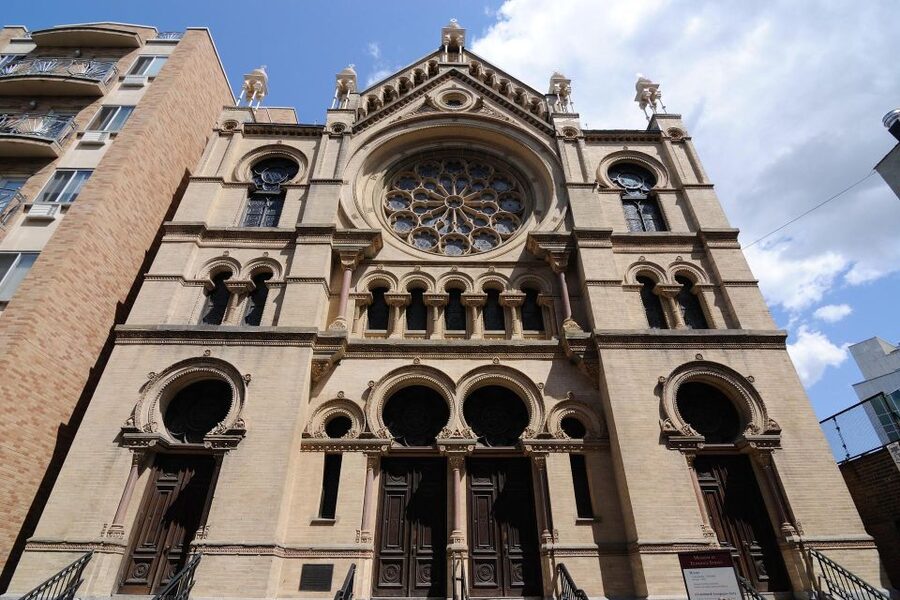
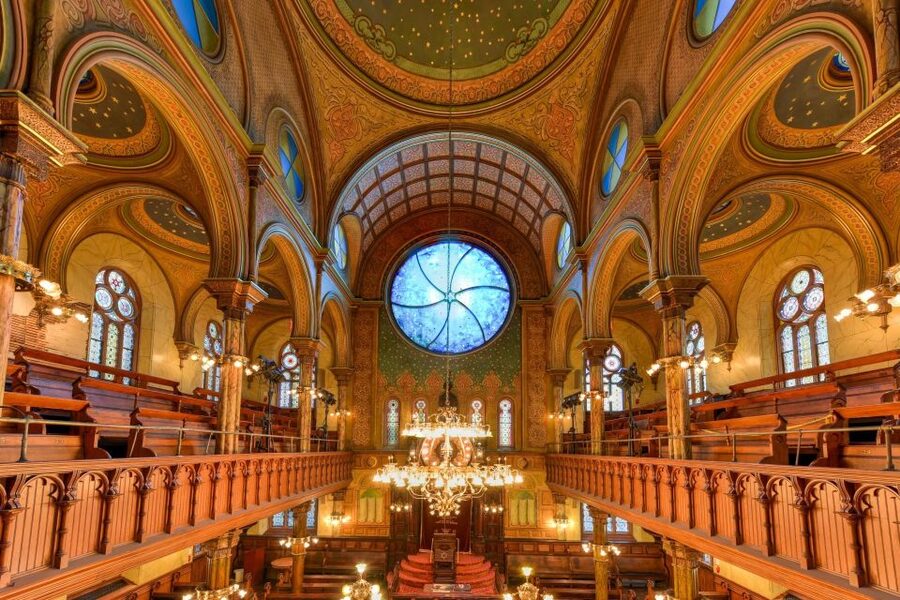
The tour ends at the Synagogue-Museum at Eldridge Street, one of the most visually important sites on the route. This restored 19th-century house of worship presents Jewish heritage alongside Moorish Revival architecture.
The building’s design makes the final stop memorable. Its restored details help you picture the scale and ambition of a Jewish congregation building a permanent religious home in New York. After the more general street history earlier in the walk, Eldridge Street gives you a focused architectural and cultural destination.
Because it is a synagogue-museum, the site helps explain both religious practice and preservation. You are not only hearing about a former congregation. You are seeing a place maintained so that its design, community story, and connection to Jewish New York remain available to the public.
The tour description does not specify the amount of time spent inside or whether admission is separately arranged, so ask your guide or check the booking details if an interior visit is essential to your plans. The stop is presented as part of the route, but the 2-hour schedule requires a steady pace.
If you plan to visit the museum at greater length, you may want to treat this tour as an introduction and return later. That is not a weakness. A guided walk gives you context, then you can spend additional time at the site that interests you most.
Stories of immigration, faith, and Holocaust escape
The tour includes stories of Jewish immigration and escape from the Holocaust. These subjects require care, and the value of a private guide is the ability to ask for context rather than receive a rushed list of tragedies.
The route links the large historical forces with local places. Immigration is tied to the neighborhood streets. Faith is tied to the synagogues. Community support is tied to the Educational Alliance. Public culture is tied to the Forward Building.
That structure makes the subject easier to follow. You are not expected to remember a long timeline before arriving. Instead, each address gives the guide a reason to explain one part of the larger story.
If you want a specialist tour focused only on Holocaust history, this may not be the right choice. The experience covers a wider subject: Jewish life in New York, immigration, religious institutions, traditions, and cultural development. The Holocaust is part of the story, not the entire subject.
What the $192 price means in practical terms
At $192 per person, this is a premium choice for a two-hour neighborhood walk. The price makes more sense for people who value a private guide, language choice, personal questions, and a tailored pace. For a solo visitor or a couple, the cost will feel higher than joining a larger group.
The value improves when several people share the private booking. You receive dedicated guide time rather than a standard group lecture, and the guide can adjust explanations for adults, children, or people with a strong family connection to Jewish history.
The 3.5-hour option adds private round-trip transportation from your accommodation. A standard car is arranged for one to three people, while groups of four or more use a van. If you prefer a larger vehicle, the instructions advise booking the four-person tour.
Keep the timing in view. About 1.5 hours of the longer option is transfer time, and traffic can change that estimate. You are buying convenience, not an extra 1.5 hours of Jewish history. The benefit is arriving without navigating New York and returning to your accommodation in a private, air-conditioned vehicle.
For a family, older visitor, or anyone staying far from the Lower East Side, that convenience may be worth the added cost. If you are already nearby and comfortable using New York transportation, the two-hour walking option gives you the core experience more efficiently.
Food advice and the useful finish
The included tips on kosher restaurants, cafes, and stores add value after the formal route ends. Food advice is especially helpful in a neighborhood where Jewish culinary traditions, local businesses, and changing commercial streets overlap.
Jonathan’s restaurant suggestions were particularly useful for one family, and that is the kind of practical help I would ask for directly. Tell your guide what you want, such as a quick lunch, a traditional meal, a cafe stop, or a place to buy Jewish food. The information provided does not name specific restaurants, so the quality of this part depends on matching the advice to your plans.
This is one advantage of a private tour over a recorded audio route. You can turn a history walk into a useful half-day plan, with suggestions for what to do next in the Lower East Side.
Families, mobility, and group planning
The tour is listed as wheelchair accessible, and the operator asks guests with disabilities to make contact in advance so arrangements can be made. That advance notice is sensible for a historic neighborhood route, where street conditions and site access can vary.
The guide adjusts walking speed to the group. For groups of up to 25 people, one licensed guide is provided. Groups of 26 to 50 receive two guides so people can hear and ask questions. Since this is sold as a private group experience, confirm the group size and exact arrangement when booking if that point matters to you.
Families should find the format manageable if children can handle a two-hour city walk. The example of Jonathan involving elementary-school-age children suggests that the guide can adapt the conversation, but the tour remains history-focused rather than designed as a children’s activity.
The route operates in all weather. Comfortable shoes and proper clothing are not optional extras here. Rain can make any walking tour less pleasant, and the private nature of the experience does not remove the need to prepare.
Who should book this Lower East Side tour
I would recommend it to you if:
- You want a private introduction to Jewish New York.
- You care about immigration, synagogue history, Yiddish culture, and community institutions.
- You prefer asking questions instead of following a large group.
- You are visiting with children and want the guide to adjust explanations.
- You would use advice on kosher dining and Jewish shops.
- You value hotel pickup enough to pay for the longer option.
I would choose another plan if you want a full museum day, extensive synagogue interiors, or a tour devoted only to Holocaust history. The route is broad and focused, not exhaustive.
The 2-hour package is best for visitors already near the Lower East Side who want the historical core. The 3.5-hour package suits you if private transportation will make the day easier, especially when your accommodation is elsewhere in New York City.
Final recommendation: a focused and personal introduction
This tour earns its place in a New York itinerary because it connects buildings with human needs. You see worship, education, newspapers, immigration support, and cultural survival in a compact area.
I like the mix of well-known sites and street-level context, along with the freedom to ask questions. The strongest practical feature is the guide’s ability to tailor the experience, whether that means including children, explaining in your preferred language, or suggesting kosher places for later.
Book it if you want a focused Jewish history walk with personal attention and you accept that two hours cannot cover every layer of the Lower East Side. Choose the transfer package only if door-to-door convenience matters to you. At $192 per person, it is not a budget walk, but for a private group seeking clear history, flexible conversation, and a helpful local orientation, the value can be solid.
FAQ
How long does the Jewish History of NYC Private Tour last?
You can choose a 2-hour walking option or a 3.5-hour option with private transportation. The longer option includes about 1.5 hours of round-trip transfer time.
Where does the walking tour meet?
The meeting point is in front of The Ludlow Hotel at 180 Ludlow Street, New York, NY 10002.
Does the tour include hotel pickup and drop-off?
Pickup and drop-off at your accommodation in New York City are included only with the 3.5-hour option. They are not included with the 2-hour walking tour.
Which languages are available?
The live guide is available in English, French, Italian, Spanish, and German.
What sites are included?
The route includes Jewish heritage sites in the Lower East Side, including the Angel Orensanz Cultural Foundation, Bialystoker Synagogue, the Educational Alliance, the Forward Building, and the Synagogue-Museum at Eldridge Street. The exact itinerary depends on the option selected.
Is the tour suitable for wheelchair users?
The activity is listed as wheelchair accessible. You should contact Rosotravel in advance so the operator can discuss arrangements for your needs.
What is included in the 3.5-hour transportation option?
A professional driver provides private pickup and drop-off in a clean, air-conditioned vehicle. One to three people use a standard car, while groups of four or more use a van.
Just listed around New York City
- Hudson Valley Wine and Food Day Trip with Sommelier host from NYC★ 5.0 · 6 reviews
- Tour of Contrasts in Italian★ 4.0 · 6 reviews
- NYC: Operation Mincemeat on Broadway6 reviews
- The NYC Speakeasy Adventure: A Tipsy Trip Through History★ 5.0 · 6 reviews
- Manhattan’s Famous Artists: Exploration Game and Tour★ 5.0 · 6 reviews
- Chelsea and the High Line NYC Architecture Walking Tour★ 5.0 · 6 reviews
- New York Salsa Lovers Dance Experience★ 4.0 · 6 reviews
- New York: Holiday Lights Tour with Rockefeller Tree★ 5.0 · 6 reviews
Historical Tours, compared.

Starship Landmark 90 Minute Sightseeing Cruise
Read our review →
Starship Landmark 90 Minute Sightseeing Cruise
Read our review →
American Museum of Natural History Admission Ticket
Read our review →
Top Rated Brooklyn Half-Day Food, History & Culture Tour via bus
Read our review →
The Original Greenwich Village Food & Cultural Tour Since 1999
Read our review →
The Speakeasy Adventure: A Tipsy Trip Through History
Read our review →Browse the lists this tour appears in