
Reviewed · CITY TOURS
New York City: Prohibition Walking Tour
New York’s Prohibition story comes alive in old saloons, political back rooms, and streets where gangsters and city power brokers once made deals. This two-hour walk links four historic bars with stories of bootlegging, speakeasies, Tammany Hall, and the people who bent the law.
I like the mix of real drinking history and neighborhood walking, rather than a talk delivered in one room. I also like the use of old photographs on a tablet, which guide Earl has used to show famous customers and how these places looked in earlier days. The main drawback is that you cover plenty of ground, so comfortable shoes are essential and the tour is not suited to people with mobility impairments.
In This Review
- Key points at a glance
- Why New York’s old bars tell the Prohibition story
- Meeting Earl at Little Owl
- Little Owl and the first taste of old New York
- McSorley’s and the weight of tradition
- Little Italy and the city behind the saloons
- Old Town Bar and the mechanics of an old saloon
- Gramercy Park and a change of pace
- Pete’s Tavern and the final saloon
- What the $59 price buys you
- Who should book this walking tour?
- Should you book the Prohibition Walking Tour?
- FAQ
- How long is the New York City Prohibition Walking Tour?
- Where does the tour meet?
- How early should I arrive?
- Who leads the tour?
- Which saloons are included?
- Are drinks included in the $59 price?
- Is the tour suitable for people under 21?
- What should I bring?
- Can I cancel for a full refund?
Key points at a glance
- Four historic saloons: Visit Little Owl, McSorley’s, Old Town Bar, and Pete’s Tavern during the walk.
- Earl’s personal guiding style: Earl leads the English-language tour and brings photographs and stories to the streets.
- Tammany Hall and political corruption: Learn how New York’s political machine connected with the city’s underworld.
- A walk through several districts: The route links Little Italy, Union Square, Gramercy Park, and old bar neighborhoods.
- Drinks are optional: The activity information says drinks are not included, though one booking review reported drinks were included at each stop. Confirm this before you go.
- Adults only: You must be at least 21 and should bring photo identification, with a copy accepted according to the tour information.
Why New York’s old bars tell the Prohibition story
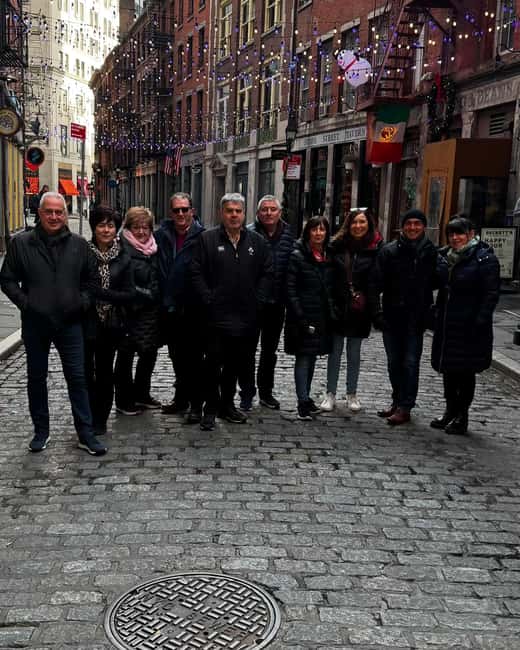
Prohibition is often presented as a national story about hidden stills, bootleggers, and secret clubs. In New York, the story is also about ordinary-looking bars, political influence, police corruption, and neighborhoods where business continued behind closed doors.
That is the useful angle of this tour. You are not only moving from bar to bar for a drink. You are using old saloons as places to understand how the city worked when alcohol was illegal. The bars became meeting points for criminals, politicians, workers, and people who knew how to keep quiet.
The tour also puts Tammany Hall into the picture. Tammany Hall was the powerful political organization that shaped New York city politics for generations. Its story gives the walk a second thread: Prohibition was not only about lawbreakers hiding from the law. It was also about who controlled the law, who enforced it, and who could look the other way.
You will hear about gangsters, bootleggers, notorious figures, and political powerhouses as you walk. The exact balance depends on Earl’s storytelling, but the setting does much of the work. These are old streets and long-running bars, not a recreated attraction built for tourists.
More New York City walking tours:
- SoHo, Little Italy, and Chinatown Walking Tour in New York
★ 5.0 · 3,153 reviews - Secrets of Grand Central Station Walking Tour New York City
★ 5.0 · 1,796 reviews - Greenwich Village Walking and Food Tasting Tour
★ 5.0 · 1,572 reviews
Meeting Earl at Little Owl
The tour begins across from the Little Owl restaurant, at a bench where the guide will be waiting. Arrive 15 minutes early. That extra time matters in Manhattan, where a missed turn or delayed subway ride can quickly turn into a late arrival.
Earl leads the tour in English. The strongest praise attached to the experience focuses on his personal approach. He has been described as fun, personable, and easy to spend time with, with one person comparing the outing to visiting old bars with a friend. Another booking came from a first tour, which suggests the experience may have a small-provider feel rather than the polished machinery of a large sightseeing company.
That can be a plus if you prefer a guide who talks with you instead of reading a script. Earl also uses a tablet to show photographs of the locations and their famous customers. This is a practical touch. A building can be hard to picture as a Prohibition-era meeting place when you are looking at it from a modern sidewalk. Old images help connect the present-day exterior with its earlier role.
The meeting point has one minor practical weakness: the directions are brief and refer to the bench across from Little Owl. Look up the restaurant before setting out and allow time to identify the spot.
Little Owl and the first taste of old New York
Little Owl is both the meeting point and the place where the tour returns. It helps give the walk a clear beginning and end, rather than leaving you in an unfamiliar part of Manhattan.
The stop also sets the tone for the activity. You begin among old New York drinking places, then move outward through neighborhoods tied to political power and the city’s nightlife. The point is not simply to count how many bars you can visit. It is to see how taverns functioned as social and business centers.
The activity promises access to four historic saloons, along with inside stories from legendary staff. That wording suggests the guide adds details that you would not get from reading a plaque outside the door. Still, the tour does not promise a private room, a reserved seat, or a full sit-down meal. Think of the bars as stops within a walking tour, not four separate pub visits.
McSorley’s and the weight of tradition
McSorley’s is one of the best-known names on the route. Its presence gives the tour an immediate connection to New York’s old saloon culture.
Here, the value is partly visual and partly atmospheric. An old bar can show you how much of New York’s drinking culture was built around familiar rooms and long-standing routines. Earl’s photographs can add faces and stories to the place, helping you understand why certain bars became gathering points for famous and infamous people.
The Prohibition section is especially useful at a bar like this. You can hear how a place connected to legal drinking also fits into an era when alcohol was banned. The tour focuses on speakeasies, bootlegging, organized crime, and corrupt politics, so you get a sense of the complicated gap between official rules and daily life.
Do not assume that visiting a famous saloon means you will have plenty of time to sit. The whole tour lasts two hours and includes several stops plus neighborhood walking. If you want a long drink at McSorley’s, you may need to return on your own.
A few more New York City picks to weigh up
- New York City: Statue of Liberty & Ellis Island with Ferry
★ 4.6 · 18,683 reviews - New York City: American Museum of Natural History Ticket
★ 4.5 · 15,447 reviews - New York City: Manhattan Helicopter Tour
★ 4.7 · 7,076 reviews - New York City: The FRIENDS™ Experience Entry Ticket
★ 4.7 · 6,234 reviews
Little Italy and the city behind the saloons
The walk continues through Little Italy. This portion matters because it widens the story beyond the bar interiors.
Little Italy is tied to the popular image of old New York, but this tour uses the neighborhood as part of a larger story about power, crime, migration, and city life. You will hear about gangsters and bootleggers while walking through streets that help you picture the dense urban world in which these figures operated.
This is also where the walking format earns its price. A bar-only experience could tell you about Prohibition, but it would miss the links between drinking places and the surrounding city. Moving from one district to another helps you understand that the underworld was not confined to one secret room. It operated through relationships, businesses, political contacts, and familiar public places.
The route includes steps and a fair amount of walking. One person specifically noted getting plenty of steps in, so do not treat the two-hour estimate as two hours of standing in bars. Wear shoes you can use comfortably on city pavement.
Old Town Bar and the mechanics of an old saloon
Old Town Bar is another major stop. Along with McSorley’s, Pete’s Tavern, and Little Owl, it forms the four-saloon core of the experience.
The attraction here is the chance to compare several drinking establishments rather than seeing one famous interior and hearing a general lecture. Each saloon becomes a case study in how old bars survived, who used them, and how their reputations grew.
The stories cover notorious criminals and political figures, but the tour also looks at staff and local characters. That human scale is important. Prohibition was shaped by famous gangsters, yet it depended on bartenders, messengers, owners, police officers, politicians, and customers. Stories from legendary staff can make the history feel less like a list of names.
Drinks are optional. The stated activity information says you pay for your own drinks, so budget extra if you want to order at the stops. One booking review says drinks were included at each stop, which conflicts with the official inclusion details. I would ask Forty Thieves Tours to confirm the current arrangement before booking, especially if the drink cost affects your decision.
Gramercy Park and a change of pace
The walk then reaches Gramercy Park. This gives the tour a pleasant change from bar interiors and narrow streets.
The park is one of Manhattan’s best-known green spaces, and it adds visual variety to a route focused on saloons and city corruption. The tour includes a guided visit to the area, but the information does not promise entry inside the private park. You should expect to hear stories and see the surroundings rather than assume you can walk through the gates.
Gramercy Park also helps show the contrast between different sides of old Manhattan. The tour moves between drinking places, political history, neighborhood streets, and more refined city spaces. That contrast makes the central theme clearer: Prohibition touched many kinds of New Yorkers, not only criminals in back rooms.
Pete’s Tavern and the final saloon
Pete’s Tavern is the last named saloon on the route, and the experience concludes at a legendary bar before returning to Little Owl. Ending in a saloon suits the subject. After hearing about speakeasies, bootlegging, and political deals, you finish in one of the old drinking places that gives the story its shape.
The final stop is also useful for anyone who wants to keep the evening going. The tour itself lasts two hours, and drinks are not part of the listed price, but you may choose to stay for another drink after the formal walk ends. That lets you separate the guided history from your own bar time.
The route description lists Little Owl as the final arrival point, while Pete’s Tavern is the last saloon stop. In practical terms, expect a walking circuit rather than a one-way trip that leaves you across town. That makes it easier to plan dinner or another activity afterward, though you should follow the guide’s directions on the day.
What the $59 price buys you
At $59 per person, this is not the cheapest way to see Manhattan. Its value depends on how much you want the guide and the stories.
You are paying for two hours with a live English-speaking guide, visits to four historic saloons, neighborhood walks, Prohibition stories, Tammany Hall context, and the chance to see places that are difficult to understand from the outside. If Earl’s photographs and storytelling are central to the experience, the price is easier to justify for someone who enjoys social history.
The calculation changes if you plan to buy drinks at every stop. Since drinks are listed as not included, add that expense to the $59. The conflicting note about included drinks makes it wise to confirm the policy in advance. If you only want a brief look at old bars, the tour may feel expensive. If you would otherwise visit several of these places and research their stories yourself, the guided route can offer good value.
The tour also includes free cancellation up to 24 hours before the start and a reserve-now, pay-later option. Those terms are helpful when your New York schedule is still changing, but check the current booking conditions when you reserve.
Who should book this walking tour?
I would choose this for adults interested in New York crime stories, political history, old bars, and neighborhood walking. It suits people who prefer stories tied to actual places, especially if you enjoy stopping for a drink while learning how a city’s past shaped its present.
It is also a good fit for repeat visitors who have already seen the major landmarks. You get a different view of Manhattan through saloons, political machines, and old neighborhood connections.
I would not pick it for children, anyone under 21, or anyone who needs an accessible route. The tour is explicitly 21-plus and not suitable for people with mobility impairments. It also may not suit you if you dislike walking, crowded bar settings, or paying separately for drinks.
Bring comfortable shoes and photo identification. A copy is accepted according to the tour information. Dress for walking outdoors, since the tour moves between indoor saloons and city streets.
Should you book the Prohibition Walking Tour?
Book it if you want old New York told through real bars and streets, not a general sightseeing circuit. Earl’s use of photographs and his conversational style add value, while the mix of gangsters, bootleggers, Tammany Hall, Little Italy, and Gramercy Park gives the two hours a clear sense of place.
Think twice if you want a slow pub crawl with long visits at each bar. The route covers plenty of ground, and the listed price does not include drinks. Confirm the drink policy before you pay, arrive early at the Little Owl meeting point, and wear good walking shoes. For the right audience, this is a lively, adult history walk with enough local character to make the $59 worthwhile.
FAQ
How long is the New York City Prohibition Walking Tour?
The tour lasts two hours. It includes walking between several Manhattan neighborhoods and stops at four historic saloons.
Where does the tour meet?
The meeting point is at a bench directly across from the Little Owl restaurant. The guide will be waiting there.
How early should I arrive?
Arrive 15 minutes before the scheduled start time so you can find the bench and meet the guide without delaying the group.
Who leads the tour?
Earl leads the English-language walking tour.
Which saloons are included?
The route includes Little Owl, McSorley’s, Old Town Bar, and Pete’s Tavern.
Are drinks included in the $59 price?
The activity information says drinks are not included and must be paid for by you. One booking comment reported drinks included at each stop, so confirm the current policy with Forty Thieves Tours before booking.
Is the tour suitable for people under 21?
No. The tour is for people aged 21 and older.
What should I bring?
Bring comfortable shoes and photo identification. A copy of your ID is accepted according to the tour information.
Can I cancel for a full refund?
Yes. You can cancel up to 24 hours before the tour for a full refund. A reserve-now, pay-later option is also available.
Just listed around New York City
- New York City Airport Group Arrival Transfer★ 5.0 · 5 reviews
- NYC: Visit Museum of Modern Art & 3hr Manhattan Walking Tour★ 4.5 · 5 reviews
- Outdoor Escape Room in Brooklyn – Prospect Heights★ 5.0 · 5 reviews
- Private Transfer from JFK&LGA Airport to New York or Vice versa★ 5.0 · 5 reviews
- New York: City highlights Private Guided Walking Tour★ 5.0 · 5 reviews
- Boat or Yacht Rental in Sag Harbor, The Hamptons, or Monatauk★ 5.0 · 5 reviews
- New York City: The Bible at the Metropolitan Museum of Art★ 5.0 · 5 reviews
- Private New York City Food Tour of East Village and Greenwich Village★ 4.5 · 5 reviews
City Tours, compared.



Top of the Rock Observation Deck New York City Ticket
Read our review →

Circle Line: 2hr – New York City Harbor Lights Cruise
Read our review →
Browse the lists this tour appears in