Reviewed · CITY TOURS
New York City Slavery and Underground Railroad Tour
New York’s financial district carries a past that many sightseeing walks skip. This 2.5-hour walking tour connects Fort Amsterdam, Wall Street, the former slave market area, and African Burial Ground with the stories of enslaved New Yorkers, abolitionists, and people seeking freedom.
I like two things right away: the route shows how slavery was tied to the city’s growth, and the guides use photographs and personal stories to make distant events easier to understand. The tour is also priced at $49, a fair sum for a focused history walk with a local guide. The main drawback is simple: you spend a lot of time standing outdoors while listening, and there may not be much to look at during every talk.
In This Review
- Key points to know before booking
- Why this downtown walk matters
- Meeting at the former Custom House
- Battery Park and the first Manhattan shoreline
- Fraunces Tavern and revolutionary-era New York
- Wall Street and the city built by enslaved labor
- Foley Square and the human presence behind the record
- African Burial Ground, the tour’s powerful ending
- What the guide adds to the experience
- The walking conditions and pacing
- Is $49 a fair price?
- Who should book this walk
- My call: book it for the story, not the scenery
- FAQ
- Where does the New York City Slavery and Underground Railroad Tour begin?
- Where does the tour end?
- How long does the tour last?
- What language is the tour offered in?
- What is included in the price?
- Are museum admission fees included?
- Is hotel pickup provided?
- How many people can join the tour?
- Is the tour physically demanding?
- What happens if the weather is poor?
Key points to know before booking
- Follow New York’s African-American Freedom Trail: The route links several downtown sites tied to slavery, resistance, abolition, and remembrance.
- Finish at African Burial Ground: This sacred memorial is the emotional center of the walk.
- See Wall Street in a new light: The tour explains how enslaved labor helped build the early city and its financial district.
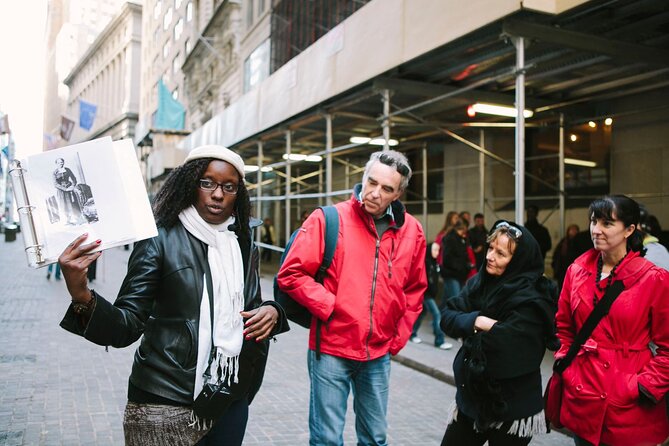
- Guides bring strong teaching skills: Past guides have included Ludie, Maia, and Sean, with some using historical photographs and classroom-style explanations.
- Plan for outdoor standing: Comfortable shoes, weather-ready clothing, and patience at street-corner talks will make a real difference.
- Small enough for discussion: Groups can reach up to 30 people, so this is not a private tour but is still more personal than a large sightseeing bus.
Why this downtown walk matters
New York often gets presented as a city of immigration, commerce, skyscrapers, and rapid change. That story is true, but incomplete. Enslaved Africans and African Americans helped build the colonial city, worked in homes and businesses, and contributed to the growth of trade and finance.
This tour puts those facts on the ground. You are not simply hearing a general lecture about slavery in the United States. You are walking through Lower Manhattan and learning how the system operated here, how enslaved people resisted it, and how abolitionists helped people escape.
The route also places New York’s role in the Underground Railroad in its proper setting. The Underground Railroad was not a railroad and rarely followed one fixed path. It was a loose network of secret routes, safe houses, guides, and allies. New York served both as a destination for freedom seekers and as a place where people could hide while moving toward free states.
The guides connect major figures, including Frederick Douglass, to this wider movement. The subject is difficult, and the best guides handle it directly without turning the walk into a simple tale of heroes and villains. Past guides such as Ludie, Maia, and Sean have been praised for clear explanations, strong delivery, and a willingness to connect the past with questions about American society today.
A few more New York City picks to weigh up
- New York City: Statue of Liberty & Ellis Island with Ferry
★ 4.6 · 18,683 reviews - New York City: American Museum of Natural History Ticket
★ 4.5 · 15,447 reviews - New York City: Manhattan Helicopter Tour
★ 4.7 · 7,076 reviews
Meeting at the former Custom House
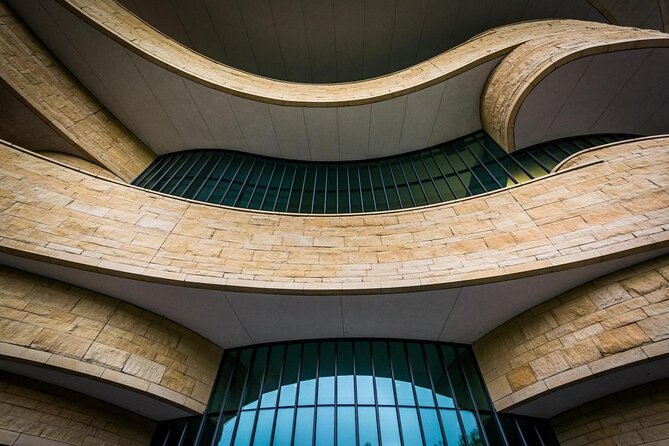
The tour begins at 1 Bowling Green, outside the National Museum of the American Indian. The building is the former Alexander Hamilton Custom House, completed in 1907 and designed in the Beaux-Arts style.
You begin outside, so admission to the museum is not part of the experience. The meeting point is easy to reach by public transportation and sits beside some of Manhattan’s most important colonial and financial sites.
This opening location gives the guide a useful chance to set the scene. The building celebrates commerce and trade, while the tour asks you to think about the human labor and unequal systems behind that prosperity. That contrast is central to the walk.
Arrive ready to listen rather than expecting a long museum visit. The experience is built around streets, monuments, and stories told at specific places.
Battery Park and the first Manhattan shoreline
The short stop at Battery Park connects the tour to the earliest years of Manhattan. Long before Ellis Island processed newcomers and before the Statue of Liberty greeted ships, people arrived in this waterfront area from Europe and elsewhere.
The Battery also helps explain why Lower Manhattan became a center of trade. Ships, cargo, labor, and people all moved through the area. Enslaved Africans were part of this colonial economy, and the guide uses the setting to show how slavery was woven into ordinary city growth.
This is a brief stop, listed at about 10 minutes, so do not expect a full exploration of the park. Its value is context. The tour uses the shoreline to remind you that New York’s story began as a port and that port economies depended on systems of labor that were often brutal and hidden from later tourist narratives.
Fraunces Tavern and revolutionary-era New York
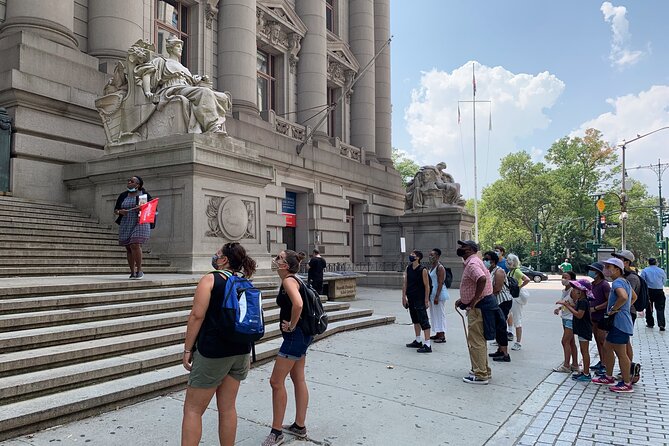
Fraunces Tavern is visited from the exterior. The site played an important role before, during, and after the American Revolution, making it a useful place to discuss the contradiction between revolutionary language about liberty and the continued existence of slavery.
You will not be taking a full museum tour here. Instead, the guide uses the building and its setting as a prompt for a larger discussion about independence, power, and who was included in the new nation’s promises.
Some visitors may wish they had more time inside Fraunces Tavern. If you have a strong interest in revolutionary history, you can return later on your own. The tour’s purpose is broader: it shows how the struggle for freedom in the late 18th and 19th centuries unfolded alongside the growth of American institutions.
Another side of New York City for the same day:
- NYC: SUMMIT One Vanderbilt Tickets
★ 4.7 · 51,195 reviews - NYC: 9/11 Memorial & Museum Timed-Entry Ticket
★ 4.8 · 31,428 reviews - NYC: Empire State Building Tickets – Observatory & Museum
★ 4.7 · 25,757 reviews - Statue of Liberty and Ellis Island Tour: All Options
★ 5.0 · 13,571 reviews
Wall Street and the city built by enslaved labor
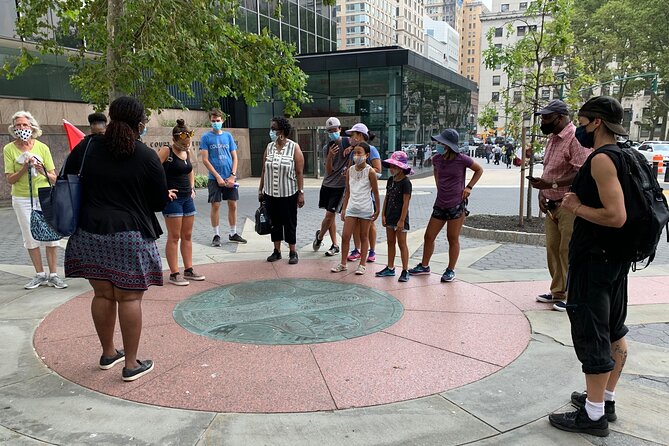
Wall Street is one of the strongest stops because it changes the way you see a familiar place. The name refers to an actual wall built between 1685 and 1699. That wall marked the edge of colonial Manhattan, and enslaved people played an important role in constructing it and in supporting the surrounding economy.
The guide also explains how people escaping slavery could hide in New York while moving toward free states. Abolitionists and other allies provided help, but the route was dangerous. Freedom seekers still faced capture, violence, and the risk of being returned to slavery.
This section requires careful listening. Wall Street is loud, crowded, and visually dominated by modern finance. You may be standing on a busy sidewalk while the guide explains how the district’s foundations were shaped by Black labor and human trafficking.
That is also the point. The past has not been preserved here as a neat historic district. It sits beneath office towers, traffic, and daily business. The tour gives you a way to read the street beyond its current image as a symbol of money and markets.
One useful caution: some visitors have wanted more time on the relationship between Wall Street, Northern commerce, and slavery. The subject is covered, but the stop cannot explain every connection in detail. If that part interests you most, ask your guide questions while the group is there and plan to continue reading afterward.
Foley Square and the human presence behind the record
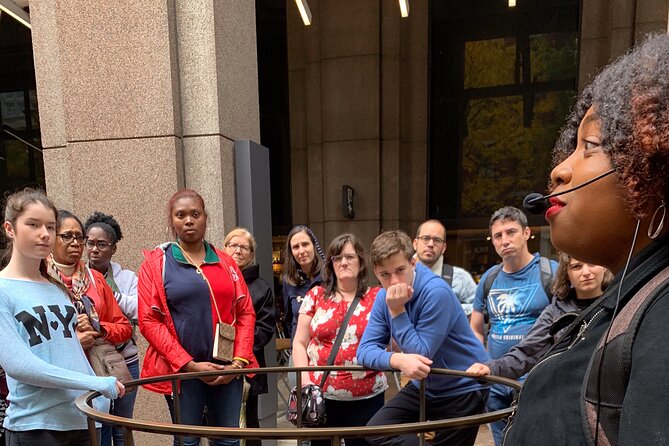
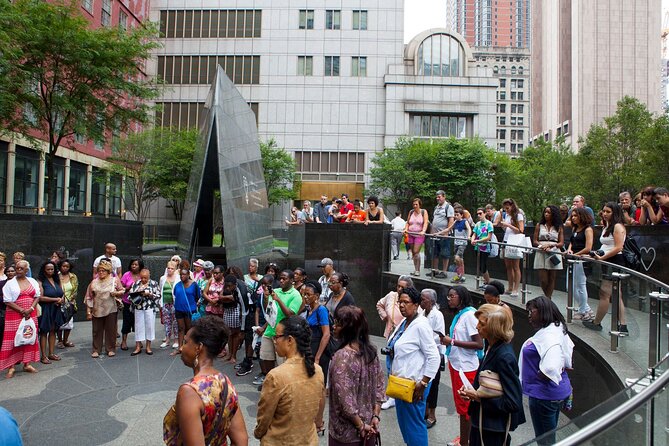
At Foley Square, the group pauses near Triumph of the Human Spirit, a sculpture honoring the presence of enslaved people in New York.
Public art matters here because written records often reduce enslaved people to property, labor figures, or names in business documents. A memorial can help restore the human dimension, even though no monument can tell every story.
This is another stop where the experience depends more on the guide than on the amount of visible material. You may hear about individuals, working lives, resistance, family separation, and the choices made by people who aided escape. Guides have used photographs of historical figures and places to help put faces and personal detail into the narrative.
The sculpture also offers a pause between the financial district and African Burial Ground. It shifts the focus from buildings and institutions toward memory and dignity.
African Burial Ground, the tour’s powerful ending
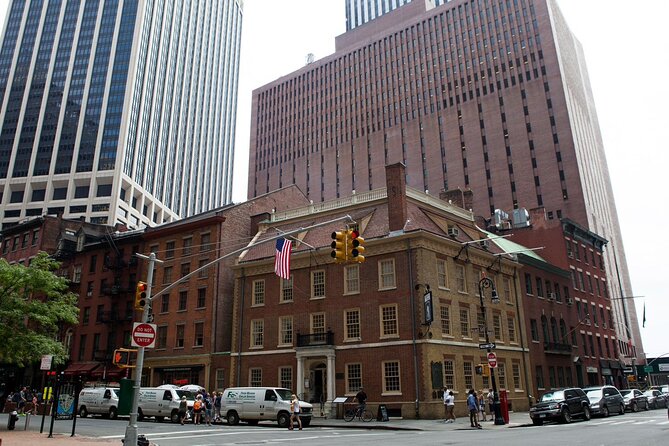
The walk ends at African Burial Ground National Monument at 290 Broadway. This is the oldest and largest known excavated burial ground in New York connected to enslaved people.
The site is sacred, solemn, and easily the most powerful part of the tour. Human remains and burial artifacts revealed the scale and importance of New York’s early African community. The memorial honors people whose lives were long ignored in the city’s public story.
The schedule allows about 10 minutes at the monument, though the guide may provide additional explanation. Symbols in the memorial can carry meaning that is easy to miss if you visit alone, so listening closely here pays off.
Construction or temporary closures can affect access to the outdoor area. When that happens, the group may use the African Burial Ground museum instead. That can still be worthwhile, but the physical memorial experience may be different from what you expected.
Do not treat this as just another downtown stop. Leave time afterward if you need it. The ending is quiet and reflective, and many people find that the tour’s earlier discussions make more sense once they reach this memorial.
What the guide adds to the experience
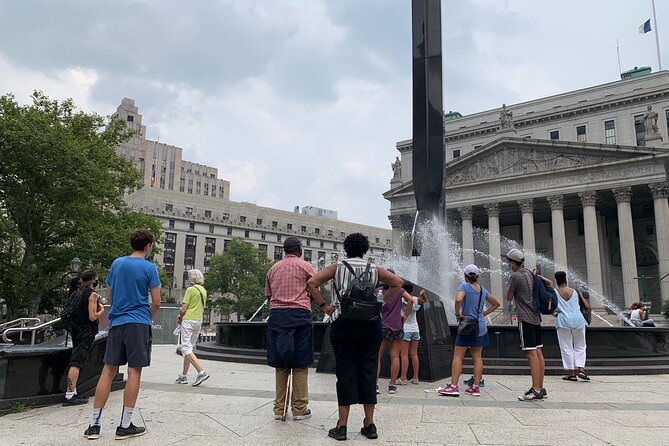
The route is important, but the guide determines how much you take away. The strongest guides on this tour have worked as teachers or use teaching methods: clear timelines, photographs, questions, and connections between individual lives and wider events.
Ludie has been singled out for a passionate delivery and careful treatment of difficult material. Maia has been praised for energy, communication, and useful book and museum suggestions. Sean has a background as a history teacher and has been especially effective at explaining the broader setting around slavery and the Underground Railroad.
Guide assignments can change, so you should not book expecting one particular person unless the company confirms it. What you can expect is a local guide speaking in English and leading a group of no more than 30 people.
The tone is direct. This is not a softened version of American history. At the same time, the tour is presented as an effort to explain rather than shame. That balance matters, especially for families, students, and anyone approaching the subject for the first time.
The walking conditions and pacing
The tour lasts about two and a half hours and requires a moderate level of physical fitness. The route is in Lower Manhattan, with several stops where the guide speaks for a while before the group moves on.
The main physical challenge is not distance alone. It is standing still outdoors. On a cold, rainy, or windy day, the talks can feel long. One former participant left early during harsh weather because standing in the open became too uncomfortable.
Wear comfortable shoes and check the forecast carefully. Bring clothing for wind and rain, even if the day looks mild when you leave your hotel. The tour needs good weather and can be canceled because of unsafe conditions, including a forecast snowstorm.
A microphone has also been an issue at times. Most people can follow the guide, but street noise and group spacing may make hearing difficult. Stay close enough to hear without blocking others, and tell the guide promptly if the sound is unclear.
The walk is offered in English only. Service animals are allowed, and the starting point is near public transportation. Hotel pickup and drop-off are not included, so you must make your own way to Bowling Green and arrange your return from Broadway.
Is $49 a fair price?
At $49 per person, this is not the cheapest way to walk around Lower Manhattan. You could visit Battery Park, Wall Street, Foley Square, and African Burial Ground independently for little or no admission cost.
The fee pays for interpretation. A guide connects sites that otherwise seem unrelated, explains the historic role of enslaved labor, and places the Underground Railroad within New York’s streets. For a visitor who wants more than photographs of financial landmarks, that added context makes the price reasonable.
The value is strongest if you ask questions, stay engaged, and follow up with the suggested books or museums. It is weaker if you want a fast-moving sightseeing walk with constant visual attractions. You are paying for teaching and interpretation, not special access to a long list of indoor attractions.
The tour has a 4.9 out of 5 rating from 411 reviews, with 97 percent recommending it. Those numbers fit the experience’s main strength: the guide and the subject matter. They should not hide the practical limits, especially outdoor standing, weather exposure, and occasional construction around memorial sites.
Who should book this walk
I recommend it most for history buffs, educators, students, and visitors who want to understand how slavery shaped Northern cities. It is also a strong choice for New Yorkers who know downtown well but have never examined its Black history.
Families can take it together, though younger children may find the subject and long talks demanding. The tour suits anyone who has read Clint Smith’s How the Word Is Passed, since the book can provide useful background, but you do not need to read it first.
You should skip it if you want a relaxed stroll with frequent café breaks or lots of interiors. This is a serious history walk. It asks you to listen, think, and stand at several street corners.
Free cancellation is available up to 24 hours before the start time. Cancellations made later are not refunded. If poor weather or too few bookings force a cancellation, you are offered another date or a full refund.
My call: book it for the story, not the scenery
Book this tour if you want New York’s slavery and Underground Railroad history explained by a strong guide in the places where it happened. The route is especially valuable because it connects the city’s early settlement, financial power, abolitionist activity, and memorial work in one compact walk.
Go in prepared for outdoor standing and a serious subject. If you arrive in comfortable shoes, dress for the weather, and keep your expectations focused on interpretation rather than sightseeing spectacle, the $49 price is justified. The final stop at African Burial Ground gives the walk a lasting weight that a self-guided stroll may not provide.
FAQ
Where does the New York City Slavery and Underground Railroad Tour begin?
It begins at 1 Bowling Green in New York, outside the National Museum of the American Indian and the former Alexander Hamilton Custom House.
Where does the tour end?
The tour ends at African Burial Ground National Monument, 290 Broadway, New York, NY 10007.
How long does the tour last?
The walking experience lasts approximately 2 hours and 30 minutes.
What language is the tour offered in?
The tour is offered in English.
What is included in the price?
The price includes a local guide and discussion of slavery in historical context, New York’s role in slavery, the Underground Railroad, African Burial Ground, Fraunces Tavern, and the former site of New York’s first slave market.
Are museum admission fees included?
No. Admission tickets are not included. The National Museum of the American Indian and Fraunces Tavern are exterior visits, while Foley Square and African Burial Ground are listed as free.
Is hotel pickup provided?
No. Hotel pickup and drop-off are not included.
How many people can join the tour?
The maximum group size is 30 people.
Is the tour physically demanding?
You should have a moderate level of physical fitness. The experience involves walking and extended periods of standing outdoors.
What happens if the weather is poor?
The tour requires good weather. If it is canceled because of poor weather, you are offered a different date or a full refund.
Just listed around New York City
- NYC: Little Shop of Horrors Off-Broadway Ticket5 reviews
- Private NYC Airport Transfer: LGA to Manhattan – Up to 5★ 3.6 · 5 reviews
- New York City Tour in German★ 4.5 · 5 reviews
- New York: Hamilton and Washington Revolutionary Walking Tour★ 5.0 · 5 reviews
- NYC Freedom Tower Private Photo or Video Experience★ 4.0 · 6 reviews
- New York Afternoon Fall Foliage Cruise with Lunch★ 5.0 · 6 reviews
- Brooklyn Walking Tours by Locals: Private & 100% Personalized★ 4.0 · 6 reviews
- Southold Bay Oyster Farm Tour★ 5.0 · 6 reviews
City Tours, compared.



Top of the Rock Observation Deck New York City Ticket
Read our review →

Circle Line: 2hr – New York City Harbor Lights Cruise
Read our review →