
Reviewed · NEW YORK CITY
NYC: Liberty Science Center General Admission with Options
The most memorable part of Liberty Science Center may be the chance to touch the science: handle shellfish, snails, and sea urchins, climb a rock wall to test friction, and make a soap bubble six feet wide. The center sits in Liberty State Park, with broad views toward the New York skyline and Statue of Liberty.
I like the wide mix of hands-on exhibits and the fact that general admission covers the permanent exhibitions, live demonstrations, and science labs. I also like the age range: younger children can experiment freely, while older kids and adults can tackle skyscraper engineering, physics, and the suspended Infinity Climber.
The main drawback is cost control. The $22 entry ticket does not cover the 3D theater, planetarium shows, or special exhibits, and ticket validation may require a separate line. One family spent about 30 minutes getting tickets checked, so arrive with patience, especially during busy periods.
In This Review
- Key points to know before you go
- Liberty Science Center in Jersey City: what your ticket really covers
- Start with hands-on science, not passive displays
- Skyscraper engineering and the 35-foot Infinity Climber
- The Jennifer Chalsty Planetarium and 3D films
- SUE: The T. rex Experience and the case for an add-on
- The view from Liberty State Park
- Who will get the most from the $22 admission?
- LSC After Dark for adults on Thursday nights
- How to plan a smoother full-day visit
- Should you book Liberty Science Center?
- FAQ
- Where is Liberty Science Center located?
- How much does general admission cost?
- How long is the admission valid?
- What does general admission include?
- Is a planetarium show included with general admission?
- Are 3D theater films included?
- Is SUE: The T. rex Experience included?
- Is the center wheelchair accessible?
- Can I cancel my booking?
Key points to know before you go
- Touch real sea life: Handle shellfish, snails, and sea urchins in an interactive exhibit.
- Test friction on a rock wall: The climbing activity turns a basic physics idea into a physical challenge.
- Make a six-foot soap bubble: This is one of the center’s best hands-on moments for children.
- Walk through the Infinity Climber: The suspended structure rises 35 feet above the atrium floor.
- Look toward Manhattan: Liberty State Park gives you views of the NYC skyline and Statue of Liberty.
- Budget for add-ons: Planetarium shows, 3D films, and SUE the T. rex Experience require extra admission.
Liberty Science Center in Jersey City: what your ticket really covers

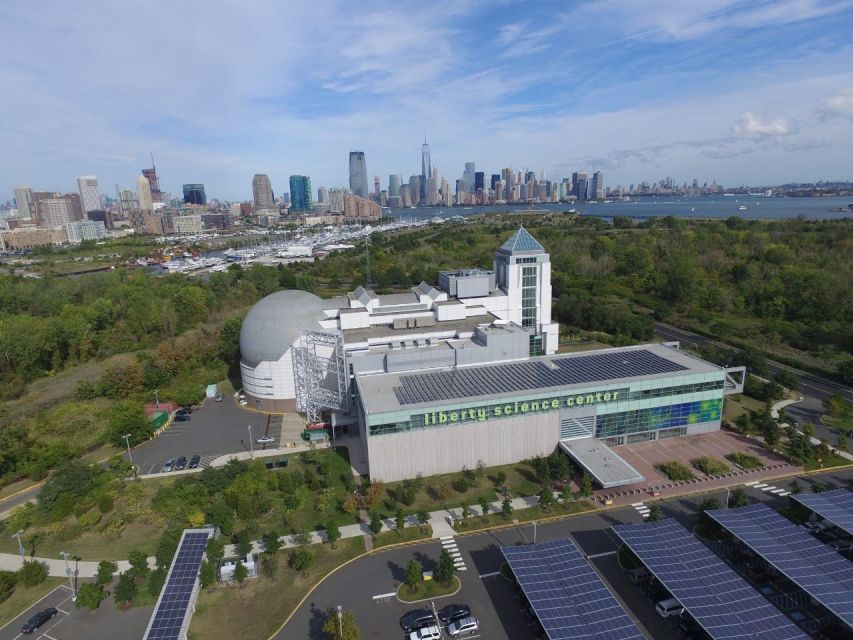
Liberty Science Center is a 300,000-square-foot science and learning center in Liberty State Park, just across the Hudson River from Manhattan. It is designed as a full-day attraction rather than a quick indoor stop, with permanent galleries, science demonstrations, labs, and interactive stations spread through a large complex.
Your $22 general admission includes the permanent exhibitions and access to the Jennifer Chalsty Planetarium building. It also includes science programming offered as part of the regular visit. That gives you plenty to do without buying every extra ticket, especially if your group enjoys experimenting at its own pace.
The important distinction is that entry to the planetarium building does not necessarily mean a planetarium show is included. A planetarium performance requires the appropriate add-on ticket. The same applies to the Joseph D. Williams 3D Science Theater and the special SUE: The T. rex Experience.
I would think of the basic ticket as a solid science-center admission, not an all-access pass. If your main goal is a planetarium film or the dinosaur exhibition, check the available options before you book and compare the total price.
Big New York City bookings that pair well with this one:
- NYC: SUMMIT One Vanderbilt Tickets
★ 4.7 · 51,195 reviews - NYC: 9/11 Memorial & Museum Timed-Entry Ticket
★ 4.8 · 31,428 reviews - NYC: Empire State Building Tickets – Observatory & Museum
★ 4.7 · 25,757 reviews
Start with hands-on science, not passive displays
The center works best when you treat it as a place to try things rather than simply look at exhibits. You can get your hands on shellfish, snails, and sea urchins, which gives younger children a direct connection to marine biology.
That kind of contact matters. A label explaining a sea urchin is easy to forget. Feeling its texture and seeing it move gives the subject a better chance of sticking. The activity is also useful for families with different interests because one person can focus on the animal while another reads or experiments nearby.
The soap bubble station is another strong early stop. The goal is to create a bubble about six feet wide, turning surface tension into something you can see around your own body. Children get a simple thrill from it, while adults can explain why the film holds together for a moment and then breaks.
You will also find live science demonstrations and labs. The exact schedule can vary, so check what is running when you arrive. These demonstrations help break up the self-guided galleries and give you a reason to pause instead of rushing from one station to the next.
Skyscraper engineering and the 35-foot Infinity Climber

The Skyscraper exhibition focuses on the engineering problems involved in building tall structures. You can try balancing on an I-beam in midair, an activity that makes stability and structure feel less like textbook material and more like a physical problem.
This is a good section for older children, teenagers, and adults who enjoy challenges. It is also a useful reminder that the center is not only aimed at small children. The best exhibits ask you to make a choice, test it, and see what happens.
The Infinity Climber is one of the more striking features inside the building. It is suspended 35 feet above the atrium floor, giving you a dizzying view down into the center and up toward its interior structure.
The height adds a little drama, but it is not just decoration. The attraction shows how climbing, balance, and spatial awareness work together. If you dislike heights, you may prefer to watch from below. If you like physical challenges, this is one of the activities to seek out early, before your group gets tired.
Because the center is large, I would not expect to cover every station in a short visit. A full day gives you time to choose favorites, return to activities that held your attention, and fit in a live demonstration without racing.
The Jennifer Chalsty Planetarium and 3D films
The Jennifer Chalsty Planetarium is housed in its own building and is described as the largest planetarium in the Western Hemisphere. That claim makes it a major part of the center’s identity, but the regular admission ticket does not automatically include a planetarium show.
You need to select the planetarium add-on if you want a scheduled presentation. This matters when comparing prices. A family that only wants permanent exhibits may find the $22 base ticket reasonable. A family planning to add a film and a special exhibition should calculate the full cost before arriving.
The Joseph D. Williams 3D Science Theater offers films such as T.Rex 3D and Oceans 3D. These add a more polished, seated presentation to a day otherwise built around movement and experimentation.
I like the choice because it lets you shape the visit. A child who needs a quiet break can watch a film, while an adult who has had enough climbing and button pushing can sit for a while. The tradeoff is that each extra option increases the price, so do not assume every popular attraction is included.
Another side of New York City for the same day:
- New York City: Statue of Liberty & Ellis Island with Ferry
★ 4.6 · 18,683 reviews - New York City: American Museum of Natural History Ticket
★ 4.5 · 15,447 reviews - Statue of Liberty and Ellis Island Tour: All Options
★ 5.0 · 13,571 reviews - New York in One Day Guided Sightseeing Tour
★ 5.0 · 13,166 reviews
SUE: The T. rex Experience and the case for an add-on
SUE: The T. rex Experience includes a 40-foot replica skeleton and immersive Cretaceous simulations. For dinosaur fans, this may be the most compelling reason to upgrade.
The scale of a 40-foot skeleton gives the exhibition an immediate visual impact. It also helps children understand the size of the animal in a way that a small fossil or drawing cannot. The Cretaceous simulations add an environmental setting around the dinosaur subject, making this more than a single skeleton in a room.
Still, it is an optional special exhibition. If your group is only mildly interested in dinosaurs, the permanent galleries may provide enough variety without the extra charge. If someone in your party has come specifically for T. rex, the add-on is easier to justify.
The center’s options are useful because they serve different interests. The planetarium suits space fans, the 3D theater suits film lovers, and SUE suits dinosaur enthusiasts. You do not need to pay for every category to have a worthwhile day.
The view from Liberty State Park
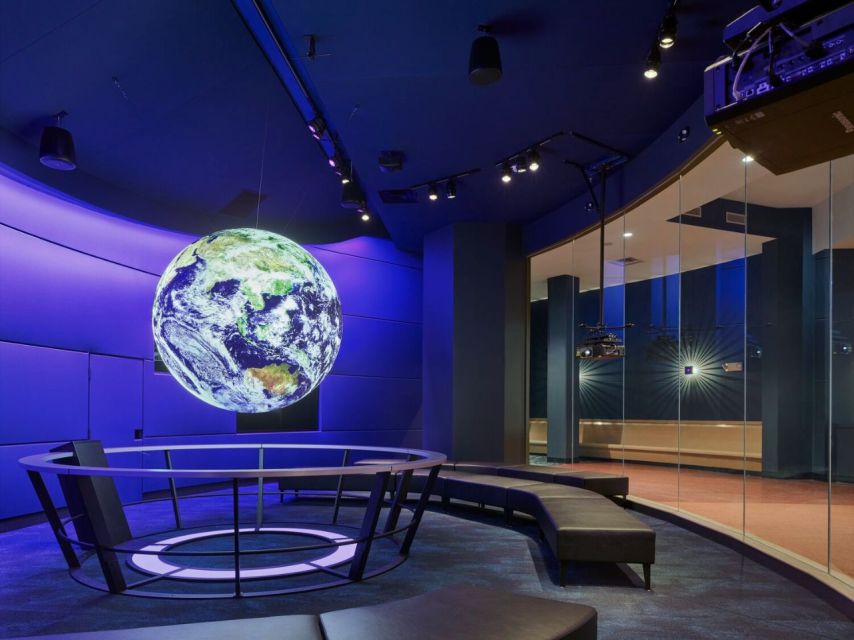
Liberty Science Center’s location is part of the appeal. It sits in Liberty State Park in Jersey City, with views toward the NYC skyline and the Statue of Liberty.
That setting gives you a visual break from the indoor galleries. You can pair a science-center visit with time in the park, though the admission described here covers the center itself. The skyline view is especially helpful for anyone who wants a New York area outing without spending the whole day in Manhattan.
The location also makes this a practical choice if you are staying in New York and want a family activity just a short trip across the Hudson. The center is close enough to Manhattan to work as a planned day trip, yet it feels separate from the usual city sightseeing routine.
I would allow time to enjoy the setting rather than treating the center as a quick indoor backup plan. The combination of science exhibits and open views gives the day more variety.
Who will get the most from the $22 admission?
The basic ticket works best for families who like interactive learning and are willing to let children choose activities. It also suits adults who enjoy engineering, physics, animals, or space and do not need every exhibit to be a formal museum display.
Children can handle sea life, make giant bubbles, and test friction. Older children and adults can spend more time with Skyscraper, the I-beam challenge, and the Infinity Climber. The center’s programming is geared toward all ages, but the activities will not all appeal equally to every age group.
One recent issue to plan around is ticket validation. A separate check-in line may be used instead of a simple scan at the main entrance, and one family waited roughly 30 minutes for validation. I would arrive early, keep your booking details ready, and avoid assuming that entry will take only a moment.
Bring a passport or ID card, as requested for the activity. The center is wheelchair accessible, which makes it a practical option for groups with different mobility needs.
The cancellation terms are friendly if your plans are uncertain: you can cancel up to 24 hours in advance for a full refund. You can also reserve now and pay later, which helps if you are arranging several New York area activities at once.
LSC After Dark for adults on Thursday nights
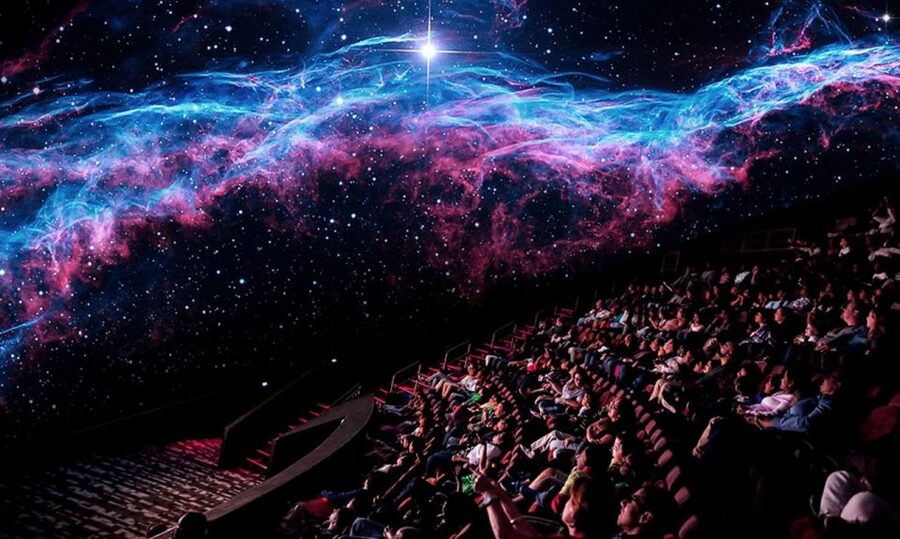
Adults 21 and older have another option on select Thursday nights from 6:00 to 10:00 pm. LSC After Dark combines themed parties, live DJs, and a full bar.
This is not the same kind of visit as daytime general admission. It is aimed at adults who want science-center surroundings with music and evening entertainment. Check the specific date and availability before planning around it, since it takes place only on select Thursdays.
For a couple or group of friends, After Dark may be more appealing than a daytime family visit. For parents with young children, it is not a substitute for regular admission because of the age requirement and evening format.
How to plan a smoother full-day visit

I would begin by deciding what you care about most. If the permanent exhibits are the priority, the $22 ticket may be enough. If you want SUE, a planetarium show, or a 3D film, choose those add-ons in advance and work them into your day.
Allow time for the hands-on stations. The shellfish exhibit, soap bubbles, rock wall, and Infinity Climber are not activities you should simply walk past. They are the parts that turn the visit into something active and memorable.
Use live demonstrations and labs to create a natural rhythm. Move through an exhibit, take part in an activity, then pause for a scheduled science program or film. That approach is easier on children than trying to see the entire building without a break.
Keep the ticket validation issue in mind. A separate line can add about 30 minutes, so a late arrival could force you to skip a timed add-on. This is the clearest practical warning for anyone booking the planetarium or theater.
The center is open for one day of admission, so you have time to build your own route. You do not need to complete every exhibit to get value. Pick a few must-do activities and leave room for discoveries along the way.
Should you book Liberty Science Center?
Book it if you want a hands-on science day near Manhattan, especially if your group enjoys animals, engineering, physical challenges, or space. The permanent exhibits offer enough variety for a full visit, and the skyline and Statue of Liberty views make the Jersey City setting worthwhile.
Be more cautious if your group expects every headline attraction to be included in the entry price. The planetarium, 3D theater, and SUE: The T. rex Experience cost extra, and the ticket check-in may take longer than expected.
My practical choice would be to start with the $22 admission, then add only the feature your group is most excited about. That keeps the price under control while preserving the center’s best strength: letting you learn by doing.
FAQ
Where is Liberty Science Center located?
Liberty Science Center is in Liberty State Park in Jersey City, New Jersey. It offers views of the New York City skyline and the Statue of Liberty.
How much does general admission cost?
General admission is listed at $22 per person.
How long is the admission valid?
The admission is valid for one day.
What does general admission include?
General admission includes access to the permanent exhibitions, science demonstrations and labs, and the Jennifer Chalsty Planetarium building.
Is a planetarium show included with general admission?
No. A planetarium show requires the noted add-on ticket.
Are 3D theater films included?
No. Films in the Joseph D. Williams 3D Science Theater require the noted add-on ticket.
Is SUE: The T. rex Experience included?
SUE: The T. rex Experience is a special exhibition and requires the noted add-on.
Is the center wheelchair accessible?
Yes. Liberty Science Center is wheelchair accessible.
Can I cancel my booking?
Yes. You can cancel up to 24 hours in advance for a full refund. Reserve now and pay later is also available.
Just listed around New York City
- New York City Day Cruise by Statue of Liberty on Small Yacht★ 5.0 · 20 reviews
- Small-Group Broadway Theater District and Times Square Walking Tour★ 5.0 · 20 reviews
- NYC’s History of Comedy Tour★ 5.0 · 20 reviews
- NYC: Radical and Weird History Bike Tour of Manhattan★ 4.6 · 20 reviews
- NYC, Brooklyn: Notorious Biggie Smalls Themed Walking Tour★ 5.0 · 20 reviews
- Contrasts Tour 6 Hours Plus Tkts Statue of Liberty★ 4.5 · 20 reviews
- New York: New York Jets Football Game at Metlife Stadium★ 4.7 · 21 reviews
- NYC: The Outsiders on Broadway21 reviews