
Reviewed · WALKING TOURS
NYC: Remnants of Dutch New Amsterdam Guided Walking Tour
Lower Manhattan can feel like a wall of glass and steel until a guide points out the Dutch city beneath your feet. This two-hour walk takes you along the old shoreline of New Amsterdam, using Manhattan’s first map to show how streets, forts, walls, and public spaces began.
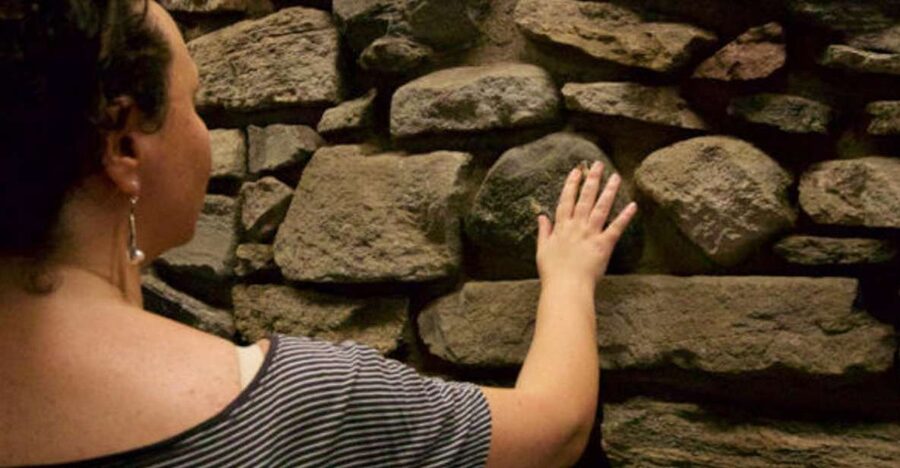
I like the 1667 map, because it turns a familiar part of New York into a puzzle you can read as you walk. I also like the chance to see and touch physical traces, including the foundations of the first City Hall and the old battery wall. The main drawback is simple: this is an outdoor walk in an exposed part of Manhattan, and it runs rain or shine.
In This Review
- Key points to know
- Why Dutch New Amsterdam still matters in lower Manhattan
- Starting at Bowling Green and the American Indian Museum
- Reading Manhattan through the 1667 map
- Finding the first City Hall beneath the modern city
- The fort, windmill, and battery along the old coast
- The unusual oyster pasty cannon
- How the guide shapes the two-hour walk
- Who will get the most from this New Amsterdam walk
- Is $39 a fair price for two hours?
- Practical tips for a rain-or-shine history walk
- Should you book the Remnants of Dutch New Amsterdam tour?
- FAQ
- Where does the tour begin?
- How long does the walking tour last?
- What language is the tour offered in?
- Is the tour wheelchair accessible?
- Does the tour operate in bad weather?
- What should I bring, and what is not allowed?
Key points to know
- The 1667 map guides the walk: Follow Manhattan’s early streets while comparing the old city with the modern one around you.
- Bowling Green gets hands-on attention: Learn how the space got its name and why it mattered to New York’s early public life.
- Dutch relics appear among modern buildings: Look for the first City Hall foundations, battery remains, a windmill site, and the unusual oyster pasty cannon.
- The route begins at 1 Bowling Green: Meet on the steps of the National Museum of the American Indian.
- Headsets make group walking easier: You can hear the guide clearly, even when standing a little distance away.
- The pace gets good marks: Richard was praised for clear explanations and a comfortable tempo, while Mandy was singled out for making the experience enjoyable.
Why Dutch New Amsterdam still matters in lower Manhattan
New York’s origin story is often reduced to a few familiar facts: the Dutch founded New Amsterdam, the English took it, and the city grew from there. This tour gives that story a physical setting.
You are not simply hearing about an old settlement from inside a museum. You are walking through the part of Manhattan where the early town was built, protected, mapped, traded, and governed. Modern streets make the old city hard to see at first, but the guide uses surviving structures and the 1667 map to make its shape easier to grasp.
That approach suits me because it connects history to things you can actually locate. A map can show you that the shoreline once ran in a different place. A foundation can show you where civic life began. A patch of public ground can reveal how people gathered, played, and claimed space.
The tour also deals with New York’s founding myths and facts. That distinction matters. Lower Manhattan has plenty of polished stories, but the useful part of this walk is learning how the stories connect to real sites and surviving evidence.
More New York City walking tours:
- SoHo, Little Italy, and Chinatown Walking Tour in New York
★ 5.0 · 3,153 reviews - Secrets of Grand Central Station Walking Tour New York City
★ 5.0 · 1,796 reviews - Greenwich Village Walking and Food Tasting Tour
★ 5.0 · 1,572 reviews
Starting at Bowling Green and the American Indian Museum
The meeting point is on the steps of the National Museum of the American Indian at 1 Bowling Green. This is a practical place to begin because Bowling Green itself is one of the key locations on the route.
You should arrive ready to walk, with comfortable shoes and clothing suited to the weather. The tour does not move indoors simply because conditions are unpleasant. It operates rain or shine, so check the forecast before you leave and bring suitable protection if rain is expected.
The museum’s steps also give the group a clear place to gather. Once the guide arrives, you can expect the walk to move into the early story of Bowling Green and the Dutch settlement around it.
Bowling Green is not treated as just a convenient starting square. You will find out how it got its name and why it has mattered throughout New York’s history. The tour’s hands-on approach is useful here. Rather than only looking at a plaque or hearing a date, you spend time locating the physical features connected with the site.
That makes Bowling Green a good first lesson in how the tour works: the modern city remains in view, but the guide keeps directing your attention to earlier layers.
Reading Manhattan through the 1667 map
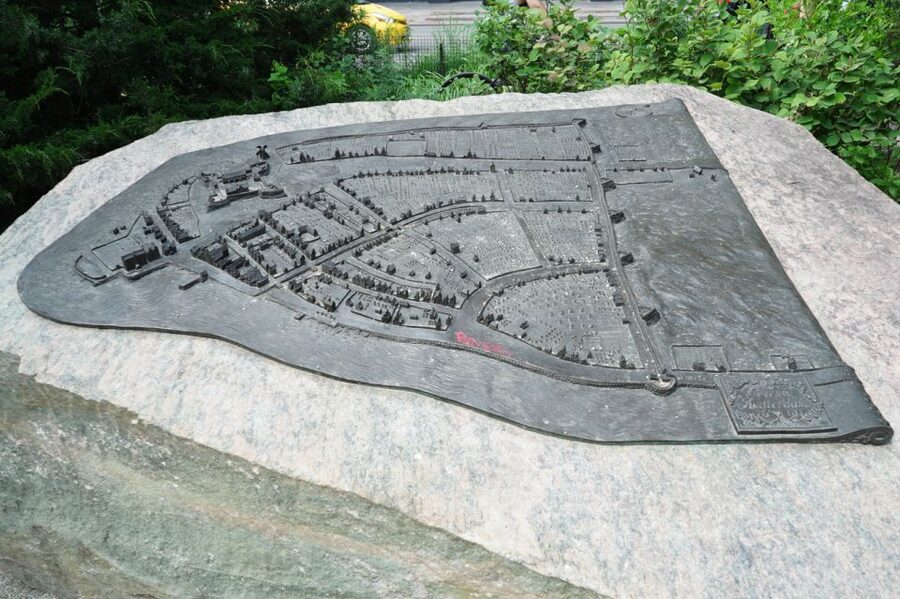
The most distinctive tool on the tour is Manhattan’s first map, used to trace the streets as they appeared in 1667. This gives the walk a clear purpose beyond moving from one landmark to another.
You can compare the map’s small Dutch settlement with the lower Manhattan of today. Streets may no longer look the same, the shoreline has changed, and large modern buildings dominate the view. Yet the map helps you understand where the early town sat and how its boundaries developed.
For me, this is the part that gives the tour its strongest value. A standard sightseeing walk may tell you that New York began here. This one asks you to picture the settlement as a real place with roads, defenses, public buildings, and working waterfronts.
The map also makes the experience more active. You are not expected to remember a long list of dates. Instead, you use a visual reference while standing in the city itself. That can be especially helpful if you enjoy old maps, city planning, or the way modern streets preserve traces of earlier towns.
The amount of detail may feel dense at times. Two hours is enough to build a strong picture, but not enough to explain every part of Dutch New Amsterdam. The guide has to choose what to emphasize, and the map may appeal more to history-minded visitors than to people looking for a quick photo walk.
Finding the first City Hall beneath the modern city
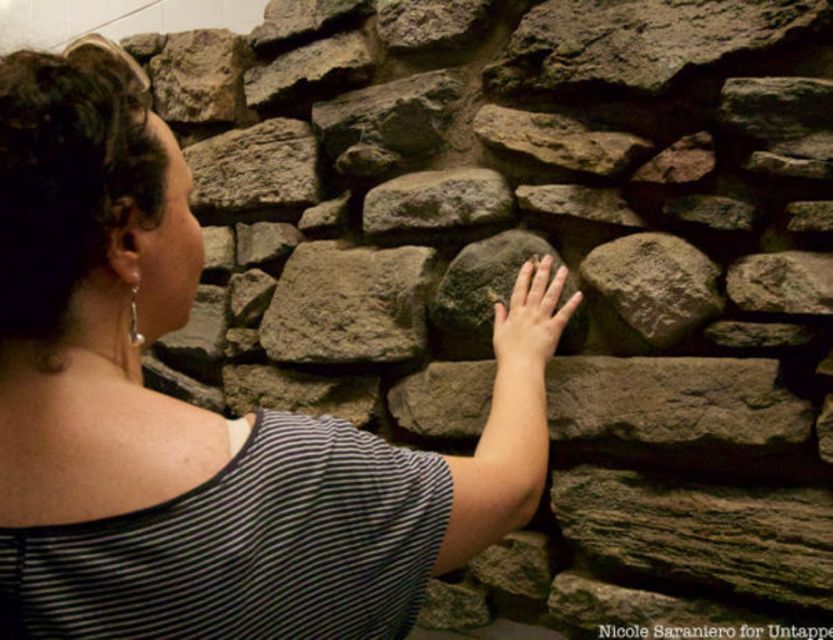
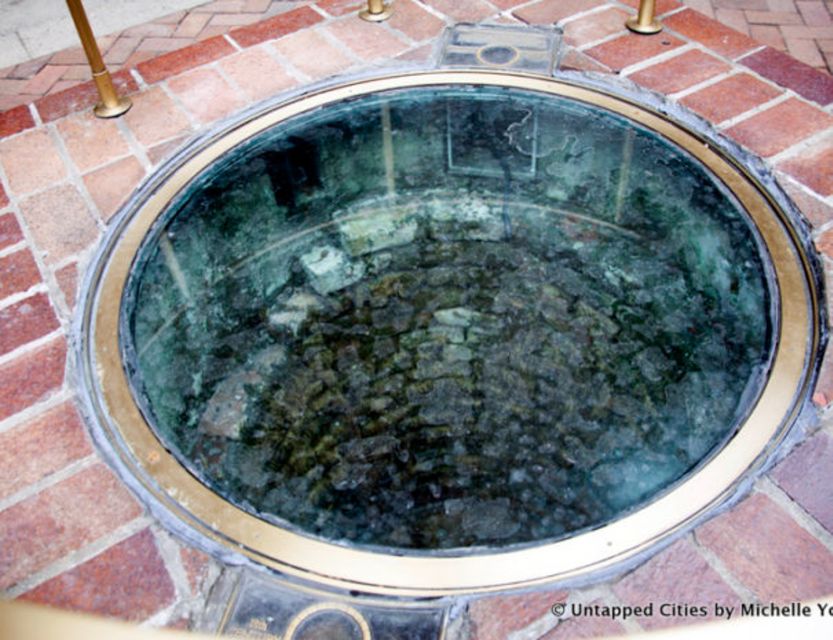
One of the major stops concerns the foundations of New York City’s first City Hall. The building also functioned as a tavern, which gives the site a more human scale than the formal name might suggest.
Early government was not separated neatly from daily social life. A building could serve civic needs and also operate as a place where people gathered, ate, and drank. That detail helps turn an abstract institution into something easier to picture.
The foundations are important because they show how much of the early city is concealed rather than completely gone. You may pass through lower Manhattan many times without realizing that the ground beneath or beside the present streets once held a different civic center.
This is also where the tour’s title becomes more than a promise. You are not only hearing that Dutch New Amsterdam existed. You are being shown a surviving physical trace connected to its government.
Do not expect a complete colonial building or a large archaeological site. The appeal is in the remains and in the guide’s explanation of what they mean. If you prefer intact monuments, this stop may feel modest. If you enjoy reconstructing the past from fragments, it should be one of the more satisfying parts of the walk.
A few more New York City picks to weigh up
- New York in One Day Guided Sightseeing Tour
★ 5.0 · 13,166 reviews - Central Park Pedicab Guided Tours
★ 5.0 · 7,108 reviews - From NYC: Guided Day Trip to Washington DC by Van or Bus
★ 4.7 · 3,418 reviews - NYC: Statue of Liberty and Ellis Island Guided Tour
★ 4.6 · 2,765 reviews
The fort, windmill, and battery along the old coast
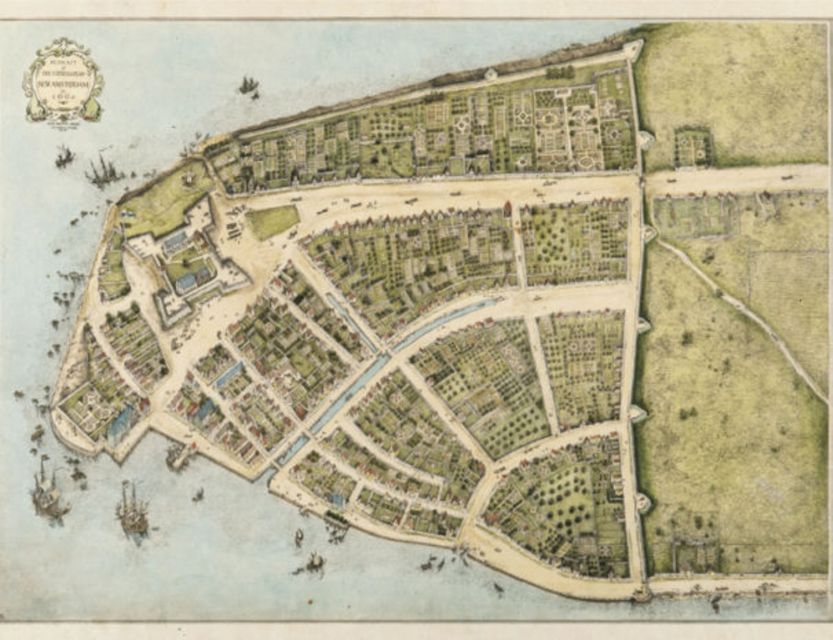
The Dutch settlement needed protection and ways to support daily work. The walk points out the original Dutch fort, the windmill, and the battery, along with the remnants of the battery wall.
These features help you see New Amsterdam as a working settlement rather than a name on a history timeline. A fort suggests defense and political control. A windmill points to food production and practical technology. A battery shows how the edge of the settlement was organized against threats from the water.
The old coastline is another key idea. You walk along the line of Manhattan’s original shore, not the full modern edge created by later construction. That change helps explain why lower Manhattan can feel confusing when you try to match old maps with current streets.
The battery wall is especially useful for understanding the settlement’s limits. Walls do more than protect a town. They mark where the town ends, where movement is controlled, and where the authorities believe danger may come from.
The available details do not promise that every relic appears as a large, open structure. Some traces may be subtle, so keep your eyes and attention on the guide rather than expecting a dramatic ruin at every stop. The reward comes from learning what a small remnant represents.
The unusual oyster pasty cannon
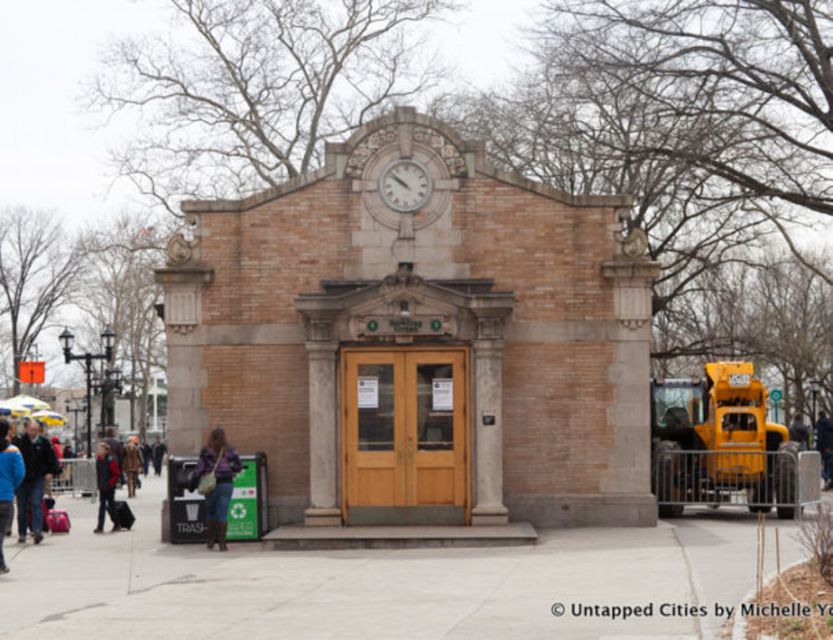
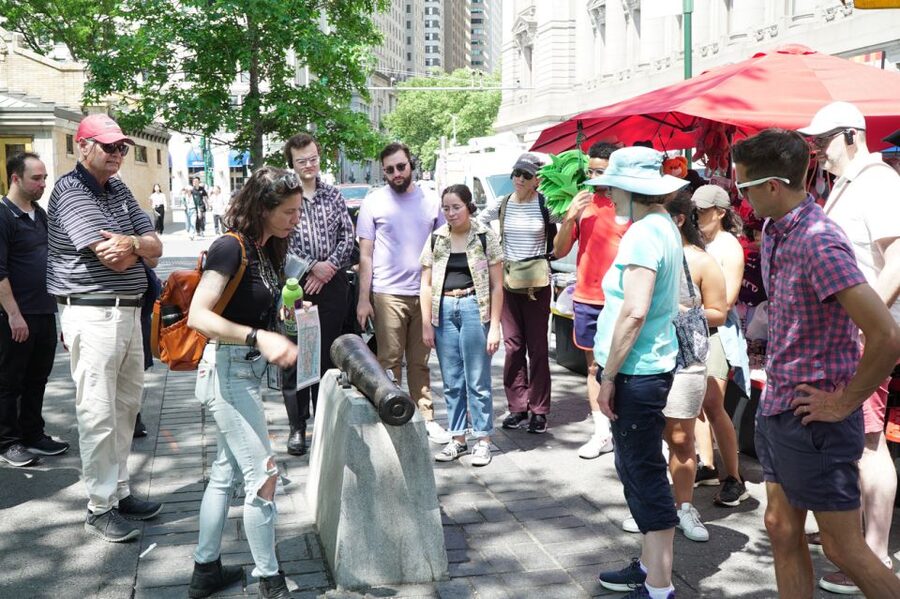
Among the less expected objects on the route is the long-forgotten oyster pasty cannon. Its name alone makes it memorable, and the stop adds a welcome bit of strangeness to the tour.
This is the kind of detail that can make an old city feel real. Big events and famous leaders often dominate public history, but everyday foods, working tools, and odd pieces of street life can reveal how people actually lived.
The oyster connection also points toward New York’s earlier relationship with the water. The Dutch settlement grew beside a productive harbor, and oysters formed part of the area’s food story. The cannon gives the guide a specific object through which to discuss that past.
You should not book this tour expecting a parade of famous landmarks. Its best moments are often small and easy to miss without explanation. The oyster pasty cannon fits that pattern perfectly. You might walk past it without knowing what you are seeing, then remember it long after more familiar buildings blur together.
How the guide shapes the two-hour walk
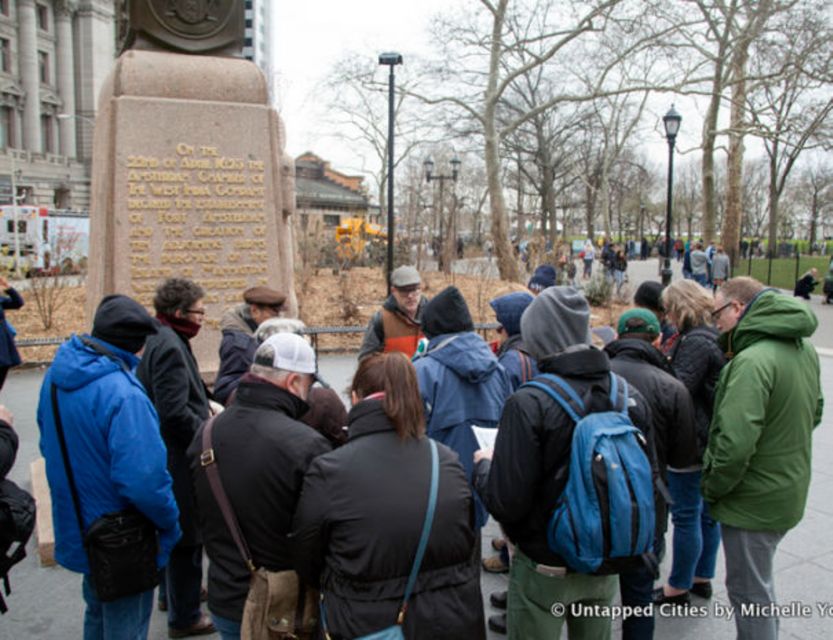
The guide makes a major difference on a history walk. Untapped New York provides a local New Yorker to lead the experience, and the available feedback specifically highlights Richard and Mandy.
Richard received praise for clear explanations and a well-judged pace. That matters in lower Manhattan, where a guide can easily overload you with names, dates, and political changes. A comfortable rhythm gives you time to look around, follow the map, and keep track of where the story is going.
Mandy was also singled out as an excellent guide. Since the tour depends on explaining details that may not be obvious, the guide’s ability to make the material engaging is more important than a long list of stops.
Headsets are included. I consider that a practical advantage, not a luxury. Walking groups often spread out near crossings, narrow sidewalks, and busy public spaces. With a headset, you can keep a little distance from the guide and still hear the explanation.
This is a small-group walk, though a specific group-size limit is not provided. You should still expect to walk as part of a group and pause at public sites rather than receive a private, flexible tour. If you want to stop for photographs whenever you like, the group rhythm may limit you.
Who will get the most from this New Amsterdam walk
I would choose this tour if you want historical context for lower Manhattan and prefer learning outdoors. It is a good match for visitors who enjoy maps, urban change, archaeology, and small details that are easy to miss.
It also works well early in a New York visit. The walk can give you a better sense of how the southern tip of Manhattan developed, which may make later sightseeing around Wall Street and Bowling Green easier to understand.
Families with older children may find the map and physical remains more engaging than a lecture in a museum. The fort, cannon, wall, and tavern connection offer concrete hooks for young minds, though the value will depend on how much history they enjoy.
The tour is wheelchair accessible, which makes it available to a wider range of visitors. You should still plan for an outdoor city walk and weather changes. Accessibility does not remove the need for suitable clothing or footwear.
I would be less likely to recommend it if your main goal is modern architecture, shopping, skyline views, or a fast overview of Manhattan. The focus stays firmly on Dutch New Amsterdam and the older layers of lower Manhattan.
Is $39 a fair price for two hours?
At $39 per person, the tour sits in a reasonable range for a guided two-hour walk in New York. The value depends on how much you want interpretation rather than independent sightseeing.
You can visit Bowling Green and walk around lower Manhattan without paying an admission fee. What you cannot easily do on your own is identify the old shoreline, match current streets to the 1667 map, locate the first City Hall foundations, and understand why the battery and other relics mattered.
That is where the price earns its keep. You are paying for a guide who organizes scattered clues into one story, plus headsets that help you follow along in an active city setting.
The cost may feel less worthwhile if you already know New Amsterdam’s history or prefer to read signs at your own pace. For someone with no background in the subject, though, the tour can prevent lower Manhattan from becoming a blur of unrelated sites.
The reserve-now, pay-later option is useful if your schedule is still shifting. You can also cancel up to 24 hours before the tour for a full refund. Those terms reduce some of the risk of booking an outdoor activity in a city where weather and plans can change quickly.
Practical tips for a rain-or-shine history walk
Wear comfortable shoes. The walk lasts two hours, and even a route that looks short on a map can feel tiring when you are stopping, standing, and looking down at old foundations or map details.
Dress for the forecast rather than the season alone. The activity takes place rain or shine, and the information provided does not promise indoor shelter along the route.
Keep your hands free if possible. You may want to examine the map, listen through the headset, and take notes or photographs. Tripods are not allowed, so plan on handheld photographs only.
Arrive at the National Museum of the American Indian, 1 Bowling Green, with enough time to find the steps and settle in. The tour is in English and includes a live guide.
The best attitude is curiosity. Some stops may be marked by small remnants rather than grand ruins. Look closely, listen for the explanation, and let the map do some of the work.
Should you book the Remnants of Dutch New Amsterdam tour?
Book it if you want to understand lower Manhattan as the birthplace of a settlement, not just as a district of offices and financial buildings. The 1667 map, the original shoreline, Bowling Green, the first City Hall foundations, and the Dutch fort and battery remains give the walk a clear focus.
I especially recommend it for history fans, first-time visitors who want context, and anyone who likes finding evidence in ordinary city streets. Richard’s measured pace and Mandy’s engaging approach are encouraging signs, and the 4.8 rating from 10 reviews supports the tour’s strong reputation.
Skip it if you want a relaxed café stroll, major monuments, or a tour centered on modern New York. For everyone else, $39 buys a focused lesson in how the city began, with enough odd details, including an oyster pasty cannon, to keep the past from feeling dusty.
FAQ
Where does the tour begin?
The tour begins on the steps of the National Museum of the American Indian at 1 Bowling Green, New York, NY 10004.
How long does the walking tour last?
The tour lasts two hours.
What language is the tour offered in?
The live guided tour is offered in English.
Is the tour wheelchair accessible?
Yes, the tour is wheelchair accessible.
Does the tour operate in bad weather?
Yes. The tour takes place rain or shine, so bring weather-appropriate clothing.
What should I bring, and what is not allowed?
Bring comfortable shoes and clothing suited to the weather. Tripods are not allowed.
Just listed around New York City
- NYC: Little Shop of Horrors Off-Broadway Ticket5 reviews
- Private NYC Airport Transfer: LGA to Manhattan – Up to 5★ 3.6 · 5 reviews
- New York City Tour in German★ 4.5 · 5 reviews
- New York: Hamilton and Washington Revolutionary Walking Tour★ 5.0 · 5 reviews
- NYC Freedom Tower Private Photo or Video Experience★ 4.0 · 6 reviews
- New York Afternoon Fall Foliage Cruise with Lunch★ 5.0 · 6 reviews
- Southold Bay Oyster Farm Tour★ 5.0 · 6 reviews
- Brooklyn Walking Tours by Locals: Private & 100% Personalized★ 4.0 · 6 reviews
Walking Tours, compared.

SoHo, Little Italy, and Chinatown Walking Tour in New York
Read our review →
Secrets of Grand Central Station Walking Tour New York City
Read our review →
Greenwich Village Walking and Food Tasting Tour
Read our review →
Artistic, Alternative Greenwich Village Walking Tour
Read our review →
True Crime NYC: Mafia Walk w/Ret. NYPD Detective and Local Food
Read our review →


Browse the lists this tour appears in