
Reviewed · WALKING TOURS
NYC: The FABulous Hell’s Kitchen Walking Tour with BFAB
Hell’s Kitchen is far more than the noisy blocks beside Times Square. On this walk, Brian, known as BFAB, leads you into a neighborhood shaped by immigrant families, gangs, performers, mental-health advocates, and LGBTQ New Yorkers. The stories are personal and theatrical, but the route also gives you a clear sense of how the district changed.
I like the mix of old buildings and living neighborhood history, especially the tenements, German Church, Hartley House, and Manhattan Plaza. I also like the interactive quiz and fan-clacking lesson, which keep the 2.5-hour walk from feeling like a lecture. The main consideration is the subject matter: stories about violence, tragic murders, prostitution, and gay history may not suit young children, and the tour is not for anyone under 13.
In This Review
- Key points to know before you book
- Starting beneath the trees on West 42nd Street
- Old buildings and the physical shape of tenement life
- Gang leaders and the harder side of Hell’s Kitchen
- Hartley House, Fountain House, and community action
- Actors, apartments, and Hell’s Kitchen’s artistic pipeline
- LGBTQ history from the OUT Hotel to FLEX
- A quiz, a fan, and a guide with stage energy
- Is $49 a fair price for 2.5 hours?
- Who should book this Hell’s Kitchen walk?
- Should you book BFAB’s Hell’s Kitchen tour?
- FAQ
- Where does the Hell’s Kitchen walking tour start?
- How long is the tour?
- What language is the tour in?
- Is the tour suitable for children?
- Are food and drinks included?
- What should I bring?
Key points to know before you book
- Brian brings the personality: BFAB is a charismatic local guide who uses humor, personal insight, and storytelling to make the neighborhood easy to connect with.
- The route covers 1.6 miles: Expect mostly flat sidewalks, 15 stops, and a short break in the middle.
- You see old Hell’s Kitchen: German Church, now the Westside Theater, Hartley House, late-1800s row houses, and several forms of tenement housing are part of the walk.
- The past is not cleaned up: Gang leaders, sordid tenement conditions, murders, and hard social struggles all enter the story.
- The LGBTQ focus is central: OUT Hotel, Sanctuary, Manhattan Plaza, Ritz and Q murders, and FLEX, formerly Posh, help explain the area’s gay past and present.
- The finish is social: The route is described as ending at FLEX, where you can buy a drink and chat, though the meeting details also list the starting point as the end location, so confirm the final stop before setting out.
Starting beneath the trees on West 42nd Street
Meet Brian under the trees in front of Citibank at the northwest corner of West 42nd Street and Ninth Avenue. The location is in Hell’s Kitchen, ZIP code 10036, and is easy to connect with from the Times Square area, though the meeting point itself can be busy and easy to overlook.
After a short introduction, Brian sets the neighborhood in context. This is useful because Hell’s Kitchen can feel like several districts at once. The blocks near Ninth Avenue have restaurants, theaters, hotels, and apartment buildings, while nearby streets still show traces of an older working-class community.
The opening story covers the origin of the name Hell’s Kitchen, the neighborhood’s immigrant past, and its shift from a rough, gang-controlled district into a more mixed area known for theater, artists, and LGBTQ life. You get the broad timeline early, so later stops have a clear place in the story.
Bring water, sunscreen, sunglasses, and clothing suited to the weather. An umbrella is sensible in uncertain conditions. The walk is mostly flat, but you will be on city sidewalks for about 1.6 miles, so comfortable shoes matter more than stylish ones.
More New York City walking tours:
- SoHo, Little Italy, and Chinatown Walking Tour in New York
★ 5.0 · 3,153 reviews - Secrets of Grand Central Station Walking Tour New York City
★ 5.0 · 1,796 reviews - Greenwich Village Walking and Food Tasting Tour
★ 5.0 · 1,572 reviews
Old buildings and the physical shape of tenement life
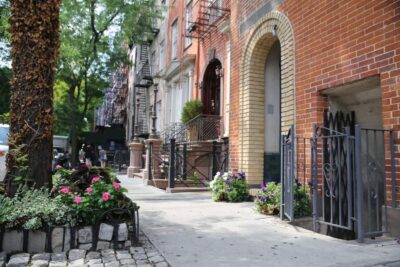
One of the best parts of the route is its focus on buildings that are easy to pass without a second glance. The German Church, now home to the Westside Theater, helps connect Hell’s Kitchen’s immigrant past with its present-day theater culture.
Hartley House adds another layer. It is one of the neighborhood organizations that grew from local needs and later inspired similar community work elsewhere. The tour also points out late-1800s row houses and older buildings that help you picture the streets before modern apartment towers and luxury development changed the area.
The tenement discussion gives the architecture practical meaning. Brian explains the difference between Pre-Law, Old Law, and New Law tenements, including how those labels developed. That detail is valuable because it turns ordinary facades into evidence of changing housing rules and public concern over overcrowding.
You hear about the difficult conditions linked to late-1800s tenements and the people who lived there. The tone is colorful rather than academic, but the subject is serious. This section works best for you if you want more than pretty streets and famous names. It shows how building design, city rules, and working-class life shaped one another.
Gang leaders and the harder side of Hell’s Kitchen
Hell’s Kitchen has long carried a tough reputation, and the tour does not avoid the gang era. You hear how gangs influenced the neighborhood’s development and meet figures such as Owney Madden, Battle Annie, and Mickey Spillane.
These stories give the neighborhood a rough, sometimes sensational edge. Brian’s delivery adds humor and drama, but the value is not only in the colorful characters. The gang history helps explain why Hell’s Kitchen developed its reputation and why older New Yorkers may describe the area very differently from someone who knows only its theaters and restaurants.
You should expect stories about violence and infamous local figures. This is not a polished history in which every difficult subject is softened. That makes the walk more memorable, but it also makes the tour a better fit for adults and teenagers than for families with small children.
The mix of gang stories, tenement life, and community work keeps the history balanced. You are not told that Hell’s Kitchen was simply dangerous, nor that redevelopment solved everything. Instead, the neighborhood comes across as a place shaped by pressure, organizing, opportunity, and constant change.
Hartley House, Fountain House, and community action
The tour gives unusual attention to organizations that are easy for sightseeing walks to skip. Hartley House, Fountain House, and Clinton Community Garden show how residents and local groups worked to improve daily life and create shared spaces.
Fountain House is especially distinctive. It is connected to community-based mental-health work, and the stop can be meaningful if you have an interest in psychology, social care, or the way neighborhoods support people beyond government services. The walk includes a short break around Fountain House and Body, giving you a chance to pause instead of walking continuously for two and a half hours.
That break matters. Hell’s Kitchen is not a place where you want to rush from point to point while trying to listen over traffic. A pause gives you time to absorb the stories, get water, and reset before the tour moves into its entertainment and LGBTQ sections.
The Clinton Community Garden adds a different example of local action. Along with Hartley House and Fountain House, it shows that Hell’s Kitchen’s story is not only about crime, buildings, and performers. It is also about people building institutions and shared places that have influenced similar efforts in other cities and countries.
Another side of New York City for the same day:
- NYC: SUMMIT One Vanderbilt Tickets
★ 4.7 · 51,195 reviews - NYC: 9/11 Memorial & Museum Timed-Entry Ticket
★ 4.8 · 31,428 reviews - NYC: Empire State Building Tickets – Observatory & Museum
★ 4.7 · 25,757 reviews - New York City: Statue of Liberty & Ellis Island with Ferry
★ 4.6 · 18,683 reviews
Actors, apartments, and Hell’s Kitchen’s artistic pipeline
Hell’s Kitchen has a strong connection to performers, and the route explores how that connection developed. You visit Manhattan Plaza and The Actors Studio, both linked to the neighborhood’s role as a training ground and home for artists.
The important point is not simply that famous people lived or worked here. Manhattan Plaza helped make space for artists and performers, while The Actors Studio represents the serious training side of the neighborhood’s theater identity. Together, they help explain why Hell’s Kitchen became a pipeline for actors and other creative workers.
You may enjoy this section most if you already care about Broadway, acting, or New York theater. Even if you do not, it gives the neighborhood a useful connection to the city’s wider performing-arts economy. The route shows how a place can be both a residential district and a place where careers are formed.
This part also makes a useful contrast with Times Square. Times Square offers bright signs and major attractions. Hell’s Kitchen gives you the blocks, institutions, and local stories behind some of New York’s performing culture. You leave with a more grounded picture of the area than you would get from a theater ticket alone.
LGBTQ history from the OUT Hotel to FLEX
The LGBTQ history is not a small add-on. It is one of the tour’s main threads, and Brian covers both the gay past and the neighborhood’s present.
Stops include the OUT Hotel, Sanctuary, Manhattan Plaza, the Ritz and Q murders, and Posh Bar, now FLEX. The stories can be funny, dramatic, and tragic. They also show how spaces change meaning over time, and how nightlife, housing, performance, and community identity overlap in Hell’s Kitchen.
The discussion of Manhattan Plaza is especially helpful because the building connects several themes at once: artists, housing, and LGBTQ life. The route does not treat the gay history as a separate footnote. Instead, it places it alongside the immigrant, gang, theater, and community stories that shaped the neighborhood.
You should be ready for adult subject matter and difficult events. The references to the Ritz and Q murders add a darker note, while the bar stops bring the story into the present. This contrast gives the walk emotional range, though some people may prefer a quieter or more traditional architectural tour.
The tour ends at FLEX, one of Hell’s Kitchen’s oldest gay bars, formerly known as Posh. Beverages are not included, but you can buy one and talk with Brian after the formal walk. The social finish is a nice touch if you want local conversation rather than a quick goodbye at a subway station.
There is one practical wrinkle: the activity details describe FLEX as the ending point, while the meeting information says the activity ends back at the meeting point. Since those instructions do not fully match, ask BFAB to confirm the final location before you go. It is a small issue, but it matters if you have dinner reservations or a theater curtain afterward.
A quiz, a fan, and a guide with stage energy
Brian’s approach is a major part of the experience. He has the kind of large personality that suits Hell’s Kitchen, where the stories include gangs, performers, scandals, bars, and old neighborhood legends. You are not simply following a guide from plaque to plaque.
The interactive quiz keeps the group involved. You answer questions as you go, and the person with the most correct answers receives a prize. This sounds simple, but it changes the pace. You listen for details instead of letting the history wash over you while taking photographs.
You also learn how to clack a fan like a pro. It is a playful detail, but it fits the theater and LGBTQ themes and gives you something physical to do. If you prefer a quiet, formal lecture, this style may feel too performative. If you like stories with humor and audience participation, it should make the time pass quickly.
One useful detail is that Brian is reported to speak French and Japanese as well as English, though the listed tour language is English. If language is important to your booking decision, confirm what level of support is available before reserving.
Is $49 a fair price for 2.5 hours?
At $49 per person, this is not a bargain-priced stroll, but the value is reasonable if you want a guided neighborhood experience rather than a simple map-led walk. You are paying for 2.5 hours, about 15 stops, a live guide, a planned route, local stories, and access to a subject mix that is hard to assemble on your own.
The strongest value comes from the interpretation. You can walk past a tenement or theater without understanding what it represents. Brian connects the building to housing laws, immigration, gangs, actors, or LGBTQ life. That context is what turns the walk into more than a series of addresses.
Food and drinks are not included, and you must make your own way to the meeting point. The break is included, but it is not presented as a full meal stop. Bring water and budget separately if you want a drink at FLEX afterward.
I would compare this tour with a standard bus or sightseeing route by asking what you want from Hell’s Kitchen. If you want major sights quickly, $49 may feel high. If you want a personal introduction to one neighborhood, with history and present-day life tied together, the price is easier to justify.
Who should book this Hell’s Kitchen walk?
I would choose this tour if you want to get beyond the artificial shine of Times Square and see a working New York neighborhood through local stories. It is a good fit for first-time visitors who want a more human introduction to Manhattan, and also for people who already know Hell’s Kitchen but want to understand its past.
It suits theater fans, LGBTQ visitors, history lovers, urbanists, and anyone who enjoys a guide with a strong personality. The tour also has appeal for locals. Even people who have lived in Hell’s Kitchen for years may know the streets but not the stories behind the buildings and institutions.
I would think twice if you dislike audience participation, adult themes, or a guide who takes center stage. The route is not designed for children under 13, and the subject matter includes gang violence, tragic deaths, and the harder parts of gay history.
Plan for comfortable shoes, water, and weather protection. The walk is flat and not especially long, but New York sidewalks can still be tiring when you are stopping, listening, and moving with a group.
Should you book BFAB’s Hell’s Kitchen tour?
Book it if you want history with a human voice, not just landmark facts. Brian’s energy, the quiz, and the fan lesson give the route a playful shape, while the tenements, community organizations, gang history, and LGBTQ stories provide real substance.
Skip it if you want a strictly chronological history walk, a food tour with included tastings, or a child-focused activity. For everyone else, $49 buys a lively, specific look at a neighborhood that is often overshadowed by Times Square. Confirm the final meeting and end locations, then let Hell’s Kitchen surprise you with how many different New York stories fit within 1.6 miles.
FAQ
Where does the Hell’s Kitchen walking tour start?
Meet BFAB under the trees in front of Citibank at the northwest corner of West 42nd Street and Ninth Avenue in Hell’s Kitchen, New York, ZIP code 10036.
How long is the tour?
The tour lasts about 2.5 hours and covers approximately 1.6 miles over mostly flat surfaces. It includes 15 stops and a short break in the middle, though the exact schedule can change.
What language is the tour in?
The listed tour language is English. One description also states that Brian speaks French and Japanese, but you should confirm language arrangements before booking if that is important to you.
Is the tour suitable for children?
No. The activity is not suitable for children under 13. The tour includes adult themes, gang history, tragic murders, and LGBTQ history.
Are food and drinks included?
No. Food and drinks are not included. The tour includes a short break, and it ends as described at FLEX, formerly Posh, where you can buy a beverage separately and talk with the guide.
What should I bring?
Wear comfortable shoes and weather-appropriate clothing. Bring water, sunglasses, sunscreen, and an umbrella. The activity does not include transportation to the meeting point.
Just listed around New York City
- NYC: Little Shop of Horrors Off-Broadway Ticket5 reviews
- Private NYC Airport Transfer: LGA to Manhattan – Up to 5★ 3.6 · 5 reviews
- New York City Tour in German★ 4.5 · 5 reviews
- New York: Hamilton and Washington Revolutionary Walking Tour★ 5.0 · 5 reviews
- NYC Freedom Tower Private Photo or Video Experience★ 4.0 · 6 reviews
- New York Afternoon Fall Foliage Cruise with Lunch★ 5.0 · 6 reviews
- Brooklyn Walking Tours by Locals: Private & 100% Personalized★ 4.0 · 6 reviews
- Southold Bay Oyster Farm Tour★ 5.0 · 6 reviews
Walking Tours, compared.
SoHo, Little Italy, and Chinatown Walking Tour in New York
Read our review →
Secrets of Grand Central Station Walking Tour New York City
Read our review →
Greenwich Village Walking and Food Tasting Tour
Read our review →
Artistic, Alternative Greenwich Village Walking Tour
Read our review →
True Crime NYC: Mafia Walk w/Ret. NYPD Detective and Local Food
Read our review →
Browse the lists this tour appears in