
Reviewed · WALKING TOURS
NYC Underground Subway Walking Tour
New York’s subway is more than a way to get across town. It is a moving museum, an engineering puzzle, and a record of the city’s growth. This two-hour tour takes you from City Hall Park into the system itself, where you can see old station details, Union Square art, Brooklyn Bridge views, and abandoned stations from the 6 train. The ghost stations are the hook, but the bigger payoff is understanding why the subway looks and works the way it does.
I like the small group of no more than 12 people, which gives the guide room to answer questions and keep everyone together underground. I also like the earpieces, a simple but important touch when trains are roaring through the station. The main caution is physical: you should expect plenty of walking and stairs, heat underground, and nearly two hours below street level.
In This Review
- Key points to know before you book
- Start at City Hall Park, where the subway story begins
- Look toward Brooklyn before heading underground
- The Municipal Building explains the city behind the trains
- Union Square turns the station into an art stop
- Ride the 6 train past New York’s ghost stations
- How the guide shapes the experience
- Is $39 a fair price for two hours?
- Who should book this underground tour?
- A useful pairing with the New York Transit Museum
- Booking, meeting point, and cancellation details
- Should you book the NYC Underground Subway Walking Tour?
- FAQ
- How long is the NYC Underground Subway Walking Tour?
- Where does the tour start?
- Where does the tour end?
- Is a MetroCard included?
- Is the tour offered in English?
- How many people can join the tour?
- Are earpieces provided?
- What is the cancellation policy?
Key points to know before you book
- See the first subway station area: City Hall Park contains visible remnants tied to New York’s earliest subway station.
- Ride the 6 train past abandoned stations: The route offers a look at subway spaces preserved from an earlier New York.
- Hear the guide underground: Earpieces help carry the commentary through stations and beside active tracks.
- Connect transit with city history: The Municipal Building and Union Square stops show how transportation, politics, business, and public life shaped one another.
- Keep the group personal: The tour has a maximum of 12 people, a useful size for a crowded subway system.
- Plan for stairs: The route involves a fair amount of walking and stair climbing, with no promise of a cool or quiet underground setting.
Start at City Hall Park, where the subway story begins
The tour starts outside Fulton Center at 200 Broadway, a central Lower Manhattan location near public transportation. From there, your guide leads you toward City Hall Park, the first major stop.
This is a smart place to begin. Instead of treating the subway as a collection of numbered lines, the tour starts with the city’s earliest underground ambitions. Looking around the park, you learn about the creation of New York’s first subway station and see remnants that can still be identified above ground.
The setting also gives you a quick sense of how closely the subway is tied to the city around it. Streets, civic buildings, bridges, and underground platforms are not separate subjects here. They are parts of one story about how New York handled growth, traffic, commerce, and daily movement.
You do not need a special interest in trains to appreciate this opening. If you like architecture or New York history, City Hall Park gives the tour a useful frame. If you are a transit fan, it provides the dates, decisions, and physical clues that make the rest of the route easier to follow.
The guide is a native New Yorker, and the tour leaders have different strengths. AJ is praised for explaining the system’s size and complexity while keeping a group together through several stations. Pete is known for mixing train facts with broader city history. Cullen has been especially helpful with subway directions, a practical bonus if you are heading somewhere else afterward. Rayn and Alexis are also noted for their enthusiasm and command of the subject.
More New York City walking tours:
- SoHo, Little Italy, and Chinatown Walking Tour in New York
★ 5.0 · 3,153 reviews - Secrets of Grand Central Station Walking Tour New York City
★ 5.0 · 1,796 reviews - Greenwich Village Walking and Food Tasting Tour
★ 5.0 · 1,572 reviews
Look toward Brooklyn before heading underground
Early in the route, you see Brooklyn and the beginning of the Brooklyn Bridge. The exact viewing experience is part of the walking portion, rather than a separate bridge tour, but it adds welcome context.
The bridge is a reminder that New York’s transportation story did not begin with subway tunnels alone. The city’s bridges, streets, elevated lines, and underground routes all helped connect growing neighborhoods. Seeing Brooklyn at the start helps you place the subway within the larger geography of New York Harbor and the boroughs.
This is also a good moment to orient yourself. Lower Manhattan can feel like a wall of tall buildings and narrow streets, especially if you are new to the city. A guide who points out how the neighborhoods and transport links relate can help you make sense of the system before you begin riding it.
Do not expect a long photo stop or an in-depth Brooklyn Bridge history lesson. The focus stays on the subway. Think of the bridge view as a useful piece of the opening, not the central attraction.
The Municipal Building explains the city behind the trains
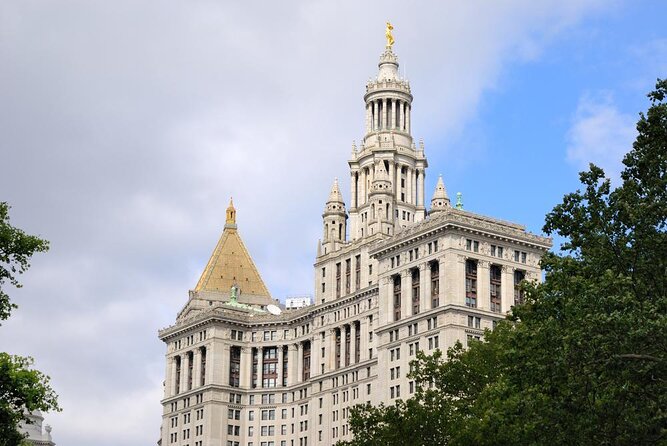
The next stop is the Municipal Building, where you learn why this grand civic structure mattered to the creation of the subway system. The stop lasts about 10 minutes and takes place outside, with no admission charge.
This part helps explain that the subway was not simply a technical project. Building and expanding it required government decisions, money, planning, and a vision for how New York should function. The Municipal Building gives that civic side of the story a physical address.
I find this kind of stop more useful than a string of disconnected train facts. It shows you that subway lines reflect decisions made by city officials, business interests, engineers, and communities. One rating described the tour as a combination of transportation, business, community, and social history, and that blend is important to the experience.
Some people may find the amount of information heavy. The New York subway system is complicated, and the tour covers a lot in two hours. If you do not already know the difference between lines, stations, boroughs, and operating divisions, some explanations may take effort to absorb. The guides try to keep the pace moving, but this is not a light stroll with only a few amusing anecdotes.
Union Square turns the station into an art stop
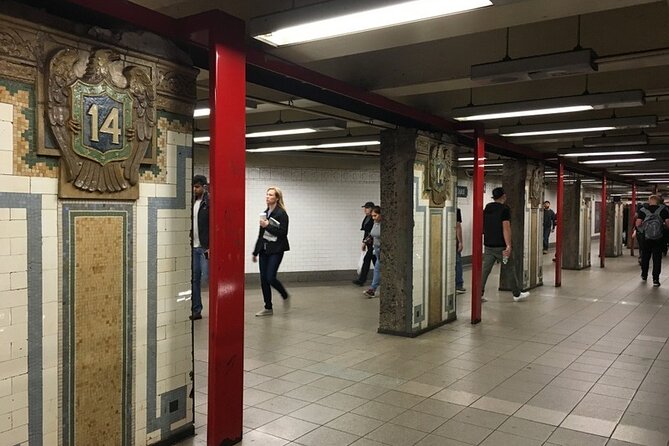
Union Square brings the tour into another side of the subway. Here, you explore the station and see an art installation that can be easy to miss when you are rushing for a train.
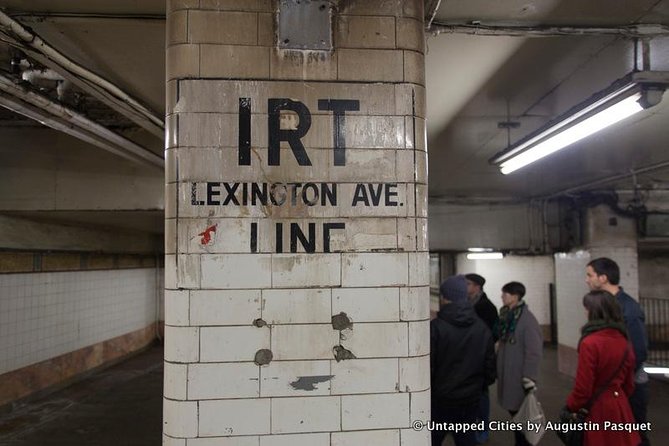
This is one of the tour’s best ideas. Subway stations are working spaces, so most people focus on signs, platforms, and the next train. A guide can slow you down long enough to show how station design and public art carry pieces of New York’s past into the present.
The art installation is linked to older subway materials and station elements, giving the stop a visual connection to what came before. That makes the subway feel less like a purely functional system and more like a place where architecture, history, and public life overlap.
You should keep your expectations in check. Union Square is a short stop of about 10 minutes, not a full museum visit. The value comes from knowing what to look for and why it matters, not from spending a long time studying one artwork.
Another side of New York City for the same day:
- NYC: SUMMIT One Vanderbilt Tickets
★ 4.7 · 51,195 reviews - NYC: 9/11 Memorial & Museum Timed-Entry Ticket
★ 4.8 · 31,428 reviews - NYC: Empire State Building Tickets – Observatory & Museum
★ 4.7 · 25,757 reviews - New York City: Statue of Liberty & Ellis Island with Ferry
★ 4.6 · 18,683 reviews
Ride the 6 train past New York’s ghost stations
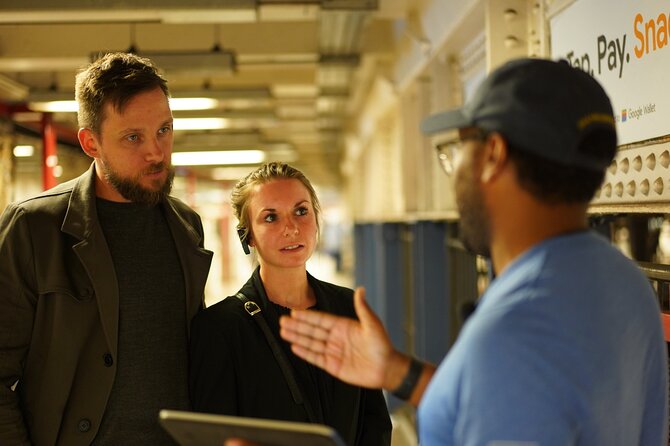
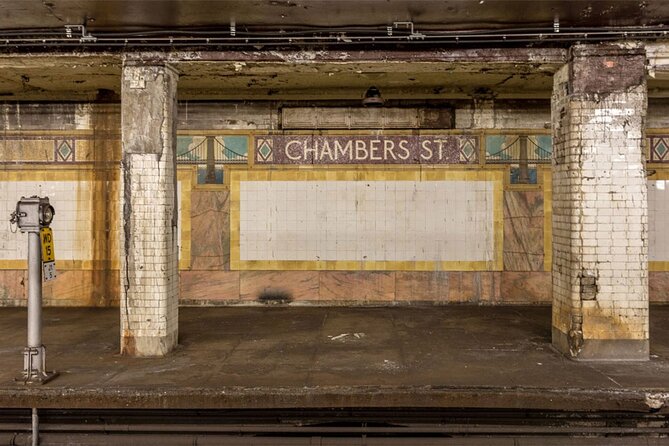
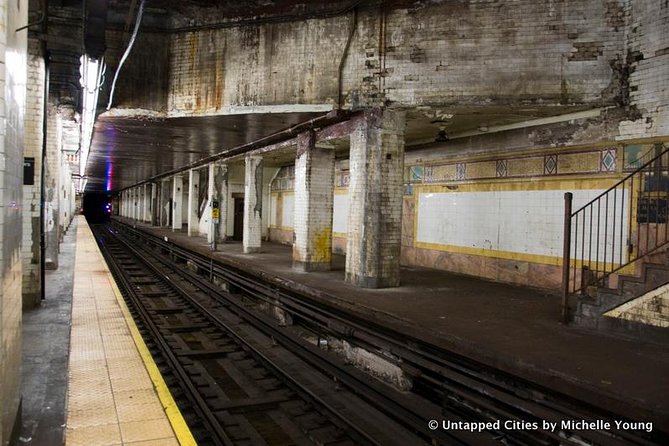
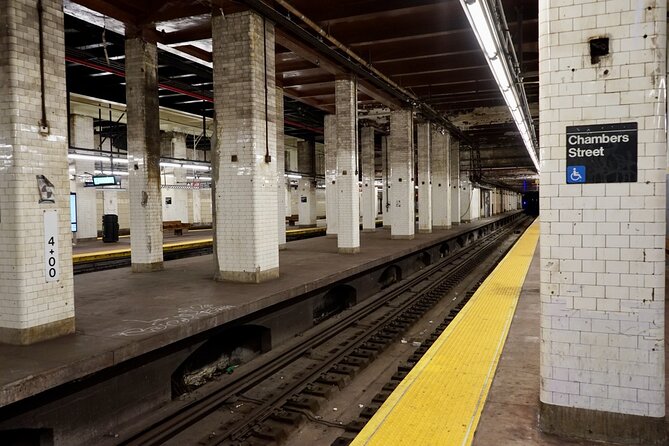
The most unusual part of the tour is the ride on the 6 train. From the moving train, you can see abandoned subway stations, often called ghost stations, that are no longer used by the public.
These spaces are preserved fragments of an older city. Their platforms, tilework, and proportions can offer a quick glimpse of how subway travel looked in earlier decades. The train does not stop so you can wander through them, but seeing them from an active route is part of the thrill. You are observing the past while riding through the present system.
This is where the tour earns its title. A guide can point out what you might otherwise miss in the darkness between stations. Without that help, an abandoned platform could pass in a few seconds. With the history attached, the brief sight becomes a lesson in changing routes, changing needs, and the way New York repeatedly rebuilds itself.
The 6 train ride also makes the tour practical. You are not only hearing about the subway. You are using it, learning how stations connect, and getting a better feel for the system’s scale. Several people who use public transportation regularly found the tour useful because it made them notice details they normally pass without a glance.
The tradeoff is comfort. Active subway stations can be hot, loud, and crowded. One person found the underground portion too warm and too long, while another had trouble hearing through the supplied earpiece over train noise. The earpieces are intended to solve that problem, and most feedback praises the ability to hear the guide, but audio quality can vary. If you are sensitive to heat, noise, or extended time underground, take that seriously.
How the guide shapes the experience
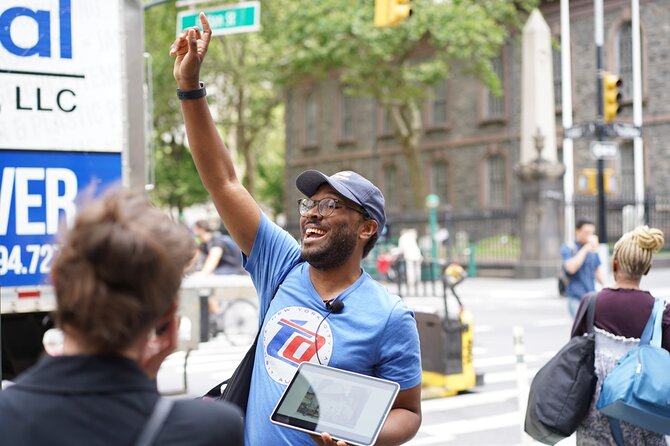
The guide matters a great deal here. This is not a route where the sights explain themselves. A tile pattern, a closed platform, or a civic building becomes meaningful only when someone connects it to the city’s past.
AJ is especially strong for people who want a full explanation of why the subway is so large and complex. Pete suits train enthusiasts and anyone who enjoys a steady stream of transit facts. Alexis brings together subway development and the social and political forces behind it. Cullen has been praised for being personable and for helping with onward subway directions.
That range matters because the experience can feel different depending on your guide and your own interests. A rail enthusiast may wish the tour lasted four hours because there is so much material. Someone looking mainly for stories about subway performers, crime, animals, or everyday street life may find the focus too technical.
The tone is generally friendly and engaging. The guides are expected to manage a group through multiple stations, trains, gates, and stairways. That takes attention. You should stay close, listen for directions, and avoid treating the tour like an ordinary independent subway ride.
Is $39 a fair price for two hours?
At $39 per person, the tour is reasonably priced for a guided New York experience, especially with a group capped at 12. You are paying for a specialist guide, route planning, commentary, and the chance to see subway details you would probably miss alone.
The price does not include one MetroCard swipe, so budget for that small extra cost. The tour ends back at the starting point, leaving the rest of your day open. That makes it easy to pair with other Lower Manhattan plans, though you should not book another activity too tightly against the finish time in case the subway runs slowly or the group needs extra time at a station.
The value is strongest if you care about history, architecture, or public transportation. It is also a good gift for someone who collects train facts or enjoys unusual city experiences. If you simply want to learn how to use the subway, you may pick up useful tips, but a basic transit guide would cost less. The special value here comes from access to context, stories, and places you would not know to notice.
Who should book this underground tour?
You should consider it if you want a less familiar side of New York. It works particularly well for:
- Train and railway enthusiasts
- History and architecture fans
- Repeat visitors who have already seen the major attractions
- Local residents who use the subway but rarely stop to study it
- Families with older children who can manage stairs and a long underground route
- Solo visitors who prefer a small group and a clear structure
The experience is suitable for most people, and service animals are allowed. Still, the practical demands are real. You need to walk between stops, climb stairs, ride trains, and remain underground for much of the two hours. Wear comfortable shoes and bring patience for noise, crowds, and heat.
If you want a relaxed surface walk with frequent fresh-air breaks, this may not be your best choice. If you want a polished attraction with guaranteed quiet listening conditions, you may also be disappointed. The subway is a working system, not a museum built for tours.
A useful pairing with the New York Transit Museum
One particularly good way to build on the tour is to visit the New York Transit Museum before or after it. The museum can give you a broad introduction to the subway’s development, while this experience places that information inside active stations and on a moving train.
You do not need the museum to enjoy the tour. It is simply a helpful match if you want more detail or find the system’s history hard to organize in your head. Several guides cover a lot of ground quickly, and a museum visit can give the names, dates, and system basics more room to settle.
If you visit the museum afterward, you may also recognize how preserved station parts and old design choices connect with what you saw underground. That extra context can turn a two-hour tour into a fuller day about New York transportation.
Booking, meeting point, and cancellation details
You meet outside Fulton Center at 200 Broadway, New York, NY 10038. Confirmation arrives when you book, and the activity ends at the same meeting point.
The tour is offered in English and uses a mobile ticket. It is often reserved about 24 days ahead, so booking early is sensible if your schedule is fixed, particularly for a small group of 12.
Free cancellation is available up to 24 hours before the local start time for a full refund. Cancellations or changes made inside that 24-hour window are not refunded or accepted. One practical warning: check your subway directions carefully before setting out. Arriving on the wrong side of the river can cause you to miss the start.
Should you book the NYC Underground Subway Walking Tour?
Book it if you want the subway explained as part of New York’s story, not just used as a ride. The best parts are the City Hall beginnings, the Union Square art, the Municipal Building connection, and the view of abandoned stations from the 6 train. The small group and earpieces make a crowded route easier to handle.
Skip it if you dislike stairs, underground heat, train noise, or detailed transit history. You should also know that the tour leans more toward systems, architecture, business, and civic history than toward stories of subway performers and street life.
For $39, I think it is a good choice for curious repeat visitors, history fans, and anyone who has ever wondered why New York’s subway works the way it does. Bring comfortable shoes, check your route to Fulton Center, and treat the ride itself as part of the lesson.
FAQ
How long is the NYC Underground Subway Walking Tour?
The tour lasts approximately two hours.
Where does the tour start?
The meeting point is outside Fulton Center at 200 Broadway, New York, NY 10038, USA.
Where does the tour end?
The tour ends back at the meeting point at 200 Broadway.
Is a MetroCard included?
No. The tour price does not include the MetroCard or one subway swipe.
Is the tour offered in English?
Yes. The tour is offered in English.
How many people can join the tour?
The maximum group size is 12 people.
Are earpieces provided?
Yes. Earpieces are provided to each participant so you can hear the guide in the stations and during the subway ride.
What is the cancellation policy?
You can cancel at least 24 hours before the local start time for a full refund. Cancellations or changes made less than 24 hours before the start are not accepted and are not refunded.
Just listed around New York City
- NYC: Little Shop of Horrors Off-Broadway Ticket5 reviews
- Private NYC Airport Transfer: LGA to Manhattan – Up to 5★ 3.6 · 5 reviews
- New York City Tour in German★ 4.5 · 5 reviews
- New York: Hamilton and Washington Revolutionary Walking Tour★ 5.0 · 5 reviews
- NYC Freedom Tower Private Photo or Video Experience★ 4.0 · 6 reviews
- New York Afternoon Fall Foliage Cruise with Lunch★ 5.0 · 6 reviews
- Brooklyn Walking Tours by Locals: Private & 100% Personalized★ 4.0 · 6 reviews
- Southold Bay Oyster Farm Tour★ 5.0 · 6 reviews
Walking Tours, compared.

SoHo, Little Italy, and Chinatown Walking Tour in New York
Read our review →
Secrets of Grand Central Station Walking Tour New York City
Read our review →
Greenwich Village Walking and Food Tasting Tour
Read our review →
Artistic, Alternative Greenwich Village Walking Tour
Read our review →
True Crime NYC: Mafia Walk w/Ret. NYPD Detective and Local Food
Read our review →


Browse the lists this tour appears in