
Reviewed · SOHO, LITTLE ITALY & CHINATOWN TOURS
NYC’s Chinatown & Little Italy Food Tour (4 Food Tastings)
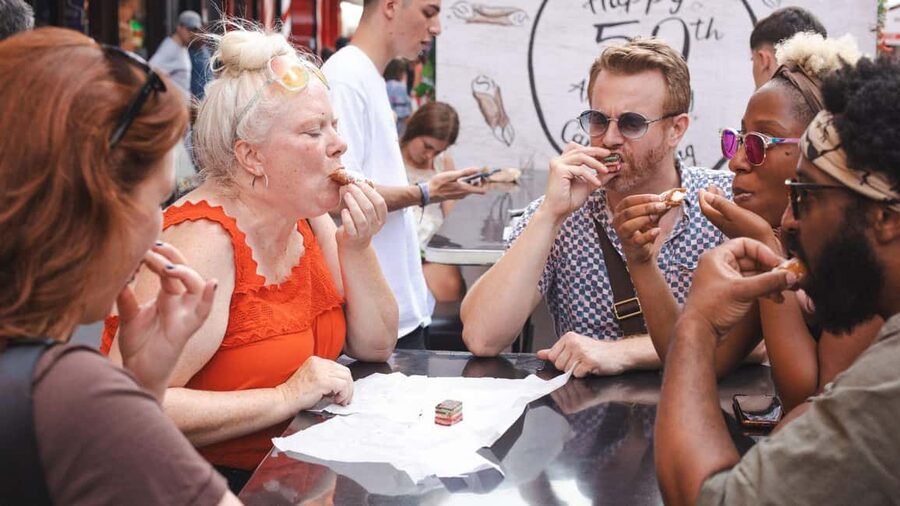
Chinatown and Little Italy make a fine double feature because the best way to understand these neighborhoods is through both their old streets and their food. In two hours, you follow Mott and Mulberry Streets, hear how immigrants built new lives here, and eat your way from pork buns and dumplings to pizza and cannoli.
I like the clear food lineup: two Chinese tastings and two Italian tastings are included in the $95 price. I also like the mix of famous bites and neighborhood landmarks, from Mei Lai Wah’s baked buns to Doyers Street and the Church of the Transfiguration.
The main drawback is that this is not a good choice for vegans, vegetarians, or anyone avoiding gluten. Four tastings may also feel more like a substantial snack than a full lunch, so plan another meal if you arrive hungry.
In This Review
- Key points to know before booking
- Why this Chinatown and Little Italy route works
- Beginning at the Baxter and Canal Street kiosk
- Mei Lai Wah and Chinatown’s baked-bun tradition
- Doyers Street, murals, and the neighborhood’s rougher past
- Dumplings at a small Shanghainese restaurant
- Mott Street Fish Market and everyday Chinatown
- The Church of the Transfiguration and immigrant life
- Crossing into Little Italy for pizza
- Di Paolo’s and the old Italian food trade
- Caffe Palermo and the cannoli finish
- What $95 buys you
- Who will enjoy this food tour most
- Practical details that affect your choice
- Should you book the Chinatown and Little Italy food tour?
- FAQ
- How long does the NYC Chinatown and Little Italy food tour last?
- How much does the tour cost?
- Where does the tour begin?
- What food is included?
- Is a tour guide included?
- Is the tour suitable for vegetarians or vegans?
- Can people with gluten intolerance join?
- Can I cancel or pay later?
Key points to know before booking
- Mei Lai Wah brings old-school Chinatown flavor: The family bakery has been serving baked buns since the late 1960s.
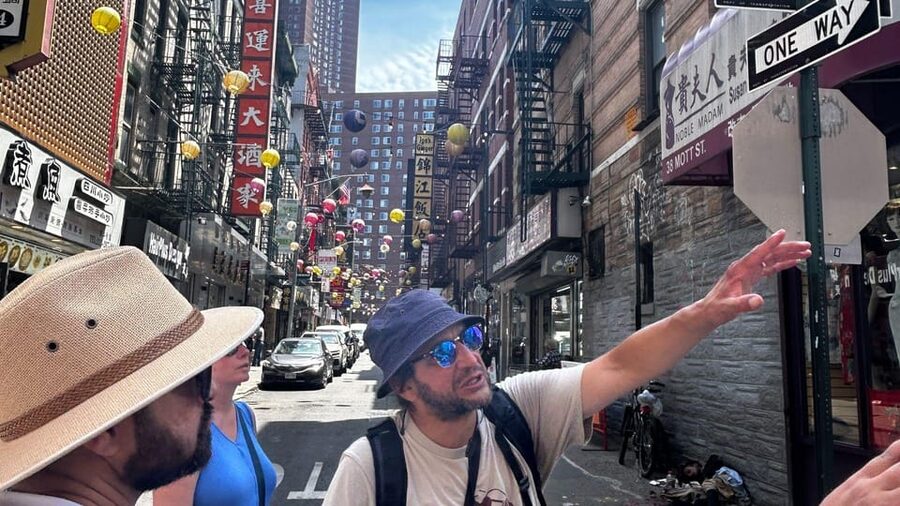
- Doyers Street adds a little drama: Once known as Murder Alley, this short street now has murals and restaurants.
- Little Italy supplies the finish: Expect pizza and an Italian dessert, with Caffe Palermo’s cannoli as the signature sweet.
- The history is part of the meal: Your guide connects food stops with immigrant life, churches, markets, and changing streets.
- The tour is short and focused: Two hours gives you a useful introduction, not a full neighborhood survey.
- The price covers the tastings: You pay $95 per person, with gratuity separate.
Why this Chinatown and Little Italy route works
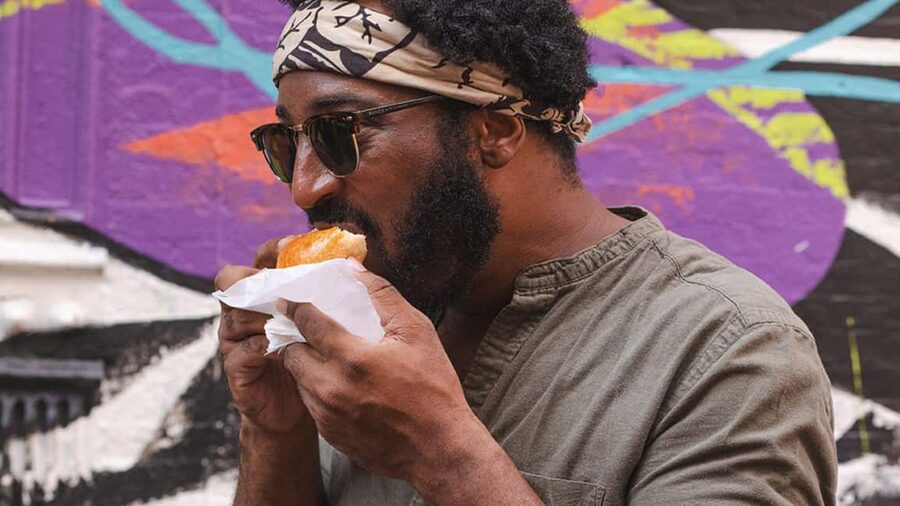
Many food tours are simply a string of bites. This one has a sensible story running through it. You begin at the Chinatown Information Kiosk at Baxter and Canal Streets, then walk through streets shaped by generations of newcomers. Food gives you a reason to pause, while the guide explains what you are seeing.
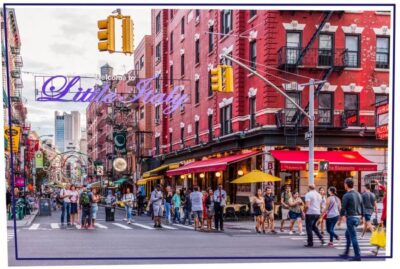
The route centers on Mott and Mulberry Streets, two of the most recognizable streets in old Manhattan. You also visit or pass places connected with Chinese and Italian life, including Doyers Street, the Church of the Transfiguration, the Mott Street Fish Market, and long-running Italian food businesses.
I like this format for a first visit. Chinatown and Little Italy can seem packed with signs, storefronts, restaurants, and people moving in every direction. A good guide helps you sort out what matters, then gives you a bite that makes the place easier to remember.
The experience lasts two hours and is generally offered in the afternoon. That timing works well if you want a late snack before dinner, or if you are building a longer day around lower Manhattan. You should not expect a slow, sit-down meal at each stop. This is a walking tour with samples along the way.
More SoHo, Little Italy and Chinatown walks:
- SoHo, Little Italy, and Chinatown Walking Tour in New York
★ 5.0 · 3,153 reviews - NYC: Chinatown & Little Italy Food Tour with 7 Flavorful Tastings
★ 5.0 · 2,733 reviews - Original NYC Guided Food Tour of Chinatown and Little Italy
★ 5.0 · 2,194 reviews
Beginning at the Baxter and Canal Street kiosk
Meet at the Chinatown Information Kiosk, located at the corner of Baxter and Canal Streets. This is a practical starting point because it places you right at the edge of the neighborhood, close to the streets and shops that shape the tour.
Your guide leads in English and handles the food arrangements, so you do not have to decide what to order at each stop. That matters in a two-hour tour. You can pay attention to the stories, the buildings, and the food rather than spending half the afternoon studying menus.
The guide also adds a human voice to the route. The strongest part of this experience is not simply getting a bun or dumpling. It is hearing how food businesses, churches, markets, and family shops helped immigrant communities put down roots.
Come ready to walk and sample food. The exact pace will depend on the group and the stops, but the format calls for movement between several locations rather than extended time in one restaurant.
Mei Lai Wah and Chinatown’s baked-bun tradition
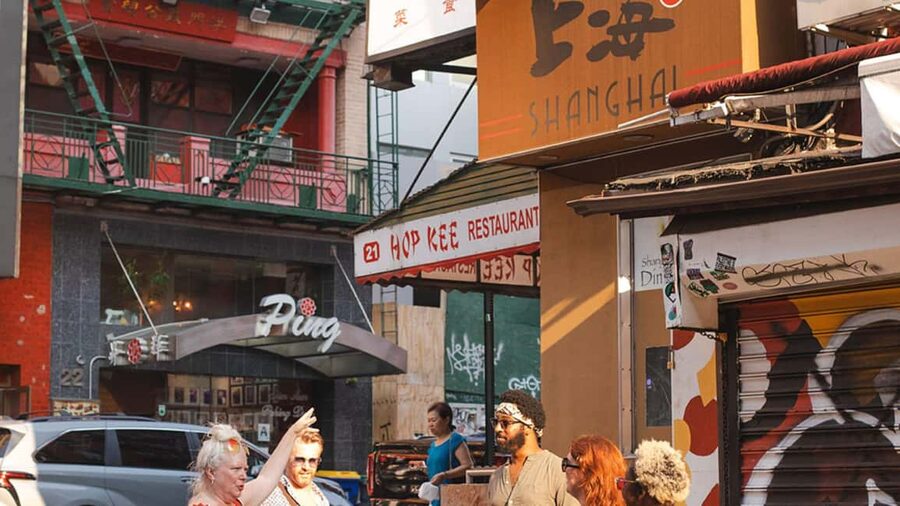
One of the Chinese tastings comes from Mei Lai Wah, a family bakery that has been a go-to stop for baked buns since the late 1960s. That longevity tells you something useful: this is not a new shop built only for sightseeing. It is part of the neighborhood’s long food culture.
The tour describes the Chinese tastings as traditional dishes, including pork buns and dumplings. At Mei Lai Wah, the baked bun is the key draw. It offers a different experience from a steamed dumpling, with a baked exterior and a filling designed for eating on the move.
Food like this is especially useful on a neighborhood tour because it connects daily life with history. A bakery serving a quick, affordable bite can tell you more about how a district functions than a grand restaurant can. You are sampling something made for regular customers, not only for special occasions.
If you prefer mild flavors or have a narrow diet, ask your guide what is being served before you eat. The tour does not cater to vegans or vegetarians, and gluten intolerance is listed as a reason not to book.
Doyers Street, murals, and the neighborhood’s rougher past
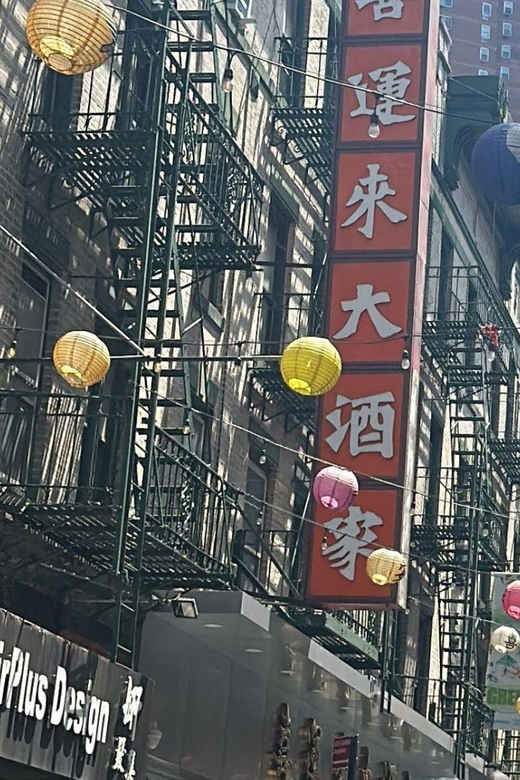
Doyers Street is one of the most memorable stops because its appearance today is so different from its old reputation. In 1900, it was known as Murder Alley. Now it is a quaint, curved street associated with murals and restaurants.
That contrast gives the guide an easy way to explain how neighborhoods change. A street can carry a dark reputation in one era and become a pleasant place to eat and take photographs in another. The point is not to turn the past into a spooky story. It is to show that Chinatown has never been frozen in time.
You will likely have time to look around as the group moves between food stops, but this is not a dedicated street-art tour. The murals and architecture are part of the larger walk. If you want long photo sessions, you may need to return on your own after the tour.
More New York City food tours:
- NYC Bus Tour of Brooklyn, Bronx, Queens: Art, Food & Sports
★ 5.0 · 3,805 reviews - NYC: Greenwich Village Food Tour with 6 Locals Favorites Dishes
★ 5.0 · 1,812 reviews - Greenwich Village Walking and Food Tasting Tour
★ 5.0 · 1,572 reviews - New York City Mafia and Local Food Tour led by NYPD Guides
★ 5.0 · 1,197 reviews
Dumplings at a small Shanghainese restaurant
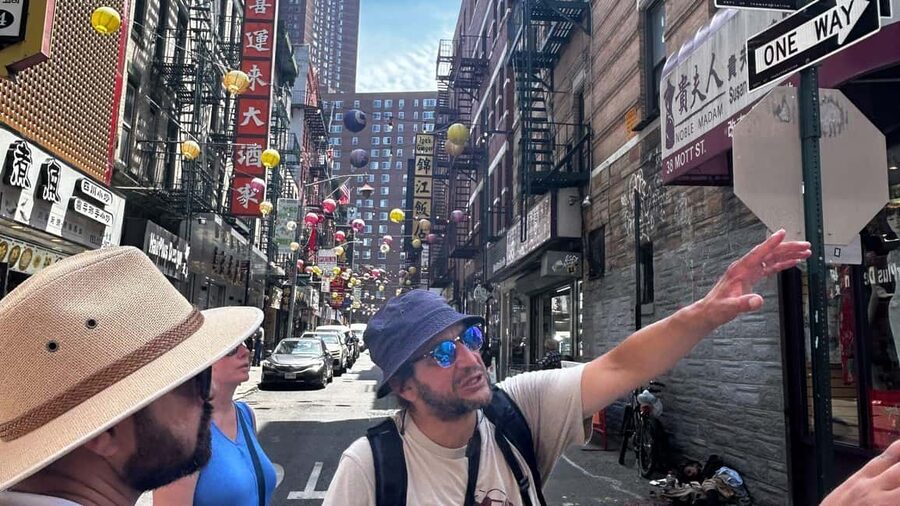
The second Chinese tasting takes place at Supreme Restaurant, a small Shanghainese restaurant known for its signature soup dumplings. This is a different style of Chinatown food from a baked bun, and that variety is one of the tour’s strengths.
Soup dumplings reward a little care. They are not simply bite-size parcels. The filling includes hot broth, so you will want to follow your guide’s lead and eat slowly. The tasting gives you a chance to compare textures and cooking styles within the same neighborhood.
This stop also adds balance to the route. Mei Lai Wah represents a long-running bakery, while Supreme Restaurant brings a restaurant specialty to the table. The food is not all one type of bun or dumpling, so the Chinese half feels varied despite lasting only part of the tour.
The provided details do not promise a particular number of dumplings or a full serving. Think of it as a tasting portion. The experience is designed to let you try several foods, not replace every meal you would otherwise eat that day.
Mott Street Fish Market and everyday Chinatown
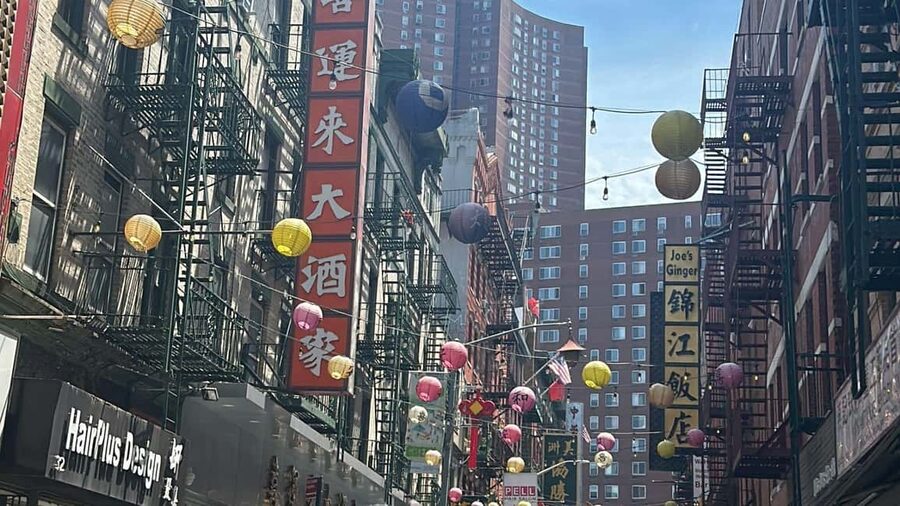
The Mott Street Fish Market gives you another view of Chinatown. This informal market is made up of shops selling fresh-caught fish, seafood, fruits, and vegetables. It is used by local residents and also draws people looking for ingredients beyond the usual restaurant strip.
Markets help explain a neighborhood in a way a restaurant cannot. You see what people buy to cook at home, how produce is displayed, and how food remains part of ordinary family life. Even if you do not stop for a tasting here, the market adds useful context to the route.
This is also a good place to notice the difference between a food district built for visitors and a working neighborhood with its own customers. The tour does not present Chinatown as a museum. It shows you a place where people shop, eat, worship, and run businesses.
The Church of the Transfiguration and immigrant life
The Church of the Transfiguration was completed in 1801 and has served immigrant groups for more than two centuries. It gives the tour a quiet pause amid the food shops and busy streets.
You will not spend the whole tour inside historic buildings. Still, a stop connected with worship helps explain how immigrant communities built institutions as well as restaurants. Churches, bakeries, markets, and family businesses all helped people maintain traditions while adapting to New York.
This is where the guide’s storytelling matters most. The tour promises a look at what life was like for immigrants arriving in the 1800s. That subject is broad, but the route gives it physical anchors. You are not hearing history in the abstract. You are standing on the streets where communities formed and changed.
Crossing into Little Italy for pizza
The Italian half of the tour includes a New York-style pizza tasting. The listed stop is Nolita Pizza, a newer pizzeria that has become popular with locals and sightseers and is known for its well-liked, photograph-friendly presentation.
Pizza is a smart bridge between old and new Little Italy. The neighborhood has deep Italian roots, but its food scene is not limited to businesses from the early 1900s. A newer pizzeria shows how the area continues to attract fresh ideas alongside long-running family shops.
You should expect a slice or tasting rather than a full pie. The value here comes from comparing the food traditions of Chinatown and Little Italy in one compact walk. You get a Chinese bakery item, soup dumplings, pizza, and dessert without booking separate meals.
If pizza is your main reason for booking, keep expectations in check. The tour does not promise a ranking of New York’s best slices or a long stop devoted only to pizza. It is one part of a broader food and neighborhood route.
Di Paolo’s and the old Italian food trade
Di Paolo’s Fine Foods has been family-owned and operated since 1925. The shop imports Italian meats and cheeses, giving you a look at the goods that helped define Italian food culture in the neighborhood.
A specialty importer is a useful stop because it shifts the focus from ready-to-eat food to ingredients. Italian cooking depends on products that may have been familiar to earlier generations but harder to find in a new country. Shops like this helped keep those tastes available.
The tour also includes Cafe Roma, a Little Italy institution operated by the same family since 1891. Together, these stops show two sides of the area: a supplier of traditional foods and a long-running cafe serving the public.
The details provided do not state that you receive tastings at every named business. The included Italian tastings are pizza and dessert, while Di Paolo’s and Cafe Roma help frame the neighborhood story. That distinction is worth keeping in mind if you are expecting a sample at each address.
Caffe Palermo and the cannoli finish
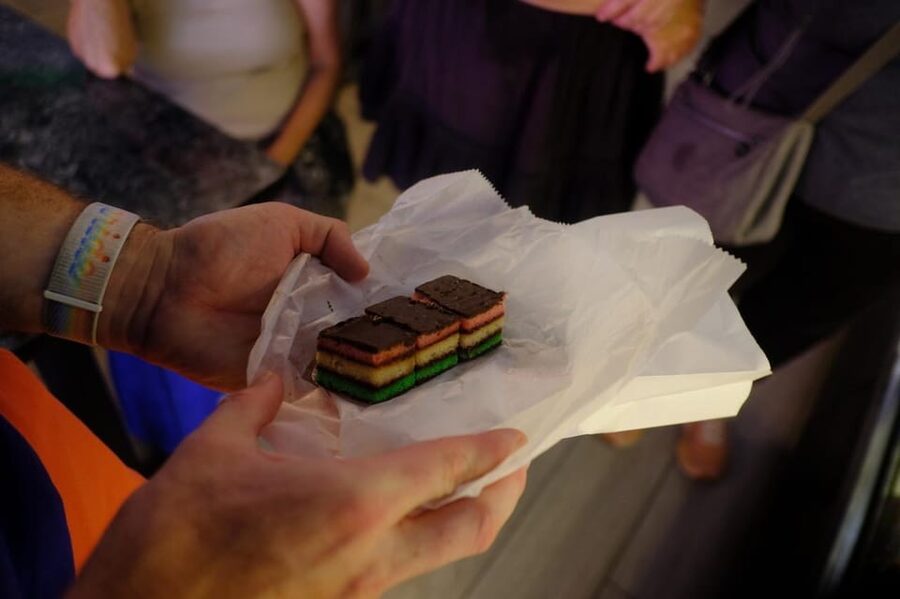
The dessert tasting comes from Caffe Palermo, which has served pastries since 1973 and is known as the home of New York’s Cannoli King. Cannoli is the tour’s most celebrated sweet, and it gives the route a clear, satisfying finish.
A good cannoli is about contrast: crisp pastry, creamy filling, and enough sweetness to feel like dessert without becoming a full meal. The stop also connects you with Little Italy’s pastry tradition, which remains one of the area’s main draws.
I would save room for this part. The food lineup moves from savory Chinese dishes to pizza and then to Italian dessert, so the progression makes sense. If you have a serious sweet tooth, the cannoli is likely to be the tasting you remember most.
Caffe Palermo has been serving residents and visitors for more than 50 years. That gives the guide another chance to show how family businesses help shape a district’s identity over time.
What $95 buys you
The price is $95 per person. That includes a licensed professional guide and four tastings: two traditional Chinese dishes in Chinatown, followed by Italian pizza and dessert in Little Italy.
For value, compare this with what you would spend ordering several specialties on your own, then add the time needed to find the right shops and understand what you are eating. You are paying for guidance, a planned route, and the convenience of having the samples arranged.
Still, you should judge the price honestly. Four tastings over two hours do not guarantee a full lunch or dinner. Portions are not specified, and gratuity is not included. If you want a large meal, you may spend more afterward.
The tour makes the most sense if you value context and variety. If you already know Chinatown and Little Italy well, or prefer to choose every dish yourself, you may find the fixed route less appealing. For a first introduction, the combination of food and local history makes the cost easier to justify.
Who will enjoy this food tour most
I would recommend this tour to first-time visitors to these neighborhoods, food-focused sightseers, and anyone who wants a short activity with a strong sense of place. It also works for people who do not want to spend an entire day on a food crawl.
The tour suits you especially well if you enjoy trying small portions from several cuisines. You will move from Chinese pork buns and dumplings to New York pizza and an Italian pastry, with street history filling the spaces between bites.
It is not suitable for vegans or vegetarians. It is also not suitable for people with gluten intolerance. The listed food includes buns, dumplings, pizza, and cannoli, so anyone with allergies or strict dietary needs should not assume substitutions are available.
The tour is conducted in English. If you need another language, this is not the right option based on the available information.
Practical details that affect your choice
You can cancel up to 24 hours in advance for a full refund. You can also reserve now and pay later, which helps if your New York schedule is still shifting.
The meeting point is specific: the Chinatown Information Kiosk at Baxter and Canal Street. Check that location before setting out, since a large Manhattan intersection can have several nearby corners and entrances.
The activity generally runs in the afternoon and lasts two hours. Since the route includes multiple food stops and neighborhood sights, arrive ready to keep moving. The information does not specify group size, indoor seating at each stop, or accessibility details, so ask the provider before booking if those points are important to you.
The five published ratings are all five out of five, with special praise for the energetic guide, fun stories, delicious food, and smooth organization. I would give the strongest weight to the repeated comments about the guide and the mix of history with food. Those are the features that make this more than a list of snacks.
Should you book the Chinatown and Little Italy food tour?
Book it if you want an easy, guided introduction to two famous lower Manhattan neighborhoods and you eat meat, dairy, wheat, and traditional Chinese and Italian foods. The tour gives you four planned tastings, a local guide, family-run food stops, and enough history to help the streets make sense.
Skip it if you need vegan, vegetarian, or gluten-free food, or if you want a large sit-down meal. You may also prefer exploring independently if you already know these neighborhoods and want to spend more time at one restaurant.
For most first-time visitors who like food and short city walks, this is a well-focused choice. The dumplings, pizza, and cannoli are the draw, but the real value is learning why these streets became such important centers of immigrant life.
FAQ
How long does the NYC Chinatown and Little Italy food tour last?
The tour lasts two hours and is usually available in the afternoon.
How much does the tour cost?
The listed price is $95 per person.
Where does the tour begin?
The tour begins at the Chinatown Information Kiosk at the corner of Baxter and Canal Street.
What food is included?
You receive two tastings of traditional Chinese dishes in Chinatown and two Italian tastings in Little Italy, including pizza and dessert. Foods described for the route include pork buns, dumplings, New York-style pizza, gelato, and cannoli.
Is a tour guide included?
Yes. The experience includes a licensed professional tour guide who leads in English.
Is the tour suitable for vegetarians or vegans?
No. The activity is listed as unsuitable for vegans and vegetarians.
Can people with gluten intolerance join?
No. The activity is listed as unsuitable for people with gluten intolerance.
Can I cancel or pay later?
You can cancel up to 24 hours in advance for a full refund. You can also reserve now and pay later, so no payment is needed at the time of booking.
Just listed around New York City
- New York City: Afternoon Fall Foliage Lunch Cruise★ 4.8 · 5 reviews
- Long Island Winery Tour★ 4.5 · 5 reviews
- Private Driving Tour of Brooklyn (Half Day)★ 5.0 · 5 reviews
- Two Day Combo: Niagara Falls and Washington with Philadelphia from New York★ 3.0 · 5 reviews
- NYC: Guided Pedicab Tour of Central Park★ 5.0 · 5 reviews
- 2.5 Hour Private Super Tour of NYC: Heroes! Comics! More!★ 5.0 · 5 reviews
- New York City: Brooklyn Bridge and Dumbo Walking Tour★ 4.8 · 5 reviews
- NY Tours Central Park★ 5.0 · 5 reviews
SoHo, Little Italy & Chinatown Tours, compared.
SoHo, Little Italy, and Chinatown Walking Tour in New York
Read our review →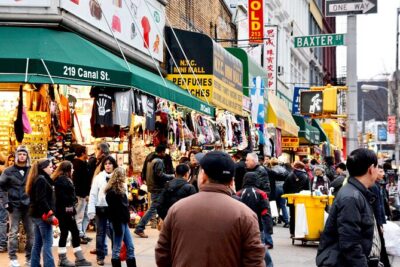
Chinatown & Little Italy Food Tour with 7 Flavorful Tastings
Read our review →
Original NYC Guided Food Tour of Chinatown and Little Italy
Read our review →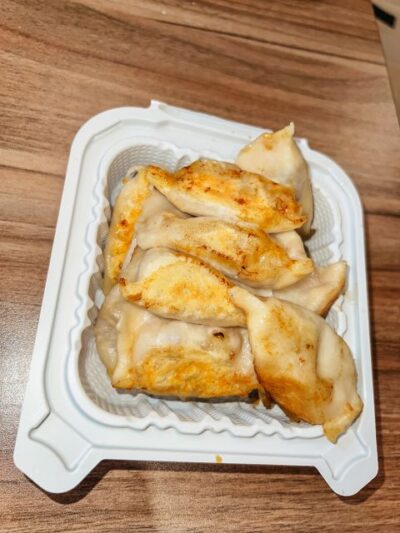
SoHo, Little Italy, and Chinatown 2-Hour Guided Walk
Read our review →
SoHo, Little Italy, and Chinatown NYC Guided Walking Tour
Read our review →Browse the lists this tour appears in