
Reviewed · WALKING TOURS
Oppenheimer in New York: Upper West Side Walking Tour
Robert Oppenheimer’s New York story begins well before Los Alamos. This Upper West Side walking tour follows the streets, homes, schools, artists, scientists, and political currents that helped form the man later linked to the Manhattan Project and the atomic bomb.
I like the tight route, which keeps the walk focused rather than sending you across Manhattan. I also like the way guide K. Krombie connects private family history with larger questions about science, politics, religion, and moral responsibility. The main consideration is that most stops are exterior locations, so you are paying for interpretation and connections, not interior access.
In This Review
- Key points to know before you book
- Why Oppenheimer’s New York story works so well on foot
- Starting at 94 Corner Cafe and meeting Oppenheimer’s family
- Ethical Culture School and the influence of Edwin Seligman
- The Clarendon, William Randolph Hearst, and a childhood neighborhood
- Oppenheimer’s childhood home on Riverside Drive
- Riverside Drive and the Soldiers’ and Sailors’ Monument
- The Master Apartments and the political ideas of the New Deal
- The New York Buddhist Church and the Shinran Statue
- Isidor Rabi’s home and the walk to Columbia
- What the $42 price includes in practical terms
- Who should take this Upper West Side walk
- Should you book Oppenheimer in New York?
- FAQ
- Where does the Oppenheimer walking tour start?
- Where does the tour end?
- What time does the tour begin?
- How long does the tour last?
- How much does the tour cost?
- How many people can join the tour?
- Is the tour offered in English?
- Can I cancel for a full refund?
Key points to know before you book
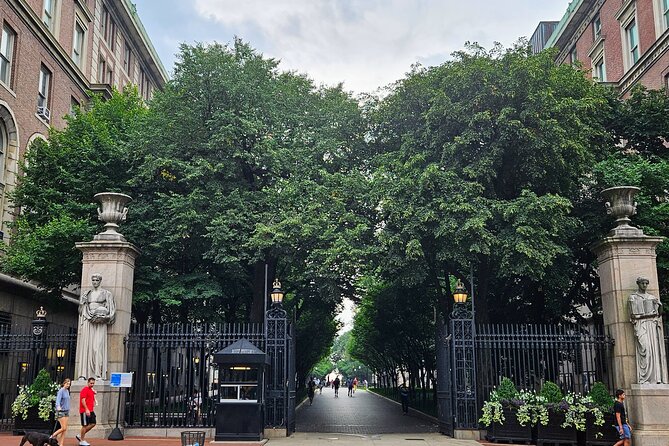
- Nine stops from Broadway to Columbia University: The route begins near 94 Corner Cafe and ends at Columbia University Plaza.
- Oppenheimer’s birthplace is included: You visit the site where he was born and discuss his parents’ life in New York.
- Small-group format: The tour is promoted as a group capped at 13, while the booking information gives a maximum of 15.
- The story reaches beyond physics: Hear about the Ethical Culture School, the New Deal, Jewish immigrant life, Buddhism, and political thought.
- A compact 2.5-hour outing: Each stop lasts about 10 to 15 minutes, with little wasted walking between locations.
- English and mobile ticket: The tour begins at 1:00 pm, costs $42 per person, and allows free cancellation up to 24 hours before departure.
Why Oppenheimer’s New York story works so well on foot
The appeal here is not a famous building with a dramatic entrance. It is the chance to look at ordinary city addresses and understand how they fit into Oppenheimer’s early life.
The Upper West Side becomes the main character. Family origins, education, money, religion, architecture, science, and international politics all meet within a relatively small area. That makes this a good choice if you want a tour that treats Oppenheimer as a person shaped by his surroundings, not simply as the scientist from a wartime project.
K. Krombie’s approach, as described in the tour material, is lively and idea-driven. She links people and movements that may seem separate at first. You get the broad setting, but you also get small details about the people who influenced Oppenheimer’s upbringing and career.
The result should suit you if you enjoy history that asks how a person became who he was. If you only want Manhattan Project facts, this may feel less direct than expected.
More New York City walking tours:
- SoHo, Little Italy, and Chinatown Walking Tour in New York
★ 5.0 · 3,153 reviews - Secrets of Grand Central Station Walking Tour New York City
★ 5.0 · 1,796 reviews - Greenwich Village Walking and Food Tasting Tour
★ 5.0 · 1,572 reviews
Starting at 94 Corner Cafe and meeting Oppenheimer’s family
The meeting point is 94 Corner Cafe at 2518 Broadway. The start time is 1:00 pm, and the directions are described as clear and simple. Because the experience is a walking tour, arrive ready to begin on time rather than treating the cafe as part of the attraction.
The first stop concerns the premarital home of Ella Oppenheimer, Robert’s mother. This is a useful opening because it moves the story back before Robert’s birth. You begin with his immigrant ancestry and the family world that existed before he became a public figure.
The stop lasts about 10 minutes and has no admission fee. Expect an exterior discussion, not a house visit. That is typical of the tour: the address matters because of the story attached to it.
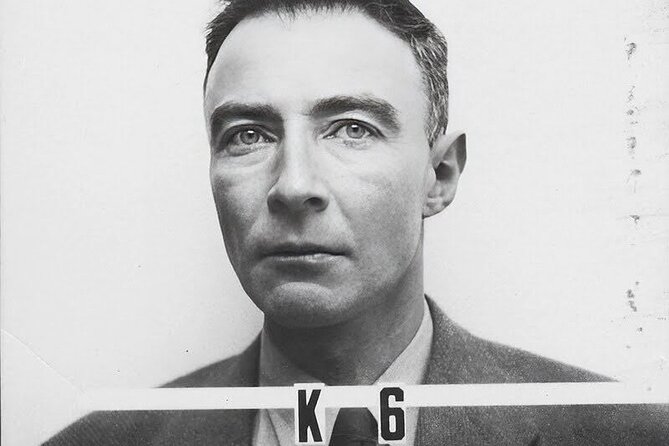
The second stop is the site of Oppenheimer’s birth, also in the Upper West Side. Here, the focus shifts to his parents and their life in New York. Seeing the actual birthplace gives the subject a firmer sense of place, even though the original setting may not function as a museum or formal memorial.
For me, this is one of the tour’s strongest details. Oppenheimer’s later public life can seem remote and monumental. Starting with his parents and birthplace brings the story down to a human scale.
Ethical Culture School and the influence of Edwin Seligman
The third stop is the former home of Edwin R. A. Seligman. The point is not simply to admire another old address. It opens a discussion of Oppenheimer’s education at the Ethical Culture School.
That connection matters because education is treated here as more than a list of institutions. The tour uses the school to consider the ideas and values surrounding Oppenheimer while he was growing up. The focus is on the intellectual setting that helped shape his outlook.
The stop lasts about 15 minutes, giving Krombie room to explain the connection without rushing. You should expect a talk beside or near the former home, with the city continuing around you. That can be a strength if you like history in place, though it requires attention and imagination.
One of the tour’s most praised qualities is its ability to connect people and ideas from the same period. This stop appears to be an early example of that method. You are not just told where Oppenheimer went to school. You are encouraged to think about what that education meant.
The Clarendon, William Randolph Hearst, and a childhood neighborhood
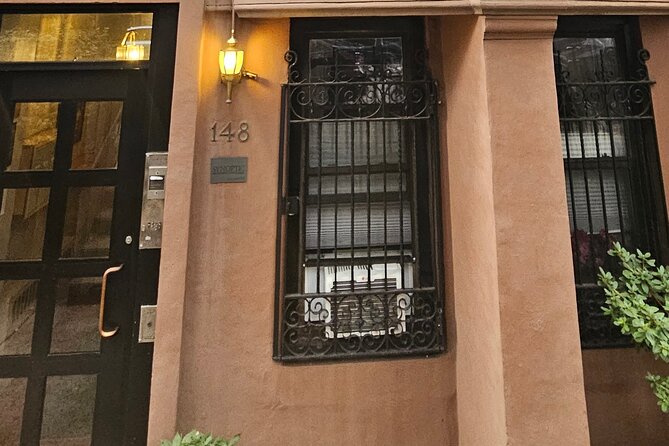
The fourth stop is the Clarendon, the former home of William Randolph Hearst. Hearst was a major presence in Oppenheimer’s childhood neighborhood, and the discussion includes his links to world leaders connected with the Second World War and Oppenheimer’s later story.
This is one of the less obvious stops, which is part of its value. A tour focused only on Oppenheimer’s family and scientific colleagues would miss the social world around him. The Clarendon adds wealth, media power, public influence, and the political atmosphere of the era.
The stop lasts about 10 minutes. You will not need to enter the building to understand the point, but you should be comfortable with a tour that treats architecture as a starting point for history rather than an attraction in itself.
The connection may take you by surprise. That is not a flaw. It shows that the walk is built around relationships and context, not only around places where Oppenheimer personally lived or worked.
Another side of New York City for the same day:
- NYC: SUMMIT One Vanderbilt Tickets
★ 4.7 · 51,195 reviews - NYC: 9/11 Memorial & Museum Timed-Entry Ticket
★ 4.8 · 31,428 reviews - NYC: Empire State Building Tickets – Observatory & Museum
★ 4.7 · 25,757 reviews - New York City: Statue of Liberty & Ellis Island with Ferry
★ 4.6 · 18,683 reviews
Oppenheimer’s childhood home on Riverside Drive
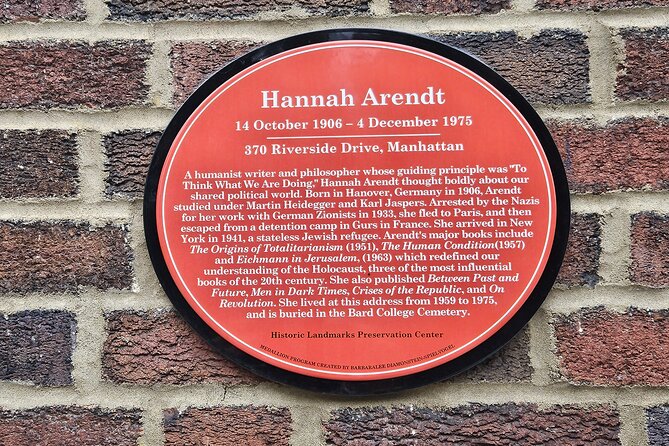
The fifth stop brings you to Oppenheimer’s childhood home on Riverside Drive. This is the most direct link yet to his daily life as a boy and teenager.
The discussion covers his childhood and adolescence, giving you a chance to connect the family background and schooling with the person he later became. The stop lasts about 15 minutes, one of the longer pauses on the route.
Riverside Drive also gives the walking tour a change of feel. The route is no longer only about a single family address. The surrounding street helps frame the social world in which Oppenheimer grew up.
You should keep your expectations realistic. This is not presented as a preserved museum apartment or a furnished historic home. The value comes from standing at the location and hearing it interpreted with the rest of the route.
Riverside Drive and the Soldiers’ and Sailors’ Monument
At the Soldiers’ and Sailors’ Monument, the subject broadens again. The tour looks at the history of Riverside Drive during Oppenheimer’s formative years.
This 15-minute stop is less about a single biographical fact and more about the setting. A street develops over time, and its monuments, buildings, and public spaces help explain the world a young person sees around him.
The monument also gives the walk a clear landmark and a natural pause. After several residential addresses, a major public structure makes the surrounding history easier to picture.
The tour’s structure works best when you let these stops build on one another. The birthplace explains family beginnings. The school stop addresses education. The childhood home and monument then place those influences in the wider city.
The Master Apartments and the political ideas of the New Deal
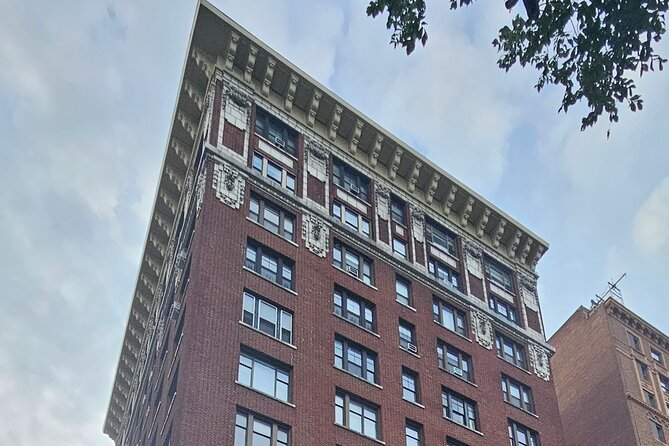
The seventh stop is the Master Apartments on Riverside Drive. Here, the discussion turns to Franklin D. Roosevelt’s New Deal and the political ideas that circulated during Oppenheimer’s youth.
This is an important shift. Oppenheimer’s life is often reduced to science, war, and the bomb. The Master Apartments stop adds the political and social debates of the time, showing that his world included competing visions for how society should work.
The stop lasts about 10 minutes. You may find this part especially useful if you want to understand the period rather than simply memorize biographical milestones.
The tour does not treat political thought as a separate lecture. It places those ideas along the same streets associated with Oppenheimer’s early life. That is the basic strength of a good neighborhood walk: the setting helps keep abstract subjects tied to real places.
The New York Buddhist Church and the Shinran Statue
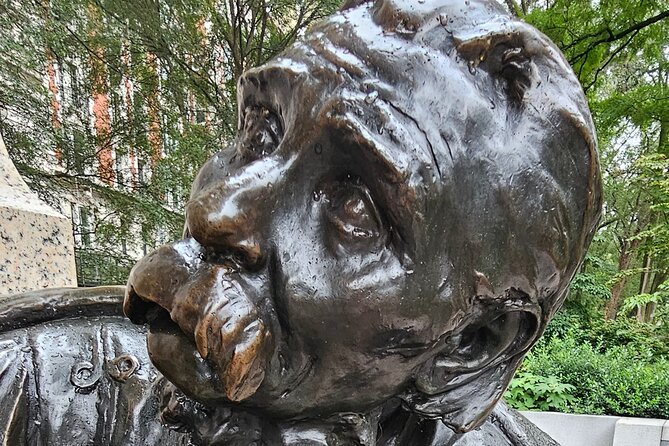
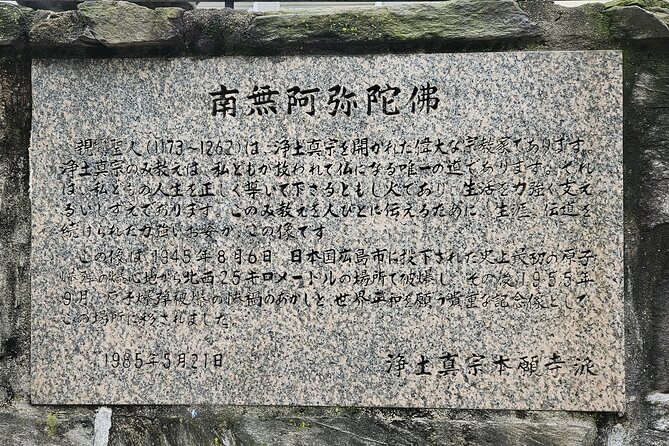
The eighth stop takes you to the New York Buddhist Church to see the Shinran Statue. The discussion turns to the cause and effect of the atomic bomb.
This stop introduces a religious and ethical angle. It does not appear to be a technical explanation of nuclear physics. Instead, it helps you think about the human consequences of Oppenheimer’s work and the moral questions that followed.
The stop lasts about 15 minutes, giving it the same weight as the birthplace, childhood home, and monument. That timing suggests that the tour wants you to pause over the bomb’s meaning, not rush past it as a final fact.
The location also prevents the tour from ending with a narrow portrait of Oppenheimer as either hero or villain. By bringing in Buddhist thought and the aftermath of the bomb, the walk leaves room for harder questions.
Isidor Rabi’s home and the walk to Columbia
The final stop is the home of Isidor Rabi, a pioneer in twentieth-century physics, Nobel Prize winner, and close friend of Oppenheimer. The stop lasts about 10 minutes and brings the story back to science and personal relationships.
Rabi’s presence gives you a better sense of Oppenheimer’s professional circle. The tour has already shown family, school, society, politics, religion, and public life. Rabi represents the scientific world that became central to Oppenheimer’s career.
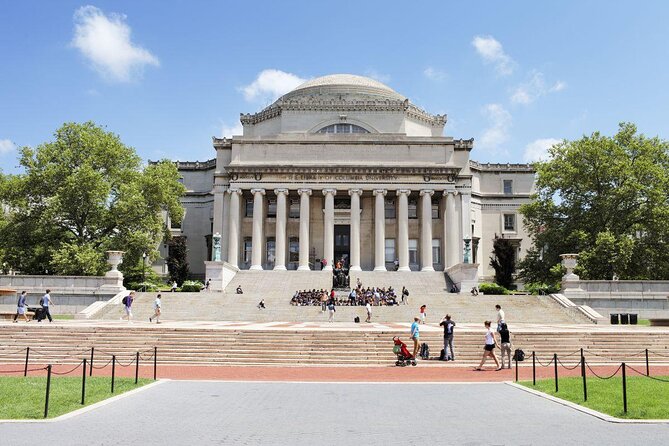
The walk ends at Columbia University, at 116th Street and Broadway, near Columbia University Plaza. Ending there gives the route a clear finish and places you near public transportation and one of New York’s major academic settings.
The start and end points are different, so plan your day around a one-way walk. That is convenient if you want to continue around Morningside Heights or Columbia after the tour. It also means you should not leave anything at the starting point.
What the $42 price includes in practical terms
At $42 per person, this is priced like a specialized neighborhood history walk rather than a general sightseeing stroll. There are no admission charges at the listed stops, so the fee primarily pays for the guide’s research, presentation, and the design of the route.
I think the price is reasonable if you care about Oppenheimer, New York intellectual life, or the history of the Upper West Side. The tour offers nine connected stops over roughly two and a half hours, with little idle walking or long stretches between locations.
The value is less clear if you prefer interiors, artifacts, or a large museum component. You will be looking at homes, streets, monuments, and an exterior statue. The experience depends heavily on how much you enjoy listening and making connections.
The small-group format helps. The highlights describe a cap of 13, while the additional booking information lists a maximum of 15. Either way, this is a much more intimate setup than a large coach tour, though the exact group size can vary.
The tour is offered in English and uses a mobile ticket. Confirmation arrives at booking. Free cancellation is available if you cancel at least 24 hours before the 1:00 pm start time. If you cancel later, the payment is not refunded.
Who should take this Upper West Side walk
I would recommend this tour to you if you fit one or more of these descriptions:
- You have seen or read about Oppenheimer and want the New York chapter.
- You enjoy biography told through homes, schools, and neighborhood streets.
- You like history that links science with politics, religion, education, and society.
- You want a compact afternoon activity rather than a full-day museum visit.
- You have already spent time in New York and want a more focused local story.
- You are planning a date or an outing with friends and want something thoughtful but not formal.
It may be less suitable if you need step-free details, indoor attractions, or a fast-paced sightseeing route. The published guidance asks for moderate physical fitness, so you should be comfortable walking for about two and a half hours. Service animals are allowed, and the route is near public transportation.
The start at 1:00 pm gives you a manageable afternoon schedule. You can have lunch beforehand, take the walk, and continue near Columbia University when it ends. The tour is typically booked about 10 days ahead, so reserve early if your New York dates are fixed.
Should you book Oppenheimer in New York?
Book it if you want a carefully connected story about a person and his city, not a simple checklist of Manhattan Project sites. The best feature is the way the route expands from Oppenheimer’s family and childhood into education, politics, religion, science, and the moral burden of the atomic bomb.
I would be especially inclined to book if you already know the basic Oppenheimer story. You will get more from the less obvious links, such as Hearst’s place in the neighborhood, the Ethical Culture School, the Master Apartments, and Rabi’s nearby home.
Skip it if your priority is entering historic buildings or seeing laboratories and wartime facilities. For $42, you are buying a small-group conversation led by K. Krombie across nine city locations. If that sounds like your kind of New York history, this is a smart, focused afternoon.
FAQ
Where does the Oppenheimer walking tour start?
The tour starts at 94 Corner Cafe, located at 2518 Broadway, New York, NY 10025.
Where does the tour end?
It ends at Columbia University, at 116th Street and Broadway, near Columbia University Plaza.
What time does the tour begin?
The scheduled start time is 1:00 pm.
How long does the tour last?
The experience lasts approximately two hours and 30 minutes.
How much does the tour cost?
The price is $42 per person.
How many people can join the tour?
The tour is described as a small-group experience capped at 13, while the additional booking information lists a maximum of 15 travelers.
Is the tour offered in English?
Yes. The tour is offered in English.
Can I cancel for a full refund?
Yes, if you cancel at least 24 hours before the experience start time. Cancellations made less than 24 hours in advance are not refunded, and changes made within that period are not accepted.
Just listed around New York City
- Brooklyn Nets Basketball Game Ticket at Barclays Center★ 5.0 · 12 reviews
- Recreate the Most Requested Walking Tour of 1840s New York★ 5.0 · 12 reviews
- Explore NYC- Tour of Manhattan, The Bronx, Queens & Brooklyn★ 4.5 · 12 reviews
- Edge at Hudson Yards General Admission Tickets★ 4.0 · 13 reviews
- Charging Bull, Wall Street, 911 Memorial + One World Tickets★ 5.0 · 13 reviews
- NYC: Thanksgiving Gourmet Lunch or Dinner Harbor Cruise★ 5.0 · 13 reviews
- Great Jones Distilling Co. NYC Craft Whiskey Tour and Tasting★ 5.0 · 13 reviews
- NYC Statue Liberty 90-Minute Sightseeing Cruise★ 4.0 · 13 reviews
Walking Tours, compared.
SoHo, Little Italy, and Chinatown Walking Tour in New York
Read our review →
Secrets of Grand Central Station Walking Tour New York City
Read our review →
Greenwich Village Walking and Food Tasting Tour
Read our review →
Artistic, Alternative Greenwich Village Walking Tour
Read our review →
True Crime NYC: Mafia Walk w/Ret. NYPD Detective and Local Food
Read our review →
Browse the lists this tour appears in