
Reviewed · HISTORICAL TOURS
Private Tour New York City in the Gilded Age: A History of High Society
New York’s Gilded Age is easiest to understand on foot, where grand mansions, museums, social clubs, and Central Park still reveal how the city’s richest families reshaped Fifth Avenue. This private walk follows that story from the General Sherman Monument toward the Upper East Side and the Cooper Hewitt museum.
I like the private format, which lets your guide adjust the pace and explain what interests your group. I also like the human side of the tour: guides such as Dan, Kevin, Sara, Richard, John, Brad, and Jarod bring in family rivalries, business fortunes, books, films, and the people behind the stone facades.
The main drawback is simple: this is an outdoor walking tour, and you should not expect regular access inside the buildings. On a very hot, cold, windy, or rainy day, good clothing matters. The tour lasts about two hours, but the stories move through buildings that have vanished, so you need to enjoy history told from the sidewalk.
In This Review
- Key points to know before you book
- Why the Gilded Age makes sense from Fifth Avenue
- Central Park as part of the social story
- The mansions that remain, and the ones that do not
- Museums, clubs, and the public face of private wealth
- Arriving at Cooper Hewitt’s former mansion
- What the private format is really worth
- Guide style and the role of storytelling
- Comfort, access, and planning the walk
- Who will get the most from this tour
- FAQ
- How long is the Gilded Age tour?
- Where does the tour begin?
- Where does the tour end?
- Is this a private tour?
- Is the tour offered in English?
- Are museum admissions included?
- Can I cancel for a full refund?
- Should you book the Fifth Avenue Gilded Age walk?
Key points to know before you book
- A private two-hour walk: Only your group participates, so the guide can shape the pace and conversation around your interests.
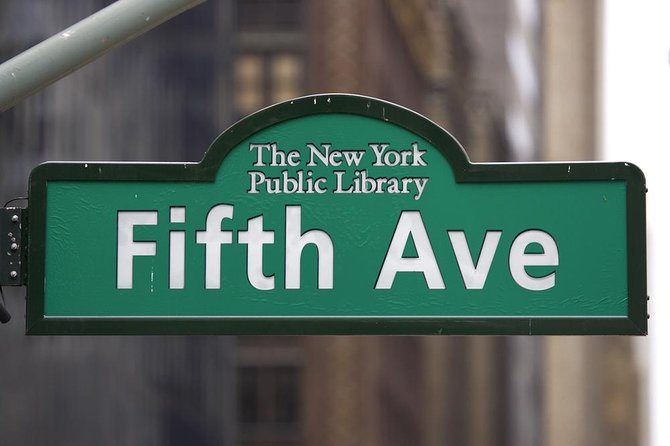
- A Fifth Avenue story: You begin where the avenue changes from a commercial street into New York’s grand residential corridor.
- Big names and bigger houses: The route explains the tycoons, families, and social ambitions behind the city’s mansion era.
- Mostly an exterior tour: You will see important buildings and institutions from outside, not tour the interiors of every stop.
- A strong guide makes the difference: Dan and Kevin receive especially strong praise for warmth, humor, pacing, and lively storytelling, while Sara, Richard, John, Brad, and Jarod have also led well-regarded walks.
- A useful Upper East Side finish: The walk ends at Cooper Hewitt, with the Metropolitan Museum of Art and Central Park nearby.
Why the Gilded Age makes sense from Fifth Avenue
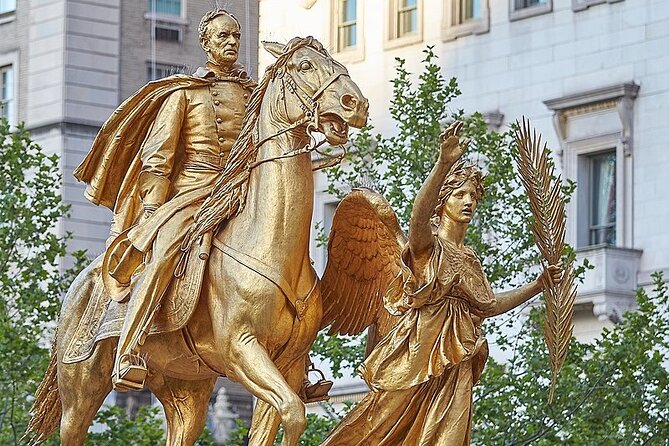
The tour begins at the General William Tecumseh Sherman Monument near the southern end of Central Park. This is a smart meeting point. You are at the hinge between Midtown’s commercial energy and the quieter residential stretch that became the preferred address for New York’s wealthiest families.
That change of scenery is the first lesson. Fifth Avenue was not always lined with luxury shops and office towers. During the Gilded Age, powerful families used the avenue to display money, taste, and social rank. Their mansions were private homes, but they also worked like public announcements.
Your guide helps you read the street as a social map. The important question is not only who lived in a particular house. It is why the family chose that location, how the building signaled status, and what happened when newer fortunes challenged older ones.
Because the route begins on the avenue itself, you get a useful sense of scale. Grand New York can feel scattered when you see it one building at a time. A guide connects the surviving architecture to the blocks, parks, museums, and institutions that made this part of town the center of elite life.
More New York City history walks:
- New York City: American Museum of Natural History Ticket
★ 4.5 · 15,447 reviews - NYC: Starship Landmark 90 Minute Sightseeing Cruise
★ 4.6 · 3,666 reviews - Starship Landmark 90 Minute Sightseeing Cruise
★ 4.5 · 2,073 reviews
Central Park as part of the social story
One portion of the walk brings in Central Park, described as a major work of landscape design and architecture. The park is not just a pleasant shortcut between stops. It was part of the city’s plan to create a grand public space beside the new residential district.
You can look at the park in two ways during this tour. It is a place for ordinary New Yorkers to walk, rest, and gather. It is also the setting that made Fifth Avenue property more desirable to wealthy families. A mansion facing the park gained light, open views, and a much stronger address.
This is one of the tour’s useful connections. You are not simply looking at expensive old buildings. You are seeing how public projects, private wealth, architecture, and social ambition worked together.
The walk through or alongside Central Park also gives the route some breathing room. Several people have found the pace manageable, including older participants. Still, this is a walking tour, not a seated lecture, so comfortable shoes remain a sensible choice.
The mansions that remain, and the ones that do not
The most appealing part of this experience is the contrast between what survives and what disappeared. New York preserved some grand institutions and adapted some former residences, but many private mansions were demolished as land values rose.
That means you will not see a continuous row of original Gilded Age houses. Instead, your guide points out the remaining evidence and explains the missing pieces. The result is part architectural tour, part historical reconstruction.
This approach works best if you enjoy stories about people. The walk brings attention to the tycoons and families who occupied this part of the city, along with the habits and competition of high society. You hear how fortunes built through business were converted into houses, collections, charitable projects, and social influence.
A good guide also keeps the subject from becoming a parade of names. Dan has been praised for mixing historical detail with humor, while Kevin is especially good at linking architecture, business, society, books, television, and film. Sara has been described as a warm storyteller who makes the period feel immediate.
John’s approach, based on the experience described by one group, placed special attention on buildings that no longer exist. That is valuable because it corrects a common assumption: the Gilded Age is not fully visible in modern New York. Much of it survives through stories, street plans, institutions, and a handful of remarkable buildings.
Museums, clubs, and the public face of private wealth
The route includes several places associated with art, culture, and exclusive New York society. These stops help explain why the city’s wealthiest families did not limit their ambitions to private houses.
One stop is associated with one of the world’s most exclusive addresses. Another is connected with one of the Western Hemisphere’s greatest art collections. The route also passes an area filled with fine art museums and cultural institutions.
The point is not simply to admire impressive facades. These museums and clubs helped wealthy New Yorkers turn private money into public influence. Art collecting, philanthropy, social membership, and architectural patronage all helped define a family’s place in the city.
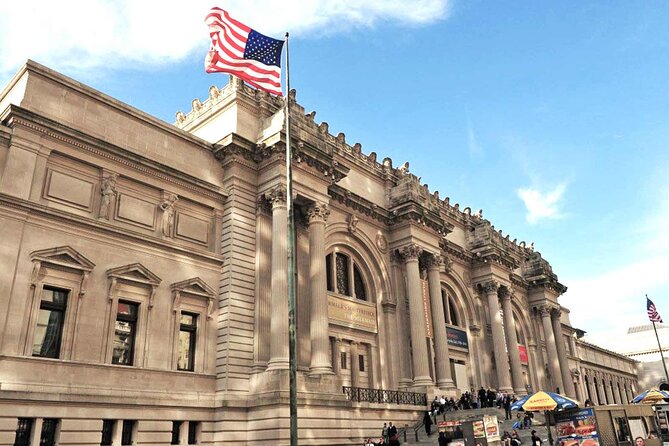
The Metropolitan Museum of Art is an important part of this story. The museum represents the era’s appetite for collecting and institution-building, and it gives the tour a strong reference point near the Upper East Side. The exact experience at the museum matters, though: this walking tour does not promise a full guided museum visit or a detailed interior tour.
If you want to enter the Met afterward, plan that as a separate activity. One practical advantage is that the museum is near the end of the route and has free restrooms, which can be useful before continuing your day.
A few more New York City picks to weigh up
- Private Central Park Pedicab Tour
★ 5.0 · 6,981 reviews - Private Transfer from Manhattan to NYC Airports (JFK/EWR/LGA)
★ 3.5 · 1,683 reviews - New York City: Private Central Park Pedicab Tour
★ 4.9 · 1,637 reviews - Carriage Ride in Central Park (VIP – PRIVATE) Since 1964™
★ 4.0 · 1,074 reviews
Arriving at Cooper Hewitt’s former mansion
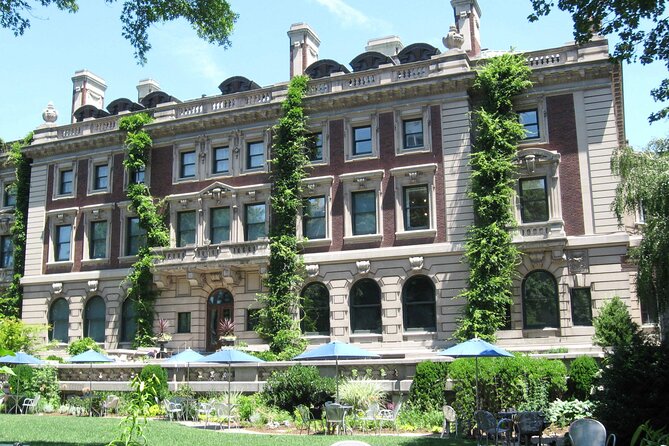
The official end point is in front of Cooper Hewitt, Smithsonian Design Museum, at 2 East 91st Street. The museum occupies a former mansion associated with an iconic American magnate, giving the tour a fitting final stop.
This ending brings the story back to architecture and personal display. A mansion that once represented private wealth now serves a public cultural purpose. That change captures one of the larger themes of the walk: New York’s elite residences have been demolished, repurposed, or turned into institutions.
Do not book this experience expecting a guided visit through the entire museum. The walk ends outside the museum, and one person felt the final stop could have received more attention. If Cooper Hewitt interests you, you can continue inside on your own after the tour, subject to the museum’s operating arrangements.
The location is also practical. You finish in the Upper East Side, close to Central Park and the Metropolitan Museum of Art. You can extend the afternoon with a museum visit, a park walk, or more neighborhood exploring without crossing back downtown.
What the private format is really worth
The price is $150 per person. That is not a small add-on, especially for a two-hour walk. The value comes from the fact that this is a private activity, not a standard group tour. Only your party takes part, and the guide can respond to your questions instead of delivering one fixed speech to a large crowd.
That matters most for families and mixed-interest groups. A history enthusiast can ask about architecture or business, while another person may care more about famous residents, social customs, or television connections. One guide, Kevin, even offered recommendations for books, films, and shows related to the period.
The private setup can also help with pace. Dan adjusted the speed for a group, and other guides adapted to cold or rainy conditions. You should not confuse this with an indoor alternative, though. Weather changes the comfort of the experience, not the basic nature of the route.
Group discounts may improve the price for larger parties. The cost makes the most sense when you are splitting a private booking among family or friends and want a focused experience rather than a general introduction to New York.
The tour is also booked an average of 31 days ahead, so advance planning is sensible. That figure suggests popular dates may fill well before your visit, particularly if you need a particular day or are traveling with a private group.
Guide style and the role of storytelling
The subject can sound dry on paper: mansions, museums, clubs, and wealthy families. The guide determines whether it becomes a useful walk or a long list of names.
The strongest guide style here is conversational and story-led. Dan has been praised for being entertaining, thoughtful, and able to keep the two hours moving. Kevin is often singled out for combining social, architectural, historical, and business details without losing the thread.
Sara, Richard, John, Brad, and Jarod have also led engaging tours. Since guide assignment can vary, you should think of these names as examples of the people who may lead the experience, not a guarantee that one particular guide will be available.
I especially like that the guides appear to adjust to the group. The route can work for a family, a couple, friends, or locals who already know the Upper East Side. A local group that had lived in the neighborhood for years still found new meaning in the architecture, which tells you that the tour is not only for first-time visitors.
It also suits people who have watched The Gilded Age. The television series is not required, but it can help you picture the social world being discussed. The tour supplies real buildings and historical context behind that kind of period drama.
Comfort, access, and planning the walk
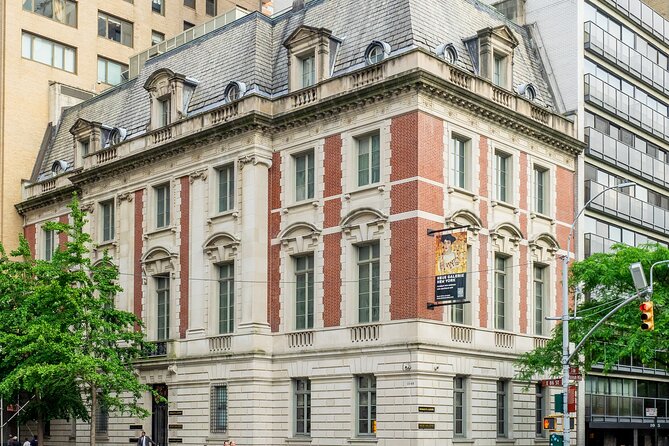
The meeting point is the General Sherman Monument at 764 Doris C. Freedman Place, New York, 10019. The tour ends at Cooper Hewitt, 2 East 91st Street, where the guide finishes in front of the museum.
The route is near public transportation, and service animals are allowed. Most people can take part, but the experience remains a two-hour outdoor walk. You should dress for the forecast, especially in winter or midsummer. A cold, breezy day can make a sidewalk stop feel much longer than it looks on a map.
Rain does not automatically cancel the experience. One guide continued in wet weather, and another adjusted the route or pace during bitter cold. Still, bring suitable clothing and shoes rather than counting on indoor shelter.
There is no regular promise of interior access. That is the most important practical point. You will see buildings, former mansions, museums, and institutions from the route, but you should not expect to enter all, or even most, of them.
The tour is offered in English and includes a licensed expert guide and private personalized service. Gratuities are not included, so plan to tip separately if the guide gives you a good experience.
Free cancellation is available when you cancel at least 24 hours before the start time. Changes or cancellations made inside that window are not accepted for a refund.
Who will get the most from this tour
I would choose this walk if you want New York history tied to real streets rather than a broad survey from a bus or an indoor lecture. It is especially good for people curious about architecture, old money, self-made fortunes, art collecting, Central Park, and the social machinery of high society.
Families can do well here because the private guide can shift the emphasis for different ages. A teenager may connect with the television and film references, while an adult may prefer the architecture or business stories.
It is also a strong choice for repeat visitors. You may already have walked Fifth Avenue many times, yet a guide can show how much history is hidden behind familiar blocks. Local residents have found value in that new reading of their own neighborhood.
I would hesitate if your main goal is to enter grand interiors. This tour cannot deliver that. I would also think twice if you dislike walking outdoors in difficult weather or prefer a tour with frequent seats and indoor stops.
FAQ
How long is the Gilded Age tour?
The tour lasts approximately two hours.
Where does the tour begin?
It begins at the General William Tecumseh Sherman Monument at 764 Doris C. Freedman Place, New York, NY 10019.
Where does the tour end?
It ends in front of Cooper Hewitt, Smithsonian Design Museum, at 2 East 91st Street, New York, NY 10128.
Is this a private tour?
Yes. Only your group participates in the activity.
Is the tour offered in English?
Yes, the tour is offered in English.
Are museum admissions included?
The tour includes a licensed expert guide and private personalized service. Museum admission is not listed as an inclusion, and the tour ends outside Cooper Hewitt.
Can I cancel for a full refund?
Yes, if you cancel at least 24 hours before the experience start time. Cancellations made less than 24 hours before the start time are not refunded.
Should you book the Fifth Avenue Gilded Age walk?
Book it if you want a focused, story-driven walk through New York’s old-money corridor and value having a guide to connect surviving buildings with the mansions and families that disappeared. The private format, flexible pace, and strong guide lineup make the $150 price easier to justify for a family or small group.
Skip it if you mainly want indoor access or a museum tour. For everyone else, this is a thoughtful way to see Fifth Avenue, Central Park, the Met area, and the Upper East Side as parts of one social and architectural story. Dress for the weather, wear good shoes, and arrive ready to picture the buildings that New York no longer has.
Just listed around New York City
- NYC: Little Shop of Horrors Off-Broadway Ticket5 reviews
- Private NYC Airport Transfer: LGA to Manhattan – Up to 5★ 3.6 · 5 reviews
- New York City Tour in German★ 4.5 · 5 reviews
- New York: Hamilton and Washington Revolutionary Walking Tour★ 5.0 · 5 reviews
- NYC Freedom Tower Private Photo or Video Experience★ 4.0 · 6 reviews
- New York Afternoon Fall Foliage Cruise with Lunch★ 5.0 · 6 reviews
- Brooklyn Walking Tours by Locals: Private & 100% Personalized★ 4.0 · 6 reviews
- Southold Bay Oyster Farm Tour★ 5.0 · 6 reviews
Historical Tours, compared.


Starship Landmark 90 Minute Sightseeing Cruise
Read our review →
Starship Landmark 90 Minute Sightseeing Cruise
Read our review →
American Museum of Natural History Admission Ticket
Read our review →
Top Rated Brooklyn Half-Day Food, History & Culture Tour via bus
Read our review →
The Original Greenwich Village Food & Cultural Tour Since 1999
Read our review →
The Speakeasy Adventure: A Tipsy Trip Through History
Read our review →Browse the lists this tour appears in