
Reviewed · CYCLING TOURS
Radical & Weird History Bike Tour of New York City
Manhattan’s odd corners make more sense from a bicycle. This four-to-five-hour ride links movie history, immigrant neighborhoods, queer liberation, fashion, music, 9/11, and Central Park without asking you to plan the route yourself. It is less a standard highlights tour than a moving conversation about how New York got its strange, layered character.
I like the small maximum of eight people, which should make it easier to ask questions and shape the stops around your interests. I also like the mix of serious subjects and lighter ones, from the 9/11 Memorial and AIDS Memorial to Ghostbusters headquarters, bagels, dumplings, and a Ukrainian basement cantina. The main consideration is physical: you need moderate fitness, and some of the four to five hours is spent riding between stops.
In This Review
- Key points to know before you book
- Why this bike ride feels different from a standard Manhattan tour
- Starting at Chambers Street and meeting Ghostbusters
- The 9/11 Memorial and Lower Manhattan’s changing skyline
- The Lower East Side, tenements, and a possible food stop
- Streecha and the East Village’s Ukrainian connection
- Greenwich Village, queer liberation, and the AIDS Memorial
- A small neighborhood stop with food and nightlife
- The Garment District and fashion’s hard side
- Colorful names and Manhattan’s famous bike lane
- Strawberry Fields and the Dakota
- Bethesda Terrace and the idea of public water
- Timing, group size, and physical demands
- Value, weather, and who should book
- Should you book this Manhattan bike tour?
- FAQ
- Where does the tour begin?
- What time does the tour start?
- How long does the tour last?
- Where does the tour end?
- How many people can join the tour?
- Is the tour offered in English?
- What level of fitness do I need?
- Is admission to the stops included?
- Can the route change based on group interests?
- What happens if I need to cancel?
Key points to know before you book
- Small-group format: The tour accepts no more than eight people, allowing the guide to adjust the route and conversation.
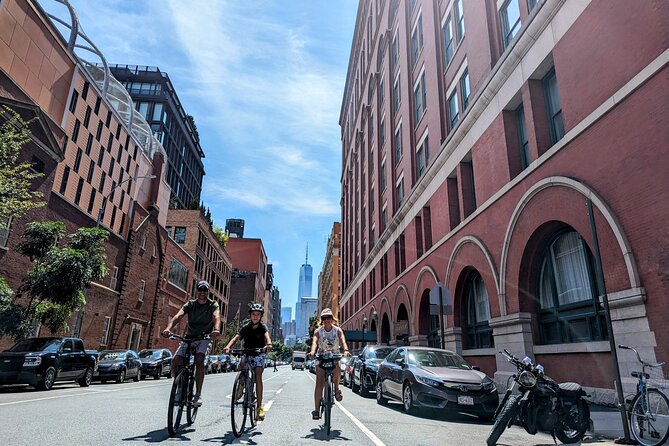
- A wide slice of Manhattan: You ride from Chambers Street through Lower Manhattan, the East Village, Greenwich Village, the Garment District, and Central Park.
- Topics beyond the usual sights: Expect discussion of immigration, queer history, AIDS activism, labor, fashion, clean water, film, and music.
- Flexible stop choices: The exact stops can respond to the group’s interests, with possible food breaks for bagels or Chinese dumplings.
- English-language ride: The tour is offered in English and begins at 11:30 a.m. from 79 Chambers Street.
- Weather matters: You can cancel up to 24 hours ahead for a full refund, but poor weather may also lead to a new date or refund.
Why this bike ride feels different from a standard Manhattan tour
Most New York sightseeing routes gather around famous buildings. This one connects the city’s public stories with the places where ordinary life happened: crowded tenement blocks, a volunteer-run cantina, a fire station known from a movie, a clothing district, and a memorial in Central Park.
The route also crosses several parts of Manhattan in one outing. That saves you the work of navigating streets and subway transfers, but it means the tour is not a leisurely stop-and-stare experience at every location. You are covering ground, and the riding time is part of the stated duration.
The flexible format matters. You are not simply following a fixed script with identical stops every day. The group’s interests can affect which options receive more attention. If food, neighborhood change, politics, film, or social history interests you most, tell the guide early.
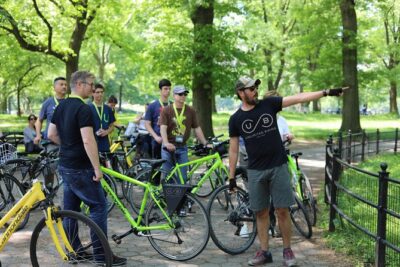
Robbie is the guide named for this experience. His approach includes historical, cultural, and political context, along with attention to what interests the group. That personal element is important here, since the tour works best as a guided exchange rather than a ride where you merely follow a flag.
A few more New York City picks to weigh up
- NYC: Central Park Bike Rentals
★ 4.2 · 2,528 reviews - NYC: Central Park Bike Rental
★ 4.1 · 1,651 reviews - Central Park Bike Rental
★ 4.7 · 1,509 reviews
Starting at Chambers Street and meeting Ghostbusters
The ride begins at 79 Chambers Street in Lower Manhattan. This is a useful starting point for a tour that intends to show how many different New Yorks can fit into one day.
One early stop is the fire station used as Ghostbusters headquarters in the original 1984 film. It is still an active fire station, which gives the movie connection a practical twist. You are not looking at a museum set. You are seeing a working part of New York that also became part of popular culture.
This is a good early reminder of the tour’s tone. A stop can be playful without being empty, and a familiar film location can lead into a broader discussion of how New York buildings gain meaning through both daily use and screen history.
The 9/11 Memorial and Lower Manhattan’s changing skyline
At the National 9/11 Memorial and Museum, the tour focuses on the memorial fountains and the rebuilding of the World Trade Center. The listed stop includes the outdoor memorial fountains, while museum admission is not included as a separate visit.
The short scheduled pause means you should expect an introduction and explanation rather than a full museum experience. That is a strength if you want to keep moving through Manhattan, but a limitation if your main goal is the museum itself. You will need a separate visit for the museum’s indoor exhibits.
From the memorial, the conversation turns to how the new World Trade Center buildings came to be. This adds context to what you see around the fountains, rather than treating the site as only a photo stop. Because the subject is painful and serious, the guide’s balance matters. The tour’s broader mix of subjects gives the day range, but you should still allow the memorial the attention it deserves.
The Lower East Side, tenements, and a possible food stop
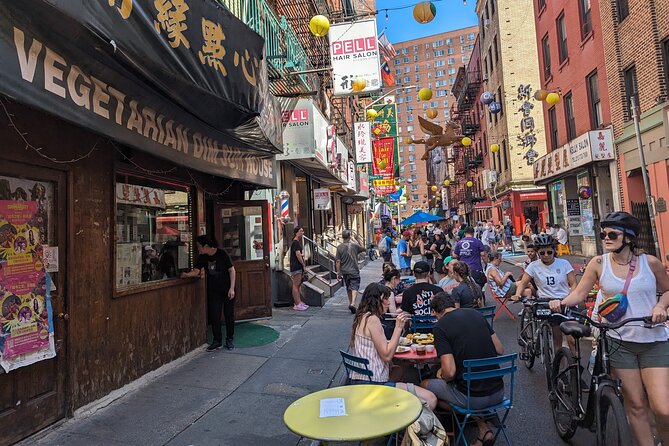
The Lower East Side section looks at the immigrant communities that lived in the area’s densely packed tenement buildings. This is one of the tour’s most useful neighborhood stops because it connects streets and buildings to the lives of the people who made Manhattan their new home.
The stop can include a historic bagel bakery or Chinese dumplings, depending on the group’s interests and the route chosen. These options make the history tangible, but they also mean the exact food experience is not guaranteed. Think of it as a possible local bite, not a meal included in the tour.
The tenement discussion also adds a needed human scale to Manhattan. Skyscrapers tend to dominate the city story, yet the Lower East Side shows how families and communities shaped the city in tightly packed housing. If you care about migration, food traditions, or neighborhood change, this is likely to be one of the most rewarding sections.
More New York City history walks:
- New York City: American Museum of Natural History Ticket
★ 4.5 · 15,447 reviews - NYC: Starship Landmark 90 Minute Sightseeing Cruise
★ 4.6 · 3,666 reviews - Starship Landmark 90 Minute Sightseeing Cruise
★ 4.5 · 2,073 reviews - American Museum of Natural History Admission Ticket
★ 4.0 · 1,931 reviews
Streecha and the East Village’s Ukrainian connection
Streecha is a volunteer-run Ukrainian cantina in the basement of an apartment building in the East Village. Its setting alone makes it unlike a typical sightseeing stop. You are visiting a place tied to community life, not a polished attraction built for tour groups.
The stop is scheduled for about 15 minutes, the longest listed pause on the route. That suggests time for a quick look and perhaps a taste if available, though the supplied information does not promise food or a purchase. The volunteer-run nature also means you should approach it with respect and flexibility.
This stop works well beside the Lower East Side discussion. Both show how Manhattan neighborhoods carry memories of communities that arrived, settled, adapted, and left marks on the city’s food and social life. The focus is not simply on architecture. It is on the people who used these spaces.
Greenwich Village, queer liberation, and the AIDS Memorial
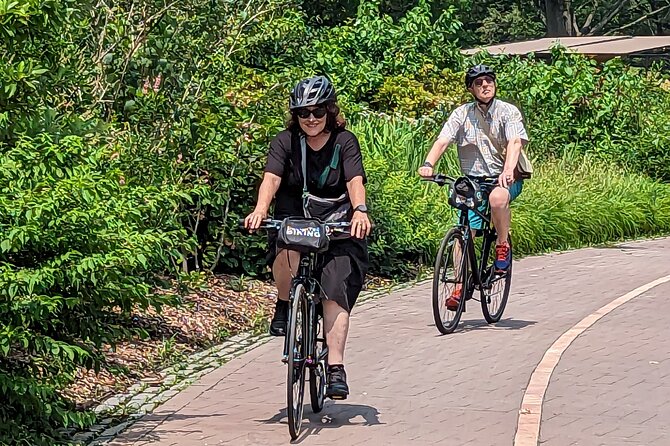
At the New York City AIDS Memorial, the tour discusses Greenwich Village as an historic center of gay life, queer liberation, and activism. It also addresses how stigma in the medical community slowed research toward an AIDS cure.
This is a serious and important part of the ride. The short listed stop, about seven minutes, gives you an introduction rather than a full lesson in the AIDS crisis or queer history. Still, placing this memorial on a citywide route helps show that New York’s past includes struggles over dignity, public health, and political power, not only buildings and famous names.
The subject may feel abrupt after lighter stops, but that contrast is intentional. The day moves between humor, food, grief, protest, and public memory. I appreciate that the tour does not flatten New York into a cheerful postcard. You should book this part expecting frank historical discussion.
A small neighborhood stop with food and nightlife
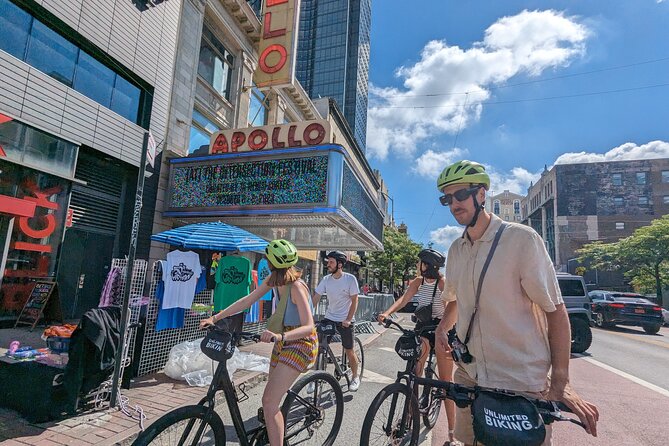
The ride also passes through a one-block neighborhood known for karaoke bars, street food, and boba tea shops. The supplied details do not identify the neighborhood by name, so you should treat this as a compact stop centered on atmosphere and local businesses rather than a major landmark.
This is another example of the tour’s interest in everyday New York. Karaoke, quick food, and tea shops tell you something about how commercial streets change and how different cultural influences appear in a small area.
The stop may appeal to people who prefer street life to formal attractions. It is less useful if you want a long sit-down food break, since the overall route has many subjects to cover.
The Garment District and fashion’s hard side
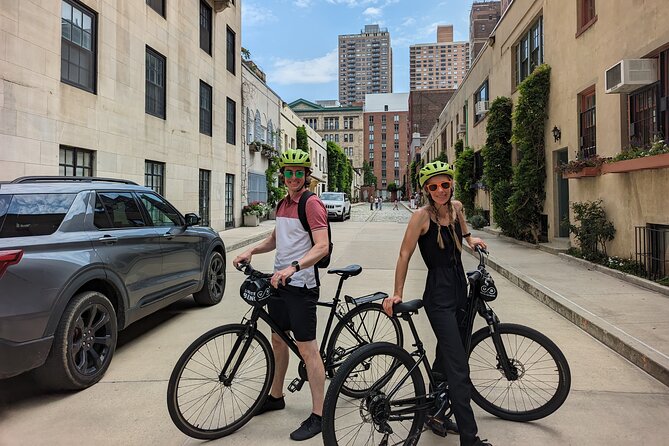
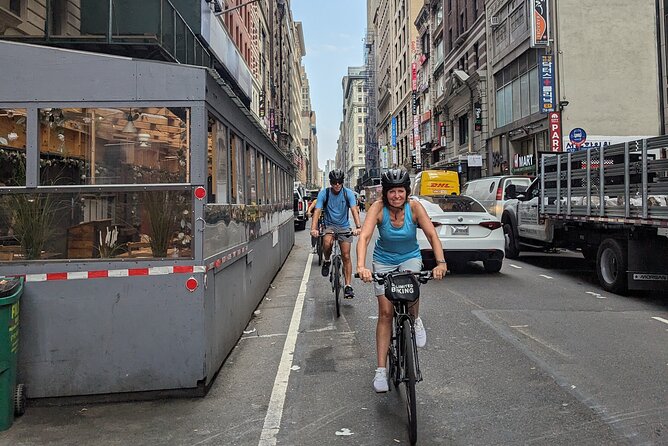
In the Garment District, the guide discusses Manhattan’s clothing manufacturers and the darker side of one of the world’s fashion capitals. That wording points toward labor and working conditions, not just designer labels and shopping.
The stop is brief, around five minutes, so expect a concise explanation while standing or pausing with the bikes. The value comes from adding labor history to the image of New York fashion. Clothing may look glamorous at the end of the process, but manufacturing depends on workers, deadlines, and working spaces that deserve attention.
This is a useful counterweight to the city’s polished image. You may not see a factory in operation, and no specific interior visit is promised. The stop is about understanding the district and its past as you pass through it.
Colorful names and Manhattan’s famous bike lane
Two additional points on the route are described in broad terms: New York City’s most colorfully named neighborhood and the city’s most popular bike lane. The supplied details do not name either one, so I would not book this ride expecting a fixed list of famous labels.
What you can expect is a route that uses Manhattan’s streets as part of the story. A neighborhood name can reveal how locals viewed an area, while a major bike lane shows how New Yorkers are changing the way they move through the city.
For cyclists, the bike lane stop is especially relevant. You get to see a part of the city’s cycling network while riding through it, rather than discussing urban cycling from a tour bus. Still, street conditions and traffic can affect the pace, and the tour requires a moderate level of fitness.
Strawberry Fields and the Dakota
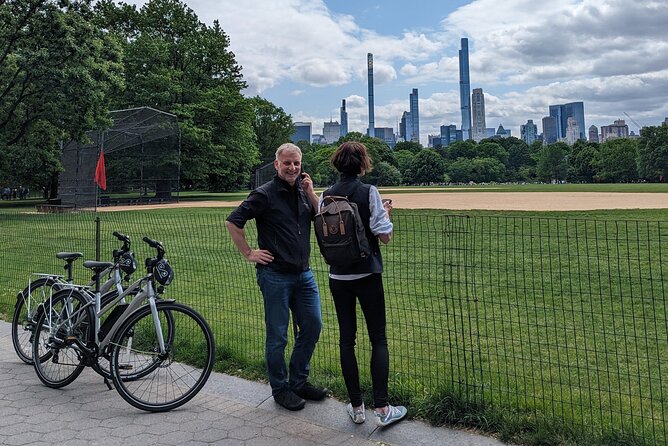
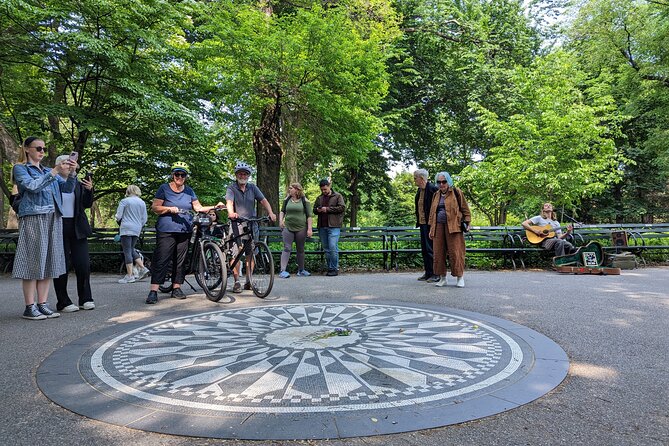
In Central Park, the ride reaches Strawberry Fields, the John Lennon memorial across from the Dakota apartments. This is a compact but recognizable stop, combining music history with one of Manhattan’s most famous residential buildings.
The memorial is a place for a short pause rather than a full Beatles history lesson. Its appeal comes from the setting and the connection between the park, Lennon, and the Dakota. If you enjoy music history, this gives the tour another change of tone after the heavier discussions downtown.
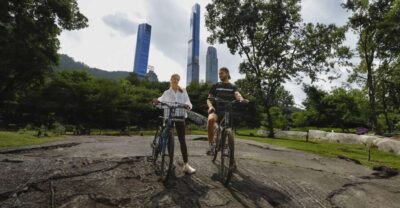
The location also marks the route’s move from dense city streets into Central Park. After hours of urban neighborhoods, the park provides a different kind of space and a calmer finish.
Bethesda Terrace and the idea of public water
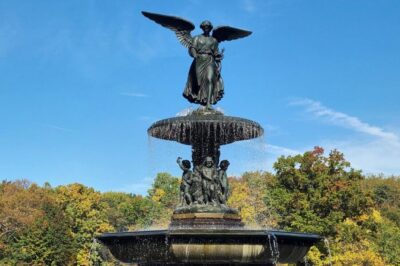
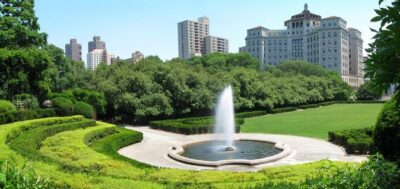
The final listed stop is Bethesda Terrace, the centerpiece of Central Park. The guide discusses its monument to access to clean water for all New Yorkers.
That theme gives the tour a thoughtful ending. Water access is basic, public, and easy to overlook, yet it shaped the growth and health of New York. Bethesda Terrace is visually impressive, but the explanation connects its beauty to a practical civic concern.
The scheduled pause is about five minutes. You will have time to see the terrace and hear its main story, but not to explore Central Park at length. The tour then returns to the original meeting point, so plan any later Central Park visit separately.
Timing, group size, and physical demands
The tour lasts approximately four to five hours and starts at 11:30 a.m. The full duration includes time spent riding between stops, which is important when you compare it with walking tours that may spend more time at individual sites.
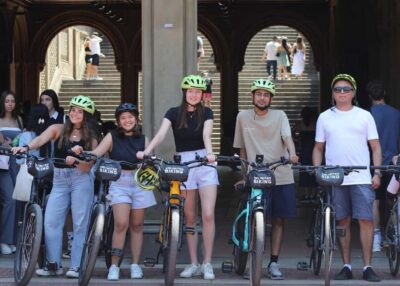
A maximum of eight people is a real advantage in Manhattan. Small groups are easier to manage on bikes, and the guide can respond to questions without losing the whole route. The group’s interests can also shape the stop options, though flexibility means the exact balance of locations may vary.
You should have a moderate physical fitness level. The route covers a lot of Manhattan, and the day is not just a series of short rides between nearby sights. Comfortable clothing and an honest assessment of your ability to cycle for several hours matter more than trying to squeeze in one more attraction.
The experience is offered in English. It is near public transportation, making the start at Chambers Street practical for reaching from other parts of New York.
Value, weather, and who should book
No tour price is provided here, so I cannot judge the exact cost. The value depends on what you would otherwise spend on transport, route planning, and separate guided visits. If you want one organized ride that links Lower Manhattan, the East Village, Greenwich Village, the Garment District, and Central Park, the time saved can be significant.
The tour is strongest for someone who wants context and variety. You should consider it if you like local food references, film locations, social history, politics, music, and city planning in the same outing. It is also a good fit for a repeat New York visitor who has already seen the Empire State Building and Times Square and wants stranger, more revealing corners.
It may be less suitable if you want a slow museum visit, a focused architecture tour, or a long food tasting. Several stops are short, and some food options depend on the group’s interests rather than being guaranteed.
The tour requires good weather. If conditions force a cancellation, you are offered another date or a full refund. You can also cancel up to 24 hours before the start time for a full refund. A minimum group size is required, so a cancellation for that reason brings the choice of another date or experience, or a refund.
Should you book this Manhattan bike tour?
Book it if you want a broad, human-scale look at Manhattan and are comfortable riding for much of an afternoon. Robbie’s flexible guiding style, the eight-person limit, and the unusual range of subjects make this more personal than a basic landmark ride.
Skip it if your priority is maximum time inside the 9/11 Museum, a guaranteed food itinerary, or a gentle route with little cycling. For the right cyclist, though, this is a smart way to connect the city’s funny, painful, political, and everyday sides in one well-planned ride.
FAQ
Where does the tour begin?
The tour begins at 79 Chambers Street, New York, NY 10007.
What time does the tour start?
The listed start time is 11:30 a.m.
How long does the tour last?
The experience lasts approximately four to five hours, including time spent riding between stops.
Where does the tour end?
The tour ends back at the original meeting point.
How many people can join the tour?
The tour has a maximum of eight travelers.
Is the tour offered in English?
Yes. The experience is offered in English.
What level of fitness do I need?
You should have a moderate physical fitness level because the tour covers a large part of Manhattan by bicycle.
Is admission to the stops included?
The listed stops have no separate admission ticket cost. The 9/11 portion focuses on the memorial fountains and World Trade Center buildings, not a separate museum admission visit.
Can the route change based on group interests?
Yes. The tour can be customized around the group’s interests, with different stop options, including a possible historic bagel bakery or Chinese dumpling stop.
What happens if I need to cancel?
You can cancel at least 24 hours before the start time for a full refund. Cancellations or changes made less than 24 hours before the start time are not accepted for a refund.
Just listed around New York City
- 3 Days – Niagara Falls & 1000 Islands Cruise★ 5.0 · 4 reviews
- Gypsy starring Audra McDonald on Broadway Ticket★ 4.0 · 4 reviews
- Christmas in New York: Skip-the-Line Holiday Lights Tour★ 4.7 · 4 reviews
- Central Park Pedicab Guided Tours with Theater★ 5.0 · 4 reviews
- Full-Day Sightseeing Tour in New York City★ 4.5 · 4 reviews
- Private Marvelous Mrs. Maisel Sites Guided Tour★ 5.0 · 4 reviews
- Fabulous Hells Kitchen Walking Tour★ 5.0 · 4 reviews
- New York City or Brooklyn: Photoshoot in Iconic Locations★ 4.0 · 4 reviews
Cycling Tours, compared.

Central Park NYC Highlights Small-Group Bike Tour
Read our review →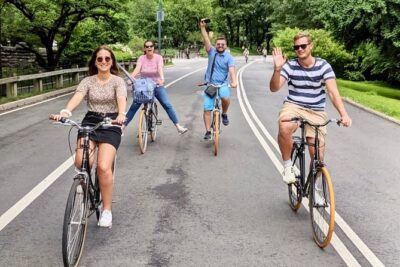
Browse the lists this tour appears in