
Reviewed · HISTORICAL TOURS
Rock and Roll History and Culture Walking Tour in New York City
New York’s rock story comes alive on the pavement, not behind glass. This three-hour walk links the old Fillmore East, CBGB, Greenwich Village clubs, famous album-cover sites, and places tied to John Lennon, Bob Dylan, Jimi Hendrix, and the Ramones. You move through several neighborhoods while the guide connects each address to the music made there.
I like the small maximum of six people, which gives you room to ask questions and hear the guide clearly. I also like the use of old photos, a detail praised in the feedback, because today’s streets often look nothing like they did in the 1960s or 1980s. The main trade-off is simple: this is a long urban walk, and some famous venues are now gone or changed beyond recognition.
In This Review
- Key points to know before you book
- Why this walk makes rock history easier to understand
- Starting at the Fillmore East in the East Village
- At the former CBGB site, punk gets its address
- Album covers become real places in Greenwich Village
- Cafe Wha? and the early careers of Dylan and Hendrix
- Washington Square Park and the folk scene
- The West Village, Sid Vicious, and John Lennon
- Ending at the White Horse Tavern
- What the $45 price gets you
- Who will enjoy this walk most
- Practical tips for a better afternoon
- Should you book the Rock and Roll History and Culture Walking Tour?
- FAQ
- Where does the Rock and Roll History and Culture Walking Tour begin?
- Where does the tour end?
- What time does the tour start?
- How long does the experience last?
- How much does the tour cost?
- What language is the tour offered in?
- How many people can join the tour?
- Are the stops free?
- Is the tour accessible by public transportation?
- Can I cancel for a full refund?
Key points to know before you book
- Follow New York’s rock story across three neighborhoods, from the East Village to the West Village.
- See the former Fillmore East and CBGB sites, two essential addresses in the city’s music story.
- Connect album covers to real streets associated with Bob Dylan, the Ramones, and Led Zeppelin.
- Visit Cafe Wha? and Washington Square Park, places tied to folk, beat, and early rock culture.
- Walk in a group of no more than six, with plenty of space for questions and conversation.
- Pay $45 for about three hours, with free cancellation up to 24 hours before the start time.
Why this walk makes rock history easier to understand
The best idea here is the route itself. New York’s music story is not confined to one museum or one club. It grew in cheap rooms, cafés, bars, parks, theaters, and apartments spread across lower Manhattan. As you walk from the East Village toward the West Village, you see how different scenes followed one another.
The 1960s brought folk singers, experimental art, and psychedelic rock. The late 1970s brought punk. The 1980s mixed music with performance art and downtown nightlife. This tour puts those changes in order while showing you the actual blocks where they happened.
That matters because many music tours simply list famous names. This one uses place to explain the connections. A club site can lead to a band, a band can lead to an album cover, and an album cover can send you looking at an ordinary doorway in a new way.
The tour is offered in English and begins at 1:30 pm from 101 Astor Place. It ends at the White Horse Tavern on Hudson Street, so you finish well west of your starting point. Allow about three hours, and expect to cover a fair amount of ground.
More New York City history walks:
- New York City: American Museum of Natural History Ticket
★ 4.5 · 15,447 reviews - NYC: Starship Landmark 90 Minute Sightseeing Cruise
★ 4.6 · 3,666 reviews - Starship Landmark 90 Minute Sightseeing Cruise
★ 4.5 · 2,073 reviews
Starting at the Fillmore East in the East Village
The first stop is the former Fillmore East, once known as the Church of Rock and Roll. You get about 45 minutes in the East Village, the longest stop on the route, and that makes sense. This area brings together several different parts of New York’s music and art past.
The Fillmore East was central to the city’s late 1960s concert scene. The name carries real weight, but the value of seeing the site today is less about a grand preserved theater and more about understanding what the address meant at the time. Your guide can help you picture the crowds, performers, and changing sound of the era.
The route also touches Andy Warhol’s Exploding Plastic Inevitable and the Velvet Underground. This is where rock meets visual art, performance, and downtown experimentation. If you think of rock only as bands on a stage, this section broadens the picture.
You also see the Pyramid Club, linked to the 1980s when music and art again mixed in the East Village. The contrast between the late 1960s and the 1980s is one of the tour’s useful themes. The city’s music life did not follow one straight path. It kept changing as new artists took over different rooms and streets.
At the former CBGB site, punk gets its address
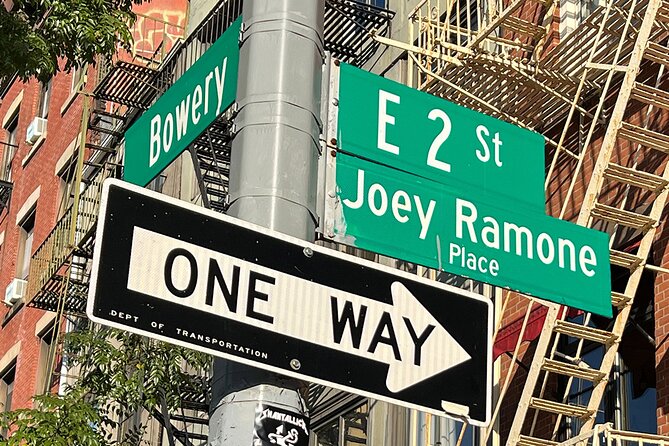
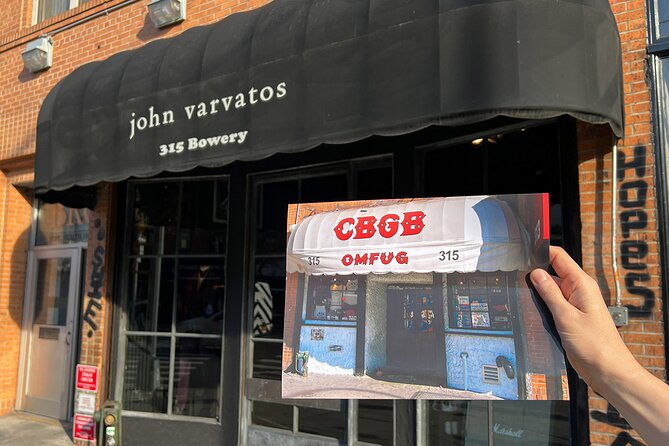
From the East Village, the walk continues to the former CBGB site. The stop lasts about 20 minutes and focuses on the club where punk rock was born.
CBGB is one of those names that can feel larger than the building itself. Seeing the location helps make the story concrete. The club was important because it gave a raw, stripped-down scene a place to gather and perform. Its importance was not based on polished production. It was based on attitude, noise, and the chance for new bands to reach an audience.
The site is free to visit because you are seeing the exterior location rather than entering a functioning club. That is also the limitation. You will not experience a live show or tour a preserved interior as part of this walk. The guide’s explanation and any historical images do much of the work.
If punk is your main reason for booking, pay close attention here and ask questions. The small group makes that easy. The guide can spend more time on the details that interest you instead of delivering a fixed speech to a large crowd.
Album covers become real places in Greenwich Village
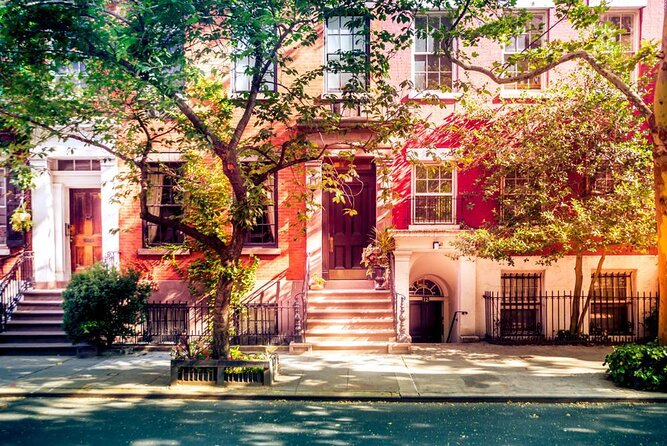
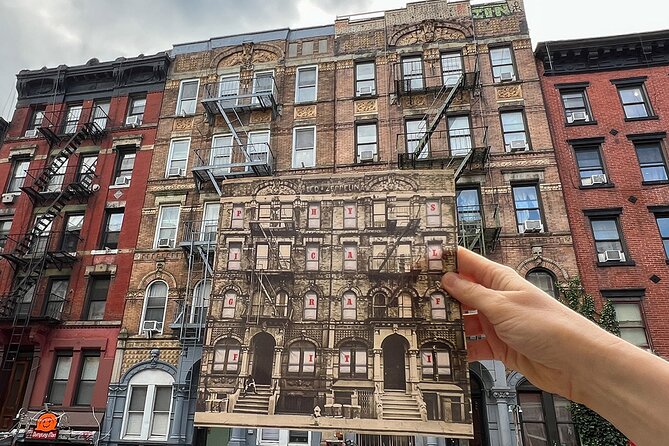
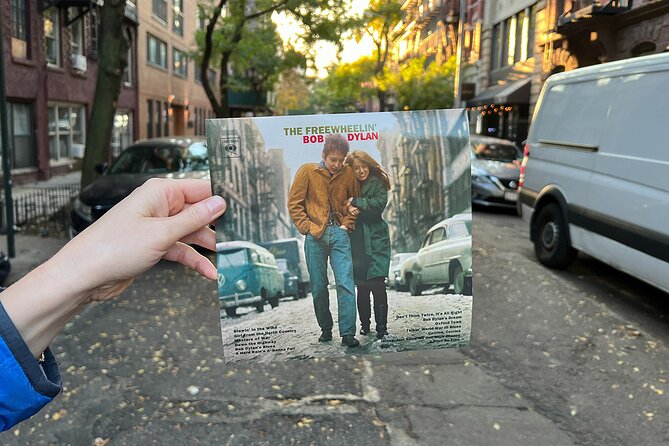
The Greenwich Village section lasts about 35 minutes and focuses on locations used for classic album covers by Bob Dylan, the Ramones, and Led Zeppelin.
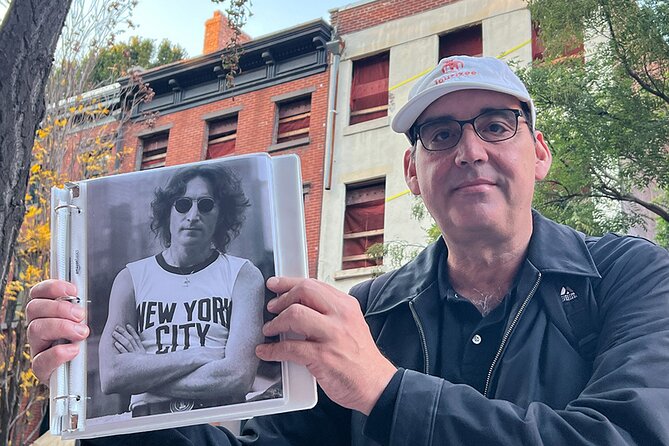
This is one of the most enjoyable parts for anyone who likes comparing old photographs with the present street. An album cover freezes a moment. The city keeps moving. Looking at the same place today lets you notice what has changed and what has remained.
The value is not just in recognizing a famous image. You begin to see how musicians used New York itself as part of their public identity. A street, stoop, corner, or storefront could become part of an album’s visual story.
The guide has used past photographs during the walk, which is especially helpful here. Without them, some locations may look like ordinary city blocks. With them, you can compare the earlier scene with what is in front of you now.
This section also keeps the tour from becoming a procession of club addresses. It gives you a visual connection to the music. You are not only hearing about artists. You are seeing the settings they chose to represent themselves.
More New York City walking tours:
- SoHo, Little Italy, and Chinatown Walking Tour in New York
★ 5.0 · 3,153 reviews - Secrets of Grand Central Station Walking Tour New York City
★ 5.0 · 1,796 reviews - Greenwich Village Walking and Food Tasting Tour
★ 5.0 · 1,572 reviews - Artistic, Alternative Greenwich Village Walking Tour
★ 5.0 · 971 reviews
Cafe Wha? and the early careers of Dylan and Hendrix
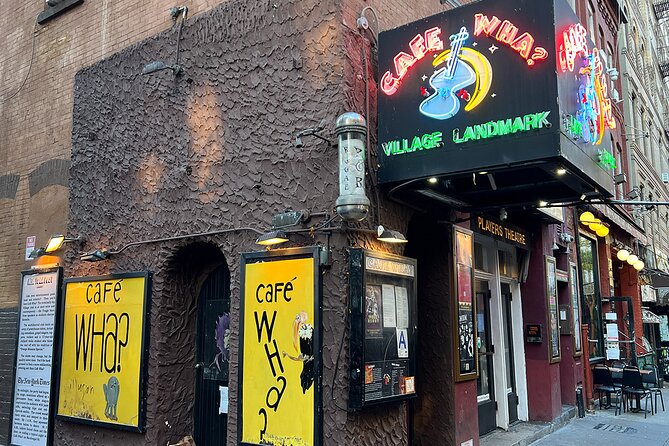
Cafe Wha? is the next stop, with about 20 minutes devoted to the venue and nearby music history. The club is associated with Bob Dylan and Jimi Hendrix, two artists whose early New York careers helped shape the city’s place in modern music.
The stop is valuable because it shifts the focus from established stars to beginnings. Before the major records and international fame, artists needed small rooms where they could perform, test material, and meet other musicians. Cafe Wha? represents that early stage.
Admission is not included at this stop. The supplied details do not specify an additional admission price, so check the current arrangements when booking if entry matters to you. The rest of the route lists free admission, but that does not mean every stop is an indoor visit.
You should also keep your expectations practical. This is a historical walking stop, not a concert or a scheduled performance. The appeal comes from the setting and the guide’s account of the artists connected with it.
Washington Square Park and the folk scene
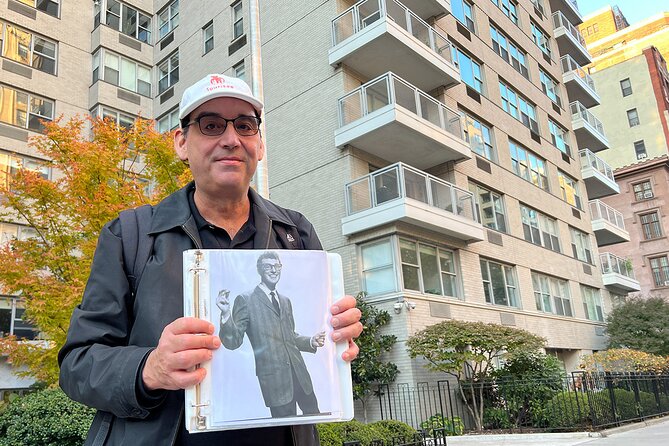
The Washington Square Park section lasts about 20 minutes and includes an audio tour. You stroll through the heart of Greenwich Village, a place associated with beat writers and folk musicians, and see the last home of Buddy Holly.
The park is an important change of pace. Clubs show you where people performed, but a public park helps explain where artists and audiences gathered outside formal venues. It adds a social side to the story, showing how music culture grew through casual meetings and shared circles as well as booked shows.
Buddy Holly’s last home adds a more personal note. The tour is not limited to the biggest clubs or the most famous stages. It also points out residences connected to musicians, giving you a sense of how artists were part of the neighborhood rather than floating above it.
The audio component may appeal to you if you like having another layer of information while walking. At the same time, the experience remains dependent on the guide and the group’s pace. If you want a long, quiet visit in the park, this stop is fairly short.
The West Village, Sid Vicious, and John Lennon
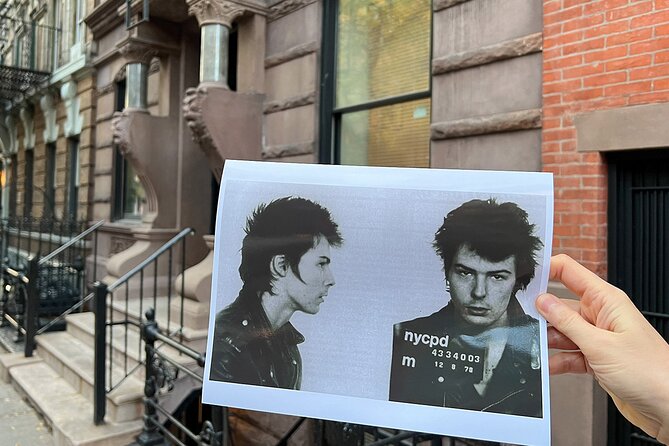
The route then moves into the West Village for about 30 minutes. Here you see the place where Sid Vicious died and the first New York home of John Lennon and Yoko Ono.
This portion brings together two very different chapters. Sid Vicious belongs to punk’s darker, more troubled mythology. John Lennon and Yoko Ono represent another kind of cultural presence, tied to fame, partnership, and life in New York.
These are residential and neighborhood sites, not theatrical attractions. You will not find a full museum display at each address. Their importance comes from knowing who lived there and what those places meant in the lives of the people involved.
That is where the old photographs and direct explanations help. The guide can give context that a plaque or quick photograph cannot. A private-style group capped at six people also makes it easier to pause for a question when a particular artist matters to you.
The word private needs a little care here. The tour is described as private, while the additional information gives a maximum of six participants. Confirm the exact booking setup if you need the entire walk reserved only for your own party.
Ending at the White Horse Tavern
The final stop is the White Horse Tavern on Hudson Street, with about 10 minutes at the end. This historic bar is tied to poet Dylan Thomas, who famously drank himself to death there.
The ending works because it widens the story beyond rock. The Greenwich Village scene brought together musicians, poets, writers, and artists, and the White Horse Tavern is a clear reminder of those overlapping circles.
It is also a convenient endpoint for the narrative. You begin with large concert culture in the East Village and finish in the West Village, where music, literature, and nightlife shared the same streets. The stop is brief, so treat it as a closing story rather than a full tavern visit.
The tour ends at 567 Hudson Street. Since the walk starts at Astor Place and finishes in a different part of Manhattan, plan your next movement from the White Horse Tavern rather than assuming you will return to the starting point.
What the $45 price gets you
At $45 per person, this is reasonably priced for a three-hour, small-group walking tour in New York. You are paying for the guide’s organization, historical context, and ability to connect scattered locations into one story. There are no major attraction admissions included, and most stops are outdoor sites, so the value is in the interpretation rather than in tickets.
The maximum of six is important to the price calculation. A large group tour can cost less, but it often limits questions and makes it harder to hear on a city sidewalk. Here, you have a better chance to ask about a particular band, album, or neighborhood.
The tour is booked, on average, 48 days ahead. That suggests you should not treat it as a last-minute option, especially if your New York dates are fixed. Confirmation arrives at booking, and mobile tickets make the meeting details easy to carry on your phone.
Free cancellation is available until 24 hours before the 1:30 pm start time. Changes or cancellations inside that window are not accepted for a refund. The activity requires good weather, and if poor weather cancels it, you are offered another date or a full refund. A minimum number of participants is also required, with the same choice of a new date, another experience, or a refund if that minimum is not met.
Who will enjoy this walk most
I would choose this tour if you care about music but also want to see New York neighborhoods on foot. It suits first-time visitors who want a focused theme, as well as people who already know the bands and want the addresses tied together.
It is especially good for:
- Fans of Bob Dylan, Jimi Hendrix, the Ramones, Led Zeppelin, the Velvet Underground, John Lennon, or Sid Vicious
- Visitors interested in the link between rock, punk, folk, poetry, and visual art
- Small groups who prefer questions and conversation
- People who enjoy album-cover locations and historic buildings
- Anyone looking for a three-hour afternoon activity starting at 1:30 pm
It may not suit you if you want indoor exhibits, live music, or a short, easy walk. Much of the experience takes place outside, and the route covers several neighborhoods. Wear comfortable shoes and plan around the weather.
Practical tips for a better afternoon
Arrive ready to walk from the first stop. The route covers the East Village, Greenwich Village, and the West Village, and one review specifically noted that a lot of distance is covered, with a new story and photograph around the corner.
Bring questions. The strongest part of a group this small is the chance to ask about a band, a recording, or a place that catches your interest. A guide such as Tom has been praised for offering a large amount of information at the stops, and the format gives you time to follow up.
Keep old photographs in mind as you look at the buildings. Some locations may not look dramatic today. The guide’s comparisons are what help you see the earlier scene.
Check the Cafe Wha? arrangements before you go, since admission is not included there. Also remember that weather can affect the schedule, so leave flexibility in your plans if possible.
Should you book the Rock and Roll History and Culture Walking Tour?
Book it if you want New York music history tied to real streets rather than presented as a list of names. The route covers major touchpoints, the group is capped at six, and the $45 price is fair for a three-hour guided walk with room for questions.
I would skip it if you need a seated museum experience, guaranteed indoor access, or a light stroll with little distance. For music fans who enjoy seeing how the East and West Villages shaped different eras, this is a practical and entertaining way to spend an afternoon. Its strongest feature is the guide’s storytelling, especially when old photos turn an ordinary block into part of rock history.
FAQ
Where does the Rock and Roll History and Culture Walking Tour begin?
The tour begins at 101 Astor Place, New York, NY 10003.
Where does the tour end?
It ends at the White Horse Tavern, 567 Hudson Street, New York, NY 10014.
What time does the tour start?
The scheduled start time is 1:30 pm.
How long does the experience last?
The walking tour lasts approximately three hours.
How much does the tour cost?
The listed price is $45 per person.
What language is the tour offered in?
The tour is offered in English.
How many people can join the tour?
The activity has a maximum of six participants.
Are the stops free?
Most stops have no admission charge. Admission is not included at Cafe Wha?.
Is the tour accessible by public transportation?
The tour is near public transportation.
Can I cancel for a full refund?
Yes. You can cancel at least 24 hours before the local start time for a full refund. Poor-weather cancellations or cancellations caused by the minimum number of participants result in an offer of another date or experience, or a full refund.
Just listed around New York City
- NYC: Little Shop of Horrors Off-Broadway Ticket5 reviews
- Private NYC Airport Transfer: LGA to Manhattan – Up to 5★ 3.6 · 5 reviews
- New York City Tour in German★ 4.5 · 5 reviews
- New York: Hamilton and Washington Revolutionary Walking Tour★ 5.0 · 5 reviews
- NYC Freedom Tower Private Photo or Video Experience★ 4.0 · 6 reviews
- New York Afternoon Fall Foliage Cruise with Lunch★ 5.0 · 6 reviews
- Brooklyn Walking Tours by Locals: Private & 100% Personalized★ 4.0 · 6 reviews
- Southold Bay Oyster Farm Tour★ 5.0 · 6 reviews
Historical Tours, compared.


Starship Landmark 90 Minute Sightseeing Cruise
Read our review →
Starship Landmark 90 Minute Sightseeing Cruise
Read our review →
American Museum of Natural History Admission Ticket
Read our review →
Top Rated Brooklyn Half-Day Food, History & Culture Tour via bus
Read our review →
The Original Greenwich Village Food & Cultural Tour Since 1999
Read our review →
The Speakeasy Adventure: A Tipsy Trip Through History
Read our review →Browse the lists this tour appears in