
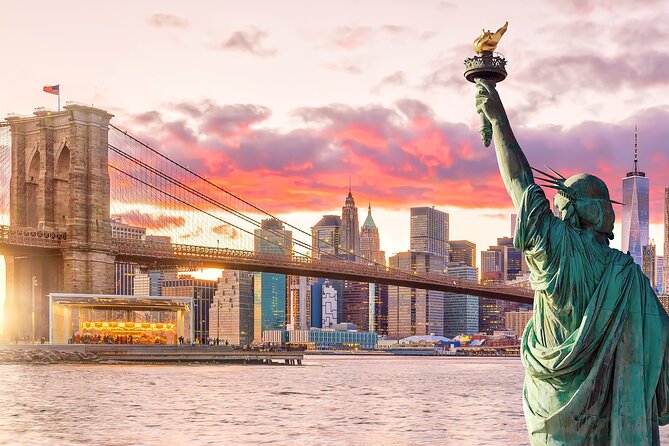
Reviewed · HISTORICAL TOURS
Slavery and African American History Private Tour in NYC
New York’s colonial story includes a fact many visitors miss: enslaved Africans made up as much as 20 percent of the city’s population and performed much of the hard labor that built it. This walking tour brings that past into view on the streets of Lower Manhattan, linking slavery, resistance, religion, commerce, and the city’s growth.
I like the focused route through streets and buildings, rather than a history talk that stays in a classroom. I also like the choice between a two-hour walk and a three-hour version with the African Burial Ground National Monument. The main drawback is simple: this is a walking tour, and the route can feel demanding if you do not enjoy spending several hours on foot.
In This Review
- Key points
- Why this Lower Manhattan walk matters
- Meeting at the Benjamin Franklin Statue
- African Burial Ground National Monument
- City Hall, St. Paul’s Chapel, and Trinity Church
- Wall Street and the slave-built wall
- Pearl Street and Fraunces Tavern
- Two hours or three hours?
- What the private format is worth
- Who will get the most from this experience?
- Simple planning advice for Lower Manhattan
- Should you book the slavery and African American history tour?
- FAQ
- Where does the tour begin?
- Where does the tour end?
- How long is the tour?
- Is the African Burial Ground National Monument included?
- What will I see on the route?
- What does the tour explain about slavery in New York?
- Is this a private tour?
- How large can the group be?
- Is the tour offered in English?
- How much walking is involved?
- Is the tour near public transportation?
- Can most people participate?
- What is the cancellation policy?
Key points
- Colonial New York through an African American lens: Learn how enslaved Africans helped build roads, docks, churches, and other parts of the city.
- A private guide for your group: The tour is designed for your party alone, with one licensed guide for up to 25 people.
- Two time choices: Pick the shorter city walk or the three-hour option with entry to the African Burial Ground visitor center.
- Important Lower Manhattan sites: Pass City Hall, St. Paul’s Chapel, Trinity Church, Wall Street, Pearl Street, and Fraunces Tavern.
- Guides who make the subject accessible: Ronald and Joseph are named in the available feedback, with special praise for clear explanations and strong presentation.
- A serious subject with a clear route: Expect stories of daily life, forced labor, rebellion, burial, and the lasting impact of Black New Yorkers.
Why this Lower Manhattan walk matters
This is not a general sightseeing stroll with a few African American facts added at the end. The route asks you to look again at familiar places and consider who built them, who profited from them, and whose stories were left out.
During the colonial period, as many as one in five New Yorkers were enslaved Africans. Their labor helped create the physical city, from roads and docks to churches and other major buildings. The tour connects those facts to actual streets, giving the subject a firm sense of place.
I find that approach useful in New York. The city can make history feel abstract because modern towers and traffic cover so much of the old ground. Here, the guide points to the spaces where commerce, government, faith, and slavery met. You are not only hearing about the past. You are walking through the area shaped by it.
The subject is difficult, and the tour does not treat it as a light diversion. You will hear about daily life under slavery, slave rebellion, forced labor, burial, and the movement of enslaved African Americans from Africa to North America. That makes this a better fit for visitors who want a serious history experience than for anyone seeking a quick list of famous buildings.
More New York City history walks:
- New York City: American Museum of Natural History Ticket
★ 4.5 · 15,447 reviews - NYC: Starship Landmark 90 Minute Sightseeing Cruise
★ 4.6 · 3,666 reviews - Starship Landmark 90 Minute Sightseeing Cruise
★ 4.5 · 2,073 reviews
Meeting at the Benjamin Franklin Statue
The tour begins at the Benjamin Franklin Statue in front of Pace University, at One Pace Plaza. The meeting point is opposite the university campus and is near public transportation, which makes it a practical starting place for a day in Lower Manhattan.
The first stop is brief, about 10 minutes, and admission is free. It gives the guide a chance to introduce the setting before the group moves into the main walking route.
Do not expect the statue itself to be the focus. Its value here is as a clear landmark for meeting the guide. Since this is a private activity, you will be with your own group rather than being folded into a large public tour. That usually makes it easier to ask questions and ask the guide to clarify a point.
The company aims for one licensed guide per maximum of 25 people. If a group has 26 to 50 participants, two guides are provided so everyone can hear. Still, the private format is most useful when your own party is small enough for a natural conversation.
African Burial Ground National Monument
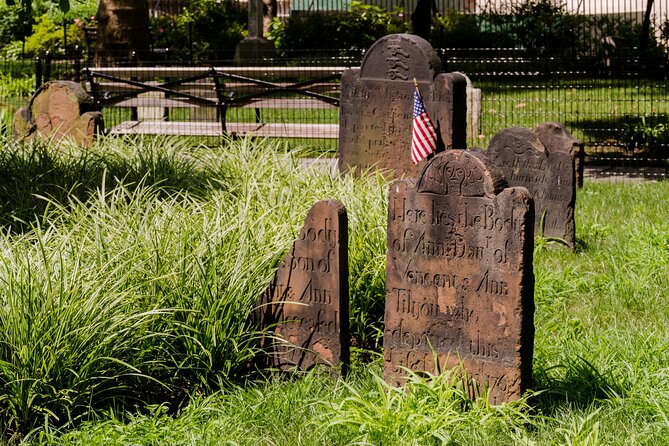
The African Burial Ground is the emotional center of the longer option. Between the 1690s and 1794, about 15,000 Africans were buried here. For generations, this burial place was largely forgotten beneath the growing city. Today, the monument and visitor center help restore that part of New York’s story.
The three-hour tour includes free admission to the African Burial Ground National Monument visitor center. You can see images, artifacts, related exhibits, and a film that explain the lives and experiences of enslaved African Americans, including both men and women.
This stop adds more than another address to the route. It gives the people behind the historical facts a place of remembrance. After walking past the sites where enslaved labor helped build the city, you reach a place that asks you to consider how those lives were honored, erased, and later recognized.
Security checks are mandatory at the visitor center, so allow a little patience at the entrance. The two-hour option does not include admission, which is an important difference when you compare prices and timing. If this monument is central to your interest, choose the three-hour version rather than hoping to add it casually.
City Hall, St. Paul’s Chapel, and Trinity Church
From the burial ground area, the guide continues through a part of Lower Manhattan crowded with major civic and religious landmarks. New York City Hall appears on the route, along with St. Paul’s Chapel and Trinity Church.
These buildings are familiar to many visitors, but the tour changes the questions you ask about them. Instead of seeing them only as old architecture or famous stops, you learn about the labor systems that supported their construction and the Black communities connected to colonial New York.
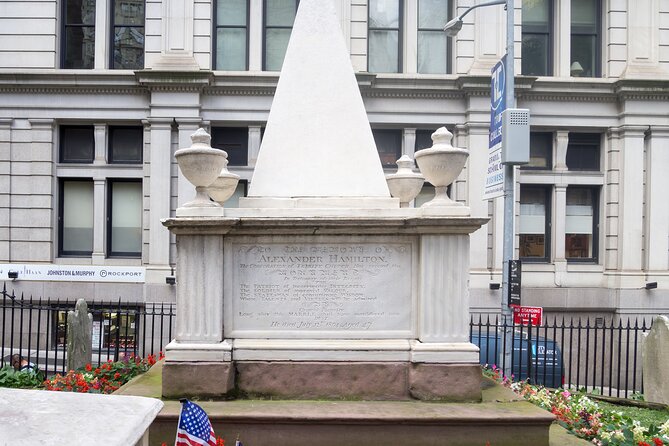
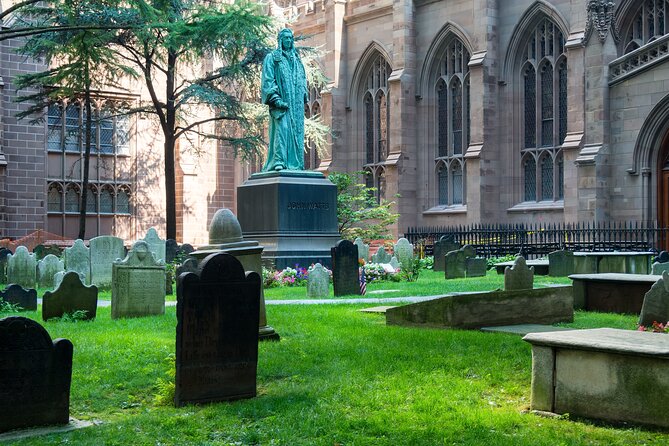
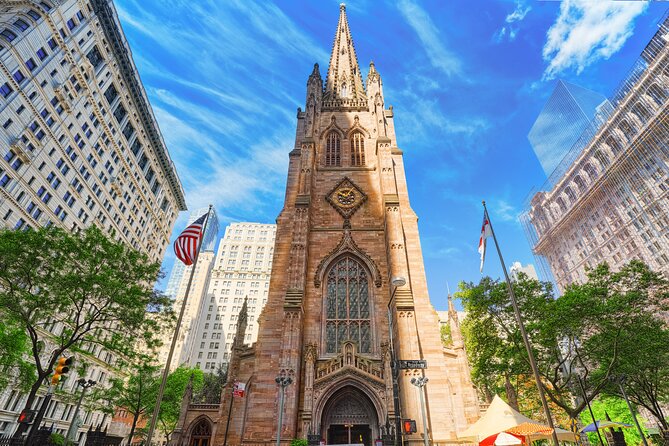
Trinity Church was originally built by enslaved people, a detail that can alter your understanding of the church and its place in the city. The guide also explains how enslaved workers contributed to the roads, docks, and other structures that allowed New York to grow.
I like this part of the walk because it gives the history a physical scale. You can compare the polished public image of Lower Manhattan with the labor that made its institutions possible. The tour also covers historical facts and myths, so you are not limited to a simple good-versus-bad story.
Your guide’s delivery will matter here. Ronald is praised for explaining a large amount of material in a way that remained easy to follow. Joseph is praised for combining strong subject knowledge with an engaging presentation. Guide assignments can vary, but those names give you an idea of the style the company aims for.
A few more New York City picks to weigh up
- Private Central Park Pedicab Tour
★ 5.0 · 6,981 reviews - Private Transfer from Manhattan to NYC Airports (JFK/EWR/LGA)
★ 3.5 · 1,683 reviews - New York City: Private Central Park Pedicab Tour
★ 4.9 · 1,637 reviews - Carriage Ride in Central Park (VIP – PRIVATE) Since 1964™
★ 4.0 · 1,074 reviews
Wall Street and the slave-built wall
Wall Street is one of the city’s most powerful names, yet its origin is tied to a defensive wall built by enslaved labor. The guide shows you the connection between the wall and the street’s name, then places that story beside the financial district you see today.
This is one of the route’s most effective moments because the historical clue is hiding in plain sight. A street known around the world for money and markets began with a wall, and enslaved workers helped build it. The tour uses that detail to show how slavery was not separate from New York’s economy. It was part of the city’s infrastructure and daily operation.
The route also passes the building that housed the former slave market. That stop links the physical work of enslaved people to the buying and selling of human beings. The history becomes less distant when you understand that the market operated in the same urban core where government, churches, shipping, and trade were taking shape.
This section may be uncomfortable, as it should be. The value lies in facing the connection rather than smoothing it over. You will get more from the walk if you are ready to listen closely and allow time for the guide’s explanations.
Pearl Street and Fraunces Tavern
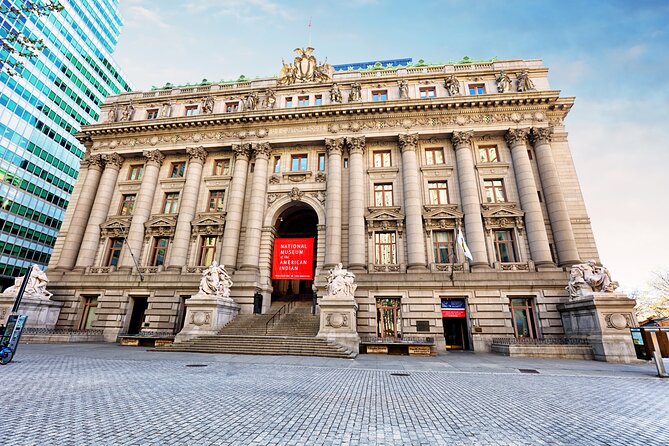
The walk continues along Pearl Street and ends outside historic Fraunces Tavern. The building once served as headquarters for George Washington, giving the final stop a strong connection to the founding era.
That ending is useful because it places the history of slavery beside the familiar story of American independence. Washington is often presented through military and political achievements, but the surrounding city also depended on enslaved labor and a society shaped by racial inequality.
Fraunces Tavern is not presented simply as a final photo stop. It helps the guide close the route by connecting colonial New York, the Revolutionary period, and the people whose work supported the city during both.
The tour information gives the endpoint as outside Fraunces Tavern, while the meeting details also describe the activity as ending back at the meeting point. Check the day-before instructions in your email for the exact end arrangement. Either way, the route remains concentrated in Lower Manhattan, near public transportation and other historic sites.
Two hours or three hours?
The shorter option suits you if you want a concentrated introduction to slavery and African American history in Lower Manhattan. It covers the principal streets and buildings, including the African Burial Ground area, City Hall, St. Paul’s Chapel, Trinity Church, Wall Street, the former slave market, Pearl Street, and Fraunces Tavern.
The three-hour option gives the subject more room. Its main advantage is admission to the African Burial Ground visitor center, where you can see the film, artifacts, images, and related exhibits. That extra hour is not just more walking. It adds a place for quiet reflection and more direct material about enslaved African Americans.
I would choose the longer option if you have a strong interest in African American history or if this is your main historical activity in Lower Manhattan. Choose the two-hour route if your schedule is tight and you mainly want the guide’s interpretation of the streets and buildings.
Either option involves substantial walking. One person specifically found the route informative but cautioned that it is not ideal for people who do not like walking much. Wear sensible shoes, leave enough time between this tour and your next appointment, and remember that city sidewalks can slow the pace.
What the private format is worth
The listed price is $192.90 per person. That is a serious cost for a two to three-hour walk, so the value depends heavily on your group size and how much you want a private guide.
For a solo visitor or a couple, the price may feel high compared with a standard group walking tour. You are paying for a special itinerary, a guide focused on your party, and a subject that is not covered well by many ordinary city tours.
For a larger family or friend group, the private format can make more sense. You do not have to follow a stranger’s pace or compete with a large crowd to hear the guide. The company’s group arrangements also aim to keep the guide-to-participant ratio workable, with extra guide support for groups of 26 to 50.
The three-hour choice includes free admission to the African Burial Ground visitor center. Admission is not included with the two-hour option, so compare the total cost and time before booking. Group discounts are available, but the amount is not specified, so check the price shown for your party.
I see the strongest value here for people who want context, not just access. The streets themselves are free, and many of the buildings can be viewed from outside. What you are buying is the guide’s ability to connect those places into a clear account of labor, resistance, commerce, faith, and memory.
Who will get the most from this experience?

This tour suits history-minded visitors, families with older children, students, and anyone who wants to examine New York beyond its usual patriotic and financial landmarks. It is also a good choice if you have already seen Lower Manhattan and want a new way to read the same streets.
The private setup works well for groups that want to ask questions. It can also help if different members of your party have different levels of background knowledge, since the guide can explain terms and events as you go.
You should think twice if you want a relaxed ride, a short indoor activity, or a tour centered on architecture alone. Much of the experience takes place outdoors, and the subject is serious. The pace is shaped by walking and discussion rather than entertainment.
Most people can participate, according to the tour information. Even so, the walking requirement remains the key practical issue. The route lasts about two to three hours, and the longer version includes security at the visitor center.
Simple planning advice for Lower Manhattan
You receive confirmation when you book, and you should check your email the day before for important instructions. Meet at the Benjamin Franklin Statue, One Pace Plaza, and arrive with enough time to identify the landmark without rushing.
The tour is offered in English, and a history expert guide fluent in your selected language is included in the tour description. Since the available booking details specifically list English, confirm language availability if you need another language.
Public transportation is nearby. The activity is private, so only your group participates, but the guide may still need to manage normal city conditions such as crowds, traffic, and busy sidewalks.
Cancellation is free up to 24 hours before the start time for a full refund. Cancellations or changes made less than 24 hours before the experience are not refunded or accepted, and cut-off times use New York local time.
Should you book the slavery and African American history tour?
Book it if you want a serious, place-based account of New York’s African American past and value having a guide explain what you are seeing. The strongest version is the three-hour tour, especially if the African Burial Ground visitor center is important to you.
The two-hour route is a better fit for a busy schedule, but the price can be harder to justify for a very small party unless this subject is a priority. For a family or group sharing the private guide, the cost may feel more reasonable.
Go in ready to walk, listen, and reconsider familiar landmarks. This is not a cheerful sightseeing loop, but it is a useful way to see how enslaved Africans helped build New York and how much of that story remains tied to the city’s most famous streets.
FAQ
Where does the tour begin?
The tour begins at the Benjamin Franklin Statue in front of Pace University, at One Pace Plaza, New York, NY 10038.
Where does the tour end?
The route passes Pearl Street and ends outside historic Fraunces Tavern. The meeting information also states that the activity ends back at the meeting point, so check the day-before email for the exact end arrangement.
How long is the tour?
You can choose an option lasting about two hours or a longer option lasting about three hours.
Is the African Burial Ground National Monument included?
Admission to the African Burial Ground National Monument visitor center is included with the three-hour option. It is not included with the two-hour option.
What will I see on the route?
The route includes the African Burial Ground area, New York City Hall, St. Paul’s Chapel, Trinity Church, Wall Street, the former slave market site, Pearl Street, and Fraunces Tavern.
What does the tour explain about slavery in New York?
The guide discusses daily life under slavery, slave rebellion, forced labor, historical facts and myths, and the role enslaved Africans played in building New York’s roads, docks, churches, and other structures.
Is this a private tour?
Yes. Only your group participates in the private activity.
How large can the group be?
The company aims to provide one licensed guide for a maximum of 25 guests. Groups of 26 to 50 receive two licensed guides.
Is the tour offered in English?
Yes, English is listed as an available language. The tour information also describes a guide fluent in the language selected at booking.
How much walking is involved?
The tour is a walking experience through Lower Manhattan and lasts two to three hours. It may not suit people who do not like walking for extended periods.
Is the tour near public transportation?
Yes, the meeting area is near public transportation.
Can most people participate?
The tour information says most participants can take part. You should still consider the length of the walk when deciding if it fits your needs.
What is the cancellation policy?
You can cancel at least 24 hours before the start time for a full refund. Cancellations and changes made less than 24 hours before the start time are not accepted, and no refund is provided.
Just listed around New York City
- NYC: Private Ghostbusters Sites Tour★ 5.0 · 3 reviews
- Tour by Night in Italian★ 5.0 · 3 reviews
- NYC: Private Central Park Pedicab Tours / PICKUP FROM MUSEUM★ 5.0 · 3 reviews
- Tour of Brooklyn Bridge at Sunset★ 3.5 · 3 reviews
- New York City: Manhattan ‘Complete Playground’ Entry Ticket★ 5.0 · 3 reviews
- New York Upper East Side Art and Architecture Tour★ 5.0 · 3 reviews
- PRIVATE Rockefeller Center Artified Walking Tour★ 5.0 · 3 reviews
- Macy’s Thanksgiving Day Parade Premium Viewing Brunch 2025★ 4.5 · 3 reviews
Historical Tours, compared.


Starship Landmark 90 Minute Sightseeing Cruise
Read our review →
Starship Landmark 90 Minute Sightseeing Cruise
Read our review →
American Museum of Natural History Admission Ticket
Read our review →
Top Rated Brooklyn Half-Day Food, History & Culture Tour via bus
Read our review →
The Original Greenwich Village Food & Cultural Tour Since 1999
Read our review →
The Speakeasy Adventure: A Tipsy Trip Through History
Read our review →Browse the lists this tour appears in