
Reviewed · HARLEM & GOSPEL TOURS
Soul of Harlem: Strivers Row, Apollo Theatre, Gospel History
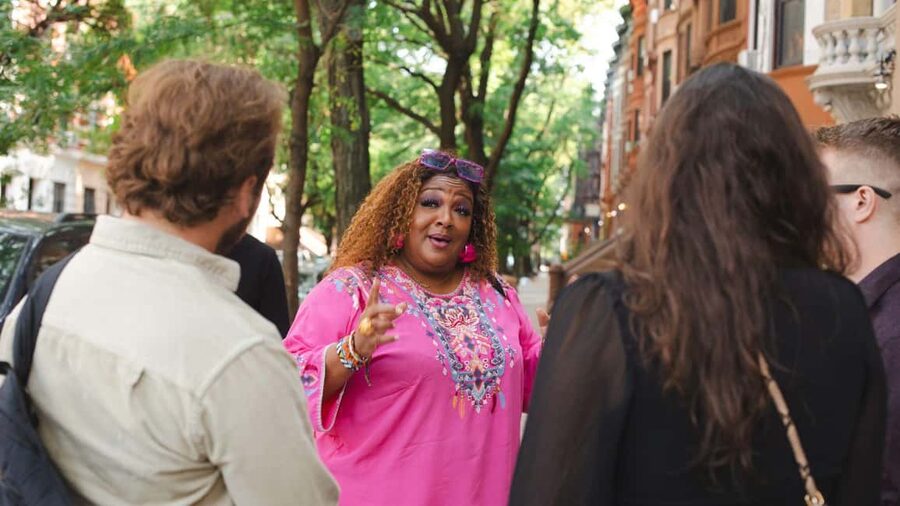
Harlem’s story comes alive through music, faith, politics, and neighborhood gossip on this focused two-hour walk. You’ll follow streets linked to Ella Fitzgerald and Duke Ellington, hear how Harlem helped place American music before a worldwide audience, and get the wonderfully odd tale of Fidel Castro being turned out of a midtown hotel after having chickens in his room.
I like the tour’s tight focus. You spend your time in one of New York’s most important neighborhoods instead of losing half the experience in a bus or subway. I also like the chance to hear gospel at a local church on Sundays, an experience that adds living faith to the historical story. The main drawback is that the tour is largely an outdoor walk, and the Apollo Theatre is viewed from outside rather than toured inside. One earlier participant specifically wished for a peek inside, even with renovation work underway.
In This Review
- Key points to know before you book
- Why Harlem works best as a walking story
- Starting at Malcolm X Boulevard or the Apollo Theatre
- Abyssinian Baptist Church and the role of faith
- Gospel on Sundays at a local church
- The Schomburg Center and Harlem’s intellectual life
- Bill’s Place and the stories that keep the walk lively
- Strivers’ Row and the meaning of a Harlem address
- The Apollo Theatre and the music that changed America
- What the guides add to the two hours
- Is $49 a fair price for two hours?
- Who should take this Harlem walk?
- Should you book Soul of Harlem?
- FAQ
- How long does the Soul of Harlem tour last?
- What language is the tour conducted in?
- Where does the tour meet?
- Does the tour include the Apollo Theatre?
- Is gospel included every day?
- Which Harlem landmarks are included?
- Is the tour wheelchair accessible?
- How much does the tour cost?
- Can I cancel the booking?
- Do I need to pay when I reserve?
Key points to know before you book
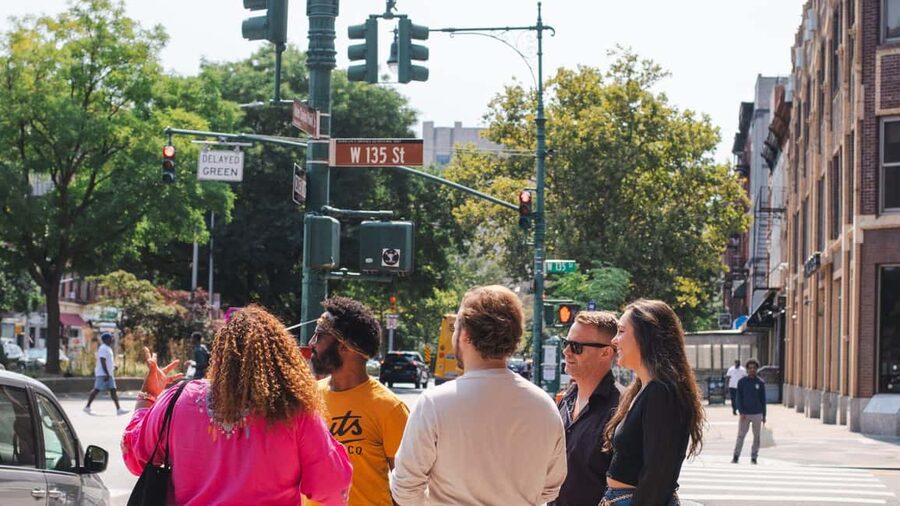
- The Apollo Theatre anchors the story: Learn why Harlem became a launchpad for Ella Fitzgerald, Duke Ellington, and other major performers.
- Sunday tours include gospel: The Sunday option offers skip-the-line access to a gospel experience at a local church.
- Strivers’ Row adds neighborhood texture: See one of Harlem’s best-known residential areas and hear how the community changed over time.
- Guides make a major difference: Altovise is praised for humor, local ties, and lively storytelling. Ron is noted for his documentation and clear explanations.
- The route covers several cultural landmarks: Expect stops at Abyssinian Baptist Church, the Schomburg Center, Bill’s Place, Strivers’ Row, and the Apollo Theatre.
- Two hours keeps the visit manageable: At $49 per person, the tour suits you if you want a guided introduction before exploring Harlem on your own.
Why Harlem works best as a walking story

Harlem is not one single story. Over roughly 400 years, the area has gone through major ethnic, cultural, and socioeconomic changes. That long arc helps explain why a relatively compact walk can bring together churches, theaters, homes, research centers, music venues, and restaurants.
I find walking especially useful here because the subject is not confined to one museum. The streets themselves connect the pieces. A theater points toward music history. A church opens a conversation about faith and community life. A row of homes leads into questions about ambition, status, and who was able to make a life in Harlem at different points in its past.
This tour is designed to give you that framework in two hours. You are not simply ticking off famous addresses. You are hearing how the neighborhood changed, what it meant to the people who lived there, and why Harlem still carries such weight in American culture.
The compact route is also practical. If you are staying elsewhere in New York, a two-hour tour is easier to fit around a museum visit, lunch, or an evening performance. You finish with a clearer sense of the area and can decide where to return.
More Harlem visits and gospel mornings:
- NYC Highlights Tour: Bronx, Brooklyn, Harlem, Queens & Coney
★ 4.5 · 2,846 reviews - NYC: Contrasts Tour of Harlem, The Bronx, Queens & Brooklyn
★ 4.5 · 2,167 reviews - NYC: Harlem Hallelujah! Gospel Wednesday Concert
★ 4.7 · 1,638 reviews
Starting at Malcolm X Boulevard or the Apollo Theatre
There are two possible starting points: 515 Malcolm X Boulevard or the Apollo Theatre. Your exact meeting place depends on the option you book, so check the confirmation carefully before setting out.
The Apollo is a natural starting point because its name immediately brings music history into the conversation. If your walk begins there, you are placed beside one of Harlem’s most recognizable cultural addresses from the first minute. If you begin on Malcolm X Boulevard, the guide can build the story through the neighborhood before arriving at the theater.
The route is led in English, and the activity is listed as wheelchair accessible. Since this is a walking tour, you should still consider your own comfort with two hours on city sidewalks and confirm the meeting details before you go.
A good guide matters here. The strongest comments focus on guides who bring the neighborhood into the room, so to speak. Altovise is repeatedly praised for being funny, engaging, and connected to local people. One participant noted that she seemed to know people all along the street, which gave the walk a personal quality. Ron is described as lively, well prepared, and generous with supporting documents.
Those details matter because Harlem’s story can easily turn into a string of dates and famous names. A guide who can answer questions, draw everyone into the conversation, and connect past events to present-day life makes the two hours feel less like a lecture.
Abyssinian Baptist Church and the role of faith
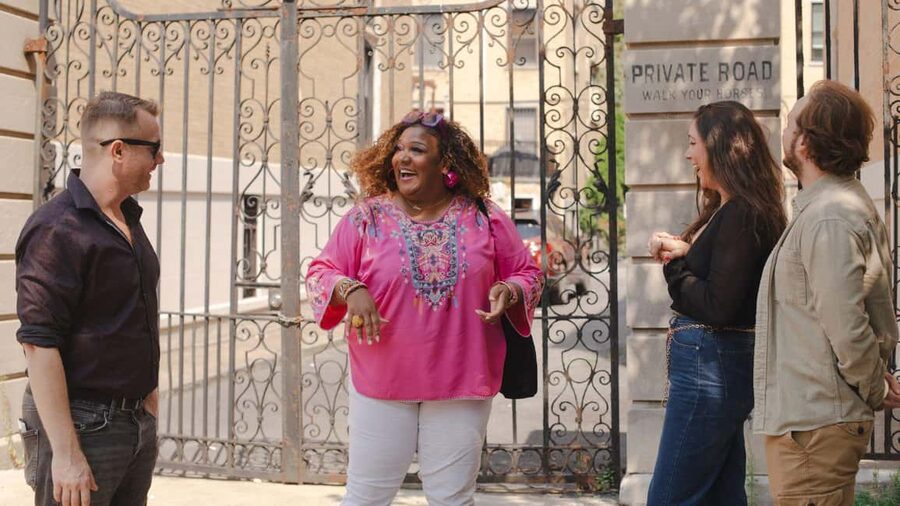
Abyssinian Baptist Church is one of the major stops. The tour includes a photo stop and visit, giving you a chance to place one of Harlem’s important houses of worship within the wider story of the neighborhood.
I value this part of the route because it widens the subject beyond music. Harlem’s cultural importance is not only found on a stage. Churches have been places of worship, gathering, leadership, and community life. A stop here helps you see how faith fits alongside theaters, homes, and civic institutions.
The precise nature of the visit can vary, so treat it as a guided stop rather than a guaranteed full interior tour. You should also be respectful of worshippers and church activity. The tour’s Sunday gospel option is a separate highlight and gives you a more direct experience of church music and worship.
Gospel on Sundays at a local church
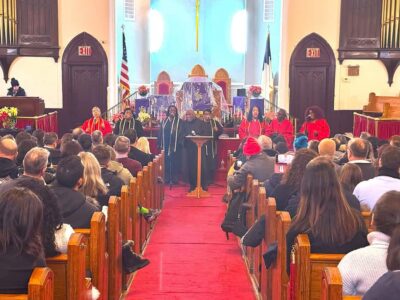
If you can take the tour on a Sunday, the gospel experience is the feature that most changes the character of the outing. The Sunday option includes skip-the-line access to gospel at a local church, with Memorial Baptist Church listed as one of the drop-off points.
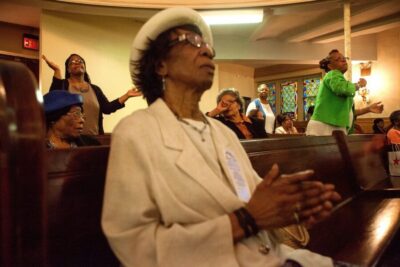
This is not just an extra photo stop. Gospel connects the tour’s music story to a living religious setting. You can hear how performance, faith, and community come together rather than only hearing about famous performers from the past.
The practical point is simple: book Sunday if gospel is your priority. The inclusion is specifically listed for Sundays, so do not assume it applies on other days. The church experience also requires appropriate behavior. Keep the setting in mind, follow the guide’s instructions, and remember that this is a functioning local church rather than a staged show.
The Sunday option may also make the two-hour schedule feel fuller. You get the neighborhood walk, the historical commentary, and a direct connection to Harlem’s church tradition. If you mainly want architecture and street history, a weekday tour may be enough. If music and faith are central to your plans, Sunday is the stronger choice.
More New York City history walks:
- New York City: American Museum of Natural History Ticket
★ 4.5 · 15,447 reviews - NYC: Starship Landmark 90 Minute Sightseeing Cruise
★ 4.6 · 3,666 reviews - Starship Landmark 90 Minute Sightseeing Cruise
★ 4.5 · 2,073 reviews - American Museum of Natural History Admission Ticket
★ 4.0 · 1,931 reviews
The Schomburg Center and Harlem’s intellectual life
The Schomburg Center for Research in Black Culture is another photo stop and visit. Its inclusion signals that Harlem’s influence is not limited to performers and public figures. The neighborhood also supports the preservation and study of Black culture.
For you, the value of this stop is context. Music history can sometimes be told as a parade of stars. A research center points to the work of recording, preserving, and studying the ideas, art, writing, and social experience behind those famous names.
The stop is not described as a full guided tour of the center, so keep your expectations measured. You will likely receive an exterior introduction and information from the guide rather than an extended indoor research visit. Still, it gives the walk an important intellectual counterpoint to the Apollo Theatre.
This is one reason I would avoid treating the experience as only an entertainment tour. You are looking at a neighborhood where culture was created, performed, practiced, remembered, and studied.
Bill’s Place and the stories that keep the walk lively
Bill’s Place appears as a photo stop in Harlem. Along with the formal landmarks, this kind of stop lets the guide bring in the neighborhood’s smaller, more personal stories.
The supplied information does not promise entry, a performance, or a meal at Bill’s Place. Think of it as an exterior point of interest, with the guide supplying the meaning. That distinction is useful. You can enjoy the stop without expecting a full venue visit, then ask the guide for suggestions if you want to eat or explore after the walk.
One of the tour’s memorable stories concerns Fidel Castro. After being removed from a midtown hotel for having chickens in his room, he slept in Harlem. It is an unusual detail, but it does the job of making the neighborhood feel connected to international politics and New York’s wider social life.
I like anecdotes such as this when they are tied to place. They give you something concrete to remember, and they show that Harlem has been part of much more than one cultural movement. The guide’s challenge is to keep such stories connected to the neighborhood rather than letting them become random trivia.
Strivers’ Row and the meaning of a Harlem address
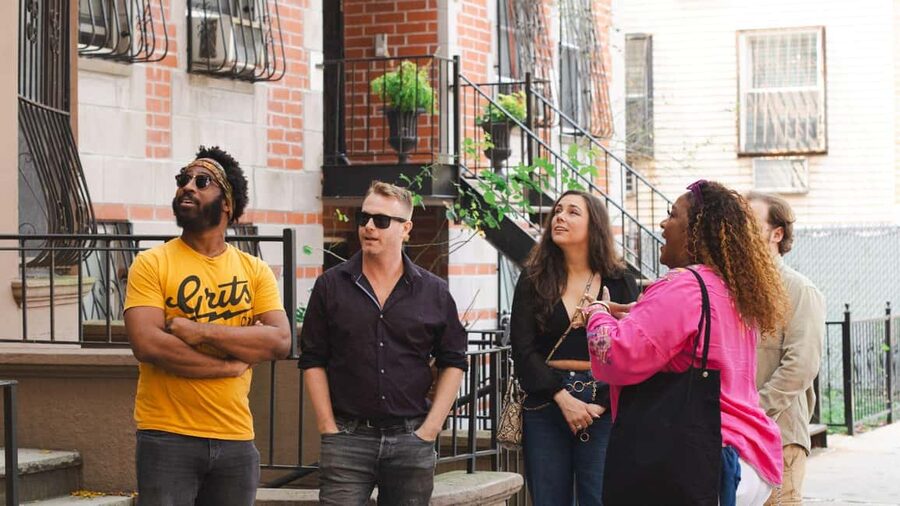
Strivers’ Row is one of the walk’s central photo stops. The name itself suggests ambition, effort, and the desire to build a respectable life. The stop gives you a chance to look at Harlem as a place where people made homes, not just a backdrop for famous events.
The supplied details do not specify an interior visit, so expect to see the area from the street and hear its story from the guide. That can still be valuable. Residential streets often reveal a different side of a neighborhood than its major theaters and churches.
This is also a good place to pay attention to the tour’s larger theme: change. Harlem has experienced different ethnic, cultural, and economic eras. Strivers’ Row helps make that transition visible through the built environment and the guide’s explanation of who lived there and what the area represented.
You might enjoy this stop most if you like architecture, urban history, and the connection between private homes and public identity. If your main goal is live music, it may feel quieter than the Apollo or gospel portions of the tour. That contrast is useful, though. It keeps the walk from becoming a nonstop list of performers.
The Apollo Theatre and the music that changed America
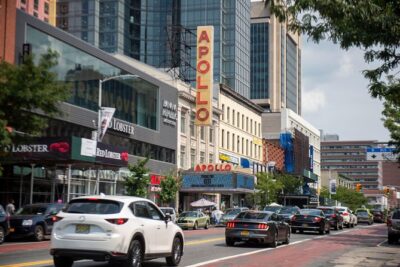
The Apollo Theatre is the emotional center of the route for many people. The tour connects the theater and surrounding streets with Ella Fitzgerald, Duke Ellington, and other artists associated with Harlem’s role in putting American music on the world map.
The Apollo is best understood here as part of a wider network. The theater matters, but so do the streets, clubs, churches, homes, and audiences that made Harlem a place where artists could develop and be heard. The guide helps you connect the famous name on the marquee with the neighborhood around it.
You should know that the tour includes a photo stop at the Apollo rather than a confirmed backstage or interior visit. One person specifically hoped to look inside but found the outside view limited by renovation work. That is the clearest practical limitation of the experience.
If stepping inside the Apollo is essential to your plans, book a separate theater visit if one is available. If you mainly want the historical setting, the exterior stop still works, especially when the guide adds stories and explains the theater’s place in Harlem’s cultural life.
The Apollo stop also makes a good ending because it gathers together the tour’s main threads: performance, opportunity, community, and the national reach of Harlem’s music.
What the guides add to the two hours
The tour company uses English-speaking guides, and the personal style may vary. The most praised guides bring more than prepared facts. Altovise is described as funny, warm, and deeply connected to the community. She also answered questions and pointed people toward further resources, including information about synchronized swimming teams at the YMCA.
That last detail gives you a useful sense of the tour’s range. A good guide can move from major cultural figures to current neighborhood resources without losing the thread. You may also get restaurant advice for after the walk, as one participant specifically appreciated.
Ron is noted for bringing documentation and making the landmarks and anecdotes easy to follow. Other comments point to guides who made an effort to include everyone in the group. That is important on a walking tour, where a shy participant can otherwise miss the chance to ask questions.
Guide assignments are not guaranteed, so do not book solely on the hope of having one particular person. Still, the repeated praise for local connection is a strong reason to choose this experience over a self-guided walk if you want conversation and interpretation.
Is $49 a fair price for two hours?
At $49 per person, this is not the cheapest way to walk through Harlem. You can see many streets and exterior landmarks on your own for less. The question is what you want your money to buy.
I think the price makes the most sense if you value a guide who can connect several subjects in a short time. You are paying for the route, the organization, the live commentary, the chance to ask questions, and, on Sundays, the gospel access. The Sunday addition makes the price easier to justify if church music is a main reason for visiting Harlem.
The value is weaker if you want extensive interior access. The Apollo and Bill’s Place are listed as photo stops, and the Schomburg Center is not presented as a full museum tour. You should not expect a long visit inside every landmark.
For a first Harlem visit, I see the tour as a useful orientation. Afterward, you can return to the places that interest you most, spend more time at a museum, seek out a meal, or attend a separate Apollo event. The tour gives you a map of ideas as much as a map of streets.
The experience includes free cancellation up to 24 hours before the start and a reserve-now, pay-later option. Those policies help if your New York schedule is still shifting, but the main value question remains the guide and the Sunday gospel access.
Who should take this Harlem walk?
I would choose this tour if you want a compact introduction to Harlem and prefer stories to a long museum visit. It suits first-time visitors, music fans, people interested in Black cultural history, and anyone who wants a local guide to challenge simple ideas about the neighborhood.
It also works well for a short New York stay. Two hours is enough to learn the basic shape of Harlem without giving up an entire day. You can schedule lunch or another activity afterward, using the guide’s local suggestions to decide where to go next.
Families and mixed-interest groups may appreciate the variety. The route includes music, churches, politics, homes, research, and neighborhood anecdotes. A group member who is not a music expert can still find something to follow.
I would hesitate if your main requirement is a full indoor tour of the Apollo Theatre or a long visit to each institution. I would also think twice if you dislike walking or need a highly predictable pace. The tour is accessible according to the activity details, but the exact meeting point varies, so confirm the chosen option before arrival.
Should you book Soul of Harlem?
Book it if you want Harlem explained through people and places, not just photographed from a sightseeing bus. The strongest reason to go is the guide-led connection between the Apollo Theatre, gospel, Strivers’ Row, Abyssinian Baptist Church, the Schomburg Center, and everyday neighborhood life.
Choose Sunday if the gospel experience is central to your plans. Choose another day if you mainly want a history walk and the Sunday timing does not fit.
The Apollo’s exterior-only limitation is real, and $49 is a considered purchase for two hours. Still, the focused route, lively local storytelling, and access to a church gospel experience give the tour a clear purpose. For a first look at Harlem, I would book it, then leave time afterward to explore the places that catch your attention.
FAQ
How long does the Soul of Harlem tour last?
The walking tour lasts two hours.
What language is the tour conducted in?
The live tour guide speaks English.
Where does the tour meet?
There are two possible starting points: 515 Malcolm X Boulevard and the Apollo Theatre. The meeting point depends on the option booked.
Does the tour include the Apollo Theatre?
The Apollo Theatre is included as a photo stop. The experience does not promise an interior or backstage visit.
Is gospel included every day?
The gospel experience is included on Sundays only. The Sunday option provides skip-the-line access to gospel at a local church.
Which Harlem landmarks are included?
The route includes Abyssinian Baptist Church, the Schomburg Center for Research in Black Culture, Bill’s Place, Strivers’ Row, and the Apollo Theatre.
Is the tour wheelchair accessible?
Yes. The activity is listed as wheelchair accessible.
How much does the tour cost?
The price is $49 per person.
Can I cancel the booking?
Yes. You can cancel up to 24 hours in advance for a full refund.
Do I need to pay when I reserve?
No. A reserve-now, pay-later option is available.
Just listed around New York City
- NYC: Little Shop of Horrors Off-Broadway Ticket5 reviews
- Private NYC Airport Transfer: LGA to Manhattan – Up to 5★ 3.6 · 5 reviews
- New York City Tour in German★ 4.5 · 5 reviews
- New York: Hamilton and Washington Revolutionary Walking Tour★ 5.0 · 5 reviews
- NYC Freedom Tower Private Photo or Video Experience★ 4.0 · 6 reviews
- New York Afternoon Fall Foliage Cruise with Lunch★ 5.0 · 6 reviews
- Brooklyn Walking Tours by Locals: Private & 100% Personalized★ 4.0 · 6 reviews
- Southold Bay Oyster Farm Tour★ 5.0 · 6 reviews
Harlem & Gospel Tours, compared.

NYC Highlights Tour: Bronx, Brooklyn, Harlem, Queens & Coney
Read our review →
Contrasts Tour of Harlem, The Bronx, Queens & Brooklyn
Read our review →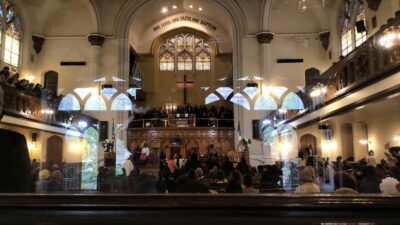


Browse the lists this tour appears in