
Reviewed · SOHO, LITTLE ITALY & CHINATOWN TOURS
The Original SoHo, Little Italy, Chinatown Walking Tour
New York’s Lower Manhattan changes block by block. On this 90-minute walk, you move from SoHo’s art and architecture to Chinatown’s food shops, then into Little Italy’s old streets and pastry counters. It is a compact way to see how immigrant life, pop culture, food, and new creative scenes share the same few blocks.
I like the small group limit of 15, which should make it easier to hear the guide and ask questions. I also like the food stops: pork buns and dumplings, New York-style pizza, Italian gelato, and a cannoli from Caffè Palermo give the walk a useful taste of the neighborhoods instead of leaving you to look at restaurants from the sidewalk.
The main drawback is the short running time. At about 90 minutes, this is an introduction, not a full food crawl or a detailed museum-style tour. You will cover several neighborhoods, but you will not have long to linger at each stop.
In This Review
- Key points to know before you book
- Why this short Lower Manhattan walk works
- Starting in SoHo at Spring Street Park
- Mott and Mulberry Streets, where the story comes into focus
- Chinatown in about 30 minutes
- Little Italy and the shared neighborhood story
- The Church of the Transfiguration after 200 years
- Finishing with the Cannoli King
- What $49 means in practical terms
- Who should book this walk
- Should you book The Original SoHo, Little Italy, Chinatown Walking Tour?
- FAQ
- How long is the walking tour?
- Where does the tour begin?
- Where does the tour end?
- How much does the tour cost?
- How large is the group?
- What neighborhoods does the tour cover?
- What food might be sampled?
- Is the cannoli stop included?
- Is the tour accessible by public transportation?
- Can I cancel for a full refund?
Key points to know before you book
- Three old Manhattan neighborhoods in 90 minutes: The route links Chinatown, Little Italy, and SoHo without taking up half a day.
- Mott and Mulberry Streets are the heart of the walk: Expect stories about immigrant life in the 1800s and a close look at one of old Manhattan’s best-preserved areas.
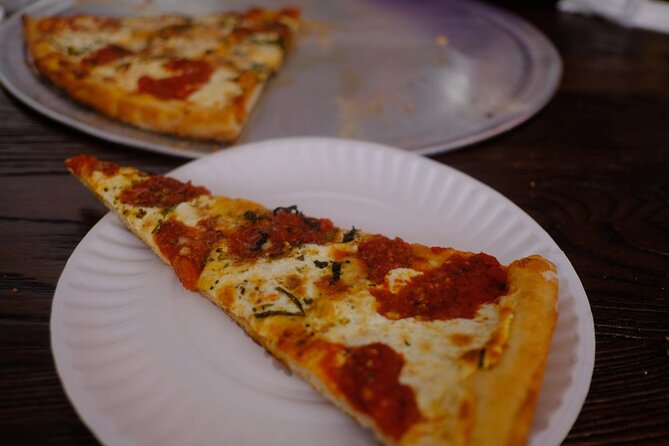
- Food is part of the lesson: Samples may include Chinese pork buns, dumplings, New York-style pizza, Italian gelato, and cannoli.
- The group is capped at 15 people: That is a useful size for a walking tour where questions and clear instructions matter.
- The route ends at Caffè Palermo: The Cannoli King stop has served pastries since 1973 and is the only stop specifically marked with admission included.
- The tour begins and ends in different places: Start at Spring Street Park and finish at Columbus Park on Mulberry and Baxter Streets.
Why this short Lower Manhattan walk works
I like tours that give you a clear sense of a neighborhood without pretending to explain an entire city in one afternoon. This walk does that well. It connects three names you already know, then gives them more shape through streets, buildings, food, and stories.
SoHo is often treated as a shopping district. Chinatown is often reduced to restaurant signs and busy sidewalks. Little Italy can feel like a narrow restaurant strip. The value here is in seeing how these areas overlap, change, and retain traces of earlier communities.
The tour begins at Spring Street Park, in the SoHo area, and ends at Columbus Park. Because the starting and finishing points differ, you should plan your next activity from Columbus Park rather than assuming you will return to Spring Street.
The route is listed as about 1 hour and 30 minutes. That is a good fit if you want a morning or afternoon activity that leaves room for a museum, another neighborhood, or dinner. It also means the guide has to keep the pace moving. If you prefer long stops, extended tastings, or plenty of free time for photographs, this may feel brisk.
More SoHo, Little Italy and Chinatown walks:
- SoHo, Little Italy, and Chinatown Walking Tour in New York
★ 5.0 · 3,153 reviews - NYC: Chinatown & Little Italy Food Tour with 7 Flavorful Tastings
★ 5.0 · 2,733 reviews - Original NYC Guided Food Tour of Chinatown and Little Italy
★ 5.0 · 2,194 reviews
Starting in SoHo at Spring Street Park
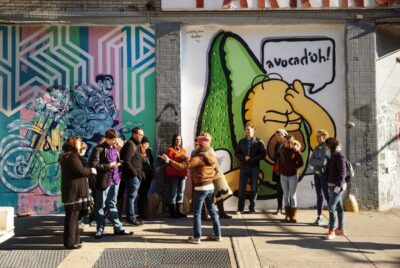
Spring Street Park is the opening point, and the tour uses the area to introduce the changing face of Lower Manhattan. You will hear about current arts and architecture while also moving toward older streets and older stories.
That contrast is one of the walk’s better ideas. SoHo is not presented only as a place for galleries or shopping. You get a sense of how the district fits into a wider downtown story, where new creative uses sit close to neighborhoods shaped by immigration and trade.
The activity description does not provide a guide’s name, so you should not book expecting a particular host. The guide is described as local, and the small group size should help keep the walk conversational rather than turning it into a distant lecture.
One practical point: this is a walking tour, not a vehicle-based overview. Wear shoes you can use comfortably on city streets, and keep your schedule flexible enough to stay with the group. The supplied details do not give an exact route between each stop, so the best way to think of this experience is as a guided neighborhood walk rather than a fixed series of indoor attractions.
Mott and Mulberry Streets, where the story comes into focus
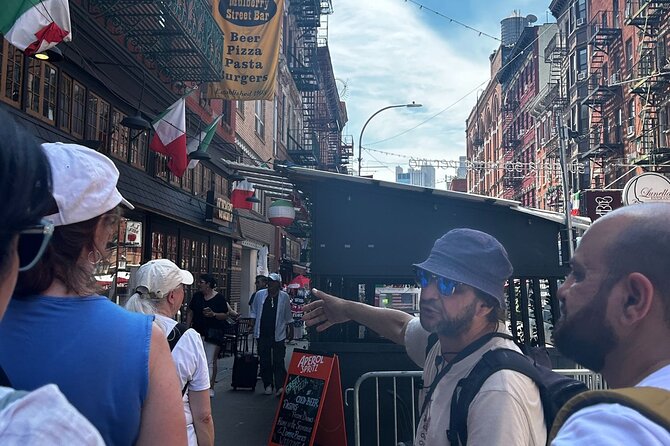
The main historical thread follows Mott and Mulberry Streets. These streets are used to explain what life was like for immigrants arriving in New York during the 1800s.
That focus gives the tour more purpose than a simple list of famous addresses. You are not only moving from Chinatown to Little Italy. You are looking at streets that preserve the feel of old Manhattan while learning how immigrant groups shaped daily life in the area.
The same streets also show how neighborhood identities can change. The route brings together Chinese and Italian food traditions, old religious buildings, newer art and culture, and the tourist businesses that now serve visitors. I find that mix more useful than a polished version of Lower Manhattan that hides its changes.
The food samples add a physical sense of place. Chinese pork buns and dumplings offer one taste of Chinatown. New York-style pizza and Italian gelato shift the focus toward Little Italy and the city’s broader Italian-American food culture. These are samples, not a full meal, so you should not rely on the walk as your only lunch or dinner plan.
Chinatown in about 30 minutes
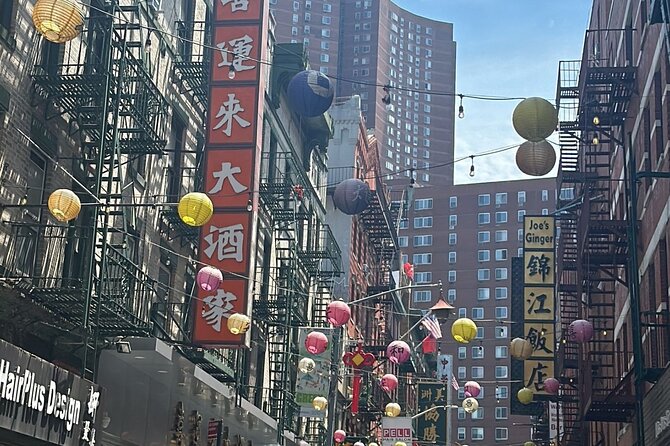
The Chinatown portion is scheduled for roughly 30 minutes. You will visit historic streets, hear about the neighborhood’s past, and look at newer arts and architecture.
The strongest part of this section is the combination of old and new. You can discuss immigrant life in the 1800s while also seeing how the area continues to develop. The walk is designed to show Chinatown as a living neighborhood, not simply as a collection of food counters.
Food helps keep the history grounded. You may sample Chinese pork buns and dumplings, with the guide explaining the local setting as you move through the streets. The details do not specify the exact food vendors or portion sizes, so treat the tastings as a series of introductions rather than guaranteed full servings from named restaurants.
Thirty minutes goes quickly. You will get a useful first look, but you will not have time to explore every side street or stop for a long meal. If Chinatown is a major priority for you, consider returning to the area after the tour. The walk can give you enough orientation to choose where you want to spend more time.
More New York City walking tours:
- Secrets of Grand Central Station Walking Tour New York City
★ 5.0 · 1,796 reviews - Greenwich Village Walking and Food Tasting Tour
★ 5.0 · 1,572 reviews - Artistic, Alternative Greenwich Village Walking Tour
★ 5.0 · 971 reviews - True Crime NYC: Mafia Walk w/Ret. NYPD Detective and Local Food
★ 5.0 · 848 reviews
Little Italy and the shared neighborhood story
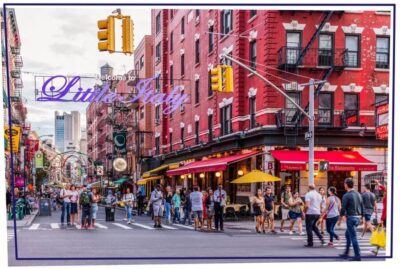
The Little Italy section is also listed at about 30 minutes. Its value comes from the way it shares streets and stories with Chinatown rather than appearing as an isolated district.
You will continue around Mott and Mulberry Streets, discussing immigrant communities and the layers of architecture and culture around them. The route makes clear that neighborhood boundaries are not always as neat as a map suggests. Food, worship, business, and migration have all shaped these blocks.
The planned tastes include real New York-style pizza and Italian gelato. Those samples give you a quick comparison with the Chinese food earlier in the walk. I like that the tour treats eating as part of the neighborhood story, not as a separate restaurant recommendation.
Still, keep your expectations measured. This is not advertised as a sit-down meal, and the full food menu is not guaranteed in the supplied details. The exact stops may depend on the guide and the day, so you should enjoy the samples as part of the walk rather than book it solely for one particular dish.
The Church of the Transfiguration after 200 years
The Church of the Transfiguration receives about 10 minutes. Completed in 1801, this small church has served immigrant groups in the neighborhood for more than 200 years.
A brief stop here adds a needed non-food element. Streets and restaurants can tell only part of the story. A place of worship shows how communities built institutions, kept traditions, and served people over generations.
Ten minutes is enough for context, but not enough for a long architectural study or extended time inside. The available details do not promise a formal interior tour, so think of this as a short historical stop within the larger walk.
Its location also helps connect the neighborhoods. Rather than treating Chinatown and Little Italy as separate themed zones, the church reminds you that different communities have used the same part of Manhattan over time.
Finishing with the Cannoli King
The last listed stop is Caffè Palermo, known here as the home of the Cannoli King. The café has served delicate pastries since 1973, and the stop lasts about 10 minutes.
This is a fitting finish. After Chinese dumplings, pork buns, pizza, and gelato, you end with one of Little Italy’s signature sweets. The cannoli gives the tour a clear final taste and a simple memory to carry into the rest of your day.
Caffè Palermo is the only stop specifically marked as having admission included. The food list says you will sample several items, but it does not spell out the cost or size of every sample. If you have allergies, dietary limits, or strong food preferences, ask before booking or contact the operator for current details.
The stop is short, so do not expect a long café break. It is best viewed as a final tasting and neighborhood landmark, not a replacement for a relaxed pastry stop later.
What $49 means in practical terms
The price is $49 per person. That is reasonable if you want a guided introduction, several tastings, and a small group in a part of Manhattan where independent exploration can easily become a series of disconnected stops.
You are paying for the guide’s local context as much as for the food. Without a guide, you can walk Mott and Mulberry Streets for free, but you may miss the connections between immigrant life, religious institutions, food traditions, SoHo’s creative scene, and the modern tourist economy.
The value is strongest for a first visit to these neighborhoods, or for someone who wants a quick orientation before returning alone. It is less compelling if you already know Chinatown and Little Italy well, or if your main goal is a large meal. A 90-minute walk cannot provide the same quantity of food as a dedicated food tour lasting several hours.
The small group maximum of 15 improves the deal. A guide can give clearer directions, answer questions, and keep food stops from feeling like a crowd-management exercise. The three existing ratings are all five out of five, and the clearest repeated strength is the mix of history, pop culture, and food. One person has taken the tour repeatedly when friends visit, partly because different guides give the walk slightly different character.
That repeat appeal matters. It suggests the format can work both as a first introduction and as a flexible outing for someone who wants to see downtown through a fresh guide’s perspective. It does not guarantee that every guide will tell the same stories, but the changing viewpoints may be a benefit.
Who should book this walk
I would recommend this tour to you if you want a short, social introduction to Lower Manhattan. It suits first-time visitors, repeat New York visitors who have focused on Times Square and major landmarks, and families or couples who prefer a guided walk with food along the way.
It also fits a tight schedule. The tour lasts about 90 minutes, begins near SoHo, and ends at Columbus Park. You can pair it with more time in Chinatown, a meal in Little Italy, or another downtown activity.
The tour may not suit you if you need a slow pace, substantial food portions, or a deep focus on one neighborhood. It also may not be the right choice if you want a fully predictable restaurant itinerary, since the supplied details do not name every food vendor or guarantee the size of each tasting.
Service animals are allowed, public transportation is nearby, and most people can participate. The route is on foot, so your own comfort with city walking remains important. Confirmation arrives when you book, and free cancellation is available up to 24 hours before the start time. Cancellations or changes made inside that window are not refunded or accepted.
Should you book The Original SoHo, Little Italy, Chinatown Walking Tour?
Book it if you want history and food in a compact format, with a local guide and no more than 15 people around you. The best parts are the Mott and Mulberry Street stories, the look at old and new neighborhood life, and the varied samples that move from dumplings to pizza to cannoli.
Skip it if you want a full meal, a long Chinatown exploration, or a detailed architectural tour. For $49, the tour earns its value through context, pacing, and access to several tastes in a short period. It is a strong choice for getting your bearings fast, then returning to the streets and cafés that interest you most.
FAQ
How long is the walking tour?
The tour lasts approximately 1 hour and 30 minutes.
Where does the tour begin?
The meeting point is Spring Street Park on Spring Street in New York, New York.
Where does the tour end?
The tour ends at Columbus Park, at Mulberry Street and Baxter Street in New York.
How much does the tour cost?
The listed price is $49 per person.
How large is the group?
The tour has a maximum of 15 people.
What neighborhoods does the tour cover?
It covers SoHo, Chinatown, and Little Italy, with a focus on Mott and Mulberry Streets.
What food might be sampled?
The listed samples include Chinese pork buns, Chinese dumplings, New York-style pizza, Italian gelato, and cannoli.
Is the cannoli stop included?
The Caffè Palermo Cannoli King stop is listed as having admission included.
Is the tour accessible by public transportation?
Yes. The tour is near public transportation.
Can I cancel for a full refund?
Yes. You can cancel at least 24 hours before the experience start time for a full refund. Cancellations or changes made less than 24 hours before the start time are not refunded or accepted.
Just listed around New York City
- NYC MAGICAL NIGHT TIME RIDE Central Park/Rockefeller Center★ 3.7 · 3 reviews
- Visit The Guggenheim Museum & 3h Manhattan Walking Tour★ 4.5 · 3 reviews
- Hot dogs food tour à New York★ 4.4 · 3 reviews
- Churches, Chapels and Cathedrals★ 5.0 · 3 reviews
- JFK or LGA package only (Round trip transfer plus VIP Contrasts)★ 5.0 · 3 reviews
- NYC: Macy’s Thanksgiving Day Parade Premium Viewing Brunch★ 4.3 · 3 reviews
- Dyker Heights – Brooklyn Christmas Houses Private Tour★ 5.0 · 3 reviews
- 6 Hours tour in the city (New York City) – Explore the city 🙂★ 3.5 · 3 reviews
SoHo, Little Italy & Chinatown Tours, compared.
SoHo, Little Italy, and Chinatown Walking Tour in New York
Read our review →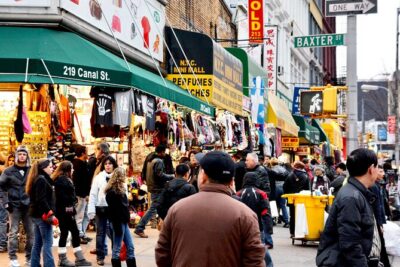
Chinatown & Little Italy Food Tour with 7 Flavorful Tastings
Read our review →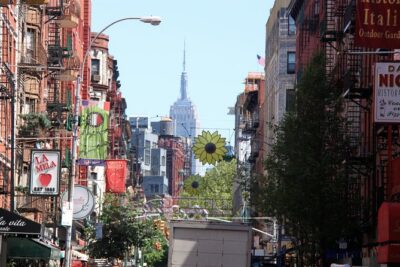
Original NYC Guided Food Tour of Chinatown and Little Italy
Read our review →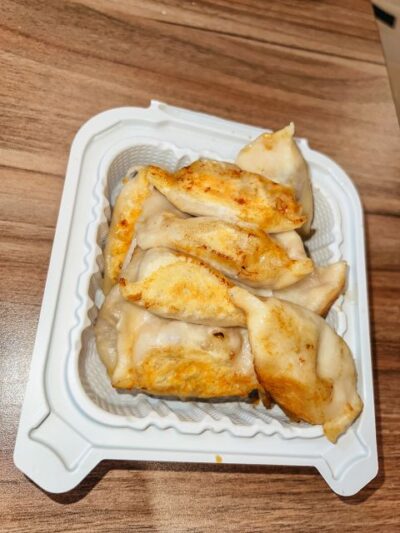
SoHo, Little Italy, and Chinatown 2-Hour Guided Walk
Read our review →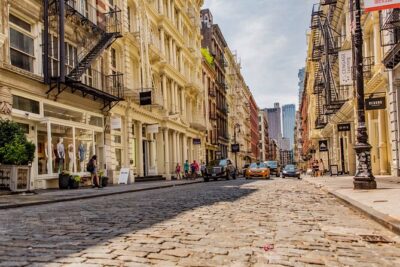
SoHo, Little Italy, and Chinatown NYC Guided Walking Tour
Read our review →Browse the lists this tour appears in