

Reviewed · NYC HARBOR & SKYLINE CRUISES
The Story Behind NY’s Evolving Skyline An Architectural Journey Through History
New York’s skyline is not just a collection of tall buildings. It is a record of trade, immigration, technology, money, politics, and changing ideas about how people should live. Kitt Garrett guides you through that story in an on-demand architectural tour that moves from Castle Clinton to Hudson Yards, covering four centuries of city growth along the way.
I like two things right away. First, Garrett explains how to recognize building styles and materials, so you are not just memorizing famous addresses. Second, the downloadable PDF gives you a useful companion for exploring neighborhoods later, at your own pace and with your phone in hand.
The main consideration is that this is not a traditional live walking tour. It is a self-guided video experience, so you will need to supply your own street-level wandering if you want to see the buildings in person. The route also covers a great deal in just under two hours, which makes it lively and efficient but not a detailed inspection of every stop.
In This Review
- Key points to know before you book
- New York’s skyline told from the harbor
- From Georgian buildings to modern towers
- A useful lesson in zoning and air rights
- Following the waterfront from industry to recreation
- Ending at 20 Hudson Yards
- How the self-guided video format works
- Who will get the most from this experience
- Is $25 good value?
- Practical details for planning your time
- My take: book it if you want to see New York differently
- FAQ
- Where does the experience start and end?
- How long does the tour take?
- Is this a live guided walking tour?
- How much does the experience cost?
- Is a PDF included?
- Can I cancel or change my booking?
Key points to know before you book
- A four-century story: Follow New York from its early Dutch settlement through Georgian, Federal, Greek Revival, Gothic Revival, Romanesque Revival, Italianate, Renaissance Revival, Queen Anne, Neo-Classical, and modern design.
- Kitt Garrett’s organized narration: Garrett connects each architectural choice to the period when it was built and to the people, events, and needs shaping the city.
- A virtual tour with a real-world use: Watch from home, then download the PDF and use the addresses and neighborhood references to plan your own walk.
- A lesson in city planning: The presentation explains zoning, air rights, parks, transportation, and the shift of waterfront districts from industrial use to recreation.
- Strong value for a group: The $25 price covers up to 15 people, making it a low-cost option for a family, classroom, club, or private group.
- A flexible 1-hour-58-minute format: You can study New York before a trip or use the tour as an architectural guide while exploring the city later.
New York’s skyline told from the harbor
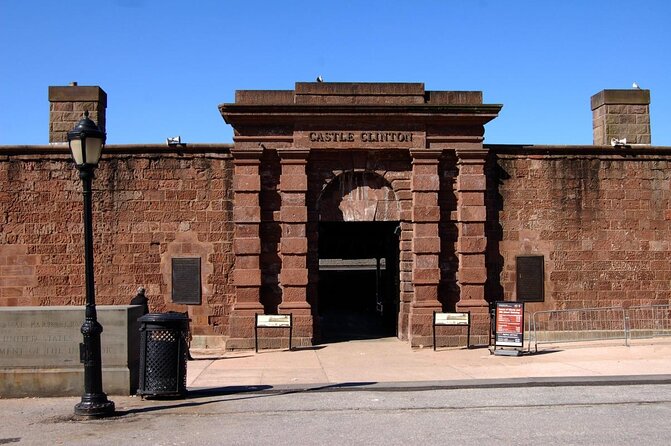
The experience begins at Castle Clinton National Monument, a fitting place to start. New York’s story begins with its harbor, and the tour uses that setting to explain how trade and commerce helped turn a small settlement into a major metropolis.
You will not simply hear a list of dates and famous architects. The larger idea is that buildings reflect the city’s changing needs. As New York grew, its architecture changed with it. New materials, new building methods, new fortunes, and new populations all left marks on the streets.
That broad approach is one of the tour’s best qualities. If you have walked around Manhattan for years, you may already know the Empire State Building, the Chrysler Building, or the Flatiron Building. This presentation aims to sharpen your eye for the less famous details too: the style of a facade, the choice of stone or brick, the shape of windows, and the way a building meets the street.
Garrett’s method is orderly. She identifies structures, explains why they matter, and places them in a larger historical setting. That structure helps keep the material manageable, especially since the tour covers a long period and many architectural movements.
More skyline cruises on the harbor:
- NYC: Circle Line 2h Harbor Lights Cruise Skip-The-Box-Office
★ 4.6 · 8,222 reviews - NYC: Circle Line 2.5 Hour Best of NYC Boat Cruise
★ 4.5 · 7,268 reviews - NYC: Circle Line 1.5-Hr Landmarks Skip-The-Box-Office Cruise
★ 4.6 · 4,778 reviews
From Georgian buildings to modern towers
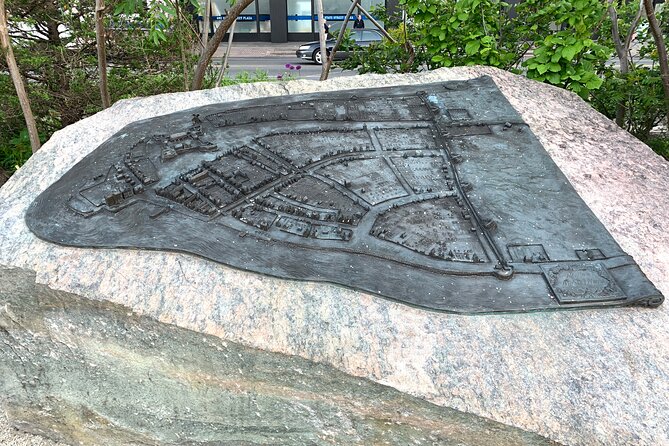
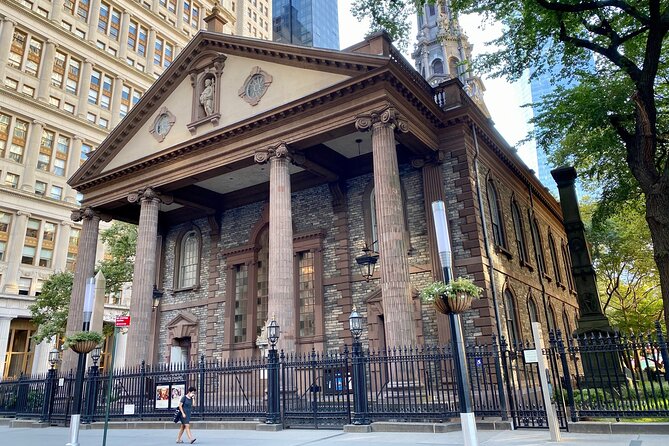
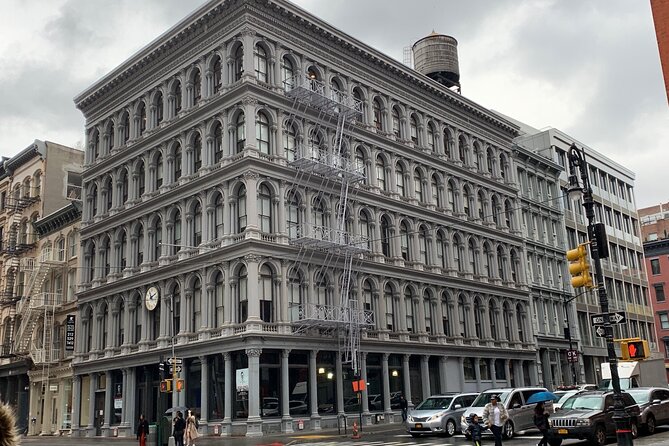
The architectural sequence is the backbone of the presentation. You move through Georgian and Federal design, then into Greek Revival, Italianate, Romanesque Revival, Renaissance Revival, Gothic Revival, Queen Anne, Neo-Classical, and the modern period.
You do not need an architecture degree to follow along. The aim is practical: after watching, you should have a better sense of what visual clues to look for when you walk through New York.
For example, a building’s ornament can point to the era in which it was built. Its materials can suggest cost, technology, and fashion. Its height and shape can reveal the rules or engineering limits of its time. The tour helps connect those visible features with the city’s story.
I especially like this approach because it turns a sightseeing walk into a kind of visual scavenger hunt. Instead of passing a block of old buildings as one blur, you can begin to separate the details. Look at the entrance. Look at the upper floors. Look at the roofline. Look for repeated patterns, decorative stonework, and changes in material.
The presentation also makes room for the architects and builders who shaped New York. The focus is not only on grand names. It is also on the decisions behind the buildings and the historical forces that made certain forms possible.
That context matters. A building is easier to understand when you know what New York was trying to become at the time. Commercial ambition, residential growth, transportation, and the pressure for more office space all pushed the city in new directions.
A useful lesson in zoning and air rights
The tour becomes especially valuable when it moves beyond architectural appearance and explains urban planning. New York’s skyline developed through rules as much as through design.
You will learn about zoning and the way regulations affect the shape of buildings. You will also hear about air rights, an important but often overlooked part of New York development. Air rights help explain how unused development capacity can affect what gets built above or beside an existing property.
This is the sort of subject that can sound technical in a textbook. Here, it connects directly to what you see overhead. The height, setbacks, and spacing of towers are not random. They reflect attempts to manage sunlight, density, transportation, investment, and the needs of people who live and work close together.
That makes the tour useful for anyone curious about why New York looks the way it does. A skyline is not only the result of architects competing to make the tallest or most dramatic building. It is also the result of rules, negotiations, public needs, and private money.
The discussion of public and private partnerships adds another practical layer. New York’s new destinations often depend on cooperation between government agencies and private developers. That can shape parks, public spaces, transportation links, and waterfront districts.
You do not have to agree with every planning decision to appreciate the explanation. The point is to help you see the city as an ongoing project, one where old neighborhoods, new towers, historic preservation, and public access must constantly be balanced.
Following the waterfront from industry to recreation

The harbor is more than a starting point. It is one of the tour’s recurring themes.
New York’s waterfront once centered heavily on shipping, manufacturing, storage, and other industrial work. Today, many sections are being reshaped as public spaces, residential areas, parks, and recreational destinations. Garrett tracks that change neighborhood by neighborhood.
This part of the presentation gives you a helpful way to understand places that can otherwise seem disconnected. A new park or public destination is not simply a pleasant place to sit. It may be part of a larger effort to reclaim former industrial land and reconnect the city to its water.
The shift also raises practical questions. Who gets access to the waterfront? How does new construction affect older neighborhoods? What happens to public transportation when a district changes? How can a city add housing, offices, and attractions without losing its sense of place?
The tour does not turn into a policy seminar, but it gives you enough background to notice these issues as you explore. That is a strong reason to take it before visiting New York, especially if you plan to spend time around the harbor, Lower Manhattan, or Hudson Yards.
More New York City history walks:
- New York City: American Museum of Natural History Ticket
★ 4.5 · 15,447 reviews - NYC: Starship Landmark 90 Minute Sightseeing Cruise
★ 4.6 · 3,666 reviews - Starship Landmark 90 Minute Sightseeing Cruise
★ 4.5 · 2,073 reviews - American Museum of Natural History Admission Ticket
★ 4.0 · 1,931 reviews
Ending at 20 Hudson Yards
The route ends at 20 Hudson Yards, a modern development on Manhattan’s far West Side. It is a logical final chapter because Hudson Yards represents the newer end of New York’s architectural story.
The endpoint is also practical. Twenty Hudson Yards offers shopping, restaurants, and restrooms, making it a convenient place to stop after a self-guided walk. You can treat the address as the conclusion of your city exploration or as a base for continuing through the surrounding district.
Hudson Yards gives the tour a chance to discuss how New York is still changing. The city is not finished. Old industrial areas are being repurposed, new towers are rising, and planners are trying to fit large projects into a dense urban setting.
For some people, Hudson Yards will be the most interesting section because it presents current development rather than distant history. For others, it may be the least traditional part of the route. That contrast is useful. It shows that New York’s identity is not frozen in landmarked streets and older facades.
The movement from Castle Clinton to 20 Hudson Yards also creates a clear narrative arc. You begin with the harbor and early commerce, pass through the city’s many architectural periods, and finish with the questions facing New York now.
How the self-guided video format works
This experience is best understood as a portable architecture lesson rather than a guided walk with a person beside you. You receive a mobile ticket and access to an on-demand video tour. You can watch it before your trip, during your trip, or from home.
That flexibility is a major advantage. You do not have to fit your day around a meeting time. You can pause when a style or planning idea needs more thought. You can also revisit sections later instead of trying to remember everything while crossing busy streets.
The downloadable PDF adds real value. Use it as a reference while walking through New York, particularly if you want to locate the structures and neighborhoods discussed in the presentation. It can also help you create a personal route based on the parts that interest you most.
I would not try to walk and watch the entire video at the same time. New York streets demand attention, and architecture is easier to appreciate when you stop, look up, and give yourself room to study a facade. Watch the presentation first, then use the PDF for a separate outing.
You can also use the tour without being in New York. That makes it a good planning tool for a future visit and a useful option for someone who cannot currently make the trip. The visual material and narration give you a framework, even when the buildings are not directly in front of you.
Who will get the most from this experience
Architecture fans are the obvious audience, but you do not need to be an expert. The tour suits anyone who enjoys understanding why a place looks the way it does.
It is particularly useful for:
- First-time visitors who want a stronger framework for exploring New York
- Longtime New Yorkers who want to notice familiar neighborhoods in a new way
- Former residents who miss the city and want a structured return to its streets
- Students, teachers, and history groups
- Families or private groups looking for an affordable shared activity
- People planning a visit who want to choose neighborhoods before arriving
Garrett’s style also works well for people who like detail. The narration is methodical and carefully organized, with attention to small architectural features and lesser-known facts about New York.
The tour is less suitable if you want a live guide, spontaneous conversation, or access inside specific buildings. The experience centers on narration, images, architectural explanation, and independent exploration. You should choose it for the ideas and context, not for a traditional group walk.
Is $25 good value?
At $25 per group for up to 15 people, this is inexpensive for a private activity. A solo visitor pays the same group price, but the value improves quickly if you share it with family or friends. A full group could work out to only a few dollars per person.
The real value is not the length alone. One hour and 58 minutes gives you a substantial overview, but the PDF extends the usefulness beyond the video. You can return to the material while walking around New York and use it to guide future outings.
It also saves you from paying for several separate architecture talks just to get a basic overview. The presentation covers architectural styles, history, city planning, zoning, transportation, waterfront change, and modern development in one sitting.
Still, keep your expectations in line with the price and format. You are not receiving a private architect-led walk through every neighborhood. You are getting a broad, carefully arranged introduction that helps you decide what to explore next.
The non-refundable policy is important. Once booked, the experience cannot be changed or refunded for any reason, so confirm your schedule before paying.
Practical details for planning your time
The stated duration is approximately 1 hour and 58 minutes. Since the experience is on demand, you have control over the pace, but set aside about two hours if you want to watch it in one sitting.
The listed start is Castle Clinton National Monument in New York, New York 10004. The end is 20 Hudson Yards, New York, New York 10001. These locations frame the story, but the format means you should confirm how you want to combine the video with your own walking route.
The activity is private, with only your group participating. Up to 15 people can share one booking. It is near public transportation, and most people can take part. Service animals are allowed.
Since this is a mobile experience, keep your phone charged and download the PDF before setting out if possible. You will want a clear way to refer to the material while exploring. Comfortable shoes are sensible for the independent walking portion, though the supplied information does not specify a required walking distance.
My take: book it if you want to see New York differently
I would book this tour if you want more than a checklist of famous buildings. Kitt Garrett’s presentation connects architectural details to New York’s growth, planning choices, and changing waterfront, giving you a stronger reason to look up as you walk.
It is also a smart purchase for a group. The $25 fee covers up to 15 people, and the nearly two-hour format offers plenty to discuss afterward. The PDF makes the experience useful beyond the initial viewing.
Skip it if you need a live guide or a tightly led street walk. But if you enjoy history, design, and the stories behind ordinary-looking blocks, this is an affordable way to prepare for New York or rediscover the city you already know.
FAQ
Where does the experience start and end?
The route starts at Castle Clinton National Monument in New York, NY 10004, and ends at 20 Hudson Yards, New York, NY 10001.
How long does the tour take?
The on-demand tour lasts approximately 1 hour and 58 minutes.
Is this a live guided walking tour?
No. It is an on-demand video and self-guided walking experience. You can watch it from home or use it as preparation for exploring New York independently.
How much does the experience cost?
The price is $25 per group, with up to 15 people included.
Is a PDF included?
Yes. A document of the virtual tour can be downloaded to your device. It can help you refer back to the locations and information while exploring.
Can I cancel or change my booking?
No. The experience is non-refundable and cannot be changed for any reason after booking.
Just listed around New York City
- NYC: Little Shop of Horrors Off-Broadway Ticket5 reviews
- Private NYC Airport Transfer: LGA to Manhattan – Up to 5★ 3.6 · 5 reviews
- New York City Tour in German★ 4.5 · 5 reviews
- New York: Hamilton and Washington Revolutionary Walking Tour★ 5.0 · 5 reviews
- NYC Freedom Tower Private Photo or Video Experience★ 4.0 · 6 reviews
- New York Afternoon Fall Foliage Cruise with Lunch★ 5.0 · 6 reviews
- Brooklyn Walking Tours by Locals: Private & 100% Personalized★ 4.0 · 6 reviews
- Southold Bay Oyster Farm Tour★ 5.0 · 6 reviews
NYC Harbor & Skyline Cruises, compared.

Circle Line 2h Harbor Lights Cruise Skip-The-Box-Office
Read our review →

Circle Line 1.5-Hr Landmarks Skip-The-Box-Office Cruise
Read our review →
Circle Line “The Beast” Midtown/Downtown Speedboat Ride
Read our review →
Circle Line 1-Hr Statue of Liberty Skip-The-Line Cruise
Read our review →
Circle Line: 2hr – New York City Harbor Lights Cruise
Read our review →
Circle Line: New York City Statue of Liberty Super Express Cruise
Read our review →
Statue of Liberty & NYC Skyline Cruise – Freedom Liberty Tour
Read our review →Browse the lists this tour appears in