
Reviewed · GRAND CENTRAL TERMINAL TOURS
The Story of Grand Central Terminal: An Art And Engineering Marvel
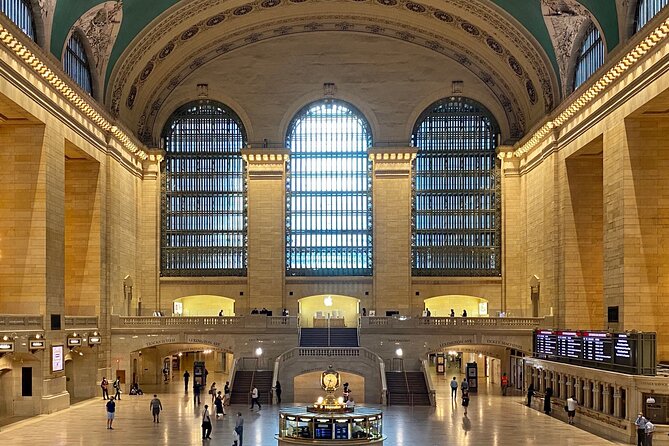
Grand Central Terminal is more than a train station. It is a giant New York story about horse carriages, commuter rail, engineering, public space, preservation, and the danger of losing a city landmark. Kitt Garrett’s virtual presentation takes you through that story with historic images, present-day views, and a self-guided map for your own visit.
I like two things right away: the myth-busting detail and the way the tour connects Grand Central to the surrounding neighborhood. I also like that you can watch before your trip, then carry the downloadable guide on your phone as you explore the building yourself. The main drawback is simple: this is a virtual tour, not a live walk inside Grand Central, so you will not have a guide beside you to answer questions in the terminal.
In This Review
- Key points about the Grand Central virtual tour
- Why Grand Central works so well as a virtual subject
- Kitt Garrett’s approach: history, myths, and visual proof
- The transportation story before Grand Central
- Grand Central’s architecture and engineering
- How Grand Central nearly disappeared
- The virtual walk through Grand Central’s spaces
- How long the experience takes, and what you receive
- Who will get the most from this experience
- Practical tips for using the tour well
- Is the Grand Central virtual tour worth booking?
- FAQ
- Where does the experience take place?
- How long does the virtual tour last?
- How much does the tour cost?
- Is this a private activity?
- Is the ticket available on a mobile device?
- Does the tour include a live guide inside Grand Central Terminal?
- Who presents the virtual tour?
- What subjects does the presentation cover?
- Can I use the tour before visiting Grand Central in person?
- Can I cancel or change the booking?
Key points about the Grand Central virtual tour
- A 1-hour-38-minute presentation covers Grand Central’s transportation story, architecture, renovation, survival, and modern use.
- Kitt Garrett’s research-led narration covers lesser-known facts, myths, and changes around the terminal.
- Historic photographs and current views help you compare Grand Central’s past with the building and neighborhood you see today.
- A downloadable PDF walking guide helps you locate the special areas discussed in the virtual tour.
- The $25 private group price covers up to 15 people, making it useful for families or a small group planning a New York visit.
- The experience is best as preparation, especially if you want to visit Grand Central independently and spend your time wisely.
Why Grand Central works so well as a virtual subject
Grand Central Terminal is unusually well suited to a screen-based tour. You can walk through the Main Concourse in person and still miss the building’s larger story. A virtual presentation gives you time to stop, compare images, and follow the sequence of events without the noise and movement of a working station.
The tour begins with New York transportation, from the early days of horse and carriage travel to the local and suburban commuting system used today. That wider setting matters. Grand Central was not simply placed in Midtown as a decorative building. It grew out of the city’s need to move people, manage rail traffic, and connect central Manhattan with communities beyond it.
I find this approach more useful than a narrow architecture talk. You learn why Grand Central was built, what purpose it served, and how its design responded to the problems of its time. The terminal becomes a working part of New York rather than just a pretty backdrop for photographs.
The virtual format also suits anyone visiting New York from far away. You can decide in advance if Grand Central belongs on your itinerary, then estimate how much time you want to spend there. That is useful in a city where every hour may already be claimed by a museum, a neighborhood walk, or a Broadway show.
More Grand Central visits:
- Secrets of Grand Central Station Walking Tour New York City
★ 5.0 · 1,796 reviews - NYC: The Secrets of Grand Central Terminal
★ 4.8 · 718 reviews - NYC: Official Grand Central Terminal Tour
★ 5.0 · 458 reviews
Kitt Garrett’s approach: history, myths, and visual proof
Kitt Garrett’s presentation focuses on the facts behind the famous building, but it does not stop at a standard timeline. You get stories about the terminal’s construction, its changing role, the threats it faced, and the people who helped save it from demolition.
The use of old and new photographs is one of the strongest parts. A historic image can show you what has changed around Grand Central, while a modern view lets you connect that earlier scene to the Midtown you will see today. This comparison is especially helpful if you have passed through the area many times without noticing how much the neighborhood has shifted.
The presentation also sorts fact from popular legend. Grand Central has collected plenty of stories over the years, and some are repeated simply because they sound good. Garrett’s method is to explain the myths and the truths, then show you where the important features are located.
That makes the tour practical, not just academic. You are not left with a list of dates. You are given places to look for when you visit, along with a better sense of why those places matter.
The transportation story before Grand Central
The opening section places the terminal in New York’s long transportation story. The move from horse and carriage to rail travel changed the scale and speed of the city. Commuters could live farther from the center, businesses could draw workers from beyond Manhattan, and Midtown became tied to a much larger region.
You will hear how New Yorkers have commuted locally and to the suburbs, which gives Grand Central a human purpose. The terminal was designed for people in motion, yet its grand spaces also made travel feel ceremonial. That tension is part of its appeal: you may be rushing to a train, but you are doing so beneath a monumental ceiling and through halls built to impress.
I appreciate this opening because it helps you see the terminal as infrastructure. Engineering decisions, rail connections, and commuter needs shaped the building just as much as artistic ambition did. If you prefer architecture with a practical story behind it, this section gives you a good foundation.
It also helps families and younger visitors. Grand Central can seem like a huge old building with trains underneath. The transportation story explains why it mattered to the city and why it still matters now.
Grand Central’s architecture and engineering
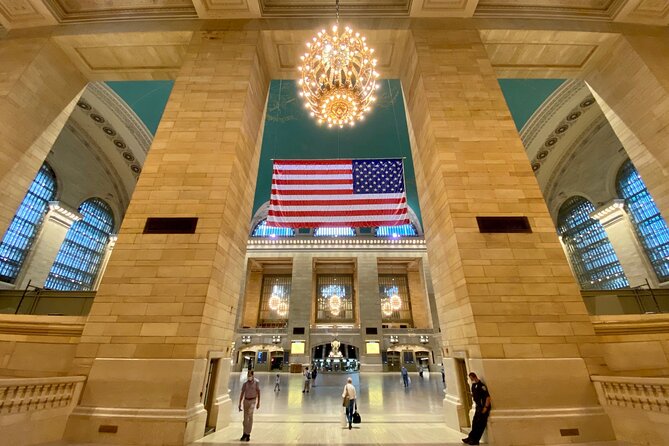
The title promises art and engineering, and the tour gives attention to both. Grand Central is famous for its scale and decorative detail, but the building’s success depends on systems that are less obvious from the Main Concourse.
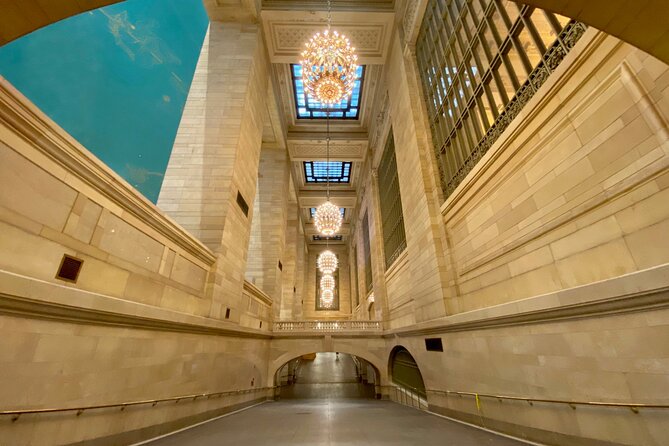
The virtual tour takes you through the terminal’s areas so you can understand how the spaces fit together. You learn where to look for the features discussed, rather than seeing only the postcard view. The presentation is particularly useful for first-time visitors who want to arrive with a plan.
Historic images add another layer. Construction and renovation are easier to understand when you can compare earlier versions of the building with current views. The terminal has changed over the past century, and the tour explains those changes instead of treating Grand Central as frozen in time.
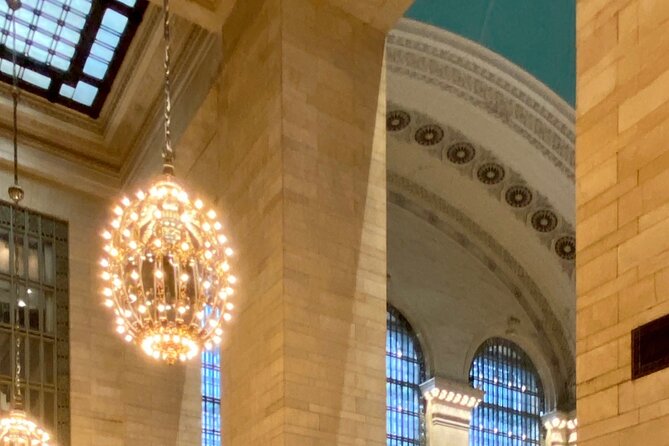
You may also come away with a sharper eye for the building’s details. A ceiling, hallway, room, or architectural feature that looks like decoration can take on a different meaning once you know how it relates to the terminal’s design and use.
Do not expect the virtual format to reproduce every physical sensation. A screen cannot give you the full scale, echo, movement, and energy of the Main Concourse. What it can do is prepare you to notice more when you stand there yourself.
Another side of New York City for the same day:
- NYC: SUMMIT One Vanderbilt Tickets
★ 4.7 · 51,195 reviews - NYC: 9/11 Memorial & Museum Timed-Entry Ticket
★ 4.8 · 31,428 reviews - NYC: Empire State Building Tickets – Observatory & Museum
★ 4.7 · 25,757 reviews - New York City: Statue of Liberty & Ellis Island with Ferry
★ 4.6 · 18,683 reviews
How Grand Central nearly disappeared
The terminal’s survival story is one of the most important parts of the presentation. Grand Central was almost demolished, and the tour explains who helped save it and how preservation efforts changed its future.
This section gives the building an emotional edge without turning it into a simple victory story. Grand Central survived because people recognized that an old structure could have civic value, not just commercial value. The debate also reflects a larger New York question: how much of the city should be replaced, and how much should be protected?
You will also hear about renovations carried out over the past 100 years. That matters because preservation is not the same as leaving a building untouched. A working terminal has to adapt, repair, and serve modern needs. The challenge is to keep its character while allowing it to function.
For me, this is a strong reason to take the virtual tour before visiting. Once you know the building was vulnerable, the details feel less automatic. You are looking at something that survived pressure to make room for something newer.
The virtual walk through Grand Central’s spaces
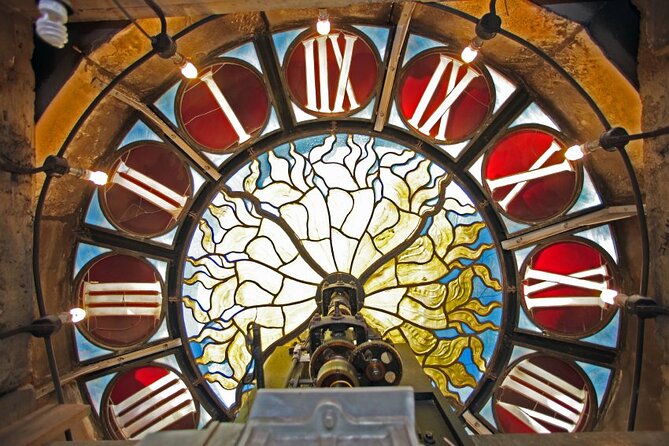
The final part takes you through the terminal area by area. The supplied information does not provide a full list of stops, so you should think of this as a guided visual orientation rather than a precise room-by-room itinerary with timed admissions.
You will see the important areas on screen and learn where the special details are found. The accompanying PDF is meant to help you locate those spots when you visit independently. Download it to your phone before heading to Grand Central so you are not trying to remember every turn from the presentation.
This is where the experience becomes a planning tool. You can mark the features you most want to see, decide how much time to allow, and use the terminal more purposefully. Instead of wandering through the building and leaving after one photograph, you can make your own short walking route.
The guide also helps if you have already visited Grand Central. Several people who had used the terminal many times still found new details in the presentation. That is believable because a working station encourages you to focus on departure boards, platforms, and getting across town. The tour shifts your attention to the building itself.
One limitation remains: the virtual walk cannot tell you what the terminal feels like at the exact moment of your visit. Crowds, construction, events, and commuter traffic can change the experience. Use the PDF as a flexible aid, not a rigid route.
How long the experience takes, and what you receive
The virtual tour lasts approximately 1 hour and 38 minutes. That is long enough to move beyond a quick introduction, but short enough to watch in one sitting if you want to make Grand Central part of your trip planning.
The mobile ticket is convenient, and the downloadable self-guided walking tour is the most useful practical extra. You can watch the presentation at home, then open the guide on your phone in New York. This two-step format gives the experience more value than a video that ends when the screen goes dark.
The listed activity hours run from midnight to 11:30 p.m. every day during the published operating period. Since this is a virtual experience, the broad hours give you flexibility to fit it around your schedule. Confirmation is received at booking, and the activity is private for your group.
The advertised price is $25 per group of up to 15 people, not $25 per person. That is a fair price if several family members, friends, or colleagues watch together. A solo visitor pays the same group rate, so the value is much better for a small group than for one person watching alone.
Because the activity is non-refundable and cannot be changed after booking, choose your viewing time carefully. That policy is worth noting before you pay, especially if your New York plans are still uncertain.
Who will get the most from this experience
I would recommend the tour most strongly to history fans, architecture enthusiasts, repeat New York visitors, and anyone who likes to understand a place before arriving. It also suits people who have passed through Grand Central many times and want to see it with fresh eyes.
Families can benefit from the private group setup. Up to 15 people can share the experience, and the transportation story gives children a reason to care about the building beyond its size. The virtual format also removes the pressure of keeping everyone together in a busy terminal.
This is a good choice if you want to build a self-guided visit. You will receive enough background to decide what deserves your attention, and the PDF should help you find the locations shown in the presentation.
I would be more cautious if you want a live guide, an interactive question-and-answer session, or a physical walking tour with a group. The information supplied describes a virtual video presentation and a downloadable walking guide. It does not promise a guide meeting you inside Grand Central for a live tour.
Practical tips for using the tour well
Watch the presentation before your New York visit rather than treating it as something to view afterward. The main benefit is preparation. You can make a short list of the places you want to find and decide how much time you want to spend in the terminal.
Download the PDF to your mobile device as soon as you have access to it. The guide is designed to help you find the special locations shown in the video, and it is easier to use a saved file than to rely on memory.
Keep the group price in mind. If you are traveling with family or friends, watch together and pause when a detail deserves discussion. The private format means only your group participates, so you can set the pace of the viewing more easily than with a large public presentation.
When you visit Grand Central, give yourself enough time to look up, look around, and follow the guide. The terminal is still a working transportation center, so you may need to step aside while commuters pass. That is part of the experience, not a distraction from it.
The terminal is at 70 East 42nd Street, near public transportation. Service animals are allowed, and most people can participate in the virtual activity. Those details make it an easy option for a broad range of visitors, though the experience itself remains screen-based.
Is the Grand Central virtual tour worth booking?
Book it if you want the stories behind Grand Central, not just a quick look at the famous interior. Kitt Garrett’s presentation brings together transportation, architecture, preservation, neighborhood change, myths, and practical viewing tips in about 98 minutes.
The strongest value comes from combining the video with the downloadable walking guide. For a group of up to 15, $25 is sensible, especially if everyone plans to visit Grand Central independently afterward.
Skip it if you are looking only for a live, in-person walk or if your schedule is too uncertain for a non-refundable booking. For everyone else, this is a useful way to turn a familiar New York landmark into a place you can actually read and understand.
FAQ
Where does the experience take place?
The activity is associated with 70 East 42nd Street, New York, NY 10165, the location of Grand Central Terminal. The experience itself is a virtual video tour, followed by a self-guided visit you can make independently.
How long does the virtual tour last?
The presentation lasts approximately 1 hour and 38 minutes.
How much does the tour cost?
The price is $25 per private group of up to 15 people.
Is this a private activity?
Yes. Only your group participates in the private activity.
Is the ticket available on a mobile device?
Yes. The experience includes a mobile ticket, and you can download the self-guided walking tour to your mobile device.
Does the tour include a live guide inside Grand Central Terminal?
The supplied information describes a virtual video presentation and a downloadable self-guided walking tour. It does not state that a live guide accompanies you inside the terminal.
Who presents the virtual tour?
The experience is provided by Kitt Garrett New York Sites & Insights, and the presentation is associated with Kitt Garrett.
What subjects does the presentation cover?
It covers New York transportation from horse and carriage travel to modern commuting, Grand Central’s history, architecture, engineering, myths, renovations, preservation, and surrounding neighborhood changes.
Can I use the tour before visiting Grand Central in person?
Yes. The experience is designed to help you learn about Grand Central before your visit and decide how much time to spend there.
Can I cancel or change the booking?
No. The experience is non-refundable and cannot be changed for any reason after booking.
Just listed around New York City
- Private Transfer: JFK Airport to Manhattan Up to 10pax★ 4.8 · 10 reviews
- Manhattan Neighborhoods Bike Tour★ 5.0 · 10 reviews
- West Village History & Walking Food Tour★ 4.5 · 10 reviews
- New York City: Private Manhattan Limousine Tour★ 4.3 · 10 reviews
- Private Walking Tour: Footsteps of Dylan and Springsteen★ 5.0 · 10 reviews
- Manhattan to Brooklyn NYC Walking Tour: Brooklyn Bridge and Dumbo in Spanish★ 4.5 · 10 reviews
- New York City Greenwich Village 3 Hour Private Walking Tour★ 5.0 · 10 reviews
- Captain Steve’s Sailing Experience on Long Island★ 5.0 · 10 reviews
Grand Central Terminal Tours, compared.

Secrets of Grand Central Station Walking Tour New York City
Read our review →



SUMMIT One Vanderbilt with Grand Central Terminal Tour
Read our review →
NYC Secrets of Grand Central Private Walking Tour
Read our review →
Best NYC Sightseeing Tour: Times Square, Grand Central, & More
Read our review →
SUMMIT One Vanderbilt Ticket and Grand Central Tour
Read our review →Browse the lists this tour appears in