Reviewed · TOURS
Twilight Tour: Death in New York (Lower Manhattan)
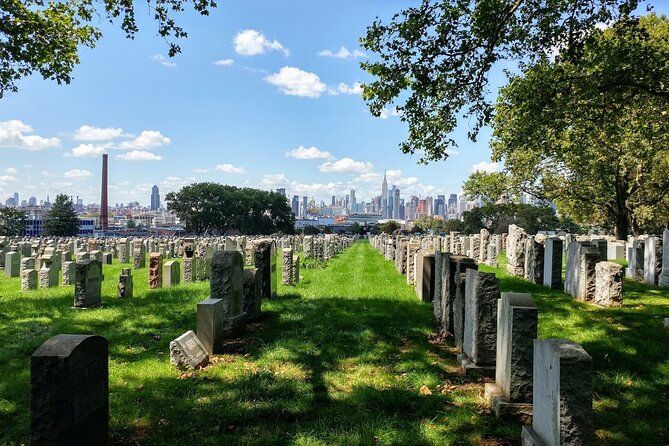
Lower Manhattan’s famous sights take on a sharper edge on this evening walk. The Statue of Liberty, Wall Street Bull, Trinity Church, and City Hall Park become doorways into stories about burial grounds, epidemics, criminals, saints, and public mourning. This is not a ghost hunt. It is a brisk history walk about how New York dealt with death over four centuries.
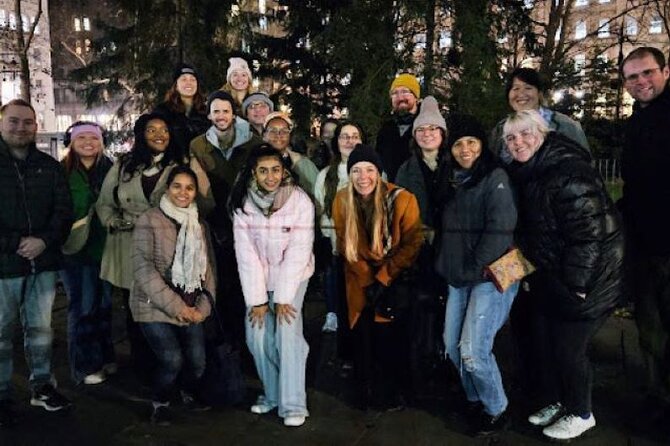
I like two things right away: the small group of no more than 15 people, which makes it easier to hear and ask questions, and the route, which links major sights with lesser-known stories. Guide Krombie brings a personal touch as the author of Death in New York, and the tone is more witty and curious than grim.
The main thing to consider is timing. The tour begins at 7:00 pm and lasts about 1 hour 45 minutes, so you will be walking outdoors after dark, often near traffic. Some stops are noisy, and anyone hoping for ghosts or paranormal tales may find the factual approach less spooky than expected.
In This Review
- Key points about Death in New York
- Why this is not a typical ghost tour
- Starting beside the harbor at Whitehall Terminal
- A saint, a shrine, and Catholic ideas about death
- Titanic history at a Battery Park City cenotaph
- Indigenous stories inside the museum district
- The Wall Street Bull and New Amsterdam’s first cemetery
- Trinity Church and the pressure of epidemics
- St. Paul’s Chapel and Irish New York
- St. Peter’s Church and Catholic burial restrictions
- City Hall Park, almshouses, hospitals, and Lincoln’s funeral
- What the 1 hour 45 minute format feels like
- Is $36 a fair price?
- Who should book this evening walk?
- Should you book Death in New York?
- FAQ
- Where does the Twilight Tour: Death in New York begin?
- Where does the tour end?
- What time does the tour start?
- How long does the tour last?
- How many people can join the tour?
- What language is the tour offered in?
- Is admission included at the stops?
- Is the tour suitable for someone with limited mobility?
- Can I cancel for a refund?
Key points about Death in New York
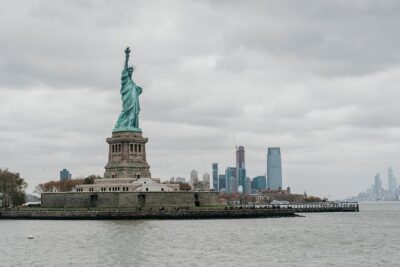
- The Statue of Liberty becomes a history lesson: Hear about Lenape history, ancient burial sites, pirate execution, and Civil War prisoners while looking across the harbor.
- Krombie keeps the tone human: Expect informed storytelling, humor, questions, and a few creepy details without a constant parade of ghost stories.
- Nine stops cover four centuries: The route moves from Whitehall to City Hall Park through churches, memorials, museums, and former burial sites.
- The Titanic story has a Lower Manhattan connection: A Battery Park City cenotaph gives the tragedy a local setting.
- You see familiar places differently: Charging Bull, Trinity Church, St. Paul’s Chapel, and City Hall Park all carry stories about the dead.
- The $36 price buys a focused small-group walk: It is good value if you want unusual context rather than another standard sightseeing circuit.
Why this is not a typical ghost tour
The title may suggest haunted alleys, spirits, and theatrical scares. That is not the main idea here. You will hear factual stories about who died, how people were buried, what diseases changed the city, and how religion and law shaped public ideas about death.
That distinction matters when deciding if the tour suits you. If you want paranormal legends, this may feel too grounded. If you like social history, unusual details, and the machinery of city life, the subject gives Lower Manhattan a fresh angle.
The tone is described as quirky macabre rather than morbid. Krombie’s style includes humor and room for questions, so the evening does not become a solemn lecture. You may hear about saints and criminals in the same hour, with pirates, Indigenous history, prisoners, and public funerals filling out the picture.
The tour also benefits from its setting. Lower Manhattan is compact, but its streets hold layers from New Amsterdam through the modern financial district. You do not spend long at any one stop. Instead, the route keeps moving, with roughly 10 minutes at most locations and 15 minutes at the opening and closing stops.
Big New York City bookings that pair well with this one:
- NYC: SUMMIT One Vanderbilt Tickets
★ 4.7 · 51,195 reviews - NYC: 9/11 Memorial & Museum Timed-Entry Ticket
★ 4.8 · 31,428 reviews - NYC: Empire State Building Tickets – Observatory & Museum
★ 4.7 · 25,757 reviews
Starting beside the harbor at Whitehall Terminal
Meet at Whitehall Terminal, at 4 Whitehall Street, for the 7:00 pm start. This puts you at the southern end of Manhattan, where the water, harbor traffic, and open views help set the mood before the walk turns inland.
The first stop is a viewpoint toward Staten Island, the Statue of Liberty, and Governors Island. The scenery is free, but the stories are the real reason to pause here.
You will hear about the Lenape, the Indigenous people connected to the region, along with ancient burial sites and the difficult layers of New York’s early history. The stop also brings in the last pirate execution in New York and Civil War prisoners. Those subjects make a useful point: death in the city was not only a private family matter. It was shaped by conquest, law, war, punishment, and public display.
Allow about 15 minutes here. Because the stop is outdoors, make sure you can comfortably hear a guide over street and harbor noise. The open view is memorable, but it can also be the least sheltered part of the route.
A saint, a shrine, and Catholic ideas about death
The walk continues to Seton Shrine, a Catholic site connected with a New York saint. Here the subject shifts from punishment and war to religious ideas about death and sainthood.
You will hear about the process of canonization and the Catholic way of thinking about death. This stop adds a useful religious layer to the tour. New York’s story is not only one of mass burials and epidemics. It is also a story of ritual, devotion, saints, and the ways communities honor particular dead people.
The stop lasts about 10 minutes and admission is free. The shrine gives you a clear change of pace after the harbor viewpoint, though the short visit means the guide must keep the explanation focused.
Titanic history at a Battery Park City cenotaph

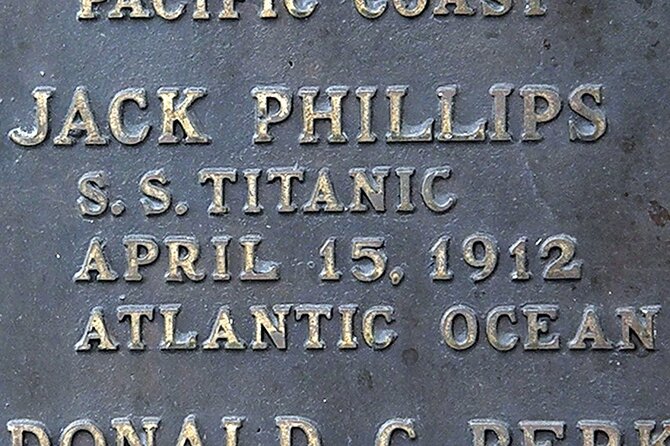
At Battery Park City, you will visit a cenotaph and connect it with the Titanic. A cenotaph is a memorial for the dead that does not necessarily contain a body, so it offers a fitting way to discuss how cities remember people who died far from home or whose remains were never gathered in one place.
The Titanic story is familiar, but the connection to a Lower Manhattan memorial gives it a more local frame. Instead of treating the disaster as a distant event, the tour places it within the city’s system of memorials, waterfront links, and public memory.
This is another 10-minute stop. You will not be visiting a Titanic museum or entering an attraction, so set your expectations accordingly. The value comes from the explanation and the setting, not from a large display.
Another side of New York City for the same day:
- New York City: Statue of Liberty & Ellis Island with Ferry
★ 4.6 · 18,683 reviews - New York City: American Museum of Natural History Ticket
★ 4.5 · 15,447 reviews - Statue of Liberty and Ellis Island Tour: All Options
★ 5.0 · 13,571 reviews - New York in One Day Guided Sightseeing Tour
★ 5.0 · 13,166 reviews
Indigenous stories inside the museum district
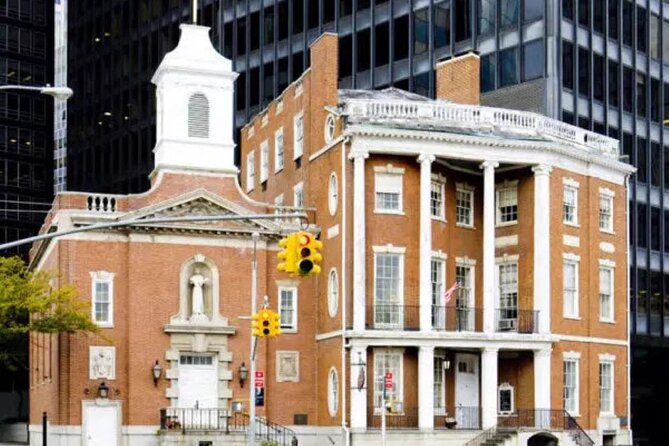
Near the National Museum of the American Indian, the tour returns to Indigenous history. The guide also discusses funerary objects and the way museum acquisitions can be linked to the dead.
This may be one of the more thought-provoking parts of the walk. It asks you to consider not just where people were buried, but what happens to objects connected with burial and mourning after they leave their original communities.
You hear the material from outside the museum rather than taking a museum tour. Admission is free because the stop is part of the walking route, not a scheduled visit inside the building. If you have already seen the museum, this stop can give its subject a different angle. If you have not, it may help you decide if a separate visit is worth your time.
The Wall Street Bull and New Amsterdam’s first cemetery
The Charging Bull is one of New York’s most photographed modern symbols. On this tour, you look beyond the polished bronze and learn that the area is tied to the location of the first city cemetery in New Amsterdam.
That contrast is exactly the sort of thing this walk does well. You begin with a present-day attraction that draws crowds for financial symbolism and photographs, then hear about an earlier city where burial space was part of everyday planning.
The stop lasts about 10 minutes. You may find the area crowded or noisy, especially around the Bull, so this is a place where standing close enough to the guide matters. The group limit helps, but you should still stay near the center of the group and keep your attention on the explanation rather than the photo line.
Trinity Church and the pressure of epidemics
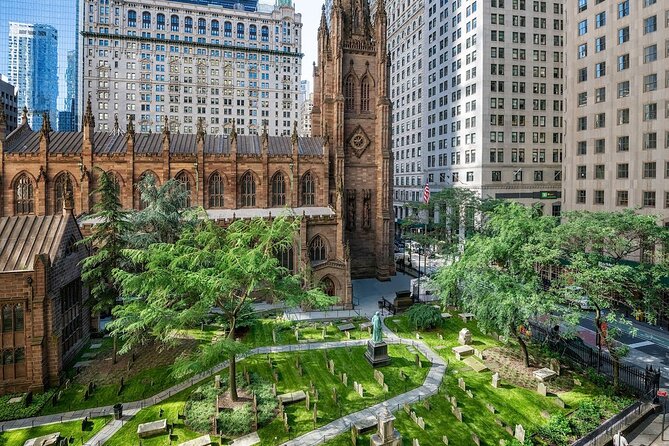
At Trinity Church, the discussion turns toward disease, burial rules, and potter’s fields. Epidemics forced New York to rethink where bodies could be buried and how public health affected religious and civic customs.
You will hear about burial prohibitions and potter’s fields, places used for people who could not be buried in private family plots. These stories show how rapidly a growing city could run out of room and how illness could change long-held traditions.
Trinity Church is a powerful setting because many people know it as an old church and cemetery in the financial district. The tour adds the less polished story of crowding, disease, and municipal decisions. Again, you spend about 10 minutes here, so the presentation is an overview rather than a full cemetery tour.
St. Paul’s Chapel and Irish New York
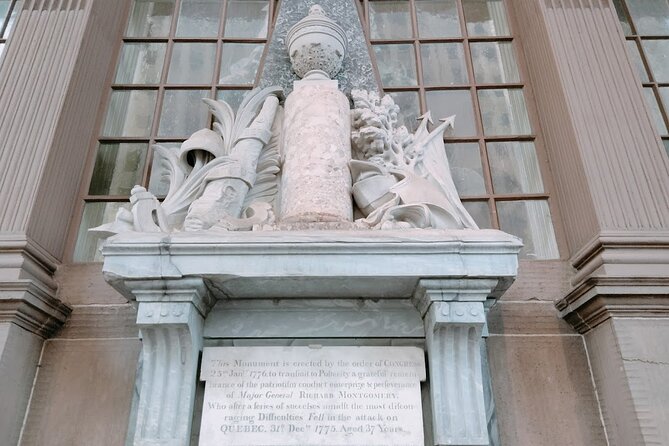
St. Paul’s Chapel brings another community into the story. The guide discusses Irish representation in the chapel’s graveyard, giving the stop an immigration and neighborhood angle.
That matters because burial grounds reveal who had a place in New York and how communities marked their presence. The subject moves away from famous individuals and toward the people and groups who helped shape the city’s social fabric.
The chapel stop lasts around 10 minutes. The route does not promise an extended interior visit, so treat this as a guided look at the site and its historical meaning. If you want to explore the chapel on your own, plan a separate visit at a time when it is open.
St. Peter’s Church and Catholic burial restrictions
At St. Peter’s Church, Catholic history comes back into focus. You will hear about the period when Catholicism was banned in New York and about the city’s first Catholic burial ground.
This is a useful companion to the Seton Shrine stop. Earlier, you hear about sainthood and Catholic beliefs about death. Here, you see how religious restrictions affected real communities, worship, and burial. The story becomes political as well as spiritual.
The stop takes about 10 minutes and is free. It is especially useful for anyone interested in New York’s religious history, but you do not need specialist knowledge to follow it. The guide connects the larger issue to a specific church and burial site.
City Hall Park, almshouses, hospitals, and Lincoln’s funeral
The walk finishes at City Hall Park, at Broadway and Chambers Street. This final stop lasts about 15 minutes and gathers several threads from the evening.
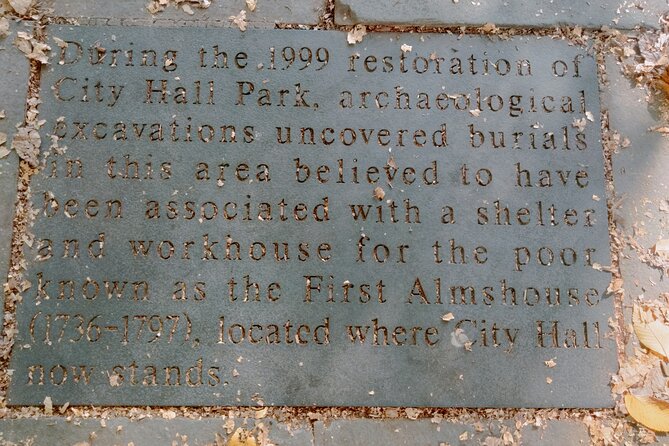
The site of New York’s first almshouse opens a discussion about poverty and public care. From there, the tour brings in Bellevue Hospital, embalming, President Lincoln’s funeral, and the excavation of the dead.
These subjects show how death can reveal a city’s institutions. Hospitals, almshouses, funeral services, and public ceremonies all had to manage bodies and grief. Lincoln’s funeral adds a national moment, while the discussion of excavation returns to the physical reality of old burial grounds beneath a changing city.
Ending at City Hall Park is practical. You finish near public transportation and in a central part of Lower Manhattan rather than at an isolated site. The final stop is also a good place to pause and think about how many layers can occupy one block of New York.
What the 1 hour 45 minute format feels like
The listed duration is about 1 hour 45 minutes, with nine stops. Most stops take 10 minutes, while the harbor viewpoint and City Hall Park receive about 15 minutes each. That creates a steady rhythm: listen, walk, change subjects, and listen again.
The route is described as manageable, with short walks between locations. You still need a moderate level of physical fitness, since this is an outdoor walking tour rather than a seated talk. Wear comfortable shoes and arrive ready to remain on your feet for the full outing.
The 7:00 pm start gives the subject an appropriate evening setting. Lower Manhattan can be quieter later in the day, though street traffic remains part of the experience. Trucks and other city noise may interrupt a sentence now and then, especially at busy streets and near the Charging Bull.
The tour is offered in English and uses a mobile ticket. Service animals are allowed, and the meeting area is near public transportation. These details make it easy to fit into a day of sightseeing, but you should still leave enough time to reach Whitehall Terminal before the start.
Is $36 a fair price?
At $36 per person, this is not the cheapest way to walk around Lower Manhattan. But you are paying for a planned route, a small group, and a specialized subject that you are unlikely to get from a standard downtown highlights tour.
The value is strongest if you enjoy stories that connect landmarks rather than simply naming them. The Statue of Liberty viewpoint, churches, memorial, museum district, Wall Street Bull, and City Hall Park are all free to see on your own. What you cannot easily reproduce is the sequence of context about Lenape history, pirate execution, epidemics, Catholic burial grounds, Titanic memory, and public funerals.
A group capped at 15 also matters. A large tour can make unusual history feel like a lecture delivered to a crowd. A smaller group gives Krombie more room to answer questions and adjust the pace.
You can cancel for a full refund if you do so at least 24 hours before the start time. Changes or cancellations made within 24 hours are not accepted for a refund, so check your plans before booking.
Who should book this evening walk?
I would choose this tour if you have already seen the major Lower Manhattan sights and want a new reason to look at them. It also suits repeat New York visitors, history students, solo explorers, and anyone who likes social history with a dry or slightly creepy edge.
It is a good pick for people who enjoy asking questions. The guide’s approach leaves room for asides, laughs, and conversation rather than delivering only a fixed script.
I would think twice if you want a strongly theatrical ghost tour, a visit inside several buildings, or a slow architectural tour. The emphasis is on stories told outdoors, and some of the strongest material concerns institutions, burial practices, and historical facts rather than dramatic hauntings.
Should you book Death in New York?
Book it if you want unusual Lower Manhattan history in a compact evening route. The combination of a 15-person limit, a clear theme, and Krombie’s humorous approach makes $36 reasonable for a focused walk.
Skip it if you are looking for paranormal scares or dislike discussions of death, cemeteries, epidemics, and funerals. For everyone else, this is a smart way to see familiar landmarks with their easy stories stripped away and their harder, stranger past brought forward.
FAQ
Where does the Twilight Tour: Death in New York begin?
The tour begins at Whitehall Terminal, 4 Whitehall Street, New York, NY 10004.
Where does the tour end?
It ends at City Hall Park, at Broadway and Chambers Street, New York, NY 10007.
What time does the tour start?
The listed start time is 7:00 pm.
How long does the tour last?
The experience lasts approximately 1 hour 45 minutes.
How many people can join the tour?
The group is limited to a maximum of 15 people.
What language is the tour offered in?
The tour is offered in English.
Is admission included at the stops?
The listed stops have free admission. The experience is an outdoor walking route and does not include a separate admission charge for the locations named.
Is the tour suitable for someone with limited mobility?
The tour requires a moderate level of physical fitness because it involves walking between nine stops. The provided information does not specify detailed accessibility arrangements.
Can I cancel for a refund?
Yes. You can cancel at least 24 hours before the local start time for a full refund. Cancellations or changes made less than 24 hours before the start time are not accepted for a refund.
Just listed around New York City
- NYC: Little Shop of Horrors Off-Broadway Ticket5 reviews
- Private NYC Airport Transfer: LGA to Manhattan – Up to 5★ 3.6 · 5 reviews
- New York City Tour in German★ 4.5 · 5 reviews
- New York: Hamilton and Washington Revolutionary Walking Tour★ 5.0 · 5 reviews
- NYC Freedom Tower Private Photo or Video Experience★ 4.0 · 6 reviews
- New York Afternoon Fall Foliage Cruise with Lunch★ 5.0 · 6 reviews
- Brooklyn Walking Tours by Locals: Private & 100% Personalized★ 4.0 · 6 reviews
- Southold Bay Oyster Farm Tour★ 5.0 · 6 reviews
Tours, compared.
Statue of Liberty and Ellis Island Tour: All Options
Read our review →




9/11 Memorial, Ground Zero Tour with Optional 9/11 Museum Ticket
Read our review →
Hop-on Hop-off Sightseeing Tour by Open-top Bus
Read our review →