
Reviewed · 9/11 MEMORIAL & GROUND ZERO TOURS
World Trade Center Photo Tour
The best part of this World Trade Center photo tour is its focus. Instead of simply walking past Lower Manhattan’s famous buildings, you’ll stop to study lines, reflections, light, balance, and scale. The Oculus gives you dramatic curves and bright surfaces, while One World Trade Center and the 9/11 Memorial offer very different subjects.
I like the practical coaching and the short walking route. You’ll also get a small-group format, advertised for up to six people, which should give you more time to ask questions and receive help with your camera or phone. The main consideration is that this is an outdoor walking activity in all weather, and entry to One World Observatory is not included.
In This Review
- Key points to know before booking
- Why this part of Lower Manhattan works so well for photography
- Starting near Silverstein Family Park
- The National 9/11 Memorial and its quiet visual demands
- One World Trade Center from the outside
- The Oculus turns lines and reflections into the main subject
- Ten minutes inside the World Trade Center PATH station
- What the photography coaching actually covers
- Group size, price, and overall value
- Who should book this photo walk
- Practical preparation for a better session
- Should you book the World Trade Center Photo Tour?
- FAQ
- Where does the World Trade Center Photo Tour begin?
- Where does the tour end?
- How long does the tour last?
- What locations are included?
- Is admission to One World Observatory included?
- How much does the tour cost?
- What is included in the price?
- Can I cancel for a full refund?
Key points to know before booking
- Photograph four major World Trade Center locations: The route includes the 9/11 Memorial, One World Trade Center, the Oculus, and the PATH station.
- Practice real architectural techniques: Your guide covers composition, lighting, angles, reflections, exposure, and scene management.
- Expect about two and a half hours: The planned stops give you time to shoot, learn, and move through Lower Manhattan on foot.
- Small-group attention matters: The tour is priced at $125 per group of up to six, though the additional information gives a maximum of eight people.
- No observatory admission is included: You photograph One World Trade Center from the tour route rather than visiting the viewing deck.
- Finish inside the Oculus: The final listed stop is the World Trade Center PATH station, where you photograph the station interior.
Why this part of Lower Manhattan works so well for photography
The World Trade Center district gives you several kinds of architecture in a compact area. You can photograph the severe, reflective surfaces of One World Trade Center, the open memorial pools, and the white ribs of the Oculus without spending the day crossing Manhattan.
That variety makes the route useful for improving your eye. A tall tower asks you to think about vertical lines and scale. The memorial asks for restraint and balance. The Oculus pushes you toward curves, symmetry, bright highlights, and reflections.
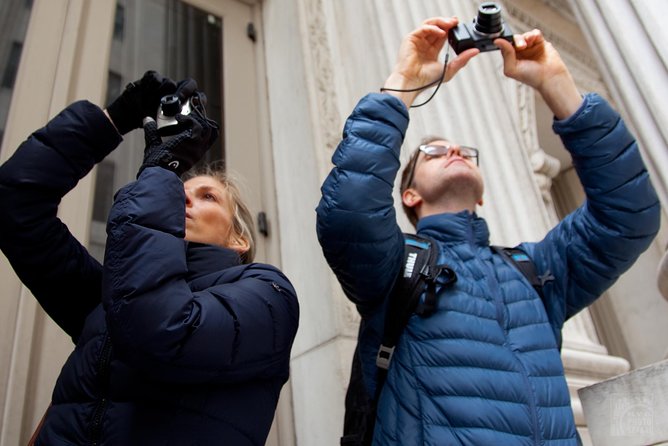
I like that the tour treats photography as more than pointing a camera at a famous building. Your guide helps you think about why a picture works. You’ll consider where to stand, how much sky to include, what the light is doing, and how people or other objects affect the frame.
The experience is also suitable for more than one type of camera user. The information does not require professional equipment, so you might use a dedicated camera or a phone. The useful part is the instruction, not the price of your equipment.
More 9/11 Memorial and Ground Zero visits:
- NYC: 9/11 Memorial & Museum Timed-Entry Ticket
★ 4.8 · 31,428 reviews - 9/11 Memorial, Ground Zero Tour with Optional 9/11 Museum Ticket
★ 5.0 · 6,381 reviews - 9/11 Memorial Museum Admission Ticket
★ 4.5 · 6,376 reviews
Starting near Silverstein Family Park
The tour begins at Silverstein Family Park on Greenwich Street, in the Lower Manhattan area. You’ll meet your professional photographer-guide there before setting out on foot.
The exact meeting instructions should be read carefully when you book, since the supplied details also note a stop involving one of Manhattan’s oldest churches without identifying it by name. That detail suggests the walk may include an additional nearby photo point, but the confirmed route focuses on the World Trade Center district.
Plan to arrive ready to walk and shoot. You should have your camera or phone charged, enough storage available, and clothing suited to the forecast. The activity operates in all weather, so rain or cold can change the feel of the photographs and the comfort of the walk.
The tour lasts about two hours and 30 minutes. That is long enough for instruction and several stops, but not so long that the experience becomes a full-day photography workshop. If you want a broad introduction to architectural photography in Lower Manhattan, the timing is sensible.
The National 9/11 Memorial and its quiet visual demands
The first major stop is the National 9/11 Memorial, with about 30 minutes planned there. Admission to the memorial portion is listed as free.
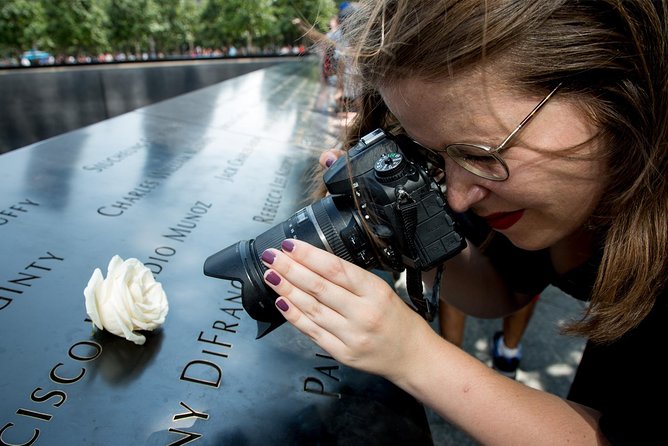
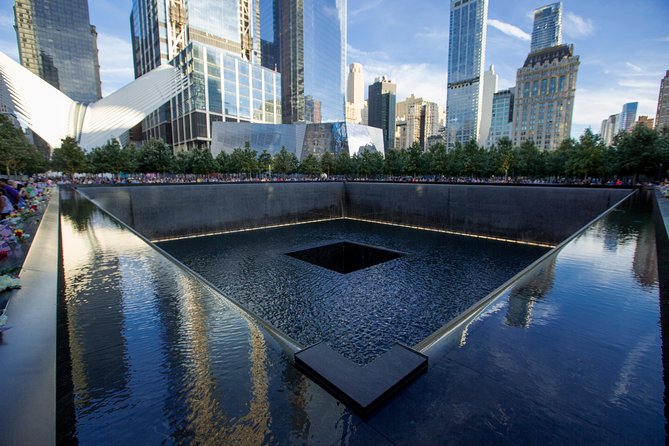
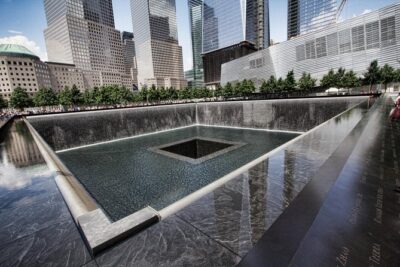
This is not simply a place to chase dramatic angles. The memorial’s open spaces, large pools, and surrounding architecture call for careful composition. You’ll need to think about balance and empty space, rather than filling every part of the frame.
That makes the stop valuable for learning visual restraint. Your guide can help you decide how much of the memorial to include and how to place the surrounding buildings within the image. You may also work on the contrast between the memorial’s solemn purpose and the new structures around it.
The memorial is an active public site, so scene management matters. Other people, barriers, changing light, and the need to show respect can all affect how you work. The tour description specifically points to scene management as part of architectural photography, and this is one of the places where that idea becomes practical.
Thirty minutes will not allow for endless experimentation. You’ll want to listen closely, make a few deliberate choices, and move on rather than trying to capture every possible angle.
One World Trade Center from the outside
The next session focuses on One World Trade Center, also called the Freedom Tower in the tour description. About 30 minutes are planned here.
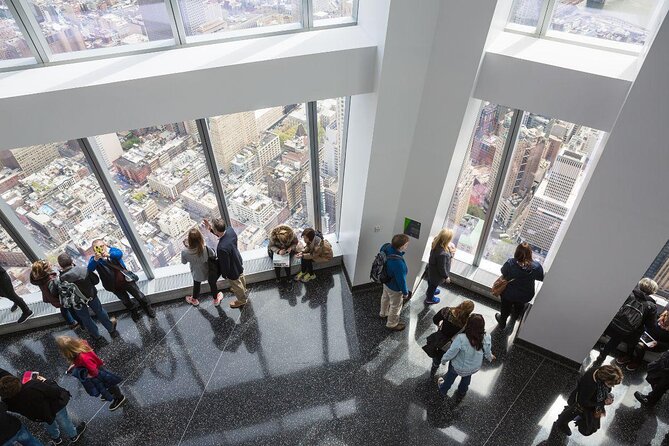
You will not enter One World Observatory. That is an important distinction. This tour is about photographing the building and nearby landmarks from the route, not visiting the observation deck or taking in the city from above.
From ground level, the challenge is making a very tall building fit into a strong picture. Your guide covers angles and architectural photography, so you can work on how to use vertical lines, perspective, and the surrounding open space.
The tower’s simplicity can be harder to photograph than a building covered in small decorative details. A good frame may depend on where you place the edges of the building, how you handle the sky, and how you use nearby structures for contrast.
The guide also discusses lighting. The same tower can look crisp, dark, reflective, or almost weightless depending on conditions. You’ll learn to pay attention before pressing the shutter instead of treating the light as an afterthought.
This stop is best for anyone who wants to improve architectural images of modern buildings. It may be less satisfying if your main goal is a skyline view from high above, since no observatory admission is included.
A few more New York City picks to weigh up
- NYC Professional Photoshoot and Walking Tour with Private Guide
★ 5.0 · 608 reviews - New York Icon Photography Tour led by a Local Photographer
★ 5.0 · 155 reviews - New York: 1-hour Photoshoot in Iconic Locations
★ 5.0 · 101 reviews - Central Park Photography Tour with Local Photographer
★ 5.0 · 85 reviews
The Oculus turns lines and reflections into the main subject
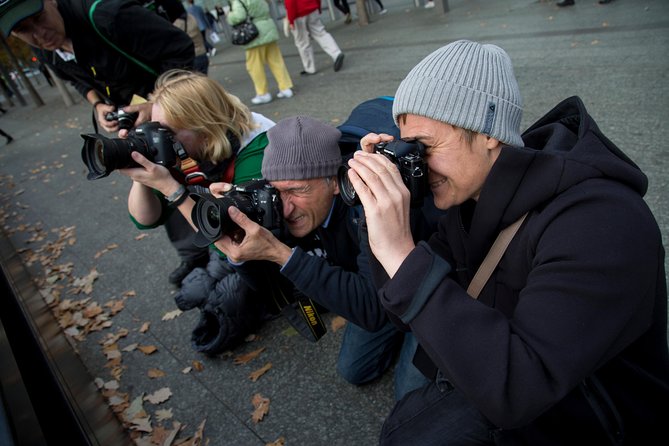
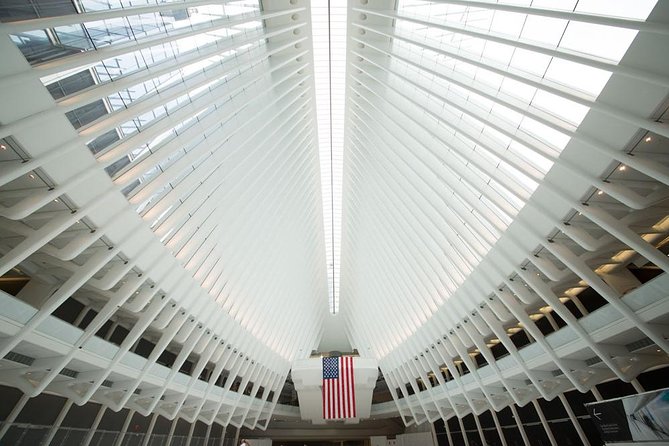
The Oculus is the visual centerpiece of the walk. The planned session lasts about 30 minutes and is designed around composition, reflections, light, and the use of overexposure for an almost ethereal effect.
Inside and outside, the structure gives you strong lines and a clear sense of symmetry. You’ll work on balance and on creating an image that helps the viewer understand the building’s size and shape.
The lesson here is not simply to photograph the most obvious central view. Your guide encourages you to look at how lines lead through the frame and how reflections change the surface of the building. Bright areas can be controlled, included, or deliberately pushed toward overexposure.
That overexposure tip is especially useful for photographers who normally try to preserve every highlight. Used carefully, it can create a lighter, softer architectural image. It is a creative choice, not a rule, and the tour gives you a chance to see how that choice affects the mood of a picture.
The Oculus is also where the tour’s interior and exterior focus comes together. You can compare hard outdoor light with the controlled, bright interior and notice how different surfaces react. Since the location is a major transportation and public space, you’ll also need to manage the scene around you while composing.
Ten minutes inside the World Trade Center PATH station
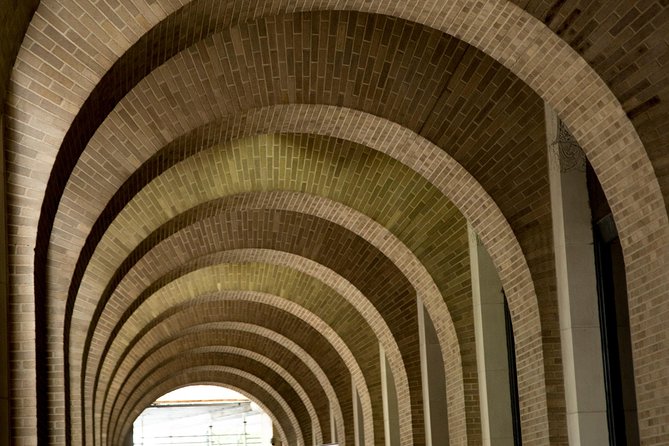
The listed final stop is the World Trade Center PATH station, with about 10 minutes planned for photography. This is located inside the Oculus.
Ten minutes is brief, but it gives you one more chance to work with repetition, symmetry, bright surfaces, and strong directional lines. The station’s interior offers a change from the memorial and the tower, so your final images can have a different rhythm from the earlier work.
Because the stop is short, you should be ready to shoot as soon as you arrive. This is not a long free-form session. Treat it as a final exercise in applying the ideas from the earlier stops.
The tour ends at the Oculus, at 185 Greenwich Street, lower level LL3110. That ending point is practical if you plan to continue exploring Lower Manhattan afterward, though hotel transportation is not included unless you select an option that includes it.
What the photography coaching actually covers
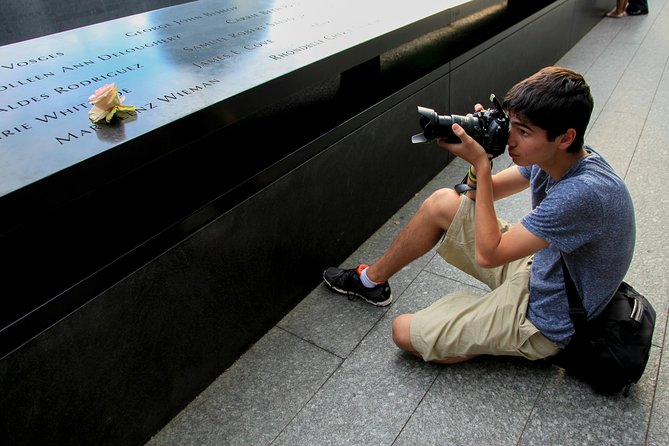
The strongest reason to choose this experience is the instruction. The guide covers several skills that apply well beyond the World Trade Center:
- Composition: You’ll work with lines, balance, symmetry, and the sense of space in an image.
- Lighting: You’ll learn to anticipate light instead of reacting only after a photograph has been taken.
- Angles: Modern buildings often require you to change your position to avoid flat or ordinary-looking results.
- Reflections: Glass, polished surfaces, and bright architectural materials can add layers to a picture.
- Exposure: The tour introduces overexposure as a creative tool for a softer, more unusual look.
- Scene management: You’ll consider how people, movement, and the public setting affect architectural photographs.
- Interior and exterior work: The route lets you compare two very different photographic environments.
This list is useful because it tells you what kind of tour this is. It is not just a guided sightseeing walk with occasional time to take pictures. It is also not a technical course covering every camera setting. The focus is on seeing, composing, and responding to the built environment.
If you already know the basics of photography, you can use the tour to sharpen your architectural work. If you are new to the subject, the compact route gives you several clear examples in a short time.
Group size, price, and overall value
The price is $125 per group of up to six people. That makes the cost attractive if you are booking with family or friends who want to photograph together. Split six ways, the guide cost is much easier to justify than a private-looking experience priced per person.
There is a small inconsistency in the supplied group information. The price is stated for up to six people, while the additional details give a maximum of eight travelers. I would confirm the actual group limit before booking if having a very small group is important to you.
The professional photographer-guide is included, as are local taxes. Gratuities are not included, and hotel pickup and drop-off are excluded unless you choose an option that provides them.
The value depends on your goals. If you mainly want a quick introduction to the Oculus and the memorial, you can visit those places without paying for a guide. The fee becomes more worthwhile if you want help improving your pictures and prefer to learn while photographing real buildings.
The group price also works best when several people share the same interest. If one person wants a serious photography session and everyone else only wants sightseeing, the pace may not suit the whole group.
Who should book this photo walk
I would recommend this tour to photographers who want practical help with architecture, especially in a compact Manhattan setting. It suits people who enjoy walking, experimenting with angles, and taking time to make several versions of a photograph.
It also fits visitors who want a more focused way to see the World Trade Center district. You’ll still learn about the area through its landmarks, but the main purpose is making better pictures.
The tour may be a good choice for:
- Adults aged 18 or older who want guided photography practice
- Couples or small groups sharing a camera interest
- People using a phone who want stronger composition
- Photographers interested in modern architecture
- Visitors willing to walk outdoors in changing weather
- Anyone who prefers instruction over a simple sightseeing route
It may not suit children, since the minimum age is 18 and children must be accompanied by an adult. It is also not the right pick if you want to visit the One World Observatory, since admission is not part of the experience.
A moderate level of physical fitness is recommended. The route is on foot, and the length of the walk, weather, and time spent standing may matter if you have mobility concerns.
Practical preparation for a better session
Charge your camera or phone before meeting the guide. You’ll be stopping at several major sites, and a full battery will let you experiment instead of rationing photographs.
Bring clothing for all weather. The activity runs in rain, cold, or other conditions, and the first three major sessions involve outdoor areas. Comfortable shoes are also sensible because the route connects several locations on foot.
Think about what you want from the session before you arrive. If your main problem is crooked vertical lines, tell the guide. If you struggle with bright skies or reflections, bring that up early. A small-group setting should make it easier to ask for advice suited to your own work.
Do not plan around a long break or a meal. The listed stops total about 100 minutes, leaving the rest of the two-and-a-half-hour duration for walking, instruction, and transitions. You should treat the experience as a continuous photo walk.
The tour provides a mobile ticket, and confirmation is received at booking. Cancellation is allowed up to 24 hours before the experience for a full refund, which gives you some flexibility if the forecast looks poor.
Should you book the World Trade Center Photo Tour?
Book it if you want to photograph Lower Manhattan while learning how to handle modern architecture, reflections, strong lines, and difficult light. The route is compact, the guide is a professional photographer, and the shared group price can be good value for up to six people.
Skip it if your priority is entering One World Observatory, spending a long time at the memorial, or exploring the district without a set schedule. You should also think twice if outdoor walking in all weather would make the session uncomfortable.
For the right photographer, this experience offers more than a collection of familiar landmarks. It gives you a clear set of visual problems to solve, from fitting One World Trade Center into the frame to turning the Oculus’s bright ribs and reflections into a balanced photograph.
FAQ
Where does the World Trade Center Photo Tour begin?
The tour begins at Silverstein Family Park on Greenwich Street, New York, NY 10007.
Where does the tour end?
The tour ends at the Oculus World Trade Center, 185 Greenwich Street, lower level LL3110, New York, NY 10006.
How long does the tour last?
The experience lasts approximately two hours and 30 minutes.
What locations are included?
The route includes the National 9/11 Memorial, One World Trade Center, the Oculus, and the World Trade Center PATH station. The supplied details also refer to one of Manhattan’s oldest churches, but do not identify it by name.
Is admission to One World Observatory included?
No. The tour includes photography around One World Trade Center, but admission to One World Observatory is not included.
How much does the tour cost?
The price is $125 per group of up to six people.
What is included in the price?
Local taxes and a professional photographer-guide are included.
Can I cancel for a full refund?
Yes. You can cancel up to 24 hours before the experience for a full refund.
Just listed around New York City
- NYC: Little Shop of Horrors Off-Broadway Ticket5 reviews
- Private NYC Airport Transfer: LGA to Manhattan – Up to 5★ 3.6 · 5 reviews
- New York City Tour in German★ 4.5 · 5 reviews
- New York: Hamilton and Washington Revolutionary Walking Tour★ 5.0 · 5 reviews
- NYC Freedom Tower Private Photo or Video Experience★ 4.0 · 6 reviews
- New York Afternoon Fall Foliage Cruise with Lunch★ 5.0 · 6 reviews
- Brooklyn Walking Tours by Locals: Private & 100% Personalized★ 4.0 · 6 reviews
- Southold Bay Oyster Farm Tour★ 5.0 · 6 reviews
9/11 Memorial & Ground Zero Tours, compared.
9/11 Memorial, Ground Zero Tour with Optional 9/11 Museum Ticket
Read our review →
All-Access 9/11: Ground Zero Tour, Memorial and Museum, One World Observatory
Read our review →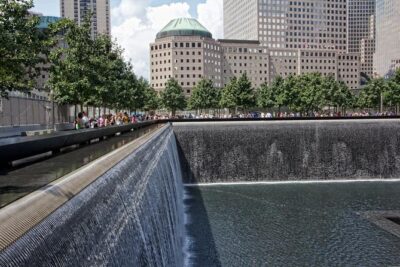
NYC City Tour: Statue of Liberty, 9/11 Memorial, Wall Street
Read our review →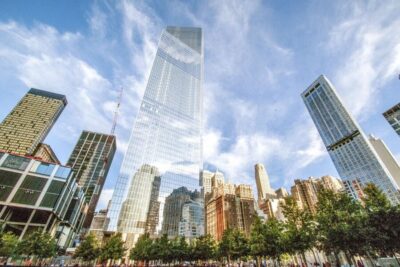
Ground Zero 9/11 Memorial Tour & Optional 9/11 Museum Ticket
Read our review →
9/11 Memorial Tour and Optional Observatory Ticket
Read our review →Browse the lists this tour appears in