
Reviewed · GREENWICH VILLAGE TOURS
Greenwich Village Historic Walking Tour
Greenwich Village is best understood on foot, one old doorway and unexpected story at a time. This $39 walk links Washington Square Park, Stonewall Inn, Jefferson Market Library, and the Triangle Shirtwaist Factory site, showing how artists, radicals, immigrants, performers, and reformers shaped one compact part of New York.
I like the use of historical photographs, which helps you compare today’s streets with the Village of earlier decades. I also like the small maximum of 20 people and the chance for guide Andrew Kirschner to adjust the pace and discussion to the group.
The main consideration is that this is a story-heavy walking tour, not a ticketed attraction crawl. You will spend much of the time outdoors, often listening from the sidewalk, and the itinerary covers serious subjects such as criminal trials, oppression, fires, and political struggle.
In This Review
- Key details before you book
- Why Greenwich Village works so well as a walking tour
- Washington Square Park and the Village’s earliest chapters
- Jefferson Market Library and the hard work of justice
- Emma Lazarus and a wider idea of America
- Stonewall Inn and the events of 1969
- Cherry Lane Theatre and the Village as a creative workshop
- The Northern Dispensary and a case that changed public debate
- Marie’s Crisis Café and Thomas Paine’s final home
- Society Cafe and the fight for integrated nightlife
- The Triangle Shirtwaist Factory fire and the walk back to reform
- What the guide adds to the experience
- Is the $39 price fair?
- Who should book this Greenwich Village walk?
- Should you book it?
- FAQ
- How long does the Greenwich Village Historic Walking Tour last?
- Where does the tour begin and end?
- How much does the standard tour cost?
- What is included in the pizza option?
- Is the tour offered in English?
- What happens if the weather is poor?
Key details before you book
- Washington Square Park sets the stage: You begin with the area’s early use as a potter’s field, later changes, and its role in protest and artistic life.
- The tour connects many kinds of history: Art, LGBTQ+ rights, women’s rights, theater, music, racial integration, and American democracy all appear along the route.
- Andrew Kirschner uses old photographs: These visual comparisons make vanished buildings, former residents, and changing streets easier to picture.
- The $39 price covers the standard walk: Expect about two to three hours, with an English-speaking guide and no meal included.
- The pizza option is separate: The $19 add-on adds about an hour and visits three pizzerias, but pizza and drinks cost extra.
- The group stays manageable: The maximum is 20 people, and smaller groups may allow more conversation and a more flexible pace.
Why Greenwich Village works so well as a walking tour
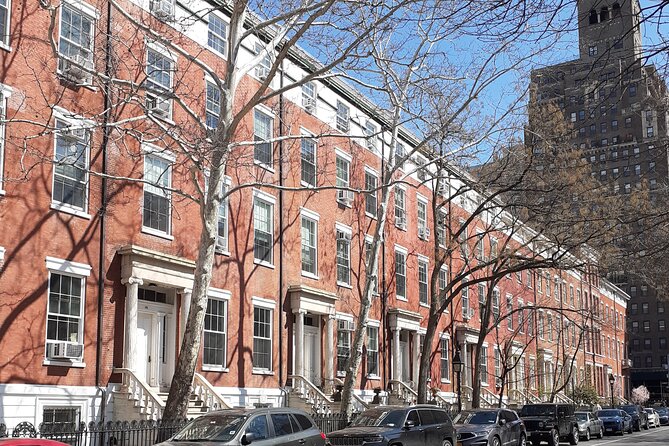
You do not come to Greenwich Village for one grand monument. You come for layers. A park can be a former burial ground, a courthouse can become a library, and a piano bar can connect to Thomas Paine and the founding of the United States.
That is the strength of this route. It gives you a framework for reading the neighborhood instead of merely pointing out attractive streets. You hear how public spaces, theaters, cafés, clubs, homes, and courtrooms became tied to larger changes in American life.
The walk begins at 10:00 a.m. in Washington Square Park and returns to the same general meeting point. The advertised duration is two to three hours, so you should allow room for the guide to spend more time on questions or particularly interesting stops.
I would wear comfortable shoes and bring water. The tour is conducted on foot, and the stops are spread through Greenwich Village rather than gathered in one small corner. Because some subjects are weighty, you should also expect a thoughtful history lesson rather than a light sightseeing stroll.
More Greenwich Village walks:
- NYC: Greenwich Village Food Tour with 6 Locals Favorites Dishes
★ 5.0 · 1,812 reviews - Greenwich Village Walking and Food Tasting Tour
★ 5.0 · 1,572 reviews - Artistic, Alternative Greenwich Village Walking Tour
★ 5.0 · 971 reviews
Washington Square Park and the Village’s earliest chapters
Washington Square Park is a smart starting point because it gives you physical space to understand the neighborhood. The park’s past reaches back to the 1600s, when part of the area was used as a potter’s field.
Its later life changed sharply. The grounds became a parade area and eventually one of New York’s best-known meeting places for public expression, art, and protest. The guide uses historical photographs at the stops, helping you see how the park and its surrounding buildings changed over time.
I especially like this opening because it avoids treating Greenwich Village as a frozen bohemian postcard. You begin with burial grounds, military use, civic life, and protest. That broader view makes the later stories about artists and performers more meaningful.
The first stop is listed for about 10 minutes, but the park also serves as the tour’s opening setting and closing point. You may want to arrive early enough to find the meeting spot without rushing. Washington Square Park is easy to reach by public transportation, and it is a useful place to get your bearings before the walk begins.
Near the park, you also learn about the former home of American artist Edward Hopper. The point is not simply to identify a famous resident. You hear how the Village’s unusual character affected Hopper’s spare, reflective style and how his time in the area influenced his work.
This is a good example of the tour’s method: a building becomes a doorway into a person’s work and the city around it. Art lovers will get more from this stop, but you do not need a background in painting to follow the connection.
Jefferson Market Library and the hard work of justice
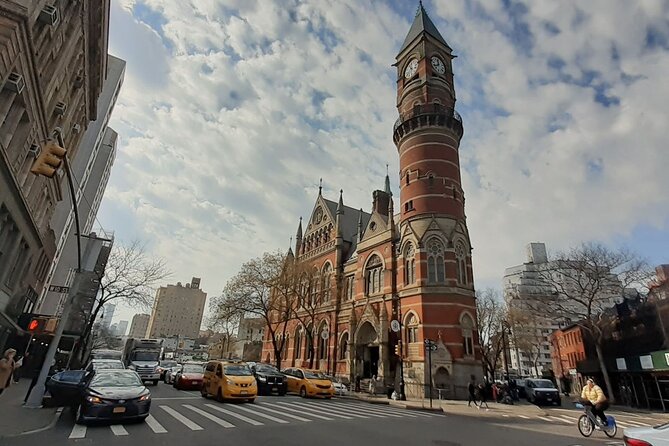
Jefferson Market Library is one of the most visually striking stops. The building began as the Jefferson Market Courthouse and once included a working jail dating from the 1870s.
The structure’s Victorian Gothic design made it famous in its own day. The tour moves past the architecture to the difficult cases associated with the site, including notorious criminals and the women’s court. You also hear about its connection to women’s rights and New York’s changing ideas about justice.
This is where the walk gets more serious. The stories involve criminal trials, legal power, and the treatment of women in the courts. That material gives you a better sense of how the Village was tied to citywide debates, not just art and nightlife.
The stop lasts about 15 minutes, one of the longer scheduled portions of the route. That extra time matters because the courthouse has several strands to explain: its design, jail, court functions, famous cases, and later use as a library.
You should pay attention to the wording of the experience here. The tour takes you to Jefferson Market Library and discusses the former courthouse, but you should not assume that the walk includes a full library visit or a lengthy indoor tour. Much of the experience is built around the site and the guide’s explanation.
Emma Lazarus and a wider idea of America
At Emma Lazarus House, the focus shifts to one of America’s most important poets and her connection to the Statue of Liberty.
This is a short stop, listed at about 10 minutes, but it adds a useful national dimension to the Village. You are not only hearing about local artists or neighborhood characters. You are also considering the words and ideas linked with immigration, welcome, and the meaning of American identity.
The stop works well alongside the later political stories. Greenwich Village appears here as a place where people wrote, argued, performed, and pushed public ideas into wider view.
If you have already visited the Statue of Liberty, this portion can give familiar symbols a stronger connection to New York’s streets. If you have not, it still offers a compact introduction to Lazarus and her role in the story.
More New York City history walks:
- New York City: American Museum of Natural History Ticket
★ 4.5 · 15,447 reviews - NYC: Starship Landmark 90 Minute Sightseeing Cruise
★ 4.6 · 3,666 reviews - Starship Landmark 90 Minute Sightseeing Cruise
★ 4.5 · 2,073 reviews - American Museum of Natural History Admission Ticket
★ 4.0 · 1,931 reviews
Stonewall Inn and the events of 1969
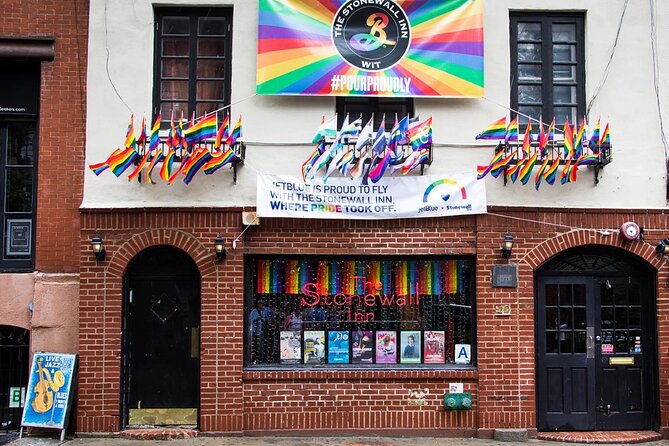
The Stonewall Inn is likely the best-known name on the route. Here, you travel back to the summer of 1969 and learn about the raids, tensions, and resistance that led to the Stonewall Uprising.
The stop is not just a photo opportunity outside a famous address. The guide explains the pressure faced by LGBTQ+ people, the conditions that made repeated police raids so explosive, and the people who resisted oppression that night.
This is an important place to hear the story in context. The uprising did not appear out of nowhere, and the tour presents it as part of a longer fight for safety, dignity, visibility, and equal rights.
The scheduled stop is about 10 minutes. That is enough for a focused explanation, though you should not expect a museum-style presentation or a long indoor visit. The value comes from standing at the location while connecting it to a much larger movement.
I appreciate that Stonewall is included alongside labor reform, women’s rights, racial integration, and free expression. The route shows several movements rather than presenting LGBTQ+ history as an isolated chapter.
Cherry Lane Theatre and the Village as a creative workshop
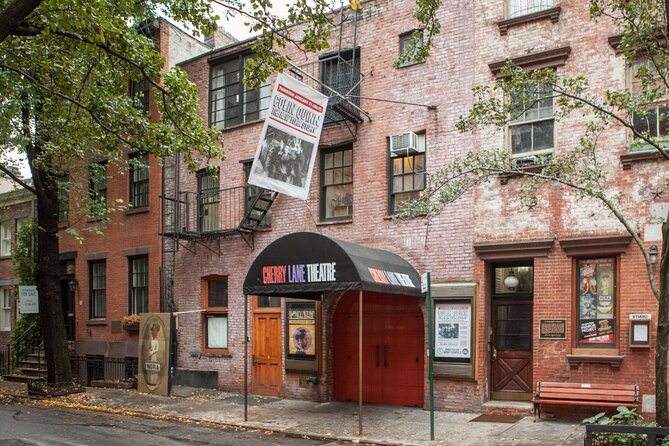
Cherry Lane Theatre is identified as the oldest continuously operating off-Broadway theater in New York City. The venue sits in a quieter part of Greenwich Village and has been a setting for ambitious work by actors, playwrights, and musicians.
You hear about early performances by people who later became major names. The exact appeal of this stop is the sense of possibility: a small room in a neighborhood known for giving unusual ideas a hearing.
The scheduled time is about 10 minutes. That makes it a lively snapshot rather than a theater tour. You should expect to learn about the building’s role and the careers connected with it, not to watch a performance or go backstage.
This stop also helps explain why so many artists were drawn to the Village. The neighborhood’s importance was not only its architecture. It was the mix of audiences, clubs, stages, cafés, political groups, and people willing to try something new.
The Northern Dispensary and a case that changed public debate
The Northern Dispensary dates to 1827 and provides another change of subject. Here, the guide tells the story of a landmark court case that helped ignite a social justice movement.
Only about five minutes are scheduled at this stop, so the explanation will be concise. Still, short stops can be powerful when the site itself is easy to overlook. You may pass an old medical building without noticing its connection to legal and social change.
This is one reason I find the route more useful than a simple list of famous addresses. It includes places whose importance is not obvious from the sidewalk. You get a reminder that New York’s political story was often shaped in modest buildings, not only in grand government halls.
Marie’s Crisis Café and Thomas Paine’s final home
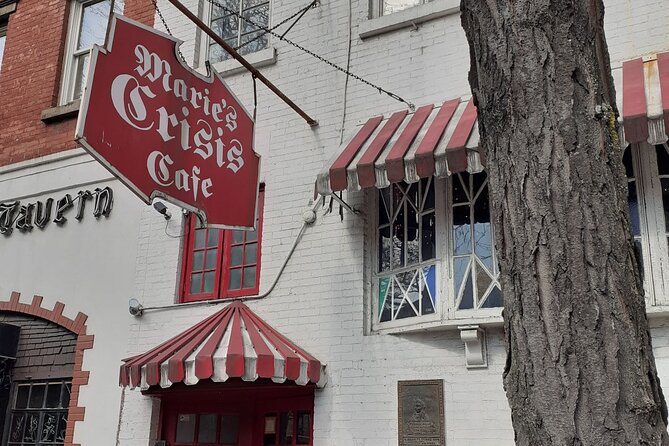
Marie’s Crisis Café is now known for piano-led show tunes, but the tour first takes you back to its connection with Thomas Paine, the author of Common Sense and a major voice in the American independence movement.
The contrast is memorable. A small Greenwich Village bar links the founding of the nation with the neighborhood’s later music culture. You learn how a place associated with communal singing also has a connection to one of the country’s most influential political writers.
This is a short, five-minute stop, and it is primarily an explanation from outside. The activity information identifies admission here as free, so you should not expect the standard walk to include drinks, a meal, or a reserved indoor music session.
Still, it is exactly the sort of detail that rewards walking. The address might look ordinary until someone explains what happened there and how its identity changed.
Society Cafe and the fight for integrated nightlife
At Society Cafe, you stand outside the site of what is described as New York’s first racially integrated nightclub. The stop focuses on the performers and trailblazers connected with this National Historic Landmark.
This adds another important thread to the walk. Greenwich Village was not only a place for artists and political discussion. It was also a setting where racial barriers in entertainment and nightlife were challenged.
The scheduled time is about five minutes. That is enough for a strong introduction, though anyone especially interested in jazz, club culture, or civil rights may wish the subject had more time.
Even so, the stop fits the overall route. You move from a courthouse and medical center to theaters and clubs, seeing how different institutions shaped public life. The Village emerges as a place where social change could happen through law, performance, protest, and everyday gathering.
The Triangle Shirtwaist Factory fire and the walk back to reform
The tour ends at the site of the Triangle Shirtwaist Factory fire, now a National Historic Landmark. In 1911, the fire killed 146 people.
The guide focuses on the workers, the tragedy, and the activism that followed. The courage of the women affected helped lead to lasting changes in labor law and strengthened the fight for women’s suffrage.
This is a sobering final stop, and it gives the walk a strong sense of purpose. The neighborhood’s story is not only about famous artists and colorful nightlife. It is also about unsafe work, unequal power, and the people who forced New York to change.
The itinerary lists Washington Square Park as the final location, while the Triangle Shirtwaist Factory site serves as the closing subject. You should expect the activity to finish back at the meeting point, but exact pacing can vary because the walk includes unscheduled surprises.
What the guide adds to the experience
Andrew Kirschner is the named guide for this experience. His approach combines local storytelling, historical photographs, and discussion of music, politics, art, and social change.
That range matters. You are not getting a narrow architecture tour or a string of celebrity addresses. The discussion can move from Edward Hopper to Emma Lazarus, from Thomas Paine to Stonewall, and from theater history to labor reform.
Small groups may make the experience feel more personal. The maximum is 20 people, and a very small group can give Andrew room to adjust the discussion to your interests. If you care about music, political history, or the Village’s literary connections, it is worth raising those interests during the walk.
The experience is offered in English. Most people can participate, and service animals are allowed. Since the tour is on foot and requires good weather, plan for outdoor conditions and a steady period of walking.
Is the $39 price fair?
At $39 per person, the standard walk is reasonably priced for a two to three-hour guided tour in Manhattan. You are paying for a focused route, a named guide, historical images, and interpretation that ties separate addresses together.
The value is strongest if you want context. If you only want to photograph Washington Square Park and Stonewall Inn, you can visit those places without a tour. The fee makes more sense when you want to understand why each site matters and how the stories connect.
The pizza option costs another $19 for admission to the pizza portion and adds about an hour. Food and drinks are not included, so the total cost will be higher once you buy the slices.
The pizza portion includes stops at three New York pizzerias. It could be a fun extension if you want food and neighborhood history in the same outing, but you should not mistake the $19 charge for a prepaid meal. If your priority is the historical walk, the $39 standard option is the clearer value.
Who should book this Greenwich Village walk?
I would recommend this tour to you if you enjoy city history told through real places. It suits first-time New York visitors who want more than major landmarks, as well as returning visitors who have already seen the Village but want a clearer story.
It is especially useful for people interested in:
- American political history and Thomas Paine
- LGBTQ+ history and the Stonewall Uprising
- Women’s rights and labor reform
- Art, theater, music, and literary New York
- Small-group walking tours with room for questions
You may want another type of outing if you dislike serious subjects, prefer lots of indoor visits, or have trouble walking for several hours. The route includes many brief stops, and not every location offers admission or a formal attraction experience.
Free cancellation is available until 24 hours before the start time. Changes or cancellations inside that window are not accepted for a refund. The tour can also be moved or refunded if poor weather or an insufficient number of bookings causes cancellation.
Should you book it?
Book this Greenwich Village Historic Walking Tour if you want the neighborhood’s contradictions: artists beside reformers, old courtrooms beside theaters, political ideals beside painful social failures. The strongest parts are Andrew Kirschner’s story-led approach, the old photographs, and the range of subjects covered in one compact route.
I would choose the standard $39 walk first. Add the pizza portion only if you want to spend another hour on food and are comfortable paying separately for what you eat and drink.
Arrive ready to listen, walk, and look closely. Greenwich Village rewards that pace, and this tour gives you a useful key to streets that can otherwise seem merely picturesque.
FAQ
How long does the Greenwich Village Historic Walking Tour last?
The standard walking tour lasts approximately two to three hours. The optional pizza portion adds about one additional hour.
Where does the tour begin and end?
The tour begins at Washington Square Park in New York City at 10:00 a.m. The activity ends back at the meeting point.
How much does the standard tour cost?
The standard walking tour costs $39 per person.
What is included in the pizza option?
The $19 pizza add-on provides admission to the pizza portion, which visits three New York City pizzerias. Pizza and drinks are purchased separately and are not included in the $19 price.
Is the tour offered in English?
Yes. The experience is offered in English and includes a mobile ticket.
What happens if the weather is poor?
The experience requires good weather. If it is canceled because of poor weather, you will be offered another date or a full refund.
More New York City walking tours
- SoHo, Little Italy, and Chinatown Walking Tour in New York
★ 5.0 · 3,153 reviews - Secrets of Grand Central Station Walking Tour New York City
★ 5.0 · 1,796 reviews - True Crime NYC: Mafia Walk w/Ret. NYPD Detective and Local Food
★ 5.0 · 848 reviews - Central Park Guided Walking Tour
★ 5.0 · 774 reviews
Just listed around New York City
- NYC: Little Shop of Horrors Off-Broadway Ticket5 reviews
- Private NYC Airport Transfer: LGA to Manhattan – Up to 5★ 3.6 · 5 reviews
- New York City Tour in German★ 4.5 · 5 reviews
- New York Afternoon Fall Foliage Cruise with Lunch★ 5.0 · 6 reviews
- New York: Hamilton and Washington Revolutionary Walking Tour★ 5.0 · 5 reviews
- NYC Freedom Tower Private Photo or Video Experience★ 4.0 · 6 reviews
- Brooklyn Walking Tours by Locals: Private & 100% Personalized★ 4.0 · 6 reviews
- Southold Bay Oyster Farm Tour★ 5.0 · 6 reviews
Greenwich Village Tours, compared.

Greenwich Village Food Tour with 6 Locals Favorites Dishes
Read our review →
Greenwich Village Walking and Food Tasting Tour
Read our review →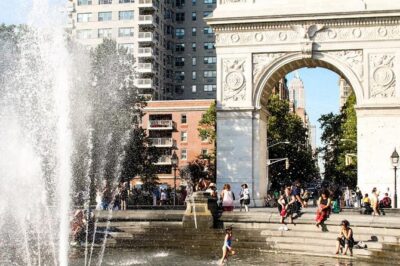
Artistic, Alternative Greenwich Village Walking Tour
Read our review →
NYC Greenwich Village Italian Food Guided Walking Tour
Read our review →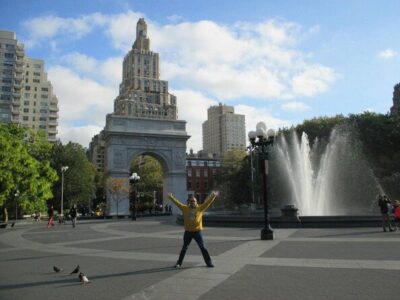

High Line Park and Greenwich Village Food Tour
Read our review →
Browse the lists this tour appears in