
Reviewed · SOHO, LITTLE ITALY & CHINATOWN TOURS
New York Soho and the Village Art and Architecture Tour
New York’s best architecture is often above eye level. This two-hour walk takes you from Cooper Square through SoHo, the Village, and nearby streets, pointing out buildings you could easily pass without noticing. I like the small maximum of 15 people and the use of personal headsets, which make it easier to follow the guide on busy city streets. The main catch is the fast pace: with so many districts and buildings packed into two hours, several stops are brief exterior visits.
I also like the way the route connects old banks, experimental modern buildings, university spaces, public art, and neighborhood streets. Ivan, the guide named for this experience, brings a strong focus on design, city planning, and the stories behind buildings. The tour begins at 5:30 pm and ends under the Washington Square Arch, so you get a useful evening introduction to downtown Manhattan without giving up an entire day.
In This Review
- Key points
- Why this downtown walk is worth two hours
- Cooper Union and the first lesson in city design
- Modern residences at 40 Bond Street
- The New Museum and the PUBLIC Hotel
- Capitale and the old Bowery Savings Bank
- SoHo, the Village, and the Lower East Side connection
- NYU and the changing Washington Square area
- Silver Towers and public space
- Bobst Library and Washington Square Park
- How the small group and headsets change the experience
- Timing, walking demands, and practical planning
- Who should book this architecture walk
- Should you book the SoHo and Village Art and Architecture Tour?
- FAQ
- How much does the tour cost?
- How long is the experience?
- Where does the tour begin?
- Where does the tour end?
- What time does the tour start?
- How large is the group?
- Are headsets provided?
- Is the tour accessible to service animals?
- Can I cancel for a full refund?
Key points
- A compact route through several downtown districts: Cover Cooper Square, SoHo, the Village, the Lower East Side area, and Washington Square in about two hours.
- Architecture from many eras: See the 1895 Bowery Savings Bank, the Little Singer Building, NYU additions, and modern work by SANAA and Herzog and de Meuron.
- Small-group format: The tour accepts no more than 15 people, allowing time for questions and personal attention.
- Headsets included: Each person receives a professional individual headset, a useful touch on noisy New York streets.
- A strong finish at Washington Square: The route ends under the Arch, close to the park and NYU.
- Good value for architecture fans: At $49, the tour costs less than many longer city excursions while offering specialist commentary and a carefully arranged route.
Why this downtown walk is worth two hours
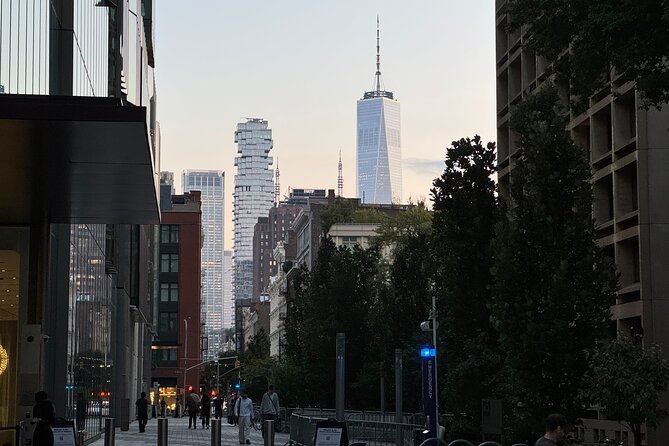
This is not a general sightseeing stroll with a few buildings thrown in. The route is built around architecture, urban design, and the way old and new New York occupy the same few blocks.
You begin at Cooper Square, a useful starting point because the area brings together several architectural periods. From there, the walk moves past landmark buildings, contemporary residences, cultural institutions, hotels, churches, university buildings, and public spaces. The route does not stay inside one tidy neighborhood, and that is part of its value. You get to see how SoHo, the Village, the Lower East Side area, and NYU fit together.
I would choose this tour if you often look at New York buildings and wonder what you are seeing. It gives you a framework for understanding façades, materials, building scale, public spaces, and the city’s constant changes. It also suits anyone who wants more than a standard Midtown route.
The published price is $49 per person. For a two-hour walk, that is not the cheapest way to wander downtown, but it is fair if you care about architecture and want a guide who can explain the details. The small group and headsets add practical value. You are paying less for admission, since nearly all the stops are viewed from outside, and more for the route and interpretation.
More SoHo, Little Italy and Chinatown walks:
- SoHo, Little Italy, and Chinatown Walking Tour in New York
★ 5.0 · 3,153 reviews - NYC: Chinatown & Little Italy Food Tour with 7 Flavorful Tastings
★ 5.0 · 2,733 reviews - Original NYC Guided Food Tour of Chinatown and Little Italy
★ 5.0 · 2,194 reviews
Cooper Union and the first lesson in city design
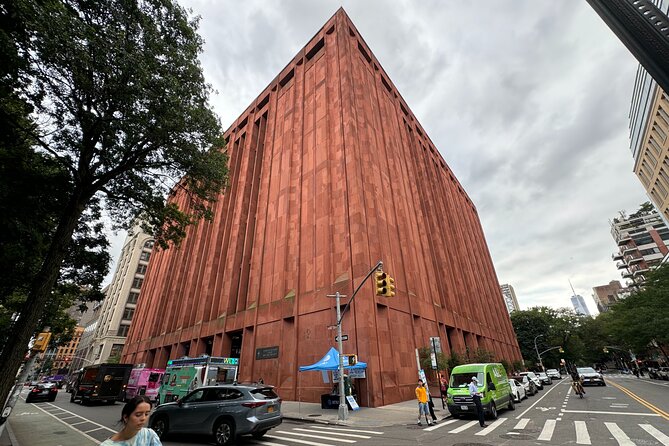
The Cooper Union Foundation Building is the first listed stop. You have about 10 minutes here, with no admission fee.
Starting with Cooper Union makes sense because it gives the tour an immediate architectural and educational focus. The building is part of the Cooper Union complex, and the stop sets up the larger question running through the walk: how institutions, private development, and public space shape downtown Manhattan.
The opening stop also helps you settle into the tour. You are not rushed straight into a long march. Instead, the guide can establish the way the tour works, explain what to watch for, and get the group looking carefully at details that might otherwise blend into the street.
Modern residences at 40 Bond Street
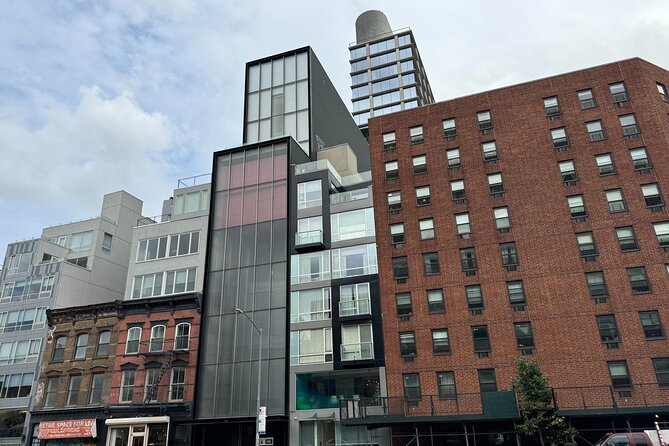
The stop at 40 Bond Street lasts about five minutes. Here you see residences designed by Herzog and de Meuron.
This is a sharp change from the older buildings around Cooper Square. The point is not simply to admire an expensive modern residence. It is to compare how a new building responds to an established downtown neighborhood.
The short stop works well for a building like this. You can examine the exterior, hear about the design, and then move on before the discussion becomes too technical. If you want a full architectural lecture on Herzog and de Meuron, five minutes will feel brief. If you want a clear introduction to modern residential design in New York, it fits the tour nicely.
The New Museum and the PUBLIC Hotel
The New Museum of Contemporary Art is another five-minute stop. The building was designed by SANAA, giving you a second modern architectural example soon after 40 Bond Street.
Seeing these two contemporary projects in one route lets you compare different approaches to new construction in lower Manhattan. The New Museum is tied to art and public culture, while 40 Bond Street is residential. The tour uses that contrast to show that architecture is shaped by purpose as much as by style.
You then see the PUBLIC Hotel. The itinerary allows about five minutes here. Like the New Museum and 40 Bond Street, it belongs to the newer side of the downtown story. The route is especially useful for visitors who want to understand how recent buildings have been inserted into older neighborhoods.
These are exterior-focused stops, so manage your expectations. You are not promised entry to the New Museum or the hotel. The value is in seeing the buildings in their street setting and hearing how they relate to the surrounding blocks.
More architecture walks:
- Manhattan Architecture Yacht Cruise
★ 5.0 · 1,395 reviews - NYC: Around Manhattan Official NYC Architecture Cruise
★ 4.8 · 402 reviews - Art Deco and Architecture Midtown Landmarks Tour
★ 5.0 · 142 reviews - Tribeca Architecture And History Walking Tour
★ 5.0 · 141 reviews
Capitale and the old Bowery Savings Bank
Capitale occupies the former Bowery Savings Bank, designed by McKim, Mead and White in 1895. The stop lasts about five minutes and has no admission fee.
This is one of the route’s most appealing contrasts. The grand former bank belongs to an older New York, when financial buildings were designed to project permanence and civic importance. Seeing it after several modern buildings gives the guide a chance to discuss changing ideas about scale, ornament, commercial power, and reuse.
The building now has a different function, but its earlier identity remains central to the stop. That makes it a useful example of adaptive use in the city. You see how an older structure can survive by taking on a new role rather than remaining frozen in the past.
The itinerary also includes the Little Singer Building, the Scholastic Building by Aldo Rossi, and New York’s old cathedral. These stops are listed as visits or pass-bys rather than timed stops, so the amount of discussion may vary. Still, they add variety to the route and keep the focus on buildings that are easy to miss when you are simply shopping or walking to dinner.
SoHo, the Village, and the Lower East Side connection
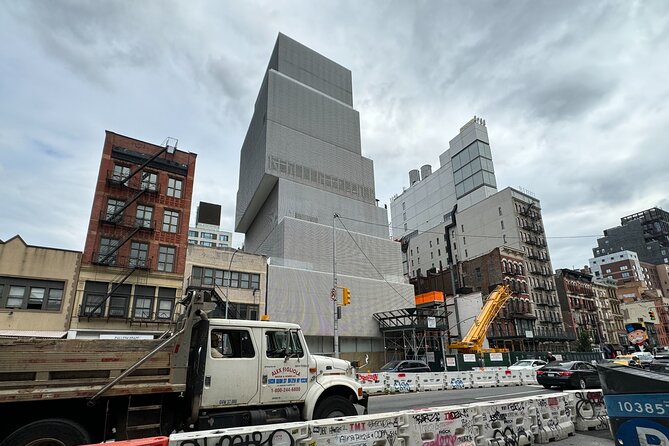
The tour’s broad route is one of its strengths. You are not confined to a single architectural style or one postcard view of downtown.
SoHo is often treated as a shopping district, but this walk asks you to look beyond the boutiques. You get a closer reading of the buildings and the reasons the area feels different from Midtown. The tour also places SoHo in relation to the Village and Lower East Side area, rather than presenting it as an isolated pocket.
That wider view matters. Neighborhoods in New York can change noticeably from one avenue to the next, and the buildings help explain why. A guide can point out how streets, institutions, residences, commercial buildings, and public spaces sit together. You may come away with a better sense of why some parts of downtown feel formal, some intimate, and some sharply modern.
The short format does mean that this is an introduction, not an exhaustive neighborhood study. You will see a lot, but you will not spend long periods inside one block or building.
NYU and the changing Washington Square area
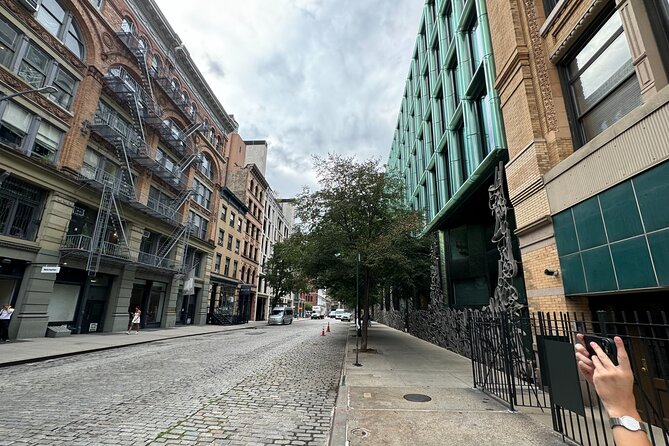
The route continues to New York University’s main campus. The tour looks at new additions to the campus and residences along Houston Street and around Washington Square.
This is a valuable part of the walk because university buildings are not separate from city life here. NYU is woven into the surrounding streets, and its newer projects affect the scale and character of the neighborhood.
You have about five minutes at the main NYU stop, but the surrounding route adds context. The guide can connect campus buildings with nearby residences, public areas, and the older urban fabric. This is where the tour’s city-planning angle becomes especially useful. You are not just looking at individual façades. You are considering how a large institution changes the blocks around it.
If you have a personal interest in campuses, urban planning, or institutional architecture, this part may be one of your favorites. If your main goal is historic SoHo architecture, it shifts the emphasis toward current development.
Silver Towers and public space
The Silver Towers stop lasts about 10 minutes. Here the focus is on the buildings, the open areas around them, and the art in the public spaces.
This is a welcome change from examining individual façades. Silver Towers lets you think about architecture at the scale of a residential complex and its shared surroundings. The relationship between towers, open areas, and public art becomes part of the discussion.
I find this kind of stop especially useful because city design is not only about attractive buildings. It is also about what happens between them. Do the spaces invite people in? How do residents and pedestrians move through them? What does the art contribute? These are the questions that make the tour more than a parade of famous addresses.
The 10-minute allocation is longer than several of the earlier stops, which suggests that the guide has more room here for explanation and questions.
Bobst Library and Washington Square Park
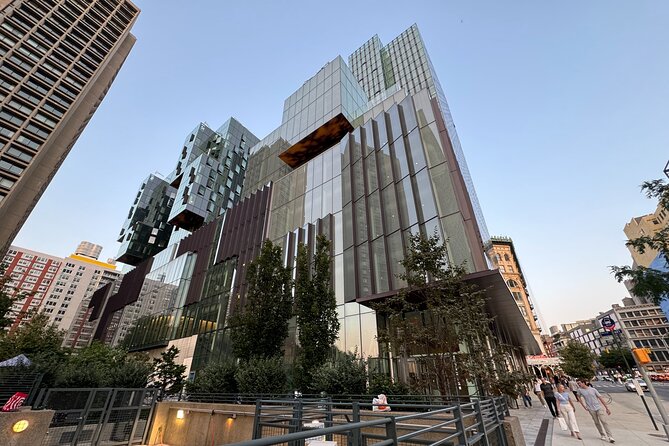
The tour enters Bobst Library for about five minutes. That indoor stop breaks up the outdoor walking and gives you a chance to see an important NYU space from within.
Five minutes is enough for a look and a short explanation, but not a full building tour. The stop works best as part of the larger sequence, especially after seeing NYU’s additions and residences.
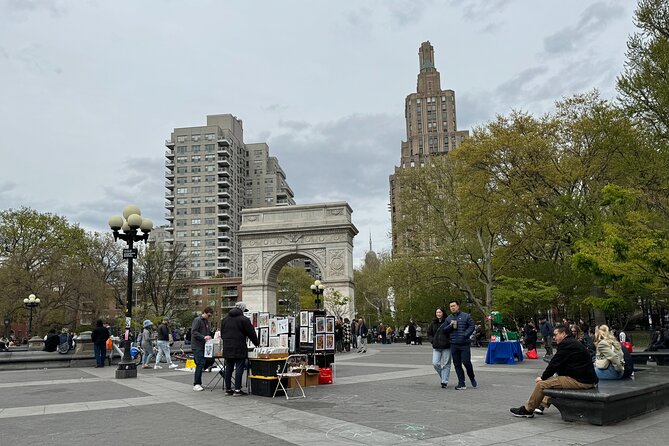
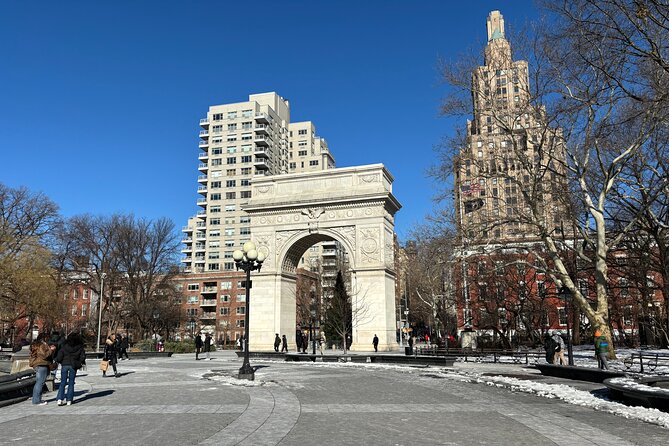
The walk ends at Washington Square Park, with about 10 minutes at the park and the final meeting point under Washington Square Arch. This is a satisfying finish because the Arch and park are among the city’s most recognizable public spaces, yet the tour arrives there with a new focus on design and urban use.
You can think back over the route here: old financial buildings, modern museums, private residences, university construction, towers, public art, and a major city park. The ending also places you in a convenient downtown area after the tour instead of sending you back to the starting point.
How the small group and headsets change the experience
The maximum group size is 15 people. That is small enough to make questions practical, especially on a subject where you may want to stop and ask why one building looks a certain way or how a site changed over time.
The headsets are another real advantage. New York traffic, buses, sirens, construction, and street crowds can make ordinary walking tours frustrating. With a personal headset for each person, you can hear the guide while looking at the building instead of hovering close to the speaker.
Ivan is the guide named for this tour. The strongest praise attached to the experience centers on his ability to explain architectural design, building history, and urban planning without making the walk dull. The commentary is also described as adaptable to individual interests, which matters in a small group. You should feel free to ask questions, especially if you are curious about a particular neighborhood or building type.
Timing, walking demands, and practical planning
The experience lasts about two hours, with travel time included. The start is at 5:30 pm at Cooper Square, and the end is at Washington Square Arch on Washington Square North.
That timing makes the tour easy to add after a museum visit, lunch, or another downtown activity. It also gives you an evening look at the neighborhoods, though the exact light and street conditions will depend on the season.
You should plan for steady city walking and outdoor exposure. The tour is listed as suitable for most people, near public transportation, and service animals are allowed. No food or drinks are listed as included, so take care of those needs before or after the walk.
Tips are not included in the $49 price. All fees and taxes, the in-person guide, and the individual headsets are included.
The tour requires good weather and a minimum number of participants. If weather or low enrollment causes cancellation, you are offered another date or experience, or a full refund. You can cancel for a full refund up to 24 hours before the start time. Inside that window, refunds are not available and changes are not accepted.
Who should book this architecture walk
I would recommend this tour to you if you enjoy buildings but do not always know how to read them. It also suits repeat visitors who have already seen the Empire State Building, Times Square, and the usual Midtown sights.
It is a good fit for students, design fans, urban-planning enthusiasts, and New Yorkers who want to see familiar streets differently. The published feedback includes a local participant who gained a new appreciation for buildings she had passed many times, which is exactly the kind of result this tour aims for.
You may want something else if you prefer long interior visits, a relaxed café-to-café stroll, or a tour devoted only to SoHo. The schedule covers many places quickly, and several stops last just five minutes. You should book it for interpretation and route planning, not for extended time inside attractions.
Should you book the SoHo and Village Art and Architecture Tour?
Book it if you want a focused, affordable introduction to downtown New York’s buildings and public spaces. At $49, the small group, headsets, named architectural works, and adaptable commentary make the price reasonable for a specialist walking tour.
The best reason to go is the range. In two hours, you move from Cooper Union and a 19th-century bank to SANAA’s New Museum, Herzog and de Meuron’s 40 Bond Street, NYU, Silver Towers, Bobst Library, and Washington Square Park.
Skip it if you want a slow tour with lots of indoor access. For everyone else, especially anyone who wants to learn why downtown New York looks the way it does, this is a smart use of an evening.
FAQ
How much does the tour cost?
The price is $49 per person. All fees and taxes, the guide, and individual headsets are included. Tips are not included.
How long is the experience?
The tour lasts approximately two hours, including travel time during the route.
Where does the tour begin?
It begins at Cooper Square, New York, NY 10003.
Where does the tour end?
The tour ends at Washington Square Park under Washington Square Arch on Washington Square North.
What time does the tour start?
The listed start time is 5:30 pm.
How large is the group?
The maximum group size is 15 people.
Are headsets provided?
Yes. Each person receives a professional individual headset so the guide can be heard clearly on city streets.
Is the tour accessible to service animals?
Yes. Service animals are allowed, and the tour is listed as suitable for most people.
Can I cancel for a full refund?
Yes. You can cancel at least 24 hours before the start time for a full refund. Cancellations or changes made within 24 hours are not accepted for a refund. If poor weather or insufficient enrollment cancels the experience, you are offered another date or experience, or a full refund.
Just listed around New York City
- 3 Days – Niagara Falls & 1000 Islands Cruise★ 5.0 · 4 reviews
- Gypsy starring Audra McDonald on Broadway Ticket★ 4.0 · 4 reviews
- Christmas in New York: Skip-the-Line Holiday Lights Tour★ 4.7 · 4 reviews
- Central Park Pedicab Guided Tours with Theater★ 5.0 · 4 reviews
- Private Marvelous Mrs. Maisel Sites Guided Tour★ 5.0 · 4 reviews
- Fabulous Hells Kitchen Walking Tour★ 5.0 · 4 reviews
- Full-Day Sightseeing Tour in New York City★ 4.5 · 4 reviews
- New York City or Brooklyn: Photoshoot in Iconic Locations★ 4.0 · 4 reviews
SoHo, Little Italy & Chinatown Tours, compared.

SoHo, Little Italy, and Chinatown Walking Tour in New York
Read our review →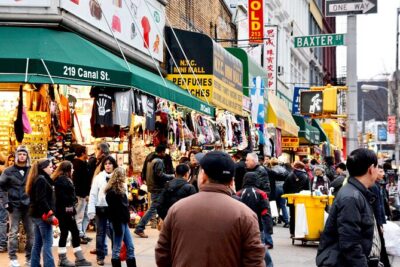
Chinatown & Little Italy Food Tour with 7 Flavorful Tastings
Read our review →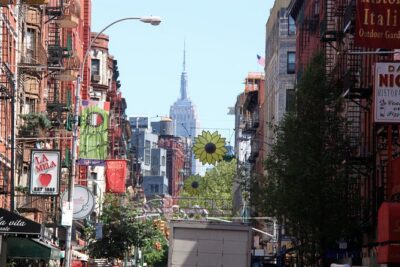
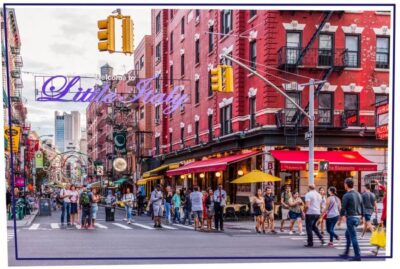
Original NYC Guided Food Tour of Chinatown and Little Italy
Read our review →

SoHo, Little Italy, and Chinatown 2-Hour Guided Walk
Read our review →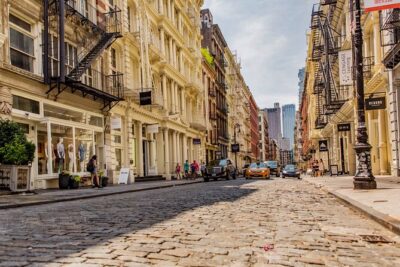
SoHo, Little Italy, and Chinatown NYC Guided Walking Tour
Read our review →Browse the lists this tour appears in