
Reviewed · METROPOLITAN MUSEUM & ART TOURS
NYC: Meet the Met – Extended 3hr Small-Group Tour
The Metropolitan Museum of Art is too large for a casual wander, especially on a first visit. This three-hour tour gives you a sensible route through Egyptian temples, ancient sculpture, European paintings, and the museum’s grandest rooms, with a guide explaining what you are seeing instead of leaving you alone with a label and a map.
I like the small group of no more than 15 because it gives you a real chance to ask questions and steer the visit toward your interests. I also like the priority entry and the seasonal rooftop stop, which adds Central Park views to a morning or afternoon indoors. The main drawback is pace: three hours covers a lot, so you may not have enough quiet time with every painting, and busy galleries can make it hard to hear without a microphone.
In This Review
- Key points at a glance
- Why a guided visit helps at the Met
- Meeting at the Met’s main lobby
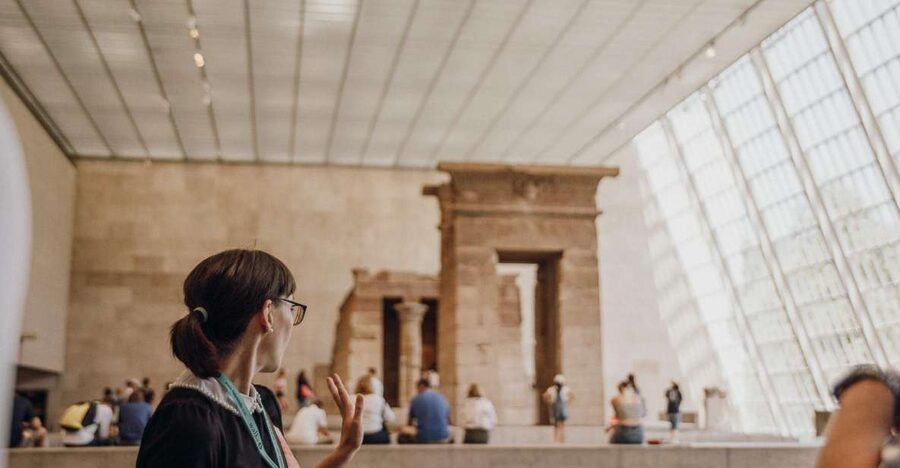
- Egyptian galleries and the Temple of Dendur
- Pompeian rooms and classical sculpture
- Van Gogh, Monet, and European masterpieces
- The guide makes the difference
- Rooftop access from May through October
- What happens after the three-hour route
- Is $79 a fair price?
- Practical strengths and drawbacks
- Who should book this Met tour?
- Final verdict
- FAQ
- How long is the Met tour?
- Where does the tour meet?
- How early should I arrive?
- What language is the tour conducted in?
- How many people are in the group?
- Does the price include museum entry?
- Is rooftop access included?
- Which artworks and collections are included?
- Can the route change?
- Is the tour wheelchair accessible?
Key points at a glance
- Five thousand years in three hours: Move from Egyptian burial customs and Pompeian rooms to Greek sculpture and European masterpieces.
- The Temple of Dendur: See the Met’s famous Egyptian temple in its dramatic setting, along with mummies and funerary objects.
- A guide-led route: Guides including Katie, Jett, Rob, Phil, and Ryan are praised for clear explanations, humor, and personal stories.
- A group capped at 15: Expect more personal attention than on a large coach-style museum visit.
- Rooftop views from May through October: Take in Central Park and Upper East Side sights from the museum’s seasonal terrace.
- Useful time after the tour: Stay on your own and revisit the galleries your guide has helped you find.
Why a guided visit helps at the Met
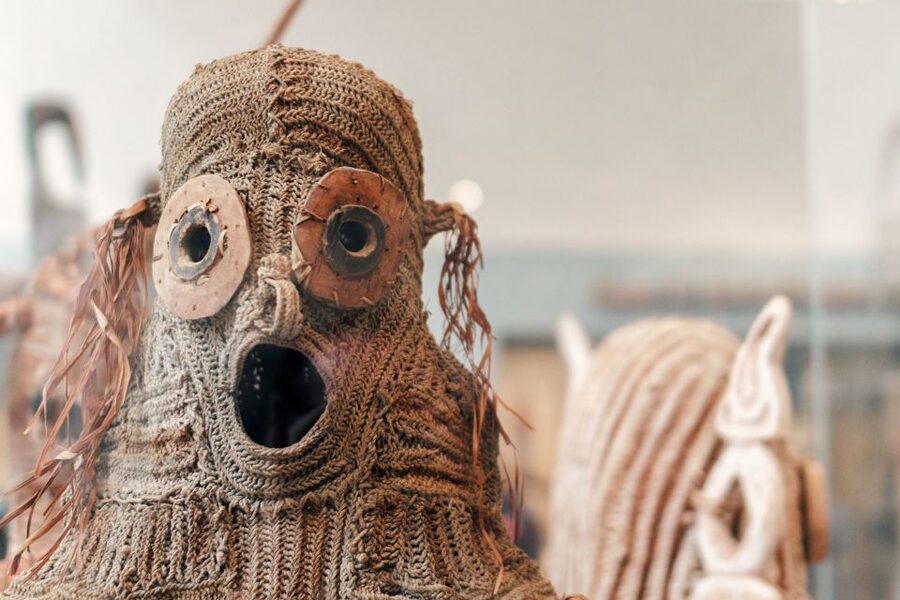
The Met is not simply a large museum. It is a collection of museums under one roof, with about 5,000 years of art spread across five continents. You can walk in with good intentions and still spend an hour trying to find the European paintings, only to miss the Egyptian rooms and American galleries entirely.
A guide gives your visit shape. Instead of treating every object as equally important, the tour picks major works and uses them to explain larger ideas: how ancient people prepared the dead for the next life, how Roman interiors survived, why certain religious paintings look the way they do, and how artists such as Van Gogh, Monet, Rembrandt, Vermeer, Picasso, and Raphael changed the way people pictured the world.
I especially value the stories behind objects that can seem remote at first glance. Ancient sculpture and Egyptian artifacts often need context before they become interesting. A good explanation about ritual, power, burial, or daily life can turn a glass case into a human story.
The guides on this tour have different personalities, but the strongest pattern is clear: they explain art in an accessible way. Katie is frequently praised for energy, humor, and enthusiasm. Jett is noted for his unusual perspective on artists and works. Rob, Ryan, Phil, Mike, John, and others are also described as engaging and flexible.
That variety matters. You do not need an art degree to enjoy this visit. You need someone who can tell you where to look and why it matters.
More Met and art museum visits:
- NYC: Museum of Modern Art (MoMA) Entry Ticket
★ 4.6 · 12,540 reviews - NYC: Guggenheim Museum Entry Ticket
★ 4.4 · 2,201 reviews - Metropolitan Museum Guided Group Tour
★ 5.0 · 1,013 reviews
Meeting at the Met’s main lobby
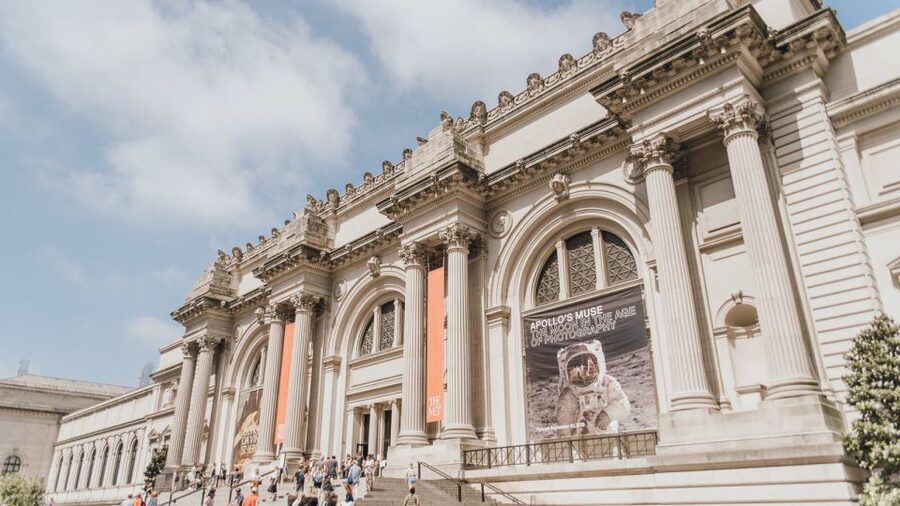
Your meeting point is the Met at 1000 Fifth Avenue. Arrive 15 minutes early and look for a guide holding a green Walks sign. The group meets in the main lobby, to the right of the information desk, in front of the large seated Pharaoh.
That landmark is useful because the Met’s entrance area can feel hectic, especially when several groups are arriving. Give yourself time to enter, locate the lobby, and find the Pharaoh without rushing. One past problem involved a delay in getting tickets organized at the start, so arriving early is sensible rather than optional.
The tour includes a pre-arranged museum ticket, the required donation, and the guide. Priority access means less time waiting before you begin, though it does not turn the Met into a private museum. The building can still be crowded, and popular galleries may be noisy.
If you use a wheelchair, the accessible ground-level entrance is to the left of the main entrance when you are facing the building. Tell museum staff that you are meeting a tour group in the main lobby. The tour involves walking at a moderate pace, so consider your comfort with three hours on your feet.
Egyptian galleries and the Temple of Dendur
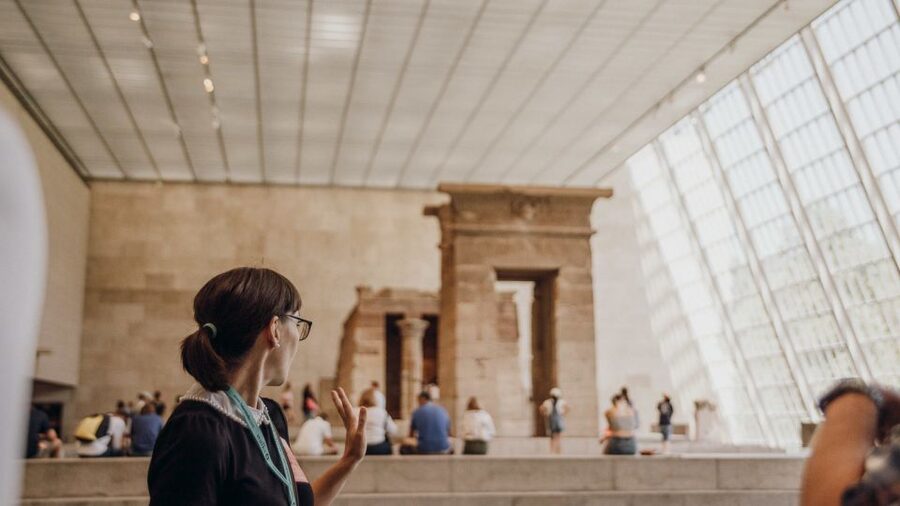
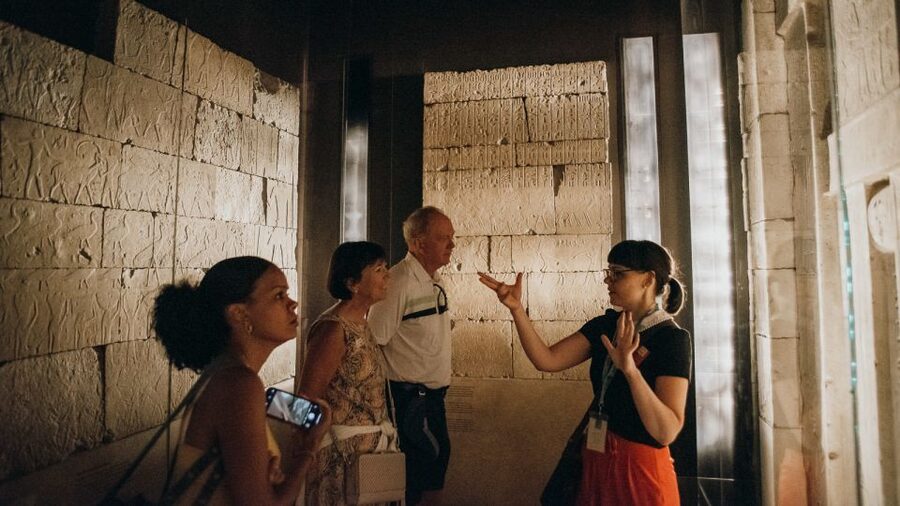
The Egyptian section is one of the tour’s major anchors. The Temple of Dendur is the headline sight, and for good reason. This ancient structure is much more than a single object in a case. Its scale, carved surfaces, and setting give you a sense of Egyptian architecture in a way that smaller artifacts cannot.
Your guide can help you notice details that are easy to miss, including the carved figures, symbols, and relationship between the temple and the surrounding gallery. The setting also makes this a natural place to pause and understand how a museum can present a building rather than just a portable artwork.
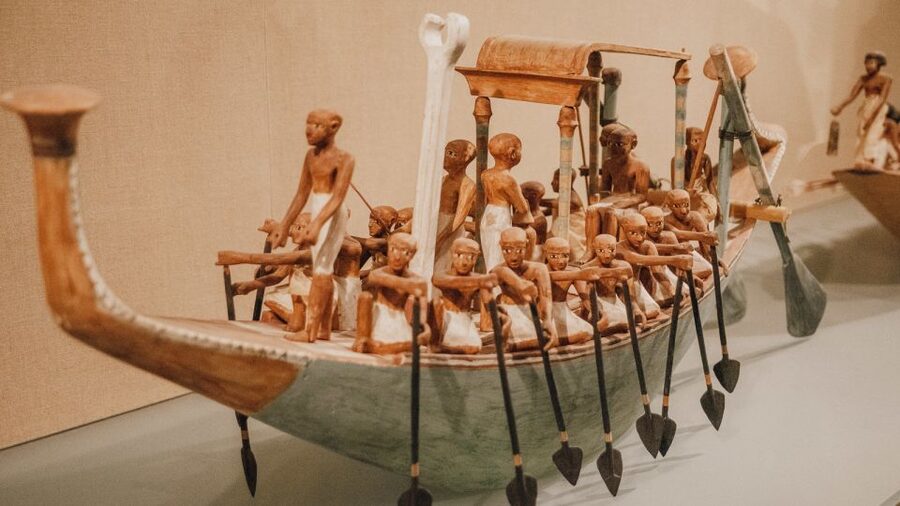
The Egyptian route also includes mummies and objects linked to burial customs. Here, the explanation matters as much as the display. You can learn how the ancient Egyptians viewed death, preservation, ceremony, and the afterlife, then connect those ideas to the objects in front of you.
This section is especially useful if you know little about ancient Egyptian art. The imagery can look repetitive until someone points out the difference between a ritual object, a funerary item, and a piece made to show status or devotion.
The drawback is that the Egyptian galleries can attract many people. If the group gathers in a crowded room, you may need to move closer to hear. One useful improvement would be a microphone or audio system, particularly when the museum is busy.
Pompeian rooms and classical sculpture
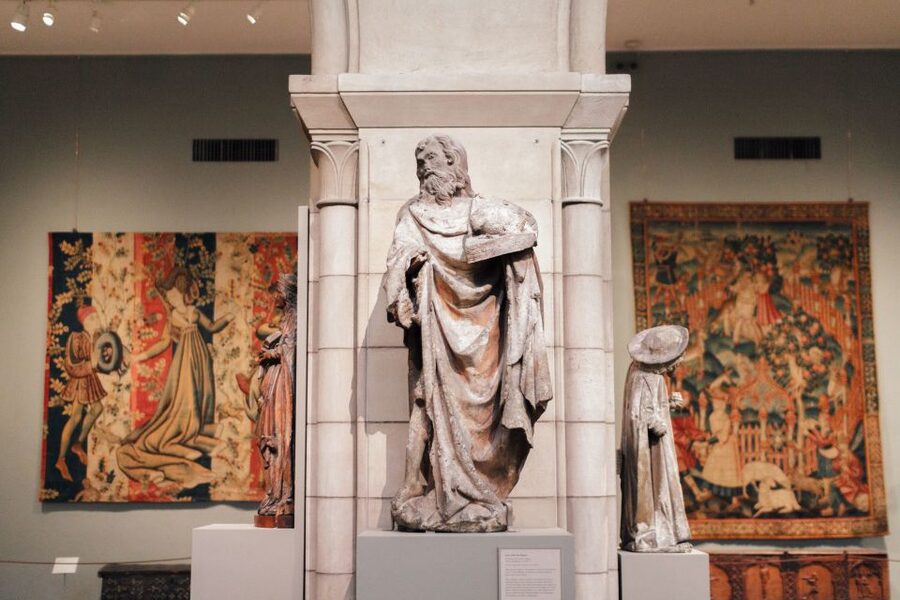
The tour then reaches the ancient Greek and Roman collections, including intact Pompeian rooms and Greek and Roman statuary. These spaces help you see how people lived, decorated their homes, honored their gods, and presented themselves in public.
The Pompeian interiors are valuable because they shift your attention from individual statues to complete spaces. Painted walls, architectural details, and household settings make the ancient world feel less like a collection of fragments and more like a place where ordinary routines took place.
Greek and Roman sculpture offers a different lesson. Your guide can point out how artists handled the body, clothing, movement, expression, and ideal beauty. You may also learn how Roman artists borrowed from Greek models while adapting them for portraits, public monuments, and private display.
This is where the tour’s broad range pays off. You are not looking at ancient art in isolation. The route links objects to politics, religion, fashion, and social rank, then carries those ideas forward into later European art.
If you prefer to spend most of your time with paintings, this section may feel long. The tour aims to show the Met’s range, not to offer three uninterrupted hours of Impressionism. That is a strength for first-time visitors, but a limitation for someone who already knows the museum and has come mainly for Van Gogh or Monet.
Another side of New York City for the same day:
- NYC: SUMMIT One Vanderbilt Tickets
★ 4.7 · 51,195 reviews - NYC: 9/11 Memorial & Museum Timed-Entry Ticket
★ 4.8 · 31,428 reviews - NYC: Empire State Building Tickets – Observatory & Museum
★ 4.7 · 25,757 reviews - New York City: Statue of Liberty & Ellis Island with Ferry
★ 4.6 · 18,683 reviews
Van Gogh, Monet, and European masterpieces
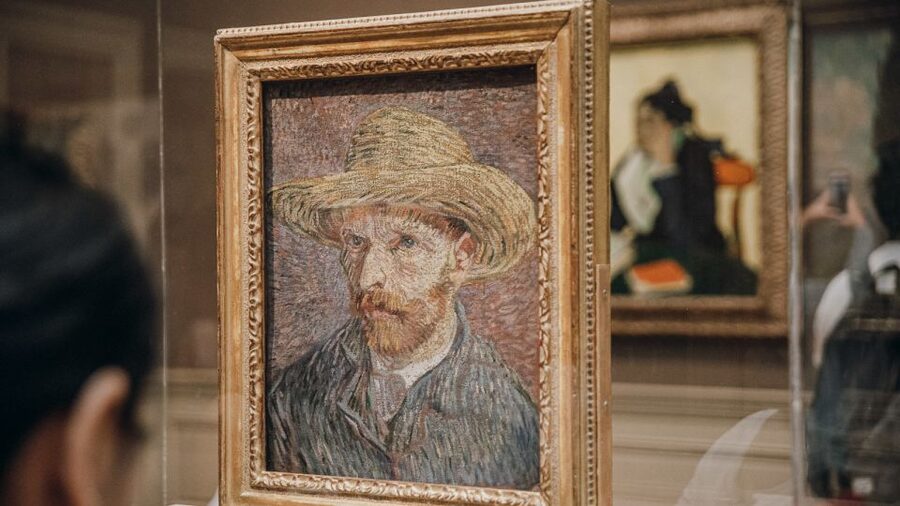
The European painting galleries provide the familiar names many people expect from a Met visit. You can see works connected with Van Gogh, Monet, Picasso, Raphael, Rembrandt, Vermeer, and other major European artists.
The guide’s job here is not simply to announce the artist’s name. It is to help you look. You may hear about brushwork, composition, light, patronage, religious symbolism, or the social world in which a painting was made. Those details can make a famous work feel less like a postcard image and more like a decision made by a particular artist at a particular moment.
I like the way a guide-led route can prevent you from walking past important paintings without noticing them. The Met has so many rooms that even a determined visitor can miss a major work. A guide can also compare artists across periods, showing how one painter’s treatment of light or movement relates to another’s.
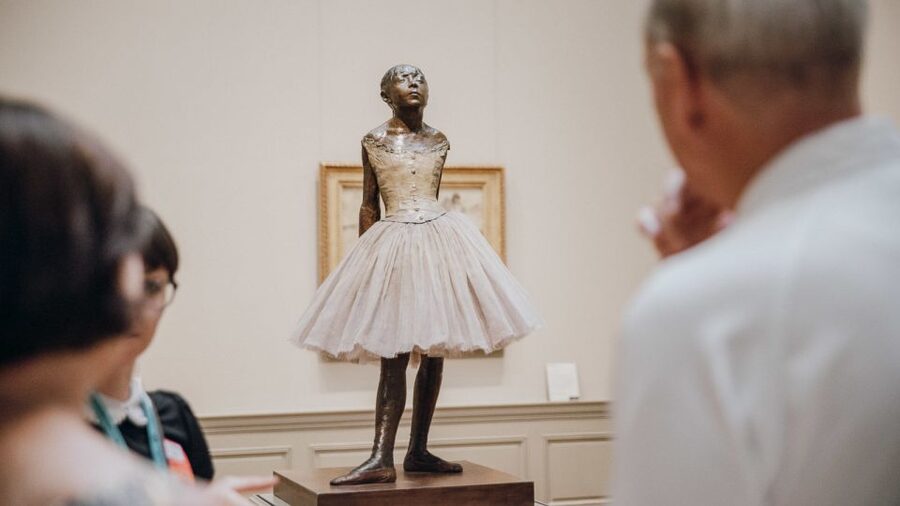
Still, plan your expectations carefully. Three hours is enough for a broad introduction, not for long, silent study of every painting. If you want to spend 20 minutes with Monet, Manet, Van Gogh, Cezanne, or Degas, you may feel hurried during the group portion.
The smart approach is to take notes, or simply remember the names of galleries and works that catch your attention. After the tour, you can return to those rooms alone. The guide’s route becomes a map for the rest of your Met visit.
The guide makes the difference

A museum tour rises or falls on the person leading it. Here, the strongest praise goes to guides who combine facts with personality.
Katie is repeatedly described as lively, funny, warm, and well prepared. Several people found that the three hours passed quickly with her, which is no small achievement in a museum. Jett is praised for detailed knowledge, entertaining stories, and a distinctive way of discussing artists. Rob is described as experienced and able to identify the essential works without losing the group’s interest.
Other named guides receive similar praise. Phil is noted for historical anecdotes and humor. Ryan adjusts the route when the group shows a strong interest in certain galleries. Mike helps people who feel overwhelmed by the Met understand how to plan their own time afterward. John is praised for giving a broad overview, while Louis and Jared are remembered for bringing objects to life.
You should not expect to request a particular guide when booking, but these names show the range of the guiding style. The experience is not a recorded audio walk. It is a live English-language visit, with room for questions and some adjustment based on the group.
That personal element is one reason the small group matters. A guide can respond to a question, slow down briefly, or spend more time on a gallery that interests several people. One guide even stayed longer than planned for part of the group, though you should treat that as a pleasant exception rather than a promised feature.
Rooftop access from May through October
From May through October, the tour includes access to the Met’s rooftop terraces. This is a welcome change of pace after several hours indoors and gives you panoramic views toward Central Park and the Upper East Side.
The rooftop is not the reason to book the tour, but it adds real value during warmer months. You get a view of the city that connects the museum to its setting. After focusing on paintings and ancient buildings, you can look out across the park and the city blocks beyond it.
Seasonal access also means you should not assume the rooftop is available on a winter visit. From November through April, the indoor route remains the focus.
What happens after the three-hour route
The tour ends back at the Met, and you are free to continue exploring. This is important because the museum cannot be fully understood in three hours, even with an efficient guide.
Use the final part of your visit to return to one or two works that interested you. You may want more time with the European paintings, a second look at the Temple of Dendur, or a quieter visit to a gallery that felt rushed when the group was moving.
A guide may also suggest areas to see on your own. That advice can save time because you begin with a better sense of the building’s layout and the collections that suit your taste.
If you plan to stay for several additional hours, wear comfortable shoes and pace yourself. The Met is rewarding, but it asks a lot from your feet and attention. A short break can help you enjoy the second half instead of treating it as an endurance test.
Is $79 a fair price?
At $79 per person, this is not the cheapest way to enter the Met. You are paying for the museum ticket, donation, priority entry, and three hours of live guiding in a group capped at 15.
The value depends on how you use the museum. If you are visiting for the first time, feel uncertain about art, or have limited time in New York, the price is easier to justify. You get a route through major collections and a framework that helps you make better use of the hours afterward.
The value is also stronger if you would otherwise spend much of your visit lost or reading every label. A guide can help you see more in less time, though the tradeoff is less freedom during the guided portion.
For a repeat Met visitor who already has a personal plan, $79 may be harder to defend. You might prefer an unguided visit that lets you stay with a handful of favorite works. And if your only goal is European painting, this broad tour may devote too much time to Egypt, Rome, and ancient sculpture.
The seasonal rooftop access adds a pleasant extra, but I would treat it as a bonus rather than a reason to pay the fee.
Practical strengths and drawbacks
The strongest practical advantage is structure. You begin at a clear meeting point, enter with arranged tickets, and follow a route that covers the Met’s major eras without requiring you to study a floor plan beforehand.
The small group is another real benefit. With up to 15 people, the guide can answer questions and watch whether the group is keeping up. It is still a group tour, so you will not have unlimited time at each object.
The main issue is sound. Crowded galleries can be noisy, and one person specifically noted that hearing the guide was difficult. Stand near the guide when possible and pay attention when the group moves into a quieter position.
The pace can also be brisk. That helps you cover a lot of ground, but it may challenge anyone who walks slowly or wants extended time with a single painting. Three hours is the minimum you need for a useful overview, not the maximum time you could spend at the Met.
The English-only format is clear, so make sure you are comfortable following detailed explanations in English. The route and individual artworks can change if galleries close or works are temporarily absent. Your guide may need to adjust the plan on the day.
Who should book this Met tour?
I would recommend it most strongly to first-time visitors, couples with different levels of art interest, and people with one day or less to organize their New York sightseeing. It is also a good choice if large museums usually leave you confused about where to begin.
Families with older children may appreciate the stories and shorter explanations, though the moderate walking pace and three-hour length require some stamina. Art lovers who want context rather than a simple list of famous names should also get plenty from the route.
I would be more cautious if you have already visited the Met several times and want an unhurried study of a narrow collection. You may find the group pace restrictive, especially in the Impressionist galleries.
Final verdict
Book this tour if you want the Met to make sense quickly. For $79, you get a well-planned introduction to ancient Egypt, Pompeii, Greece, Rome, and European painting, plus a live guide who can add humor, answer questions, and point you toward rooms worth revisiting.
Skip it if you already know exactly which galleries you want and prefer to sit with a few paintings at your own speed. For most first-time visitors, though, the guide-led structure is worth the cost, and the rooftop views from May through October make an already full museum visit feel more varied.
FAQ
How long is the Met tour?
The tour lasts three hours and takes place entirely within The Metropolitan Museum of Art.
Where does the tour meet?
Meet in the Met’s main lobby at 1000 Fifth Avenue, to the right of the information desk, in front of the large seated Pharaoh.
How early should I arrive?
Arrive 15 minutes before the scheduled start time. Your guide will be holding a green Walks sign.
What language is the tour conducted in?
The live tour guide speaks English, and the activity is offered in English only.
How many people are in the group?
The small group has a maximum of 15 people.
Does the price include museum entry?
Yes. The price includes a pre-arranged Met ticket, the required donation, and the guide.
Is rooftop access included?
Yes, access to the VIP rooftop terraces is included from May through October. Seasonal access is not listed for the other months.
Which artworks and collections are included?
The route includes the Temple of Dendur, Egyptian mummies and burial material, Pompeian rooms, Greek and Roman sculpture, and works associated with Van Gogh, Monet, Picasso, Raphael, Rembrandt, and Vermeer.
Can the route change?
Yes. Galleries and artworks may be closed or absent without notice, so the guide may modify the route during the tour.
Is the tour wheelchair accessible?
Those needing wheelchair access should use the ground-level entrance to the left of the main entrance when facing the building. Tell museum staff you are meeting a tour group in the main lobby.
Just listed around New York City
- NYC: Little Shop of Horrors Off-Broadway Ticket5 reviews
- Private NYC Airport Transfer: LGA to Manhattan – Up to 5★ 3.6 · 5 reviews
- New York City Tour in German★ 4.5 · 5 reviews
- New York: Hamilton and Washington Revolutionary Walking Tour★ 5.0 · 5 reviews
- NYC Freedom Tower Private Photo or Video Experience★ 4.0 · 6 reviews
- New York Afternoon Fall Foliage Cruise with Lunch★ 5.0 · 6 reviews
- Brooklyn Walking Tours by Locals: Private & 100% Personalized★ 4.0 · 6 reviews
- Southold Bay Oyster Farm Tour★ 5.0 · 6 reviews
Metropolitan Museum & Art Tours, compared.



“The Met” Metropolitan Museum of Art Exclusive Guided Tour
Read our review →


Browse the lists this tour appears in