
Reviewed · METROPOLITAN MUSEUM & ART TOURS
2-hour Metropolitan Museum Guided Tour
The best thing about this tour is its clear route through a museum that can otherwise feel like a small city with paintings. In two hours, you move from Egyptian tomb models and mummies to the Temple of Dendur, Greek and Roman art, Papua New Guinea, Monet, Van Gogh, and Rodin. You get a story, not just a list of rooms.
I like the small-group format, advertised at 15 people and capped at 18, since it gives you a better chance to hear the guide and ask questions. I also like the way guides such as Kevin, Katie, Jett, Rob, and Stephane Z have made the visit approachable for families, teenagers, and people who do not know much about art.
The tradeoff is simple: two hours goes fast. You see major highlights, but not the full museum, and one guest found a larger group hard to hear. The route and guide can also change if a gallery or artwork is closed, so book this as a lively introduction rather than a complete tour of the Met.
In This Review
- Key points at a glance
- Why a guide helps inside the Met
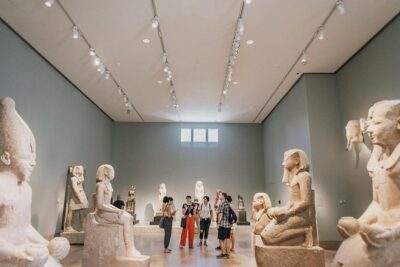
- Ancient Egypt gives the tour its best start
- The Temple of Dendur changes the scale
- Royal armor and the possible Holy Grail
- Greek statues and Roman frescoes add essential context
- Papua New Guinea keeps the route unpredictable
- Monet, Van Gogh, and Rodin finish the visit
- Two hours is useful, but it is not the whole Met
- Group size and hearing matter
- Is $65 a fair price?
- Who should book this Met tour?
- Should you book it?
- FAQ
- Where does the tour begin?
- Where does the tour end?
- How long does the tour last?
- Is admission to the Met included?
- How much does the experience cost?
- What language is the tour offered in?
- How large is the group?
- What can I expect to see?
- Is hotel pickup included?
- Can I cancel for a full refund?
Key points at a glance
- Egyptian opening: See tiny tomb models, mummies, the Met’s William mascot, and the Temple of Dendur.
- A wide sweep of art: The route includes Greek statuary, Roman frescoes, Papua New Guinea, Monet, Van Gogh, and Rodin.
- Small-group attention: The group is limited to a maximum of 18 people, with the tour advertised for 15 or fewer.
- Good for museum beginners: Guides explain the stories behind the objects without assuming an art background.
- Useful two-hour plan: You get a brisk introduction, then can return on your own to the rooms you liked best.
- English and mobile ticket: Admission is arranged in advance, and the tour runs in English from the Met entrance.
Why a guide helps inside the Met
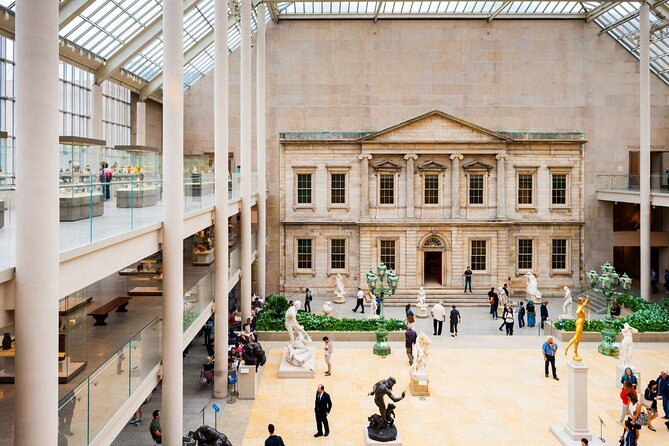
The Metropolitan Museum of Art is not hard to enter, but it is easy to lose your sense of direction once you are inside. The building holds far more than anyone can sensibly see in one visit. Without a plan, you may spend half an hour crossing galleries and still miss the works you most wanted to find.
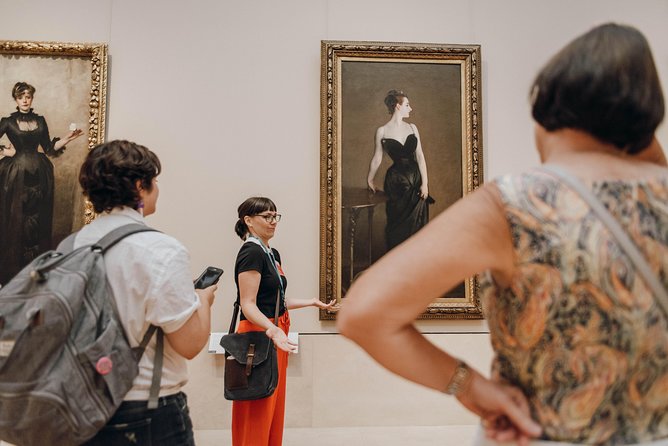
This tour gives you a useful first map. You are not simply led from famous object to famous object. The route links burial customs, royal power, religious objects, ancient daily life, and later artistic ideas. That makes each stop easier to remember.
I especially like this approach for a first visit. You do not need to know the difference between a Roman fresco and a Greek statue before you arrive. A good guide gives you enough background to understand what you are looking at, then keeps the pace moving.
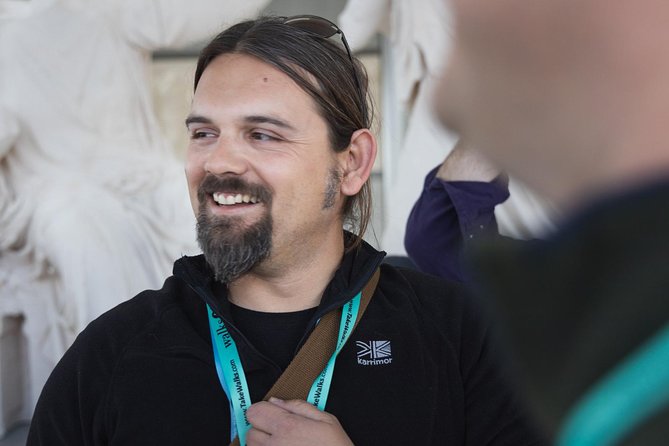
The strongest guides appear to balance facts with personality. Katie is praised for keeping teenagers interested, while Jett is described as humorous and good at explaining the story behind artists and their work. Kevin is noted for asking the group about particular periods or pieces and shaping the route around those interests.
That last point matters. The experience is designed around highlights, but it need not feel entirely fixed. If you have a particular artist or era in mind, tell your guide early. One useful tip is to do a little research before arriving and mention two or three areas you would most like to see.
More Met and art museum visits:
- NYC: Museum of Modern Art (MoMA) Entry Ticket
★ 4.6 · 12,540 reviews - NYC: Guggenheim Museum Entry Ticket
★ 4.4 · 2,201 reviews - Metropolitan Museum Guided Group Tour
★ 5.0 · 1,013 reviews
Ancient Egypt gives the tour its best start
The first section focuses on Ancient Egypt, beginning with carefully preserved tomb models. These small scenes show daily life through miniature figures and settings. Instead of looking at a single statue and wondering what it means, you get a picture of work, ritual, and household life in the time of Tutankhamen.
The scale is part of the appeal. Tiny models can be more revealing than grand monuments because they show ordinary activities. They help explain why Egyptian tombs contained images and objects linked to the life a person hoped to continue after death.
Next come Egyptian mummies and William, the Met’s familiar mascot. The mummy displays connect the private burial objects with the human remains themselves. Your guide can help explain the burial customs and beliefs that shaped these works, making the section more than a parade of ancient objects.
The pace is brisk, but that is useful here. Egypt alone could fill an afternoon. You will get a focused introduction, not every dynasty and detail.
The Temple of Dendur changes the scale
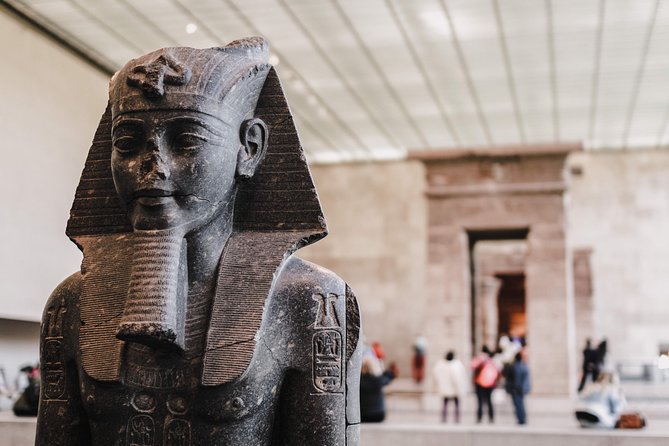
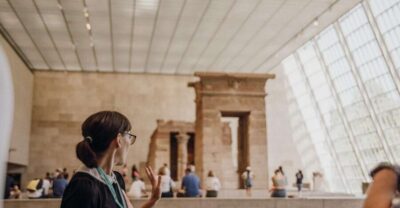
The Temple of Dendur is one of the Met’s most memorable spaces. After the small tomb models and close-up displays, you come into a large gallery with an actual Egyptian temple placed indoors near the museum’s Central Park side.
This is the point where the tour’s scale shifts. You can look at carved stone, columns, and the surrounding space while hearing how the temple fit into ancient Egyptian religious life. The setting also gives you one of the Met’s signature visual moments, with a sense of the building opening toward Central Park.
The tour includes a view of Central Park and the museum’s Fifth Avenue setting, but this is not a separate outdoor sightseeing walk. The main event remains inside the Met.
If you have seen photographs of the Temple of Dendur, it is still worth seeing in person. Its size and placement make it easier to understand than a flat image. It is also a good place to pause and let the guide connect the earlier Egyptian displays to a larger ceremonial structure.
Royal armor and the possible Holy Grail
The route then moves to objects surrounded by stories of power and mystery. You will see armor associated with Britain’s King Henry VIII, whose reputation needs little help from a guide. The armor gives you a direct look at how wealth, rank, and military display could be expressed through clothing and protective equipment.
The Antioch Chalice adds a different kind of story. Some have linked it to the Holy Grail, though the point here is less about proving a legend than understanding how objects gain meaning through religious tradition and later interpretation.
These stops keep the tour from becoming a straight march through paintings. You move between archaeology, royal display, religious belief, and art history. That variety helps hold the attention of children and adults who might not want two hours of technical discussion about painting styles.
You should also expect some variation. The precise works shown can change if a gallery closes or an object is absent. The guide may adjust the route on the day, and the experience is better approached with some flexibility.
More New York City museums to visit:
- NYC: 9/11 Memorial & Museum Timed-Entry Ticket
★ 4.8 · 31,428 reviews - NYC: Empire State Building Tickets – Observatory & Museum
★ 4.7 · 25,757 reviews - New York City: American Museum of Natural History Ticket
★ 4.5 · 15,447 reviews - 9/11 Memorial, Ground Zero Tour with Optional 9/11 Museum Ticket
★ 5.0 · 6,381 reviews
Greek statues and Roman frescoes add essential context
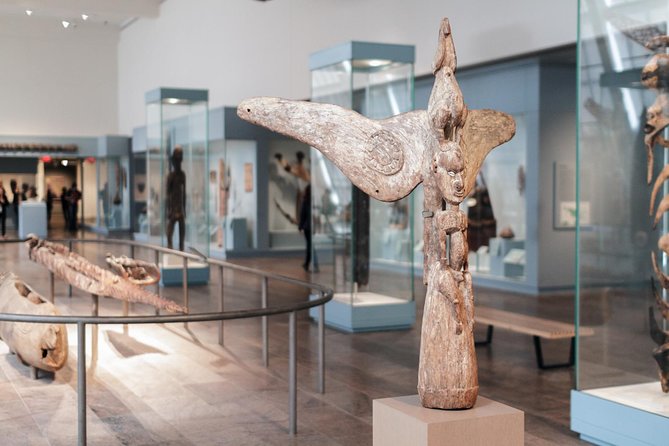
The ancient section continues with Greek statuary and Roman frescoes. These works help you see how artistic ideas traveled and changed across the ancient Mediterranean.
Greek sculpture can look familiar because later artists copied its ideas of the human body, movement, and balance. A guide can point out what you might otherwise miss, such as how a pose, garment, or expression shapes the figure’s meaning.
Roman frescoes bring art into an architectural setting. Rather than imagining Roman painting as isolated pictures, you can consider how painted walls formed part of a room and helped create a sense of place.
This is one reason I prefer taking a guided introduction before wandering alone. The Met’s labels provide useful information, but a guide can connect one room to the next in a way that makes the overall route easier to follow.
Papua New Guinea keeps the route unpredictable
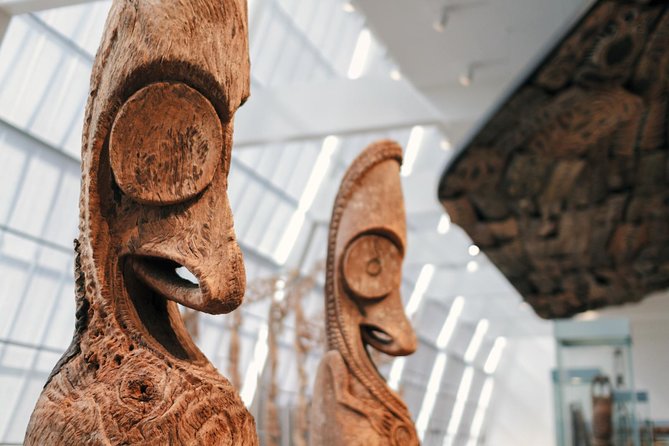
A stop in Papua New Guinea gives the tour a welcome change of subject. After Egyptian, Greek, and Roman works, you encounter art from a different region and cultural tradition.
The value of this stop is its contrast. You are reminded that the Met is not only a museum of European paintings and ancient Mediterranean objects. Its collections cover many places and ways of making meaning.
Because the tour moves across several departments, you should not expect long, detailed treatment of every culture. Instead, this stop broadens your sense of what the museum contains and keeps the visit from feeling like a standard greatest-hits route.
Monet, Van Gogh, and Rodin finish the visit
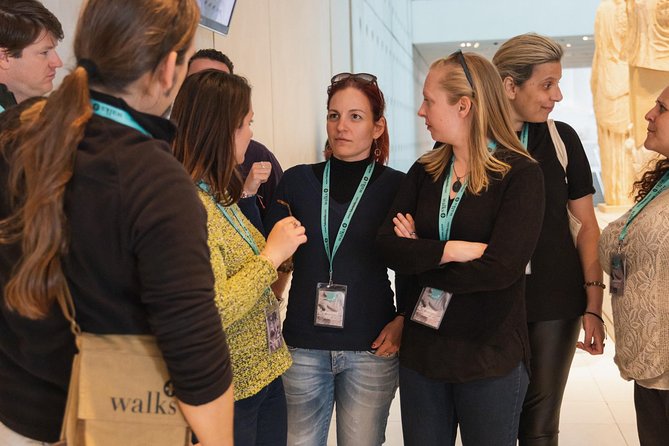
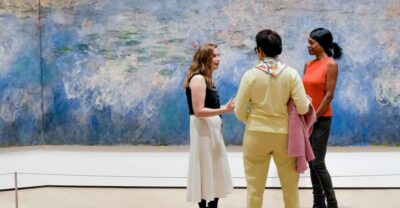
The second floor brings the tour into better-known European art. Claude Monet’s Water Lilies provide a softer shift after the ancient galleries. You can look closely at how color and brushwork suggest reflections, water, and changing light without spelling out every detail.
Vincent van Gogh brings a stronger emotional charge. His paintings are familiar from posters and books, but the originals can make their surface and energy easier to appreciate. A guide may also help you place the painting within the artist’s life and working methods, rather than treating it as a famous image with no background.
Rodin’s Thinker closes the art sequence with a work many people recognize at once. Seeing the bronze in the museum gives you a chance to consider its pose, surface, and physical presence beyond the familiar reproduction.
These final stops are likely to appeal to visitors who arrive with a short list of famous names. They also give beginners a comfortable way into the collection. You can enjoy the pictures first, then use the guide’s explanation to notice more.
Two hours is useful, but it is not the whole Met
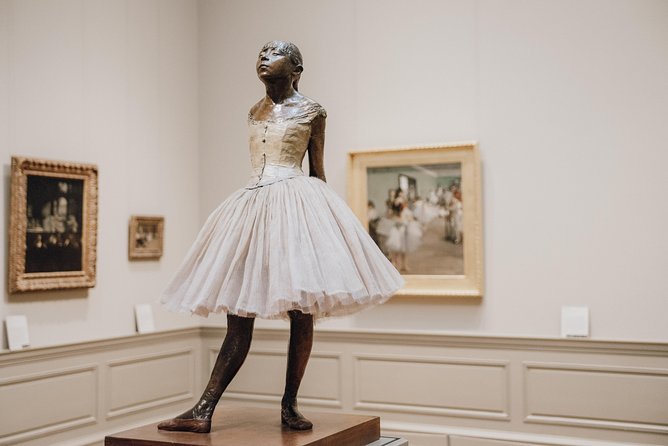
Two hours is a sensible length for a first orientation. The museum is large enough to exhaust you, especially if you try to cover every floor and department. This route gives you a strong sample without demanding an entire day.
The drawback is that the visit can feel compressed. Several sections receive only a short stop, and art lovers who want sustained discussion of individual works may want a longer tour or extra time afterward.
That limitation is not a flaw if you use the tour properly. Treat it as your introduction, then return to the rooms that caught your attention. A few reviews describe the two hours as passing quickly, with a desire for more time with the guide. That is a good sign for curious visitors, but it also tells you not to expect a full scholarly treatment.
If you are choosing among start times, an early tour may be a wise pick. The Met can get busy, and a quieter beginning may make it easier to hear the guide and move between galleries. One useful plan is to tour first, eat at one of the museum cafes afterward, then revisit your favorite section at your own pace.
Group size and hearing matter
The tour is promoted as a small group of up to 15 people, while the additional information gives a maximum of 18. Some groups in the feedback were much smaller, including one of 10, which allowed the guide to ask about individual interests.
A small group can make a real difference in a museum. You can stay closer to the guide, ask a question without stopping a crowd, and possibly shape part of the route. It also makes the experience feel less like a lecture.
Still, the group size may vary. One person found it difficult to hear in a larger group and suggested a microphone and headphones. The tour information does not promise an audio system, so if hearing every detail is especially important to you, consider your position in the group and stay near the guide.
The walking pace is moderate. You should be able to walk through the museum without difficulty. Hotel pickup and drop-off are not included, but the meeting point is the Metropolitan Museum of Art at 1000 Fifth Avenue, near public transportation.
Is $65 a fair price?
At $65 per person, the tour costs more than simply arranging your own museum visit, but admission is included and a local expert guide does the planning. The real value is time: you avoid wandering without direction and get context for objects you might otherwise pass without noticing.
I think the price makes the most sense for first-time visitors, short stays, and anyone who feels uneasy in large museums. It is also a fair choice for families if your group benefits from a clear route and lively explanations.
The value is less certain for repeat Met visitors who already know the building and prefer to set their own pace. You may also find it less suitable if you want to spend 30 minutes with one painting instead of moving across several departments.
The rating is 4.8 from 515 reviews, with 96 percent recommending the experience. That high level of approval fits the tour’s main purpose: an efficient, guided introduction with plenty of famous works and a few less expected stops.
Who should book this Met tour?
I would choose this tour if you are visiting the Met for the first time, have about two hours, or are not sure how to approach art museums. It is particularly useful for families, couples, and friends with mixed levels of interest.
It also suits repeat visitors who want a fresh route. Several guides, including Kevin, Katie, Jett, Rob, LizBanks, and Stephane Z, have been praised for making the experience engaging and for adding stories that are easy to miss when you walk alone.
I would think twice if you want a specialist tour devoted only to Egypt, Impressionism, or modern art. The wide route is the strength here, but it means no single period receives exhaustive attention.
The tour is offered in English only. Confirmation arrives when you book, tickets are mobile, and free cancellation is available up to 24 hours before the start time. Within 24 hours, no refund is provided, and changes are not accepted.
Should you book it?
Book this tour if you want the Met to feel manageable rather than endless. For $65, you receive admission, a planned two-hour route, and the chance to see the Temple of Dendur, Egyptian burial works, ancient sculpture, Monet, Van Gogh, and Rodin with a guide who can tie the pieces together.
Go in expecting a highlight tour, not a complete museum education. Arrive ready to walk, tell the guide what interests you, and plan to stay afterward if a particular gallery catches your eye. That approach gives you both a useful introduction and room to make the Met your own.
FAQ
Where does the tour begin?
The tour begins at The Metropolitan Museum of Art, 1000 Fifth Avenue, New York, NY 10028, USA.
Where does the tour end?
The activity ends back at the meeting point at the Metropolitan Museum of Art.
How long does the tour last?
The tour lasts approximately two hours.
Is admission to the Met included?
Yes. Pre-arranged Metropolitan Museum admission is included in the tour price.
How much does the experience cost?
The listed price is $65 per person.
What language is the tour offered in?
The tour is offered in English.
How large is the group?
The experience is promoted as a small group limited to 15 people, while the additional information gives a maximum of 18 travelers.
What can I expect to see?
The route includes Ancient Egyptian tomb models, mummies, William the Met mascot, the Temple of Dendur, Greek statuary, Roman frescoes, works from Papua New Guinea, Monet’s Water Lilies, paintings by Van Gogh, and Rodin’s Thinker. It also includes views connected with Central Park, Fifth Avenue, the American Wing, and the Temple of Dendur.
Is hotel pickup included?
No. Hotel pickup and drop-off are not included.
Can I cancel for a full refund?
Yes. You can cancel at least 24 hours before the experience start time for a full refund. Cancellations or changes made less than 24 hours before the start time are not accepted, and the amount paid is not refunded.
More 2-Hour Experiences in New York City
- NYC: Circle Line 2h Harbor Lights Cruise Skip-The-Box-Office
★ 4.6 · 8,222 reviews - New York City: Gangsters and Ghosts 2-Hour Walking Tour
★ 4.7 · 615 reviews - SoHo, Little Italy, and Chinatown 2-Hour Guided Walk
★ 4.6 · 566 reviews - From Manhattan: 2-Hour Brooklyn Bridge Bike Tour
★ 4.4 · 230 reviews
Just listed around New York City
- NYC: Little Shop of Horrors Off-Broadway Ticket5 reviews
- Private NYC Airport Transfer: LGA to Manhattan – Up to 5★ 3.6 · 5 reviews
- New York City Tour in German★ 4.5 · 5 reviews
- New York: Hamilton and Washington Revolutionary Walking Tour★ 5.0 · 5 reviews
- NYC Freedom Tower Private Photo or Video Experience★ 4.0 · 6 reviews
- New York Afternoon Fall Foliage Cruise with Lunch★ 5.0 · 6 reviews
- Brooklyn Walking Tours by Locals: Private & 100% Personalized★ 4.0 · 6 reviews
- Southold Bay Oyster Farm Tour★ 5.0 · 6 reviews
Metropolitan Museum & Art Tours, compared.

“The Met” Metropolitan Museum of Art Exclusive Guided Tour
Read our review →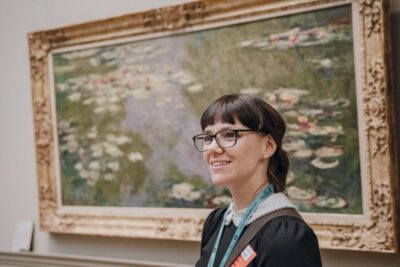

Browse the lists this tour appears in