
Reviewed · HISTORICAL TOURS
NYC’s History of Comedy Tour
New York’s comedy story is written into the streets of Greenwich Village. This walking tour connects old vaudeville, radio, dinner clubs, television, and modern stand-up, with stops at places such as Cafe Wha?, The Bitter End, and the Comedy Cellar. Guide Joe uses photographs to make vanished venues and famous performers easier to picture.
I like two things right away: the tour gives you a useful map of New York comedy instead of focusing on one club, and it ends at the Village Underground, where you receive access to a local stand-up show later that evening. The main consideration is timing. The tour is advertised at about 1 hour 15 minutes, while one description calls it closer to two hours, so you should leave some flexibility in your schedule.
In This Review
- Key points at a glance
- Why this tour works for comedy fans
- Starting at Gay Street and Christopher Street
- The Duplex and Cafe Wha? in five-minute snapshots
- The Bitter End and Cafe Au Go Go
- Television, Saturday Night Live, and wider comedy history
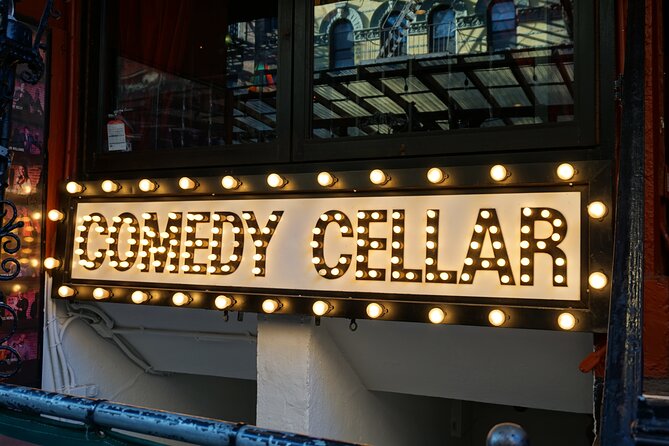
- The Comedy Cellar and the familiar marquee
- Finishing at the Village Underground
- What you get for $30
- Timing, comfort, and who should book
- Booking and cancellation details
- Should you book NYC’s History of Comedy Tour?
- FAQ
- Where does the NYC’s History of Comedy Tour begin?
- Where does the tour end?
- How long does the tour last?
- Is a comedy show included?
- What language is the tour offered in?
- How many people can join the tour?
Key points at a glance
- Greenwich Village is the main stage: The route begins at Gay Street and Christopher Street and finishes near the Comedy Cellar.
- Joe brings visual aids: Photos help explain clubs, performers, and venues that have changed or disappeared.
- The story covers more than stand-up: You hear about vaudeville, radio, dinner clubs, television, African American comedy, and Saturday Night Live.
- The Comedy Cellar is a highlight: You visit both the familiar MacDougal Street area and the Village Underground location.
- A show may follow the walking tour: The tour includes free access to a local stand-up comedy performance later that night.
- Small-group size keeps it personal: The maximum group size is 20 people, with morning and afternoon start options.
Why this tour works for comedy fans
Many New York comedy outings begin and end with the Comedy Cellar. This one gives you the longer story. You start with early twentieth-century vaudeville, then move through the dinner-club and radio years of the 1930s and 1940s before reaching television and modern stand-up.
That wider view is the tour’s real value. You are not simply being shown a famous marquee. You are shown how comedy shifted from stage variety acts to radio performers, from nightclub hosts to television writers and live club comics.
I especially like the use of photographs. Comedy venues change quickly, and some of the buildings you see no longer look as they did during their most important years. A picture can show you the old room, the performer who worked there, or the sign that once drew audiences inside.
Guide Joe is described as friendly, funny, patient, and well informed about New York show business. One person who arrived 15 minutes late found that he was willing to accommodate the delay. That is useful to know in Manhattan, where a missed subway connection or a crowded sidewalk can easily upset a tight schedule.
The group limit of 20 is another plus. This is not a large bus tour with a guide speaking over a crowd. You should have a fair chance to ask about clubs, neighborhoods, performers, and the changing comedy business. The tour is offered in English, with morning and afternoon options.
More New York City history walks:
- New York City: American Museum of Natural History Ticket
★ 4.5 · 15,447 reviews - NYC: Starship Landmark 90 Minute Sightseeing Cruise
★ 4.6 · 3,666 reviews - Starship Landmark 90 Minute Sightseeing Cruise
★ 4.5 · 2,073 reviews
Starting at Gay Street and Christopher Street
The meeting point is 13 Christopher Street, at the famous intersection with Gay Street. This opening stop lasts about 10 minutes and sets up the full story.
Your guide begins with comedy in the early 1900s, especially vaudeville. That period matters because comedy was often part of a larger bill, alongside music, dance, novelty acts, and other stage entertainment. It helps explain why later New York comedy developed such a strong connection to clubs and live performance.
The discussion then moves into the 1930s and 1940s, when dinner clubs and radio helped performers reach wider audiences. You get a sense of how a comedian’s career could move from a live stage to a broadcast audience, and how New York served as a meeting point for those worlds.
This is a street-corner explanation, not an indoor museum visit. You will be standing outside while Joe talks and shows photographs. Comfortable shoes are a sensible choice, and you should be ready for normal city noise and foot traffic.
The Duplex and Cafe Wha? in five-minute snapshots
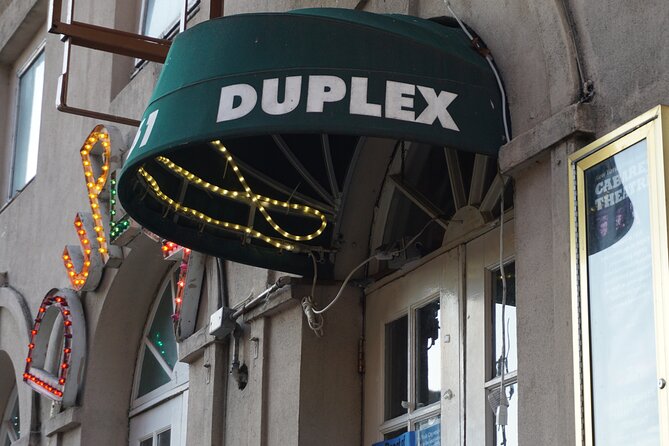
The next stop is The Duplex, a historic Greenwich Village venue linked with comedians who developed their careers there. The stop lasts about five minutes, so expect a brisk explanation rather than a long visit inside.
The value here is the connection between a small local room and the larger comedy circuit. Places like The Duplex gave performers a chance to test material in front of a live audience. For you, the stop helps turn an ordinary-looking Village address into part of a larger performance story.
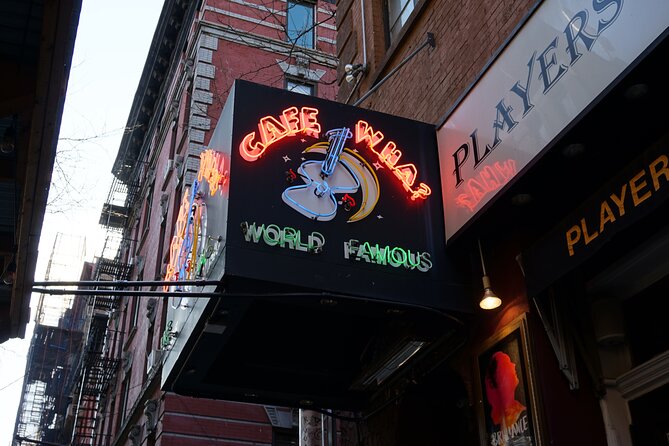
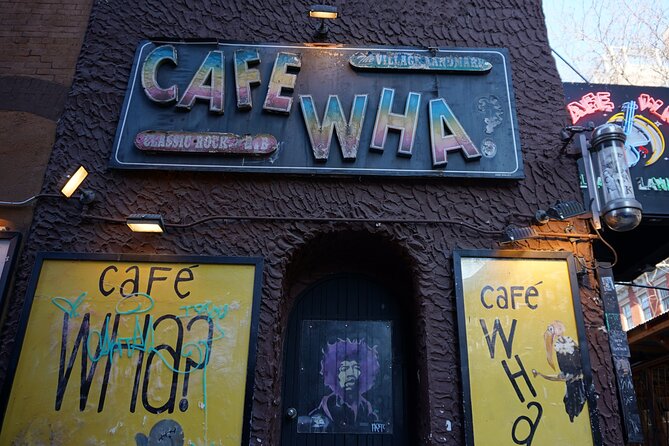
At Cafe Wha?, your guide spends another five minutes explaining the club’s comedy past and the performers associated with it. The venue is well known for its place in Greenwich Village entertainment, and the tour uses photographs to show how the room fit into the neighborhood’s club culture.
These short stops work best if you enjoy context. You are not attending a show at either venue during the walk. Instead, you learn why these rooms mattered and how performers used them as stepping stones.
The Bitter End and Cafe Au Go Go
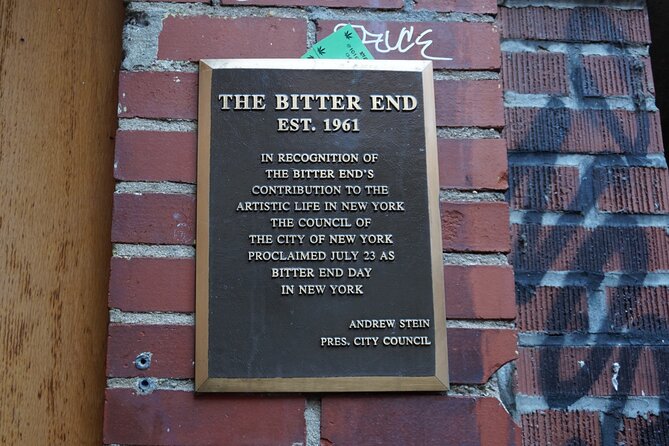
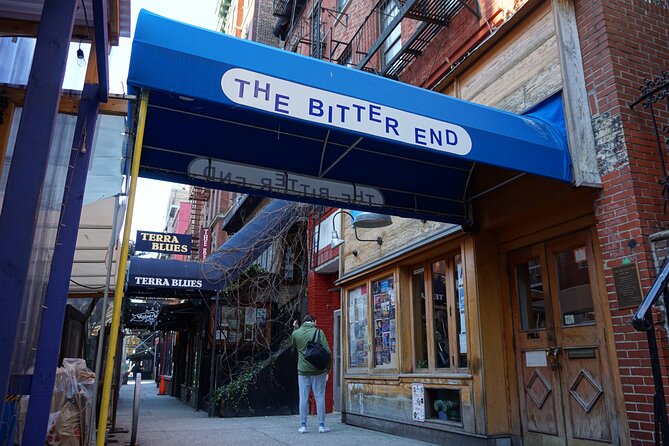
The Bitter End stop lasts about 10 minutes and also covers Cafe Au Go Go. Your guide explains the comedy connections of both venues and points out performers who rose through them.
This part of the route broadens the picture again. Greenwich Village was not shaped by one type of entertainment. Music, comedy, and nightclub performance overlapped, and the same neighborhood could support several kinds of acts.
The Bitter End remains a useful point of reference because it reminds you that New York’s entertainment history is not only found in purpose-built theaters. Small clubs often gave performers a room, a microphone, and a demanding audience. Those conditions helped shape the direct, audience-aware style associated with stand-up.
Since this is an outdoor walking tour, the experience depends on your guide’s storytelling. Joe’s photographs and explanations are important here. Without them, a short stop outside a club could feel like a simple photo opportunity. With them, the address becomes part of the route from old nightclub comedy to the clubs you know today.
Another side of New York City for the same day:
- NYC: SUMMIT One Vanderbilt Tickets
★ 4.7 · 51,195 reviews - NYC: 9/11 Memorial & Museum Timed-Entry Ticket
★ 4.8 · 31,428 reviews - NYC: Empire State Building Tickets – Observatory & Museum
★ 4.7 · 25,757 reviews - New York City: Statue of Liberty & Ellis Island with Ferry
★ 4.6 · 18,683 reviews
Television, Saturday Night Live, and wider comedy history
At The Grisly Pear Comedy Club, the focus shifts to the 1960s and the rise of television. This 10-minute stop also covers the creation of Saturday Night Live, African American contributions to comedy, and major modern comedy clubs in New York City.
This is one of the most useful sections for anyone who knows comedy mainly through television. The tour connects live club performance with the way television changed the careers of writers, performers, and sketch-comedy ensembles.
The discussion of African American contributions is also important. A history of New York comedy would be incomplete without recognizing the performers and traditions that shaped American entertainment, often in the face of limited access and unequal treatment. The supplied details do not name the specific figures Joe covers, so you should treat this as a broad historical section rather than a promised list of particular biographies.
The mention of Saturday Night Live gives the stop a clear modern link. You hear how a major comedy program came together and how New York’s live-performance culture helped create the conditions for sketch comedy on television.
The Grisly Pear is also where Joe notes some of the city’s best-known modern comedy clubs. That makes this a practical point in the tour. If you want to see more comedy during your stay, pay attention and ask questions about which rooms might fit your interests.
The Comedy Cellar and the familiar marquee
The Comedy Cellar stop lasts about seven minutes. Joe explains the club’s history and offers to take photographs of you in front of the famous marquee.
For many people, this will be the emotional high point of the walk. The Comedy Cellar is one of the best-known names in New York stand-up, and seeing the marquee gives you a clear link between the historical story and the present-day comedy circuit.
Still, keep your expectations in check. This stop is not a comedy performance and does not promise entry to a Comedy Cellar show itself. It is a brief history lesson and photo opportunity outside the venue.
That distinction matters because comedy fans may arrive expecting a club visit. The tour does give you access to a local stand-up show later in the evening, but the information provided does not say that this is a Comedy Cellar performance. Ask Joe for the exact details of the show included with your tour.
Finishing at the Village Underground
The last stop is the Village Underground, another Comedy Cellar location. The explanation lasts about seven minutes, and the route ends at 130 West 3rd Street, near this venue.
Ending here is practical. You finish close to a working comedy room rather than being returned to the first meeting point. That gives you a natural chance to continue your evening in the area, especially if you use the included access to a local stand-up show.
Joe also points out the second Comedy Cellar location here. For someone trying to understand how New York comedy operates, that is a useful detail. A comedy brand can have more than one room, and the surrounding Village streets form part of the larger circuit.
The exact amount of walking between stops is not provided. The individual explanations add up to about 54 minutes, so the rest of the advertised 75 minutes allows for walking and transitions. One account describes the outing as lasting two hours, so I would not schedule a meal, theater curtain, or timed attraction immediately afterward.
What you get for $30
The price is $30 per person. That is fair if you care about comedy history and plan to use the included show access.
You are paying for a guided walk through one of New York’s most important entertainment districts, a focused historical narrative, photographs, and practical information about current comedy clubs. The possible show later that evening makes the price easier to justify, though you should confirm the exact show arrangements with the guide.
The value is weaker if you only want a quick look at the Comedy Cellar. You could walk through Greenwich Village on your own, take a photo outside the marquee, and spend nothing on a guide. The tour earns its price through the connections between the stops, especially the movement from vaudeville and radio to television and modern stand-up.
I would also count the small group as part of the value. With a maximum of 20 people, Joe can answer questions and adjust his explanations to the group. The personal style is one of the experience’s most praised features, along with his humor, patience, and enthusiasm.
Timing, comfort, and who should book
The tour offers morning and afternoon departure choices. That makes it easier to fit around museums, shopping, a Broadway performance, or an evening comedy show.
Because the tour ends near the Village Underground, an afternoon departure may work well if the included stand-up show takes place later that night. A morning departure may suit you if you want to spend the afternoon visiting other Greenwich Village sights. The exact show time is not provided, so check before building your schedule around it.
Most people can participate, and service animals are allowed. The tour is near public transportation, but the provided information does not give a detailed accessibility description or state the walking distance. If you have mobility concerns, ask the provider before booking.
The best audience is clear:
- You enjoy stand-up, sketch comedy, or American show business.
- You want background before attending New York comedy clubs.
- You like neighborhood walks with historical context.
- You are planning several comedy shows during your visit.
- You prefer a small group and a guide who welcomes questions.
This is less suited to someone who wants a full comedy performance during the walk, a museum-style indoor experience, or a detailed biography of every famous comedian connected with New York.
Booking and cancellation details
Confirmation is provided when you book, and the experience uses a mobile ticket. You do not need to print a paper voucher based on the information provided.
The tour is commonly booked about 21 days ahead. That does not guarantee that every date sells out, but it suggests that planning ahead is sensible, especially if you want a specific morning or afternoon departure.
Free cancellation is available up to 24 hours before the start time for a full refund. Cancellations or changes made within 24 hours are not accepted for a refund, and the cut-off follows local New York time.
Should you book NYC’s History of Comedy Tour?
Book it if comedy is a real part of your New York plans. The route gives you more than famous club names. It explains how vaudeville, radio, dinner clubs, television, African American performers, Saturday Night Live, and modern stand-up fit into one city story.
The strongest reasons to go are Joe’s friendly and interactive style, the photographs that bring old venues to life, the small group, and the chance to attend a local comedy show afterward. At $30, that is a good deal for a comedy fan who will make use of the evening access.
Skip it if you want a performance instead of a history walk, or if your schedule is too tight to allow for a tour that may run longer than the stated 1 hour 15 minutes. For everyone else, this is a smart way to get your bearings in Greenwich Village and understand why so many American comedy careers passed through these few streets.
FAQ
Where does the NYC’s History of Comedy Tour begin?
The tour begins at 13 Christopher Street in New York City, at the intersection of Gay Street and Christopher Street.
Where does the tour end?
The tour ends at the Village Underground, one of the Comedy Cellar locations, at 130 West 3rd Street.
How long does the tour last?
The tour is listed as approximately 1 hour 15 minutes. One description places the experience closer to two hours, so allow extra time for walking and discussion.
Is a comedy show included?
You receive access to a local stand-up comedy show later that evening as a benefit of attending the tour. The provided details do not identify the show or state that it takes place at the Comedy Cellar.
What language is the tour offered in?
The tour is offered in English.
How many people can join the tour?
The maximum group size is 20 people. Morning and afternoon tour options are available.
Just listed around New York City
- NYC: Little Shop of Horrors Off-Broadway Ticket5 reviews
- Private NYC Airport Transfer: LGA to Manhattan – Up to 5★ 3.6 · 5 reviews
- New York City Tour in German★ 4.5 · 5 reviews
- New York: Hamilton and Washington Revolutionary Walking Tour★ 5.0 · 5 reviews
- NYC Freedom Tower Private Photo or Video Experience★ 4.0 · 6 reviews
- New York Afternoon Fall Foliage Cruise with Lunch★ 5.0 · 6 reviews
- Brooklyn Walking Tours by Locals: Private & 100% Personalized★ 4.0 · 6 reviews
- Southold Bay Oyster Farm Tour★ 5.0 · 6 reviews
Historical Tours, compared.

Starship Landmark 90 Minute Sightseeing Cruise
Read our review →
Starship Landmark 90 Minute Sightseeing Cruise
Read our review →
American Museum of Natural History Admission Ticket
Read our review →
Top Rated Brooklyn Half-Day Food, History & Culture Tour via bus
Read our review →
The Original Greenwich Village Food & Cultural Tour Since 1999
Read our review →
The Speakeasy Adventure: A Tipsy Trip Through History
Read our review →Browse the lists this tour appears in