
Reviewed · LOWER EAST SIDE & EAST VILLAGE TOURS
Tenement History and Immigrant Life in the Lower East Side
New York’s immigrant story is easiest to grasp when you walk through the streets where it unfolded. This tour begins near the former Five Points district, follows tenement-lined blocks through Chinatown and the Lower East Side, and ends with a rooftop look back at the city’s changing housing patterns. Guide Rob Arnell uses photographs and maps to connect ordinary buildings with the people who lived in them.
I like the small maximum of five people, which gives you room to ask questions and lets Rob adjust the pace. I also like the route’s range: Jewish, Italian, and Chinese New York all enter the story, along with reformers, bathhouses, newspapers, parks, and changing housing laws. The main drawback is simple: this is a walking tour, and two to three hours on city sidewalks calls for comfortable shoes, water, and a moderate level of fitness.
In This Review
- Key points to know before booking
- Why this Lower East Side walk is different
- Foley Square and the Five Points story
- Columbus Park and Jacob Riis’s photographs
- Tenement streets and the laws that changed them
- Chinatown views and East Broadway architecture
- Eldridge Street Synagogue and Jewish Lower East Side life
- Parks, photographs, and a Jewish newspaper
- The Tenement Museum connection, and an important clarification
- Delancey Street and the old bathhouse
- The Hotel Indigo rooftop finish
- What $59 buys you
- Timing, walking, and who should book
- Should you book Tenement History and Immigrant Life in the Lower East Side?
- FAQ
- Where does the tour begin?
- Where does the tour end?
- How long does the walking tour last?
- Is admission to the Tenement Museum included?
- How many people can join the tour?
- Is the tour offered in English?
- What happens if the weather is poor?
Key points to know before booking
- The tour begins at Foley Square, near the former Five Points and Mulberry Bend districts.
- Rob Arnell uses visual aids, including photographs and maps, to show how streets and tenements changed.
- The route connects Chinatown with the Lower East Side, covering Jewish, Italian, and Chinese immigrant experiences.
- You do not enter the Tenement Museum, and this tour has no affiliation with that institution.
- The group is limited to five people, with morning and afternoon departures available.
- The finish is at Hotel Indigo, where rooftop views help you read the neighborhood from above.
Why this Lower East Side walk is different
Many New York history tours point out famous buildings, then move on. This one pays attention to the less glamorous structures that shaped daily life: crowded housing, public baths, discount clothing stores, newspapers, parks, and streets where new arrivals built working lives.
That focus gives the tour a useful scale. You are not only hearing about immigration as a broad national story. You are looking at the blocks where families rented rooms, shopped, worshiped, washed, read the news, and gradually moved into better housing as city rules changed.
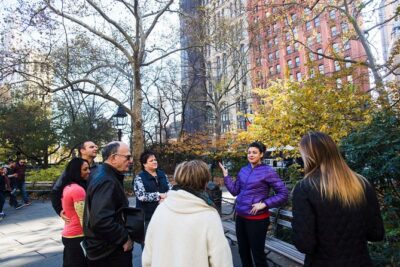
The experience is led by Rob Arnell, whose approach is heavily centered on explanation and conversation. He brings visual material along the route, answers questions, and can adjust the emphasis to suit the group. If you want a general introduction, he can lay out the full story. If you already know the basics, you can ask about architecture, city growth, or a particular immigrant community.
The small size matters here. With no more than five people, you are less likely to lose the guide’s explanation in city noise, and it is easier to pause at an overlooked building. The pace can also be adapted to the group, though you should still expect steady walking.
More Lower East Side walks:
- Lower East Side Food Tour: Taste NYC’s American Dream
★ 5.0 · 1,031 reviews - NYC Lower East Side Walking and Food Tour
★ 5.0 · 646 reviews - NYC: Taste the American Dream a Lower East Side Food Tour
★ 4.8 · 307 reviews
Foley Square and the Five Points story
The tour opens at Foley Square, near Lafayette Street, Worth Street, and Centre Street. This area was once associated with Five Points and Mulberry Bend, two districts long described in New York’s darker urban history.
The important point is not simply that these places were notorious. The stop introduces the idea of the tenement, a form of purpose-built housing created for working-class residents, many of them poor immigrants. From here, Rob places tenement life within the larger growth of Manhattan.
This opening is brief, about 15 minutes, but it gives the rest of the walk a clear frame. You begin by thinking about why this housing appeared, who needed it, and how city officials gradually responded to difficult conditions.
Do not expect preserved Five Points streets or a reconstructed slum. The value is in understanding what occupied this part of Manhattan and how the city’s housing story developed nearby. If you need a dramatic ruin or a museum interior, this first stop may feel modest. If you enjoy reading the modern city through its earlier uses, it is a smart beginning.
Columbus Park and Jacob Riis’s photographs
A short stop at Columbus Park brings in Jacob Riis and his influential book, How the Other Half Lives. The park occupies ground tied to communities that once lived between Chinatown and the Court District.
The tour uses Riis’s photographs to make the past more immediate. These images are not decoration. They help you picture the crowded rooms, streets, and families that written descriptions can leave abstract.
The stop itself lasts only about five minutes, so it is more of a focused pause than a long presentation. That keeps the route moving, but it also means you may want to ask questions while the subject is fresh.
Riis’s work also opens a useful discussion about how New York saw its poor. His photographs helped draw attention to housing conditions, but the tour does not reduce immigrant life to misery. Tenement buildings were not all alike, and not every tenement was part of a slum. That distinction is one of the more valuable ideas carried through the walk.
Tenement streets and the laws that changed them
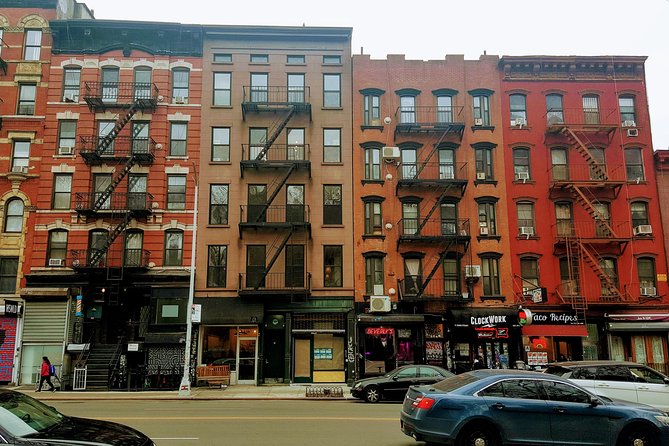
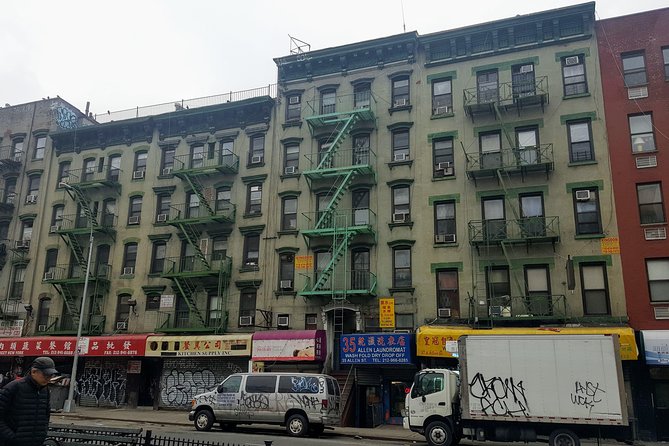
The central section runs along the Lower East Side, where tenement buildings appeared in large numbers from the mid-19th century into the early 20th century. Here, the tour becomes less about one landmark and more about learning how to read a block.
Rob points out different tenement types from different periods. You look for changes linked to new housing laws and see how construction evolved over several decades. Windows, courtyards, light, ventilation, and shared facilities all become part of the story, even when the buildings look like ordinary city apartments today.
This is where visual aids are especially useful. A photograph or map can show what a building looked like before alterations, or clarify how a law affected design. The past becomes a comparison exercise: look at the street, then consider what earlier residents faced and what later rules attempted to fix.
I appreciate that the tour avoids treating every old apartment building as a symbol of extreme poverty. Living conditions could be hard, but the buildings and communities were not identical. That makes the interpretation more credible and gives you a better understanding of how immigrant neighborhoods changed rather than simply disappeared.
More New York City history walks:
- New York City: American Museum of Natural History Ticket
★ 4.5 · 15,447 reviews - NYC: Starship Landmark 90 Minute Sightseeing Cruise
★ 4.6 · 3,666 reviews - Starship Landmark 90 Minute Sightseeing Cruise
★ 4.5 · 2,073 reviews - American Museum of Natural History Admission Ticket
★ 4.0 · 1,931 reviews
Chinatown views and East Broadway architecture
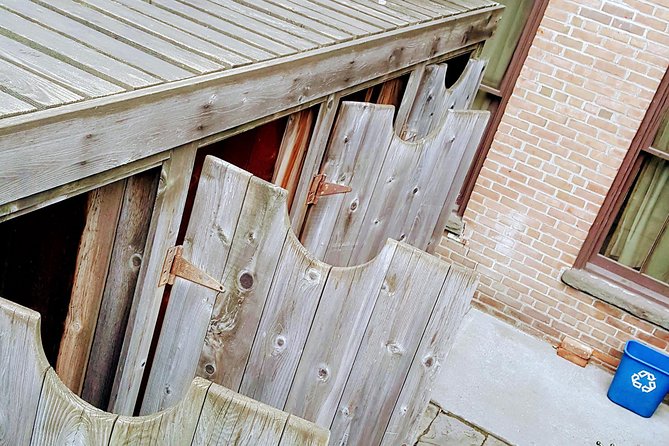
The route includes East Broadway, one of Chinatown’s important street scenes, with views toward the Municipal Building and Woolworth Building. These landmarks broaden the tour beyond tenement interiors and show how the Lower East Side relates to the larger civic center of Manhattan.
You also get a look at less obvious historic details along the way. The point is not a checklist of grand buildings. It is the contrast between major towers, neighborhood streets, commercial activity, and the older structures that continue to share the same blocks.
The Chinese experience enters the tour as part of the neighborhood’s ongoing story. Earlier Jewish and Italian communities are not presented as the final chapter. Chinatown is part of the area’s continuing pattern of arrival, adaptation, and change.
If you want a food stop, one detailed account of the tour included a recommendation for dumplings in Chinatown. That is not listed as a formal inclusion, so treat it as a possible personal suggestion from the guide, not a promised meal. Bring a snack and water instead, especially if you book the longer afternoon option or tend to get hungry while walking.
Eldridge Street Synagogue and Jewish Lower East Side life
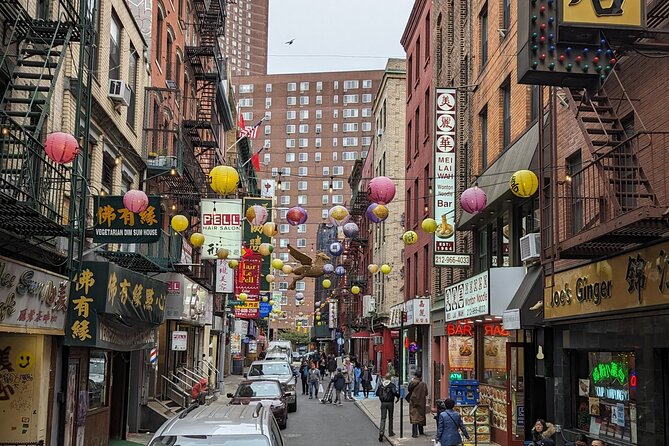
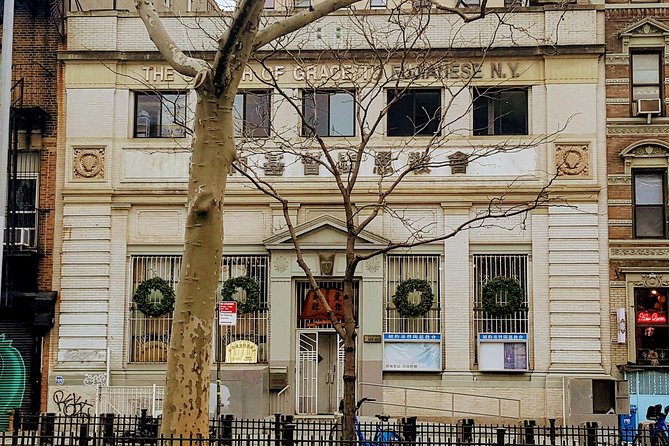
The Eldridge Street Synagogue is one of the route’s most striking buildings and the point where the Jewish experience receives fuller attention. Its architecture provides a strong physical entry into the story of Jewish immigrants who helped shape the Lower East Side.
The discussion places Jewish life alongside the earlier immigrant waves and stresses that each group had its own experience. That is important. New York’s immigrant neighborhoods were not one single culture with different accents. They included distinct religious traditions, languages, businesses, institutions, and paths through the city.
You should understand the stop as an exterior-focused part of the walking route. The tour information does not promise admission inside the synagogue, so do not book it expecting an interior visit.
Parks, photographs, and a Jewish newspaper
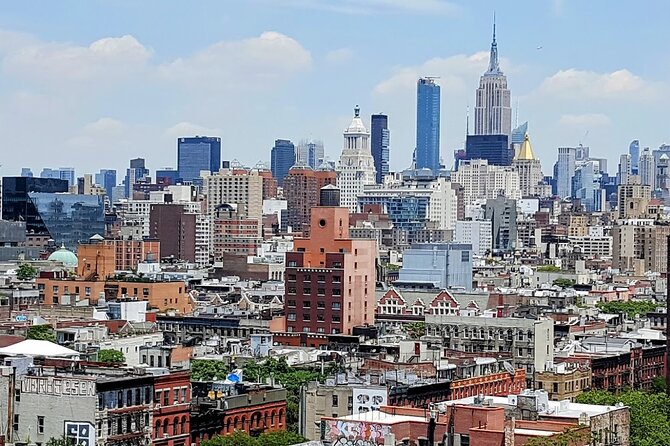
Another neighborhood park provides a glimpse into the public life of the old Lower East Side. It was among the area’s early parks, and its opening day was so crowded that people filled the available space.
Here, more images from How the Other Half Lives help bring former residents into view. Parks mattered in a district where private space was often limited. They offered room for fresh air, public gatherings, and a break from crowded housing.
The route also passes a newspaper that served as an institution for the Jewish community. This is a small but meaningful detail. A community newspaper can tell you as much about immigrant life as a synagogue or apartment building, because it reflects language, politics, local concerns, and a shared public voice.
The exact newspaper is not specified in the tour details, so the guide’s explanation at the stop will supply the name and context. This is a good example of why the tour works best for curious walkers who enjoy asking follow-up questions.
The Tenement Museum connection, and an important clarification
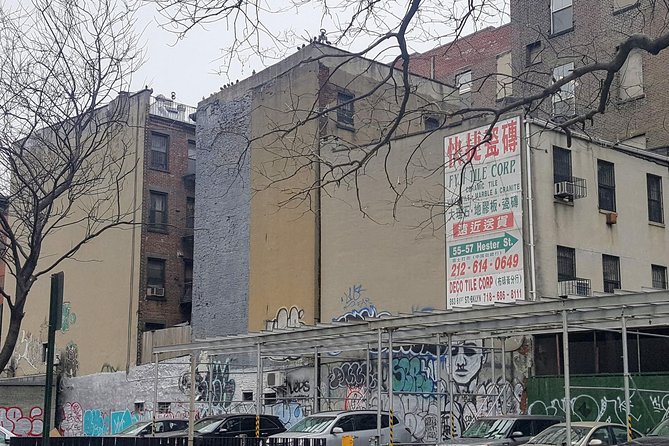
At one point, you pass behind the Tenement Museum, where recreated rooms, outhouses, and clotheslines help visitors picture earlier tenement life. The walking tour does not include admission to the museum.
This distinction matters. The tour is not operated by, sponsored by, or affiliated with the Tenement Museum. It is a separate experience that explores the wider neighborhood from the street.
The two experiences can complement each other. The museum offers reconstructed interiors and a more contained presentation. This tour covers a wider area, connects several immigrant communities, and places housing within the development of Manhattan. If you want both, book museum admission separately and allow enough time to avoid rushing between plans.
Check your meeting details carefully before setting out. A past booking problem involved conflicting times on a ticket, and the operator has indicated that issue was corrected. Still, confirm the start time shown for your booking and contact the operator promptly if anything looks unclear.
Delancey Street and the old bathhouse
Delancey Street brings in the commercial side of immigrant life. It was once known for discount clothing outlets, and that detail helps explain how working families bought practical goods in the neighborhood.
The tour also stops near the Allen Street bathhouse. It operated from 1905 to 1975 and was one of about a dozen bathhouses in the area. It lasted the longest before being converted into a church.
For me, these stops add texture because they deal with everyday needs rather than only religion or housing. Clothing, washing, and public services all mattered to families living in crowded apartments. They also show how buildings can change purpose while retaining traces of the neighborhood’s earlier needs.
The bathhouse is an exterior stop, and the route does not promise entry into the former facility. You are learning what it did and why such places mattered, not taking a guided tour of its interior.
The Hotel Indigo rooftop finish
The tour ends at Hotel Indigo Lower East Side New York, at 171 Ludlow Street. From the upper-floor lobby and rooftop area, you look back over the streets you have walked.
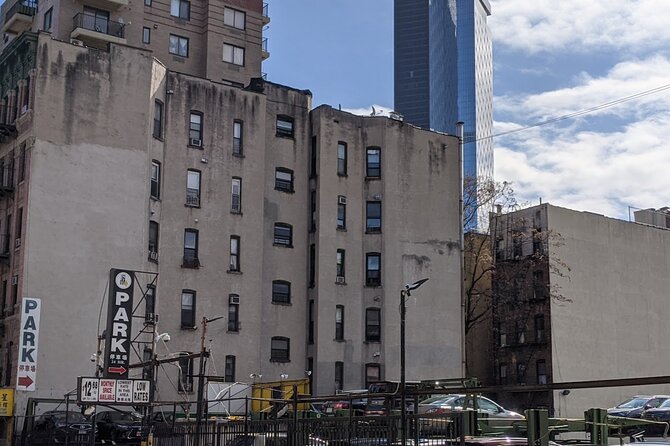
This final view is more than a photo stop. From ground level, tenement differences can be easy to miss. From above, you can compare building heights, rooflines, blocks, and the spread of later construction. Rob uses the bird’s-eye view to help identify different eras shaped by tenement laws.
You also get views toward Midtown, creating a satisfying link between the neighborhood scale and the larger city. The rooftop portion lasts about 10 minutes, so it is a brief ending rather than a long lounge visit.
Access is described as ending on the rooftop or upper-floor lobby area. Since the tour details do not promise food, drinks, or a reserved rooftop table, plan on the view and the closing explanation rather than a full rooftop experience.
What $59 buys you
At $59 per person, this is not the cheapest way to walk around the Lower East Side. You can explore the streets independently for free, and many landmarks on the route are viewed from outside.
The value comes from the guide’s interpretation. Rob supplies the sequence that turns separate buildings into a story about housing, migration, reform, religion, commerce, and urban change. His maps and photographs also save you from having to research every block in advance.
The maximum group size of five improves that value. You are paying for a small, guided experience rather than a large crowd following a flag. The format is especially useful if you want to ask why a building looks different from its neighbor or how one community followed another.
I would not choose this tour solely for sightseeing photographs. The views are a bonus. Choose it if you want context, patient explanations, and a better way to understand what you are seeing.
Timing, walking, and who should book
The tour runs approximately two to three hours, with morning and afternoon options. The actual pace can vary depending on questions and the group’s interests.
Wear comfortable walking shoes. You need a moderate level of physical fitness, and water plus a snack are recommended. The route includes city sidewalks and several stops, but no special equipment is listed.
This tour suits adults, families with older children, and teenagers who can stay engaged with a history-focused walk. A 16-year-old participant was specifically included in a successful family outing, which suggests the subject can work well for curious teens when presented interactively.
I would also recommend it to repeat visitors who want more than the usual Manhattan landmarks. It is less suitable if you dislike walking, need a fully indoor activity, or want a museum ticket included.
The tour is offered in English, uses a mobile ticket, and allows service animals. It begins at Foley Square and ends at Hotel Indigo, so plan your next activity from the Lower East Side rather than assuming you will finish back downtown.
Should you book Tenement History and Immigrant Life in the Lower East Side?
Book it if you want to understand how immigrant communities shaped New York through ordinary buildings and daily institutions. The strongest parts are Rob Arnell’s detailed explanations, the small group, the visual material, and the wide route from Five Points to Chinatown and the Lower East Side.
Choose something else if your priority is entering historic apartments, since museum admission is not included. Also skip it if two to three hours of walking sounds tiring.
For $59, I see good value for a traveler who wants a thoughtful introduction to Lower East Side history rather than a quick collection of photo stops. Confirm the meeting time, bring water, and keep the Tenement Museum distinction clear. With those expectations in place, this is a focused way to see a part of New York that rewards attention.
FAQ
Where does the tour begin?
It begins at Foley Square near Lafayette Street, Worth Street, and Centre Street in New York City.
Where does the tour end?
The tour ends at Hotel Indigo Lower East Side New York by IHG, 171 Ludlow Street, New York, NY 10002.
How long does the walking tour last?
The experience lasts approximately two to three hours.
Is admission to the Tenement Museum included?
No. The tour passes near the museum but does not include admission, and the tour operator is not affiliated with the Tenement Museum.
How many people can join the tour?
The maximum group size is five travelers.
Is the tour offered in English?
Yes. The tour is offered in English.
What happens if the weather is poor?
The experience requires good weather. If it is canceled because of poor weather, you will be offered another date or a full refund.
Just listed around New York City
- NYC: Little Shop of Horrors Off-Broadway Ticket5 reviews
- Private NYC Airport Transfer: LGA to Manhattan – Up to 5★ 3.6 · 5 reviews
- New York City Tour in German★ 4.5 · 5 reviews
- New York: Hamilton and Washington Revolutionary Walking Tour★ 5.0 · 5 reviews
- NYC Freedom Tower Private Photo or Video Experience★ 4.0 · 6 reviews
- New York Afternoon Fall Foliage Cruise with Lunch★ 5.0 · 6 reviews
- Brooklyn Walking Tours by Locals: Private & 100% Personalized★ 4.0 · 6 reviews
- Southold Bay Oyster Farm Tour★ 5.0 · 6 reviews
Lower East Side & East Village Tours, compared.
Lower East Side Food Tour: Taste NYC’s American Dream
Read our review →
Taste the American Dream a Lower East Side Food Tour
Read our review →
East Village Rock and Roll Tour *Rock Junket Tours
Read our review →

Guided tour of Lower East Side, Chinatown and Little Italy in French
Read our review →Browse the lists this tour appears in