
Reviewed · 9/11 MEMORIAL & GROUND ZERO TOURS
The 9/11 Full Story Tour
The most valuable part of The 9/11 Full Story Tour is its focus on the surrounding streets and buildings, not only the two famous memorial pools. A guide connects the memorial to the wider World Trade Center site, nearby refuge points, damaged buildings, and the people whose choices shaped that terrible day.
I like the small maximum of 25 people, which makes it easier to ask questions, and I like the calm walking pace that leaves room for photos and conversation. The main thing to know is that the 9/11 Museum is not included, so you’ll need a separate $40 ticket if you want to go inside.
In This Review
- Key points to know before booking
- Why this 9/11 tour feels different from a quick memorial stop
- Starting at the Jacob Wrey Mould Fountain
- Seeing the World Trade Center site as a whole
- The two memorial pools and the names around them
- What you do not get at the 9/11 Museum
- Brookfield Place and the places that offered refuge
- America’s Response Monument and the wider aftermath
- The guides: Jon Noto, Garrett, and John Gallagher
- Is $29 a good value?
- Who should book this walk?
- Final call: book the walk or visit on your own?
- FAQ
- How long is The 9/11 Full Story Tour?
- How much does the tour cost?
- Is the 9/11 Museum included?
- Is the observatory included?
- Where does the tour begin?
- What time does the tour start?
- Where does the tour finish?
- How large can the group be?
- Can I cancel for a full refund?
Key points to know before booking
- The memorial pools are the heart of the tour: You’ll visit both pools and learn about many of the names engraved around them.
- The route goes beyond the memorial: Brookfield Place, nearby buildings, and sites connected to the aftermath add useful context.
- The guide shapes the experience: Jon Noto, Garrett, and John Gallagher are among the guides associated with this tour.
- Museum entry costs extra: The walking tour does not include admission to the National 9/11 Memorial & Museum.
- The route ends near the Oculus: You finish by the memorial pools on the western side of the Oculus, close to lower Manhattan transit.
- The subject is serious but not grim every minute: Brookfield Place and the America’s Response Monument add variety to a heavy morning.
Why this 9/11 tour feels different from a quick memorial stop
Many people visit the 9/11 Memorial, pause beside the waterfalls, read a few names, and move on. That can be moving, but it leaves out much of the story. This two-hour walk gives you time to ask how the attack affected the surrounding district and what happened to the people who escaped.
The tour covers buildings that were destroyed, buildings that survived, and places that took on a new role after the attacks. That wider view matters. The memorial pools mark the footprints of the former towers, but the streets around them show how lower Manhattan changed and recovered.
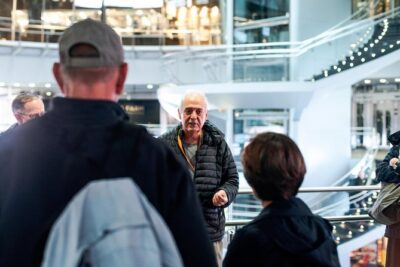
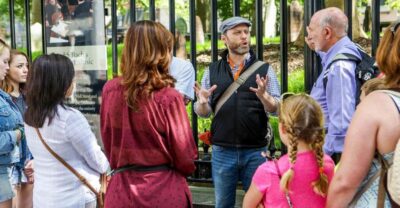
I also like that the tour is built around questions. If you have wondered how the towers failed, what happened in nearby buildings, or where people found safety, you can raise those points as you walk. Jon Noto is especially noted for using photographs on an iPad to explain details, while Garrett is praised for a lively delivery that can shift from humor to quiet respect when the subject calls for it.
The tone is not casual in a careless way. The emphasis is on honoring the people who died and the first responders who acted that day. Still, the guide includes lighter stops and stories about New York, which helps the morning feel human rather than like two straight hours of tragedy.
More 9/11 Memorial and Ground Zero visits:
- NYC: 9/11 Memorial & Museum Timed-Entry Ticket
★ 4.8 · 31,428 reviews - 9/11 Memorial, Ground Zero Tour with Optional 9/11 Museum Ticket
★ 5.0 · 6,381 reviews - 9/11 Memorial Museum Admission Ticket
★ 4.5 · 6,376 reviews
Starting at the Jacob Wrey Mould Fountain
The tour begins at the Jacob Wrey Mould Fountain at 43 Park Row at 10:00 am. This is a useful starting point for a lower Manhattan walk because it places you near several transit options and the historic Civic Center area.
Arrive with comfortable shoes and enough time to find the fountain. The tour is outdoors, and the route includes steady walking between stops. Most people can take part, and service animals are allowed.
A mobile ticket keeps the arrival simple. You’ll receive confirmation when you book, and the group can include up to 25 people. That is not a private walk, but it is small enough for a guide to speak directly to the group and handle questions without turning the experience into a large crowd exercise.
The route ends near WTC Cortlandt, by the memorial pools on the western side of the Oculus. Because the tour starts and ends at different points, you should not plan on returning to Park Row before lunch. The finish is convenient for continuing around the World Trade Center district, shopping at Brookfield Place, or using nearby public transportation.
Seeing the World Trade Center site as a whole
The first part of the walk introduces the World Trade Center Memorial Foundation and the buildings affected by the attacks. This opening section is short, about 15 minutes, but it sets up the larger story.
You’ll hear about places that are gone and those that remain. That distinction is important because the district is now filled with new towers, memorial spaces, transportation links, and public areas. Without a guide, it can be hard to understand which parts relate directly to the former complex and which belong to the later rebuilding effort.
The opening also brings attention to the people the tour aims to honor. The stated focus is not only the mechanics of the attack, but also the firefighters, police officers, emergency workers, office workers, passengers, and others who faced the crisis.
This is where a strong guide matters most. John Gallagher is praised for adding extra stops, including churches, while Jon Noto is known for extensive research and a clear answer to detailed questions. The exact guide can vary, so the personality and presentation may not be identical on every departure.
The two memorial pools and the names around them
The National 9/11 Memorial is the main part of the tour, lasting about an hour. You’ll visit both memorial pools, located in the footprints of the original Twin Towers, and learn about names connected with the attacks.
The pools are large, quiet spaces set within the busy World Trade Center district. Water drops into the square openings, then falls again into a lower center that seems to have no visible end. The design creates a pause in the middle of lower Manhattan, but the tour helps you read the space rather than simply photograph it.
Learning many names gives the memorial a human scale. The guide can explain stories connected with individuals and groups, including brave actions and acts of sacrifice. This is one reason the walk can feel more personal than a self-guided visit.
The subject can be upsetting. One person who booked a private version of the experience was helped in locating the name of a friend who died in the South Tower. That detail shows the kind of personal attention a guide may provide, though you should not assume every group will receive the same amount of individual assistance.
You should also expect pauses. This is not a stop where you rush through a checklist. The guide may speak, answer questions, and allow time for you to look around. If you prefer to explore the memorial in silence, you may want to return later on your own.
Another side of New York City for the same day:
- NYC: SUMMIT One Vanderbilt Tickets
★ 4.7 · 51,195 reviews - NYC: Empire State Building Tickets – Observatory & Museum
★ 4.7 · 25,757 reviews - New York City: Statue of Liberty & Ellis Island with Ferry
★ 4.6 · 18,683 reviews - New York City: American Museum of Natural History Ticket
★ 4.5 · 15,447 reviews
What you do not get at the 9/11 Museum
The walking tour does not include admission to the National 9/11 Memorial & Museum. Museum entry can be purchased separately for $40.
That distinction is important when comparing the total cost. The tour itself is $29 per person, so adding the museum brings the planned spend to $69 before any other purchases. You are paying the $29 for the guide-led outdoor experience, not for museum access.
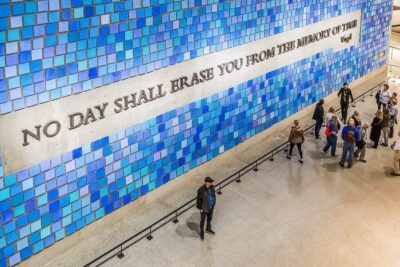
The museum and the memorial serve different purposes. The outdoor tour explains the district, buildings, names, and immediate surroundings. The museum provides an indoor presentation with artifacts, exhibits, and a large amount of historical material. One account of the experience included a museum visit, but the stated tour arrangement here does not include that admission, so check your booking details carefully before assuming you will enter.
If this is your first visit to the World Trade Center site, I would treat the walk and museum as separate parts of one lower Manhattan morning or afternoon. The guide gives you orientation and context. The museum then gives you time to examine objects and displays at your own pace.
Brookfield Place and the places that offered refuge
After the memorial, the tour spends about 20 minutes at Brookfield Place. This is one of the most useful changes of mood in the route.
Brookfield Place is a shopping center with palm trees, open interior space, architecture, and views toward the waterfront. It also served as a refuge for many survivors and first responders after the attacks. That contrast is worth noticing. Today, you see shops and a polished public setting. The guide helps you understand how the same building functioned as a place of safety during a crisis.
I like this stop because it prevents the tour from becoming only a sequence of memorial sites. It shows how ordinary public spaces can become essential in an emergency. It also gives the group a visual and emotional breather after the memorial pools.
The stop can be practical, too. If you need a restroom, a snack, or a short pause, Brookfield Place is a useful place to reset. The tour does not promise a meal break, so do not arrive expecting time for a full lunch. You may want to eat beforehand or plan to return after the walk.
America’s Response Monument and the wider aftermath
The final listed stop is America’s Response Monument, a brief two-minute visit. The monument honors the first American soldiers deployed to the Middle East after the attacks, and it is associated with the events that inspired the film 12 Strong.
This is a small stop, but it broadens the story beyond New York City. The tour begins with the attacks and their immediate effect on lower Manhattan, then points toward the military response that followed.
Do not expect a long talk here. Two minutes is enough for an introduction, a look at the monument, and a link to the larger events. Its value comes from placing the 9/11 story within a wider national and international response.
The guides: Jon Noto, Garrett, and John Gallagher
The guide is the main reason to choose this experience over a self-guided walk. CityShuffles uses guides associated with different styles, but the strongest pattern is careful research paired with an engaging delivery.
Jon Noto is repeatedly praised for extensive preparation, clear explanations, and a sense of humor. He is also noted for projecting his voice well, which matters outdoors when city noise competes with the talk. His use of photographs on an iPad can help you compare the present-day streets with earlier views.
Garrett is described as passionate, smart, funny, and able to handle the emotional weight of the subject with respect. That mix can make a difficult morning easier to follow, especially for a group with different levels of prior knowledge.
John Gallagher is associated with an informative presentation and extra sights, including beautiful churches and Brookfield Place. His approach appears to add more lower Manhattan context around the core 9/11 material.
Because guide assignments can change, do not book expecting one particular person unless the operator confirms it. The common strength is the guide-led format: you can ask questions, stop for clarification, and hear stories that are not obvious from plaques alone.
Is $29 a good value?
At $29, this is a reasonable price for a two-hour walking tour in lower Manhattan, especially if you want interpretation rather than only directions. The value depends on your interest in the subject and your willingness to walk outdoors.
The tour includes the guide, the two-hour route, and free entry to the outdoor stops. It does not include the museum or the observatory, each listed at $40 separately. That makes the tour a modest add-on if you already plan to visit the memorial, but a larger part of the budget if you add both paid attractions.
You are paying for organization and explanation. A self-guided visit costs less, but you would need to research the buildings, locate the relevant sites, and build the story yourself. The guide also makes it easier to ask about specific names, buildings, and survivor experiences.
The 25-person limit supports the price. It is not an intimate private tour, yet it is far more manageable than a large group where questions get lost. If the group reaches the maximum, you may still need to stay close to the guide to hear every detail.
Who should book this walk?
I would choose this tour if you want a respectful introduction to 9/11 and the World Trade Center district before visiting the museum. It suits first-time New York visitors, families with older children, history-minded people, and anyone who prefers stories and explanation to reading signs alone.
It also works well for people who have already visited the memorial but felt they missed the larger picture. The route adds Brookfield Place, refuge sites, affected buildings, and a monument connected to the military response.
You may want a different plan if you only have time for the museum, if you dislike emotionally difficult subjects, or if you want a private walk with a custom schedule. The tour has lighter moments, but its central subject remains loss, heroism, and the aftermath of an attack.
Wear comfortable shoes, bring water, and plan for an outdoor walk. The tour is recommended for all, most people can participate, and it is near public transportation, but the supplied details do not promise a fully step-free route or a weather adjustment policy.
Cancellation is free up to 24 hours before the 10:00 am start. A cancellation within 24 hours is not refunded, and late changes are not accepted.
Final call: book the walk or visit on your own?
Book The 9/11 Full Story Tour if you want the memorial pools explained in context, with time for questions and stories about the people affected. At $29, it offers good value before a separate museum visit, and the small group limit improves the experience.
I would not book it expecting museum entry or an observatory ticket. Think of it as a guided outdoor history walk, then add the $40 museum visit if you want exhibits and artifacts. For a thoughtful first look at the World Trade Center district, this is a strong choice, especially when your guide is Jon Noto, Garrett, or John Gallagher.
FAQ
How long is The 9/11 Full Story Tour?
The tour lasts approximately two hours.
How much does the tour cost?
The listed price is $29 per person.
Is the 9/11 Museum included?
No. Museum admission is not included and can be purchased separately for $40.
Is the observatory included?
No. Observatory admission is separate and can be purchased for $40.
Where does the tour begin?
The meeting point is the Jacob Wrey Mould Fountain at 43 Park Row, New York, NY 10038.
What time does the tour start?
The tour starts at 10:00 am.
Where does the tour finish?
The tour finishes at WTC Cortlandt near the memorial pools, on the western side of the Oculus.
How large can the group be?
The activity has a maximum of 25 people.
Can I cancel for a full refund?
Yes. You can cancel at least 24 hours before the start time for a full refund. Cancellations made within 24 hours are not refunded.
Just listed around New York City
- NYC: Little Shop of Horrors Off-Broadway Ticket5 reviews
- Private NYC Airport Transfer: LGA to Manhattan – Up to 5★ 3.6 · 5 reviews
- New York City Tour in German★ 4.5 · 5 reviews
- New York Afternoon Fall Foliage Cruise with Lunch★ 5.0 · 6 reviews
- New York: Hamilton and Washington Revolutionary Walking Tour★ 5.0 · 5 reviews
- NYC Freedom Tower Private Photo or Video Experience★ 4.0 · 6 reviews
- Brooklyn Walking Tours by Locals: Private & 100% Personalized★ 4.0 · 6 reviews
- Southold Bay Oyster Farm Tour★ 5.0 · 6 reviews
9/11 Memorial & Ground Zero Tours, compared.

9/11 Memorial, Ground Zero Tour with Optional 9/11 Museum Ticket
Read our review →
All-Access 9/11: Ground Zero Tour, Memorial and Museum, One World Observatory
Read our review →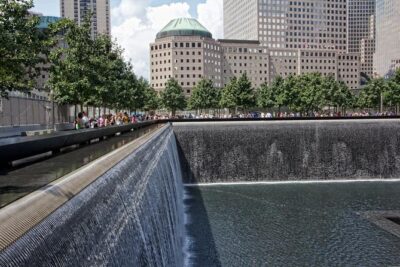
NYC City Tour: Statue of Liberty, 9/11 Memorial, Wall Street
Read our review →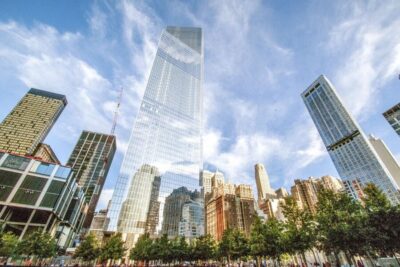
Ground Zero 9/11 Memorial Tour & Optional 9/11 Museum Ticket
Read our review →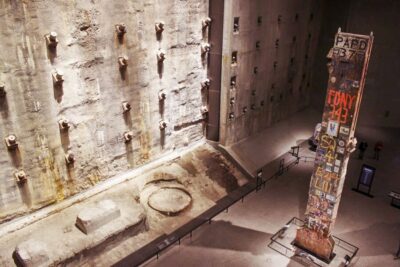
9/11 Memorial Tour and Optional Observatory Ticket
Read our review →Browse the lists this tour appears in