
Reviewed · AUDIO TOURS
The Battery: A Self-Guided Audio Tour from Bowling Green Park to Stone St
Lower Manhattan began with a dirt-walled fort, trading outpost, and a few cannon batteries. This self-guided walk follows that small beginning through the Battery, past memorials and Castle Clinton, and into the old streets around Fraunces Tavern and Stone Street.
I like the freedom to set your own pace and the fact that the audio, maps, and route data work without cellular service or Wi-Fi. I also like the route’s mix of big public monuments and easy-to-miss corners, including the old fort, the Immigrants statue, and Manhattan’s oldest surviving building. The main drawback is that this is an app-based tour, so you must bring your own smartphone and headphones, and the experience may be less smooth if construction changes the Battery paths.
In This Review
- Key points to know before you go
- A short walk through New York’s first neighborhood
- Starting at Bowling Green and the city’s first foothold
- The Battery: cannon, water, and New York’s changing edge
- Three memorials, three different wartime stories
- Castle Clinton and the many lives of one fort
- Immigration stories near the harbor
- Peter Minuit Plaza and the purchase of Manahatta
- Fraunces Tavern and the final turn toward Stone Street
- What $14.99 gets you
- Who will get the most from this audio walk
- Should you book the Battery to Stone Street tour?
- FAQ
- Where does the tour begin?
- Where does the tour end?
- How long does the tour take?
- What language is available?
- Do I need cellular service or Wi-Fi?
- What do I need to bring?
- Are museum tickets or food included?
- Is this a group tour?
Key points to know before you go

- The route connects Bowling Green Park with Stone Street: You begin at the bottom of Broadway and finish on one of Lower Manhattan’s oldest cobbled streets.
- The Battery gets the main historical treatment: The audio explains how a modest fort and artillery post helped shape New York’s early story.
- The walk covers memorials with very different purposes: You pass the Korean War Memorial, American Merchant Marines Memorial, and East Coast Memorial.
- Castle Clinton has had several lives: The former fort later became an entertainment venue and aquarium, which helps explain the nearby carousel.
- The tour is fully offline: Download the VoiceMap app content before setting out, then follow the route without Wi-Fi or mobile data.
- The price is modest for repeat use: At $14.99, you receive lifetime access to the English audio tour, map, and virtual tour.
A short walk through New York’s first neighborhood
This route is about 90 minutes to two hours, depending on how often you stop. You are not being hurried from one landmark to the next. The audio lets you pause, look around, take photos, or spend extra time at a memorial before continuing.
That flexible timing matters in Lower Manhattan. The Battery is a public park with several points of interest close together, while the final stretch toward Stone Street shifts into a tighter old-city setting. You get a sense of how the waterfront edge, government district, commercial streets, and immigrant gateway all fit into one compact part of New York.
The experience is offered in English through the VoiceMap app for Android and iOS. You need to provide your own smartphone and headphones. Food, drinks, transportation, museum admission, and other entrance fees are not included, though the route itself passes by several sights that can be appreciated from outside.
A few more New York City picks to weigh up
- An Epic Scavenger Hunt: New York City Central Park Adventure
★ 4.5 · 244 reviews - Skyline Night Bus Audio Narrated Tour Experience
★ 4.5 · 138 reviews - NYC: Metropolitan Museum of Art Guided or Self-Guided Tour
★ 4.0 · 56 reviews
Starting at Bowling Green and the city’s first foothold

The tour begins at Bowling Green Park, at Broadway and Whitehall Street. This is a practical starting point because it puts you at the bottom of Broadway, close to public transportation and within easy reach of the Battery.
The opening audio explains how VoiceMap works and introduces New York’s beginnings. The central idea is simple but useful: the city did not begin as the giant commercial center you see today. It grew from a small Dutch trading outpost protected by a rough fort and artillery batteries.
I find this kind of introduction valuable because it gives the rest of the walk a clear thread. You are not just collecting separate landmarks. You are watching the city change from a defended waterfront settlement into one of the world’s most powerful cities.
Bowling Green also gives you a strong sense of scale. The route is not trying to cover all of Manhattan. It focuses on a small area where early settlement, defense, immigration, war, and trade all left visible marks.
The Battery: cannon, water, and New York’s changing edge
The route then circles through the Battery, the park at Manhattan’s southern tip. The audio connects the park to the batteries that once guarded the harbor and explains how the area developed around defense and trade.
The Battery is the place where the tour’s main theme becomes easiest to grasp. New York’s strength came partly from its position at the harbor, but that position also needed protection. The fort and artillery posts were meant to control access to the young settlement.
The present-day park is much calmer than its military past suggests. You can take your time here, and the audio gives you a reason to look beyond the paths and open spaces. It also helps explain why this southern point mattered so much before modern skyscrapers and bridges changed the city.
One practical note: construction at the Battery has affected the experience at times. A positive review specifically noted that the tour was already worthwhile, while also pointing out that the route should be even better once construction is finished. Check your footing and follow the app carefully if paths or access points have changed.
Three memorials, three different wartime stories
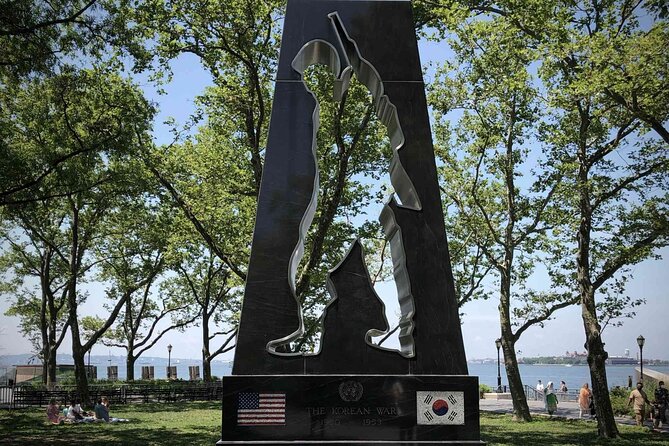
The walk passes the Korean War Memorial, whose monument is called The Universal Soldier. It serves as a symbolic tribute to those who died or disappeared during the conflict.
This stop adds a quieter note to the tour. The Battery is often associated with colonial beginnings and harbor views, but this memorial reminds you that the park also carries memory from the modern era. The audio helps turn a brief pass-by into a moment of reflection.
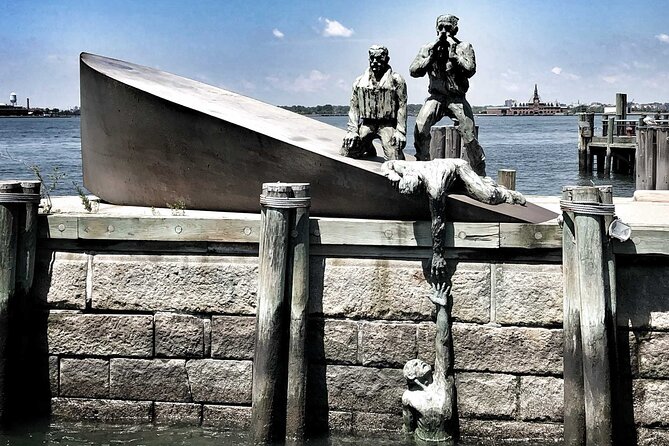
Next comes the American Merchant Marines Memorial. As you walk, the tour tells the story of German U-boat submarines secretly entering New York Harbor in 1940 on a daring mission. That detail gives the harbor a different mood. It was not only a route for trade and immigration. During wartime, it was also a place watched for danger.
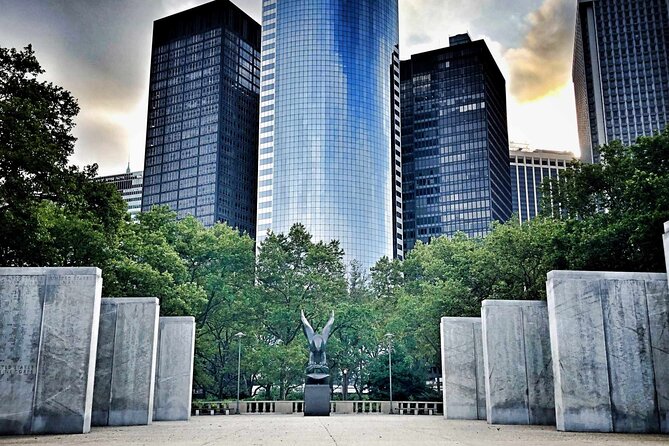
The East Coast Memorial honors American servicemen who lost their lives in the Atlantic during World War II. These three memorials are close enough to visit during one walk, yet each points to a different aspect of war: soldiers, merchant sailors, and those lost at sea.
I like this portion because it does not treat Lower Manhattan as a single-period museum piece. The route keeps moving across centuries. Colonial defense, twentieth-century warfare, immigration, and city growth all appear within a short distance.
Another side of New York City for the same day:
- NYC: SUMMIT One Vanderbilt Tickets
★ 4.7 · 51,195 reviews - NYC: 9/11 Memorial & Museum Timed-Entry Ticket
★ 4.8 · 31,428 reviews - NYC: Empire State Building Tickets – Observatory & Museum
★ 4.7 · 25,757 reviews - New York City: Statue of Liberty & Ellis Island with Ferry
★ 4.6 · 18,683 reviews
Castle Clinton and the many lives of one fort
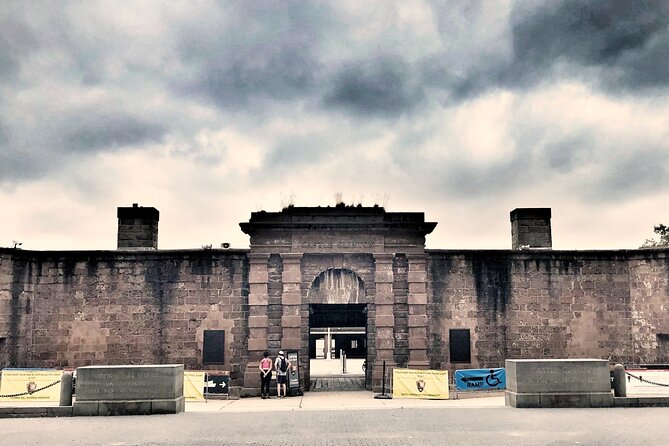
Castle Clinton is one of the most useful stops for understanding how New York repurposed old structures. The building began as a nineteenth-century fort, but it did not remain only a military site.
The audio follows the building through its different identities and explains the origin of its name. The Clinton in question was DeWitt Clinton, one of New York City’s most powerful political figures, not the modern presidents associated with that surname.
Castle Clinton’s changing role makes it more interesting than a simple fort visit. Buildings in a growing city rarely remain fixed in purpose. A defensive structure can become part of public entertainment, transport, or civic life as the city expands around it.
The tour also connects Castle Clinton with the nearby carousel. The carousel was inspired by the memory that the building once housed the New York Aquarium. That is a pleasing detail because it links a lively family attraction with a building that began as a defensive installation.
You do not receive admission to museums or other attractions along the route. The experience is designed as an outdoor audio walk, so you should treat Castle Clinton and the other stops as points on the route rather than assume an indoor visit is included.
Immigration stories near the harbor
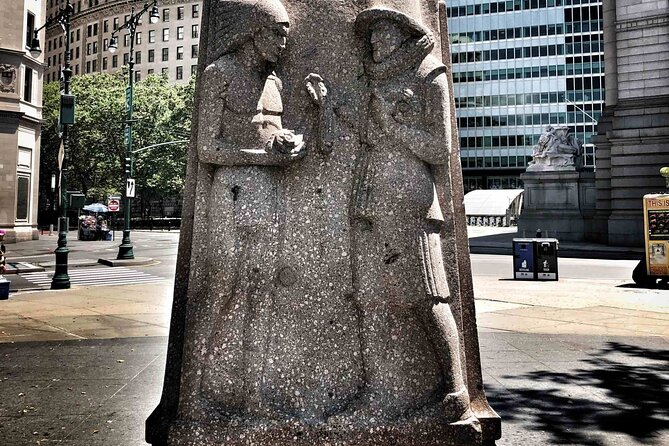
The route passes the Immigrants statue and uses it to introduce the immigrant experience. This is one of the more human sections of the walk, moving away from forts and military memorials to the people who arrived hoping to begin a new life.
The audio includes Annie Moore, identified as the first immigrant to disembark at the Ellis Island inspection station. Her story gives a name and face to a process that can otherwise seem like a huge, impersonal movement of people.
The nearby harbor setting helps the subject make sense. New arrivals came through this part of New York, and the water connected the city to the wider world. You are walking through a place where military protection, commerce, and human movement all met.
I would give this section your full attention. It is easy to rush past a statue when you are following a route, but the story adds emotional weight to the walk. It also makes a useful connection between the physical harbor and the family histories that began there.
Peter Minuit Plaza and the purchase of Manahatta
The tour continues through Peter Minuit Plaza, named for the Dutchman associated with the purchase of the island of Manahatta using wampum.
This stop takes you back to the earliest Dutch period. It also raises an important question about whose history gets simplified in a city tour. The purchase is often told as a neat transaction, but the name Manahatta points to the island’s earlier Indigenous history.
The tour’s supplied information focuses on Minuit, wampum, and the origin story of New York. You should listen closely here because the plaza itself may not look as obviously historic as a fort or cobbled street. The audio gives the modern public space a link to the earliest period of the city.
This is another reason the route works well as an introduction to Lower Manhattan. It does not stay with one famous building. It uses ordinary public places to connect the present city with the events that shaped it.
Fraunces Tavern and the final turn toward Stone Street
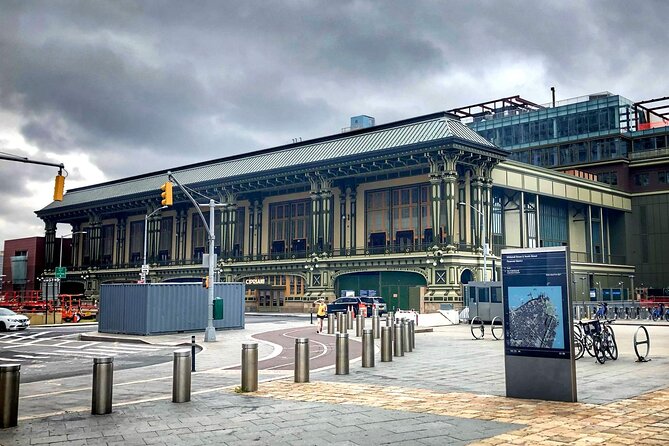
Near the end, the walk passes Fraunces Tavern, described as Manhattan’s oldest surviving building. The audio covers the remarkable events that took place inside its walls.
Fraunces Tavern is an especially good lead-in to the finish because it brings the route back to the people and decisions that shaped the city. After hearing about defenses, memorials, immigration, and the harbor, you reach a building tied to the city’s political and social life.
The tour ends on Stone Street. Its cobbled stretch is easy to miss if you are focused only on the large attractions of Lower Manhattan, yet it gives the walk a satisfying change of setting. The route begins with a broad public park at the foot of Broadway and ends in a compact historic street setting.
That ending is practical, too. Stone Street is a natural place to continue exploring on your own, though food and drinks are not included in the tour price. The route itself ends there, so plan your next stop before you begin if you want to keep moving.
What $14.99 gets you
The cost is $14.99 per person. For that price, you receive lifetime access to the English tour, offline audio, offline maps, geodata, and a virtual tour through the VoiceMap app.
I consider that a fair price if you want more than a basic stroll through the Battery. A live guide would offer conversation and the chance to ask questions, but this format gives you control over the pace and lets you return to the material later. Lifetime access is useful if you expect to revisit Lower Manhattan or want to share the route planning with someone in your group.
The value is less obvious if you prefer spontaneous walking without a phone. You must bring a smartphone and headphones, and the tour does not cover food, transportation, museum admission, or other entry fees. It is best viewed as a focused audio guide for an outdoor walk, not as a package of attractions.
The tour has a 5 out of 5 rating based on three reviews. The strongest praise centers on its value and its ability to reveal new sites and information, even to someone familiar with the area. The only specific caution is the Battery construction issue, which may affect how smoothly the route works at a given time.
Who will get the most from this audio walk
I would recommend this for first-time visitors who want a clear introduction to Lower Manhattan without joining a scheduled group. It also suits people who enjoy history but prefer to stop for photos or explore at their own speed.
Families may like the carousel detail and the short walking format, though younger children may not stay engaged with every historical explanation. The route is also a good fit for anyone interested in immigration, military memorials, New York’s Dutch beginnings, or the way old buildings changed purpose over time.
It is less suitable if you want a live guide, a food stop, or entry inside every major attraction. The tour is in English only, and the audio format depends on your phone and headphones working properly. Since the activity is non-refundable and cannot be changed after booking, make sure the date and format fit your plans.
Should you book the Battery to Stone Street tour?
Book it if you want a low-cost, flexible way to understand the southern tip of Manhattan. The route gives you a useful story arc, from Bowling Green’s early fort and trading post to Castle Clinton, immigration memories, wartime monuments, Fraunces Tavern, and Stone Street.
I especially like it for visitors who might otherwise walk through the Battery without knowing what they are seeing. Download the content before you start, bring headphones, allow the full two hours if you like to pause, and keep an eye out for construction changes.
Skip it if you strongly prefer personal interaction or plan to spend most of your time inside museums. For everyone else, $14.99 buys a focused walk with lifetime access and enough detail to make Lower Manhattan feel far more connected.
FAQ
Where does the tour begin?
The tour begins at Bowling Green Greenmarket near Broadway and Whitehall Street in New York City.
Where does the tour end?
The tour ends on Stone Street in Lower Manhattan.
How long does the tour take?
The approximate duration is 1 hour 30 minutes to 2 hours.
What language is available?
The tour is offered in English.
Do I need cellular service or Wi-Fi?
No. The tour includes offline access to the audio, maps, and geodata.
What do I need to bring?
You need a smartphone and headphones. The VoiceMap app is available for Android and iOS.
Are museum tickets or food included?
No. Food, drinks, transportation, museum admission, and entrance fees for other attractions are not included.
Is this a group tour?
It is a private activity for only your group, but the experience itself is self-guided through the VoiceMap app.
Just listed around New York City
- NYC: Private Ghostbusters Sites Tour★ 5.0 · 3 reviews
- Tour by Night in Italian★ 5.0 · 3 reviews
- NYC: Private Central Park Pedicab Tours / PICKUP FROM MUSEUM★ 5.0 · 3 reviews
- Tour of Brooklyn Bridge at Sunset★ 3.5 · 3 reviews
- New York City: Manhattan ‘Complete Playground’ Entry Ticket★ 5.0 · 3 reviews
- New York Upper East Side Art and Architecture Tour★ 5.0 · 3 reviews
- PRIVATE Rockefeller Center Artified Walking Tour★ 5.0 · 3 reviews
- Macy’s Thanksgiving Day Parade Premium Viewing Brunch 2025★ 4.5 · 3 reviews
Audio Tours, compared.

Skyline Night Bus Audio Narrated Tour Experience
Read our review →
St. Patrick’s Cathedral Official Self-Guided Audio Tour
Read our review →
Statue Of Liberty & Ellis Island Skip The Queue Audio Guide Tour
Read our review →
A Gilded Age Audio Guide: New York’s Millionaire Row
Read our review →
Guided Tour (with Audio) Hamilton Musical in Lower Manhattan NYC
Read our review →
New York City’s Financial District: A Self-Guided Audio Tour
Read our review →
New York City’s High Line: A Self-Guided Audio Tour
Read our review →
New York’s Iconic Central Park: A Self-Guided Audio Tour
Read our review →Browse the lists this tour appears in