
Reviewed · HISTORICAL TOURS
The Bowery Official Historic District Tour
New York’s Bowery is more than a street lined with restaurants and galleries. In 90 minutes, this tour links Chinatown, old immigrant neighborhoods, vanished theaters, bank buildings, music clubs, and Cooper Square into one useful story of how the city changed. Ramona’s personal connection to the district gives the walk a human voice, not just a list of dates and facades.
I like two things right away: the route covers several eras, from the Bowery’s Irish and Chinese communities to Yiddish theater and punk rock, and the small-group guide format gives you room to ask questions. The $38 price is fair for a 90-minute guided walk, though a maximum of 50 people means the group may feel less intimate than the subject deserves.
In This Review
- Key points at a glance
- Why the Bowery makes such a good walking tour
- Confucius Plaza and the Bowery’s immigrant beginning
- Doyers Street and the Bloody Angle
- Manhattan Bridge, the Diamond District, and vanished buildings
- The Bowery Ballroom and the old entertainment district
- The New Museum and the Bowery Mission
- Punk rock, CBGB’s, and the Bowery after dark
- Cooper Square and the final ten minutes
- What $38 gets you
- Who should book this Bowery walk
- Booking, timing, and cancellation details
- Should you book The Bowery Official Historic District Tour?
- FAQ
- Where does the tour start?
- Where does the tour end?
- What time does the tour begin?
- How long does the experience last?
- Is the tour offered in English?
- Can I cancel for a full refund?
Key points at a glance
- Confucius Plaza starts the story in Chinatown, with the Bowery’s immigrant past close at hand.
- Doyers Street adds a darker turn, recalling its 19th-century reputation as Murder Alley and the Bloody Angle.
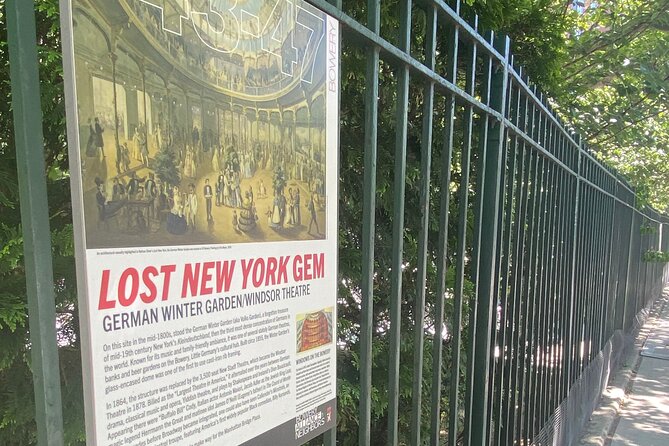
- The route traces lost entertainment venues, including Italian opera houses, Yiddish theater, the Germania Bank buildings, and Windsor Theatre.
- Music fans get a strong chapter, with the Bowery Ballroom, CBGB’s former site, Electric Ladyland, and Deborah Harry’s former residence.
- The walk ends at Cooper Union, passing McSorley’s Ale House, the old Village Voice Building, and the Carl Fischer Music Building.
- English-language tours begin at 3:30 p.m., last about 90 minutes, and require good weather.
Why the Bowery makes such a good walking tour
The Bowery works best when you see it as a record of New York’s changing population and tastes. Irish immigrants, Chinese residents, Italians, Germans, and Jewish theatergoers all shaped the street at different times. Later, artists, musicians, and nightlife crowds gave it another identity.
That mix is the main strength of this experience. You are not looking at one preserved neighborhood frozen in time. You are following layers of New York that often survive only in building names, empty spaces, and stories about places that have disappeared.
The tour begins in Chinatown and moves north toward Cooper Square. That direction matters. It lets you watch the setting change as the stories move from immigrant settlement and old commerce to theaters, music clubs, art, and education.
Your guide is the key to making sense of those shifts. Ramona is specifically identified as the guide, and her approach centers on the Bowery’s buildings and preservation. Her enthusiasm comes through strongly, but the useful part is the detail: she connects a current street corner with the institution or neighborhood life that once occupied it.
The tour is conducted in English. The route takes about an hour and a half, with stops usually lasting five minutes and a longer 10-minute section around Cooper Square. You should expect a steady historical walk rather than a museum visit or an indoor attraction.
More New York City history walks:
- New York City: American Museum of Natural History Ticket
★ 4.5 · 15,447 reviews - NYC: Starship Landmark 90 Minute Sightseeing Cruise
★ 4.6 · 3,666 reviews - Starship Landmark 90 Minute Sightseeing Cruise
★ 4.5 · 2,073 reviews
Confucius Plaza and the Bowery’s immigrant beginning
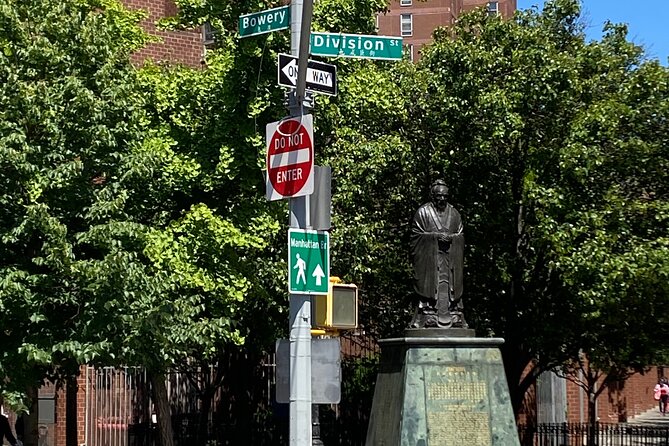
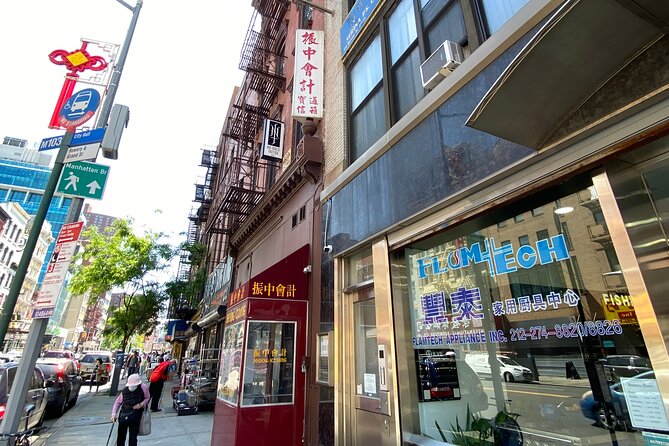
Meet at the Confucius statue in Confucius Plaza, at the corner of Bowery and Division Street. This is a practical starting point because it places you right beside one of the Bowery’s clearest links to Chinese New York.
The statue and plaza provide the opening setting for stories about immigration, neighborhood change, and the Bowery’s place beside Chinatown. You will hear about the street’s Irish and Chinese past, a useful reminder that New York’s ethnic districts were never completely separate worlds.
There is no admission charge at this stop, since the tour takes place outdoors. Give yourself enough time to find the statue before the 3:30 p.m. start. The meeting address is 1-9 Bowery, New York, NY 10002, and the area is near public transportation.
This first stop is brief, but it establishes the tour’s method. Instead of treating the Bowery as one old street, the guide uses a specific place to explain who lived, worked, and gathered here.
Doyers Street and the Bloody Angle
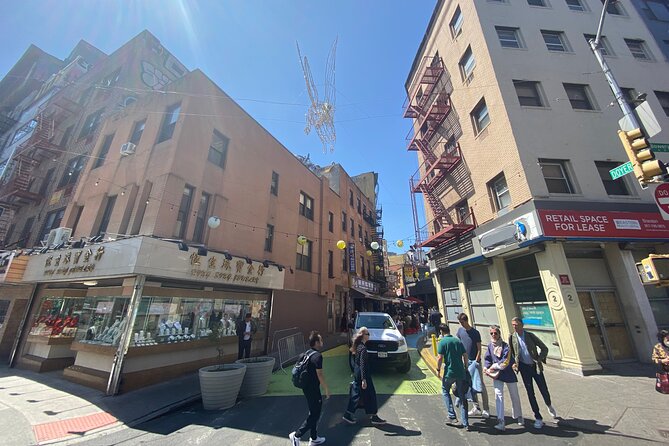
The next stop is the entrance to Doyers Street, a short distance from the starting point. The street was known in the 19th century as Murder Alley and the Bloody Angle, names that immediately signal a rougher side of old Manhattan.
The value here is not simply the dramatic nickname. Doyers Street helps you picture how narrow, crowded urban spaces could gain reputations that lasted long after the original conditions changed. The guide places the Bowery’s past within the wider story of Chinatown and downtown New York.
You stop at the entrance rather than spending a long period exploring the street itself. That keeps the tour moving, but it also means this is an introduction, not a full Doyers Street tour. If you want extended time for photographs or a meal nearby, plan to return after the walk.
Manhattan Bridge, the Diamond District, and vanished buildings
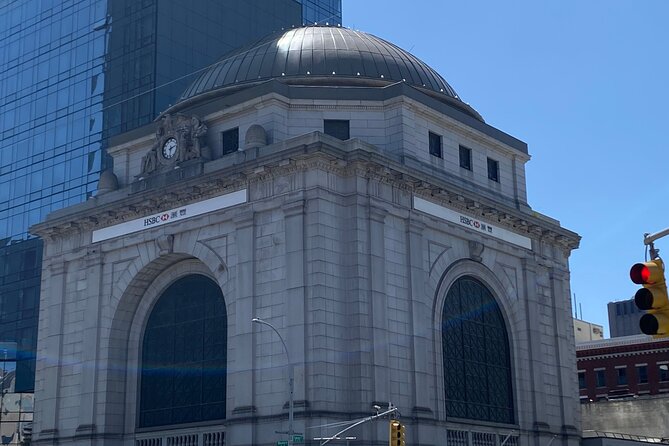
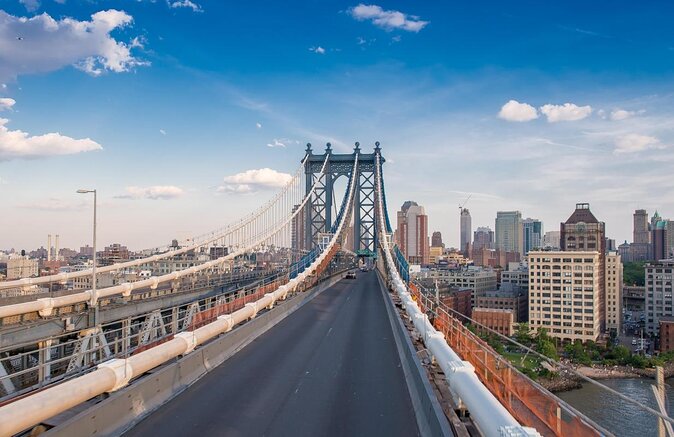
Near the Manhattan Bridge, the tour turns toward the Bowery’s commercial and architectural past. You will pass the bridge’s Triumphal Arch and Colonnade, then hear about the original Diamond District around Bowery and Canal.
This is one of the more useful stops for understanding how commercial New York moved around. The Bowery was not only a route through immigrant neighborhoods and entertainment zones. It was also a place for specialized trade, banking, and major civic construction.
The guide also points out the old Citizens Bank Building and discusses Confucius Plaza again, along with former locations connected to the German Winter Garden and Windsor Theatre. These references show how much of the Bowery’s story has vanished from the street itself.
For you, the important lesson is to look up and look beyond the newest storefront. A current building may have little to say on its own, while the corner once held a bank, theater, or gathering place that shaped the neighborhood.
The Manhattan Bridge gives this part of the walk a strong visual marker, but the tour does not promise a bridge crossing or a dedicated architectural inspection. The focus remains the Bowery and its surrounding sites.
Another side of New York City for the same day:
- NYC: SUMMIT One Vanderbilt Tickets
★ 4.7 · 51,195 reviews - NYC: 9/11 Memorial & Museum Timed-Entry Ticket
★ 4.8 · 31,428 reviews - NYC: Empire State Building Tickets – Observatory & Museum
★ 4.7 · 25,757 reviews - New York City: Statue of Liberty & Ellis Island with Ferry
★ 4.6 · 18,683 reviews
The Bowery Ballroom and the old entertainment district
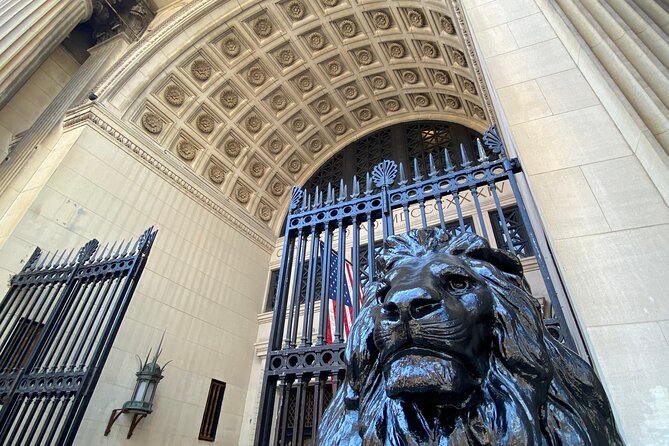
The Bowery was New York’s first entertainment district, and the stop near the Bowery Ballroom develops that idea. The present music venue is described as one of the last surviving music links to the street’s long performance tradition.
The story reaches back well before modern concerts. Earlier stops and later ones connect the Bowery to opera houses, theaters, and public entertainment. The point is not that every venue served the same audience. It is that the street repeatedly adapted to new forms of leisure and new groups of New Yorkers.
Near the Bowery Ballroom, you will also hear about the old Lincoln Hotel and a former Germania Bank building. Those details keep the entertainment story tied to everyday city life. Hotels, banks, theaters, and music halls once worked together as part of a busy commercial district.
This stop is especially useful if you like music but do not want a tour limited to rock history. The Bowery Ballroom is only one chapter in a much longer story.
The New Museum and the Bowery Mission
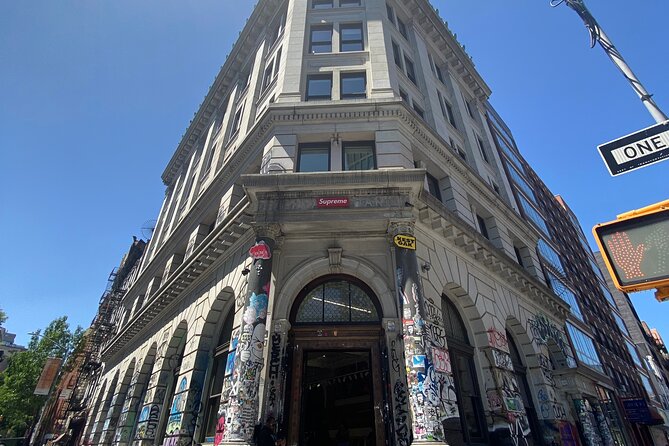
Near the New Museum of Contemporary Art, the tour turns to another set of institutions. The stop includes the Bowery Mission, Italian opera houses, and Yiddish theater.
That combination says a lot about the Bowery. It was a street of public performance, religious and social aid, immigrant culture, and later contemporary art. The New Museum is a present-day landmark, but the guide uses it as a doorway into older layers rather than treating it as the sole attraction.
The Italian opera houses and Yiddish theater material should appeal to anyone interested in how immigrant communities maintained culture in New York. These venues were not simply entertainment businesses. They offered language, familiar stories, and a place for communities to gather.
The Bowery Mission adds a different note. It reminds you that the street’s public image has long included poverty and hardship as well as nightlife and art. That balance keeps the tour from turning into a glossy story about old New York.
You stop near the building, not for an indoor visit. If you want to explore the New Museum itself, set aside separate time and admission.
Punk rock, CBGB’s, and the Bowery after dark
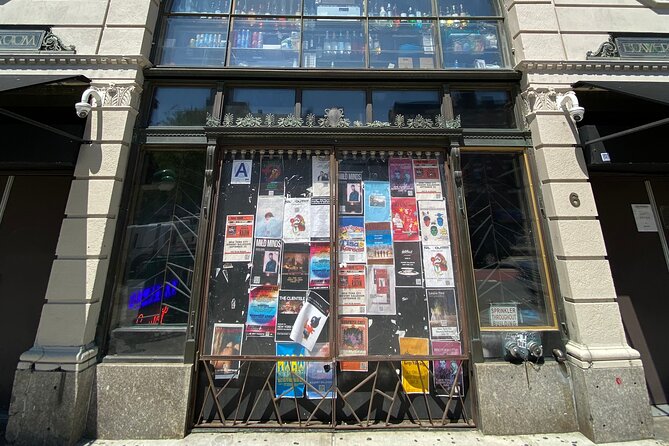
The Bowery Poetry Club stop moves the timeline into the punk rock era. Across the street was the former location of CBGB’s, one of the most important music sites associated with the Bowery’s modern identity.
The tour also points toward Electric Ladyland and the former residence of Deborah Harry of Blondie. These details give music fans a clear reason to choose this walk. You get a street-level connection between clubs, performers, and the buildings around them.
The Bowery Poetry Club is a fitting place to discuss the area’s creative life. It links poetry, live music, and the wider arts scene without pretending they were all part of one single movement.
There is an important limit here. You should not expect to enter CBGB’s, Electric Ladyland, or Deborah Harry’s former home. The experience is about locating and explaining those places, not visiting private interiors or preserved club rooms.
Still, the outdoor setting has an advantage. You can see how close these cultural sites were to the banks, hotels, theaters, and immigrant streets discussed earlier. That physical closeness makes the Bowery’s many identities easier to grasp.
Cooper Square and the final ten minutes
The final stretch approaches the Cooper Union Foundation Building and includes several stops around Cooper Square. This section lasts about 10 minutes, longer than most earlier stops, so the tour has room to tie several threads together.
The old Village Voice Building adds a publishing and urban culture angle. The Carl Fischer Music Building continues the connection to music, while McSorley’s Ale House brings the story back to one of the area’s long-running social institutions.
The tour ends at the Cooper Union Foundation Building, 7 E 7th Street, New York, NY 10003. Ending here is practical. You finish near a major architectural landmark and can continue exploring Cooper Square or nearby streets on your own.
Because the route ends at a different place from the start, you should note the two addresses before booking. This is not a round trip. The one-way format makes sense for the story, but it may matter if you have a car, a timed reservation, or plans near Confucius Plaza afterward.
What $38 gets you
At $38 per person, the main purchase is interpretation. You are paying for a guide who can connect scattered buildings and former sites into one narrative, not for admission to a museum, transportation, food, or a performance.
I consider that a fair price for a 90-minute New York walk, especially if you care about architecture, immigration, music, or neighborhood change. The tour covers a wide range of subjects that would be difficult to organize from guidebook captions alone.
The value depends on your style. If you prefer to wander quietly and read plaques, you may find the price harder to justify. If you want to ask questions and have someone explain why a corner matters, the guide adds real value.
Gratuity is not included, so budget for that separately if you choose to tip. The tour uses a mobile ticket, and confirmation is provided when you book.
The maximum group size is 50 people. That is manageable for a street walk, but it is not a tiny private tour. If you want the best chance of hearing every detail, stay reasonably close to the guide and use the question period rather than waiting until the group spreads out.
Who should book this Bowery walk
I would recommend this tour to first-time New York visitors who want more than the standard Midtown sights, and to returning visitors who have passed through Chinatown or the East Village without understanding how the pieces fit together.
It is also a good match for:
- People interested in immigrant neighborhoods and New York social history
- Music fans curious about CBGB’s, Blondie, and the Bowery’s concert past
- Architecture fans who enjoy old banks, theaters, hotels, and civic buildings
- Visitors who like asking a guide specific questions
- Anyone with about 90 minutes free in the late afternoon
Families may find the changing subject matter easier to follow than a tour focused only on dates and names. The Doyers Street stories add drama, while the music and theater stops give younger visitors recognizable points of reference.
You should think twice if you need a fully indoor activity, want a long stop at each site, or dislike group tours. The experience requires good weather and can be canceled for poor conditions. In that case, you are offered another date or a full refund.
Service animals are allowed, and most people can participate. The tour is near public transportation, which helps with the one-way route. The supplied details do not specify the walking distance, so ask the provider if you need exact route information before booking.
Booking, timing, and cancellation details
The tour starts at 3:30 p.m. and runs in English. Since it is often booked 27 days ahead, reserve early if your New York dates are fixed, particularly if you want this specific afternoon time.
You can cancel for a full refund up to 24 hours before the start time. Changes or cancellations inside that 24-hour window are not accepted for a refund. The cutoff uses local New York time.
Allow a little extra time before the start to locate the Confucius statue. At the end, remember that you are at Cooper Union rather than back at the original meeting point.
Should you book The Bowery Official Historic District Tour?
Book it if you want the Bowery explained as a changing neighborhood, not just photographed as an old New York street. The strongest parts are the immigrant stories, the lost theaters and banks, and the direct link from early entertainment to CBGB’s and punk rock.
Ramona appears to be the guide to request if available, especially if you value preservation stories and a guide who cares about the district. The 5 out of 5 rating from 17 published reviews and a 100 percent recommendation record support the tour’s appeal, though the small number of ratings means you should still match it to your own interests.
Skip it if you want indoor access, a private experience, or a slow architectural survey. For $38, though, this is a sensible way to spend 90 minutes in lower Manhattan, particularly if you combine it with your own time around Chinatown, Doyers Street, or Cooper Square afterward.
FAQ
Where does the tour start?
It starts at the Confucius statue in Confucius Plaza, at 1-9 Bowery, New York, NY 10002, on the corner of Bowery and Division Street.
Where does the tour end?
The tour ends at the Cooper Union Foundation Building, 7 E 7th Street, New York, NY 10003.
What time does the tour begin?
The start time is 3:30 p.m.
How long does the experience last?
The tour lasts approximately one hour and 30 minutes.
Is the tour offered in English?
Yes. English is the available tour language.
Can I cancel for a full refund?
Yes. You can cancel at least 24 hours before the experience start time for a full refund. Cancellations or changes made less than 24 hours before the start are not accepted for a refund.
Just listed around New York City
- New York City: Gossip Girl Walking Tour★ 5.0 · 17 reviews
- Romantic Photoshoot Experience for Couples in New York★ 4.9 · 17 reviews
- SUMMIT One Vanderbilt with Grand Central Terminal Tour★ 4.5 · 17 reviews
- Washington DC: Washington Monument Top View Reserved Entry★ 4.5 · 17 reviews
- Griffins, Goblet & Gold: An Interactive Magical Arts Museum Tour★ 5.0 · 17 reviews
- Central Park Pedicab Guided Tour★ 5.0 · 17 reviews
- TRANSFER VAN NYC for family up to 10pax★ 5.0 · 17 reviews
- Shopping at Jersey Gardens★ 4.8 · 17 reviews
Historical Tours, compared.

Starship Landmark 90 Minute Sightseeing Cruise
Read our review →
Starship Landmark 90 Minute Sightseeing Cruise
Read our review →
American Museum of Natural History Admission Ticket
Read our review →
Top Rated Brooklyn Half-Day Food, History & Culture Tour via bus
Read our review →
The Original Greenwich Village Food & Cultural Tour Since 1999
Read our review →
The Speakeasy Adventure: A Tipsy Trip Through History
Read our review →Browse the lists this tour appears in