
Reviewed · WALL STREET & FINANCIAL DISTRICT TOURS
Wall Street: The birth place of NYC in French/English tour
New York began at the southern tip of Manhattan, long before skyscrapers and stock tickers took over. This three-hour walk with NYC licensed guide David follows that story from the Lenape tribe and Dutch New Amsterdam to Wall Street and the World Trade Center.
I like the route for two clear reasons: it mixes famous sights with small surprises, including old tavern foundations, a tucked-away park, and a local bagel stop; and David brings the city to life with history, humor, and an immigrant’s affection for America. The main drawback is the pace: three hours on city streets can feel long if you want a relaxed photo stop at every landmark.
In This Review
- Key points
- Why New York’s first chapter belongs in the Financial District
- Starting near the South Seaport and New York’s oldest print shop
- Stone Street and the remains of Dutch New Amsterdam
- Wall Street, the old wall, and New York’s money center
- Federal Hall and Washington’s first presidential oath
- Trinity Church, Hamilton’s tomb, and the city beneath the churchyard
- The first park in New York State and the National Museum of the American Indian
- From famous statues to the World Trade Center site
- The local touches that make the route feel personal
- Is $70 a fair price for three hours?
- Who will enjoy this Wall Street walking tour?
- Practical advice before you go
- Should you book it?
- FAQ
- How long does the Wall Street tour last?
- Is the tour offered in French?
- Who is the guide?
- Where does the tour meet?
- Where does the tour end?
- Is the tour wheelchair accessible?
Key points
- A walk from the South Seaport to the World Trade Center: The route crosses the southern end of Manhattan from east to west, linking the city’s oldest stories with its modern financial center.
- David’s anecdote-filled guiding: David leads in French or English and is praised for his warmth, energy, and ability to keep the past connected to the street in front of you.
- Stone Street and Dutch New Amsterdam: See New York’s first paved street and the foundations of a Dutch tavern.
- Wall Street’s layers of power: Visit the New York Stock Exchange, Federal Hall, Washington’s statue, Trinity Church, Hamilton’s tomb, and the story behind the old wall.
- Local details beyond the headline sights: The route includes a hidden park, a viewpoint toward Brooklyn, an original bagel shop, and the oldest tavern still operating in New York City.
- A useful choice for French-speaking visitors: You get the same central Manhattan route with a live guide in either French or English, plus free cancellation up to 24 hours before the tour.
Why New York’s first chapter belongs in the Financial District
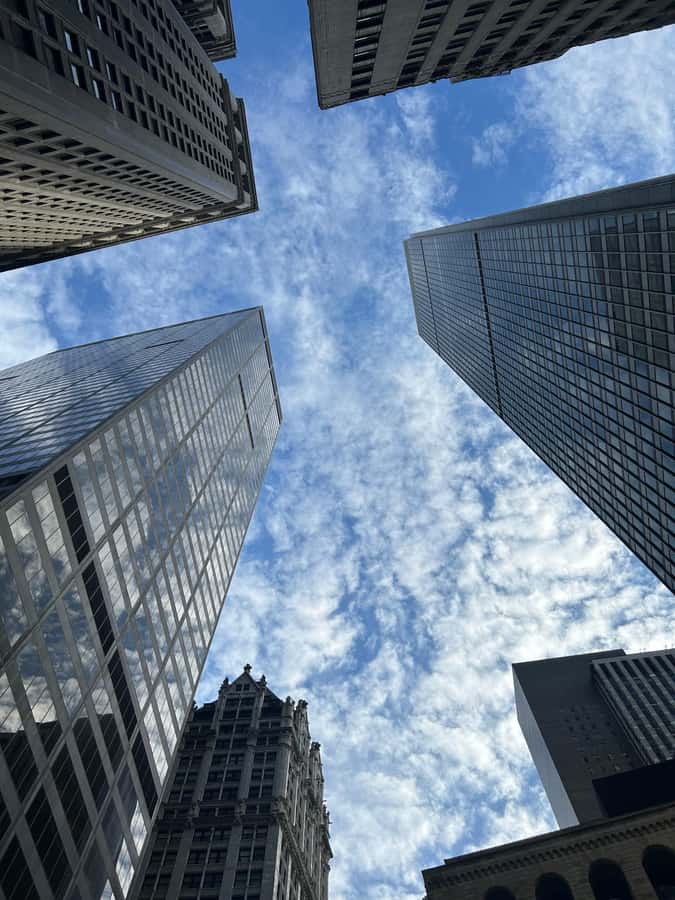
Many people see Lower Manhattan as a place of office towers, security gates, and financial headlines. This tour gives you a different frame. The southern end of Manhattan is where the city’s earliest layers sit close together, often under your feet or behind an ordinary-looking doorway.
You begin with the Lenape people, then move through Dutch New Amsterdam, colonial New York, the American founding, modern finance, and the post-2001 World Trade Center site. The route is not just a parade of buildings. It asks you to notice how one small waterfront settlement became New York City.
That broad time span is the tour’s main strength. You do not spend three hours on one narrow subject, such as the Stock Exchange or the Revolutionary era. Instead, you keep moving through the city’s changing identity. For a first visit, that gives you a useful map of Lower Manhattan and a set of stories you can carry into the rest of your stay.
David is an important part of the experience. He is a French native and leads in both French and English. His style is warm and conversational, with plenty of anecdotes, practical tips, and touches of humor. The strongest praise centers on his ability to make the time pass quickly while still giving you a lot to remember.
More Wall Street walks:
- NYC City Tour: Statue of Liberty, 9/11 Memorial, Wall Street
★ 4.5 · 2,059 reviews - Wall Street Insider Tour with a Finance Professional
★ 4.5 · 660 reviews - Wall Street Insider Tour with a Finance Professional
★ 4.5 · 571 reviews
Starting near the South Seaport and New York’s oldest print shop
The meeting point is the man with the hat in front of the iPic theater. That detail matters because Lower Manhattan has many busy corners and several nearby attractions. Give yourself enough time to identify the meeting spot rather than arriving at the last minute.
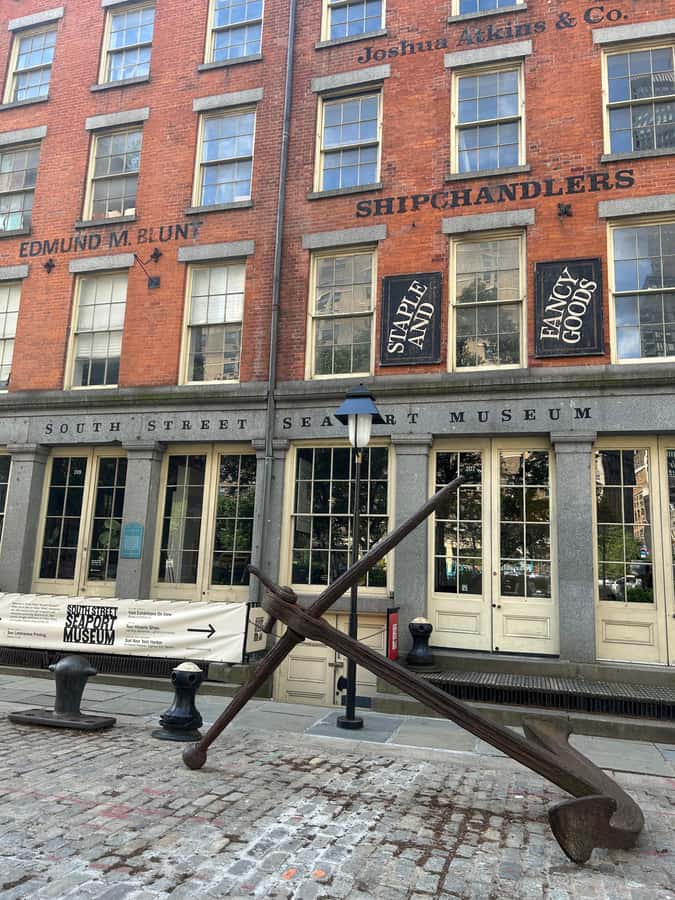
The tour begins near the city’s oldest print shop. This is a fitting opening because printed words helped spread political ideas, commercial news, and arguments about the future of the colonies and the new nation. You are not simply looking at an old business. You are starting with the tools that helped New York communicate and grow.
From there, the walk moves through the South Seaport area and toward the western side of Lower Manhattan. The distance between stops is part of the lesson. You see how close the city’s early commercial, religious, political, and financial centers were to one another.
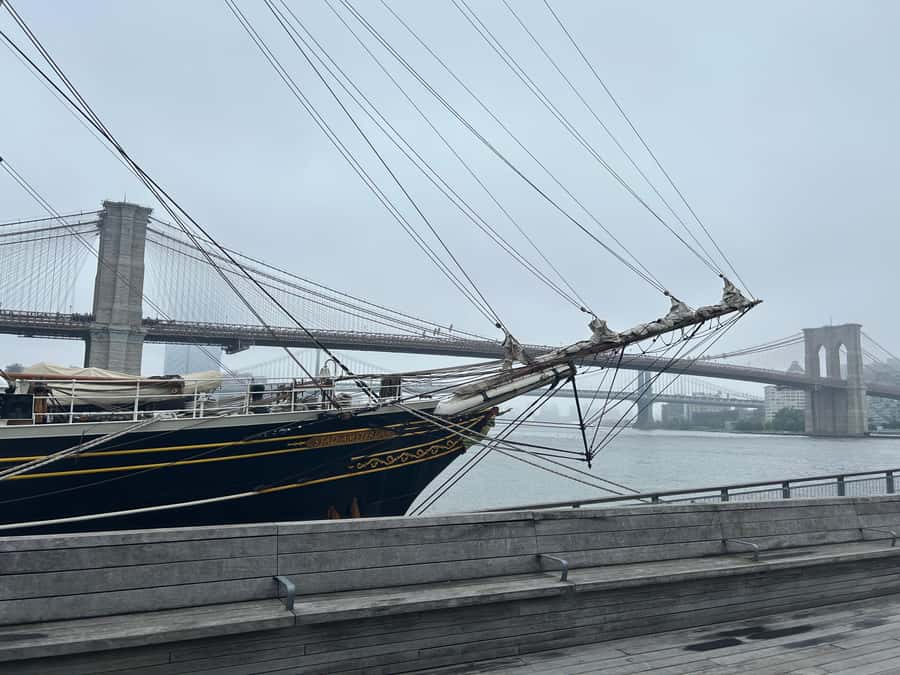
An early stop is a small park tucked away from the main streets. It offers a change of pace from the hard stone and traffic around it. David also points out an elevated park with strong views toward Brooklyn. These pauses are useful because they break up the denser sections of the walk and give you a chance to look outward, not just down at plaques and doorways.
Stone Street and the remains of Dutch New Amsterdam
Stone Street is one of the most memorable parts of the route. It is identified as New York City’s first paved street, and its cobbles make the old street pattern easier to imagine. In a city that changes quickly, a surviving surface can say more than a large modern sign.
You also see the foundations of a Dutch tavern. The remains are modest, but that is exactly why they are useful. New Amsterdam was not built as a grand capital in the modern sense. It was a working settlement, and taverns were places where business, news, food, drink, and local politics crossed paths.
The tour also includes the oldest tavern still in operation in New York City, identified as Fraunces Tavern. Its value is not only its age. It connects the city’s colonial past with the period surrounding American independence. You get a sense of the tavern as a social and political meeting place, not just a restaurant in an old building.
A practical note: these historic streets are best appreciated at walking speed. Watch your footing on cobblestones, and do not expect every historic feature to look grand or perfectly preserved. The reward comes from seeing several small pieces together.
Wall Street, the old wall, and New York’s money center
The name Wall Street points to one of the city’s most famous old defenses. The tour explains the story of the wall and how its memory survived after the physical barrier disappeared. This is a good example of how Lower Manhattan works: a modern street name can preserve a much older chapter.
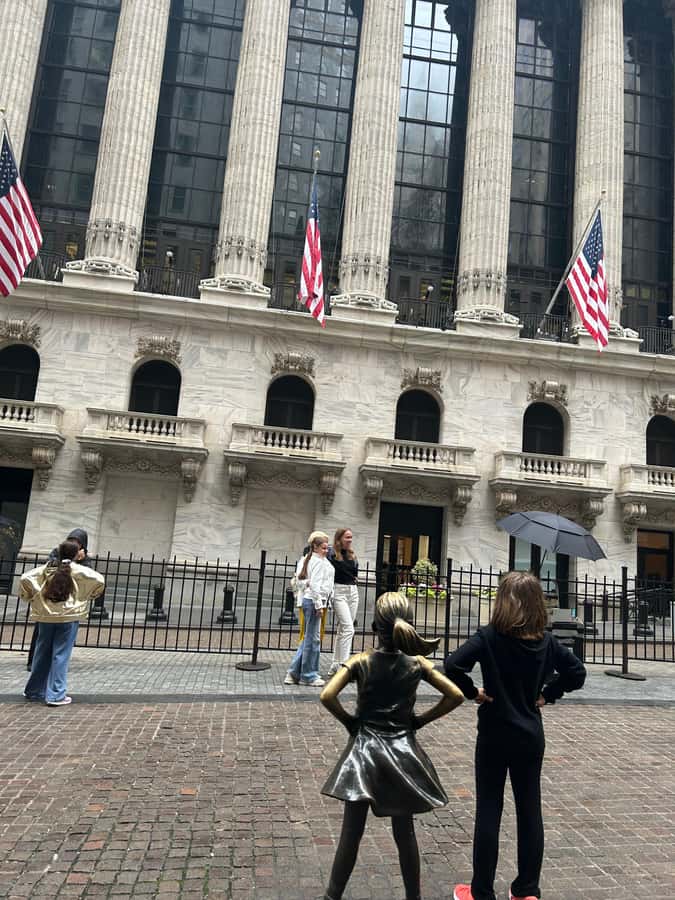
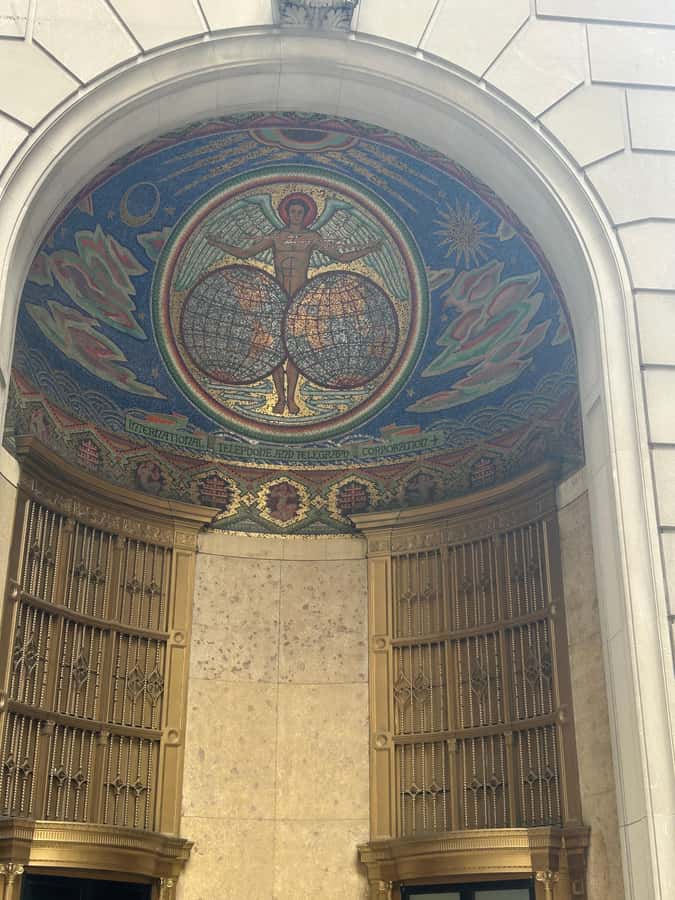
You then enter the heart of the Financial District. The New York Stock Exchange is included, with attention to both the older and newer exchange buildings. You should not expect this walking tour to function as a trading-floor visit or an inside tour of the exchange. Its purpose is to explain the institution’s place in New York and show you the buildings from the street.
That distinction helps set expectations. The Financial District is most interesting when you understand the forces behind the facades. Trade, banking, government, immigration, and real estate all helped shape this small part of the island. David’s many anecdotes give the area a human scale, which is welcome in a district that can otherwise feel imposing.
You also see the Charging Bull and Fearless Girl statues. These are among the most photographed public artworks in Lower Manhattan, and they offer an easy way into the city’s arguments about finance, power, gender, and public space. The tour points out the controversy around both statues rather than treating them as simple photo props.
Expect people near the bull, especially if you want a close picture. The value here is the context. You learn why the statues became symbols and why their placement and meaning have been debated.
Another side of New York City for the same day:
- NYC: SUMMIT One Vanderbilt Tickets
★ 4.7 · 51,195 reviews - NYC: 9/11 Memorial & Museum Timed-Entry Ticket
★ 4.8 · 31,428 reviews - NYC: Empire State Building Tickets – Observatory & Museum
★ 4.7 · 25,757 reviews - New York City: Statue of Liberty & Ellis Island with Ferry
★ 4.6 · 18,683 reviews
Federal Hall and Washington’s first presidential oath
Federal Hall is one of the essential stops for anyone interested in the United States government. George Washington took the oath of office here, and the site links New York directly to the country’s earliest national political life.
The statue of Washington outside gives you a strong visual marker, but the bigger point is geographic. New York was briefly the nation’s capital, and Lower Manhattan was not merely a trading center. It was also a place where the new government had to define itself.
I like this part of the tour because it corrects a common assumption that American founding stories belong only to Philadelphia, Boston, or Washington, DC. New York played a major early role too. You get that lesson without leaving the compact streets of the Financial District.
Federal Hall can be busy, and the surrounding streets are active. Your guide helps connect the building to the larger route, so it does not feel like an isolated history stop.
Trinity Church, Hamilton’s tomb, and the city beneath the churchyard
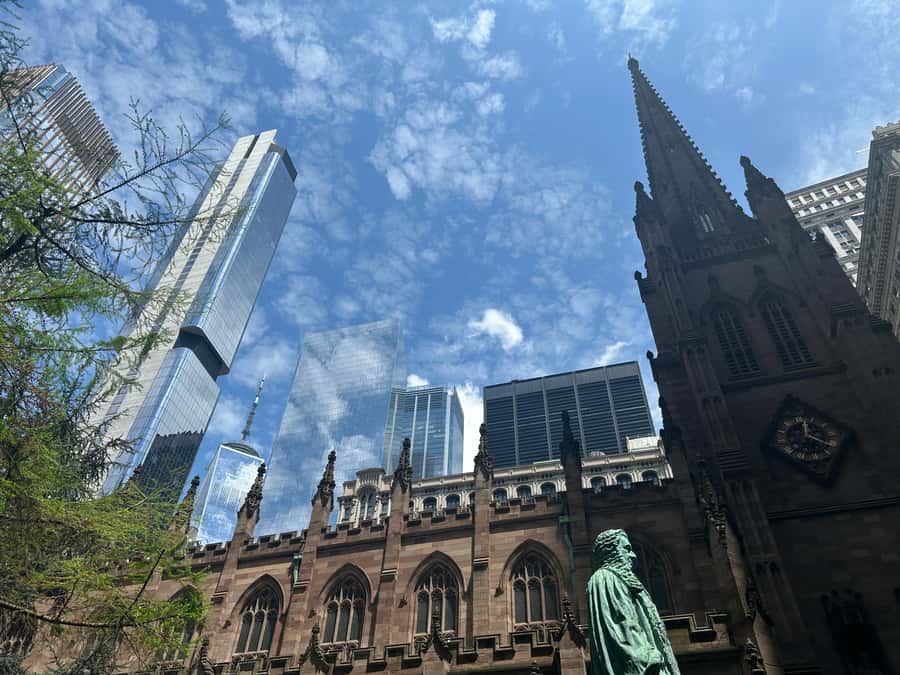
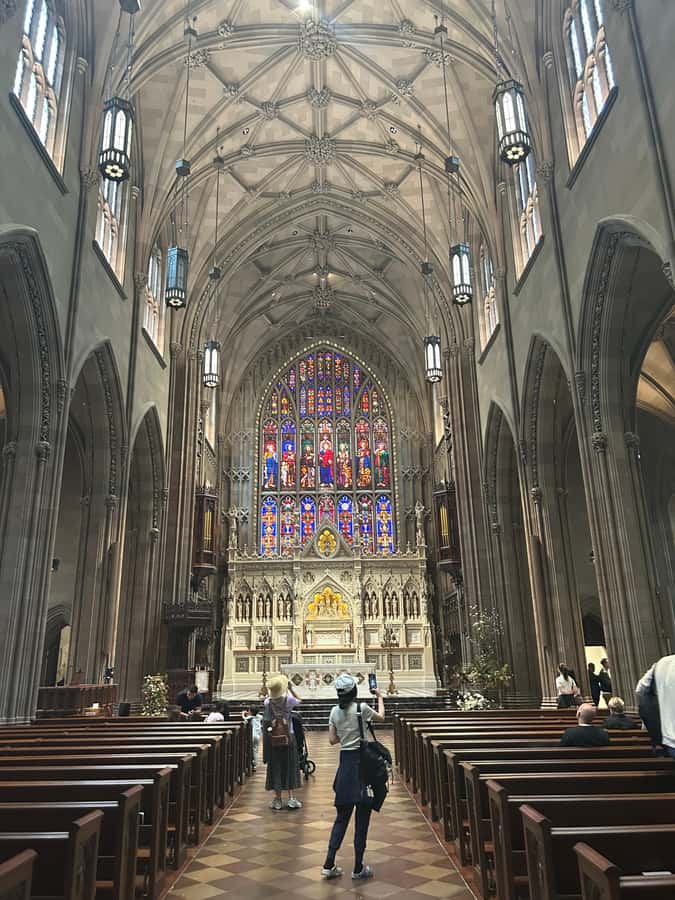
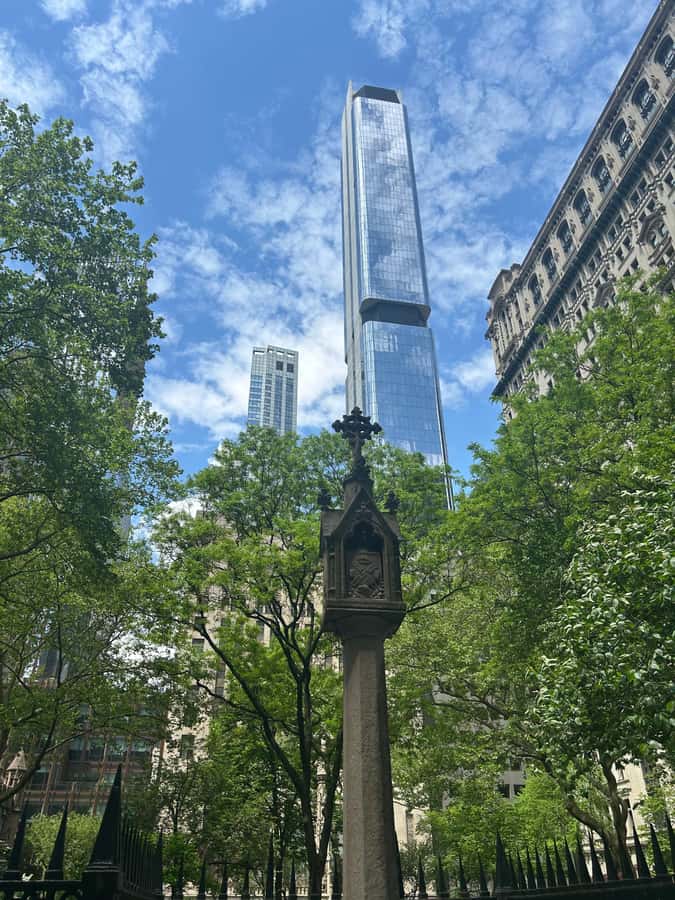
Trinity Church brings a quieter mood to the walk. Its cemetery and Hamilton’s tomb add a personal scale to the political story. Alexander Hamilton is often treated as a larger-than-life figure, but a grave in an old churchyard makes the period feel more immediate.
The church and cemetery also show how much older New York is than its present skyline suggests. In a few steps, you move from finance and government to a place of worship and burial. The contrast is one of the best features of Lower Manhattan.
The inclusion of Hamilton’s tomb will appeal to anyone interested in the early republic, but you do not need to be a specialist to enjoy the stop. David’s style is built around anecdotes, so the history comes through people and incidents rather than a dry list of dates.
This is another area where a busy day can affect your experience. If you want time for careful photographs or a quiet look at the graves, you may need to use your own judgment and stay close to the group.
The first park in New York State and the National Museum of the American Indian
Later, the route reaches New York State’s first park and the National Museum of the American Indian. Together, these stops help widen the story beyond Wall Street and colonial buildings.
The reference to the Lenape people at the start of the tour matters here. New York’s beginnings did not start with Dutch settlement. The city was built on land with an Indigenous past, and the route gives that earlier chapter a place in the story.
The museum is included as a stop on the walk, but the tour does not promise a full museum visit. Think of it as part of the area’s historical setting rather than a separate museum tour. If you want to explore its galleries in detail, plan another visit at a different time.
The first park adds another civic layer. Public spaces tell you how a city organizes itself, and this one helps connect the early settlement period with New York’s later public life. These stops keep the tour from becoming too focused on wealth and finance.
From famous statues to the World Trade Center site
The tour ends at the World Trade Center site, bringing the walk into the present. That ending gives the route a clear arc: Lenape land, Dutch settlement, colonial trade, American government, modern finance, and a city reshaped by tragedy and rebuilding.
The site can be an emotional place, and the experience of visiting it varies from person to person. The tour’s earlier historical layers help place it in a longer story of New York rather than treating it as a stand-alone stop.
You should also expect a great deal of modern architecture and movement around the final area. This is not a quiet ending, but it is a meaningful one. The walk shows how Lower Manhattan keeps changing while older street lines, names, graves, and foundations remain.
Because the tour crosses the southern tip of Manhattan from east to west, you finish in a different part of the district from where you began. That is useful if you want to continue exploring the World Trade Center area afterward.
The local touches that make the route feel personal
The famous sights would be enough for a standard Wall Street walk, but the extra details make this experience more distinctive. David includes a tucked-away park, an elevated viewpoint with views toward Brooklyn, an original bagel shop, and the oldest tavern still operating in New York City.
The bagel stop is especially useful for people who want a break from formal sightseeing. It gives you a taste of ordinary New York life, even within a heavily visited part of Manhattan. The exact food experience is not described as a meal included in the price, so treat it as a guide’s local recommendation rather than a promised food tasting.
The viewpoint also changes the rhythm of the tour. Lower Manhattan can feel enclosed by tall buildings, so a raised place with an open view helps you see the district as part of a larger harbor setting.
These details explain why David receives such strong praise. He is not only pointing out the biggest landmarks. He is showing you places and small stories you might miss while walking alone.
Is $70 a fair price for three hours?
At $70 per person, this is not the cheapest way to see Wall Street. You can walk through the Financial District on your own for free, and many of the exterior landmarks cost nothing to view.
The price makes more sense if you value a clear route and a live guide who can connect the stops. In three hours, you cover a wide range of subjects: Lenape history, Dutch New Amsterdam, colonial taverns, the first paved street, the old wall, American independence, Federal Hall, Hamilton, the Stock Exchange, public art, the first park, and the World Trade Center.
That is a lot of ground and a lot of context. The best value comes from the storytelling, not from admission tickets. You are paying to avoid piecing together the history yourself and to discover the lesser-known stops between the major sights.
I would consider the price fair for a visitor who wants a focused introduction to Lower Manhattan, especially in French. It is less compelling for someone who prefers to wander alone, read plaques, and spend long stretches inside individual attractions.
The booking terms also reduce some risk. You can cancel up to 24 hours ahead for a full refund, and you can reserve now and pay later. The tour is wheelchair accessible, though the route includes historic streets and outdoor walking, so it is sensible to confirm any specific mobility needs before booking.
Who will enjoy this Wall Street walking tour?
I would recommend it most strongly to:
- First-time visitors who want to understand how New York began
- French-speaking visitors who want a live tour in their own language
- History fans interested in Dutch New Amsterdam, the founding era, and Hamilton
- People who prefer stories and local details over a simple landmark checklist
- Visitors who want to combine major sights with less obvious corners
- Anyone staying in Manhattan who wants a structured introduction to Lower Manhattan
It may be less suitable if you want a short, photo-focused outing. Three hours is enough time to cover a lot, but it also means sustained walking and a steady flow from one stop to the next.
Families and older visitors should consider their comfort with city walking. The tour is wheelchair accessible, which is helpful, but accessibility does not remove the usual challenges of a historic urban route, including crowds, street crossings, and uneven older surfaces.
Practical advice before you go
Wear comfortable shoes. Stone Street and other older sections are part of the appeal, but they are not the place for delicate footwear.
Arrive early at the iPic theater and look for the man with the hat. That simple meeting instruction is easy once you know it, but the Financial District has many nearby entrances and busy corners.
Choose French or English when you book. If you are comfortable in both, consider which language will let you absorb fast-moving anecdotes most easily. David’s style is energetic and talkative, so following the language that feels most natural will improve the experience.
Keep your camera ready, but do not let photographs take over. The tour’s best moments often come from details such as a street surface, a foundation, a grave, or a building connection. Those are easy to miss if you are focused only on the biggest skyline shot.
Finally, leave some time after the tour if you want to explore the World Trade Center site on your own. The walking tour ends there, so you can continue nearby without having to cross back to the starting point.
Should you book it?
Book this tour if you want the story behind Lower Manhattan, not just a series of famous photo stops. The route is unusually broad, and David’s friendly, anecdotal style adds the personal touch that can turn a financial district walk into a memorable city lesson.
At $70, you should expect to pay for interpretation rather than entry tickets or a meal. If that suits you, the combination of Stone Street, Fraunces Tavern, Federal Hall, Trinity Church, Wall Street, the statues, local food tips, and the World Trade Center makes the three hours worthwhile.
Skip it if you prefer to explore at your own pace or want a short introduction with minimal walking. For everyone else, especially French-speaking visitors and first-time visitors to New York, this is a strong way to get your bearings in the city’s oldest core.
FAQ
How long does the Wall Street tour last?
The tour lasts three hours.
Is the tour offered in French?
Yes. You can take the tour in French or English.
Who is the guide?
The tour is led by David, an NYC licensed guide. He is a French native and is known for using history, anecdotes, humor, and practical tips throughout the walk.
Where does the tour meet?
The meeting point is the man with the hat in front of the iPic theater.
Where does the tour end?
The tour ends at the World Trade Center site.
Is the tour wheelchair accessible?
Yes, the activity is listed as wheelchair accessible.
Just listed around New York City
- NYC: Little Shop of Horrors Off-Broadway Ticket5 reviews
- Private NYC Airport Transfer: LGA to Manhattan – Up to 5★ 3.6 · 5 reviews
- New York City Tour in German★ 4.5 · 5 reviews
- New York Afternoon Fall Foliage Cruise with Lunch★ 5.0 · 6 reviews
- New York: Hamilton and Washington Revolutionary Walking Tour★ 5.0 · 5 reviews
- NYC Freedom Tower Private Photo or Video Experience★ 4.0 · 6 reviews
- Brooklyn Walking Tours by Locals: Private & 100% Personalized★ 4.0 · 6 reviews
- Southold Bay Oyster Farm Tour★ 5.0 · 6 reviews
Wall Street & Financial District Tours, compared.

NYC City Tour: Statue of Liberty, 9/11 Memorial, Wall Street
Read our review →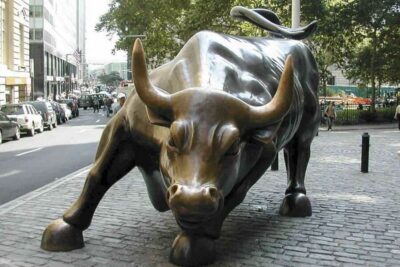
Wall Street Insider Tour with a Finance Professional
Read our review →Wall Street Insider Tour with a Finance Professional
Read our review →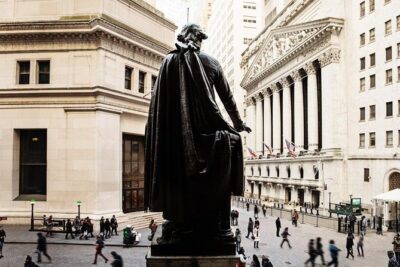
Manhattan Group Tour Including Wall Street and 911 Memorial
Read our review →
Wall Street Tour with 9/11 Memorial and Statue Ferry
Read our review →
Wall Street and Financial District Walking Tour
Read our review →

Wall Street and Financial District Walking Tour
Read our review →Browse the lists this tour appears in