
Reviewed · SOHO, LITTLE ITALY & CHINATOWN TOURS
Wall Street to Chinatown: Dumplings & Taro bites walking tour
New York’s financial district and Chinatown can feel like two different cities. This three-hour walk links them on foot, moving from the Charging Bull and Federal Hall to Columbus Park, Five Points, taro bites, and dumplings. You get major sights, street-level stories, and two small food stops without spending the day in a bus or museum.
I like the small group limit of 10, which should make it easier to ask questions and keep up with the guide. I also like the pairing of sightseeing and food: Ali Mama’s taro munchkins add a sweet, chewy stop, while Tasty Dumpling gives you a savory Chinatown bite. The main consideration is the price, $119 per person, and the amount of walking packed into about three hours.
In This Review
- Key points to know before booking
- Why this route works for first-time New York visitors
- Starting at the Charging Bull in Bowling Green
- Trinity Church and the early city
- Wall Street, the NYSE, and Federal Hall
- The Federal Reserve and St. Paul’s Chapel
- The Brooklyn Bridge connection
- Columbus Park and the story of Five Points
- Taro munchkins at Ali Mama Tea
- Dumplings at Tasty Dumpling
- What $119 buys you
- Who will enjoy this walking tour
- Booking and cancellation advice
- Should you book Wall Street to Chinatown?
- FAQ
- How long is the Wall Street to Chinatown tour?
- Where does the tour start?
- Where does the tour end?
- What food is included?
- Is the tour offered in English?
- How many people can join the group?
- Are admission tickets to the landmarks included?
- Are service animals allowed?
- Can I cancel for a refund?
Key points to know before booking
- Wall Street to Chinatown on foot: Follow a clear route through Lower Manhattan rather than piecing together the sights yourself.
- Two included food tastings: Try taro munchkins at Ali Mama Tea and dumplings at Tasty Dumpling.
- Small group of up to 10: The format allows closer contact with the guide than a large city tour.
- Guides named Robert and Muhammad: Robert is described as friendly and informative, while Muhammad led an organized, personal experience.
- A mix of famous and local-feeling stops: The route covers the Charging Bull, Federal Hall, St. Paul’s Chapel, Columbus Park, Five Points, and Chinatown.
- Flexible planning: Choose from available time slots, receive a mobile ticket, and cancel for a full refund up to 24 hours before departure.
Why this route works for first-time New York visitors
The smart idea here is the direction of travel. You start at Bowling Green, at the southern end of Manhattan, then work north and east through the Financial District before reaching Chinatown. Instead of treating Wall Street as a quick photo stop, the walk gives the area a fuller shape.
I find Lower Manhattan easier to understand when its landmarks are connected by streets and stories. The route moves through the birth of American government, the machinery of modern finance, the aftermath of September 11, the Brooklyn Bridge area, and the immigrant neighborhoods around Five Points. That range gives you more than a checklist of buildings.
The tour lasts about three hours, so expect a brisk overview rather than long visits inside every site. The listed stops are generally around 15 minutes, with about 30 minutes set aside for Chinatown and shorter food visits. This is useful if you want orientation early in your New York stay, but it will not replace a full museum visit or a detailed church tour.
More SoHo, Little Italy and Chinatown walks:
- SoHo, Little Italy, and Chinatown Walking Tour in New York
★ 5.0 · 3,153 reviews - NYC: Chinatown & Little Italy Food Tour with 7 Flavorful Tastings
★ 5.0 · 2,733 reviews - Original NYC Guided Food Tour of Chinatown and Little Italy
★ 5.0 · 2,194 reviews
Starting at the Charging Bull in Bowling Green
The meeting point is Bowling Green, written as Bowling GreenPX3P+XG in the location details. That is at the southern end of Manhattan, near the Charging Bull in Bowling Green Park. A mobile ticket is provided, and the tour is offered in English.
The Charging Bull is an easy place to recognize. Arturo Di Modica created the bronze sculpture in 1989, and it is about 11 feet tall and more than 7,000 pounds. Its lowered head, broad shoulders, and raised tail fit the stock market image of force and risk.
You will likely have time for photographs and a quick look at the park. The bull’s horns, nose, and tail have become popular good-luck touch points, so expect a crowd around the sculpture at busy times. The free stop is brief, but the guide can give it context that a quick photo alone cannot.
Trinity Church and the early city
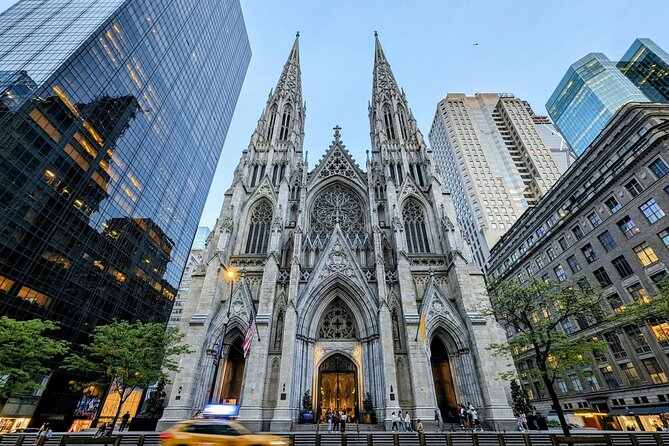
Trinity Church sits at Wall Street and Broadway, surrounded by the tall buildings of the Financial District. Its Gothic Revival design, soaring spire, and stained glass offer a sharp contrast to the steel and glass nearby.
The church was completed in 1846 and has a historic cemetery where Alexander Hamilton is buried. That detail gives the stop a direct link to the early United States, especially when paired with Federal Hall a few minutes later.
The planned visit is about 15 minutes. You should think of this as a guided look and orientation stop, not a full church tour. The church remains a place of worship, so access and quiet areas may depend on what is happening there at the time.
Wall Street, the NYSE, and Federal Hall
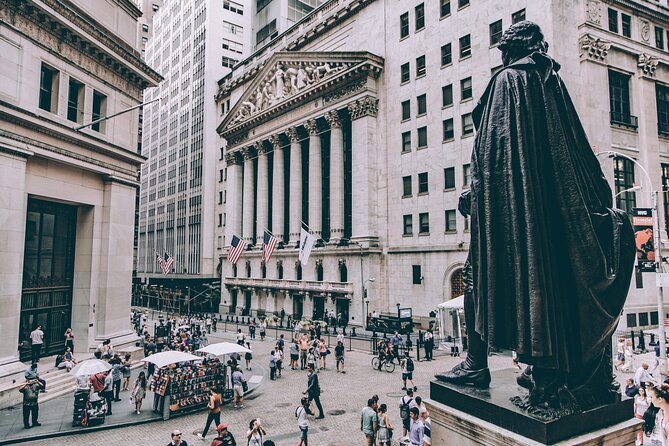
The New York Stock Exchange is one of the route’s big modern symbols. Its facade at 11 Wall Street uses grand Corinthian columns and a pediment sculpture called Integrity Protecting the Works of Man. You will view the building from outside and have time for photographs.
The value here is not simply seeing a famous sign. A guide can explain how this stretch of Lower Manhattan came to represent global finance, then connect that story to the Federal Reserve Bank of New York nearby. Robert is specifically described as bringing facts, humor, and an easygoing manner to the walk, qualities that fit this kind of street-based history.
Federal Hall, at 26 Wall Street, shifts the subject from money to government. George Washington took the oath of office as the first president of the United States here in 1789. The present building has a neoclassical facade, tall columns, and a statue of Washington outside.
The tour gives each of these stops roughly 15 minutes. That is enough for an explanation and photographs, but not enough for a careful look at every exhibit inside Federal Hall. If you want to study the birth of the federal government in detail, plan a separate visit.
More Wall Street walks:
- NYC City Tour: Statue of Liberty, 9/11 Memorial, Wall Street
★ 4.5 · 2,059 reviews - Wall Street Insider Tour with a Finance Professional
★ 4.5 · 660 reviews - Wall Street Insider Tour with a Finance Professional
★ 4.5 · 571 reviews - Manhattan Group Tour Including Wall Street and 911 Memorial
★ 5.0 · 408 reviews
The Federal Reserve and St. Paul’s Chapel
At 33 Liberty Street, the Federal Reserve Bank of New York looks more like a fortified Italian Renaissance palace than an ordinary office building. It is known for holding one of the world’s largest gold reserves, although this walk does not include a separate gold-vault visit.
The stop helps connect everyday economic ideas to a real institution. You can learn about the Federal Reserve’s role in monetary policy and financial stability through the guide’s explanation. The building itself is the main sight on this route.
St. Paul’s Chapel at 209 Broadway brings the walk back to older New York. Completed in 1766, it is the oldest surviving church building in the city. Its Georgian design and long history make it an important contrast to the financial institutions around it.
St. Paul’s also became a place of rest and service after the attacks of September 11. It survived the collapse of the Twin Towers just blocks away and became known as the Little Chapel That Stood. The 15-minute stop gives you a chance to consider that more recent chapter in the city’s history.
The Brooklyn Bridge connection
The route includes the Brooklyn Bridge, the 1883 suspension bridge linking Manhattan and Brooklyn over the East River. Its stone towers, steel cables, and elevated pedestrian path are among the city’s most recognizable sights.
The supplied timing does not assign a separate duration to the bridge, so you should not assume this means a complete walk from one borough to the other. The exact crossing or viewing point may depend on the guide’s route and the day’s timing. Still, the bridge adds a strong visual change after the enclosed streets of the Financial District.
If you enjoy city views and historic engineering, this part may be a highlight. If you dislike crowded walkways or steady walking, it is worth keeping the pace in mind. Comfortable shoes are a practical choice for the full outing.
Columbus Park and the story of Five Points
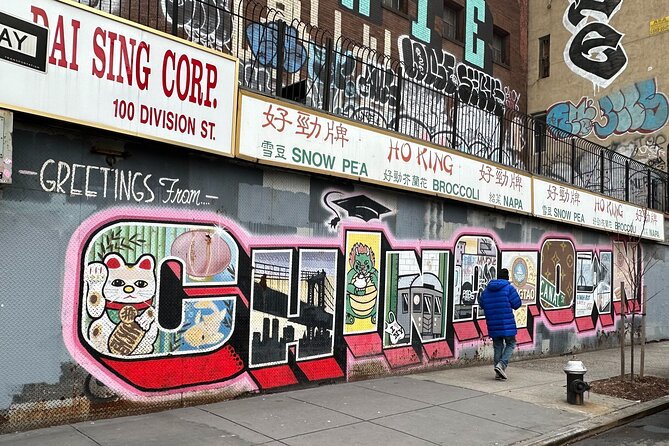
Columbus Park is in Chinatown and occupies part of the former Five Points area. Today, it is a community space where you might see mahjong, tai chi, music, basketball, and people taking a break under the trees.
The park is more than a green pause in the route. It gives the guide a place to explain how the neighborhood changed from one of New York’s most notorious 19th-century districts into part of present-day Chinatown.
Five Points was named for a five-way intersection formed by Anthony, Orange, and Cross Streets, now known as Worth, Baxter, and Mosco Streets. It was crowded, poor, and associated with gangs and tenement housing. It was also shaped by immigrant communities, making it part of the larger story of how New York developed its many cultures.
The Chinatown portion lasts about 30 minutes, longer than most of the earlier landmark stops. That extra time matters because the route shifts from formal monuments to streets, food, and neighborhood history.
Taro munchkins at Ali Mama Tea
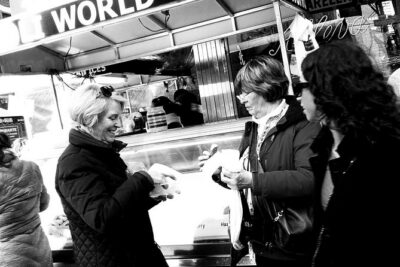
At Ali Mama Tea, you taste taro munchkins. These are small mochi donuts with a crisp outside, a soft and chewy center, and taro custard inside. Taro has an earthy flavor with a gentle sweetness, so this is a useful introduction if you have not tried it before.
The portion is a tasting rather than a full meal. That is helpful because another food stop follows soon after. The texture is the main attraction: crisp outside, chewy dough, and creamy filling in one small bite.
I like this stop because it gives the food section a clear Chinatown identity instead of relying only on familiar tourist snacks. It also keeps the experience approachable. You do not need to commit to a large dish or know what to order.
Dumplings at Tasty Dumpling
The second tasting is at Tasty Dumpling. The dumplings are described with crisp, golden bottoms, soft wrappers, and juicy filling. Options include classic pork and chive as well as a vegetable choice.
Soy sauce or vinegar can add more flavor. Since the stop is brief, think of it as a sample to enjoy during the walk, not a sit-down meal. If dumplings are a major reason for booking, you may want to return later and order more on your own.
The two food stops work well together. Taro munchkins provide sweetness and unusual texture, while dumplings deliver a familiar savory bite. Together, they make the Chinatown portion feel more substantial than a simple sightseeing pass.
What $119 buys you
At $119 per person, this is not a cheap way to see Lower Manhattan. The price makes the most sense if you place real value on a guide, a small group, route planning, and the included food.
You are paying for about three hours of interpretation rather than admission to major attractions. The listed landmark stops are free, and the walk does not promise extended interior visits at Federal Hall, the Federal Reserve, or St. Paul’s Chapel. If you are happy to read signs and follow a map, you could cover many of the same exterior sights at no ticket cost.
The stronger case for the price is convenience and connection. The guide handles navigation between areas that can feel confusing on a first visit, then ties together finance, government, religion, immigration, and food. With a maximum of 10 people, you also have a better chance to hear the explanation and ask a question than you would in a large group.
Robert is praised for making the walk fun while sharing plenty of facts. Muhammad is described as organized and personal. Since guide assignment may vary, you should treat those names as examples rather than a guarantee that one specific person will lead your departure.
Who will enjoy this walking tour
I would recommend this outing to a first-time New York visitor who wants a compact Lower Manhattan introduction. It suits people who like history in manageable portions and prefer seeing a neighborhood while moving through it.
It also works for anyone who wants food built into a sightseeing plan. The tastings are small, so you can continue exploring afterward without feeling as if lunch has taken over the day.
The tour may be less suitable if you want a slow pace, long indoor visits, or a full meal. The itinerary covers many places in roughly three hours, and the route includes substantial walking. People with mobility concerns should note that the tour is near public transportation and says most participants can take part, but the supplied details do not specify the exact distance, surface conditions, or step-free access throughout.
Service animals are allowed. The tour is offered in English, and available time slots let you choose a departure that fits your schedule.
Booking and cancellation advice
Confirmation arrives at booking, and the mobile ticket keeps the process simple. This experience is often booked about 88 days ahead, so popular time slots may fill well before your visit.
You can cancel for a full refund up to 24 hours before the local start time. Inside that 24-hour window, the payment is not refunded and changes are not accepted. That policy is fairly flexible for a city plan, but mark the deadline clearly if your schedule may shift.
Should you book Wall Street to Chinatown?
Book this tour if you want a guided route through Wall Street, the Brooklyn Bridge area, and Chinatown, with two distinctive food tastings along the way. The small group, named guides such as Robert and Muhammad, and mix of American history with Chinese food give it a clear advantage over simply taking photos at the bull and NYSE.
Skip it if $119 feels high for mostly outdoor sightseeing, or if you would rather spend that money on a full Chinatown meal and explore with your own map. For the right person, though, the route offers a useful first orientation, a friendly pace, and enough food to turn a standard Lower Manhattan walk into a more memorable afternoon.
FAQ
How long is the Wall Street to Chinatown tour?
The experience lasts approximately three hours.
Where does the tour start?
The meeting point is Bowling Green in New York City, near the Charging Bull in the Financial District.
Where does the tour end?
The tour ends in Chinatown, New York.
What food is included?
The tour includes tastings of taro munchkins at Ali Mama Tea and dumplings at Tasty Dumpling.
Is the tour offered in English?
Yes. The experience is offered in English.
How many people can join the group?
The tour has a maximum of 10 participants.
Are admission tickets to the landmarks included?
The listed landmark stops, including the Charging Bull, Trinity Church, the NYSE, Federal Hall, the Federal Reserve Bank, and St. Paul’s Chapel, are shown as free admission stops. The included paid tastings are taro munchkins and dumplings.
Are service animals allowed?
Yes, service animals are allowed.
Can I cancel for a refund?
Yes. You can cancel at least 24 hours before the experience start time for a full refund. Cancellations or changes made less than 24 hours before the start time are not refunded or accepted.
More New York City walking tours
- Secrets of Grand Central Station Walking Tour New York City
★ 5.0 · 1,796 reviews - Greenwich Village Walking and Food Tasting Tour
★ 5.0 · 1,572 reviews - Artistic, Alternative Greenwich Village Walking Tour
★ 5.0 · 971 reviews - True Crime NYC: Mafia Walk w/Ret. NYPD Detective and Local Food
★ 5.0 · 848 reviews
Just listed around New York City
- Exploring Eastern European Food in Little Odessa★ 5.0 · 3 reviews
- New York City: West Village Food Tour★ 5.0 · 3 reviews
- Williamsburg Walking Tour: History, Hipsters, Hasids & Hops★ 5.0 · 3 reviews
- The Best of Midtown Manhattan Self-Guided Walking Tour★ 3.5 · 3 reviews
- Cabaret at the Kit Kat Club on Broadway Ticket★ 5.0 · 3 reviews
- Bike Rental-Easy GO NYC★ 3.5 · 3 reviews
- Private Tour of High Line, Chelsea, Hudson Yards and Edge★ 5.0 · 3 reviews
- Little Italy Official Walking Tour – Manhattan NYC★ 4.2 · 3 reviews
SoHo, Little Italy & Chinatown Tours, compared.
SoHo, Little Italy, and Chinatown Walking Tour in New York
Read our review →
Chinatown & Little Italy Food Tour with 7 Flavorful Tastings
Read our review →
Original NYC Guided Food Tour of Chinatown and Little Italy
Read our review →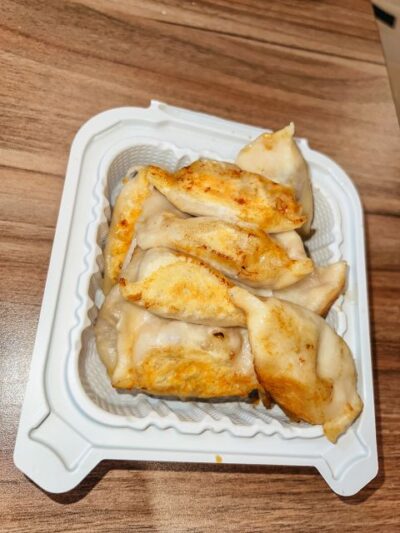
SoHo, Little Italy, and Chinatown 2-Hour Guided Walk
Read our review →
SoHo, Little Italy, and Chinatown NYC Guided Walking Tour
Read our review →Browse the lists this tour appears in