
Reviewed · HISTORICAL TOURS
Before Stonewall Secret Gay History of New York City
New York’s LGBTQ past comes alive on foot in places where ordinary-looking bars and streets helped change American law. This two-hour walk connects the pre-Stonewall Sip-In, the 1969 Stonewall Riots, and the neighborhood spaces that made LGBTQ life visible.
I love the way the tour leaves room for stories instead of rushing from plaque to plaque. I also like the small-group limit of 25 and the chance to hear guides such as Patrick or Percy explain details that can be easy to miss in a standard sightseeing tour. The main drawback is simple: you walk outside for two hours, and bad weather can make the experience less comfortable.
In This Review
- Key points at a glance
- Why this short walk matters
- Starting at 640 Broadway
- The bar where the Sip-In took place
- Seeing the Stonewall Inn
- The park at the center of community life
- Walking the main road of LGBTQ visibility
- A street of speakeasies, tearooms, and quick bites
- Finishing at Julius’ Bar
- How Patrick and Percy shape the experience
- Is $39 a fair price?
- Who should book this walk?
- Final call: book it for the connections
- FAQ
- How long does the tour last?
- What time does the tour start?
- Where does the tour begin?
- Where does the tour end?
- How much does the tour cost?
- What language is the tour offered in?
- Is transportation included?
- What is included in the price?
- How large can the group be?
- Can I cancel for a full refund?
Key points at a glance
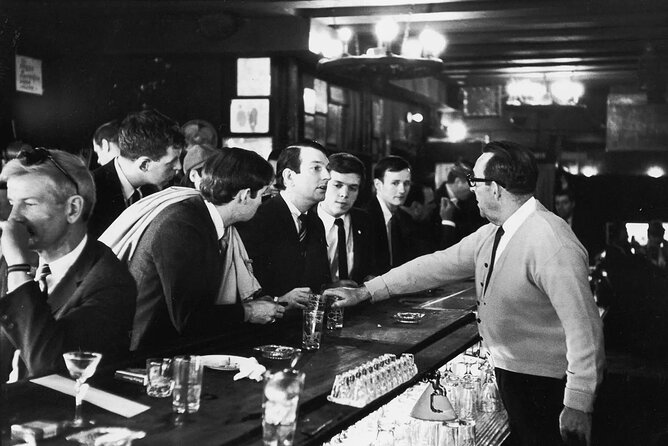
- The tour begins with the pre-Stonewall Sip-In: Learn how a protest at a popular LGBTQ bar helped challenge service rules against LGBTQ customers.
- Stonewall Inn is part of the walk: See the site of the 1969 riots, now a popular LGBTQ bar and National Landmark.
- The route connects places, not just dates: Parks, streets, bars, and old gathering spots show how community life grew across Greenwich Village and nearby areas.
- Patrick and Percy are named guides: Their approach includes detailed storytelling, visual material, and time for questions.
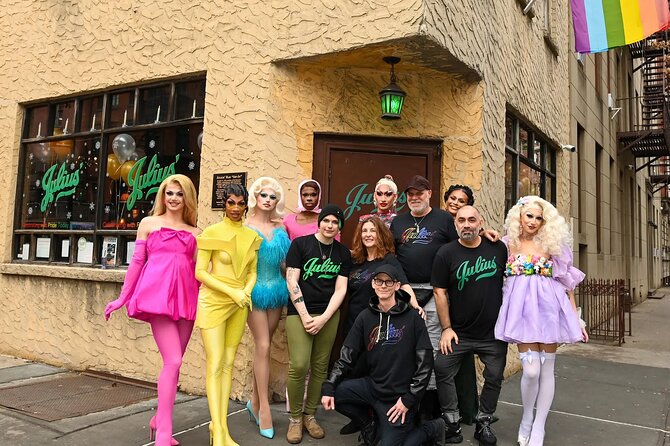
- It ends at Julius’ Bar: You finish at one of New York’s historic LGBTQ bars, with nearby food and drink options.
- The price is $39: For two hours with a licensed guide, the value is strongest if you want focused LGBTQ history rather than a general city walk.
Why this short walk matters
A good history tour changes the way you see a street. Here, a bar entrance can point to a protest, a park can represent community life, and a busy avenue can reveal decades of public visibility.
This experience focuses on LGBTQ history before and around Stonewall. That matters because the 1969 riots did not appear from nowhere. Earlier groups, protests, social spaces, and quiet acts of resistance helped create the conditions for change.
You will not simply hear a list of names and dates. The route shows how laws and public attitudes affected everyday choices, including where people could meet, eat, drink, and feel safe. The walk also makes clear that LGBTQ history belongs to the physical city, not only to museums and books.
The tour lasts about two hours and begins at 11:00 a.m. at 640 Broadway. It ends at 159 West 10th Street, at Julius’ Bar. Since there is no private vehicle, you move between stops on foot and remain responsible for handling city traffic, sidewalks, and weather.
More New York City history walks:
- New York City: American Museum of Natural History Ticket
★ 4.5 · 15,447 reviews - NYC: Starship Landmark 90 Minute Sightseeing Cruise
★ 4.6 · 3,666 reviews - Starship Landmark 90 Minute Sightseeing Cruise
★ 4.5 · 2,073 reviews
Starting at 640 Broadway
The meeting point on Broadway places you near the southern edge of the route. The tour starts with a guide rather than a vehicle, so arrive ready to walk and listen from the first stop.
The group can include up to 25 people. That is not a private tour, but it is still small enough for the guide to address questions and keep the group together. The experience is offered in English, and a licensed expert guide is included in the price.
The walk is not presented as a nonstop march. One useful feature is the rhythm of walking followed by longer pauses for stories. That makes a difference when the subject is complicated. You have time to absorb the setting rather than glance at a building and hurry on.
At the same time, this is not a good choice if you want a fully seated activity. You should expect outdoor walking and standing. Wear practical shoes, and check the weather before you go.
The bar where the Sip-In took place
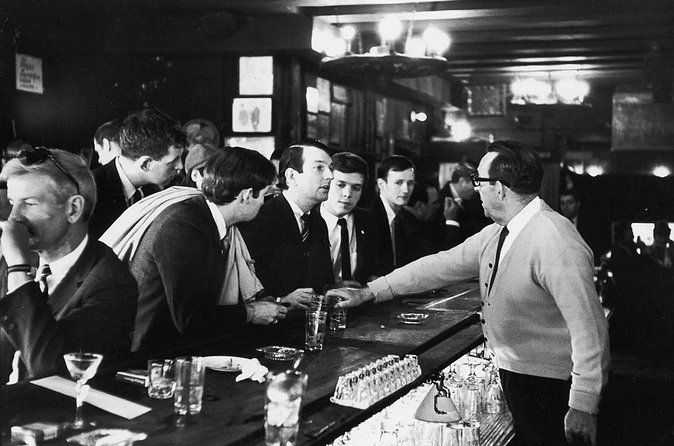
One of the most important early stops is a popular LGBTQ bar connected with the Sip-In, an event that came before Stonewall. The protest challenged the practice of refusing service to LGBTQ customers in bars and restaurants.
That detail gives the tour its strongest lesson: change often begins with a very specific injustice. The issue was not abstract. It involved the basic right to sit in a public place and receive service without being turned away because of who you were.
The bar is valuable as a historic setting because it links private social life with public protest. People needed places to meet, but those places were also subject to discrimination and pressure. The Sip-In showed that a bar could become a stage for legal and social change.
You should pay attention to the guide’s explanation here, since the importance of the stop comes from the story attached to the place. The building alone may not explain what happened. A strong guide helps you see why this moment mattered before the better-known events of 1969.
Seeing the Stonewall Inn
The route continues to the location of the 1969 Stonewall Riots. Today, the site is home to a popular LGBTQ bar and is recognized as a National Landmark.
Stonewall is often treated as the single beginning of LGBTQ rights activism. This tour gives you a more useful frame. The riots were a major turning point, but they followed earlier organizing and resistance, including the Sip-In.
There is also an unusual piece of context: the Mob owned the Stonewall Inn. That fact adds another layer to the story of the bar. It reminds you that LGBTQ social spaces were shaped by the limited and sometimes difficult choices available at the time.
The tour only takes you to the Stonewall location, so do not assume the admission includes a full indoor visit. If you want more time with the site, you can return afterward. One particularly useful tip is to double back to the Stonewall Inn Visitor Center, which is close enough to add on after the walk. It has exhibits and apparel for purchase.
That extra stop is not part of the stated tour itself, but it fits naturally with the subject. Plan it separately so you are not rushing to another appointment.
A few more New York City picks to weigh up
- Pride Tours NYC’s LGBTQ Historical Walking Tour
★ 5.0 · 89 reviews - Two-Hour NYC LGBTQ+ History Walking Tour
★ 5.0 · 35 reviews - NYC Greenwich Village LGBTQ+ History And Food Tour
★ 5.0 · 17 reviews - Greenwich Village LGBTQ+ Pride Walking Tour
★ 5.0 · 3 reviews
The park at the center of community life
Another stop is one of New York City’s best-known parks, described as a center of LGBTQ life and community. The park offers a change of pace from the bar interiors and narrow city streets.
This part of the walk helps explain that LGBTQ history was made in open public places, too. A park can be a meeting ground, a place to be seen, and a shared point of reference for people who may not have had many welcoming public spaces.
I like this kind of stop because it keeps the tour from becoming a string of famous bars. The story broadens from protests and nightlife to daily community life. You get a sense of how visibility works when people gather in public, not only behind a door.
The park also provides one of the tour’s natural pauses. The guide can speak about people and events while you look at the surrounding neighborhood. Since the walk includes longer moments of storytelling, this is a good place to ask questions if you want to connect earlier events with later changes.
Walking the main road of LGBTQ visibility
The route follows a major New York thoroughfare associated with LGBTQ visibility. This is where the past and present sit side by side.
A busy street can make history feel less distant. Shops, pedestrians, traffic, and ordinary city routines continue around locations that once carried enormous risk or importance. The contrast is part of the point. Public visibility that may seem normal now was not always safe or accepted.
Your guide’s job is especially important along this section. A street does not come with a built-in museum label explaining who gathered there or why it mattered. Patrick, one of the named guides, is noted for adding background beyond the planned route and for handling questions patiently. Percy is another named guide associated with the experience.
The route may not unfold in perfect chronological order. City geography does not arrange events like a textbook. You might discuss Gay Liberation before the Mattachine Society because the stops make more sense that way. That can be a small adjustment if you prefer a strict timeline, but the guide can help connect the pieces.
A street of speakeasies, tearooms, and quick bites
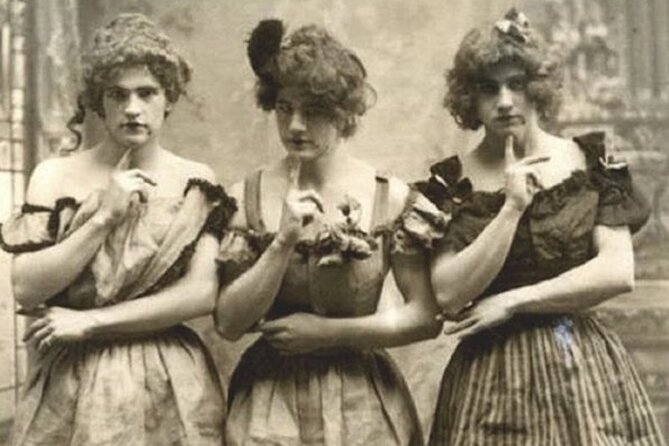
The walk also reaches a street once filled with secret speakeasies and tearooms serving the LGBTQ community. Today, it is known for comedy clubs, cafes, music venues, and quick food.
This change is one of the most telling parts of the route. The same street can move from coded meeting places to openly popular entertainment. The modern businesses are not necessarily LGBTQ history sites in themselves, but they show how the neighborhood has changed.
The word secret matters here. Earlier social spaces often needed discretion because LGBTQ people faced discrimination and could be refused service. The tour uses these old gathering places to show how community networks worked when public acceptance was limited.
You may also want to leave room after the tour to explore nearby. The route ends in a neighborhood with cafes, food, and gelato or ice cream close to the final stop. That makes the late-morning schedule practical if you want lunch or a snack afterward.
Finishing at Julius’ Bar
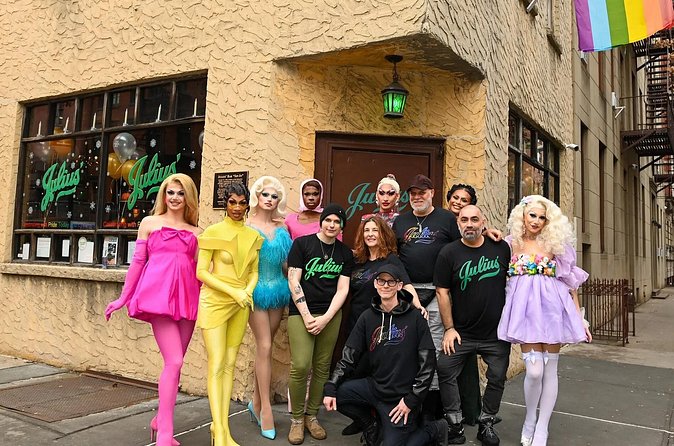
The final stop is Julius’ Bar at 159 West 10th Street. It is both the ending point and a fitting place to close a tour centered on LGBTQ bars and public life.
Because the walk ends at Julius’, you can decide for yourself if you want to continue exploring the area. The tour price does not include private transportation or an air-conditioned vehicle, and no food or drinks are listed as included. Treat any snack or drink afterward as a separate expense.
The end point also gives you a useful chance to revisit the opening themes. The Sip-In stop shows an organized challenge to discriminatory service. Stonewall shows a far larger confrontation. Julius’ brings the story back to the ordinary social spaces where people gathered, talked, and built community.
A former gay bookstore is also part of the area discussed near the end, although it is no longer operating in that form. A nearby bookstore has a small but unusual LGBTQ section. It may contain titles you cannot easily find at home, so book lovers should consider allowing extra time after the tour.
How Patrick and Percy shape the experience
The guide is the main reason to book a history walk instead of reading the same subject on your own. Patrick is described as combining serious explanation with a light touch, including humor when appropriate. He also answered questions patiently when the route’s order did not match a strict timeline.
That balance matters. LGBTQ history includes protest, discrimination, fear, organizing, and loss. A guide who treats every stop as a solemn lecture can make two hours feel heavy. A guide who jokes too much can miss the subject’s weight. The useful middle ground is a clear explanation with room for personality.
The tour uses photos and information on a tablet or phone. In very cold weather, the tablet stopped working during one small-group walk, but the guide switched to a phone and continued. You should not expect every visual aid to be available in every condition, but the guide can still carry the main story without it.
The strongest feature here is time for questions. The route covers several periods and organizations, so you may want to clarify how one event led to another. Guides such as Patrick and Percy make the experience more useful for people who already know the basic Stonewall story and want added detail.
Is $39 a fair price?
At $39 per person, this is a reasonable price for a two-hour walking tour led by a licensed expert. The value depends on what you want. If you only need a quick photo at Stonewall, you can visit the area on your own for less. If you want context, connections, and a guide who can answer questions, the fee is easier to justify.
There is no transportation included, but that is not a serious weakness for this route. Walking is the point. A vehicle would carry you between places but would remove much of the connection between streets, parks, bars, and public spaces.
The small-group cap of 25 helps protect the value. It is not an intimate one-on-one experience, yet it is more manageable than a large coach group. Since the walk includes pauses, a smaller group should also make it easier to hear the guide.
Book at least a few days ahead if you can. This experience is booked about six days in advance on average, so a last-minute place may not always be available. Free cancellation is allowed until 24 hours before the 11:00 a.m. start time. Inside that window, the payment is not refunded, and changes are not accepted.
Who should book this walk?
I would choose this tour if you want LGBTQ history tied to real New York locations, especially if Stonewall is only the beginning of your interest. It suits first-time visitors, people already familiar with the broad story, and anyone who prefers a guide to a museum-only visit.
It is also a good fit if you like history with stops for discussion rather than a fast march through a long list of sites. The longer pauses make the two-hour length manageable, but you still need to be comfortable walking outside.
You may want another format if you need private transportation, an air-conditioned vehicle, or a fully indoor activity. The tour is offered only in English, and the group can reach 25 people. Those are practical limits to consider before booking.
Final call: book it for the connections
Book this tour if you want to understand how the Sip-In, Stonewall, public parks, visible streets, and old gathering places fit into one story. Its best feature is not any single stop. It is the way the walk links daily life with protest and shows why the city’s geography matters.
The strongest guides, including Patrick and Percy, add value through clear explanations, patience, and room for questions. Add time afterward for the Stonewall Inn Visitor Center, Julius’ Bar, nearby food, and the bookstore with its small LGBTQ section.
Skip it if you only want a quick Stonewall photo or cannot handle outdoor walking. For everyone else, $39 buys a focused and human-scale look at a part of New York that is easy to pass by and much harder to understand without context.
FAQ
How long does the tour last?
The tour lasts approximately two hours.
What time does the tour start?
The tour starts at 11:00 a.m.
Where does the tour begin?
The meeting point is 640 Broadway, New York, NY 10012, USA.
Where does the tour end?
The tour ends at 159 West 10th Street, New York, NY 10014, USA, at Julius’ Bar.
How much does the tour cost?
The price is $39 per person.
What language is the tour offered in?
The tour is offered in English.
Is transportation included?
No. Private transportation and an air-conditioned vehicle are not included. The experience is a walking tour.
What is included in the price?
An expert licensed tour guide is included.
How large can the group be?
The activity allows a maximum of 25 participants.
Can I cancel for a full refund?
Yes. You can cancel at least 24 hours before the start time for a full refund. Cancellations or changes made less than 24 hours before the start time are not accepted and are not refunded.
Just listed around New York City
- NYC: Private Ghostbusters Sites Tour★ 5.0 · 3 reviews
- Tour by Night in Italian★ 5.0 · 3 reviews
- NYC: Private Central Park Pedicab Tours / PICKUP FROM MUSEUM★ 5.0 · 3 reviews
- Tour of Brooklyn Bridge at Sunset★ 3.5 · 3 reviews
- New York City: Manhattan ‘Complete Playground’ Entry Ticket★ 5.0 · 3 reviews
- New York Upper East Side Art and Architecture Tour★ 5.0 · 3 reviews
- PRIVATE Rockefeller Center Artified Walking Tour★ 5.0 · 3 reviews
- Macy’s Thanksgiving Day Parade Premium Viewing Brunch 2025★ 4.5 · 3 reviews
Historical Tours, compared.


Starship Landmark 90 Minute Sightseeing Cruise
Read our review →
Starship Landmark 90 Minute Sightseeing Cruise
Read our review →
American Museum of Natural History Admission Ticket
Read our review →
Top Rated Brooklyn Half-Day Food, History & Culture Tour via bus
Read our review →
The Original Greenwich Village Food & Cultural Tour Since 1999
Read our review →
The Speakeasy Adventure: A Tipsy Trip Through History
Read our review →Browse the lists this tour appears in