
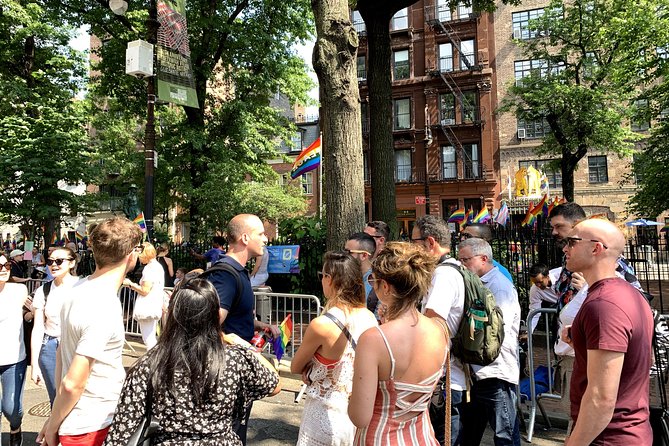
Reviewed · HISTORICAL TOURS
Pride Tours NYC’s LGBTQ Historical Walking Tour
Greenwich Village can look like a pleasant maze of cafés, brownstones, and narrow streets. This tour shows you the stories beneath the pavement, from the Stonewall Uprising to the first Pride March and the quiet acts of resistance that helped build the modern LGBTQ rights movement. I especially like the small group limit of 15 and the way the tour stays within a compact part of the Village, so the history never gets lost in a long hike.
I also like the stops at Julius’ and the former Oscar Wilde Memorial Bookshop site. They widen the story beyond Stonewall and show that change came through many kinds of action, from a bar protest to book sales and public marches. The main thing to consider is the pace: one guide received praise for moving quickly and not checking in enough with the group, and visitors who do not speak English at a high level may find the commentary hard to follow.
In This Review
- Key points to know before you book
- Why this Greenwich Village walk matters
- Starting at Christopher Park
- Standing outside the Stonewall Inn
- Craig Rodwell and the Oscar Wilde Memorial Bookshop
- The story behind Gay Street
- The first Pride March and the Rainbow Flag
- Julius’ and the first Sip In
- Marie’s Crisis Café and a movement going mainstream
- The Gay Liberation Monument and the road after Stonewall
- How much walking and how long it takes
- Guide style and group atmosphere
- Is $30 a fair price?
- Who should book this tour?
- Should you book Pride Tours NYC?
- FAQ
- Where does the LGBTQ Historical Walking Tour start?
- Where does the tour end?
- How long does the tour last?
- How much does the tour cost?
- How many people can join the tour?
- Is the tour offered in English?
- Are morning and afternoon departures available?
- Does the tour include admission to the Stonewall Inn or other sites?
- Is the tour suitable for most people?
- What happens if bad weather cancels the tour?
- What is the cancellation policy?
Key points to know before you book
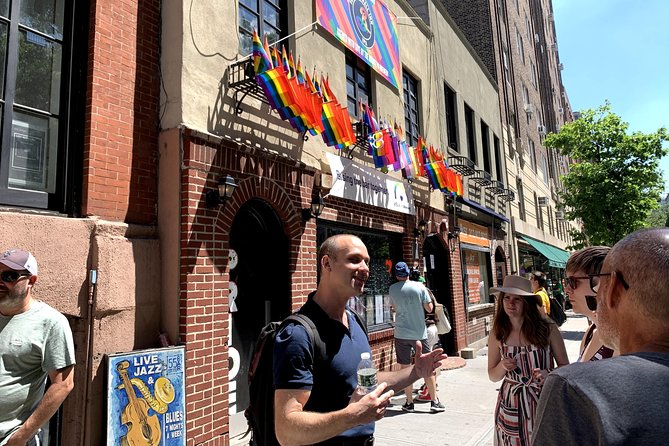
- Stonewall is one chapter, not the whole story: The route links the uprising to earlier activism and later Pride marches.
- The walk covers only a few blocks: You get a lot of historical context without a strenuous city trek.
- Joe is a frequently praised guide: Reviews describe him as engaging, passionate, and generous with recommendations, though your guide may vary.
- Eight stops give the tour a clear shape: Christopher Park, Stonewall Inn, Gay Street, Julius’, and the Gay Liberation Monument all carry different parts of the story.
- Morning and afternoon departures help with planning: You can fit the walk around a museum visit, meal, or other Greenwich Village plans.
- The $30 fee pays for interpretation, not admission: Every listed stop is free to enter or view, so the value comes from the guide’s storytelling and context.
Why this Greenwich Village walk matters
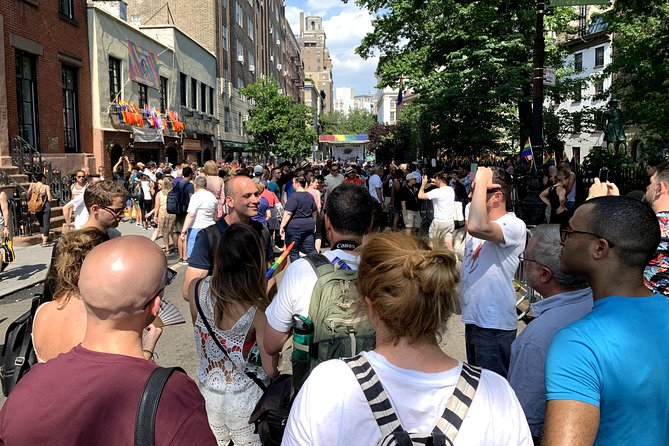
The strongest feature here is the setting. You are not sitting in a classroom hearing a general lesson about LGBTQ history. You are moving through the streets where key events took place, stopping at the actual Stonewall Inn, the site of an early Pride March, and bars and businesses tied to activism.
That makes the tour useful even if you already know the basic Stonewall story. The guide connects people, places, and political changes across several decades. You hear what led up to June 1969, what happened in the days afterward, and how those events fed into the Pride movement that followed.
The tour also avoids treating history as a single heroic moment. Christopher Park and Stonewall are central, but the route includes Craig Rodwell and the Oscar Wilde Memorial Bookshop, the Sip In at Julius’, the Rainbow Flag, and the Gay Liberation Monument. Those stops help you see how organizing, publishing, public protest, and community gathering all played a part.
At 75 minutes, this is short enough to fit into a busy New York day. It is also long enough to give the subject room to breathe. You are not racing from one sight to another for a quick photograph.
More New York City history walks:
- New York City: American Museum of Natural History Ticket
★ 4.5 · 15,447 reviews - NYC: Starship Landmark 90 Minute Sightseeing Cruise
★ 4.6 · 3,666 reviews - Starship Landmark 90 Minute Sightseeing Cruise
★ 4.5 · 2,073 reviews
Starting at Christopher Park
Meet your guide at Christopher Park, at 38 to 64 Christopher Street. This opening section takes about 12 minutes and gives you the background needed for the rest of the walk.
The guide begins with LGBTQ history in the United States and New York City before Stonewall. That matters because the Stonewall Uprising did not appear out of nowhere. The introduction sets up the social and political conditions that shaped the movement and gives you a clearer sense of why the events in Greenwich Village mattered so much.
Christopher Park is also a sensible meeting place. It keeps you close to the Stonewall Inn and lets the guide establish the neighborhood before the group begins walking. Since the whole route stays in a small area, you can pay attention to the streets and buildings instead of worrying about navigation.
If you arrive early, use the time to get comfortable with the group and the guide’s speaking pace. This tour is in English, and one review points out that non-native speakers may need strong English skills to catch every detail.
Standing outside the Stonewall Inn
The Stonewall Inn receives another 12-minute stop, focused on the early morning hours of June 28, 1969, and the days that followed. This is the emotional center of the route.
The value here is the physical setting. You are looking at the place connected to the Stonewall Uprising rather than hearing about it in an unrelated museum room. The guide’s job is to put the event in context, explain what happened, and show how its immediate aftermath helped change the direction of LGBTQ activism.
The tour does not include an admission ticket at the Stonewall Inn, so expect an exterior history stop rather than a bar visit. That keeps the price low and allows the group to continue through the neighborhood without a long pause.
I would not expect a quiet, private atmosphere at every point. Greenwich Village is a working city neighborhood, and the group may need to stand close together so everyone can hear. Still, the maximum of 15 people gives the guide a better chance to answer questions than a large coach tour would.
Craig Rodwell and the Oscar Wilde Memorial Bookshop
The next stop takes about seven minutes at Greenwich Letterpress, the original site of the Oscar Wilde Memorial Bookshop. The focus is Craig Rodwell, the shop’s founder, and his work with activists who helped connect the Stonewall period to the modern Pride movement.
This is one of the most useful stops for anyone who already knows the famous Stonewall headline. Movements need places where people can find books, ideas, one another, and a sense of shared purpose. A bookshop may sound less dramatic than a street uprising, but it shows how community infrastructure helped keep political work going.
The site also gives the tour a wider frame. You begin to see that LGBTQ history in New York was shaped not only by confrontations with police or public marches, but also by people who created spaces for education and organizing.
Because this stop lasts seven minutes, the guide needs to keep the explanation focused. If you enjoy social and political history, this is a place to ask a question. The tour promises room for questions, and the small group format makes that more practical.
More New York City walking tours:
- SoHo, Little Italy, and Chinatown Walking Tour in New York
★ 5.0 · 3,153 reviews - Secrets of Grand Central Station Walking Tour New York City
★ 5.0 · 1,796 reviews - Greenwich Village Walking and Food Tasting Tour
★ 5.0 · 1,572 reviews - Artistic, Alternative Greenwich Village Walking Tour
★ 5.0 · 971 reviews
The story behind Gay Street
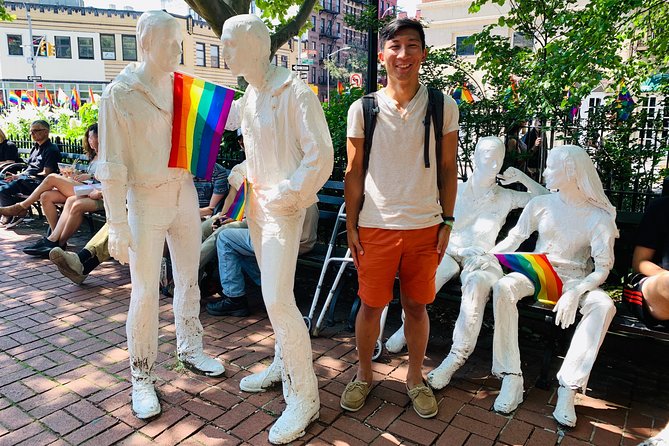
At the Gay Street sign, the guide spends about seven minutes explaining its history. This is a brief stop, but it adds a useful reminder that even ordinary-looking street details can carry layers of meaning.
Do not expect a major monument here. The appeal is the story attached to a simple sign in the Village. It is the sort of detail you could pass without noticing if you explored alone. A guide gives you a reason to pause and look more closely.
This stop also breaks up the heavier material. The route moves between major political events and small neighborhood clues, which makes the walk feel like a tour of a real community rather than a line between memorials.
The first Pride March and the Rainbow Flag
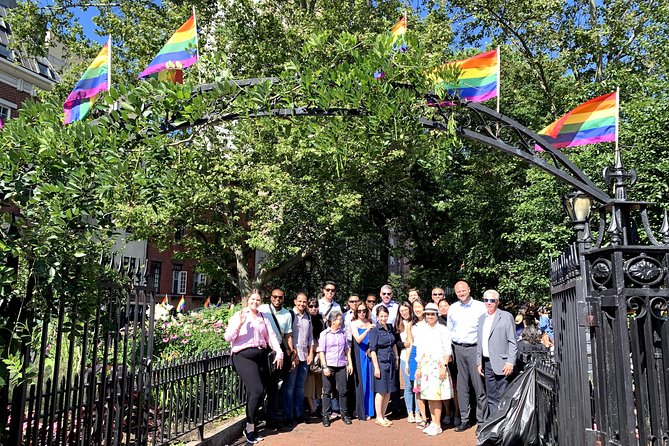
At the Axis Theatre Company site, the tour turns to the first Pride March and the history of Pride marches since then. The guide also discusses the Rainbow Flag at this 12-minute stop.
This part connects the Stonewall Uprising to the public celebrations and demonstrations that came afterward. You get to consider how a movement moved from protest and organizing into a broader public presence, while still carrying its political roots.
The Rainbow Flag gives the explanation a visual focus. It is a familiar symbol, but the tour uses this location to place it within the story of Pride rather than treating it as a free-floating design. That can make a common symbol feel more specific and connected to New York’s streets.
One practical benefit is the compact route. The tour does not ask you to walk across Manhattan to understand this chapter. You stay in the Village, where the guide can connect the physical surroundings to the narrative.
Julius’ and the first Sip In
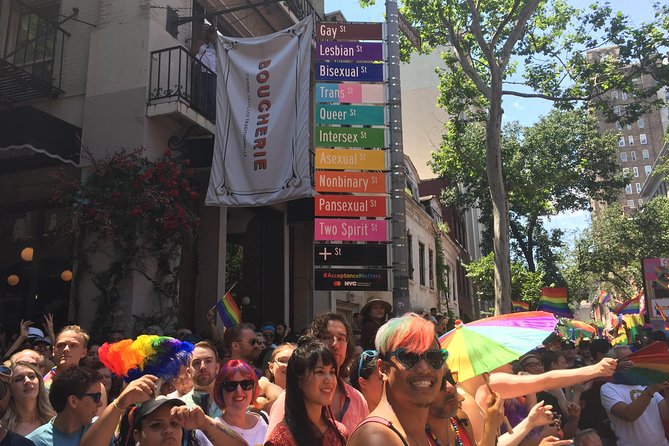
The stop at Julius’ lasts about seven minutes and covers the first Sip In. This adds another form of protest to the tour’s account of LGBTQ activism.
The Sip In story helps show how activists challenged discrimination in everyday public life. It is different in tone and method from the Stonewall Uprising, which is exactly why it belongs on the route. You see that the movement used many approaches, from direct protest to public gatherings and legal challenges.
Julius’ is also a working bar, not simply a preserved exhibit. That gives the stop a sense of place, though the tour details do not promise entry, a drink, or a reserved table. Plan to hear the story outside or around the location rather than treating this as a bar crawl.
If you want to extend the afternoon, the location works well near a meal or drink plan. The walk ends back at Christopher Park, so you can return to the Village’s restaurants and bars without arranging transport from a distant endpoint.
Marie’s Crisis Café and a movement going mainstream
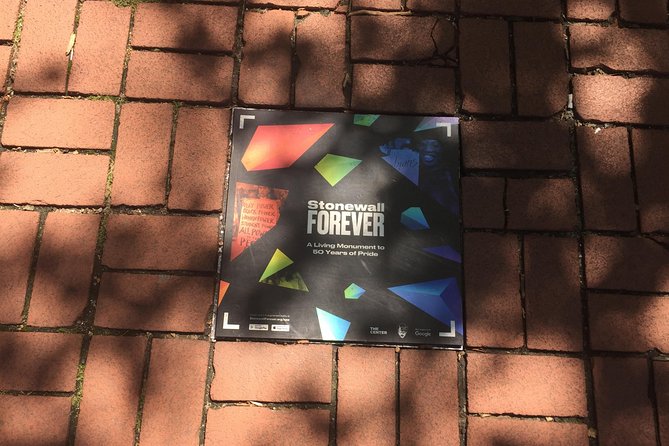
At Marie’s Crisis Café, the guide discusses the café’s history and the changes in the LGBTQ movement as it entered the mainstream. This is another seven-minute stop, but it helps explain the shift from early activism to wider public recognition.
The phrase mainstream can hide a complicated story. Greater visibility can bring political gains and wider support, but it can also change how a movement presents itself and how outsiders understand it. The tour uses Marie’s Crisis as a place to discuss those changes.
Like Julius’, Marie’s Crisis is part of the living Village rather than a sealed historical site. That is an advantage if you want to see the neighborhood as it exists now, with history mixed into daily life. It also means you should expect a walking tour atmosphere, not museum-style displays or long indoor visits.
The Gay Liberation Monument and the road after Stonewall
The final major stop is the Gay Liberation Monument, with about 12 minutes devoted to LGBTQ rights and politics in the United States since Stonewall. The guide also explains the monument itself.
This closing section gives the tour a clear destination. Instead of ending immediately after the Stonewall story, it asks what happened next. You hear about the political changes, continued activism, and evolving public meaning of LGBTQ rights.
Ending at the monument also gives the route a reflective note. The tour returns to the broader movement after showing you specific places where people gathered, protested, published, marched, and built community.
The experience ends back at Christopher Park. That makes the route easy to fit into a day, since you finish where you started rather than needing to find a new pickup point. It also creates a loop in the storytelling: the tour begins with the conditions leading to Stonewall and ends with the movement’s later political history.
How much walking and how long it takes
The advertised duration is about one hour and 15 minutes. The route includes eight stops, but the actual walking is limited, with the sites concentrated in a few Greenwich Village blocks.
That is good news in hot weather or on a crowded New York schedule. One review specifically appreciated that the group stayed in a small area and did not do a large amount of walking. You still need to be comfortable standing outdoors and moving between stops, but this is not an all-day walking tour.
Morning and afternoon departures give you flexibility. I would pair the morning option with a longer Greenwich Village visit afterward, or use the afternoon tour as a focused history break before dinner.
Wear ordinary comfortable walking shoes and check the weather forecast. The experience requires good weather, and poor conditions can lead to a different date or a full refund. There is no need to budget for admission fees at the stops, since all are listed as free.
Guide style and group atmosphere
The guide is the main reason to book this experience. The best feedback centers on clear historical explanations, enthusiasm, friendliness, and a strong ability to connect individuals with the larger movement.
Joe is named repeatedly in the feedback and is praised for bringing energy to the subject, explaining the Pride movement in context, and offering neighborhood recommendations. He has also been described as passionate and engaging. Your guide may not be Joe, so treat those comments as a useful picture of the tour’s strongest style rather than a guarantee.
The group size is capped at 15. That is small enough for questions and a more relaxed exchange, while still large enough to bring different interests to the discussion. You can ask for clarification or request a little more detail at a stop.
There is one clear caution. One person found the guide’s people skills lacking and felt the presentation moved too fast without checking the group’s interests. If you prefer a slow, highly interactive walk, say so early and ask questions as you go.
Is $30 a fair price?
The price is $30 per person. Since the stops do not charge admission, you are paying for the guide’s time, research, storytelling, and ability to connect the sites into one understandable account.
I consider that fair if you want more than a self-guided look at Stonewall. You could walk through Christopher Park and see the Stonewall Inn on your own, but you would miss the links between Stonewall, Craig Rodwell, Julius’, the first Pride March, the Rainbow Flag, and the Gay Liberation Monument.
The value is strongest for first-time visitors to the subject, people who have visited the Village before without knowing its LGBTQ history, and anyone who wants a focused introduction before visiting other museums or memorials. If you already have extensive knowledge of New York LGBTQ history, the tour may feel introductory, though the local sites and guide’s additional details can still make it worthwhile.
A 4.9 rating from 89 reviews and a 98 percent recommendation rate suggest a very strong overall experience. The important point is not the number alone. The consistent praise focuses on the guide’s command of the material, the emotional weight of the subject, and the amount of information packed into a short walk.
Who should book this tour?
I would choose this tour if you want history tied to real streets and buildings. It suits LGBTQ visitors, allies, couples, solo visitors, families, and anyone interested in New York social history.
It is also a good fit if you have limited time. You can learn about several major events in just over an hour, then continue exploring the Village on your own.
The tour may be less suitable if you need commentary in another language, dislike outdoor walking, or want extended time inside the Stonewall Inn or the bars along the route. The activity is offered in English, and all stops are presented as short guided visits rather than long indoor experiences.
Most people can participate, service animals are allowed, and the route is near public transportation. The tour is also available with free cancellation up to 24 hours before the start time. If bad weather cancels it, you can receive a different date or a full refund.
Should you book Pride Tours NYC?
Book it if you want a concise, place-based introduction to LGBTQ history in New York. The route does more than point out Stonewall. It shows how bookstores, bars, street signs, marches, symbols, and monuments fit into a larger movement.
The $30 price is sensible for a 75-minute walk with a small group and a guide who can answer questions. I would schedule it early in your Greenwich Village time, then use the guide’s neighborhood suggestions for the rest of the day.
Skip it only if you need a slower presentation, another language, or a longer tour with indoor access. For most visitors interested in LGBTQ history, Pride, or the Village itself, this is a focused and meaningful way to understand what you are seeing.
FAQ
Where does the LGBTQ Historical Walking Tour start?
The tour starts at Christopher Park, at 38 to 64 Christopher Street, New York, NY 10014.
Where does the tour end?
The activity ends back at the meeting point in Christopher Park.
How long does the tour last?
The tour lasts approximately one hour and 15 minutes.
How much does the tour cost?
The price is $30 per person.
How many people can join the tour?
The maximum group size is 15 people.
Is the tour offered in English?
Yes. The tour is offered in English.
Are morning and afternoon departures available?
Yes. You can choose between morning and afternoon tour times.
Does the tour include admission to the Stonewall Inn or other sites?
No admission fees are listed. Each stop on the route has free admission.
Is the tour suitable for most people?
Yes. Most people can participate, and service animals are allowed.
What happens if bad weather cancels the tour?
You will be offered a different date or a full refund if the experience is canceled because of poor weather.
What is the cancellation policy?
You can cancel at least 24 hours before the start time for a full refund. Cancellations or changes made less than 24 hours before the start time are not accepted for a refund.
More LGBTQ-Friendly in New York City
- Two-Hour NYC LGBTQ+ History Walking Tour
★ 5.0 · 35 reviews - NYC Greenwich Village LGBTQ+ History And Food Tour
★ 5.0 · 17 reviews
Just listed around New York City
- NYC: Little Shop of Horrors Off-Broadway Ticket5 reviews
- Private NYC Airport Transfer: LGA to Manhattan – Up to 5★ 3.6 · 5 reviews
- New York City Tour in German★ 4.5 · 5 reviews
- New York: Hamilton and Washington Revolutionary Walking Tour★ 5.0 · 5 reviews
- NYC Freedom Tower Private Photo or Video Experience★ 4.0 · 6 reviews
- New York Afternoon Fall Foliage Cruise with Lunch★ 5.0 · 6 reviews
- Brooklyn Walking Tours by Locals: Private & 100% Personalized★ 4.0 · 6 reviews
- Southold Bay Oyster Farm Tour★ 5.0 · 6 reviews
Historical Tours, compared.


Starship Landmark 90 Minute Sightseeing Cruise
Read our review →
Starship Landmark 90 Minute Sightseeing Cruise
Read our review →
American Museum of Natural History Admission Ticket
Read our review →
Top Rated Brooklyn Half-Day Food, History & Culture Tour via bus
Read our review →
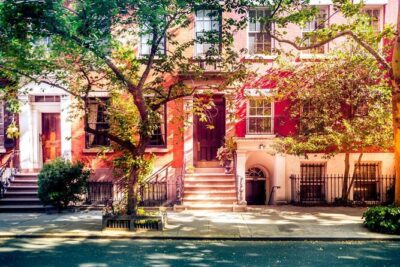
The Original Greenwich Village Food & Cultural Tour Since 1999
Read our review →
The Speakeasy Adventure: A Tipsy Trip Through History
Read our review →Browse the lists this tour appears in