
Reviewed · SOHO, LITTLE ITALY & CHINATOWN TOURS
Mafia Gangster History Walking Tour in Little Italy, New York
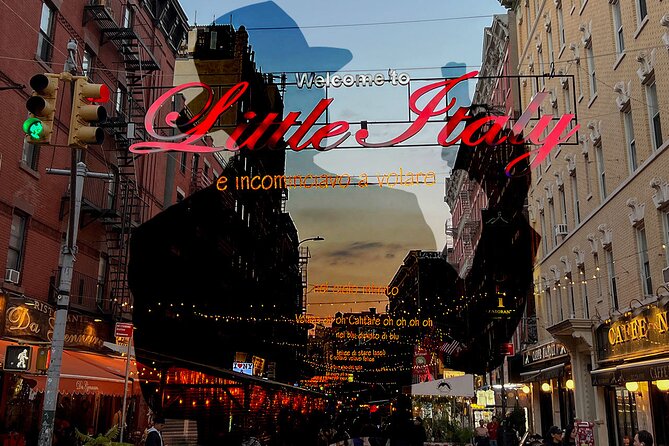
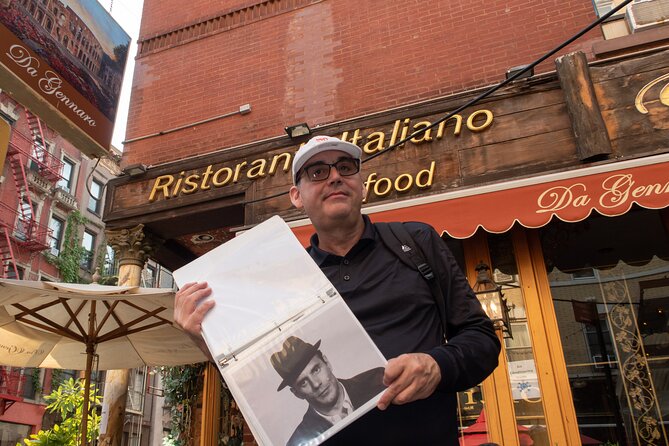
Little Italy’s Mafia past is written into ordinary storefronts. On this walk, you pass restaurants, squares, and city buildings tied to Black Hand gangs, prohibition battles, John Gotti, Frank Serpico, and the killing of Crazy Joey Gallo. Tom’s binder of old photographs and newspaper clippings helps turn a simple street corner into a crime story.
I like two things right away: the tour connects real events to The Godfather and Gangs of New York, and it keeps the route compact enough to cover on foot without wearing you out. The main consideration is that this is a street-level history walk, not a tour of preserved mob interiors. Some stops are now ordinary businesses, so your enjoyment depends on the stories and the guide’s presentation.
In This Review
- Key points at a glance
- Little Italy’s streets tell the first crime stories
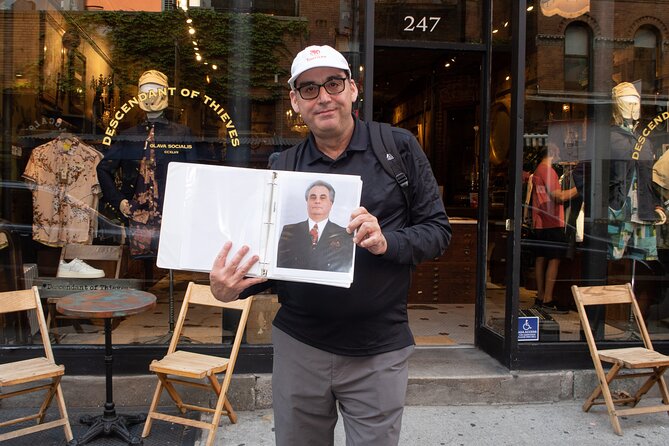
- Mulberry Street and the John Gotti chapter
- Lieutenant Petrosino Square brings in the law
- The Police Building and Frank Serpico
- Umberto’s Clam House and Crazy Joey Gallo
- How the movie connections work
- Tom’s photos make ordinary buildings readable
- Is two hours enough for the route?
- What $40 buys you
- Who will enjoy this Little Italy walk?
- Should you book the Mafia Gangster History Walking Tour?
- FAQ
- Where does the tour start?
- Where does the tour finish?
- How long does the tour last?
- How much does the tour cost?
- Is the tour offered in English?
- What locations are included?
- How many people can join the tour?
- Can I cancel for a refund?
Key points at a glance
- Black Hand to Mafia: Follow the early gangs and the rise of organized crime during prohibition.
- Lucky Luciano’s Five Families: Learn how Luciano helped create The Commission and reshape New York’s crime network.
- John Gotti’s Mulberry Street: See the area connected with the Dapper Don’s public image.
- Crime fighters get their due: Meet Lieutenant Petrosino and learn about Frank Serpico’s fight against police corruption.
- Real places behind movie stories: Connect Little Italy streets with The Godfather and Gangs of New York.
- Small, practical format: The walk lasts about two hours, costs $40 per person, and is offered in English.
Little Italy’s streets tell the first crime stories
Begin at 44 Spring Street, where the tour sets the scene for Little Italy and explains how early Black Hand gangs developed into more organized Mafia groups. This opening section takes about 40 minutes, making it the longest stop and the foundation for everything that follows.
The useful point here is that the tour does not begin with movie mythology. It starts with the neighborhood’s criminal history, then moves into prohibition and the fight over liquor. That approach gives you a clearer sense of how power, money, immigration, and local territory shaped the area.
I especially like the way this part links several generations of organized crime. You hear about the Black Hand gangs, then the changes brought by prohibition, and finally Lucky Luciano’s role in creating The Commission of The Five Families. That gives you a basic map of New York’s Mafia structure without requiring a background in gang history.
The stop also helps separate fact from screen drama. Little Italy supplied the setting and many of the stories that later fed mob films, but the real events were often less tidy than a movie plot. If you enjoy The Godfather, you will have plenty of familiar reference points, but the tour’s main subject is the actual city around you.
More SoHo, Little Italy and Chinatown walks:
- SoHo, Little Italy, and Chinatown Walking Tour in New York
★ 5.0 · 3,153 reviews - NYC: Chinatown & Little Italy Food Tour with 7 Flavorful Tastings
★ 5.0 · 2,733 reviews - Original NYC Guided Food Tour of Chinatown and Little Italy
★ 5.0 · 2,194 reviews
Mulberry Street and the John Gotti chapter
The walk continues to Mulberry Street for about 15 minutes. Here, the focus shifts to John Gotti, known as the Dapper Don, and the places where he held court.
This is a good example of what the tour does best: it points out locations that still function as normal city businesses. You might see a clothing shop or restaurant rather than a preserved Mafia headquarters. The value comes from learning what the address meant in an earlier period and picturing the people who once gathered there.
Do not expect a dramatic museum display. There is no guarantee of entering a former mob hangout, and the stop is mainly about the location and its history. Still, that contrast is part of the fun. A regular-looking block can carry a surprisingly dark past, and Tom’s photographs help you see the difference between the street now and the street then.
Lieutenant Petrosino Square brings in the law
At Lieutenant Petrosino Square, the story changes from gangsters to the people trying to stop them. The 15-minute stop introduces Lieutenant Petrosino, an early crime fighter who worked against Black Hand gangs.
This makes the walk more balanced. You are not simply collecting tales about famous criminals. You also learn about the policing of the period and the effort to confront organized crime before the Mafia reached its later form.
The square gives the history a clear physical setting. You can pause, listen, and connect Petrosino’s work with the earlier discussion of Black Hand activity. It is a short stop, but it adds important context to the opening section.
For families with older children, this part can be especially useful. The tour deals with crime and violence, so it is not designed for very young children, but older children can follow the basic question at the heart of the walk: who controlled the neighborhood, and who tried to challenge that control?
The Police Building and Frank Serpico
The next stop is the Police Building, where you learn about the former police headquarters and Frank Serpico’s battle against corruption. This section lasts about 15 minutes.
Serpico adds a different kind of crime story. The focus is no longer only on gang activity, but also on the pressure within law enforcement and the risks faced by a police officer who challenged corruption. That broadens the tour beyond a simple Mafia greatest-hits list.
I appreciate this change of subject because it shows that New York’s crime history includes institutions as well as individuals. The Police Building gives the story a civic setting, while Serpico’s experience raises questions about trust, public duty, and the cost of speaking out.
Again, you are mainly viewing the building from the outside and hearing the story on the street. The stop is brief, so it will not provide a full biography of Serpico. It works best as one part of a wider route.
More New York City history walks:
- New York City: American Museum of Natural History Ticket
★ 4.5 · 15,447 reviews - NYC: Starship Landmark 90 Minute Sightseeing Cruise
★ 4.6 · 3,666 reviews - Starship Landmark 90 Minute Sightseeing Cruise
★ 4.5 · 2,073 reviews - American Museum of Natural History Admission Ticket
★ 4.0 · 1,931 reviews
Umberto’s Clam House and Crazy Joey Gallo
The final major stop is Umberto’s Clam House, the restaurant associated with the bloody end of Crazy Joey Gallo. The tour allows about 15 minutes here.
This is likely to be one of the most memorable locations because it connects a familiar restaurant setting with a notorious event. As with the other stops, the power comes from standing near the actual place and hearing the date, people, and circumstances tied to it.
The stop also captures the central appeal of the walk. Little Italy is not presented as a stage set. It is a living neighborhood where restaurants and shops continue to operate, while the guide explains what happened there in another era.
You should approach this section as historical storytelling rather than crime-scene tourism. The subject is violent, but the tour places it within the wider story of Mafia power, rivalry, and public life in New York.
How the movie connections work
Movie fans have a clear reason to book this walk. The route includes locations linked with The Godfather and Gangs of New York, and the guide explains how real events helped shape mob films.
The best part is the back-and-forth between fiction and fact. You can recognize the way film uses family names, restaurants, neighborhoods, and public confrontations, then learn which elements came from real New York stories. The tour does not appear to be only a film-location walk, so you should book it for Mafia history first and movie connections second.
That balance is useful. If you want only filming locations, this may feel too historical. If you like seeing how cinema borrows from real events, the film references add another layer without taking over the route.
Tom’s photos make ordinary buildings readable
Several parts of the experience depend on the guide. Tom is specifically associated with the tour, and the presentation includes a binder filled with photographs and newspaper clippings.
That material matters. Without it, you would mostly be looking at present-day buildings and trying to imagine their earlier role. A dated photograph or newspaper page gives you a visual anchor and helps explain why a particular corner matters.
Tom’s presentation is described as precise, with attention to dates and supporting details. You can expect an entertaining delivery, but the tour also asks you to listen closely. The history covers several names, groups, and time periods, and the route moves from one story to another fairly quickly.
The stated maximum is 10 people, which should make it easier to hear the guide and view the binder. One account described a group of 12, so the actual size may vary on some departures. Either way, this is a much more personal format than a large coach excursion.
Is two hours enough for the route?
The advertised duration is about two hours, while one account described the walk as closer to an hour and a half. The listed timing adds up to roughly 100 minutes, so you should allow some flexibility.
That is not a problem for most people. The route covers five nearby areas, and the walk is designed as a compact overview rather than a full-day study. You get enough time to understand the main figures and locations without giving up an entire afternoon.
The short stops also keep the pace moving. You will not spend 40 minutes at every address, but you will return repeatedly to the larger themes: territory, liquor, corruption, law enforcement, and the making of Mafia legends.
Wear comfortable shoes and keep your schedule loose around the stated two-hour duration. The tour is outdoors and requires good weather, so rain or poor conditions can lead to a different date or a full refund.
What $40 buys you
At $40 per person, this tour offers fair value if you care about organized crime history and prefer a guide-led walk to reading plaques on your own. The price includes about two hours of interpretation, a focused route through Little Italy, and visual material that helps explain the sites.
The value is less obvious if you only want to stroll Mulberry Street or take a few movie-location photographs. You can see the neighborhood without paying for a tour, but you will not automatically know which restaurant was tied to a killing, where a crime boss held court, or how the Black Hand story led into Luciano’s Five Families.
I also like that the guide provides restaurant recommendations. That is a small but useful extra, especially if you plan to stay in Little Italy for a meal after the walk. The tour ends where it begins, so you can easily continue exploring the area on your own.
Because the tour is often booked about 25 days ahead, plan early if your New York schedule is fixed. Free cancellation is available up to 24 hours before the start time. Changes or cancellations inside that period are not refunded, except when the operator cancels for poor weather or because the minimum number of participants is not reached.
Who will enjoy this Little Italy walk?
I would recommend it to you if you enjoy:
- New York crime history and prohibition-era stories
- The real events behind The Godfather
- Small-group walking tours with a strong guide
- Historic photographs and newspaper evidence
- A family outing suited to older children
- Exploring Little Italy with more purpose than shopping and eating
It may not suit you if you want access inside historic buildings, a long stop at each location, or a tour focused only on cinema. Some locations are now ordinary shops and restaurants, and much of the experience depends on listening to the guide rather than seeing a preserved interior.
Service animals are allowed, the meeting point is near public transportation, and most people can take part. The tour is offered in English, so you should be comfortable following spoken historical detail in English.
Should you book the Mafia Gangster History Walking Tour?
Book this tour if the names Lucky Luciano, John Gotti, Frank Serpico, and Crazy Joey Gallo already catch your attention, or if you want to understand the real stories behind New York crime films. The strongest feature is the mix of exact places, clear storytelling, and old photographs that make today’s Little Italy easier to read.
I would skip it if you want a broad New York sightseeing tour or a polished attraction with exhibits and indoor access. For everyone else, $40 is a reasonable price for a focused afternoon, especially with a small group and a guide such as Tom who brings dates, images, and newspaper accounts to the sidewalk.
FAQ
Where does the tour start?
The tour starts at 44 Spring Street, New York, NY 10012, USA.
Where does the tour finish?
The activity ends back at the meeting point.
How long does the tour last?
The advertised duration is approximately two hours.
How much does the tour cost?
The price is $40 per person.
Is the tour offered in English?
Yes. The tour is offered in English.
What locations are included?
The route includes Little Italy, Mulberry Street, Lieutenant Petrosino Square, the Police Building, and Umberto’s Clam House.
How many people can join the tour?
The stated maximum is 10 participants.
Can I cancel for a refund?
Yes. You can cancel at least 24 hours before the start time for a full refund. Cancellations or changes made less than 24 hours before the start time are not refunded. If poor weather or an insufficient number of participants causes the operator to cancel, you can receive a different date or a full refund.
More New York City walking tours
- Secrets of Grand Central Station Walking Tour New York City
★ 5.0 · 1,796 reviews - Greenwich Village Walking and Food Tasting Tour
★ 5.0 · 1,572 reviews - Artistic, Alternative Greenwich Village Walking Tour
★ 5.0 · 971 reviews - True Crime NYC: Mafia Walk w/Ret. NYPD Detective and Local Food
★ 5.0 · 848 reviews
Just listed around New York City
- NYC Holiday Lights Tour★ 4.5 · 16 reviews
- Greenwich Village NYC Pizza Walking Tour★ 4.9 · 16 reviews
- Luci e Ponti di New York- Night Tour in Italiano★ 4.3 · 16 reviews
- NYC Horse and Carriage Central Park Tours★ 4.5 · 16 reviews
- Central Park Electric Scooter Rentals★ 4.5 · 16 reviews
- Paramus Indoor Skydiving Experience with 2 Flights & Personalized Certificate★ 4.5 · 16 reviews
- Empire State Building Walking Tour from NYC★ 5.0 · 16 reviews
- NYC: Bottomless Brunch Cruise★ 3.8 · 16 reviews
SoHo, Little Italy & Chinatown Tours, compared.
SoHo, Little Italy, and Chinatown Walking Tour in New York
Read our review →
Chinatown & Little Italy Food Tour with 7 Flavorful Tastings
Read our review →
Original NYC Guided Food Tour of Chinatown and Little Italy
Read our review →
SoHo, Little Italy, and Chinatown 2-Hour Guided Walk
Read our review →
SoHo, Little Italy, and Chinatown NYC Guided Walking Tour
Read our review →Browse the lists this tour appears in