
Reviewed · NYC ARCHITECTURE TOURS
Manhattan Architecture Photography Tour
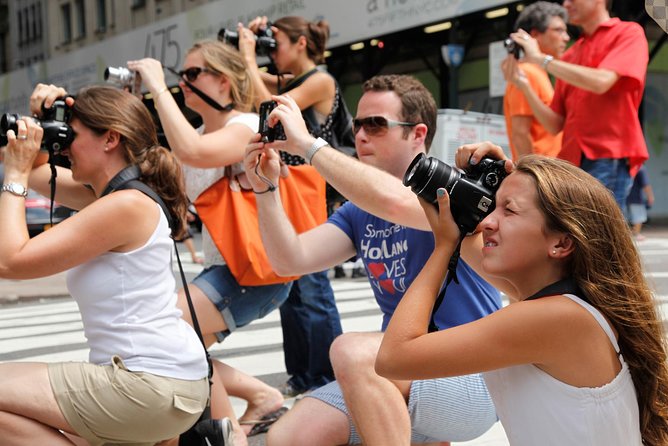
Manhattan’s best architecture can be hard to photograph well. Buildings tower above you, streets fill the frame, and Times Square can turn into a blur of signs and people. This three-hour photo walk gives you a pro photographer’s eye for angles, unwanted space, and the camera settings you may not be using.
I like two things right away: the small maximum of eight people, which should leave room for personal help, and the route through several major sights without requiring a separate sightseeing plan. Zim is praised for patient, adaptable teaching, especially with beginners. The main drawback is simple: you’ll walk, and three hours is a short window for this many locations.
In This Review
- Key points to know before booking
- A fast, focused way to photograph Manhattan
- Grand Central Terminal in a 20-minute session
- The Chrysler Building and the search for a clean angle
- Times Square, where light and motion complicate everything
- The New York Public Library and Bryant Park
- The route includes more than the five named photo stops
- What the photography instruction is really worth
- Who should book this photo walk
- My call: book it if you want better pictures, not just more sights
- FAQ
- How long does the Manhattan Architecture Photography Tour last?
- How much does the tour cost?
- Where does the tour begin?
- Where does the tour end?
- Which Manhattan sights are included?
- Do I need to bring my own camera?
- Can I cancel for a full refund?
Key points to know before booking
- Grand Central is the visual anchor: You get about 20 minutes to work inside one of New York’s most dramatic public spaces.
- The teaching is practical: Expect help with angles, composition, and making less boring images, not just a list of camera settings.
- Zim receives special praise: She is described as patient, attentive, lively, and able to adjust advice to your interests and skill level.
- The route covers five major photo subjects: Grand Central Terminal, the Chrysler Building, Times Square, the New York Public Library, and Bryant Park.
- The group is capped at eight: That makes personal instruction more realistic than on a large sightseeing tour.
- You need your own camera: A digital camera is not provided, and the activity depends on good weather.
A fast, focused way to photograph Manhattan
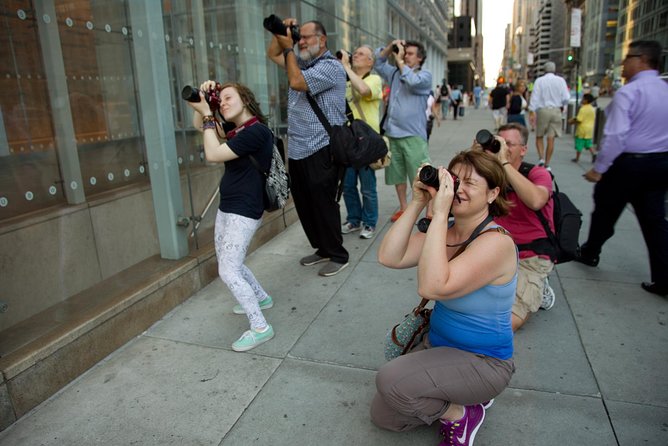
This experience is less about checking off famous buildings and more about learning how to make those buildings look good in a photograph. You’ll move through central Manhattan with a professional photographer, stopping to find useful viewpoints and working on the problems that make city pictures fall flat.
The guide’s job is especially valuable in New York because the obvious viewpoint is often not the best one. A straight-on shot of a famous building can feel ordinary. A small change in position, framing, or camera angle can remove empty space, show more height, or make the architecture feel less familiar.
The feedback places strong emphasis on the teaching. One participant learned to use camera abilities that had been sitting untouched, along with ways to eliminate boring areas from a frame. That is a useful sign for anyone who owns a camera but mostly relies on automatic settings.
You do not need to be an expert. Zim is specifically praised for working patiently with a novice and for shaping advice around a person’s interests and ability. At the same time, a more experienced photographer can use the session to sharpen composition and find fresh angles in places already photographed millions of times.
The group limit of eight matters. You won’t have unlimited time at each stop, but a small group gives you a better chance to ask questions, show the guide a picture, and get a direct suggestion. The guide can also respond to different interests instead of giving every person the same basic lesson.
More architecture walks:
- Manhattan Architecture Yacht Cruise
★ 5.0 · 1,395 reviews - NYC: Around Manhattan Official NYC Architecture Cruise
★ 4.8 · 402 reviews - Art Deco and Architecture Midtown Landmarks Tour
★ 5.0 · 142 reviews
Grand Central Terminal in a 20-minute session
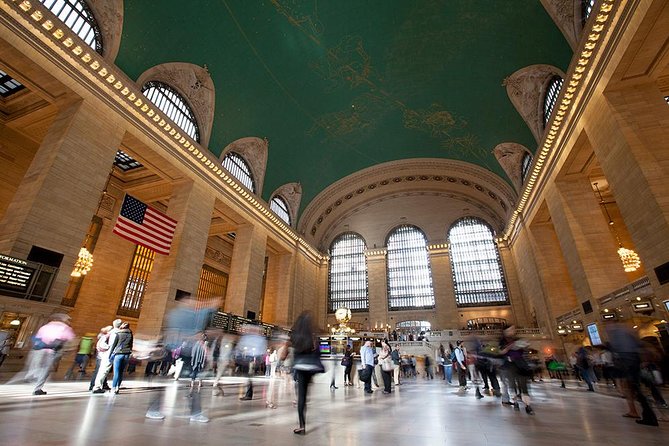
Grand Central Terminal gets the longest listed stop, and it deserves it. You’ll photograph the main interior space, described here as the grandest space in New York City. The scale, symmetry, and ornament give you plenty to work with, but they also create familiar picture problems.
A wide photograph can show the room’s size, but it may leave too much empty floor or ceiling. A tighter frame can highlight architectural detail but lose the sense of place. This is where advice on composition and space becomes useful.
You’ll have about 20 minutes, with admission included. That is enough time to try a few approaches, but not enough for a slow, museum-style photography session. If you want a large number of carefully staged images, this stop may feel quick. If you want a focused lesson in working inside a major public building, the time limit keeps you moving.
Grand Central also gives you a good early exercise because it presents one clear subject with many possible frames. You can compare a broad view with a detail, change your angle, and see how the structure changes on your screen. I would arrive ready to work rather than simply admire the room.
The Chrysler Building and the search for a clean angle
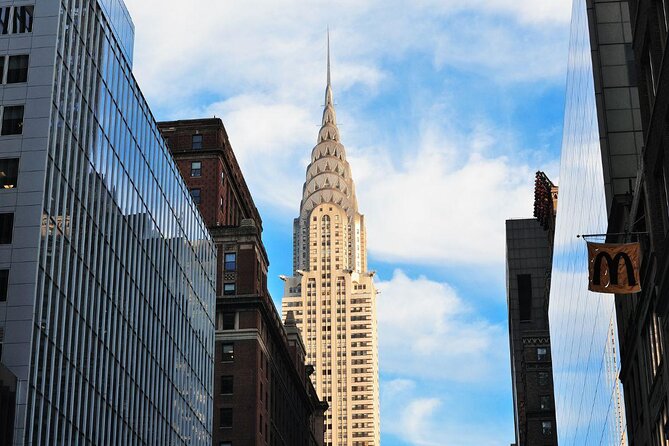
The Chrysler Building stop lasts about 10 minutes and has no admission charge. That short pause is not meant for an interior visit. It is about finding the best exterior position for one of Manhattan’s most recognizable skyscrapers.
The Chrysler Building can be difficult to frame because city streets force you to look upward, and nearby structures can crowd the picture. The guide’s role here is to help you choose an angle that gives the building shape and presence rather than capturing only a narrow slice of its facade.
Ten minutes goes quickly. You should think of this as a targeted composition stop, not a chance to wander around the building. The advantage is that you get professional direction in a location where you might otherwise take the obvious shot and move on.
This is also a good example of the tour’s value. You are paying for the photographer’s judgment and teaching, not for an attraction ticket. The building itself is free to photograph, but knowing where to stand and what to leave out can make the difference between a record shot and a strong image.
Times Square, where light and motion complicate everything
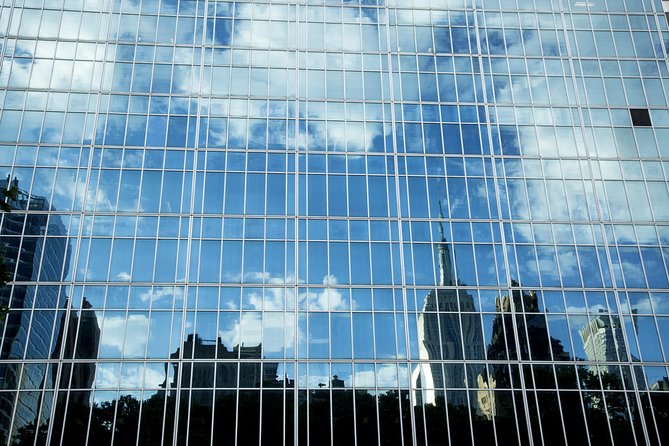
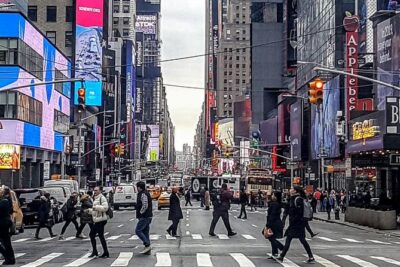
Times Square is the most demanding stop on the route. You’ll work on capturing the lights, movement, and crowded energy of the area in about 15 minutes. It is a difficult subject because there is too much happening, not too little.
Bright screens can confuse exposure. Moving people can clutter the frame. Signs compete for attention, and a wide photograph can become a wall of unrelated details. A professional guide can help you decide what the picture is actually about before you press the shutter.
The timing again is brief, but the lesson can be useful long after you leave New York. Times Square forces you to think about exposure, timing, and composition at the same time. You may find that a tighter image works better than trying to include every sign and building.
The stop is listed with admission included, though Times Square itself is a public location. In practical terms, you should expect a street photography session rather than an attraction visit. Keep your camera ready, follow the guide’s directions, and use the short stop to test several approaches instead of chasing one perfect frame.
A few more New York City picks to weigh up
- NYC Professional Photoshoot and Walking Tour with Private Guide
★ 5.0 · 608 reviews - New York Icon Photography Tour led by a Local Photographer
★ 5.0 · 155 reviews - New York: 1-hour Photoshoot in Iconic Locations
★ 5.0 · 101 reviews - Central Park Photography Tour with Local Photographer
★ 5.0 · 85 reviews
The New York Public Library and Bryant Park
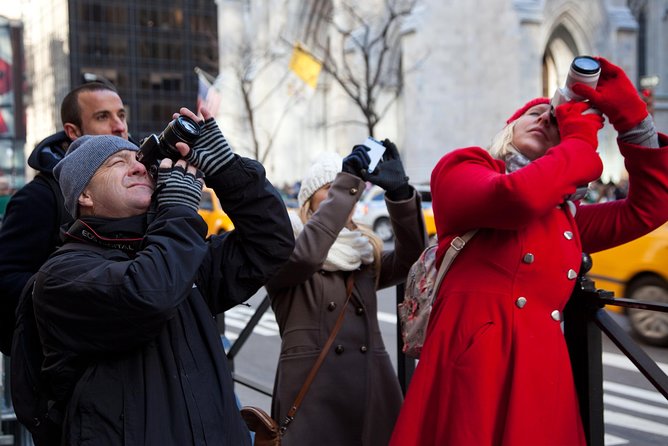
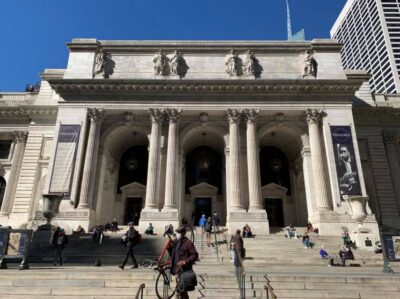
The exterior of the New York Public Library provides a calmer architectural subject after Times Square. You’ll have about 15 minutes to photograph one of the world’s largest libraries, with admission included for this portion of the activity.
The library’s exterior gives you a chance to move away from the visual overload of Times Square and focus on structure, facade, and framing. I like this contrast in the route. You are not repeating the same kind of city picture at every stop. You move from a grand interior to a skyscraper, then to electric signs and street movement, followed by a more formal civic building.
Bryant Park also gets about 15 minutes and is used as a location for photographing the Empire State Building. This is a useful stop because the park can give you a wider setting for the skyscraper rather than an isolated upward view from a street canyon.
You’ll need to work quickly. The route gives you a taste of each subject rather than a long session at one location. Still, the variety helps you learn how different surroundings affect composition. The best approach is to ask the guide what to prioritize at each stop, especially if you are new to photography.
The route includes more than the five named photo stops
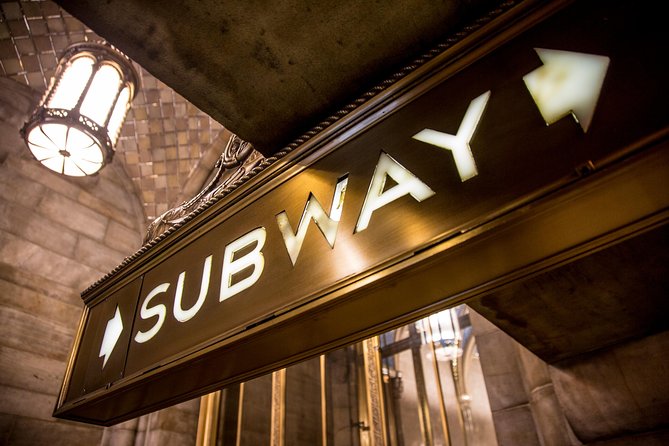
The meeting point is at Pershing Square, 90 E 42nd Street, near Grand Central. The route also identifies the Pershing Square Signature Center, a complex of three theaters just off Broadway, as part of the Manhattan architecture experience.
Some route details are presented broadly, including references to Manhattan’s grandest buildings and the heart of Times Square. The practical point is that this is a moving photo tour, not a class held in one room. You start at one location and finish somewhere else, so you should not plan on returning to the meeting point at the end.
Walking is part of the experience. A past participant gave the direct advice to be prepared for it, and the physical requirement is listed as moderate fitness. You do not need to be an athlete, but comfortable shoes are sensible. The schedule covers several central Manhattan sights in roughly three hours, so expect a steady pace.
The end location is not specified in the available details. If you have a fixed appointment afterward, allow extra time rather than building in a tight connection.
What the photography instruction is really worth
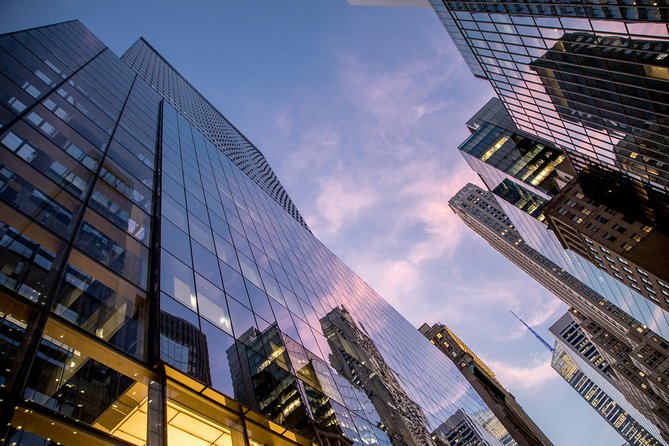
The price is $125 per person. That is more than a basic sightseeing walk, but the comparison is not quite fair. You are paying for a professional photographer’s time, a small group, and instruction that can improve how you use equipment you already own.
The strongest value comes if you want to learn. If you simply want someone to lead you past famous buildings, the price may feel high. You can see these places without a guide. If you want help with angles, composition, and camera functions, the cost makes more sense.
One of the most useful details from the feedback is the focus on eliminating boring space. That is a plain but important lesson. Many city images fail because the subject occupies too little of the frame, the sky takes over, or the street includes distracting areas. Learning to identify and remove those weaknesses can improve your pictures immediately.
The guide can also adjust the session to your level. Zim is described as able to make recommendations based on personal interests and skill level. That flexibility is valuable in a group setting, though the exact balance will depend on who else joins you.
The tour is booked an average of 116 days ahead, so you should not assume you can arrange it at the last minute. The 100 percent recommendation rate and five-star score from 24 ratings point to a consistently strong experience, with the teaching and guide receiving the clearest praise.
Who should book this photo walk
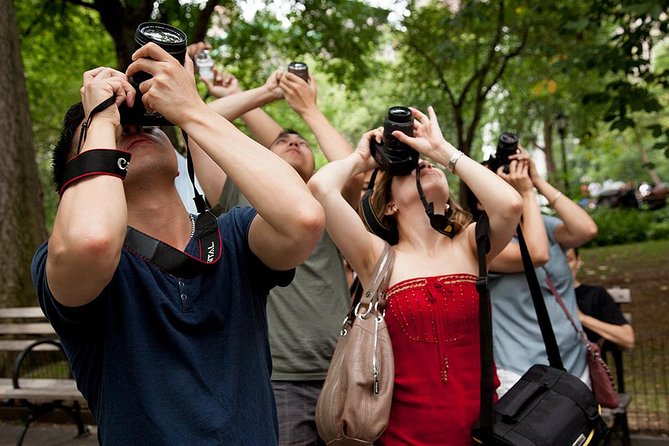
I would recommend this to a beginner who wants practical help without committing to a long technical workshop. You can bring questions about your camera and learn by photographing real buildings instead of sitting through a lecture.
It also suits an intermediate photographer who wants a fresh eye on familiar subjects. New York’s architecture is easy to photograph badly because the obvious shot is so easy to take. A guide who can suggest a different angle may be worth more than another hour of solo wandering.
The tour is a good fit for someone who wants to see central Manhattan while learning. One participant valued the local New York facts shared during the photography instruction, so you should expect some city context along with camera advice.
I would be more cautious if you want a slow, specialized architecture workshop. Five major locations in about three hours means short sessions and regular movement. You may leave with useful techniques, but you should not expect a long stay at each building or a portfolio review afterward.
You also need to bring your own digital camera. The camera is not supplied. If you use a phone, the available information does not confirm whether the guide teaches phone photography, so you should ask before booking if that is your main equipment.
Children must be accompanied by an adult. Service animals are allowed, and the starting point is near public transportation. Confirmation arrives at booking. The activity requires good weather, and a weather cancellation offers either another date or a full refund.
Free cancellation is available if you cancel at least 24 hours before the local start time. Cancellations or changes made inside that window are not refunded or accepted.
My call: book it if you want better pictures, not just more sights
Book the Manhattan Architecture Photography Tour if you want a compact lesson built around real New York subjects. The strongest reasons are the small group, the practical guidance, and the range of settings, from Grand Central’s interior to Times Square’s bright disorder and Bryant Park’s Empire State Building view.
The experience is less suitable if you dislike walking, need a slow pace, or only want a standard sightseeing tour. At $125, its value rests on the guide’s instruction. For a beginner or an enthusiastic camera owner who wants to stop making ordinary city images, that is a fair reason to go.
FAQ
How long does the Manhattan Architecture Photography Tour last?
The tour lasts approximately three hours.
How much does the tour cost?
The price is $125 per person.
Where does the tour begin?
The tour begins at Pershing Square, 90 E 42nd Street, New York, NY 10017.
Where does the tour end?
The activity ends at a different location from the starting point. The exact end location is not specified in the provided details.
Which Manhattan sights are included?
The route includes Grand Central Terminal, the Chrysler Building, Times Square, the New York Public Library, Bryant Park, and the Empire State Building view from Bryant Park. It also includes the Pershing Square Signature Center as part of the architecture route.
Do I need to bring my own camera?
Yes. A digital camera is not included, so you need to bring your own equipment.
Can I cancel for a full refund?
Yes. You can cancel at least 24 hours before the local start time for a full refund. If poor weather cancels the activity, you’ll be offered another date or a full refund.
Just listed around New York City
- NYC: Little Shop of Horrors Off-Broadway Ticket5 reviews
- Private NYC Airport Transfer: LGA to Manhattan – Up to 5★ 3.6 · 5 reviews
- New York City Tour in German★ 4.5 · 5 reviews
- New York: Hamilton and Washington Revolutionary Walking Tour★ 5.0 · 5 reviews
- NYC Freedom Tower Private Photo or Video Experience★ 4.0 · 6 reviews
- New York Afternoon Fall Foliage Cruise with Lunch★ 5.0 · 6 reviews
- Brooklyn Walking Tours by Locals: Private & 100% Personalized★ 4.0 · 6 reviews
- Southold Bay Oyster Farm Tour★ 5.0 · 6 reviews
NYC Architecture Tours, compared.
Around Manhattan Official NYC Architecture Cruise
Read our review →
Art Deco and Architecture Midtown Landmarks Tour
Read our review →
Midtown Manhattan Art and Architecture Walking Tour
Read our review →Browse the lists this tour appears in