
Reviewed · MUSEUMS
Mercer Labs Museum of Art and Technology Admission Ticket
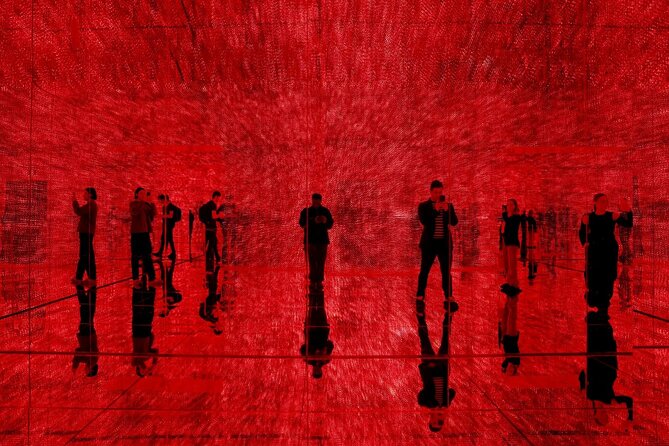
Mercer Labs turns a museum visit into a walk through light, sound, mirrors, robotics, and play. You begin at the Window, a portal-like opening, then enter the Map Room with huge 16K laser projections. Later come the 4D Sound gallery, the 507,000-light Dragon Room, and a final floor where your hand-drawn animal becomes part of a 3D digital world.
I like the range of sensations here. One room asks you to watch, another asks you to listen, and another lets you move, draw, wave your hand, or play. I also like the easy one-hour format, which fits neatly into a rainy afternoon or a busy day in New York.
The catch is value. At $56.62 per person, this is a costly visit for an experience that can take less than an hour if you move quickly. Some rooms are smaller than the online photos suggest, and dark spaces, loud music, mirrors, and flashing lights may not suit young children, older adults, or anyone prone to vertigo.
In This Review
- Key points to know before you go
- What Mercer Labs is really offering
- The Window and the first step into the museum
- The Map Room and 16K laser projections
- The 4D Sound gallery and directional audio
- The Dragon Room and its half-million lights
- Crown Kids and the museum’s artistic side
- Drawing animals in a live 3D world
- Ball pond, giant chess, and the robotic violin
- How long you should allow
- Price, location, and practical comfort
- Who will enjoy Mercer Labs most
- Should you book Mercer Labs?
- FAQ
- How much does Mercer Labs admission cost?
- How long does a visit to Mercer Labs take?
- Can I use a mobile ticket?
- What are the main exhibits at Mercer Labs?
- What is special about the Dragon Room?
- Is Mercer Labs suitable for children?
- Can I stay in each room as long as I want?
- Is Mercer Labs near public transportation?
- What is the cancellation policy?
Key points to know before you go
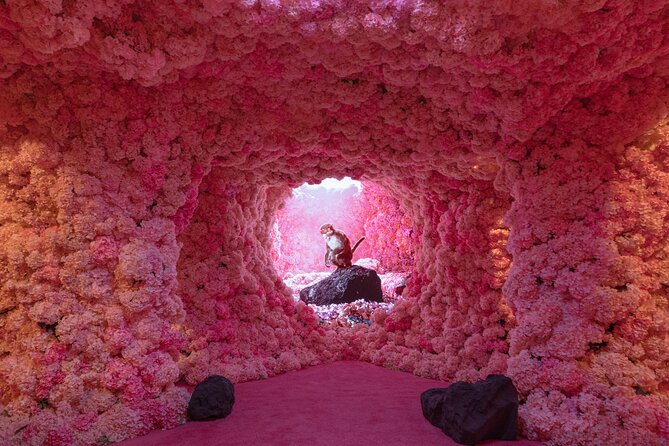
- The Dragon Room uses 507,000 LED lights, making it the biggest installation in the museum.
- The Map Room uses 16K laser projections to fill a colossal space with moving imagery.
- The 4D Sound gallery creates directional sound holograms, so sound appears to occupy different points around you.
- The Drawing Station turns your artwork into a 3D digital animal, one of the most hands-on parts of the visit.
- The robotic violin responds to hand movements, and the ball pond and movable chess pieces add a playful side.
- You need to wear shoe covers, and you cannot return to a floor after leaving it, so take your time.
What Mercer Labs is really offering
Mercer Labs is best understood as a short, theatrical art experience rather than a traditional museum. You will not spend the visit reading long wall labels or studying paintings in quiet galleries. Instead, you move through designed environments where light, sound, motion, and participation do most of the talking.
That makes it a good choice when you want something different from New York’s major collections. It also explains the mixed value. If you enjoy digital art, projection shows, music, and interactive technology, the ticket can feel worthwhile. If you prefer a large museum with many hours of material, you may find the visit brief.
The average visit lasts about one hour to one hour and 30 minutes. Some people move through in under 20 minutes, while others spend several hours trying each activity and sitting with the installations. Your pace matters here. The museum rewards curiosity, but it does not force you to linger.
The overall rating is 3.9 out of 5, which fits the experience well. The strongest praise centers on the visual effects, the interactive rooms, helpful staff, cleanliness, and appeal for families. The most common concerns are the price, small room sizes, loud music, darkness, and limited entertainment for adults who are not interested in hands-on play.
More New York City museums to visit:
- NYC: 9/11 Memorial & Museum Timed-Entry Ticket
★ 4.8 · 31,428 reviews - NYC: Empire State Building Tickets – Observatory & Museum
★ 4.7 · 25,757 reviews - New York City: American Museum of Natural History Ticket
★ 4.5 · 15,447 reviews
The Window and the first step into the museum
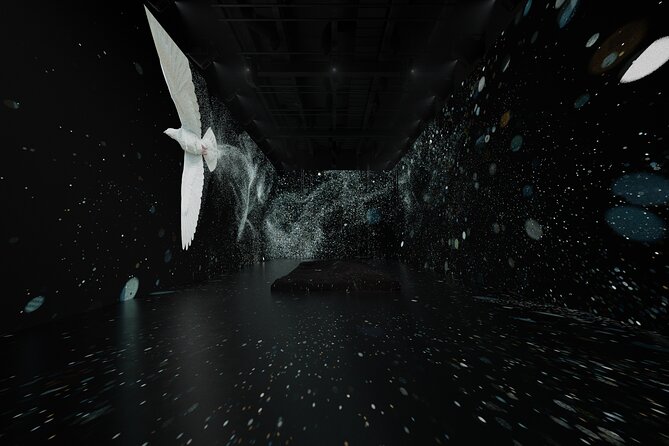
The visit begins with the Window, described as a portal to infinity. Think of it as an opening statement rather than a full exhibit. It sets the mood for a place where ordinary walls and floors may become visual tricks.
This first moment matters because Mercer Labs asks you to give up your usual museum habits. You may need to pause, look twice, and check whether a shape is physical or projected. The visual design often plays with depth, reflection, and scale.
Take your time at the entrance instead of rushing toward the next room. The route moves upward through different floors, and you cannot go back once you leave a floor. That simple detail can affect your visit. If a room has a viewing area, swing, seat, or place to lie down, use it before moving on.
The Map Room and 16K laser projections
The Map Room is one of the major visual displays. It uses 16K laser projections to create a huge moving environment. The effect is less like looking at a screen and more like standing inside a changing image.
This is likely to be one of the strongest stops for anyone who enjoys large-scale digital art. The room gives the technology room to work, using scale and motion rather than small interactive buttons. It also provides a useful contrast to the later exhibits, which ask you to take part.
The practical issue is that projection rooms can affect people differently. If you are sensitive to flashing images, dark spaces, or visual motion, give yourself permission to stand near an edge or move on. One visitor specifically described vertigo and dark environments as possible concerns. That is worth considering before you buy a premium ticket.
The 4D Sound gallery and directional audio
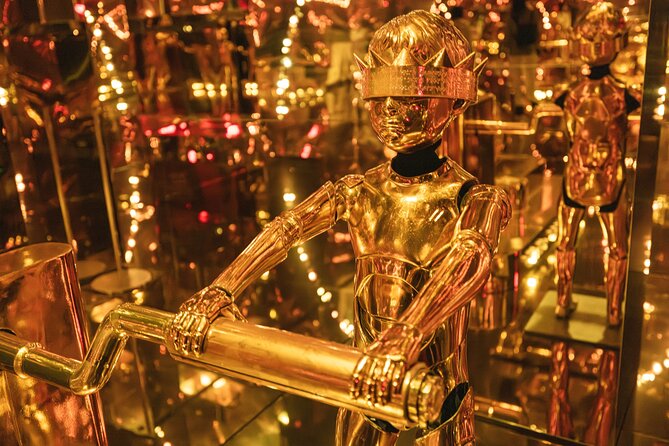
The 4D Sound gallery focuses on sound rather than spectacle alone. Its omni-directional system creates what Mercer Labs calls sound holograms, giving audio a sense of position and space.
This is an interesting idea because you are not simply hearing music from speakers in front of you. The point is to notice how sound seems to move around the room. For some people, this will be the most memorable part of the visit because it changes how you pay attention.
Sound levels are important here. The audio can be intense, and one family found the music too loud and the darker, eerie displays unsuitable for a three-year-old. I would not treat this as a quiet family museum. Older children may enjoy it, but very young children may be unsettled by the volume, darkness, or unusual sound design.
A few more New York City picks to weigh up
- NYC: SUMMIT One Vanderbilt Tickets
★ 4.7 · 51,195 reviews - NYC: Museum of Modern Art (MoMA) Entry Ticket
★ 4.6 · 12,540 reviews - NYC: One World Observatory Skip-the-Line Ticket
★ 4.7 · 12,329 reviews - NYC Empire State Building Observation Deck Ticket
★ 4.5 · 6,916 reviews
The Dragon Room and its half-million lights

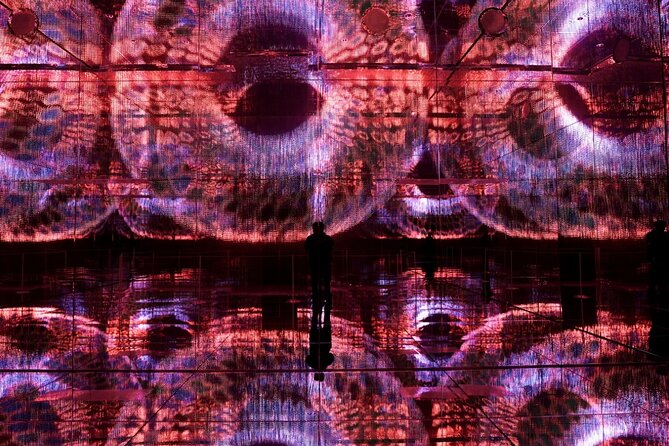
The Dragon Room is the visual centerpiece, with 507,000 LED lights. It is promoted as the largest installation of its kind, and the sheer number of lights gives you a clear idea of its purpose: scale, color, movement, and sensory impact.
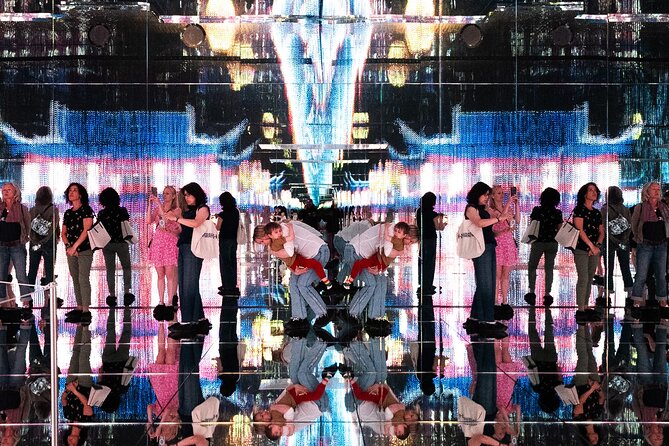
Music works with the LEDs, so this is not simply a room full of lights. The combination creates a show-like experience that can be thrilling, especially if you enjoy concerts, digital displays, or experimental design. It is also a strong place for photographs, although mirrored and reflective surfaces can make clothing choices worth considering.
The Dragon Room may be less satisfying if you want a clear story or a traditional artwork to study. Its effect is immediate and physical. You respond to it with your eyes and ears, not by learning a long explanation about the artist.
Crown Kids and the museum’s artistic side
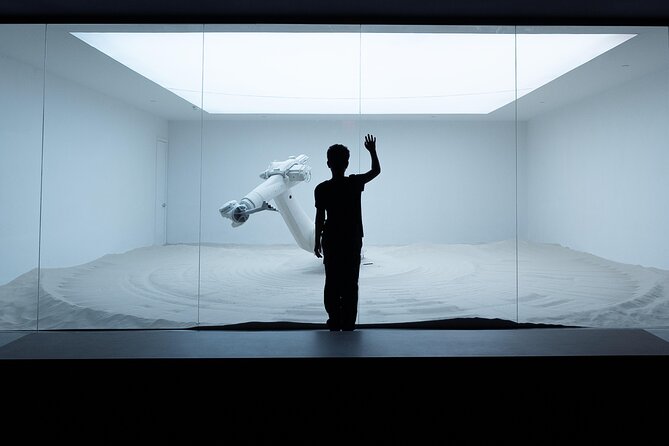
Mercer Labs also features Crown Kids by Roy Nachum, known for designing Rihanna’s Anti album cover. This gives the museum a link to a recognized contemporary artist and shows that the attraction is not only a technology showroom.
The work fits the wider idea of combining art with unusual presentation. At Mercer Labs, you are asked to consider how an artist can use digital systems, sound, light, and space to shape a response. The result is more about sensation and visual thought than about a conventional gallery visit.
If you want time with each work, do not follow the crowd too quickly. The museum can be completed fast, but the rooms have viewing areas where you can sit, swing, or lie down. That makes the experience more rewarding when you treat it as a series of environments rather than a checklist.
Drawing animals in a live 3D world
The final level shifts from watching to making. At the interactive Drawing Station, you create a personalized animal, scan it, and see it enter a live 3D video ecosystem.
This is one of the clearest reasons to bring children or teenagers. You are not just pointing a phone at a display or pressing a button. You make something, then watch the museum’s system place it into a digital environment.
Adults can enjoy it too, especially if you like seeing how ordinary drawings become computer-generated forms. Still, this is a playful activity, not a serious art class. The charm comes from the transformation and the surprise of seeing your creation move through the digital space.
Ball pond, giant chess, and the robotic violin
The hands-on parts continue with a ball pond, a larger-than-life chess game using movable sculptures, and a robotic encounter. These displays give the museum a playful edge that many projection rooms lack.
The robotic violin is especially unusual. You can play it by waving your hand, creating a direct connection between your movement and the instrument. It is a small but memorable idea, and it gives you something to do rather than simply something to view.
The giant chess display is also useful for families and groups because it encourages shared play. The ball pond is likely to be a hit with children, though adults may see it as a quick novelty. If you are visiting as a couple or alone, the sound and visual rooms may hold your attention longer than the play areas.
The robot may not feel fully interactive to everyone. Its repetitive movement can seem more like a programmed demonstration than a genuine exchange. That is not a flaw unique to Mercer Labs, but it is worth keeping expectations in check.
How long you should allow
The stated visit time is 60 to 90 minutes, and I would plan for at least 90 minutes if you want to pause, take photos, try the activities, and avoid feeling hurried. You might finish much sooner if you walk straight through.
The route is timed for entry, but once inside, you can stay as long as you like in each room. That flexibility helps. It means you can let a child repeat the drawing activity, sit through a sound piece, or wait for space in a popular room.
Do not save a favorite room for later. Since you cannot return to a floor after leaving it, stop and look around before continuing. A quick visit can still work, but a slow visit gives the ticket better value.
Price, location, and practical comfort
The admission price is $56.62 per person. That is a serious New York ticket price for a visit lasting around an hour. I would compare it with the kind of afternoon you want. For a one-off digital art experience, a birthday outing, or a rainy-day activity, it may be a fair splurge. For a budget-conscious museum day, it is harder to justify.
The attraction is near public transportation, and it is convenient for combining with shopping and sightseeing around Hudson Yards and the arts center. That makes the short duration less of a problem if you build it into a larger day rather than traveling across the city only for Mercer Labs.
Wear practical shoes. Shoe covers are required, and several rooms have mirrored floors. I would skip delicate heels and choose clothing that lets you sit, swing, or move comfortably. Reflective rooms can also make very short skirts or loose clothing awkward, especially if you plan to use viewing platforms or sit low.
Mobile tickets are accepted, and confirmation arrives at booking. Service animals are allowed, and most people can participate. The attraction is not presented as a quiet or low-stimulation museum, so consider the needs of anyone in your group who dislikes loud music, darkness, flashing lights, or visual distortion.
Who will enjoy Mercer Labs most
I would recommend Mercer Labs to:
- Families with school-age children and teenagers
- Couples looking for an unusual indoor date
- Friends who enjoy digital art, music, and photography
- New York residents seeking a short break from the city
- Solo visitors who like exploring interactive installations at their own pace
I would be more cautious if you want classical art, detailed historical interpretation, or several hours of museum content. Very young children may enjoy the ball pond but dislike the dark rooms and loud music. Anyone with vertigo or strong sensitivity to flashing lights should think carefully before booking.
The museum also works well for mixed-age groups. A teenager may focus on the drawing station and robotics, while an older adult may prefer the projections, music box, mirrors, or quieter viewing areas. The experience is not equally strong for every age, but it offers enough variety for a family group to find several points of interest.
Should you book Mercer Labs?
Book it if you like high-tech visual art, want a short indoor activity, and are happy to pay for a sensory experience rather than a traditional museum. Give yourself 60 to 90 minutes, wear comfortable shoes, and slow down before leaving each floor.
Skip it if $56.62 feels high for a compact attraction, or if loud music, dark spaces, mirrors, and flashing lights are likely to make the visit unpleasant. For the right audience, Mercer Labs is inventive and memorable. For the wrong one, it can feel short, crowded in concept, and overpriced.
The free cancellation policy gives you some protection: cancel at least 24 hours before the start time for a full refund. Changes or cancellations inside that window are not accepted and are not refunded.
FAQ
How much does Mercer Labs admission cost?
The listed price is $56.62 per person.
How long does a visit to Mercer Labs take?
The expected visit lasts about one hour to one hour and 30 minutes, though some people spend less than 20 minutes and others stay several hours.
Can I use a mobile ticket?
Yes. A mobile ticket is available, and booking confirmation is provided at the time of booking.
What are the main exhibits at Mercer Labs?
The main areas include the Window, Map Room, 4D Sound gallery, Dragon Room, infinity rooms, Drawing Station, ball pond, giant chess display, robotic encounter, and robotic violin.
What is special about the Dragon Room?
The Dragon Room uses 507,000 LED lights and is described as the largest installation of its kind.
Is Mercer Labs suitable for children?
Many children enjoy the ball pond, drawing station, 3D animals, chess sculptures, lights, and robotic displays. However, loud music, dark rooms, eerie sounds, and visual effects may not suit very young children.
Can I stay in each room as long as I want?
Yes. You can stay as long as you like in each room, but you cannot go back to a floor after leaving it.
Is Mercer Labs near public transportation?
Yes. The museum is near public transportation and is also convenient for Hudson Yards shops, sightseeing, and the arts center.
What is the cancellation policy?
You can cancel at least 24 hours before the experience for a full refund. Cancellations or changes made less than 24 hours before the start time are not accepted, and the amount paid is not refunded.
Just listed around New York City
- NYC: Little Shop of Horrors Off-Broadway Ticket5 reviews
- Private NYC Airport Transfer: LGA to Manhattan – Up to 5★ 3.6 · 5 reviews
- New York City Tour in German★ 4.5 · 5 reviews
- New York: Hamilton and Washington Revolutionary Walking Tour★ 5.0 · 5 reviews
- NYC Freedom Tower Private Photo or Video Experience★ 4.0 · 6 reviews
- New York Afternoon Fall Foliage Cruise with Lunch★ 5.0 · 6 reviews
- Southold Bay Oyster Farm Tour★ 5.0 · 6 reviews
- Brooklyn Walking Tours by Locals: Private & 100% Personalized★ 4.0 · 6 reviews
Museums, compared.


Empire State Building Tickets – Observatory & Museum
Read our review →


9/11 Memorial, Ground Zero Tour with Optional 9/11 Museum Ticket
Read our review →

All-Access 9/11: Ground Zero Tour, Memorial and Museum, One World Observatory
Read our review →
Browse the lists this tour appears in