
Reviewed · MUSEUMS
New York City: Museum at Eldridge Street Docent-Led Tour
The first grand synagogue built in the United States by Eastern European Jewish immigrants is not tucked away in a quiet museum district. It rises from Manhattan’s Lower East Side, where crowded tenements once surrounded this grand house of worship. Inside, Moorish architecture, 60 stained glass windows, and original furnishings tell a story of faith, immigration, and hard-won permanence.
I like the way the docent-led format gives the building a human scale. I also like that your $7 ticket covers the synagogue, permanent collection, and temporary exhibit, making this one of New York’s better-value short museum visits. The main consideration is guide quality: Bonnie has been praised for bringing the geography of Eastern Europe and immigrant life into focus, while one recent guest found another guide disrespectful and dull.
In This Review
- Key points to know before you go
- Why the Eldridge Street Synagogue matters
- Entering through the Lower East Side doorway
- The first hour: architecture, faith, and immigrant life
- Looking up at Moorish design and stained glass
- The modern window by Kiki Smith and Deborah Gans
- From decline to a careful restoration
- The exhibits beyond the main tour
- Is one hour enough?
- Guide quality and the tone of the tour
- Who will get the most from this tour?
- Price, booking flexibility, and practical value
- Should you book the Eldridge Street tour?
- FAQ
- How long does the docent-led tour last?
- What language is the tour offered in?
- What does the $7 admission include?
- Where does the tour begin?
- Is the museum wheelchair accessible?
- Can I take photographs inside?
Key points to know before you go
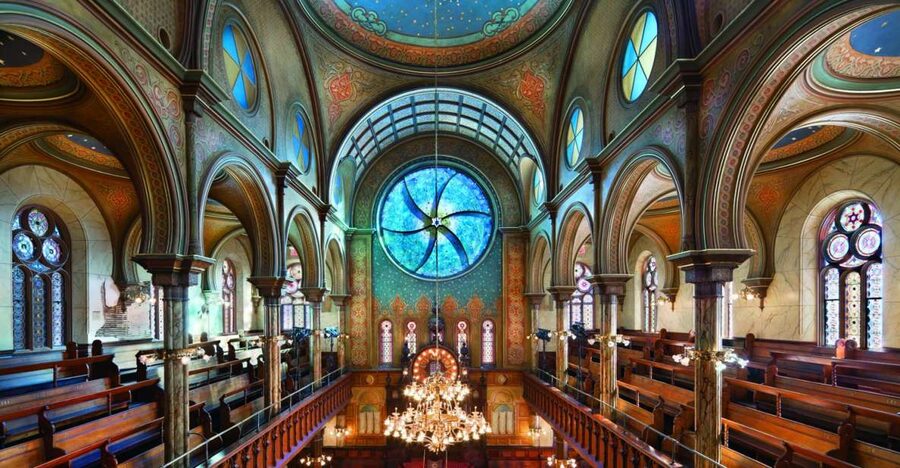
- The 1887 synagogue is the main attraction: This National Historic Landmark was built by Eastern European Jewish immigrants as both a house of worship and a community center.
- The one-hour tour has a clear historical arc: Your docent explains the synagogue’s rise, decline, restoration, and renewed public life.
- Look up and look around: The building features Moorish details, 60 historic stained glass windows, original floors and furnishings, and a modern window by Kiki Smith and Deborah Gans.
- The $7 price is unusually gentle: Admission includes the guided tour, permanent collection, and temporary exhibit.
- Bonnie has received especially warm praise: Her explanations connect the Lower East Side to Jewish communities in Eastern Europe and the area known as the Pale.
- Plan for a museum-style security check: Food, drinks other than water, strollers, and backpacks are checked at arrival, and flash photography is not allowed.
Why the Eldridge Street Synagogue matters
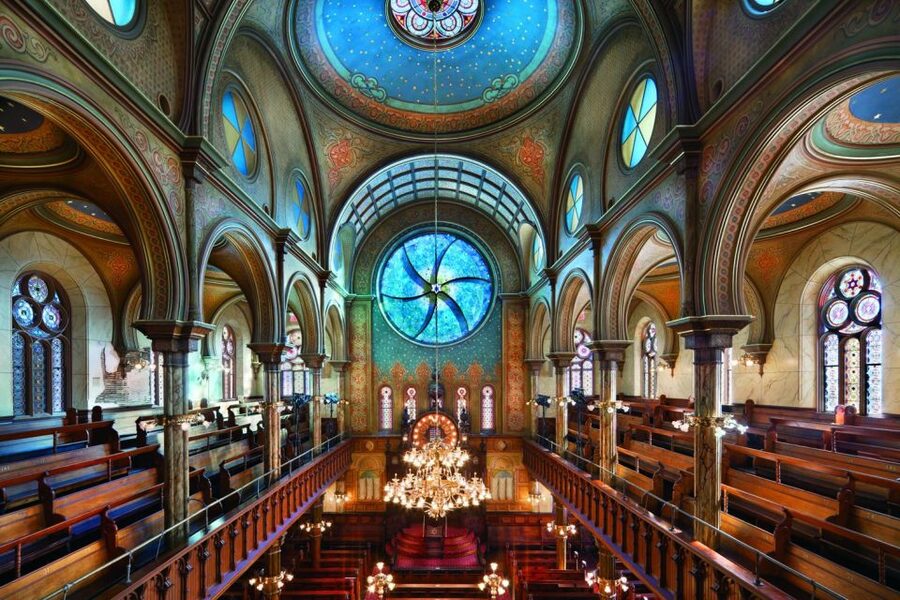
The Eldridge Street Synagogue was built in 1887, during the great wave of immigration that brought millions of Europeans across the Atlantic. Its founders were Eastern European Jewish immigrants who wanted more than a place to pray. They wanted a permanent address, a gathering place, and a public sign that their new lives in America had begun.
That goal is easy to understand when you consider the setting. The synagogue was built among the crowded streets and tenements of the Lower East Side. Its grand scale must have felt striking in a neighborhood shaped by limited space and hard work.
Your guide uses the building to explain this world. The tour is not only about decorative details. It connects architecture to immigration, religious life, community customs, and the choices people made as they built new lives in New York.
The building also tells a less tidy story. Strict immigration quotas in the 1920s changed the neighborhood and reduced the flow of new arrivals. Over time, the synagogue suffered from neglect and came close to being lost.
A 20-year, $20 million restoration brought it back for public use. That restoration is part of the visit’s meaning. You are seeing a beautiful building, but you are also seeing what can happen when a place is carefully repaired instead of erased.
More New York City museums to visit:
- NYC: 9/11 Memorial & Museum Timed-Entry Ticket
★ 4.8 · 31,428 reviews - NYC: Empire State Building Tickets – Observatory & Museum
★ 4.7 · 25,757 reviews - New York City: American Museum of Natural History Ticket
★ 4.5 · 15,447 reviews
Entering through the Lower East Side doorway
The meeting point is simple. Walk down the stairs and enter the museum. The tour begins inside, so you do not need to search for a separate street corner or guide kiosk.
Give yourself a moment before the tour starts. The approach is practical rather than grand, and the building’s surroundings help explain its original setting. You are entering a former immigrant neighborhood where a monumental synagogue once served people living nearby.
The museum is wheelchair accessible, with an elevator reaching all four floors. That matters here because the building is not just one open room. The museum’s material, exhibits, and architectural details extend across the site.
Food, drinks other than water, strollers, and backpacks are searched and checked on arrival. Water is allowed, but keep your belongings manageable. Flash photography and professional cameras are not permitted, although personal, non-commercial photography is welcome.
The first hour: architecture, faith, and immigrant life
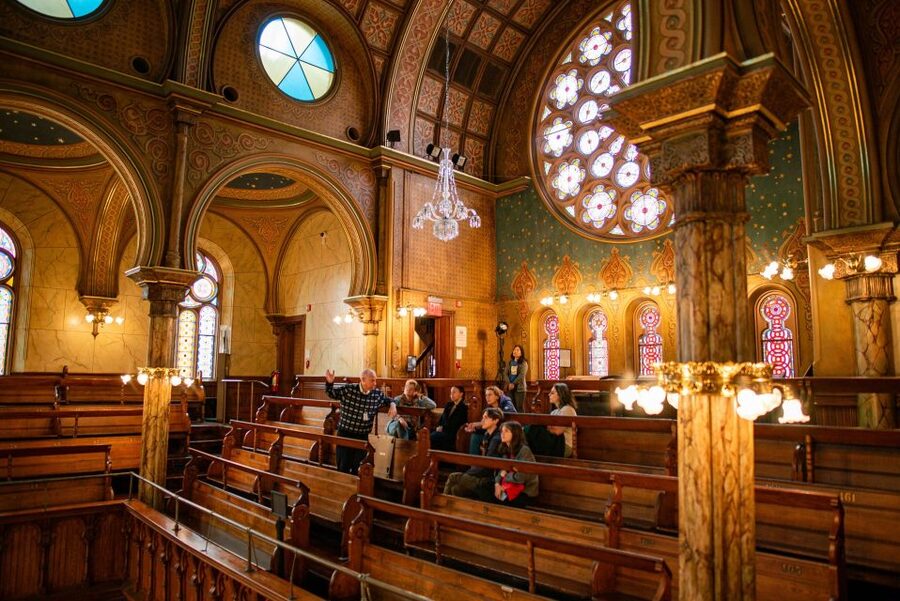
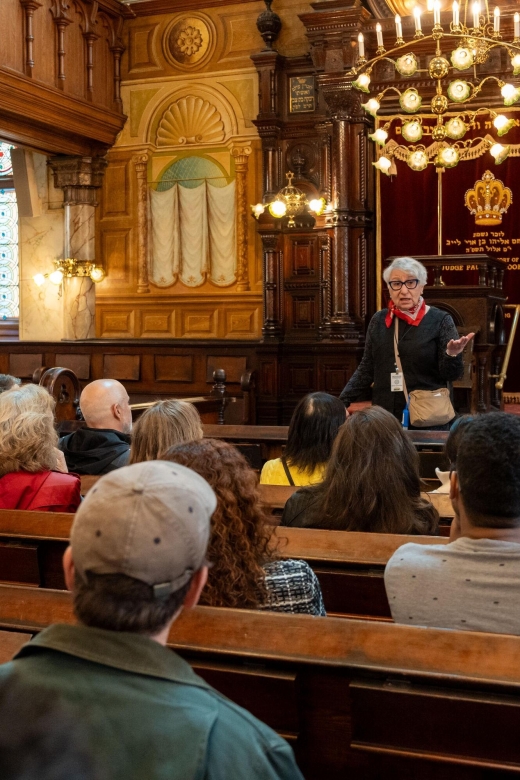
The docent-led tour lasts one hour, a good length for this kind of visit. You get enough time to understand the building without committing half a day to a single subject.
Expect the tour to move through several connected themes:
- The synagogue’s construction in 1887
- The arrival and settlement of Eastern European Jewish immigrants
- Jewish religious traditions and community life
- The building’s decline after immigration restrictions changed the neighborhood
- The restoration that returned it to public use
- The museum’s work to preserve stories and objects for the future
The best guides make these subjects feel connected. Bonnie, one named guide praised for her work, has been especially effective at explaining where Jewish immigrants came from in Eastern Europe. Her explanation of the Pale, a broad area where many Jewish communities were confined under the Russian Empire, helped one guest understand the geography behind the immigration story.
That kind of detail can make a short tour far more useful. Instead of hearing only that people came from Eastern Europe, you begin to understand that they came from particular regions, towns, and communities with their own customs and memories.
A docent may also share personal stories or family connections when appropriate. Those details can make the era easier to picture, though the experience will naturally depend on who leads your tour. The museum offers the guided tour in English.
Looking up at Moorish design and stained glass
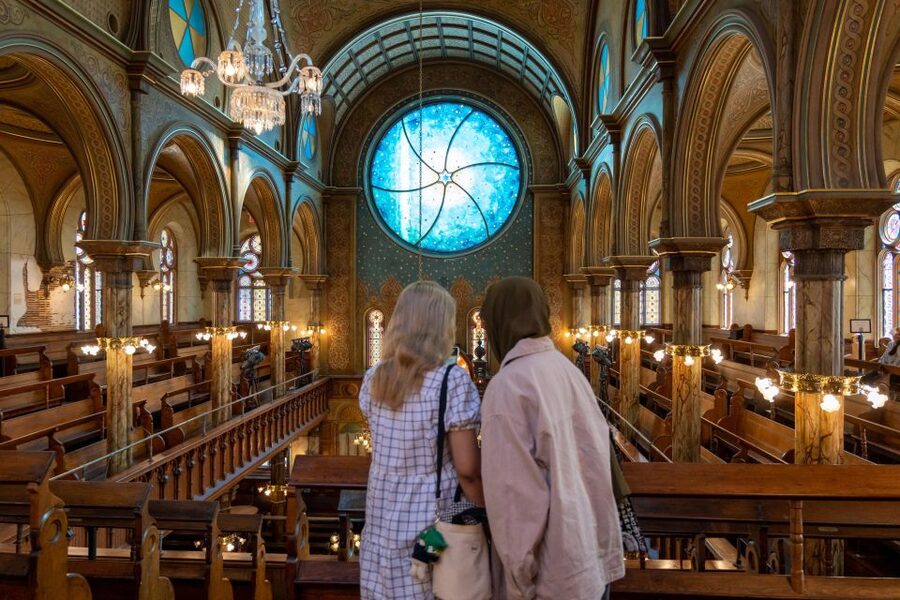
The synagogue’s architecture is a major reason to book this experience. The Moorish design gives the interior a different character from the churches and civic buildings many people associate with New York’s 19th-century architecture.
Look closely at the shapes, patterns, and decorative choices rather than rushing from one room to the next. Your guide can explain how the building’s visual language helped create a grand setting for worship and community life.
The 60 historic stained glass windows are another highlight. Their color and placement reward a slow look, especially if you are interested in how light changes a religious interior. The windows are not simply decoration. They help show the care and ambition that went into creating a permanent synagogue for a new American community.
Original floors and furnishings add another layer. They give you physical links to the building’s earlier life, rather than presenting a completely new reconstruction. The combination of original elements and restored features helps you understand both the synagogue’s age and the work needed to save it.
You will want to check your camera settings before entering. Personal photography is allowed, but flash photography is not. Professional cameras are also prohibited.
A few more New York City picks to weigh up
- New York City: Statue of Liberty & Ellis Island with Ferry
★ 4.6 · 18,683 reviews - New York City: Manhattan Helicopter Tour
★ 4.7 · 7,076 reviews - New York City: The FRIENDS™ Experience Entry Ticket
★ 4.7 · 6,234 reviews - Top of the Rock Observation Deck New York City Ticket
★ 4.5 · 4,556 reviews
The modern window by Kiki Smith and Deborah Gans
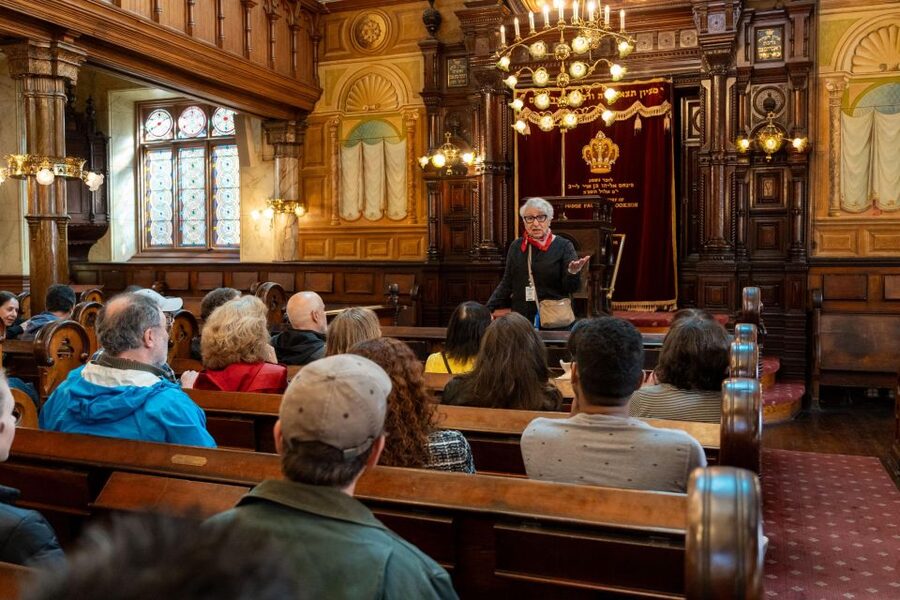
The visit is not frozen in 1887. One of its more interesting features is a modern window created by artists Kiki Smith and Deborah Gans.
This newer work places the synagogue in an ongoing conversation about art, memory, religion, and preservation. It shows that the museum is not treating the building as a sealed period piece. The old and new elements can be viewed together, giving you a reason to think about how historic places continue to serve people today.
If you tend to skip contemporary additions in historic buildings, do not. The modern window is specifically part of the experience, and it offers a useful contrast with the synagogue’s older stained glass.
From decline to a careful restoration
The synagogue’s later years add emotional weight to the tour. After immigration quotas restricted new arrivals in the 1920s, the community and neighborhood changed. The building eventually fell into neglect and faced the possibility of disappearing.
The restoration took 20 years and cost $20 million. Those figures explain why the museum visit is about more than admiring a pretty interior. Preserving a large, aging building requires time, money, skilled work, and a decision that the place still matters.
The docent explains the building’s rise, decline, and restoration as one connected story. You can see how a synagogue built to express confidence became vulnerable, then found a new purpose as a museum and public landmark.
I find this part particularly useful for anyone interested in preservation. The visit shows that saving a historic building is not just about repairing walls. It also means deciding which objects, stories, traditions, and changes should remain visible.
The exhibits beyond the main tour
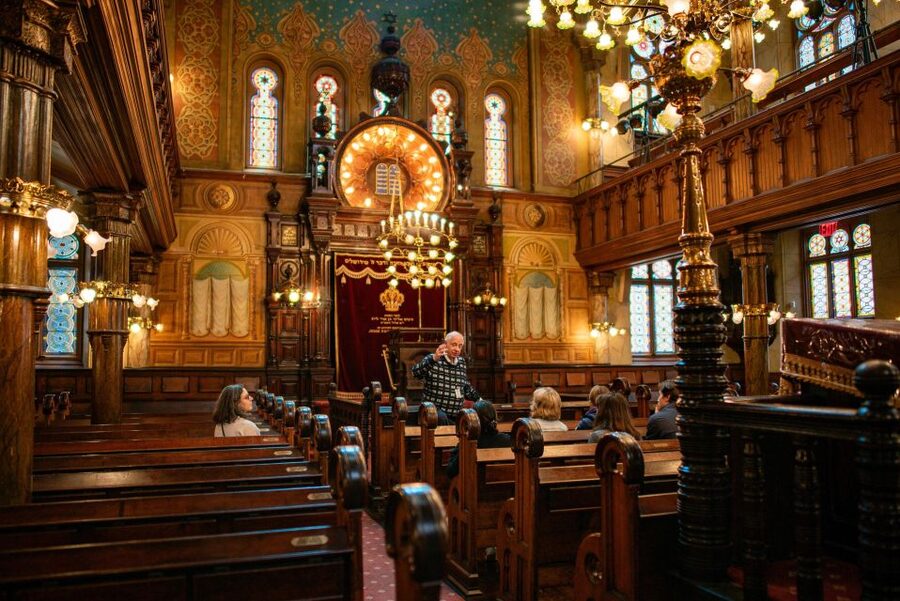
Your admission includes the temporary exhibit and permanent collection. That makes the $7 ticket more valuable than a simple architecture stop.
The temporary displays change over time, so their exact content depends on your visit. One recent exhibit focused on menorahs, which was singled out as a favorite by one visitor. If that display is still on view, allow time to examine it after the docent tour rather than leaving as soon as the hour ends.
The permanent collection helps extend the building’s story. The synagogue gives you the large-scale setting, while the collection can offer a closer look at objects tied to Jewish life and Lower East Side communities.
The tour itself may provide the main narrative, but the exhibits let you pause at your own speed. That is useful if you want to read more, study religious objects, or revisit a detail your guide mentioned.
Is one hour enough?
For a basic introduction, yes. One hour is enough to understand why the synagogue was built, what happened to it, and why its restoration matters. It is also enough time to see the main architectural features without exhausting your attention.
It is not enough for a slow, exhaustive study of every window, object, and exhibit. If you enjoy museums at a very deliberate pace, treat the docent tour as the beginning of the visit and use the included museum admission afterward.
The tour’s short length also makes it easy to fit into a Lower East Side day. You can pair it with other neighborhood sightseeing without giving up an entire afternoon. The museum does not promise a neighborhood walking tour as part of this ticket, so keep that separate in your plans.
Guide quality and the tone of the tour
A live docent can make or break a one-hour visit. The strongest guides explain unfamiliar geography and customs clearly, answer questions, and connect the building to real human choices.
Bonnie has been praised for explaining the origins of Jewish immigrants in Eastern Europe, including the geography of the Pale. Her personal stories helped make the subject easier to follow. If she is leading your tour, you can expect a guide who brings extra context to the building’s immigrant story.
You should also know that guide experiences can differ. One recent guest described a guide as disrespectful toward religious Jews and found the tour boring. That is a serious concern, especially because the subject involves living religious traditions as well as past events.
I would not let one poor account erase the museum’s value, but I would keep expectations realistic. The setting and material are strong. The quality of interpretation depends on the docent assigned to your time.
Who will get the most from this tour?
I would recommend the tour to you if you enjoy architecture, New York immigrant history, Jewish history, religious buildings, or historic preservation. It is also a good choice if you want a focused museum visit with a clear one-hour time limit.
Families with older children may find the building easier to appreciate after hearing why it was built. Younger children may enjoy the color and scale, but the historical explanation could require patience.
The tour is also useful for people who have seen the Lower East Side only as a food and shopping district. It adds an older layer to the neighborhood and shows how immigrant communities shaped the area.
You may want to skip it if you only want a large art collection, a self-guided visit, or a tour with a guaranteed guide style. The museum’s appeal is specific: one historic synagogue, its community story, and the work of saving it.
Price, booking flexibility, and practical value
At $7 per person, this is an easy New York add-on. Many city attractions cost far more, and this ticket includes the docent-led tour, museum admission, temporary exhibit, and permanent collection.
The value is strongest if you stay after the guided hour to see the exhibits. Even if you only have time for the tour and a quick look around, the price remains modest for a National Historic Landmark with a live English-speaking guide.
You can reserve now and pay later, which helps if your schedule is still shifting. Free cancellation is available up to 24 hours in advance for a full refund. Check the available starting times before booking, since the tour runs for one hour and exact departures are not fixed in the information provided.
Should you book the Eldridge Street tour?
Book it if you want a compact, low-cost visit with real architectural character and a clear connection to New York’s immigrant past. The stained glass, original furnishings, Moorish details, modern art, and restoration story give the hour plenty to discuss.
I would especially choose it if you are already exploring the Lower East Side or if you want more than a quick photograph of an old building. The tour helps you understand why this synagogue was built and why saving it matters.
The only reason to hesitate is the variable docent experience. Still, the $7 price and included exhibits make the risk fairly small. For most people interested in New York’s communities, architecture, or preservation, this is a smart short stop.
FAQ
How long does the docent-led tour last?
The tour lasts one hour.
What language is the tour offered in?
The live docent-led tour is available in English.
What does the $7 admission include?
Admission includes the Museum at Eldridge Street and Eldridge Street Synagogue, the temporary exhibit, the permanent collection, and the English-language docent-led tour.
Where does the tour begin?
Walk down the stairs and enter the museum. The tour begins inside.
Is the museum wheelchair accessible?
Yes. The museum is fully accessible, and an elevator reaches all four floors.
Can I take photographs inside?
Personal, non-commercial photography is welcome. Flash photography and professional cameras are not allowed. Food, drinks other than water, strollers, and backpacks are searched and checked on arrival.
Just listed around New York City
- NYC: Little Shop of Horrors Off-Broadway Ticket5 reviews
- Private NYC Airport Transfer: LGA to Manhattan – Up to 5★ 3.6 · 5 reviews
- New York City Tour in German★ 4.5 · 5 reviews
- New York: Hamilton and Washington Revolutionary Walking Tour★ 5.0 · 5 reviews
- NYC Freedom Tower Private Photo or Video Experience★ 4.0 · 6 reviews
- New York Afternoon Fall Foliage Cruise with Lunch★ 5.0 · 6 reviews
- Brooklyn Walking Tours by Locals: Private & 100% Personalized★ 4.0 · 6 reviews
- Southold Bay Oyster Farm Tour★ 5.0 · 6 reviews
Museums, compared.

Empire State Building Tickets – Observatory & Museum
Read our review →


9/11 Memorial, Ground Zero Tour with Optional 9/11 Museum Ticket
Read our review →

All-Access 9/11: Ground Zero Tour, Memorial and Museum, One World Observatory
Read our review →
Browse the lists this tour appears in