
Reviewed · MUSEUMS
New York City: Museum of Illusions Entry Ticket
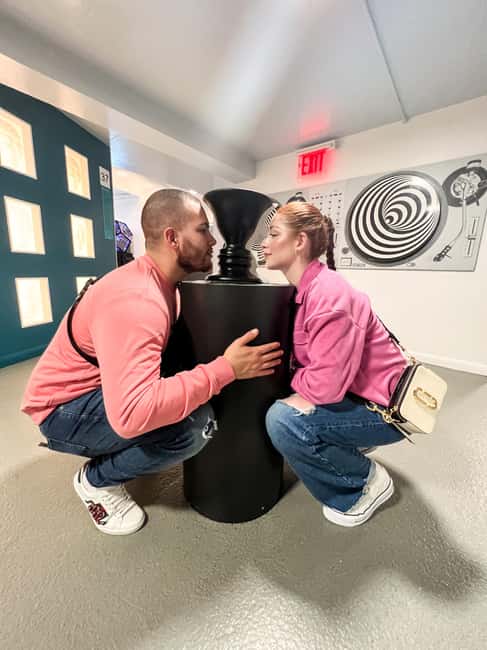
The most interesting thing here is how quickly the museum turns your own senses against you. At Museum of Illusions New York, you can appear to grow or shrink, challenge gravity, step into a life-size kaleidoscope, and watch holograms shift as you move. The exhibits are playful, but each one also explains how your brain builds its version of reality.
I like the hands-on format, since you are not just looking at framed objects. I also like the Chelsea location, at 14th Street and 8th Avenue, which makes this an easy indoor stop during a day in Manhattan. The main concern is value: at $35 per person, the museum may feel expensive if you move quickly or expect a large traditional museum.
In This Review
- Key points
- What You Actually Do Inside the Museum
- Illusion Rooms That Change Your Sense of Size
- Holograms and the Science Behind the Tricks
- Defying Gravity and Confusing Your Senses
- A Life-Size Kaleidoscope and Photo-Friendly Displays
- Why the Chelsea Location Helps
- Who Will Enjoy the $35 Ticket Most
- Accessibility and Practical Planning
- The Main Strengths and Weaknesses
- Should You Book Museum of Illusions New York?
- FAQ
- Where is Museum of Illusions New York located?
- How much does admission cost?
- How long is the ticket valid?
- What is included with the ticket?
- How many exhibits are inside?
- Is the museum wheelchair accessible?
- Is this a guided tour?
- Is the ticket refundable?
- What kinds of illusions can I see?
- Who is the museum suited for?
Key points
- 50+ interactive exhibits let you test optical illusions with your own body and senses.
- Illusion rooms and holograms create the best photo opportunities and give the visit a playful, social feel.
- Science sits behind the fun, showing how your brain interprets size, gravity, motion, and space.
- Chelsea access makes the museum convenient at the corner of West 14th Street and 8th Avenue.
- The visit can feel short, so take time with each display if you want the $35 ticket to feel worthwhile.
- Wheelchair access is available, making this a practical indoor choice for many families and groups.
What You Actually Do Inside the Museum

This is not a museum built around a long historical collection. It is a sequence of visual, sensory, and educational displays that ask you to participate. You walk from one setup to the next, test what you see, and try to work out why your eyes and brain disagree.
The collection includes more than 50 exhibits. The exact route is not described as a fixed guided itinerary, so you should think of the ticket as open access to a set of interactive stations rather than a tour led by a named guide.
The first part of the visit is about getting used to the museum’s basic idea: perception is not always reliable. An object can look larger or smaller than it is. A room can make your body appear to change size. A visual pattern can seem to move or shift even when the display itself is still.
That makes the experience more social than a quiet gallery visit. You will often want a friend or family member to stand in the right place, take a picture, or try the same illusion from another angle. For a date night or group outing, this gives you something to do together instead of simply walking side by side.
More New York City museums to visit:
- NYC: 9/11 Memorial & Museum Timed-Entry Ticket
★ 4.8 · 31,428 reviews - NYC: Empire State Building Tickets – Observatory & Museum
★ 4.7 · 25,757 reviews - New York City: American Museum of Natural History Ticket
★ 4.5 · 15,447 reviews
Illusion Rooms That Change Your Sense of Size

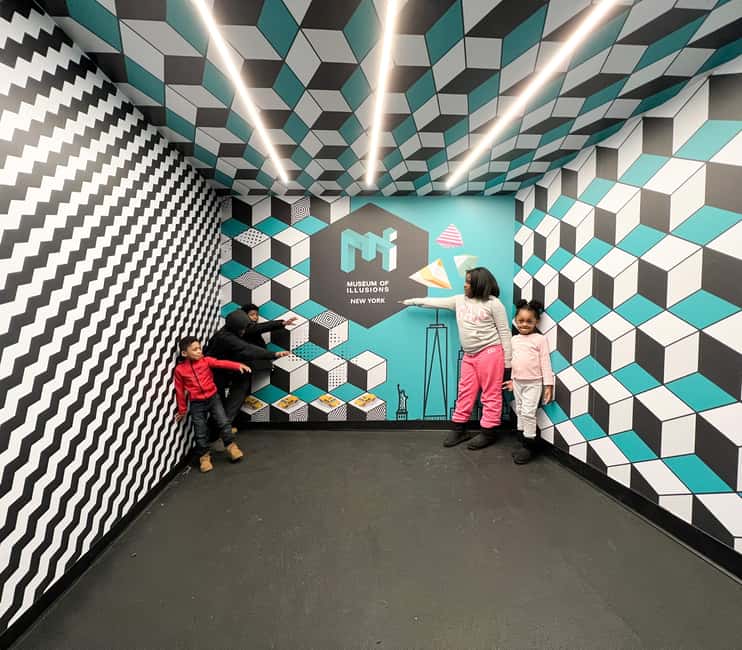
The illusion rooms are likely to be the strongest part of the visit for most people. These spaces use perspective and carefully arranged surroundings to make your body look unusually large or small. The effect is simple to understand once you see it, but still amusing when you are the person inside it.
This is where the museum works best for families. Children can see a clear result from their own actions, and adults usually find themselves testing the effect too. You do not need a background in science to enjoy it. The room gives you the visual trick first, then invites you to think about why it works.
Take your time with these exhibits. A quick walk through can make the museum feel like a small collection of photo sets. If you pause to read the explanations and try each display from different positions, the visit becomes more than a series of snapshots.
A practical point: the experience depends on your willingness to participate. If you prefer museums where you mainly observe objects, you may find the rooms less satisfying. If you enjoy posing, experimenting, and comparing what you see with what someone else sees, they are much more rewarding.
Holograms and the Science Behind the Tricks
The holograms add a different kind of illusion. Instead of changing the apparent size of your body or the shape of a room, they play with light and image. They help show how easily the eye accepts a convincing visual pattern as something solid or present.
The educational angle matters here. The museum is designed to reveal how the brain interprets reality, not just to provide odd pictures. You can use the displays as a simple introduction to optical illusion, sensory perception, and the gap between what reaches your eyes and what your mind decides it means.
That explanation also helps parents make the visit more useful for children. You can ask a child what they think is happening, then compare the answer with the museum’s explanation. The exhibits are designed to be entertaining, but they give you a natural way to talk about sight, perspective, and mistaken assumptions.
Still, keep expectations in check. This is an educational experience in a light, accessible form. It is not a science museum with long demonstrations, experiments, or detailed lectures. The value comes from seeing the effect for yourself and understanding the basic idea behind it.
Defying Gravity and Confusing Your Senses
Several displays are built around the feeling that ordinary physical rules have been interrupted. You may appear to defy gravity or see an arrangement that makes a normal room seem wrong. These exhibits work because your brain relies on familiar cues, such as angles, lines, body position, and the relationship between objects.
The museum’s title gives away the general theme, but the fun comes from being caught by the effect before you analyze it. You may know that the display is using perspective or visual design, yet your first impression can still be convincing.
I would give yourself more time than you think you need here. A display that takes only a few seconds to understand may become more interesting when you change your position or compare the effect with someone else. The museum is at its best when you treat it as a set of small experiments rather than a quick photo stop.
This also explains the mixed value of the ticket. The admission is $35 per person, and the attraction does not promise a long, full-day program. Some people may find enough to do among the 50-plus exhibits, while others may finish in a relatively short visit and feel the price is high for the amount of time spent inside.
A few more New York City picks to weigh up
- NYC: SUMMIT One Vanderbilt Tickets
★ 4.7 · 51,195 reviews - NYC: Museum of Modern Art (MoMA) Entry Ticket
★ 4.6 · 12,540 reviews - NYC: One World Observatory Skip-the-Line Ticket
★ 4.7 · 12,329 reviews - NYC Empire State Building Observation Deck Ticket
★ 4.5 · 6,916 reviews
A Life-Size Kaleidoscope and Photo-Friendly Displays
The life-size kaleidoscope is one of the more distinctive features. Rather than looking through a small handheld tube, you step into a larger visual setup and become part of the pattern. It offers the kind of experience that is hard to reproduce with an ordinary photograph or a standard museum display.
The photo element is important throughout the museum. Many exhibits are designed so your body, position, or perspective becomes part of the illusion. Friends and family can take turns, and the results give you a record of how the trick looked from outside.
That makes the attraction a good match for people who enjoy interactive outings. You are not expected to remain silent or move carefully around a fragile collection. The displays invite participation, and the social side is part of the point.
On the other hand, a photo-focused visit can make the museum feel smaller. If you stop only long enough for one picture at each station, you may be done sooner than expected. I would read the explanations, try the effects more than once, and let children set the pace if you want a fuller experience.
Why the Chelsea Location Helps

The museum is at 77 8th Avenue, with the entrance on the corner of West 14th Street and 8th Avenue in Chelsea. That is useful for building the attraction into a wider Manhattan day, especially if you want an indoor activity in this part of the city.
The location also makes the museum easier to consider as a short planned stop rather than the only event of the day. You can schedule it around other time in Manhattan, though the supplied information does not give a precise visit length or a list of nearby attractions included with the ticket.
Because the address is specific, check the corner entrance carefully. A closure or changed operating time could turn a simple stop into a wasted trip, especially when you are traveling with an excited young child. One family arrived to find the museum closed and the posted closing information different from what they had expected. That kind of problem is especially frustrating because the ticket is non-refundable.
For that reason, check the available starting times and confirm the museum’s current opening information before leaving. The ticket is valid for one day, but that does not remove the need to match your visit to an available time.
Who Will Enjoy the $35 Ticket Most
I would recommend this most strongly to families, friend groups, couples, and small group outings that enjoy doing things together. The exhibits create conversation and give everyone a role. One person can pose, another can take the picture, and a third can read the explanation.
It can also work well for a date night. The displays provide easy conversation starters, and you are not locked into a long formal presentation. If both of you like visual tricks and playful challenges, the museum gives you a shared activity with plenty to discuss.
Families should consider the age and patience of their children. The museum is presented as suitable for family adventures, but the visit depends on children engaging with the displays rather than simply racing from one room to the next. A young child may love the visual effects, but you should allow extra time and confirm operating hours before setting out.
You may want to skip it if you are looking for a large collection, extensive historical information, or a full day of museum viewing. The reported overall rating is 3.1 out of 5 from 56 ratings, and the main weakness in the available feedback is that the museum can feel small and the visit can feel short. Several low ratings also point to the price not matching the experience for some people.
Accessibility and Practical Planning

The museum is wheelchair accessible, which is useful for families and groups with different mobility needs. The information provided does not describe the width of individual exhibit spaces or the precise layout inside, so you may want to contact the venue directly if you need details beyond general wheelchair access.
No guide names or live tour format are provided. You should expect a self-directed visit through the exhibits rather than a scheduled tour with a particular guide.
The activity is listed as valid for one day, with starting times available to check. Since the ticket is non-refundable, timing matters. Do not assume the museum will be open simply because you hold a ticket. Confirm the selected time and current hours before making the trip.
The price is also worth considering beside your plans. At $35, this is not a cheap filler activity. It makes more sense when you expect to spend enough time testing the displays, reading the explanations, and taking part with other people. It makes less sense as a five-minute stop between other attractions.
The Main Strengths and Weaknesses
The museum’s strongest feature is its directness. You do not need a guide to understand the basic appeal. You see an illusion, step into it, and discover that your senses can be fooled by a carefully designed room or image.
Its second strength is the mix of entertainment and simple science. The explanations give the displays a purpose, and they can help children understand that perception is an active process rather than a perfect recording of the world.
The weaknesses are just as clear. The museum may feel small if you move quickly, and the total experience may be shorter than the price suggests. The attraction also depends heavily on your interest in photos and participation. A person who wants a large, traditional museum may come away disappointed.
Operational reliability deserves attention too. A changed closing time caused a serious problem for one family who arrived with a five-year-old. Since the booking is non-refundable, verify the hours before setting off.
Should You Book Museum of Illusions New York?
Book it if you want a playful, indoor activity in Chelsea and you enjoy optical tricks, unusual photos, and hands-on exhibits. It is particularly suitable when you are traveling with family or friends who will actively try the displays rather than simply look at them.
Think twice if your main goal is a long museum visit or strong value per hour. At $35, the ticket asks you to slow down and use the exhibits fully. Check opening times carefully, since the non-refundable policy makes a missed visit costly.
My practical verdict: a fun choice for the right group, but not an automatic bargain. Go with realistic expectations. You are buying an interactive set of perception experiments, not a large art or science museum. If that sounds like your kind of afternoon, Museum of Illusions New York can deliver plenty of laughs and a few genuine surprises.
FAQ
Where is Museum of Illusions New York located?
It is located at 77 8th Avenue in Manhattan’s Chelsea area. The building entrance is on the corner of West 14th Street and 8th Avenue.
How much does admission cost?
The entry ticket costs $35 per person.
How long is the ticket valid?
The ticket is valid for one day. You should check availability for the starting times offered.
What is included with the ticket?
The ticket includes entry to Museum of Illusions New York.
How many exhibits are inside?
The museum offers more than 50 interactive exhibits, including illusion rooms, installations, holograms, and other sensory displays.
Is the museum wheelchair accessible?
Yes. The museum is wheelchair accessible.
Is this a guided tour?
The provided information does not name a guide or describe a live guided tour. You should expect entry to the museum’s interactive exhibits.
Is the ticket refundable?
No. This activity is non-refundable.
What kinds of illusions can I see?
You can encounter displays that make you appear to defy gravity, grow or shrink, enter a life-size kaleidoscope, and question what your senses are reporting.
Who is the museum suited for?
It is designed for family outings, friend groups, date nights, and group activities.
Just listed around New York City
- NYC: Little Shop of Horrors Off-Broadway Ticket5 reviews
- Private NYC Airport Transfer: LGA to Manhattan – Up to 5★ 3.6 · 5 reviews
- New York City Tour in German★ 4.5 · 5 reviews
- New York: Hamilton and Washington Revolutionary Walking Tour★ 5.0 · 5 reviews
- NYC Freedom Tower Private Photo or Video Experience★ 4.0 · 6 reviews
- New York Afternoon Fall Foliage Cruise with Lunch★ 5.0 · 6 reviews
- Brooklyn Walking Tours by Locals: Private & 100% Personalized★ 4.0 · 6 reviews
- Southold Bay Oyster Farm Tour★ 5.0 · 6 reviews
Museums, compared.


Empire State Building Tickets – Observatory & Museum
Read our review →


9/11 Memorial, Ground Zero Tour with Optional 9/11 Museum Ticket
Read our review →

All-Access 9/11: Ground Zero Tour, Memorial and Museum, One World Observatory
Read our review →
Browse the lists this tour appears in