
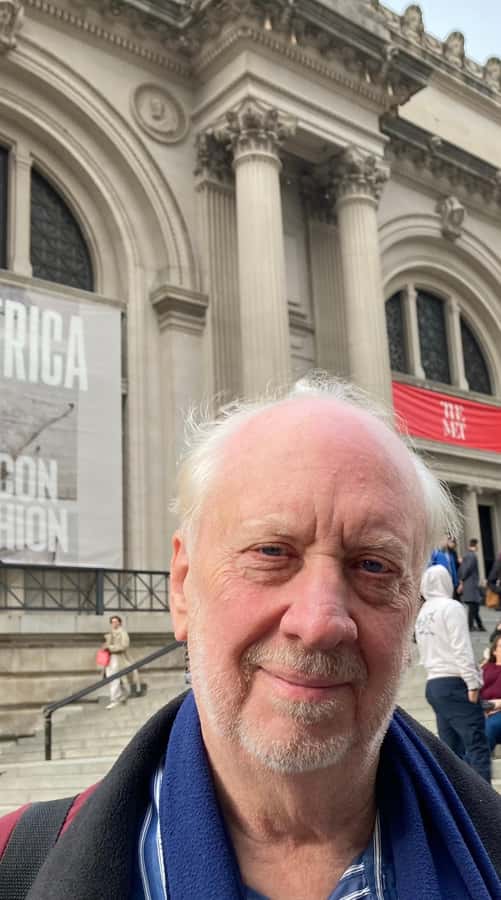
Reviewed · METROPOLITAN MUSEUM & ART TOURS
New York City: The Bible at the Metropolitan Museum of Art
The most interesting part of this Met tour is the way it connects objects across several museum sections to the Bible. You move from ancient Egypt to Greece and Rome, then to later paintings shaped by biblical stories, rather than treating the Bible as a subject confined to one gallery. I like the clear historical thread and the chance to see major art alongside archaeological pieces tied to the biblical world.
I also like the practical touch of a guide handout listing artifacts and related Bible passages. Guide Mel Lehman is praised for answering questions, adding information beyond the labels, and adjusting the pace for breaks. The main drawback is time: two hours passes quickly in a museum as large as the Met, and this tour offers a focused route rather than a full museum visit.
In This Review
- Key points to know before you book
- Why the Met works so well for a Bible-focused tour
- Meeting the Pharaoh in the Great Hall
- Egypt and the Exodus connection
- Greece and Rome broaden the route
- From archaeology to Bible-inspired painting
- Mel Lehman’s guiding style
- What the $60 price really includes
- Practical details inside a very large museum
- Who will get the most from this tour
- Should you book The Bible at the Met?
- FAQ
- How long does The Bible at the Met tour last?
- How much does the tour cost?
- Where does the tour meet?
- Is museum admission included after the tour?
- What language is the tour offered in?
- Is the tour wheelchair accessible?
- Can I take photographs?
- Should I bring water?
- Can I cancel the booking?
Key points to know before you book
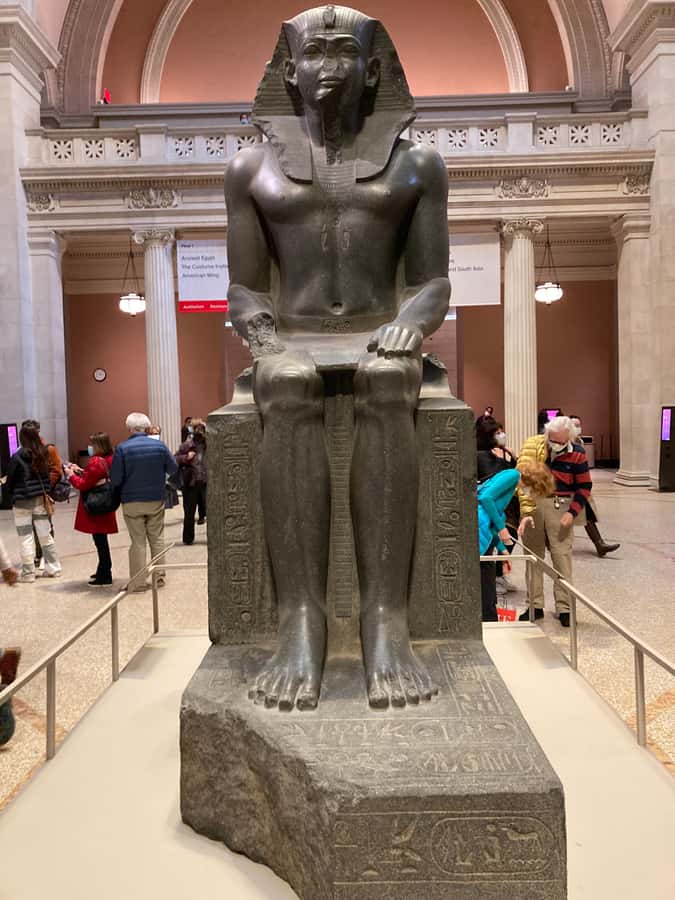
- Meet by the Pharaoh statue: The meeting point is in the Met’s Great Hall, near the entrance.
- Egypt comes first in the story: The tour links Egyptian objects to the Exodus and the Bible’s ideas about human dignity.
- Greece and Rome add vital context: Ancient Mediterranean art helps explain parts of the biblical world and its later interpretation.
- Mel Lehman leads the English tour: He can answer questions and adjust the pace, including taking breaks when needed.
- Your ticket lasts beyond the tour: You can continue exploring the Met for the rest of the day after the guided portion.
- Bring water and good shoes: There are no water fountains, and the museum visit involves walking and standing.
Why the Met works so well for a Bible-focused tour
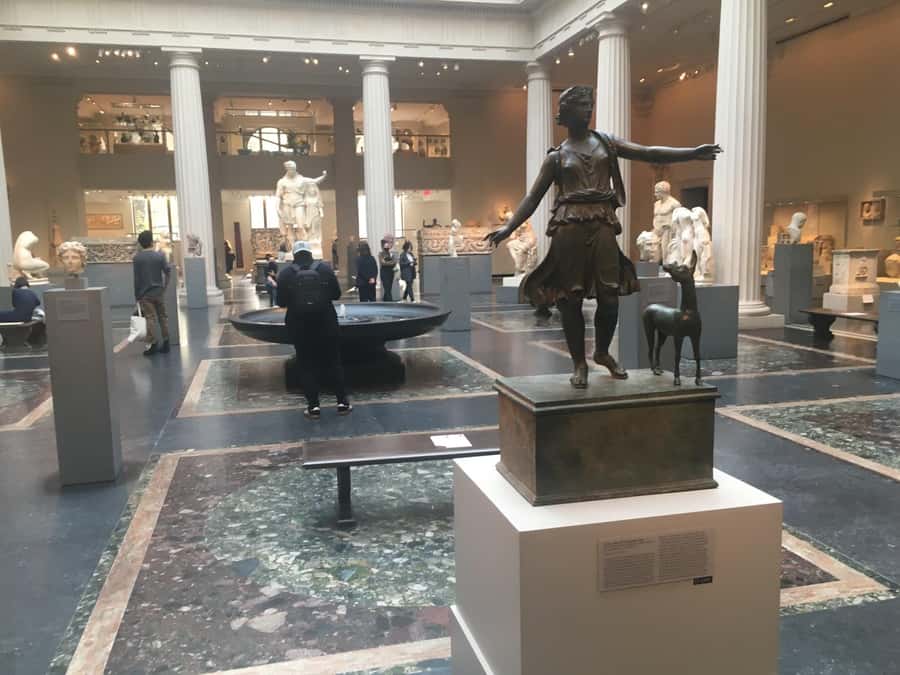
The Metropolitan Museum of Art is a useful setting for this subject because the Bible touches several ancient cultures, not just one. Egypt, Greece, Rome, and later Christian Europe all appear in the museum’s collections, so you can see how biblical stories relate to the wider world around them.
That wider setting is the tour’s real strength. Instead of looking only at religious paintings, you examine archaeology and art together. A sculpture, inscription, vessel, or painting can help place a biblical passage within the customs and visual language of its time.
You do not need to approach the tour as a person of faith. The experience is described as non-sectarian, and the subject can work as an introduction to ancient civilizations, Western art, and the Bible’s place in education. If you are religious, the objects may add depth to familiar stories. If you are not, you can treat the tour as a cultural and art-focused study of a text that has shaped centuries of public life.
That makes this a better choice for someone who wants connections and explanation, not just a list of famous objects. Museum labels give basic facts. A guide can show you why one room matters to another and how biblical themes continue into later art.
More Met and art museum visits:
- NYC: Museum of Modern Art (MoMA) Entry Ticket
★ 4.6 · 12,540 reviews - NYC: Guggenheim Museum Entry Ticket
★ 4.4 · 2,201 reviews - Metropolitan Museum Guided Group Tour
★ 5.0 · 1,013 reviews
Meeting the Pharaoh in the Great Hall
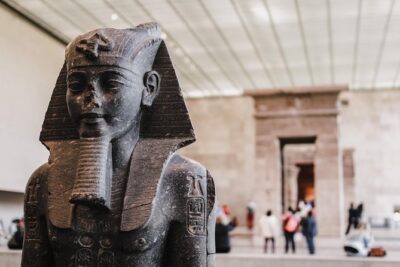
You meet at the Statue of Pharaoh in the Met’s Great Hall. This is a sensible landmark inside the main entrance, but give yourself enough time to reach it. The Metropolitan Museum of Art is large, and a rushed arrival can make the first few minutes needlessly stressful.
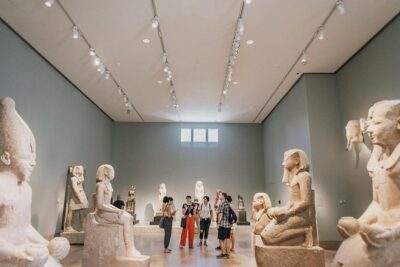
The meeting point also sets the tone for the route. You begin among monumental Egyptian material, with the museum’s grand entrance around you, before moving into the galleries. Bring comfortable walking shoes, since the tour covers more than one section and includes time on your feet.
The tour lasts two hours and is conducted in English. The information provided does not give a group size, so you should not assume a private or tiny group. What you can count on is a live guide rather than an audio route, with room for questions and conversation.
Mel Lehman is the guide named for this experience. The useful detail here is not only his subject knowledge, but his flexible approach. He can respond to questions, pause when needed, and break up the route with rests. That matters in a museum where the pace can easily become tiring.
Egypt and the Exodus connection
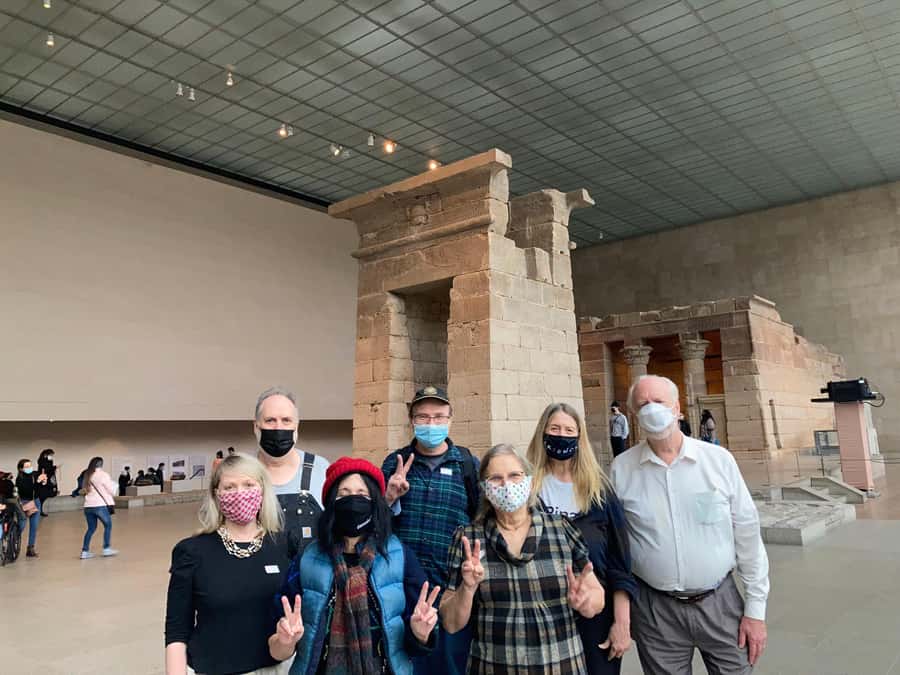
The Egyptian section is an important early stop. Ancient Egypt gives the tour a direct link to the Exodus, one of the Bible’s central stories. The experience uses this part of the museum to consider how the Exodus gave a new sense of dignity to humanity.
That is a larger idea than simply finding an object that appears in a biblical passage. You are asked to think about power, identity, and the position of ordinary people within an ancient society. The Egyptian galleries provide the visual and archaeological setting for that discussion.
The tour does not promise that every object is a direct biblical artifact. That distinction is worth keeping in mind. Some pieces relate to the Bible through geography, period, culture, or theme rather than through a specific named person or event.
This is where a guide can make a real difference. You might find it hard to see the connection from a label alone, especially when the museum presents objects according to art history rather than biblical study. A guided explanation helps separate firm historical links from broader interpretation.
For people of faith, the Egyptian section may give familiar passages a stronger physical setting. For people interested in ancient cultures, it provides a way to connect museum objects with one of the most influential stories in world literature.
Greece and Rome broaden the route
The tour continues into ancient Greece and Rome, both of which play important parts in the Bible. These sections help you see the Bible within the wider Mediterranean world rather than as an isolated tradition.
Greek and Roman galleries can be especially useful for understanding the cultures that shaped the later biblical period and its interpretation. You may encounter art that reflects ancient ideas about gods, rulers, the body, public life, and human virtue. The guide’s task is to point out where those subjects meet biblical themes.
The route also shows why a museum tour can add something different from reading at home. A text gives you words and narrative. Objects give you scale, materials, style, and evidence of how people represented authority and belief.
You should expect connections to be explained rather than a simple parade of biblical scenes. The supplied details do not name every object or guarantee specific stops, so the exact selection can depend on the guide and the museum’s current displays. Still, Greece and Rome are stated parts of the route, giving the tour a useful chronological and cultural range.
This section may appeal most to readers who want context. If your interest is limited to Christian paintings, you may find some of the ancient archaeology less immediately familiar. If you enjoy seeing how cultures overlap, this part should be one of the tour’s most useful elements.
More New York City museums to visit:
- NYC: 9/11 Memorial & Museum Timed-Entry Ticket
★ 4.8 · 31,428 reviews - NYC: Empire State Building Tickets – Observatory & Museum
★ 4.7 · 25,757 reviews - New York City: American Museum of Natural History Ticket
★ 4.5 · 15,447 reviews - 9/11 Memorial, Ground Zero Tour with Optional 9/11 Museum Ticket
★ 5.0 · 6,381 reviews
From archaeology to Bible-inspired painting
The experience also includes art by major painters inspired by the Bible. This changes the mood of the tour. After ancient objects and archaeological links, you see how biblical stories were reshaped by artists centuries later.
The value here is comparison. You can consider how the same sacred text looks when represented through different periods, artistic choices, and cultural settings. The tour is not only about what happened in the biblical world, but also about how later societies imagined and retold it.
The Met’s art collection makes that transition possible within a single visit. You move from objects connected to ancient cultures to paintings that show the Bible’s continuing influence. The guide can help you notice the links without pretending that every later artwork presents the original story in the same way.
I would pay attention to the difference between historical evidence and artistic interpretation. An archaeological object may tell you about a society’s materials or beliefs. A painting may reveal more about the artist’s time, patrons, and religious outlook than about the biblical period itself.
That distinction makes the tour suitable for both faith-based and secular visitors. You can appreciate the paintings as religious art, cultural documents, or examples of how artists handled familiar stories. The experience gives you several ways to look.
Mel Lehman’s guiding style
The guide is a major part of this experience. Mel Lehman is described as warm, humorous, flexible, and willing to answer questions. Those qualities matter in a subject that can become heavy or overly academic if presented without a human touch.
You should also expect information beyond the museum labels. Mel has a handout that lists the artifacts and the corresponding Bible passages, giving you something concrete to use during the tour and afterward. That is a helpful feature if you want to continue reading or revisit a passage later.
The pace can be adjusted for breaks. This is particularly useful for older visitors, anyone managing fatigue, or anyone who prefers to spend more time with fewer objects. It also means the route may feel less rigid than a fast-moving highlights tour.
The tradeoff is that flexibility can affect how much you cover. If the group has many questions or takes regular rests, you may see fewer galleries. I consider that a fair exchange for a tour that lets you think and ask questions instead of hurrying from one stop to the next.
The experience has received a perfect five-star rating from five verified bookings, including strong praise for Mel’s preparation, patience, and ability to make connections. That is a small sample, so I would not treat it as a guarantee. It does give you a useful picture of the guide’s role and the tone to expect.
What the $60 price really includes
At $60 per person, this is not the cheapest way to enter the Metropolitan Museum of Art. Its value depends on how much you want from a guided visit.
Your price includes a two-hour guided tour, admission to the museum for the remaining part of the day, and the route focused on archaeology and art related to the Bible. If you plan to spend several additional hours at the Met, the ability to stay after the tour improves the value considerably.
If you only want a short look at the museum, the price may feel high. You are paying for a specialized subject, a live English-speaking guide, an organized route, and explanations that are not limited to the wall labels. That is worthwhile when you want the Bible connections made clearly and in sequence.
The ticket is also useful for planning a longer museum day. After the guided portion, you can keep exploring at your own pace rather than leaving when the tour ends. You should still budget for food, drinks, transportation, and personal expenses, since none of those are included.
The tour offers free cancellation up to 24 hours before the start and a reserve-now, pay-later option. Those policies help if your New York schedule is still changing, though they do not reduce the basic cost.
Practical details inside a very large museum
Wear comfortable walking shoes. Even a two-hour route in a major museum can involve plenty of walking and standing, and the advice is repeated for good reason.
Bring a bottle of water if you want one. There are no water fountains, and beverages are not included. You can also bring a camera, but flash photography is not allowed. Non-flash photography is permitted.
Transportation to and from the museum is not included, so you need to make your own way to the Met. The meeting point is inside the Great Hall at the Pharaoh statue, not at a separate street location.
The tour is wheelchair accessible. If mobility affects your pace, the guide’s willingness to take breaks is another useful feature. The tour is offered in English, and no other language is listed.
The experience includes skip-the-ticket-line access. That can save time at a busy museum, especially when you have planned other activities in New York the same day. You should still arrive with enough time to find the meeting point.
Who will get the most from this tour
I would recommend this tour to you if you want a focused introduction to the Bible’s cultural setting and its influence on art. It suits people of faith who want physical objects and paintings to add context to familiar passages.
It also suits people with no religious commitment. The tour is non-sectarian, and the Met provides enough material for a broader discussion of ancient Egypt, Greece, Rome, archaeology, and Western painting.
Families with older children or teenagers may find the guided links more useful than wandering through the galleries alone, though the two-hour focus may be better for visitors who can engage with art and history. The information does not specify a minimum age, so you should judge your group’s interest and attention span.
I would be less likely to choose it if you want a general tour of the Met’s most famous works. This experience follows a Bible-centered route, and the museum is far too large to cover fully in two hours. You will see selected sections, not the whole collection.
It is also not the right pick if you prefer to move at your own pace from the start. The guide provides structure, and the value comes from following connections between rooms. You can explore independently after the tour, which softens that limitation.
Should you book The Bible at the Met?
Book this tour if the Bible’s links to ancient Egypt, Greece, Rome, and later painting interest you. The strongest reasons are the focused route, the handout with Bible passages, and Mel Lehman’s flexible approach to questions and breaks.
The $60 price makes the most sense if you use the included museum admission for the rest of the day. Plan to arrive early, wear good shoes, bring water, and leave time after the tour for galleries not covered by the guided route.
Skip it if you want a broad Met overview or a quick visit with no set theme. Choose it if you want a thoughtful, English-language explanation of how biblical stories connect with objects and art across the museum.
FAQ
How long does The Bible at the Met tour last?
The guided tour lasts two hours.
How much does the tour cost?
The price is $60 per person.
Where does the tour meet?
Meet at the Statue of Pharaoh in the Great Hall, near the entrance to the Metropolitan Museum of Art.
Is museum admission included after the tour?
Yes. Your ticket is good for the remaining part of the day after the guided tour.
What language is the tour offered in?
The live guided tour is offered in English.
Is the tour wheelchair accessible?
Yes, the experience is wheelchair accessible.
Can I take photographs?
Yes. Photography without flash is allowed, but flash photography is not permitted.
Should I bring water?
You should bring a bottle of water if you want one because the museum has no water fountains. Meals and beverages are not included.
Can I cancel the booking?
Yes. You can cancel up to 24 hours in advance for a full refund. A reserve-now, pay-later option is also available.
Just listed around New York City
- New York City Airport Group Arrival Transfer★ 5.0 · 5 reviews
- NYC: Visit Museum of Modern Art & 3hr Manhattan Walking Tour★ 4.5 · 5 reviews
- Outdoor Escape Room in Brooklyn – Prospect Heights★ 5.0 · 5 reviews
- Private Transfer from JFK&LGA Airport to New York or Vice versa★ 5.0 · 5 reviews
- New York: City highlights Private Guided Walking Tour★ 5.0 · 5 reviews
- Boat or Yacht Rental in Sag Harbor, The Hamptons, or Monatauk★ 5.0 · 5 reviews
- Guided tour in French of Brooklyn Bushwick and Williamsburg★ 5.0 · 5 reviews
- Private New York City Food Tour of East Village and Greenwich Village★ 4.5 · 5 reviews
Metropolitan Museum & Art Tours, compared.


“The Met” Metropolitan Museum of Art Exclusive Guided Tour
Read our review →


Browse the lists this tour appears in