
Reviewed · SOHO, LITTLE ITALY & CHINATOWN TOURS
New York: Mafia and Gangster History Tour in Little Italy
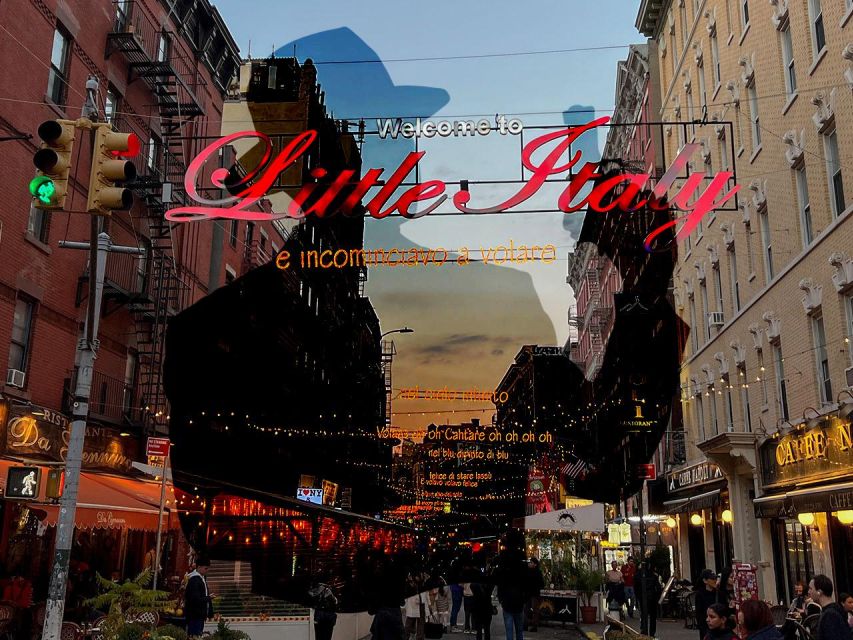
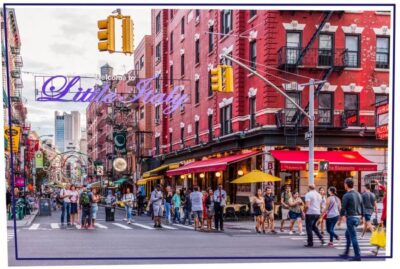
Little Italy’s mob story is not confined to movie screens. On this two-hour walk through real crime scenes, you follow the rise of the Black Hand, Prohibition gangs, Lucky Luciano, and John Gotti, then finish at places tied to violent mob killings. The streets are compact, but the story reaches from immigrant neighborhoods to the highest levels of organized crime.
I like the small limit of 10 people, which gives you a fair chance to hear the guide and ask questions. I also like the use of old photographs and newspaper clippings, a practical touch that helps you picture buildings before modern New York changed them. The main drawback is that this is a brisk outdoor walk, and the guide may speak quickly, so cold, wet weather or mobility limits can make it harder to enjoy.
In This Review
- Key points at a glance
- Why this Little Italy mob tour works
- Meeting at Spring and Mulberry Streets
- The Black Hand and New York’s early gangs
- Lucky Luciano and the creation of the Five Families
- The Ravenite Social Club and John Gotti
- Lieutenant Petrosino Square and the police response
- The Police Building and the city’s darker institutions
- Umberto’s Clam House and the murder of Crazy Joey Gallo
- Film locations and extra New York history
- How the guides shape the experience
- Is $40 a fair price?
- Who should book this walk?
- Should you book the Little Italy Mafia tour?
- FAQ
- Where does the tour begin?
- How early should I arrive?
- How long is the tour?
- How far do you walk?
- How many people can join?
- What language is the tour conducted in?
- Is the tour suitable for people with mobility impairments?
- Are pets allowed?
- Can I cancel for a refund?
Key points at a glance
- Gotti’s Ravenite Social Club: See the former headquarters where John Gotti attracted cameras and held court.
- Joey Gallo’s final meal: Visit Umberto’s Clam House, linked to the 1972 killing of Crazy Joey Gallo.
- A full story, not just mob glamour: The route covers police corruption, anti-mafia work, and reformers such as Lieutenant Petrosino and Frank Serpico.
- A compact one-mile route: Two hours of stories and stops fit into a walk of about 1.5 kilometers.
- Small groups with an English-speaking guide: The maximum is 10, and guides including Tom and Thomas use photos and documents to make the past easier to picture.
- Movie connections included: You can hear about locations associated with The Godfather and The Sopranos.
Why this Little Italy mob tour works
The best part of this experience is its scale. You are not being driven around New York in a bus, hearing broad claims about famous gangsters from a distance. You are walking a short route through Little Italy, stopping at addresses tied to specific people and events.
That makes the subject easier to follow. The guide begins with early Black Hand gangs, moves into the liquor battles of Prohibition, then explains how Lucky Luciano helped reshape organized crime. The story continues through the Five Families, the Mafia’s arrangement with the government during World War Two, the public image of John Gotti, and the police efforts to fight corruption.
I appreciate that the tour does not treat mobsters as folk heroes. The dramatic names are here, but so are the people who challenged organized crime. Lieutenant Giuseppe Petrosino represents an earlier generation of anti-Mafia policing, while Frank Serpico brings the story into the modern era with his exposure of police corruption.
The tone is lively and sometimes grim, as it should be. You will hear about shootings and murder scenes, so this is not a gentle sightseeing walk. But the focus is on history, power, policing, and the changing city, not cheap shock.
More SoHo, Little Italy and Chinatown walks:
- SoHo, Little Italy, and Chinatown Walking Tour in New York
★ 5.0 · 3,153 reviews - NYC: Chinatown & Little Italy Food Tour with 7 Flavorful Tastings
★ 5.0 · 2,733 reviews - Original NYC Guided Food Tour of Chinatown and Little Italy
★ 5.0 · 2,194 reviews
Meeting at Spring and Mulberry Streets
The tour begins on the sidewalk at the corner of Spring and Mulberry Streets, beside DaSalvio Playground at 44 Spring Street. Look for a guide wearing a white cap.
Arrive 10 minutes early. The tour begins promptly, and you cannot join once the group has left. That rule matters here because the route is small and the guide cannot easily backtrack to find late arrivals.
Wear comfortable shoes. The distance is only about one mile, but you will spend much of the two hours standing outdoors while the guide explains each stop. The experience is not suitable for people with mobility impairments, so consider the walking and standing demands before booking.
The group maximum of 10 is a real advantage. You can usually stay close to the guide, see the photographs, and ask about details that catch your interest. On quieter dates, the group may be even smaller. One booking became a private lesson when no other group members appeared, though you should not count on that happening.
The Black Hand and New York’s early gangs
The opening section sets up the world before the famous Mafia families took shape. You learn about Black Hand gangs, their threats and extortion tactics, and the way early criminal groups operated within immigrant communities.
This part is useful because it cuts through the simple movie version of Mafia history. Organized crime did not appear fully formed with tailored bosses and elaborate family structures. It developed from smaller gangs competing for territory, influence, and money.
The guide then moves toward the struggle for control of the liquor trade during Prohibition. That period created enormous profits for criminal groups and helped turn local gangs into more organized operations. Joe Masseria, known as Joe the Boss, becomes a key figure in this transition.
The strength of this section depends on the guide’s storytelling. Tom, also referred to as Thomas, has been praised for using a thick binder of photographs and newspaper articles. Those visual aids matter because many buildings have changed, and a historic address can otherwise look like an ordinary modern storefront.
Lucky Luciano and the creation of the Five Families
Lucky Luciano is the intellectual center of the tour. You learn how he changed organized crime by moving away from older, more rigid patterns of leadership and helping create the Commission of Five Families.
That shift is more interesting than a simple list of gangsters. Luciano’s importance comes from organization. The tour explains how competing groups could work through a shared system rather than fight constantly for control. It gives you a clearer idea of why the New York Mafia lasted so long and why its influence reached beyond a single neighborhood.
The route also covers Luciano’s unusual cooperation with the government during World War Two. This is one of the tour’s better historical turns because it shows organized crime as a force that sometimes dealt with public institutions, rather than operating as a completely separate world.
You will not get a full academic course in two hours, and the amount of information can be substantial. Still, the walk gives you a useful framework for understanding the names that appear in films, television, and newspaper accounts.
More New York City history walks:
- New York City: American Museum of Natural History Ticket
★ 4.5 · 15,447 reviews - NYC: Starship Landmark 90 Minute Sightseeing Cruise
★ 4.6 · 3,666 reviews - Starship Landmark 90 Minute Sightseeing Cruise
★ 4.5 · 2,073 reviews - American Museum of Natural History Admission Ticket
★ 4.0 · 1,931 reviews
The Ravenite Social Club and John Gotti
The Ravenite Social Club is the tour’s most recognizable stop for many people. Located on Mulberry Street, it became closely associated with John Gotti, the Gambino crime family boss known in the press as the Dapper Don.
This is where the tour shifts from older criminal history to the media age. Gotti’s public image, his confidence in front of cameras, and the attention around his legal troubles helped turn him into a celebrity figure. The guide explains the rise and fall of that image while showing you the place where he was seen meeting associates and conducting business.
The building itself may not deliver a cinematic reveal. That is part of the point. New York keeps changing, and the power of the stop comes from knowing what happened there rather than from expecting a preserved gangster headquarters.
Allow about 15 minutes at the Ravenite. The guide may use photos to show how the location looked during Gotti’s period. This is one of the moments when the extra visual material makes the stop much stronger than simply walking past a doorway.
Lieutenant Petrosino Square and the police response
Lieutenant Petrosino Square adds welcome balance to a tour that could otherwise focus only on criminals. The square honors Giuseppe Petrosino, an early crime fighter who worked against organized criminal networks in New York.
His story helps you see that the city’s struggle with the Mafia began long before the famous federal prosecutions of the late 20th century. Petrosino represents an era when police work was personal, dangerous, and often limited by politics and communication.
The guide also discusses Frank Serpico, whose decision to expose police corruption makes him an important counterpoint to the gangster stories. Serpico’s inclusion broadens the tour from Mafia history to the wider question of how institutions respond to crime from within and outside their own ranks.
This stop takes about 10 minutes. It is not a dramatic crime scene, but it is one of the most worthwhile pauses because it places law enforcement into the same story as the gangs.
The Police Building and the city’s darker institutions
The Police Building continues the discussion of policing and corruption. Here, the tour looks at the relationship between organized crime and the New York Police Department, including the difficult work of officers who tried to resist bribery and misconduct.
I like this part because it keeps the walk from becoming a parade of notorious nicknames. The Mafia’s power depended not only on violence and illegal markets, but also on contacts, fear, corruption, and the ability to operate around public systems.
The stop is scheduled for roughly 10 minutes. You should expect an exterior explanation rather than an extended indoor visit. The value is in the guide’s account of what the building represents and how it connects to Petrosino, Serpico, and the wider fight against corruption.
Umberto’s Clam House and the murder of Crazy Joey Gallo
The final major stop is Umberto’s Clam House, associated with the killing of Crazy Joey Gallo in 1972. Gallo was shot while dining there, making the restaurant one of the clearest links between a working neighborhood and a notorious mob murder.
This is the tour’s most direct crime-scene moment. You are not simply hearing that a gangster once lived in the area. You are standing near a place connected to a specific killing, and the guide explains the people and tensions surrounding it.
The stop also shows why you should keep some distance from movie mythology. The real event was messy, violent, and rooted in local power struggles. The guide’s job is to separate the documented story from the legend, and the photographs and printed material help keep the account grounded.
The schedule allows about 10 minutes here before the walk returns to 44 Spring Street. Depending on the guide and the group, you may also hear about the death of Sally Bugs Briguglio, another figure whose violent end forms part of the route’s closing chapter.
Film locations and extra New York history
The tour can include locations connected with The Godfather and one location from The Sopranos. These references are optional, but they add appeal if you enjoy seeing how filmmakers used Little Italy’s streets.
The movie material works best as a supplement, not the main reason to book. The tour is built around real people, actual addresses, police work, and the growth of organized crime. Film fans get an extra layer, while history-minded visitors still have plenty to keep them interested.
One guide also extended the experience to Five Points after the scheduled walk. Do not assume that extra stop is guaranteed, but it shows how the route can lead into older New York gang history if time and the guide allow.
How the guides shape the experience
The guide makes a major difference on a walking tour like this. Tom and Thomas are the names most often connected with the experience, and the feedback describes a guide who is friendly, funny, prepared, and clearly passionate about the subject.
The strongest practical detail is the binder of old images and newspaper reports. Ask to see these when the group reaches a changed building or a hard-to-picture event. They can help you understand what the street looked like during the period being discussed.
One point to keep in mind is speaking pace. A visitor specifically suggested that the guide speak more slowly. If English is not your first language, stay close to the guide and ask for a repeat when needed. With a group limit of 10, that should be manageable.
The tour operates in English only. You should be comfortable following names, dates, and connected storylines in English for two hours.
Is $40 a fair price?
At $40 per person, this is a good value if you want a focused history walk rather than a general Little Italy orientation. You get two hours with a live guide, a one-mile route, several named locations, and a story that moves from early gangs to modern police corruption.
The value is strongest for people who would otherwise spend time searching for these places without knowing what happened there. The Ravenite and Umberto’s Clam House are easy enough to locate, but the context, old images, and links between events are what you are paying for.
It is less useful if you want interior access, a meal, or a broad tour of Manhattan. The route is concentrated in Little Italy, and most stops are viewed from outside. You are buying interpretation and local context, not admission to museums or private buildings.
Free cancellation up to 24 hours before the start and reserve-now, pay-later booking make the $40 commitment easier to manage. The tour can be cancelled for bad weather or too few bookings, with a full refund.
Who should book this walk?
I would choose this tour if you enjoy American crime history, The Godfather, The Sopranos, New York neighborhoods, or police reform. You do not need to be a Mafia expert. The guide builds the story from the early Black Hand through the later families, so newcomers can follow along.
It also suits people who want a small, highly focused activity between larger New York attractions. Two hours is long enough to tell a real story but short enough to fit around other plans.
I would think twice if you dislike violent subject matter or want a relaxed food-focused walk through Little Italy. The route includes murder sites and criminal violence, and the guide spends much of the time explaining events rather than discussing restaurants or architecture.
Plan carefully for weather. The walk goes ahead in outdoor conditions unless the provider cancels, and even past participants who enjoyed cold-weather departures still had to deal with the elements. Comfortable shoes are essential.
Should you book the Little Italy Mafia tour?
Book it if you want specific places tied to specific people, not just a general story about gangsters. The Ravenite Social Club, Lieutenant Petrosino Square, the Police Building, and Umberto’s Clam House give the walk a clear structure, while Lucky Luciano, John Gotti, Crazy Joey Gallo, Sally Bugs Briguglio, Petrosino, and Serpico give it human focus.
The best reason to go is the guide’s use of documents and strong command of the subject. The main caution is pace, weather, and the fact that the experience is entirely outdoors. For $40, a small group, and two focused hours in Little Italy, I consider it a smart pick for history fans and movie followers who want the real streets behind the stories.
FAQ
Where does the tour begin?
Meet on the sidewalk at the corner of Spring and Mulberry Streets, beside DaSalvio Playground at 44 Spring Street. Look for the guide wearing a white cap.
How early should I arrive?
Arrive 10 minutes before the scheduled start. The tour leaves promptly, and you cannot join after it has begun.
How long is the tour?
The walking tour lasts two hours.
How far do you walk?
The total distance is about one mile, or 1.5 kilometers.
How many people can join?
The maximum group size is 10 participants.
What language is the tour conducted in?
The tour is conducted in English with a live English-speaking guide.
Is the tour suitable for people with mobility impairments?
No. The activity is listed as unsuitable for people with mobility impairments.
Are pets allowed?
Pets are not allowed, but assistance dogs are permitted.
Can I cancel for a refund?
Yes. You can cancel up to 24 hours before the start time for a full refund. The tour may also be cancelled because of bad weather or too few bookings, in which case you receive a full refund.
Just listed around New York City
- NYC: Little Shop of Horrors Off-Broadway Ticket5 reviews
- Private NYC Airport Transfer: LGA to Manhattan – Up to 5★ 3.6 · 5 reviews
- New York City Tour in German★ 4.5 · 5 reviews
- New York: Hamilton and Washington Revolutionary Walking Tour★ 5.0 · 5 reviews
- NYC Freedom Tower Private Photo or Video Experience★ 4.0 · 6 reviews
- New York Afternoon Fall Foliage Cruise with Lunch★ 5.0 · 6 reviews
- Brooklyn Walking Tours by Locals: Private & 100% Personalized★ 4.0 · 6 reviews
- Southold Bay Oyster Farm Tour★ 5.0 · 6 reviews
SoHo, Little Italy & Chinatown Tours, compared.
SoHo, Little Italy, and Chinatown Walking Tour in New York
Read our review →
Chinatown & Little Italy Food Tour with 7 Flavorful Tastings
Read our review →
Original NYC Guided Food Tour of Chinatown and Little Italy
Read our review →
SoHo, Little Italy, and Chinatown 2-Hour Guided Walk
Read our review →
SoHo, Little Italy, and Chinatown NYC Guided Walking Tour
Read our review →Browse the lists this tour appears in