

Reviewed · MUSEUMS
NYC: Whitney Museum Ticket
The Whitney Museum gives you two experiences in one: a serious look at American art from the 20th century to today, and a fine architectural walk through the Meatpacking District. You can see work by Jackson Pollock, Georgia O’Keeffe, Andy Warhol, Edward Hopper, and many other artists, then step outside for broad views over the High Line and lower Manhattan.
I especially like the freedom to set your own pace and the free audio guide, which is available in English and Spanish through the museum’s Wi-Fi. I also like the building itself, designed by Renzo Piano, with four levels of outdoor balcony terraces that make a welcome break from the galleries.
The main consideration is price. At $30 per person, this is not a quick pop-in, and a crowded Sunday can slow you down. Give yourself at least two hours, and check which exhibitions are showing before you book, especially if you are coming mainly for Hopper or another particular artist.
In This Review
- Key points to know before you go
- Arriving at 99 Gansevoort Street
- Starting with the Whitney collection
- Pollock, O’Keeffe, Warhol, and American modernism
- Temporary exhibitions and the changing visit
- Four terraces with High Line and Manhattan views
- Using the free audio guide
- How long to stay and how to pace the visit
- Is $30 a fair price?
- Who will enjoy the Whitney most?
- Should you book the Whitney Museum ticket?
- FAQ
- Where is the Whitney Museum located?
- What does the $30 ticket include?
- Is the audio guide included?
- Do I need to bring headphones?
- How long is the ticket valid?
- Can I see temporary exhibitions with this ticket?
- Can I bring food, drinks, luggage, or large bags?
- Can I cancel the booking?
Key points to know before you go

- A major American art collection: See works from a permanent collection of more than 21,000 paintings, sculptures, photographs, films, videos, prints, drawings, and new media.
- The building is part of the visit: Renzo Piano’s Meatpacking District museum includes outdoor terraces on four levels.
- Your ticket covers more than the permanent collection: Admission includes the temporary exhibitions on the date you reserve.
- The mobile guide is free: Connect to onsite Wi-Fi for the museum map, audio content, and other digital material in English or Spanish.
- Plan for a real museum visit: Two hours is a sensible minimum, and a longer stay makes the $30 price easier to justify.
- Bring headphones and identification: You need a passport or ID card and your own headphones for the mobile guide.
Arriving at 99 Gansevoort Street
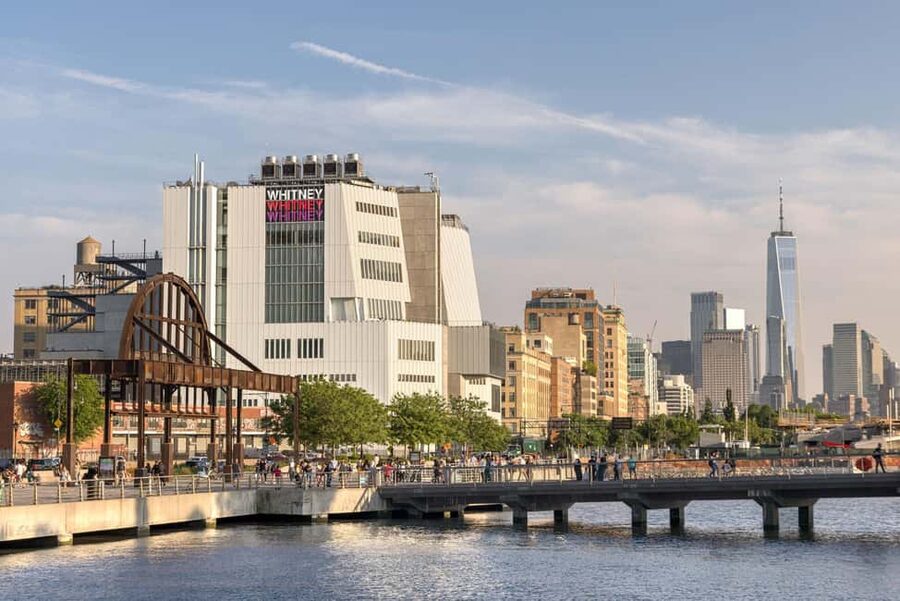
The Whitney Museum is at 99 Gansevoort Street in Manhattan’s Meatpacking District. You redeem your voucher at the admissions counter, then begin the visit inside a building that is as much a part of the attraction as the art.
The museum’s current home was designed by Renzo Piano. Its shape, terraces, windows, and open circulation areas give you changing views of the city as you move through the galleries. You are not simply walking from one white room to another. The building repeatedly brings New York back into view.
The ticket is valid for one entry on the specific date you reserve. That matters because this is not a hop-on, hop-off style museum pass. Once you leave, you should not assume you can return later the same day.
You also need to travel light. Food and drinks are not allowed, large bags and luggage are not permitted, and there is currently no coat check. Bring your passport or ID card, along with headphones if you want to use the audio guide.
More New York City museums to visit:
- NYC: 9/11 Memorial & Museum Timed-Entry Ticket
★ 4.8 · 31,428 reviews - NYC: Empire State Building Tickets – Observatory & Museum
★ 4.7 · 25,757 reviews - New York City: American Museum of Natural History Ticket
★ 4.5 · 15,447 reviews
Starting with the Whitney collection
The Whitney is devoted to American art from the 20th century through the present day. Its permanent collection includes more than 21,000 works by over 3,000 artists, covering painting, sculpture, drawing, printmaking, photography, film, video, and newer forms of media.
That range gives the museum a different feel from a collection focused mainly on European masters. You may move from Abstract Expressionism to Pop Art, Minimalism, Modernism, and contemporary work in a single visit. The displays also give you a chance to see how American artists responded to changing ideas about cities, bodies, politics, popular culture, materials, and daily life.
The museum places particular attention on living artists. That is useful if you want a picture of American art that does not stop in the middle of the 20th century. At the same time, the permanent collection includes important works from the first half of that century, so the older material provides a firm base for understanding the later rooms.
I would not try to see all 21,000 works, of course. The collection is too large for that, and the exhibitions on view change. Instead, use the museum map and audio guide to choose a route that fits your time and interests.
Pollock, O’Keeffe, Warhol, and American modernism

The Whitney is a strong choice if you want to see major movements in American art under one roof. Jackson Pollock brings the force of Abstract Expressionism, Georgia O’Keeffe represents a distinctive form of American Modernism, and Andy Warhol points toward Pop Art’s fascination with fame, products, and mass culture.
These names are useful guideposts, but the museum is not only a checklist of famous artists. You might find that a group exhibition or a work by a less familiar artist holds your attention longer than the best-known pieces. The Whitney’s wide collection makes room for that kind of discovery.
The galleries also work well for visitors who are still finding their way into modern art. You can begin with a painting you understand immediately, then use the wall text or audio material to see how the artist handled color, shape, repetition, scale, or subject matter.
If modern art is new to you, do not worry about getting every idea right. Pick one or two works in each room and ask what changes as you move forward. The museum is more rewarding when you give yourself time to look rather than racing after famous names.
Temporary exhibitions and the changing visit
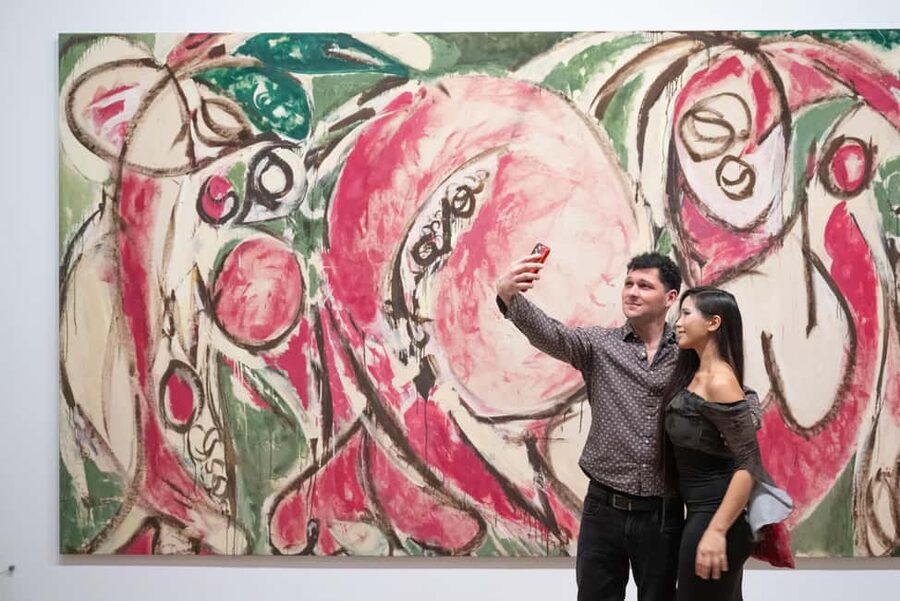
Your entrance ticket includes both the permanent collection and temporary exhibitions. The Whitney presents about 15 exhibitions each year, including single-artist shows, group exhibitions, historical surveys, and career-spanning retrospectives.
This is one reason the museum can be worth revisiting. Your experience depends partly on the temporary program on the date of your visit. A strong special exhibition can turn a good museum stop into the main cultural event of your day.
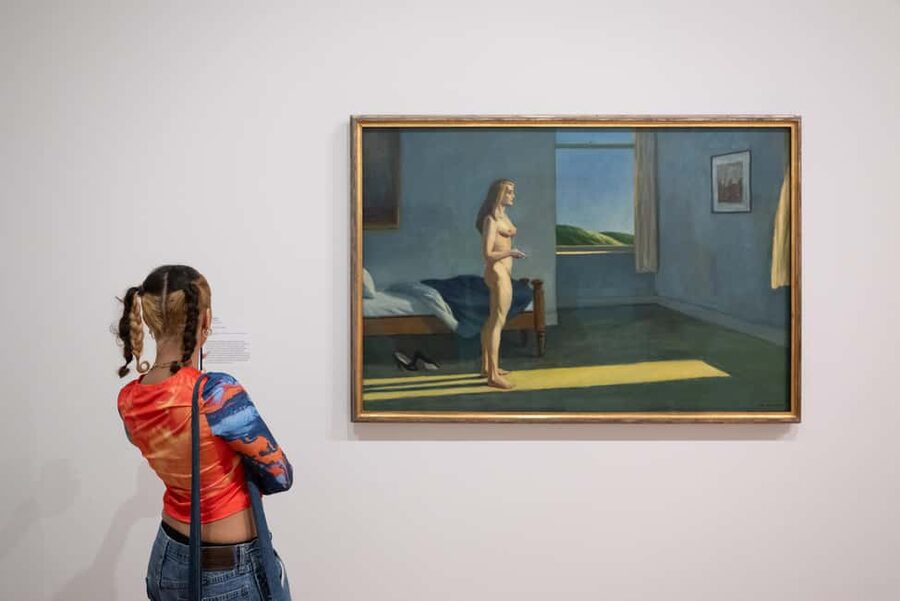
Past programs have included exhibitions focused on artists such as Henry Taylor and Edward Hopper. The Hopper presentation included works that are not often seen, along with information about his process and the way he developed paintings from groups of sketches. That kind of material is especially helpful if you want to understand how an artist worked, rather than simply admire the finished image.
Do check the current program before paying for your ticket. If you are visiting mainly for Edward Hopper, keep your expectations measured. The Whitney holds important American art, but the number of Hopper works on display can vary, and one visit may contain fewer than you hoped to see.
A few more New York City picks to weigh up
- NYC: SUMMIT One Vanderbilt Tickets
★ 4.7 · 51,195 reviews - NYC: Museum of Modern Art (MoMA) Entry Ticket
★ 4.6 · 12,540 reviews - NYC: One World Observatory Skip-the-Line Ticket
★ 4.7 · 12,329 reviews - NYC Empire State Building Observation Deck Ticket
★ 4.5 · 6,916 reviews
Four terraces with High Line and Manhattan views
The outdoor balconies are one of the museum’s most memorable features. There are terraces across four stories, giving you views toward the High Line and lower Manhattan.
These spaces make the museum visit feel less enclosed. After several rooms of paintings and sculpture, you can step outside, look across the city, and reset your attention. The views also create a useful connection between the art and the place where you are seeing it. The Meatpacking District, the High Line, and the changing skyline become part of the day without requiring a separate sightseeing stop.
The terraces are not just a photo opportunity. They help you pace the visit. I would use them as natural pauses between exhibition areas, especially if you are spending several hours inside.
The views are weather dependent, and crowded periods can make the outdoor areas feel busy. Still, they add real value to the admission price because you get more than a conventional gallery visit. You get an architectural route with several chances to see New York from above street level.
Using the free audio guide
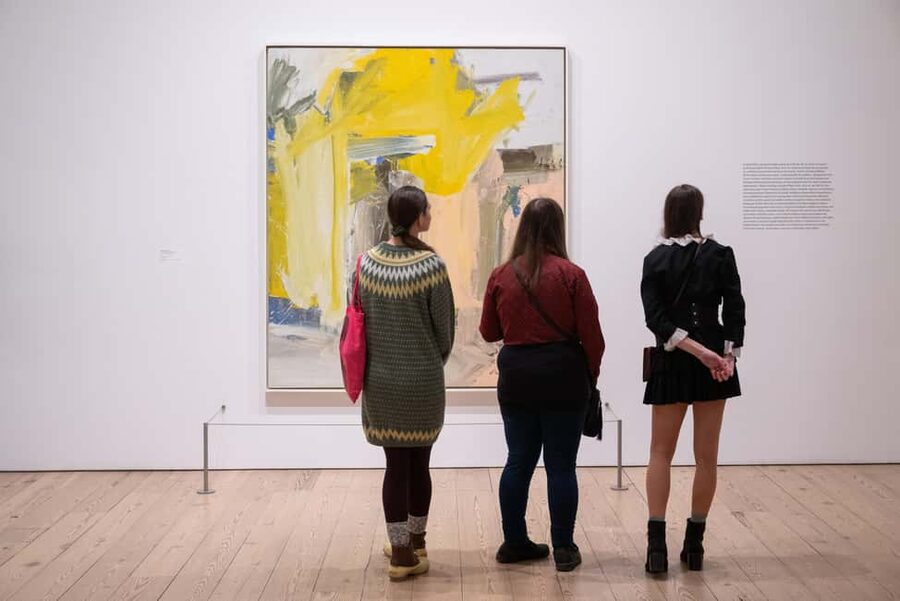
The mobile guide is included with admission. Connect to the Whitney’s free onsite Wi-Fi, then access the guide, museum map, and other digital content on your own device.
The guide is available in English and Spanish. You should bring your own headphones, since headphones are listed among the items to bring. This arrangement keeps the visit flexible: you can listen to selected works, follow the map, or ignore the audio and make your own route.
I like this format for the Whitney because the collection covers many movements and periods. A short explanation can help you place a difficult painting in context, while a map keeps you from wasting time trying to find a particular gallery.
The drawback is practical rather than artistic. You need a charged phone and headphones, and using your own device can feel less convenient than receiving a museum handset. If you prefer to read labels, you can simply use the digital map for orientation and take the galleries at your own speed.
One small issue matters for older visitors or anyone with tired eyes: some explanations beside the art may be printed in fairly small type. The audio guide can help, but you may still want to allow extra time for reading.
How long to stay and how to pace the visit
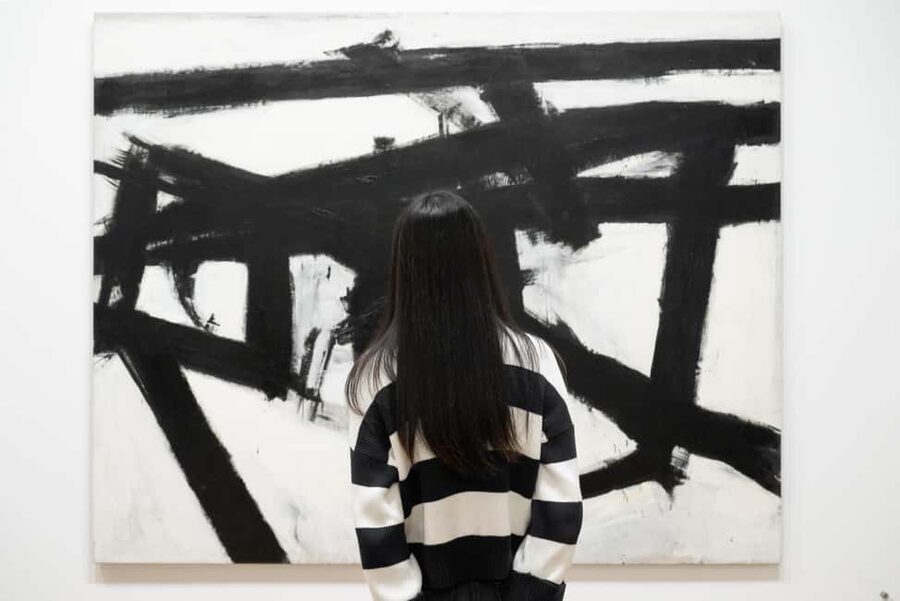
The ticket is valid for one day, but the admission is for one entry on the reserved date. The museum does not become an all-day pass that you can use repeatedly, so plan your timing before you arrive.
I would allow at least two hours. That gives you time for a portion of the permanent collection, a temporary exhibition, and several terrace stops. If you want to listen to much of the audio guide or study the art carefully, three hours is more comfortable.
A practical route looks like this:
- Begin with the museum map and identify the temporary exhibition first.
- Spend time in the special exhibition while your attention is fresh.
- Move through selected permanent collection galleries rather than trying to cover everything.
- Use the audio guide only for works that catch your eye or artists you want to understand better.
- Step onto the terraces between floors or exhibition areas.
- Leave time for a final gallery or city view instead of rushing for the exit.
Crowds can change the rhythm. A Sunday around noon may be particularly busy, making it harder to stand close to popular works or hear a docent clearly. If you have flexibility, a quieter time will make the visit easier, though the exact starting times depend on availability when you check.
Is $30 a fair price?
At $30, the Whitney costs more than a casual gallery stop, so value depends on how you use the ticket. You are paying for access to a large permanent collection, temporary exhibitions, the Renzo Piano building, the terraces, and digital guide material.
For someone who spends only 45 minutes inside and is not especially interested in modern or contemporary American art, the price may feel high. The museum’s value improves when you stay at least two hours and take advantage of both the exhibitions and the outdoor spaces.
The temporary program is the deciding factor for many people. A major retrospective or group show may make the admission feel worthwhile. If the current program does not appeal to you, the collection and views may not be enough to justify the cost compared with other New York activities.
The ticket’s flexible booking terms can also be useful for trip planning. You can reserve now and pay later, and cancellation is allowed up to 24 hours before the visit for a full refund. Those terms reduce some of the risk when you are organizing a busy New York schedule, but you still need to check the reserved date and museum hours carefully.
Who will enjoy the Whitney most?

I would recommend this visit to anyone with a real interest in American art, especially the development of painting and sculpture from Modernism through Pop Art, Minimalism, Abstract Expressionism, and contemporary practice.
It also suits visitors who enjoy architecture and city views. Even if you are not ready to spend a full afternoon studying art, the terraces and building give you reasons to slow down.
Families and mixed-interest groups may appreciate the self-guided format. One person can listen to the audio guide, another can read labels, and someone else can move more quickly through the rooms. There is no fixed group tour forcing everyone to follow the same pace.
The museum may be less suitable if your main goal is one particular artist. Hopper fans should check the current display before booking, since the number of works can be limited. You should also think twice if you are carrying luggage, since large bags are not permitted and there is no coat check at present.
Should you book the Whitney Museum ticket?
Book it if you want a substantial look at American art and like the idea of pairing gallery time with open-air views of Manhattan. The combination of permanent and temporary exhibitions, a self-guided format, and four levels of terraces gives you a full, flexible visit rather than a single exhibition room.
I would make the booking after checking the current exhibitions and setting aside at least two hours. Bring identification, headphones, and as little luggage as possible. At $30, the Whitney is best treated as a planned cultural stop, not a quick filler between meals and shopping.
If modern American art is not your interest, the price may be harder to defend. If it is, the Whitney offers enough variety, space, and city scenery to make the visit worthwhile.
FAQ
Where is the Whitney Museum located?
The Whitney Museum of American Art is at 99 Gansevoort Street in New York’s Meatpacking District.
What does the $30 ticket include?
The ticket includes entry to the Whitney Museum, its permanent and temporary exhibitions, the downloadable mobile guide, and onsite Wi-Fi.
Is the audio guide included?
Yes. The mobile audio guide is included and is available in English and Spanish.
Do I need to bring headphones?
Yes. Headphones are listed among the items you should bring for the audio guide.
How long is the ticket valid?
The ticket is valid for one day, with one entry to the museum on the specific date reserved.
Can I see temporary exhibitions with this ticket?
Yes. Your entrance ticket allows access to the museum’s permanent and temporary exhibitions.
Can I bring food, drinks, luggage, or large bags?
Food and drinks are not allowed. Luggage and large bags are also not allowed, and there are currently no coat-check facilities.
Can I cancel the booking?
Yes. You can cancel up to 24 hours in advance for a full refund. You can also reserve now and pay later.
Just listed around New York City
- NYC: Little Shop of Horrors Off-Broadway Ticket5 reviews
- Private NYC Airport Transfer: LGA to Manhattan – Up to 5★ 3.6 · 5 reviews
- New York City Tour in German★ 4.5 · 5 reviews
- NYC Freedom Tower Private Photo or Video Experience★ 4.0 · 6 reviews
- New York Afternoon Fall Foliage Cruise with Lunch★ 5.0 · 6 reviews
- New York: Hamilton and Washington Revolutionary Walking Tour★ 5.0 · 5 reviews
- Brooklyn Walking Tours by Locals: Private & 100% Personalized★ 4.0 · 6 reviews
- Southold Bay Oyster Farm Tour★ 5.0 · 6 reviews
Museums, compared.


Empire State Building Tickets – Observatory & Museum
Read our review →


9/11 Memorial, Ground Zero Tour with Optional 9/11 Museum Ticket
Read our review →

All-Access 9/11: Ground Zero Tour, Memorial and Museum, One World Observatory
Read our review →
Browse the lists this tour appears in